
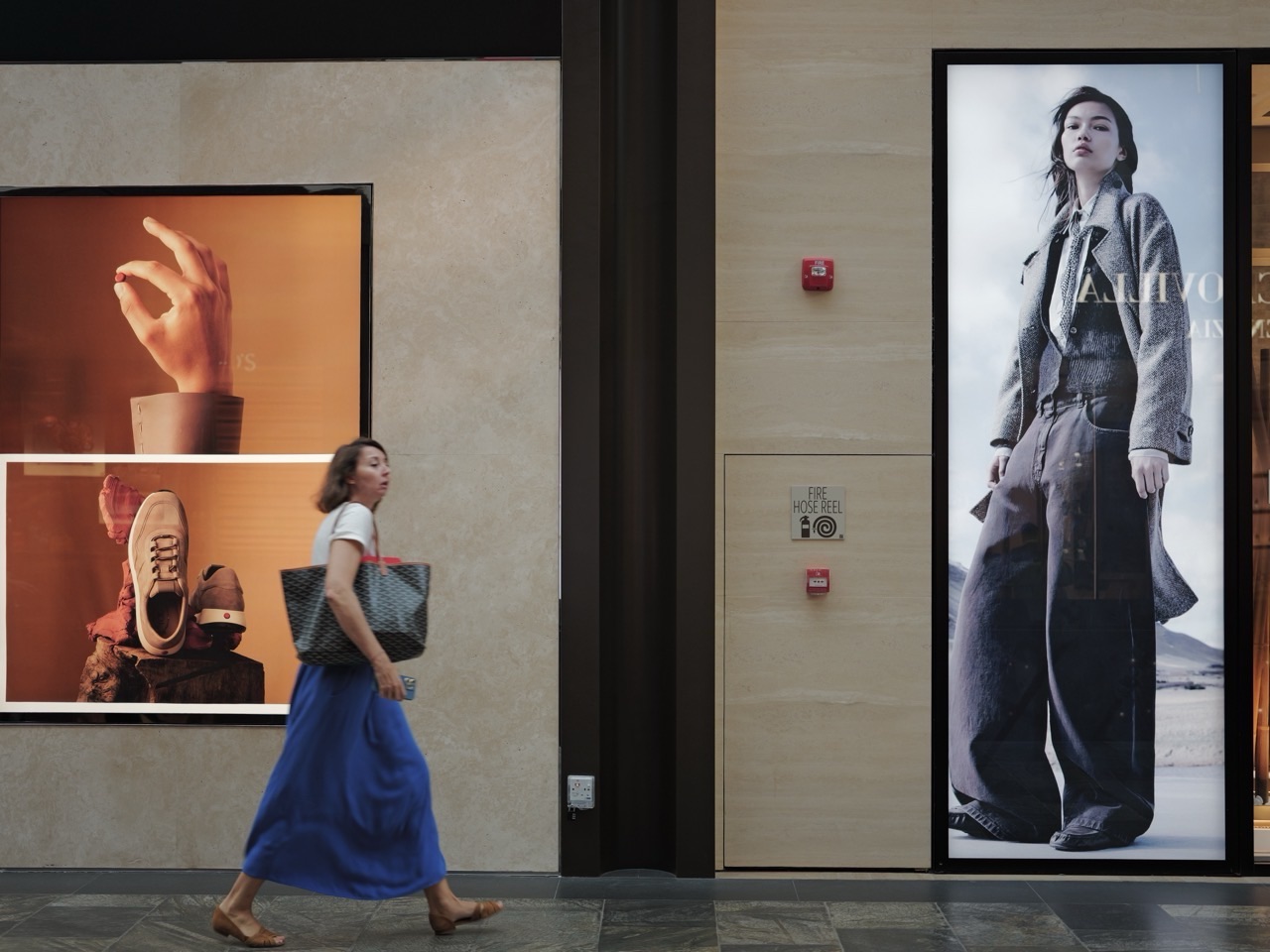
How does a shopping centre become an advertising medium as well as a place to shop? Retail media in malls uses digital screens, atrium displays, directories, app placements, sponsored events, façade media, sampling, pop-ups and brand partnerships to reach people close to the point of purchase. The opportunity is powerful precisely because the customer can often act on the message within minutes.
This guide explains mall retail media, shopping-centre advertising, digital signage, brand partnerships, sponsored events, atrium advertising, in-app media, tenant promotions and measurement. We will look at why context makes mall media valuable, how advertising can support tenant discovery, why too many messages reduce effectiveness, how campaigns connect physical and digital surfaces and why wayfinding should never become collateral damage.
Did you know that a directory screen can have two jobs at once? It can help a customer find a pharmacy while also carrying commercial content. Those functions must be balanced carefully. If advertising makes the directory harder to use, the mall has weakened a service in order to monetise the attention created by that service.
For the campaign layer, read Marketing, Events, Loyalty Programmes and Customer Experience. For analytics, continue with Retail Data, Footfall Analytics and Performance.
Retail Media
Retail Media shows how the shopping centre can communicate commercially without turning the entire environment into noise. The mall has commercially valuable attention because people are already in a place where transactions can happen. Advertising becomes valuable because the audience is physically close to shops, restaurants and services where the message can be acted on immediately.
The mechanism is context plus attention. Screens, directories, atrium installations, app placements and sponsored events can reach different audiences at different moments. The centre has to balance advertiser value with wayfinding, visual comfort and the identity of the property.
Imagine a dining campaign shown on a screen beside the food floor at 6 p.m. The same message has more immediate utility than a generic advertisement far from any participating restaurant. Location and timing make the media inventory more relevant.
For students, separate message, audience, place and action. Ask who sees the advertisement, what they can do next and whether the placement interferes with another function such as navigation. This turns advertising into a systems problem rather than a poster-design exercise.
The result is useful commercial communication. The best retail media adds relevance and revenue while preserving clarity, atmosphere and customer trust. Retail media works best when monetising attention does not destroy the environment that made the audience valuable in the first place.
Mall Advertising
Mall Advertising shows how the shopping centre can communicate commercially without turning the entire environment into noise. The mall has commercially valuable attention because people are already in a place where transactions can happen. Advertising becomes valuable because the audience is physically close to shops, restaurants and services where the message can be acted on immediately.
The mechanism is context plus attention. Screens, directories, atrium installations, app placements and sponsored events can reach different audiences at different moments. The centre has to balance advertiser value with wayfinding, visual comfort and the identity of the property.
Imagine a dining campaign shown on a screen beside the food floor at 6 p.m. The same message has more immediate utility than a generic advertisement far from any participating restaurant. Location and timing make the media inventory more relevant.
For students, separate message, audience, place and action. Ask who sees the advertisement, what they can do next and whether the placement interferes with another function such as navigation. This turns advertising into a systems problem rather than a poster-design exercise.
The result is useful commercial communication. The best retail media adds relevance and revenue while preserving clarity, atmosphere and customer trust. Retail media works best when monetising attention does not destroy the environment that made the audience valuable in the first place.
Digital Signage
Digital Signage shows how the shopping centre can communicate commercially without turning the entire environment into noise. The mall has commercially valuable attention because people are already in a place where transactions can happen. Advertising becomes valuable because the audience is physically close to shops, restaurants and services where the message can be acted on immediately.
The mechanism is context plus attention. Screens, directories, atrium installations, app placements and sponsored events can reach different audiences at different moments. The centre has to balance advertiser value with wayfinding, visual comfort and the identity of the property.
Imagine a dining campaign shown on a screen beside the food floor at 6 p.m. The same message has more immediate utility than a generic advertisement far from any participating restaurant. Location and timing make the media inventory more relevant.
For students, separate message, audience, place and action. Ask who sees the advertisement, what they can do next and whether the placement interferes with another function such as navigation. This turns advertising into a systems problem rather than a poster-design exercise.
The result is useful commercial communication. The best retail media adds relevance and revenue while preserving clarity, atmosphere and customer trust. Retail media works best when monetising attention does not destroy the environment that made the audience valuable in the first place.
Directory Advertising
Directory Advertising shows how the shopping centre can communicate commercially without turning the entire environment into noise. The mall has commercially valuable attention because people are already in a place where transactions can happen. Advertising becomes valuable because the audience is physically close to shops, restaurants and services where the message can be acted on immediately.
The mechanism is context plus attention. Screens, directories, atrium installations, app placements and sponsored events can reach different audiences at different moments. The centre has to balance advertiser value with wayfinding, visual comfort and the identity of the property.
Imagine a dining campaign shown on a screen beside the food floor at 6 p.m. The same message has more immediate utility than a generic advertisement far from any participating restaurant. Location and timing make the media inventory more relevant.
For students, separate message, audience, place and action. Ask who sees the advertisement, what they can do next and whether the placement interferes with another function such as navigation. This turns advertising into a systems problem rather than a poster-design exercise.
The result is useful commercial communication. The best retail media adds relevance and revenue while preserving clarity, atmosphere and customer trust. Retail media works best when monetising attention does not destroy the environment that made the audience valuable in the first place.
Atrium Media
Atrium Media shows how the shopping centre can communicate commercially without turning the entire environment into noise. The mall has commercially valuable attention because people are already in a place where transactions can happen. Advertising becomes valuable because the audience is physically close to shops, restaurants and services where the message can be acted on immediately.
The mechanism is context plus attention. Screens, directories, atrium installations, app placements and sponsored events can reach different audiences at different moments. The centre has to balance advertiser value with wayfinding, visual comfort and the identity of the property.
Imagine a dining campaign shown on a screen beside the food floor at 6 p.m. The same message has more immediate utility than a generic advertisement far from any participating restaurant. Location and timing make the media inventory more relevant.
For students, separate message, audience, place and action. Ask who sees the advertisement, what they can do next and whether the placement interferes with another function such as navigation. This turns advertising into a systems problem rather than a poster-design exercise.
The result is useful commercial communication. The best retail media adds relevance and revenue while preserving clarity, atmosphere and customer trust. Retail media works best when monetising attention does not destroy the environment that made the audience valuable in the first place.
Escalator Media
Escalator Media shows how the shopping centre can communicate commercially without turning the entire environment into noise. The mall has commercially valuable attention because people are already in a place where transactions can happen. Advertising becomes valuable because the audience is physically close to shops, restaurants and services where the message can be acted on immediately.
The mechanism is context plus attention. Screens, directories, atrium installations, app placements and sponsored events can reach different audiences at different moments. The centre has to balance advertiser value with wayfinding, visual comfort and the identity of the property.
Imagine a dining campaign shown on a screen beside the food floor at 6 p.m. The same message has more immediate utility than a generic advertisement far from any participating restaurant. Location and timing make the media inventory more relevant.
For students, separate message, audience, place and action. Ask who sees the advertisement, what they can do next and whether the placement interferes with another function such as navigation. This turns advertising into a systems problem rather than a poster-design exercise.
The result is useful commercial communication. The best retail media adds relevance and revenue while preserving clarity, atmosphere and customer trust. Retail media works best when monetising attention does not destroy the environment that made the audience valuable in the first place.
Lift Lobby Media
Lift Lobby Media shows how the shopping centre can communicate commercially without turning the entire environment into noise. The mall has commercially valuable attention because people are already in a place where transactions can happen. Advertising becomes valuable because the audience is physically close to shops, restaurants and services where the message can be acted on immediately.
The mechanism is context plus attention. Screens, directories, atrium installations, app placements and sponsored events can reach different audiences at different moments. The centre has to balance advertiser value with wayfinding, visual comfort and the identity of the property.
Imagine a dining campaign shown on a screen beside the food floor at 6 p.m. The same message has more immediate utility than a generic advertisement far from any participating restaurant. Location and timing make the media inventory more relevant.
For students, separate message, audience, place and action. Ask who sees the advertisement, what they can do next and whether the placement interferes with another function such as navigation. This turns advertising into a systems problem rather than a poster-design exercise.
The result is useful commercial communication. The best retail media adds relevance and revenue while preserving clarity, atmosphere and customer trust. Retail media works best when monetising attention does not destroy the environment that made the audience valuable in the first place.
Car-Park Media
Car-Park Media shows how the shopping centre can communicate commercially without turning the entire environment into noise. The mall has commercially valuable attention because people are already in a place where transactions can happen. Advertising becomes valuable because the audience is physically close to shops, restaurants and services where the message can be acted on immediately.
The mechanism is context plus attention. Screens, directories, atrium installations, app placements and sponsored events can reach different audiences at different moments. The centre has to balance advertiser value with wayfinding, visual comfort and the identity of the property.
Imagine a dining campaign shown on a screen beside the food floor at 6 p.m. The same message has more immediate utility than a generic advertisement far from any participating restaurant. Location and timing make the media inventory more relevant.
For students, separate message, audience, place and action. Ask who sees the advertisement, what they can do next and whether the placement interferes with another function such as navigation. This turns advertising into a systems problem rather than a poster-design exercise.
The result is useful commercial communication. The best retail media adds relevance and revenue while preserving clarity, atmosphere and customer trust. Retail media works best when monetising attention does not destroy the environment that made the audience valuable in the first place.
Façade Media
Façade Media shows how the shopping centre can communicate commercially without turning the entire environment into noise. The mall has commercially valuable attention because people are already in a place where transactions can happen. Advertising becomes valuable because the audience is physically close to shops, restaurants and services where the message can be acted on immediately.
The mechanism is context plus attention. Screens, directories, atrium installations, app placements and sponsored events can reach different audiences at different moments. The centre has to balance advertiser value with wayfinding, visual comfort and the identity of the property.
Imagine a dining campaign shown on a screen beside the food floor at 6 p.m. The same message has more immediate utility than a generic advertisement far from any participating restaurant. Location and timing make the media inventory more relevant.
For students, separate message, audience, place and action. Ask who sees the advertisement, what they can do next and whether the placement interferes with another function such as navigation. This turns advertising into a systems problem rather than a poster-design exercise.
The result is useful commercial communication. The best retail media adds relevance and revenue while preserving clarity, atmosphere and customer trust. Retail media works best when monetising attention does not destroy the environment that made the audience valuable in the first place.
LED Screens
LED Screens shows how the shopping centre can communicate commercially without turning the entire environment into noise. The mall has commercially valuable attention because people are already in a place where transactions can happen. Advertising becomes valuable because the audience is physically close to shops, restaurants and services where the message can be acted on immediately.
The mechanism is context plus attention. Screens, directories, atrium installations, app placements and sponsored events can reach different audiences at different moments. The centre has to balance advertiser value with wayfinding, visual comfort and the identity of the property.
Imagine a dining campaign shown on a screen beside the food floor at 6 p.m. The same message has more immediate utility than a generic advertisement far from any participating restaurant. Location and timing make the media inventory more relevant.
For students, separate message, audience, place and action. Ask who sees the advertisement, what they can do next and whether the placement interferes with another function such as navigation. This turns advertising into a systems problem rather than a poster-design exercise.
The result is useful commercial communication. The best retail media adds relevance and revenue while preserving clarity, atmosphere and customer trust. Retail media works best when monetising attention does not destroy the environment that made the audience valuable in the first place.
Static Posters
Static Posters shows how the shopping centre can communicate commercially without turning the entire environment into noise. The mall has commercially valuable attention because people are already in a place where transactions can happen. Advertising becomes valuable because the audience is physically close to shops, restaurants and services where the message can be acted on immediately.
The mechanism is context plus attention. Screens, directories, atrium installations, app placements and sponsored events can reach different audiences at different moments. The centre has to balance advertiser value with wayfinding, visual comfort and the identity of the property.
Imagine a dining campaign shown on a screen beside the food floor at 6 p.m. The same message has more immediate utility than a generic advertisement far from any participating restaurant. Location and timing make the media inventory more relevant.
For students, separate message, audience, place and action. Ask who sees the advertisement, what they can do next and whether the placement interferes with another function such as navigation. This turns advertising into a systems problem rather than a poster-design exercise.
The result is useful commercial communication. The best retail media adds relevance and revenue while preserving clarity, atmosphere and customer trust. Retail media works best when monetising attention does not destroy the environment that made the audience valuable in the first place.
Window Media
Window Media shows how the shopping centre can communicate commercially without turning the entire environment into noise. The mall has commercially valuable attention because people are already in a place where transactions can happen. Advertising becomes valuable because the audience is physically close to shops, restaurants and services where the message can be acted on immediately.
The mechanism is context plus attention. Screens, directories, atrium installations, app placements and sponsored events can reach different audiences at different moments. The centre has to balance advertiser value with wayfinding, visual comfort and the identity of the property.
Imagine a dining campaign shown on a screen beside the food floor at 6 p.m. The same message has more immediate utility than a generic advertisement far from any participating restaurant. Location and timing make the media inventory more relevant.
For students, separate message, audience, place and action. Ask who sees the advertisement, what they can do next and whether the placement interferes with another function such as navigation. This turns advertising into a systems problem rather than a poster-design exercise.
The result is useful commercial communication. The best retail media adds relevance and revenue while preserving clarity, atmosphere and customer trust. Retail media works best when monetising attention does not destroy the environment that made the audience valuable in the first place.
Tenant Promotions
Tenant Promotions shows how the shopping centre can communicate commercially without turning the entire environment into noise. The mall has commercially valuable attention because people are already in a place where transactions can happen. Advertising becomes valuable because the audience is physically close to shops, restaurants and services where the message can be acted on immediately.
The mechanism is context plus attention. Screens, directories, atrium installations, app placements and sponsored events can reach different audiences at different moments. The centre has to balance advertiser value with wayfinding, visual comfort and the identity of the property.
Imagine a dining campaign shown on a screen beside the food floor at 6 p.m. The same message has more immediate utility than a generic advertisement far from any participating restaurant. Location and timing make the media inventory more relevant.
For students, separate message, audience, place and action. Ask who sees the advertisement, what they can do next and whether the placement interferes with another function such as navigation. This turns advertising into a systems problem rather than a poster-design exercise.
The result is useful commercial communication. The best retail media adds relevance and revenue while preserving clarity, atmosphere and customer trust. Retail media works best when monetising attention does not destroy the environment that made the audience valuable in the first place.
Mall-Wide Campaigns
Mall-Wide Campaigns shows how the shopping centre can communicate commercially without turning the entire environment into noise. The mall has commercially valuable attention because people are already in a place where transactions can happen. Advertising becomes valuable because the audience is physically close to shops, restaurants and services where the message can be acted on immediately.
The mechanism is context plus attention. Screens, directories, atrium installations, app placements and sponsored events can reach different audiences at different moments. The centre has to balance advertiser value with wayfinding, visual comfort and the identity of the property.
Imagine a dining campaign shown on a screen beside the food floor at 6 p.m. The same message has more immediate utility than a generic advertisement far from any participating restaurant. Location and timing make the media inventory more relevant.
For students, separate message, audience, place and action. Ask who sees the advertisement, what they can do next and whether the placement interferes with another function such as navigation. This turns advertising into a systems problem rather than a poster-design exercise.
The result is useful commercial communication. The best retail media adds relevance and revenue while preserving clarity, atmosphere and customer trust. Retail media works best when monetising attention does not destroy the environment that made the audience valuable in the first place.
Sponsored Events
Sponsored Events shows how the shopping centre can communicate commercially without turning the entire environment into noise. The mall has commercially valuable attention because people are already in a place where transactions can happen. Advertising becomes valuable because the audience is physically close to shops, restaurants and services where the message can be acted on immediately.
The mechanism is context plus attention. Screens, directories, atrium installations, app placements and sponsored events can reach different audiences at different moments. The centre has to balance advertiser value with wayfinding, visual comfort and the identity of the property.
Imagine a dining campaign shown on a screen beside the food floor at 6 p.m. The same message has more immediate utility than a generic advertisement far from any participating restaurant. Location and timing make the media inventory more relevant.
For students, separate message, audience, place and action. Ask who sees the advertisement, what they can do next and whether the placement interferes with another function such as navigation. This turns advertising into a systems problem rather than a poster-design exercise.
The result is useful commercial communication. The best retail media adds relevance and revenue while preserving clarity, atmosphere and customer trust. Retail media works best when monetising attention does not destroy the environment that made the audience valuable in the first place.
Brand Partnerships
Brand Partnerships shows how the shopping centre can communicate commercially without turning the entire environment into noise. The mall has commercially valuable attention because people are already in a place where transactions can happen. Advertising becomes valuable because the audience is physically close to shops, restaurants and services where the message can be acted on immediately.
The mechanism is context plus attention. Screens, directories, atrium installations, app placements and sponsored events can reach different audiences at different moments. The centre has to balance advertiser value with wayfinding, visual comfort and the identity of the property.
Imagine a dining campaign shown on a screen beside the food floor at 6 p.m. The same message has more immediate utility than a generic advertisement far from any participating restaurant. Location and timing make the media inventory more relevant.
For students, separate message, audience, place and action. Ask who sees the advertisement, what they can do next and whether the placement interferes with another function such as navigation. This turns advertising into a systems problem rather than a poster-design exercise.
The result is useful commercial communication. The best retail media adds relevance and revenue while preserving clarity, atmosphere and customer trust. Retail media works best when monetising attention does not destroy the environment that made the audience valuable in the first place.
Product Sampling
Product Sampling shows how the shopping centre can communicate commercially without turning the entire environment into noise. The mall has commercially valuable attention because people are already in a place where transactions can happen. Advertising becomes valuable because the audience is physically close to shops, restaurants and services where the message can be acted on immediately.
The mechanism is context plus attention. Screens, directories, atrium installations, app placements and sponsored events can reach different audiences at different moments. The centre has to balance advertiser value with wayfinding, visual comfort and the identity of the property.
Imagine a dining campaign shown on a screen beside the food floor at 6 p.m. The same message has more immediate utility than a generic advertisement far from any participating restaurant. Location and timing make the media inventory more relevant.
For students, separate message, audience, place and action. Ask who sees the advertisement, what they can do next and whether the placement interferes with another function such as navigation. This turns advertising into a systems problem rather than a poster-design exercise.
The result is useful commercial communication. The best retail media adds relevance and revenue while preserving clarity, atmosphere and customer trust. Retail media works best when monetising attention does not destroy the environment that made the audience valuable in the first place.
Pop-Up Sponsorship
Pop-Up Sponsorship shows how the shopping centre can communicate commercially without turning the entire environment into noise. The mall has commercially valuable attention because people are already in a place where transactions can happen. Advertising becomes valuable because the audience is physically close to shops, restaurants and services where the message can be acted on immediately.
The mechanism is context plus attention. Screens, directories, atrium installations, app placements and sponsored events can reach different audiences at different moments. The centre has to balance advertiser value with wayfinding, visual comfort and the identity of the property.
Imagine a dining campaign shown on a screen beside the food floor at 6 p.m. The same message has more immediate utility than a generic advertisement far from any participating restaurant. Location and timing make the media inventory more relevant.
For students, separate message, audience, place and action. Ask who sees the advertisement, what they can do next and whether the placement interferes with another function such as navigation. This turns advertising into a systems problem rather than a poster-design exercise.
The result is useful commercial communication. The best retail media adds relevance and revenue while preserving clarity, atmosphere and customer trust. Retail media works best when monetising attention does not destroy the environment that made the audience valuable in the first place.
Naming Rights Context
Naming Rights Context shows how the shopping centre can communicate commercially without turning the entire environment into noise. The mall has commercially valuable attention because people are already in a place where transactions can happen. Advertising becomes valuable because the audience is physically close to shops, restaurants and services where the message can be acted on immediately.
The mechanism is context plus attention. Screens, directories, atrium installations, app placements and sponsored events can reach different audiences at different moments. The centre has to balance advertiser value with wayfinding, visual comfort and the identity of the property.
Imagine a dining campaign shown on a screen beside the food floor at 6 p.m. The same message has more immediate utility than a generic advertisement far from any participating restaurant. Location and timing make the media inventory more relevant.
For students, separate message, audience, place and action. Ask who sees the advertisement, what they can do next and whether the placement interferes with another function such as navigation. This turns advertising into a systems problem rather than a poster-design exercise.
The result is useful commercial communication. The best retail media adds relevance and revenue while preserving clarity, atmosphere and customer trust. Retail media works best when monetising attention does not destroy the environment that made the audience valuable in the first place.
App Advertising
App Advertising shows how the shopping centre can communicate commercially without turning the entire environment into noise. The mall has commercially valuable attention because people are already in a place where transactions can happen. Advertising becomes valuable because the audience is physically close to shops, restaurants and services where the message can be acted on immediately.
The mechanism is context plus attention. Screens, directories, atrium installations, app placements and sponsored events can reach different audiences at different moments. The centre has to balance advertiser value with wayfinding, visual comfort and the identity of the property.
Imagine a dining campaign shown on a screen beside the food floor at 6 p.m. The same message has more immediate utility than a generic advertisement far from any participating restaurant. Location and timing make the media inventory more relevant.
For students, separate message, audience, place and action. Ask who sees the advertisement, what they can do next and whether the placement interferes with another function such as navigation. This turns advertising into a systems problem rather than a poster-design exercise.
The result is useful commercial communication. The best retail media adds relevance and revenue while preserving clarity, atmosphere and customer trust. Retail media works best when monetising attention does not destroy the environment that made the audience valuable in the first place.
Push Notifications
Push Notifications shows how the shopping centre can communicate commercially without turning the entire environment into noise. The mall has commercially valuable attention because people are already in a place where transactions can happen. Advertising becomes valuable because the audience is physically close to shops, restaurants and services where the message can be acted on immediately.
The mechanism is context plus attention. Screens, directories, atrium installations, app placements and sponsored events can reach different audiences at different moments. The centre has to balance advertiser value with wayfinding, visual comfort and the identity of the property.
Imagine a dining campaign shown on a screen beside the food floor at 6 p.m. The same message has more immediate utility than a generic advertisement far from any participating restaurant. Location and timing make the media inventory more relevant.
For students, separate message, audience, place and action. Ask who sees the advertisement, what they can do next and whether the placement interferes with another function such as navigation. This turns advertising into a systems problem rather than a poster-design exercise.
The result is useful commercial communication. The best retail media adds relevance and revenue while preserving clarity, atmosphere and customer trust. Retail media works best when monetising attention does not destroy the environment that made the audience valuable in the first place.
Email Marketing
Email Marketing shows how the shopping centre can communicate commercially without turning the entire environment into noise. The mall has commercially valuable attention because people are already in a place where transactions can happen. Advertising becomes valuable because the audience is physically close to shops, restaurants and services where the message can be acted on immediately.
The mechanism is context plus attention. Screens, directories, atrium installations, app placements and sponsored events can reach different audiences at different moments. The centre has to balance advertiser value with wayfinding, visual comfort and the identity of the property.
Imagine a dining campaign shown on a screen beside the food floor at 6 p.m. The same message has more immediate utility than a generic advertisement far from any participating restaurant. Location and timing make the media inventory more relevant.
For students, separate message, audience, place and action. Ask who sees the advertisement, what they can do next and whether the placement interferes with another function such as navigation. This turns advertising into a systems problem rather than a poster-design exercise.
The result is useful commercial communication. The best retail media adds relevance and revenue while preserving clarity, atmosphere and customer trust. Retail media works best when monetising attention does not destroy the environment that made the audience valuable in the first place.
Loyalty App Placements
Loyalty App Placements shows how the shopping centre can communicate commercially without turning the entire environment into noise. The mall has commercially valuable attention because people are already in a place where transactions can happen. Advertising becomes valuable because the audience is physically close to shops, restaurants and services where the message can be acted on immediately.
The mechanism is context plus attention. Screens, directories, atrium installations, app placements and sponsored events can reach different audiences at different moments. The centre has to balance advertiser value with wayfinding, visual comfort and the identity of the property.
Imagine a dining campaign shown on a screen beside the food floor at 6 p.m. The same message has more immediate utility than a generic advertisement far from any participating restaurant. Location and timing make the media inventory more relevant.
For students, separate message, audience, place and action. Ask who sees the advertisement, what they can do next and whether the placement interferes with another function such as navigation. This turns advertising into a systems problem rather than a poster-design exercise.
The result is useful commercial communication. The best retail media adds relevance and revenue while preserving clarity, atmosphere and customer trust. Retail media works best when monetising attention does not destroy the environment that made the audience valuable in the first place.
Website Placements
Website Placements shows how the shopping centre can communicate commercially without turning the entire environment into noise. The mall has commercially valuable attention because people are already in a place where transactions can happen. Advertising becomes valuable because the audience is physically close to shops, restaurants and services where the message can be acted on immediately.
The mechanism is context plus attention. Screens, directories, atrium installations, app placements and sponsored events can reach different audiences at different moments. The centre has to balance advertiser value with wayfinding, visual comfort and the identity of the property.
Imagine a dining campaign shown on a screen beside the food floor at 6 p.m. The same message has more immediate utility than a generic advertisement far from any participating restaurant. Location and timing make the media inventory more relevant.
For students, separate message, audience, place and action. Ask who sees the advertisement, what they can do next and whether the placement interferes with another function such as navigation. This turns advertising into a systems problem rather than a poster-design exercise.
The result is useful commercial communication. The best retail media adds relevance and revenue while preserving clarity, atmosphere and customer trust. Retail media works best when monetising attention does not destroy the environment that made the audience valuable in the first place.
QR Codes
QR Codes shows how the shopping centre can communicate commercially without turning the entire environment into noise. The mall has commercially valuable attention because people are already in a place where transactions can happen. Advertising becomes valuable because the audience is physically close to shops, restaurants and services where the message can be acted on immediately.
The mechanism is context plus attention. Screens, directories, atrium installations, app placements and sponsored events can reach different audiences at different moments. The centre has to balance advertiser value with wayfinding, visual comfort and the identity of the property.
Imagine a dining campaign shown on a screen beside the food floor at 6 p.m. The same message has more immediate utility than a generic advertisement far from any participating restaurant. Location and timing make the media inventory more relevant.
For students, separate message, audience, place and action. Ask who sees the advertisement, what they can do next and whether the placement interferes with another function such as navigation. This turns advertising into a systems problem rather than a poster-design exercise.
The result is useful commercial communication. The best retail media adds relevance and revenue while preserving clarity, atmosphere and customer trust. Retail media works best when monetising attention does not destroy the environment that made the audience valuable in the first place.
Shoppable Media
Shoppable Media shows how the shopping centre can communicate commercially without turning the entire environment into noise. The mall has commercially valuable attention because people are already in a place where transactions can happen. Advertising becomes valuable because the audience is physically close to shops, restaurants and services where the message can be acted on immediately.
The mechanism is context plus attention. Screens, directories, atrium installations, app placements and sponsored events can reach different audiences at different moments. The centre has to balance advertiser value with wayfinding, visual comfort and the identity of the property.
Imagine a dining campaign shown on a screen beside the food floor at 6 p.m. The same message has more immediate utility than a generic advertisement far from any participating restaurant. Location and timing make the media inventory more relevant.
For students, separate message, audience, place and action. Ask who sees the advertisement, what they can do next and whether the placement interferes with another function such as navigation. This turns advertising into a systems problem rather than a poster-design exercise.
The result is useful commercial communication. The best retail media adds relevance and revenue while preserving clarity, atmosphere and customer trust. Retail media works best when monetising attention does not destroy the environment that made the audience valuable in the first place.
Contextual Advertising
Contextual Advertising shows how the shopping centre can communicate commercially without turning the entire environment into noise. The mall has commercially valuable attention because people are already in a place where transactions can happen. Advertising becomes valuable because the audience is physically close to shops, restaurants and services where the message can be acted on immediately.
The mechanism is context plus attention. Screens, directories, atrium installations, app placements and sponsored events can reach different audiences at different moments. The centre has to balance advertiser value with wayfinding, visual comfort and the identity of the property.
Imagine a dining campaign shown on a screen beside the food floor at 6 p.m. The same message has more immediate utility than a generic advertisement far from any participating restaurant. Location and timing make the media inventory more relevant.
For students, separate message, audience, place and action. Ask who sees the advertisement, what they can do next and whether the placement interferes with another function such as navigation. This turns advertising into a systems problem rather than a poster-design exercise.
The result is useful commercial communication. The best retail media adds relevance and revenue while preserving clarity, atmosphere and customer trust. Retail media works best when monetising attention does not destroy the environment that made the audience valuable in the first place.
Daypart Advertising
Daypart Advertising shows how the shopping centre can communicate commercially without turning the entire environment into noise. The mall has commercially valuable attention because people are already in a place where transactions can happen. Advertising becomes valuable because the audience is physically close to shops, restaurants and services where the message can be acted on immediately.
The mechanism is context plus attention. Screens, directories, atrium installations, app placements and sponsored events can reach different audiences at different moments. The centre has to balance advertiser value with wayfinding, visual comfort and the identity of the property.
Imagine a dining campaign shown on a screen beside the food floor at 6 p.m. The same message has more immediate utility than a generic advertisement far from any participating restaurant. Location and timing make the media inventory more relevant.
For students, separate message, audience, place and action. Ask who sees the advertisement, what they can do next and whether the placement interferes with another function such as navigation. This turns advertising into a systems problem rather than a poster-design exercise.
The result is useful commercial communication. The best retail media adds relevance and revenue while preserving clarity, atmosphere and customer trust. Retail media works best when monetising attention does not destroy the environment that made the audience valuable in the first place.
Dining Media
Dining Media shows how the shopping centre can communicate commercially without turning the entire environment into noise. The mall has commercially valuable attention because people are already in a place where transactions can happen. Advertising becomes valuable because the audience is physically close to shops, restaurants and services where the message can be acted on immediately.
The mechanism is context plus attention. Screens, directories, atrium installations, app placements and sponsored events can reach different audiences at different moments. The centre has to balance advertiser value with wayfinding, visual comfort and the identity of the property.
Imagine a dining campaign shown on a screen beside the food floor at 6 p.m. The same message has more immediate utility than a generic advertisement far from any participating restaurant. Location and timing make the media inventory more relevant.
For students, separate message, audience, place and action. Ask who sees the advertisement, what they can do next and whether the placement interferes with another function such as navigation. This turns advertising into a systems problem rather than a poster-design exercise.
The result is useful commercial communication. The best retail media adds relevance and revenue while preserving clarity, atmosphere and customer trust. Retail media works best when monetising attention does not destroy the environment that made the audience valuable in the first place.
Beauty Media
Beauty Media shows how the shopping centre can communicate commercially without turning the entire environment into noise. The mall has commercially valuable attention because people are already in a place where transactions can happen. Advertising becomes valuable because the audience is physically close to shops, restaurants and services where the message can be acted on immediately.
The mechanism is context plus attention. Screens, directories, atrium installations, app placements and sponsored events can reach different audiences at different moments. The centre has to balance advertiser value with wayfinding, visual comfort and the identity of the property.
Imagine a dining campaign shown on a screen beside the food floor at 6 p.m. The same message has more immediate utility than a generic advertisement far from any participating restaurant. Location and timing make the media inventory more relevant.
For students, separate message, audience, place and action. Ask who sees the advertisement, what they can do next and whether the placement interferes with another function such as navigation. This turns advertising into a systems problem rather than a poster-design exercise.
The result is useful commercial communication. The best retail media adds relevance and revenue while preserving clarity, atmosphere and customer trust. Retail media works best when monetising attention does not destroy the environment that made the audience valuable in the first place.
Luxury Media
Luxury Media shows how the shopping centre can communicate commercially without turning the entire environment into noise. The mall has commercially valuable attention because people are already in a place where transactions can happen. Advertising becomes valuable because the audience is physically close to shops, restaurants and services where the message can be acted on immediately.
The mechanism is context plus attention. Screens, directories, atrium installations, app placements and sponsored events can reach different audiences at different moments. The centre has to balance advertiser value with wayfinding, visual comfort and the identity of the property.
Imagine a dining campaign shown on a screen beside the food floor at 6 p.m. The same message has more immediate utility than a generic advertisement far from any participating restaurant. Location and timing make the media inventory more relevant.
For students, separate message, audience, place and action. Ask who sees the advertisement, what they can do next and whether the placement interferes with another function such as navigation. This turns advertising into a systems problem rather than a poster-design exercise.
The result is useful commercial communication. The best retail media adds relevance and revenue while preserving clarity, atmosphere and customer trust. Retail media works best when monetising attention does not destroy the environment that made the audience valuable in the first place.
Entertainment Media
Entertainment Media shows how the shopping centre can communicate commercially without turning the entire environment into noise. The mall has commercially valuable attention because people are already in a place where transactions can happen. Advertising becomes valuable because the audience is physically close to shops, restaurants and services where the message can be acted on immediately.
The mechanism is context plus attention. Screens, directories, atrium installations, app placements and sponsored events can reach different audiences at different moments. The centre has to balance advertiser value with wayfinding, visual comfort and the identity of the property.
Imagine a dining campaign shown on a screen beside the food floor at 6 p.m. The same message has more immediate utility than a generic advertisement far from any participating restaurant. Location and timing make the media inventory more relevant.
For students, separate message, audience, place and action. Ask who sees the advertisement, what they can do next and whether the placement interferes with another function such as navigation. This turns advertising into a systems problem rather than a poster-design exercise.
The result is useful commercial communication. The best retail media adds relevance and revenue while preserving clarity, atmosphere and customer trust. Retail media works best when monetising attention does not destroy the environment that made the audience valuable in the first place.
Tourist Media
Tourist Media shows how the shopping centre can communicate commercially without turning the entire environment into noise. The mall has commercially valuable attention because people are already in a place where transactions can happen. Advertising becomes valuable because the audience is physically close to shops, restaurants and services where the message can be acted on immediately.
The mechanism is context plus attention. Screens, directories, atrium installations, app placements and sponsored events can reach different audiences at different moments. The centre has to balance advertiser value with wayfinding, visual comfort and the identity of the property.
Imagine a dining campaign shown on a screen beside the food floor at 6 p.m. The same message has more immediate utility than a generic advertisement far from any participating restaurant. Location and timing make the media inventory more relevant.
For students, separate message, audience, place and action. Ask who sees the advertisement, what they can do next and whether the placement interferes with another function such as navigation. This turns advertising into a systems problem rather than a poster-design exercise.
The result is useful commercial communication. The best retail media adds relevance and revenue while preserving clarity, atmosphere and customer trust. Retail media works best when monetising attention does not destroy the environment that made the audience valuable in the first place.
Festive Media
Festive Media shows how the shopping centre can communicate commercially without turning the entire environment into noise. The mall has commercially valuable attention because people are already in a place where transactions can happen. Advertising becomes valuable because the audience is physically close to shops, restaurants and services where the message can be acted on immediately.
The mechanism is context plus attention. Screens, directories, atrium installations, app placements and sponsored events can reach different audiences at different moments. The centre has to balance advertiser value with wayfinding, visual comfort and the identity of the property.
Imagine a dining campaign shown on a screen beside the food floor at 6 p.m. The same message has more immediate utility than a generic advertisement far from any participating restaurant. Location and timing make the media inventory more relevant.
For students, separate message, audience, place and action. Ask who sees the advertisement, what they can do next and whether the placement interferes with another function such as navigation. This turns advertising into a systems problem rather than a poster-design exercise.
The result is useful commercial communication. The best retail media adds relevance and revenue while preserving clarity, atmosphere and customer trust. Retail media works best when monetising attention does not destroy the environment that made the audience valuable in the first place.
Event Media
Event Media shows how the shopping centre can communicate commercially without turning the entire environment into noise. The mall has commercially valuable attention because people are already in a place where transactions can happen. Advertising becomes valuable because the audience is physically close to shops, restaurants and services where the message can be acted on immediately.
The mechanism is context plus attention. Screens, directories, atrium installations, app placements and sponsored events can reach different audiences at different moments. The centre has to balance advertiser value with wayfinding, visual comfort and the identity of the property.
Imagine a dining campaign shown on a screen beside the food floor at 6 p.m. The same message has more immediate utility than a generic advertisement far from any participating restaurant. Location and timing make the media inventory more relevant.
For students, separate message, audience, place and action. Ask who sees the advertisement, what they can do next and whether the placement interferes with another function such as navigation. This turns advertising into a systems problem rather than a poster-design exercise.
The result is useful commercial communication. The best retail media adds relevance and revenue while preserving clarity, atmosphere and customer trust. Retail media works best when monetising attention does not destroy the environment that made the audience valuable in the first place.
Audience Segmentation
Audience Segmentation shows how the shopping centre can communicate commercially without turning the entire environment into noise. The mall has commercially valuable attention because people are already in a place where transactions can happen. Advertising becomes valuable because the audience is physically close to shops, restaurants and services where the message can be acted on immediately.
The mechanism is context plus attention. Screens, directories, atrium installations, app placements and sponsored events can reach different audiences at different moments. The centre has to balance advertiser value with wayfinding, visual comfort and the identity of the property.
Imagine a dining campaign shown on a screen beside the food floor at 6 p.m. The same message has more immediate utility than a generic advertisement far from any participating restaurant. Location and timing make the media inventory more relevant.
For students, separate message, audience, place and action. Ask who sees the advertisement, what they can do next and whether the placement interferes with another function such as navigation. This turns advertising into a systems problem rather than a poster-design exercise.
The result is useful commercial communication. The best retail media adds relevance and revenue while preserving clarity, atmosphere and customer trust. Retail media works best when monetising attention does not destroy the environment that made the audience valuable in the first place.
Footfall Context
Footfall Context shows how the shopping centre can communicate commercially without turning the entire environment into noise. The mall has commercially valuable attention because people are already in a place where transactions can happen. Advertising becomes valuable because the audience is physically close to shops, restaurants and services where the message can be acted on immediately.
The mechanism is context plus attention. Screens, directories, atrium installations, app placements and sponsored events can reach different audiences at different moments. The centre has to balance advertiser value with wayfinding, visual comfort and the identity of the property.
Imagine a dining campaign shown on a screen beside the food floor at 6 p.m. The same message has more immediate utility than a generic advertisement far from any participating restaurant. Location and timing make the media inventory more relevant.
For students, separate message, audience, place and action. Ask who sees the advertisement, what they can do next and whether the placement interferes with another function such as navigation. This turns advertising into a systems problem rather than a poster-design exercise.
The result is useful commercial communication. The best retail media adds relevance and revenue while preserving clarity, atmosphere and customer trust. Retail media works best when monetising attention does not destroy the environment that made the audience valuable in the first place.
Dwell Time
Dwell Time shows how the shopping centre can communicate commercially without turning the entire environment into noise. The mall has commercially valuable attention because people are already in a place where transactions can happen. Advertising becomes valuable because the audience is physically close to shops, restaurants and services where the message can be acted on immediately.
The mechanism is context plus attention. Screens, directories, atrium installations, app placements and sponsored events can reach different audiences at different moments. The centre has to balance advertiser value with wayfinding, visual comfort and the identity of the property.
Imagine a dining campaign shown on a screen beside the food floor at 6 p.m. The same message has more immediate utility than a generic advertisement far from any participating restaurant. Location and timing make the media inventory more relevant.
For students, separate message, audience, place and action. Ask who sees the advertisement, what they can do next and whether the placement interferes with another function such as navigation. This turns advertising into a systems problem rather than a poster-design exercise.
The result is useful commercial communication. The best retail media adds relevance and revenue while preserving clarity, atmosphere and customer trust. Retail media works best when monetising attention does not destroy the environment that made the audience valuable in the first place.
Impressions
Impressions shows how the shopping centre can communicate commercially without turning the entire environment into noise. The mall has commercially valuable attention because people are already in a place where transactions can happen. Advertising becomes valuable because the audience is physically close to shops, restaurants and services where the message can be acted on immediately.
The mechanism is context plus attention. Screens, directories, atrium installations, app placements and sponsored events can reach different audiences at different moments. The centre has to balance advertiser value with wayfinding, visual comfort and the identity of the property.
Imagine a dining campaign shown on a screen beside the food floor at 6 p.m. The same message has more immediate utility than a generic advertisement far from any participating restaurant. Location and timing make the media inventory more relevant.
For students, separate message, audience, place and action. Ask who sees the advertisement, what they can do next and whether the placement interferes with another function such as navigation. This turns advertising into a systems problem rather than a poster-design exercise.
The result is useful commercial communication. The best retail media adds relevance and revenue while preserving clarity, atmosphere and customer trust. Retail media works best when monetising attention does not destroy the environment that made the audience valuable in the first place.
Engagement
Engagement shows how the shopping centre can communicate commercially without turning the entire environment into noise. The mall has commercially valuable attention because people are already in a place where transactions can happen. Advertising becomes valuable because the audience is physically close to shops, restaurants and services where the message can be acted on immediately.
The mechanism is context plus attention. Screens, directories, atrium installations, app placements and sponsored events can reach different audiences at different moments. The centre has to balance advertiser value with wayfinding, visual comfort and the identity of the property.
Imagine a dining campaign shown on a screen beside the food floor at 6 p.m. The same message has more immediate utility than a generic advertisement far from any participating restaurant. Location and timing make the media inventory more relevant.
For students, separate message, audience, place and action. Ask who sees the advertisement, what they can do next and whether the placement interferes with another function such as navigation. This turns advertising into a systems problem rather than a poster-design exercise.
The result is useful commercial communication. The best retail media adds relevance and revenue while preserving clarity, atmosphere and customer trust. Retail media works best when monetising attention does not destroy the environment that made the audience valuable in the first place.
Redemption
Redemption shows how the shopping centre can communicate commercially without turning the entire environment into noise. The mall has commercially valuable attention because people are already in a place where transactions can happen. Advertising becomes valuable because the audience is physically close to shops, restaurants and services where the message can be acted on immediately.
The mechanism is context plus attention. Screens, directories, atrium installations, app placements and sponsored events can reach different audiences at different moments. The centre has to balance advertiser value with wayfinding, visual comfort and the identity of the property.
Imagine a dining campaign shown on a screen beside the food floor at 6 p.m. The same message has more immediate utility than a generic advertisement far from any participating restaurant. Location and timing make the media inventory more relevant.
For students, separate message, audience, place and action. Ask who sees the advertisement, what they can do next and whether the placement interferes with another function such as navigation. This turns advertising into a systems problem rather than a poster-design exercise.
The result is useful commercial communication. The best retail media adds relevance and revenue while preserving clarity, atmosphere and customer trust. Retail media works best when monetising attention does not destroy the environment that made the audience valuable in the first place.
Sales Attribution
Sales Attribution shows how the shopping centre can communicate commercially without turning the entire environment into noise. The mall has commercially valuable attention because people are already in a place where transactions can happen. Advertising becomes valuable because the audience is physically close to shops, restaurants and services where the message can be acted on immediately.
The mechanism is context plus attention. Screens, directories, atrium installations, app placements and sponsored events can reach different audiences at different moments. The centre has to balance advertiser value with wayfinding, visual comfort and the identity of the property.
Imagine a dining campaign shown on a screen beside the food floor at 6 p.m. The same message has more immediate utility than a generic advertisement far from any participating restaurant. Location and timing make the media inventory more relevant.
For students, separate message, audience, place and action. Ask who sees the advertisement, what they can do next and whether the placement interferes with another function such as navigation. This turns advertising into a systems problem rather than a poster-design exercise.
The result is useful commercial communication. The best retail media adds relevance and revenue while preserving clarity, atmosphere and customer trust. Retail media works best when monetising attention does not destroy the environment that made the audience valuable in the first place.
Campaign Baselines
Campaign Baselines shows how the shopping centre can communicate commercially without turning the entire environment into noise. The mall has commercially valuable attention because people are already in a place where transactions can happen. Advertising becomes valuable because the audience is physically close to shops, restaurants and services where the message can be acted on immediately.
The mechanism is context plus attention. Screens, directories, atrium installations, app placements and sponsored events can reach different audiences at different moments. The centre has to balance advertiser value with wayfinding, visual comfort and the identity of the property.
Imagine a dining campaign shown on a screen beside the food floor at 6 p.m. The same message has more immediate utility than a generic advertisement far from any participating restaurant. Location and timing make the media inventory more relevant.
For students, separate message, audience, place and action. Ask who sees the advertisement, what they can do next and whether the placement interferes with another function such as navigation. This turns advertising into a systems problem rather than a poster-design exercise.
The result is useful commercial communication. The best retail media adds relevance and revenue while preserving clarity, atmosphere and customer trust. Retail media works best when monetising attention does not destroy the environment that made the audience valuable in the first place.
Tenant Participation
Tenant Participation shows how the shopping centre can communicate commercially without turning the entire environment into noise. The mall has commercially valuable attention because people are already in a place where transactions can happen. Advertising becomes valuable because the audience is physically close to shops, restaurants and services where the message can be acted on immediately.
The mechanism is context plus attention. Screens, directories, atrium installations, app placements and sponsored events can reach different audiences at different moments. The centre has to balance advertiser value with wayfinding, visual comfort and the identity of the property.
Imagine a dining campaign shown on a screen beside the food floor at 6 p.m. The same message has more immediate utility than a generic advertisement far from any participating restaurant. Location and timing make the media inventory more relevant.
For students, separate message, audience, place and action. Ask who sees the advertisement, what they can do next and whether the placement interferes with another function such as navigation. This turns advertising into a systems problem rather than a poster-design exercise.
The result is useful commercial communication. The best retail media adds relevance and revenue while preserving clarity, atmosphere and customer trust. Retail media works best when monetising attention does not destroy the environment that made the audience valuable in the first place.
Non-Tenant Advertisers
Non-Tenant Advertisers shows how the shopping centre can communicate commercially without turning the entire environment into noise. The mall has commercially valuable attention because people are already in a place where transactions can happen. Advertising becomes valuable because the audience is physically close to shops, restaurants and services where the message can be acted on immediately.
The mechanism is context plus attention. Screens, directories, atrium installations, app placements and sponsored events can reach different audiences at different moments. The centre has to balance advertiser value with wayfinding, visual comfort and the identity of the property.
Imagine a dining campaign shown on a screen beside the food floor at 6 p.m. The same message has more immediate utility than a generic advertisement far from any participating restaurant. Location and timing make the media inventory more relevant.
For students, separate message, audience, place and action. Ask who sees the advertisement, what they can do next and whether the placement interferes with another function such as navigation. This turns advertising into a systems problem rather than a poster-design exercise.
The result is useful commercial communication. The best retail media adds relevance and revenue while preserving clarity, atmosphere and customer trust. Retail media works best when monetising attention does not destroy the environment that made the audience valuable in the first place.
Brand Safety
Brand Safety shows how the shopping centre can communicate commercially without turning the entire environment into noise. The mall has commercially valuable attention because people are already in a place where transactions can happen. Advertising becomes valuable because the audience is physically close to shops, restaurants and services where the message can be acted on immediately.
The mechanism is context plus attention. Screens, directories, atrium installations, app placements and sponsored events can reach different audiences at different moments. The centre has to balance advertiser value with wayfinding, visual comfort and the identity of the property.
Imagine a dining campaign shown on a screen beside the food floor at 6 p.m. The same message has more immediate utility than a generic advertisement far from any participating restaurant. Location and timing make the media inventory more relevant.
For students, separate message, audience, place and action. Ask who sees the advertisement, what they can do next and whether the placement interferes with another function such as navigation. This turns advertising into a systems problem rather than a poster-design exercise.
The result is useful commercial communication. The best retail media adds relevance and revenue while preserving clarity, atmosphere and customer trust. Retail media works best when monetising attention does not destroy the environment that made the audience valuable in the first place.
Visual Clutter
Visual Clutter shows how the shopping centre can communicate commercially without turning the entire environment into noise. The mall has commercially valuable attention because people are already in a place where transactions can happen. Advertising becomes valuable because the audience is physically close to shops, restaurants and services where the message can be acted on immediately.
The mechanism is context plus attention. Screens, directories, atrium installations, app placements and sponsored events can reach different audiences at different moments. The centre has to balance advertiser value with wayfinding, visual comfort and the identity of the property.
Imagine a dining campaign shown on a screen beside the food floor at 6 p.m. The same message has more immediate utility than a generic advertisement far from any participating restaurant. Location and timing make the media inventory more relevant.
For students, separate message, audience, place and action. Ask who sees the advertisement, what they can do next and whether the placement interferes with another function such as navigation. This turns advertising into a systems problem rather than a poster-design exercise.
The result is useful commercial communication. The best retail media adds relevance and revenue while preserving clarity, atmosphere and customer trust. Retail media works best when monetising attention does not destroy the environment that made the audience valuable in the first place.
Wayfinding Priority
Wayfinding Priority shows how the shopping centre can communicate commercially without turning the entire environment into noise. The mall has commercially valuable attention because people are already in a place where transactions can happen. Advertising becomes valuable because the audience is physically close to shops, restaurants and services where the message can be acted on immediately.
The mechanism is context plus attention. Screens, directories, atrium installations, app placements and sponsored events can reach different audiences at different moments. The centre has to balance advertiser value with wayfinding, visual comfort and the identity of the property.
Imagine a dining campaign shown on a screen beside the food floor at 6 p.m. The same message has more immediate utility than a generic advertisement far from any participating restaurant. Location and timing make the media inventory more relevant.
For students, separate message, audience, place and action. Ask who sees the advertisement, what they can do next and whether the placement interferes with another function such as navigation. This turns advertising into a systems problem rather than a poster-design exercise.
The result is useful commercial communication. The best retail media adds relevance and revenue while preserving clarity, atmosphere and customer trust. Retail media works best when monetising attention does not destroy the environment that made the audience valuable in the first place.
Accessibility
Accessibility shows how the shopping centre can communicate commercially without turning the entire environment into noise. The mall has commercially valuable attention because people are already in a place where transactions can happen. Advertising becomes valuable because the audience is physically close to shops, restaurants and services where the message can be acted on immediately.
The mechanism is context plus attention. Screens, directories, atrium installations, app placements and sponsored events can reach different audiences at different moments. The centre has to balance advertiser value with wayfinding, visual comfort and the identity of the property.
Imagine a dining campaign shown on a screen beside the food floor at 6 p.m. The same message has more immediate utility than a generic advertisement far from any participating restaurant. Location and timing make the media inventory more relevant.
For students, separate message, audience, place and action. Ask who sees the advertisement, what they can do next and whether the placement interferes with another function such as navigation. This turns advertising into a systems problem rather than a poster-design exercise.
The result is useful commercial communication. The best retail media adds relevance and revenue while preserving clarity, atmosphere and customer trust. Retail media works best when monetising attention does not destroy the environment that made the audience valuable in the first place.
Readable Signs
Readable Signs shows how the shopping centre can communicate commercially without turning the entire environment into noise. The mall has commercially valuable attention because people are already in a place where transactions can happen. Advertising becomes valuable because the audience is physically close to shops, restaurants and services where the message can be acted on immediately.
The mechanism is context plus attention. Screens, directories, atrium installations, app placements and sponsored events can reach different audiences at different moments. The centre has to balance advertiser value with wayfinding, visual comfort and the identity of the property.
Imagine a dining campaign shown on a screen beside the food floor at 6 p.m. The same message has more immediate utility than a generic advertisement far from any participating restaurant. Location and timing make the media inventory more relevant.
For students, separate message, audience, place and action. Ask who sees the advertisement, what they can do next and whether the placement interferes with another function such as navigation. This turns advertising into a systems problem rather than a poster-design exercise.
The result is useful commercial communication. The best retail media adds relevance and revenue while preserving clarity, atmosphere and customer trust. Retail media works best when monetising attention does not destroy the environment that made the audience valuable in the first place.
Screen Brightness
Screen Brightness shows how the shopping centre can communicate commercially without turning the entire environment into noise. The mall has commercially valuable attention because people are already in a place where transactions can happen. Advertising becomes valuable because the audience is physically close to shops, restaurants and services where the message can be acted on immediately.
The mechanism is context plus attention. Screens, directories, atrium installations, app placements and sponsored events can reach different audiences at different moments. The centre has to balance advertiser value with wayfinding, visual comfort and the identity of the property.
Imagine a dining campaign shown on a screen beside the food floor at 6 p.m. The same message has more immediate utility than a generic advertisement far from any participating restaurant. Location and timing make the media inventory more relevant.
For students, separate message, audience, place and action. Ask who sees the advertisement, what they can do next and whether the placement interferes with another function such as navigation. This turns advertising into a systems problem rather than a poster-design exercise.
The result is useful commercial communication. The best retail media adds relevance and revenue while preserving clarity, atmosphere and customer trust. Retail media works best when monetising attention does not destroy the environment that made the audience valuable in the first place.
Sound
Sound shows how the shopping centre can communicate commercially without turning the entire environment into noise. The mall has commercially valuable attention because people are already in a place where transactions can happen. Advertising becomes valuable because the audience is physically close to shops, restaurants and services where the message can be acted on immediately.
The mechanism is context plus attention. Screens, directories, atrium installations, app placements and sponsored events can reach different audiences at different moments. The centre has to balance advertiser value with wayfinding, visual comfort and the identity of the property.
Imagine a dining campaign shown on a screen beside the food floor at 6 p.m. The same message has more immediate utility than a generic advertisement far from any participating restaurant. Location and timing make the media inventory more relevant.
For students, separate message, audience, place and action. Ask who sees the advertisement, what they can do next and whether the placement interferes with another function such as navigation. This turns advertising into a systems problem rather than a poster-design exercise.
The result is useful commercial communication. The best retail media adds relevance and revenue while preserving clarity, atmosphere and customer trust. Retail media works best when monetising attention does not destroy the environment that made the audience valuable in the first place.
Privacy
Privacy shows how the shopping centre can communicate commercially without turning the entire environment into noise. The mall has commercially valuable attention because people are already in a place where transactions can happen. Advertising becomes valuable because the audience is physically close to shops, restaurants and services where the message can be acted on immediately.
The mechanism is context plus attention. Screens, directories, atrium installations, app placements and sponsored events can reach different audiences at different moments. The centre has to balance advertiser value with wayfinding, visual comfort and the identity of the property.
Imagine a dining campaign shown on a screen beside the food floor at 6 p.m. The same message has more immediate utility than a generic advertisement far from any participating restaurant. Location and timing make the media inventory more relevant.
For students, separate message, audience, place and action. Ask who sees the advertisement, what they can do next and whether the placement interferes with another function such as navigation. This turns advertising into a systems problem rather than a poster-design exercise.
The result is useful commercial communication. The best retail media adds relevance and revenue while preserving clarity, atmosphere and customer trust. Retail media works best when monetising attention does not destroy the environment that made the audience valuable in the first place.
Data Governance
Data Governance shows how the shopping centre can communicate commercially without turning the entire environment into noise. The mall has commercially valuable attention because people are already in a place where transactions can happen. Advertising becomes valuable because the audience is physically close to shops, restaurants and services where the message can be acted on immediately.
The mechanism is context plus attention. Screens, directories, atrium installations, app placements and sponsored events can reach different audiences at different moments. The centre has to balance advertiser value with wayfinding, visual comfort and the identity of the property.
Imagine a dining campaign shown on a screen beside the food floor at 6 p.m. The same message has more immediate utility than a generic advertisement far from any participating restaurant. Location and timing make the media inventory more relevant.
For students, separate message, audience, place and action. Ask who sees the advertisement, what they can do next and whether the placement interferes with another function such as navigation. This turns advertising into a systems problem rather than a poster-design exercise.
The result is useful commercial communication. The best retail media adds relevance and revenue while preserving clarity, atmosphere and customer trust. Retail media works best when monetising attention does not destroy the environment that made the audience valuable in the first place.
Personalisation
Personalisation shows how the shopping centre can communicate commercially without turning the entire environment into noise. The mall has commercially valuable attention because people are already in a place where transactions can happen. Advertising becomes valuable because the audience is physically close to shops, restaurants and services where the message can be acted on immediately.
The mechanism is context plus attention. Screens, directories, atrium installations, app placements and sponsored events can reach different audiences at different moments. The centre has to balance advertiser value with wayfinding, visual comfort and the identity of the property.
Imagine a dining campaign shown on a screen beside the food floor at 6 p.m. The same message has more immediate utility than a generic advertisement far from any participating restaurant. Location and timing make the media inventory more relevant.
For students, separate message, audience, place and action. Ask who sees the advertisement, what they can do next and whether the placement interferes with another function such as navigation. This turns advertising into a systems problem rather than a poster-design exercise.
The result is useful commercial communication. The best retail media adds relevance and revenue while preserving clarity, atmosphere and customer trust. Retail media works best when monetising attention does not destroy the environment that made the audience valuable in the first place.
Frequency Caps Context
Frequency Caps Context shows how the shopping centre can communicate commercially without turning the entire environment into noise. The mall has commercially valuable attention because people are already in a place where transactions can happen. Advertising becomes valuable because the audience is physically close to shops, restaurants and services where the message can be acted on immediately.
The mechanism is context plus attention. Screens, directories, atrium installations, app placements and sponsored events can reach different audiences at different moments. The centre has to balance advertiser value with wayfinding, visual comfort and the identity of the property.
Imagine a dining campaign shown on a screen beside the food floor at 6 p.m. The same message has more immediate utility than a generic advertisement far from any participating restaurant. Location and timing make the media inventory more relevant.
For students, separate message, audience, place and action. Ask who sees the advertisement, what they can do next and whether the placement interferes with another function such as navigation. This turns advertising into a systems problem rather than a poster-design exercise.
The result is useful commercial communication. The best retail media adds relevance and revenue while preserving clarity, atmosphere and customer trust. Retail media works best when monetising attention does not destroy the environment that made the audience valuable in the first place.
Creative Rotation
Creative Rotation shows how the shopping centre can communicate commercially without turning the entire environment into noise. The mall has commercially valuable attention because people are already in a place where transactions can happen. Advertising becomes valuable because the audience is physically close to shops, restaurants and services where the message can be acted on immediately.
The mechanism is context plus attention. Screens, directories, atrium installations, app placements and sponsored events can reach different audiences at different moments. The centre has to balance advertiser value with wayfinding, visual comfort and the identity of the property.
Imagine a dining campaign shown on a screen beside the food floor at 6 p.m. The same message has more immediate utility than a generic advertisement far from any participating restaurant. Location and timing make the media inventory more relevant.
For students, separate message, audience, place and action. Ask who sees the advertisement, what they can do next and whether the placement interferes with another function such as navigation. This turns advertising into a systems problem rather than a poster-design exercise.
The result is useful commercial communication. The best retail media adds relevance and revenue while preserving clarity, atmosphere and customer trust. Retail media works best when monetising attention does not destroy the environment that made the audience valuable in the first place.
Campaign Scheduling
Campaign Scheduling shows how the shopping centre can communicate commercially without turning the entire environment into noise. The mall has commercially valuable attention because people are already in a place where transactions can happen. Advertising becomes valuable because the audience is physically close to shops, restaurants and services where the message can be acted on immediately.
The mechanism is context plus attention. Screens, directories, atrium installations, app placements and sponsored events can reach different audiences at different moments. The centre has to balance advertiser value with wayfinding, visual comfort and the identity of the property.
Imagine a dining campaign shown on a screen beside the food floor at 6 p.m. The same message has more immediate utility than a generic advertisement far from any participating restaurant. Location and timing make the media inventory more relevant.
For students, separate message, audience, place and action. Ask who sees the advertisement, what they can do next and whether the placement interferes with another function such as navigation. This turns advertising into a systems problem rather than a poster-design exercise.
The result is useful commercial communication. The best retail media adds relevance and revenue while preserving clarity, atmosphere and customer trust. Retail media works best when monetising attention does not destroy the environment that made the audience valuable in the first place.
Media Inventory
Media Inventory shows how the shopping centre can communicate commercially without turning the entire environment into noise. The mall has commercially valuable attention because people are already in a place where transactions can happen. Advertising becomes valuable because the audience is physically close to shops, restaurants and services where the message can be acted on immediately.
The mechanism is context plus attention. Screens, directories, atrium installations, app placements and sponsored events can reach different audiences at different moments. The centre has to balance advertiser value with wayfinding, visual comfort and the identity of the property.
Imagine a dining campaign shown on a screen beside the food floor at 6 p.m. The same message has more immediate utility than a generic advertisement far from any participating restaurant. Location and timing make the media inventory more relevant.
For students, separate message, audience, place and action. Ask who sees the advertisement, what they can do next and whether the placement interferes with another function such as navigation. This turns advertising into a systems problem rather than a poster-design exercise.
The result is useful commercial communication. The best retail media adds relevance and revenue while preserving clarity, atmosphere and customer trust. Retail media works best when monetising attention does not destroy the environment that made the audience valuable in the first place.
Rate Cards Context
Rate Cards Context shows how the shopping centre can communicate commercially without turning the entire environment into noise. The mall has commercially valuable attention because people are already in a place where transactions can happen. Advertising becomes valuable because the audience is physically close to shops, restaurants and services where the message can be acted on immediately.
The mechanism is context plus attention. Screens, directories, atrium installations, app placements and sponsored events can reach different audiences at different moments. The centre has to balance advertiser value with wayfinding, visual comfort and the identity of the property.
Imagine a dining campaign shown on a screen beside the food floor at 6 p.m. The same message has more immediate utility than a generic advertisement far from any participating restaurant. Location and timing make the media inventory more relevant.
For students, separate message, audience, place and action. Ask who sees the advertisement, what they can do next and whether the placement interferes with another function such as navigation. This turns advertising into a systems problem rather than a poster-design exercise.
The result is useful commercial communication. The best retail media adds relevance and revenue while preserving clarity, atmosphere and customer trust. Retail media works best when monetising attention does not destroy the environment that made the audience valuable in the first place.
Production
Production shows how the shopping centre can communicate commercially without turning the entire environment into noise. The mall has commercially valuable attention because people are already in a place where transactions can happen. Advertising becomes valuable because the audience is physically close to shops, restaurants and services where the message can be acted on immediately.
The mechanism is context plus attention. Screens, directories, atrium installations, app placements and sponsored events can reach different audiences at different moments. The centre has to balance advertiser value with wayfinding, visual comfort and the identity of the property.
Imagine a dining campaign shown on a screen beside the food floor at 6 p.m. The same message has more immediate utility than a generic advertisement far from any participating restaurant. Location and timing make the media inventory more relevant.
For students, separate message, audience, place and action. Ask who sees the advertisement, what they can do next and whether the placement interferes with another function such as navigation. This turns advertising into a systems problem rather than a poster-design exercise.
The result is useful commercial communication. The best retail media adds relevance and revenue while preserving clarity, atmosphere and customer trust. Retail media works best when monetising attention does not destroy the environment that made the audience valuable in the first place.
Installation
Installation shows how the shopping centre can communicate commercially without turning the entire environment into noise. The mall has commercially valuable attention because people are already in a place where transactions can happen. Advertising becomes valuable because the audience is physically close to shops, restaurants and services where the message can be acted on immediately.
The mechanism is context plus attention. Screens, directories, atrium installations, app placements and sponsored events can reach different audiences at different moments. The centre has to balance advertiser value with wayfinding, visual comfort and the identity of the property.
Imagine a dining campaign shown on a screen beside the food floor at 6 p.m. The same message has more immediate utility than a generic advertisement far from any participating restaurant. Location and timing make the media inventory more relevant.
For students, separate message, audience, place and action. Ask who sees the advertisement, what they can do next and whether the placement interferes with another function such as navigation. This turns advertising into a systems problem rather than a poster-design exercise.
The result is useful commercial communication. The best retail media adds relevance and revenue while preserving clarity, atmosphere and customer trust. Retail media works best when monetising attention does not destroy the environment that made the audience valuable in the first place.
Maintenance
Maintenance shows how the shopping centre can communicate commercially without turning the entire environment into noise. The mall has commercially valuable attention because people are already in a place where transactions can happen. Advertising becomes valuable because the audience is physically close to shops, restaurants and services where the message can be acted on immediately.
The mechanism is context plus attention. Screens, directories, atrium installations, app placements and sponsored events can reach different audiences at different moments. The centre has to balance advertiser value with wayfinding, visual comfort and the identity of the property.
Imagine a dining campaign shown on a screen beside the food floor at 6 p.m. The same message has more immediate utility than a generic advertisement far from any participating restaurant. Location and timing make the media inventory more relevant.
For students, separate message, audience, place and action. Ask who sees the advertisement, what they can do next and whether the placement interferes with another function such as navigation. This turns advertising into a systems problem rather than a poster-design exercise.
The result is useful commercial communication. The best retail media adds relevance and revenue while preserving clarity, atmosphere and customer trust. Retail media works best when monetising attention does not destroy the environment that made the audience valuable in the first place.
Screen Downtime
Screen Downtime shows how the shopping centre can communicate commercially without turning the entire environment into noise. The mall has commercially valuable attention because people are already in a place where transactions can happen. Advertising becomes valuable because the audience is physically close to shops, restaurants and services where the message can be acted on immediately.
The mechanism is context plus attention. Screens, directories, atrium installations, app placements and sponsored events can reach different audiences at different moments. The centre has to balance advertiser value with wayfinding, visual comfort and the identity of the property.
Imagine a dining campaign shown on a screen beside the food floor at 6 p.m. The same message has more immediate utility than a generic advertisement far from any participating restaurant. Location and timing make the media inventory more relevant.
For students, separate message, audience, place and action. Ask who sees the advertisement, what they can do next and whether the placement interferes with another function such as navigation. This turns advertising into a systems problem rather than a poster-design exercise.
The result is useful commercial communication. The best retail media adds relevance and revenue while preserving clarity, atmosphere and customer trust. Retail media works best when monetising attention does not destroy the environment that made the audience valuable in the first place.
Worked Example: Dinner Campaign
Worked Example: Dinner Campaign shows how the shopping centre can communicate commercially without turning the entire environment into noise. The mall has commercially valuable attention because people are already in a place where transactions can happen. Advertising becomes valuable because the audience is physically close to shops, restaurants and services where the message can be acted on immediately.
The mechanism is context plus attention. Screens, directories, atrium installations, app placements and sponsored events can reach different audiences at different moments. The centre has to balance advertiser value with wayfinding, visual comfort and the identity of the property.
Imagine a dining campaign shown on a screen beside the food floor at 6 p.m. The same message has more immediate utility than a generic advertisement far from any participating restaurant. Location and timing make the media inventory more relevant.
For students, separate message, audience, place and action. Ask who sees the advertisement, what they can do next and whether the placement interferes with another function such as navigation. This turns advertising into a systems problem rather than a poster-design exercise.
The result is useful commercial communication. The best retail media adds relevance and revenue while preserving clarity, atmosphere and customer trust. Retail media works best when monetising attention does not destroy the environment that made the audience valuable in the first place.
Worked Example: F1 Display
Worked Example: F1 Display shows how the shopping centre can communicate commercially without turning the entire environment into noise. The mall has commercially valuable attention because people are already in a place where transactions can happen. Advertising becomes valuable because the audience is physically close to shops, restaurants and services where the message can be acted on immediately.
The mechanism is context plus attention. Screens, directories, atrium installations, app placements and sponsored events can reach different audiences at different moments. The centre has to balance advertiser value with wayfinding, visual comfort and the identity of the property.
Imagine a dining campaign shown on a screen beside the food floor at 6 p.m. The same message has more immediate utility than a generic advertisement far from any participating restaurant. Location and timing make the media inventory more relevant.
For students, separate message, audience, place and action. Ask who sees the advertisement, what they can do next and whether the placement interferes with another function such as navigation. This turns advertising into a systems problem rather than a poster-design exercise.
The result is useful commercial communication. The best retail media adds relevance and revenue while preserving clarity, atmosphere and customer trust. Retail media works best when monetising attention does not destroy the environment that made the audience valuable in the first place.
Worked Example: Tourist Campaign
Worked Example: Tourist Campaign shows how the shopping centre can communicate commercially without turning the entire environment into noise. The mall has commercially valuable attention because people are already in a place where transactions can happen. Advertising becomes valuable because the audience is physically close to shops, restaurants and services where the message can be acted on immediately.
The mechanism is context plus attention. Screens, directories, atrium installations, app placements and sponsored events can reach different audiences at different moments. The centre has to balance advertiser value with wayfinding, visual comfort and the identity of the property.
Imagine a dining campaign shown on a screen beside the food floor at 6 p.m. The same message has more immediate utility than a generic advertisement far from any participating restaurant. Location and timing make the media inventory more relevant.
For students, separate message, audience, place and action. Ask who sees the advertisement, what they can do next and whether the placement interferes with another function such as navigation. This turns advertising into a systems problem rather than a poster-design exercise.
The result is useful commercial communication. The best retail media adds relevance and revenue while preserving clarity, atmosphere and customer trust. Retail media works best when monetising attention does not destroy the environment that made the audience valuable in the first place.
Worked Example: Directory Screen
Worked Example: Directory Screen shows how the shopping centre can communicate commercially without turning the entire environment into noise. The mall has commercially valuable attention because people are already in a place where transactions can happen. Advertising becomes valuable because the audience is physically close to shops, restaurants and services where the message can be acted on immediately.
The mechanism is context plus attention. Screens, directories, atrium installations, app placements and sponsored events can reach different audiences at different moments. The centre has to balance advertiser value with wayfinding, visual comfort and the identity of the property.
Imagine a dining campaign shown on a screen beside the food floor at 6 p.m. The same message has more immediate utility than a generic advertisement far from any participating restaurant. Location and timing make the media inventory more relevant.
For students, separate message, audience, place and action. Ask who sees the advertisement, what they can do next and whether the placement interferes with another function such as navigation. This turns advertising into a systems problem rather than a poster-design exercise.
The result is useful commercial communication. The best retail media adds relevance and revenue while preserving clarity, atmosphere and customer trust. Retail media works best when monetising attention does not destroy the environment that made the audience valuable in the first place.
The Larger Idea: Attention Is Shared Infrastructure
The Larger Idea: Attention Is Shared Infrastructure shows how the shopping centre can communicate commercially without turning the entire environment into noise. The mall has commercially valuable attention because people are already in a place where transactions can happen. Advertising becomes valuable because the audience is physically close to shops, restaurants and services where the message can be acted on immediately.
The mechanism is context plus attention. Screens, directories, atrium installations, app placements and sponsored events can reach different audiences at different moments. The centre has to balance advertiser value with wayfinding, visual comfort and the identity of the property.
Imagine a dining campaign shown on a screen beside the food floor at 6 p.m. The same message has more immediate utility than a generic advertisement far from any participating restaurant. Location and timing make the media inventory more relevant.
For students, separate message, audience, place and action. Ask who sees the advertisement, what they can do next and whether the placement interferes with another function such as navigation. This turns advertising into a systems problem rather than a poster-design exercise.
The result is useful commercial communication. The best retail media adds relevance and revenue while preserving clarity, atmosphere and customer trust. Retail media works best when monetising attention does not destroy the environment that made the audience valuable in the first place.
A Practical Learning Activity
Map ten possible advertising surfaces in a fictional mall. For each, write the customer’s primary task in that location. If the task is navigation, explain how commercial content can remain secondary to wayfinding.
Now design one dinner campaign that runs only from 5 p.m. to 8 p.m. Choose the screen locations, audience and one measurable action. Explain why the same media plan would be weaker at 10 a.m.
Finally remove half the advertising. Does the remaining media become easier to notice? This demonstrates that scarcity and clarity can increase value when attention is limited.
Official and eduKateSG Reading Route
Advertising, consumer protection, privacy and property rules depend on the campaign and data used. Real operators should apply current Singapore requirements and platform or property policies to each activation.
Within eduKateSG, continue with Pop-Ups and Experiential Retail, Digital Payments and Transaction Trust, and Mall Design and Architecture.
The durable method is to protect the customer’s primary task, match the message to place and time, measure behaviour rather than noise and keep the environment legible. Retail media succeeds when commercial attention remains a guest inside a useful public experience.