
Did you know that the name Beauty World belongs to a place with more than one life? Today, visitors see shopping buildings, an MRT station, restaurants and apartments. But the name began on the other side of the road, in an entertainment and market area shaped by some difficult chapters of Singapore’s history.
The quick answer: Beauty World began during the Japanese Occupation as an amusement park called Tai Tong Ah Sai Kai. It was renamed Beauty World in 1947, grew into a busy postwar shopping district, and closed in 1983 after several fires. Beauty World Centre opened in 1984 to accommodate former traders, while later transport and development added new layers to the neighbourhood.
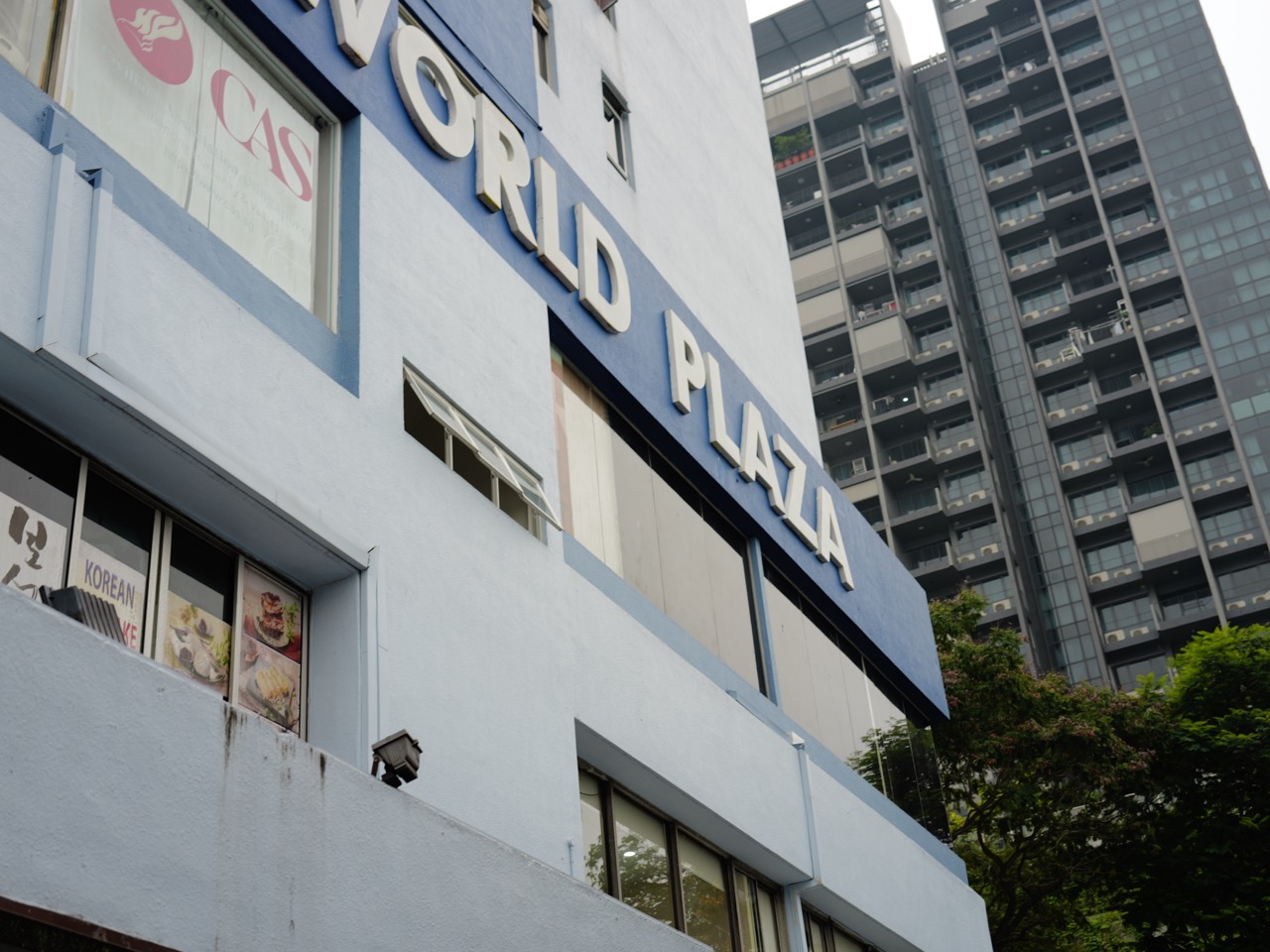
Beauty World Plaza and the neighbouring The LINQ, pictured in the modern Beauty World area. These are not photographs of the former 1940s–1980s market.
Jump to: Why did Beauty World start as an amusement park? · How does an informal market become a neighbourhood centre? · Why did the original Beauty World close? · What changed when the mall opened in 1984? · How did MRT access add another layer? · What can a visitor notice on a short walk? · The larger idea: neighbourhoods have memories
1. Why did Beauty World start as an amusement park?
The National Heritage Board records that the original site began as Tai Tong Ah Sai Kai, an amusement park during the Japanese Occupation. The name referred to the Greater East Asia propaganda concept promoted by Imperial Japan. It is part of a wartime setting, not simply a colourful story about shopping.
At the time there were entertainment stages, a cinema, coffee shops and stalls. Gambling was allowed by the occupying authorities. Learning this context matters because the cheerful modern place name should not obscure the conditions under which the earliest venue operated.
After the war, its purpose changed. In 1947 the site was renamed Beauty World and developed as a marketplace. People needed places to buy food, clothes, services and everyday household items. The district’s role as an accessible trading point became central to its identity.
2. How does an informal market become a neighbourhood centre?
Imagine a stall selling one essential item. It attracts regular customers. Nearby, another business offers a service those customers also need. Food sellers arrive because traders and shoppers must eat. The mix of needs creates repeated trips, conversation and opportunities for more businesses.
This is one way a commercial node forms. Its value is not just the number of shops; it is the convenience of finding different services close together. A market becomes a place where neighbours meet, children remember family errands and small businesses establish long relationships with customers.
By 1976, according to the National Heritage Board, Beauty World had more than 160 market stalls, along with barber shops, a wet market and a Chinese temple. It was a compact, intensely used space.
3. Why did the original Beauty World close?
The older market’s makeshift fabric and dense activity were not without risk. The National Heritage Board says the area suffered fires on five occasions by the early 1980s. The government acquired the property in 1975, and the old market eventually closed in December 1983.
That timeline is a reminder that urban renewal is rarely just a matter of replacing an old building with a newer one. It involves safety, land ownership, business continuity and the disruption felt by families whose work and memories were tied to a particular place.
Visitors sometimes assume that Beauty World Centre occupies the exact ground where the older market stood. NHB’s account explains that the current shopping centre took its name from the former shopping and leisure location across the road. The distinction is worth noticing if you are reading old maps or photographs.
4. What changed when the mall opened in 1984?
Beauty World Centre was completed in 1984 to house shop owners and hawkers from the former market. The move created a more permanent indoor shopping environment while keeping an important commercial name alive.
Does that mean every previous merchant moved into the new centre or that its customers experienced no change? No. The historical record supports the centre’s role in accommodating former traders, not an assumption that the relocation was seamless for everyone.
Other shopping facilities in the surrounding area also helped Beauty World remain a recognisable neighbourhood hub. Its identity comes from the combination of local shops, dining, public transport and long-term neighbourhood habits—not from a single building.
5. How did MRT access add another layer?
Beauty World MRT station, on the Downtown Line, opened with Stage 2 on 27 December 2015. Rail access made it easier for more people to reach the area without travelling entirely by road.
An MRT station works differently from a market. A market draws customers toward a cluster of goods and services. A station also links the area outward to workplaces, other schools and other neighbourhoods. Combined, these roles increase the number of reasons people have to pass through Beauty World.
Be careful with cause and effect: Beauty World was already a trading and residential destination long before the Downtown Line. The MRT strengthened accessibility to an established node; it did not invent the area’s commercial history.
6. What can a visitor notice on a short walk?
A safe observation activity does not require entering construction sites or private premises. A few notes from public pedestrian routes, compared with a heritage guide, can reveal how the same neighbourhood has served different generations.
- Place names: compare the historic Beauty World name with the names carried by modern buildings and the MRT station.
- Different building periods: spot older retail blocks alongside more recent structures.
- Mixed uses: look for food businesses, everyday services and homes near one another.
- Access: notice how station exits, crossings and buses affect where people walk.
- Historical gaps: ask which people and workplaces are remembered, and which have vanished.
7. The larger idea: neighbourhoods have memories
Urban development is often presented as a simple story of progress: old becomes new. Beauty World offers a more useful explanation. Social and commercial relationships can survive changes in physical buildings, but they can also be weakened or transformed when tenants relocate and travel patterns change.
The name lasts because the place has remained meaningful. Understanding how that happened connects heritage, business, transport and community life in one compact part of Bukit Timah.
Frequently asked questions
What was Beauty World before the shopping centre?
According to the National Heritage Board, the original area began as a wartime amusement park called Tai Tong Ah Sai Kai and was renamed Beauty World in 1947.
When did old Beauty World close?
The original market closed in December 1983. Beauty World Centre was completed in 1984 to accommodate traders and hawkers from the former site.
Was the original Beauty World on the same site as today’s Beauty World Centre?
No. National Heritage Board records explain that the former shopping and leisure venue was across the road from Beauty World Centre.
When did Beauty World MRT station open?
It opened as part of the Downtown Line Stage 2 in December 2015.
Official references and further reading
These references support the historical and technical details. For safety-critical information, current access and dates, consult the relevant agency directly.
- National Heritage Board: Former Beauty World
- National Heritage Board: Bukit Timah community heritage trail
- LTA: Downtown Line information
More from How Bukit Timah Works
- How Bukit Timah Works | Why Granite, Quarries and Hills Shaped the Area
- How Bukit Timah Works | How the Rainforest Survives Inside Singapore
- How Bukit Timah Works | How the Rail Corridor Connects History and Nature
- How Bukit Timah Works | Why Schools and MRT Stations Follow the Main Road
- How Bukit Timah Works | Why Floods Happen and How the 2026 Canal Upgrade Helps
- How Bukit Timah Works | How Beauty World Grew from a Market into a Town Centre (this guide)
- How Bukit Timah Works | How Kampongs Became Communities and Fuyong Estate
- How Bukit Timah Works | Why Bukit Timah Was Crucial in World War II
If you are exploring Bukit Timah with children, continue with how the Rail Corridor connects history and nature.