
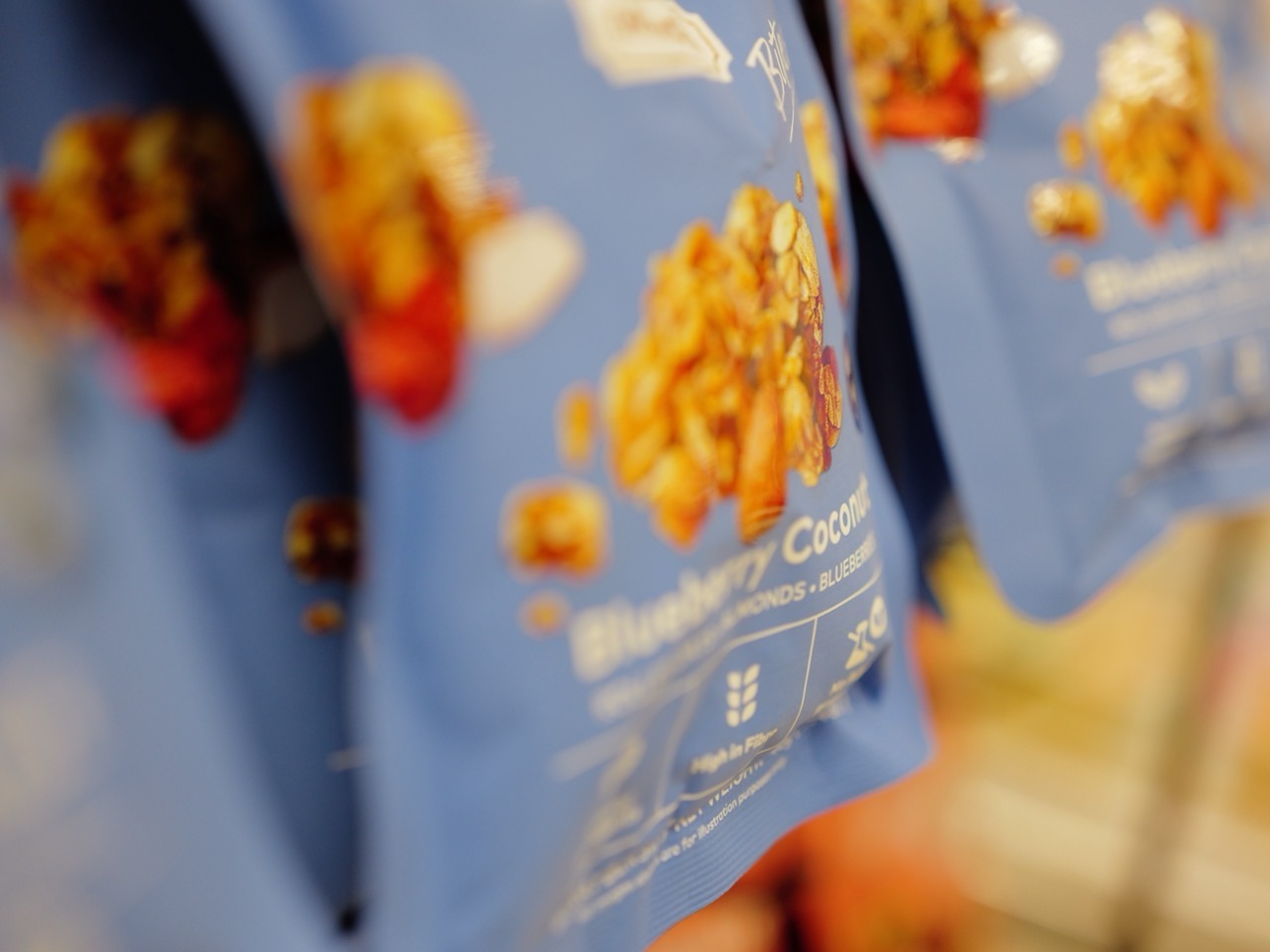
Did you know? A packet can display ‘7 grams of sugar per serving’ and still contain far more than 7 grams in the full package. If the package holds four servings of the declared size, the total could be 28 grams, assuming the nutritional values and quantities are accurately stated.
That is one way food labels mislead. A numerical claim may be correct within its stated unit, yet the shopper takes it to describe the whole package. A nutrient claim may also draw attention to one feature while the food’s wider nutritional profile receives less attention.
Quick answer: food-label information can be misunderstood when consumers confuse a serving with a package, compare products with different serving sizes, overlook ingredient and allergen information or interpret one nutrition claim as proof that a product is universally healthy. The repair is to check the serving size, number of servings, comparable per-100g or per-100mL values and the full label context.
A label is useful evidence only when the unit is clear
A nutrition information panel may display energy, carbohydrates, protein, fat or other nutrients using different quantities. One product can report figures per 100 grams, another per serving and another may supply both.
The declared amount of a nutrient has little practical meaning without knowing what food quantity it represents.
Singapore’s Food Agency guide to understanding food and nutrition labels explains that brands may use different serving sizes. SFA recommends comparing similar products using the per-100g or per-100mL column when an equivalent basis is needed.
This is why a shopper should not compare a 30-gram serving of one cereal with a 45-gram serving of another as though the numbers describe equal quantities.
Seven ways food-label information can mislead
- Serving-size confusion: one declared serving is mistaken for the whole bag, bottle or box.
- Different comparison bases: one product’s per-serving value is compared directly with another product’s per-100g figure.
- Claim halo: ‘low fat’, ‘high fibre’ or another statement is taken to mean the entire nutritional profile is ideal.
- Ingredient omission in the consumer’s reading: shoppers focus on a marketing phrase and overlook the actual ingredient list or allergen declaration.
- Misunderstood product name: an attractive brand or flavour description distracts from the product’s true nature.
- Safety information overlooked: storage directions, use-by information or relevant preparation requirements are ignored.
- Context lost: one food’s values are treated as a medical recommendation or a guarantee about the person’s overall diet.
Not all these examples involve unlawful labelling. The distinction between a misleading presentation and a reader misinterpreting accurate information matters. Singapore imposes rules on labelling and claims; a consumer may still need to read the complete information carefully.
The four-serving snack example
Hypothetical product: a snack bag contains 120 grams of food. The declared serving size is 30 grams, with 7 grams of sugar per serving.
The number of servings is 120 divided by 30, or four. If someone eats the entire bag, the labelled sugar quantity for the full bag is approximately 4 × 7 = 28 grams.
The arithmetic is simple. The question is whether the reader noticed that the label described one quarter of the package.
The same logic applies to energy, sodium or other declared nutrients when the relevant per-serving value and servings-per-package information are available and appropriately used.
This does not establish whether that quantity is appropriate for any individual person’s diet. It teaches the relationship between a serving and the amount actually consumed.
Why per 100 grams is useful for comparing products
Imagine two fictional breakfast cereals.
Cereal A reports 6 grams of sugar per 30-gram serving. Cereal B reports 7 grams of sugar per 50-gram serving.
Looking only at the serving figures, A appears lower because 6 is less than 7. But the declared serving sizes are different.
On an equal 100-gram basis, A corresponds to 20 grams of sugar per 100 grams, while B corresponds to 14 grams per 100 grams. On this particular measure, B has the lower sugar content for the same weight of food.
That does not make B superior in every nutritional respect. The products may differ in fibre, sodium, fat, ingredients or other relevant considerations. The lesson is to compare equivalent quantities before interpreting the difference.
The Health Promotion Board’s nutrition labelling and claims guidance explains the use of nutrition information panels and per-100g, per-100mL and per-serving declarations.
The number of servings is not an instruction for everyone
Manufacturers may declare a serving size to give a reference quantity for nutrition information. That does not establish the medically ideal or mandatory amount for each person to consume.
People have different nutritional requirements, appetites, circumstances and health conditions. A particular serving size can also differ by brand even when the products are similar.
A reader can use serving sizes to understand the numbers and estimate intake. However, it would be a mistake to infer that eating one exact serving is always healthy, or that eating more or less is inherently wrong.
For people managing medical or dietary needs, individual guidance may be appropriate. A general label-reading article should not prescribe a personal diet.
A nutrition claim can be true and still incomplete
A packet might say ‘high in fibre’ or ‘low fat’. Such a claim highlights one nutritional property. It does not automatically describe the food’s full composition or the rest of the person’s diet.
Singapore’s Health Promotion Board explains that nutrition claims are subject to requirements and must be supported by the relevant Nutrition Information Panel. A claim must meet applicable criteria rather than merely sound positive.
For example, SFA’s consumer guide describes ‘low fat’ as an expression governed by the national nutrient-claims guidance. Its published example specifies less than 3 grams of fat per 100 grams for that category.
The relevant standards, product type and current law matter. A product meeting one ‘low’ criterion might still contain nutrients that deserve attention under a person’s broader dietary needs.
Do not leap from one valid claim to a universal promise about health.
What about sugar-free, low-fat and high-fibre claims?
These terms have distinct meanings and relevant regulatory criteria. A product labelled ‘sugar-free’ is not simply the same as a product containing no carbohydrates or no energy.
Similarly, ‘low fat’ does not automatically mean low in total energy, and ‘high fibre’ does not remove the need to examine other nutrients or ingredients.
The HPB guidance on nutrition claims explains requirements for different claims and the information required when they appear. The correct definitions should be checked against the latest applicable rules, not guessed from ordinary language.
Consumers should examine the full panel instead of choosing a product solely because one front-of-pack phrase sounds favourable.
Ingredients tell a different story from nutrition totals
A Nutrition Information Panel provides information about energy and nutrients. The ingredient list tells shoppers what the product contains.
Under Singapore’s food-labelling rules, a prepacked food’s ingredients are listed in descending order by weight, with other requirements applying to additives and substances known to cause hypersensitivity.
The ingredient statement can be particularly important when a person has an allergy or needs to avoid a particular substance. A general health-related marketing phrase cannot replace checking relevant allergens.
The SFA consumer guide sets out the ingredient and allergen information that shoppers should recognise and advises contacting the business listed on the label when clarification is needed.
For serious allergies, rely on appropriate product information and qualified medical guidance. Do not treat this article as a substitute for checking the actual package.
The picture on the front may be a serving suggestion
Imagine a packet showing fresh fruit, a bowl of cereal and a glass of milk. A shopper might assume all those items are ingredients in the package, when the image may simply show one way to serve the product.
Singapore’s SFA guidance says pictorial illustrations should be truthful and accurate; illustrations intended as ways to serve food should be accompanied by suitable words such as ‘Serving Suggestion’ or ‘Recipe’ under the relevant labelling requirements.
A picture can help a shopper imagine the product. It is not automatically evidence that all the photographed foods are contained inside.
Read the product name, net quantity and ingredient list to determine what is actually being sold.
Nutritional information and food safety are different questions
An item may have a clear nutrition panel and still require proper refrigeration, safe cooking or an applicable expiry date.
Conversely, a food may be safe to eat under correct handling conditions while not being suitable for a particular person’s nutritional needs.
The Singapore Food Agency’s current labelling requirements distinguish general labelling from additional labelling, nutrition claims, health claims and other specified requirements.
The related How Food Safety Breaks | When Storage, Handling and Traceability Fail explains how safe handling and traceability operate beyond nutrition labels.
A shopper should not treat ‘contains protein’ as proof that the food has been stored safely, or treat a correct expiry date as a guarantee about how it was handled after opening.
The Singapore regulatory split matters
Since 2 May 2024, regulatory control of nutrition labelling, nutrition claims and health claims in Singapore has been under the Ministry of Health and the Health Promotion Board, while SFA remains responsible for the other relevant food-labelling requirements within its remit.
The SFA regulatory guide describes this division and highlights that amendments to labelling rules took effect on 30 January 2026.
The relevant rules can change with legal amendments and product categories. Businesses should consult the current legal requirements and official agency guidance instead of relying only on a historic retail or educational blog post.
For consumers, the distinction explains why a question about a nutrition claim may be governed by a different authority from one concerning general packaging information.
Not every packaged food has exactly the same panel obligations
A shopper may expect every packaged food to have an identical full Nutrition Information Panel. The current Singapore rules distinguish types of products and conditions under which a panel is mandatory.
HPB identifies products with health or nutrition claims, edible fats and oils, Nutri-Grade beverages and special-purpose foods among categories where the applicable NIP requirements arise. Different additional rules can apply to other products.
The lack of a particular panel on an item does not by itself prove the business violated the law. Classification and exemptions matter.
If the label raises a genuine compliance concern, consult the current SFA and HPB information rather than guessing from a photograph.
A nutrition panel is only as trustworthy as its inputs
Nutrient values can be estimated or analysed using suitable methods. A business must be able to support applicable claims and declared information under the relevant rules.
From a consumer perspective, the presence of numbers does not mean that every decimal should be treated as an exact measurement of every individual mouthful.
Variation in raw ingredients, manufacturing and appropriate label conventions can affect declared nutrient figures. The goal is reliable, honest information within the applicable requirements.
This links food labelling to How Scientific Measurement Fails: precise numbers require correct interpretation of the measurement and method.
What the Healthier Choice Symbol means—and what it does not
Singapore’s Health Promotion Board administers the Healthier Choice Symbol for qualifying products under the relevant criteria.
A consumer may use recognised symbols to identify options within applicable food categories, but should not infer that a symbol alone guarantees the ideal diet, that unlimited consumption is appropriate or that all products without the symbol are unsafe.
The actual nutritional comparison may still depend on the product, serving size, other nutrient values and individual needs.
A balanced approach treats official symbols as useful information, not a substitute for the full label and broader food choices.
Where front-of-pack words can overshadow the ingredient list
Imagine a beverage whose packaging emphasises a fruit flavour. The consumer assumes that fruit is the predominant ingredient but has not checked the statement of ingredients.
A flavour description, a product name and a visual illustration are different information elements. Consumers should inspect the required product identity and ingredient statement to understand the contents.
The question becomes especially important when a shopper is avoiding an ingredient because of an allergy or other legitimate need.
A label that gives the correct information in small print may still be difficult to interpret if marketing design creates an exaggerated impression. The appropriate regulatory assessment depends on the full presentation and applicable law.
A four-product supermarket comparison exercise
Give students four fictional product cards, each containing a serving size, servings per package, nutrient amounts per serving and a per-100g figure.
Ask them to identify which product has the lowest sugar content per 100 grams, calculate the amount in a complete package and check whether the front-of-pack claim describes the same thing as the nutritional panel.
Then add an ingredient list and ask whether a particular allergen or other important ingredient appears.
This teaches proportions, comparison bases, scientific information literacy and cautious interpretation without recommending that every person consume the same amounts.
The activity also helps learners understand why marketing statements should be read alongside, not instead of, the underlying evidence.
Seven warning signs a food label may be misread
- A small per-serving number is discussed as though it refers to the complete container.
- Two products are compared using different declared serving sizes without adjustment.
- One positive nutrient claim is treated as proof that the entire nutritional profile is ideal.
- The product illustration is mistaken for evidence of actual ingredients.
- A shopper ignores the ingredient and allergen declaration.
- Storage instructions and expiry information are omitted from the safety decision.
- A label’s numerical detail is turned into medical advice for everyone without relevant individual context.
These warning signs do not all imply unlawful labelling. They describe situations where a consumer’s interpretation may not match the information or where the presentation deserves closer examination.
A five-step label-reading routine
Step 1: Identify the exact food product and its net quantity.
Step 2: Read the serving size and number of servings if a per-serving panel is provided. If necessary, calculate how much the entire package contains.
Step 3: Compare similar products on a consistent basis, preferably per 100g or 100mL when appropriate and available.
Step 4: Look beyond one nutrition claim. Consider other relevant declared nutrients, the ingredient list and any allergen information.
Step 5: Check storage, preparation and expiry instructions when relevant. For important dietary or medical questions, obtain appropriate qualified guidance.
The routine is designed to make labels understandable, not to tell every person which specific food to buy.
A note about personal diet and health
Nutrition choices depend on age, activity, health circumstances, cultural preferences, access and other factors. A general article cannot assess whether a specific amount of sugar, sodium or other nutrient is suitable for a particular person.
A Nutrition Information Panel helps with comparisons and planning. It is not a diagnosis or a substitute for professional care.
SFA’s consumer guide cautions against exaggerated health promises and recommends consulting a doctor before relying on particular foods for health benefits when a pre-existing medical condition is involved.
The correct educational message is to read accurately, make appropriate comparisons and avoid assuming a single label claim can settle every nutrition question.
Frequently asked questions
Is a serving size the same as the entire package?
Not necessarily. Check the declared servings per package and serving size. A container may hold several servings.
Is per 100 grams better than per serving?
For comparing similar products with different serving sizes, per-100g values often provide a more consistent basis. Per-serving figures can still help describe the amount in a stated portion.
Does ‘low fat’ automatically mean low calorie?
No. The claim relates to specific fat criteria, not every aspect of the product’s energy or nutrient content.
Does ‘high fibre’ mean the product is healthy for everyone?
No. The claim highlights one feature under relevant rules. The wider nutritional profile and individual circumstances still matter.
Must every prepacked food in Singapore display a full nutrition panel?
Not necessarily. NIP obligations vary according to product category and claims under the applicable regulations. General prepacked-food labelling rules still apply.
How can I compare two cereals whose serving sizes differ?
Use a common quantity such as per 100g where available. If necessary, convert the declared per-serving amount consistently before comparing.
Is food safe just because the label and expiry date look correct?
Not always. Safe handling, appropriate storage and actual product condition also matter. Follow the food’s relevant storage and preparation instructions and any official safety notice.
The final idea
Food labels mislead when a correct number or permitted claim becomes detached from the quantity and context it actually describes. A useful shopper compares equivalent amounts, checks the entire package and reads ingredients, claims and safety information together. The strongest food choice begins with understanding the label—not merely believing the largest words on the front.
Sources and further reading
- Singapore Food Agency: Understanding Food and Nutrition Labels Before Purchase
- SFA: Labelling Requirements for Food
- Health Promotion Board: Nutrition Labelling and Claims
- Singapore: A Guide to Food Labelling and Advertisements
- eduKateSG: How Food Safety Breaks
- eduKateSG: How Statistics Misleads
General food-labelling literacy information, not individual nutrition or medical advice. Current regulatory requirements and suitability depend on product classification and individual circumstances.
Related guides in the How Things Fail series
- How Digital Privacy Fails | When Consent and Data Sharing Drift Apart
- How Fitness Training Stalls | When Volume Outpaces Recovery
- How School Discipline Fails | When Punishment Replaces Behavioural Support
- How Food Labels Mislead | When Serving Sizes and Claims Hide Context — current article
For the wider education and systems perspective, see How Education Fails, How Public Policy Fails and the unchanged Secondary 1 Mathematics Tutor Clementi | Small Groups Tutorials. A strong process diagnoses and repairs the first weak link rather than merely adding activity.