
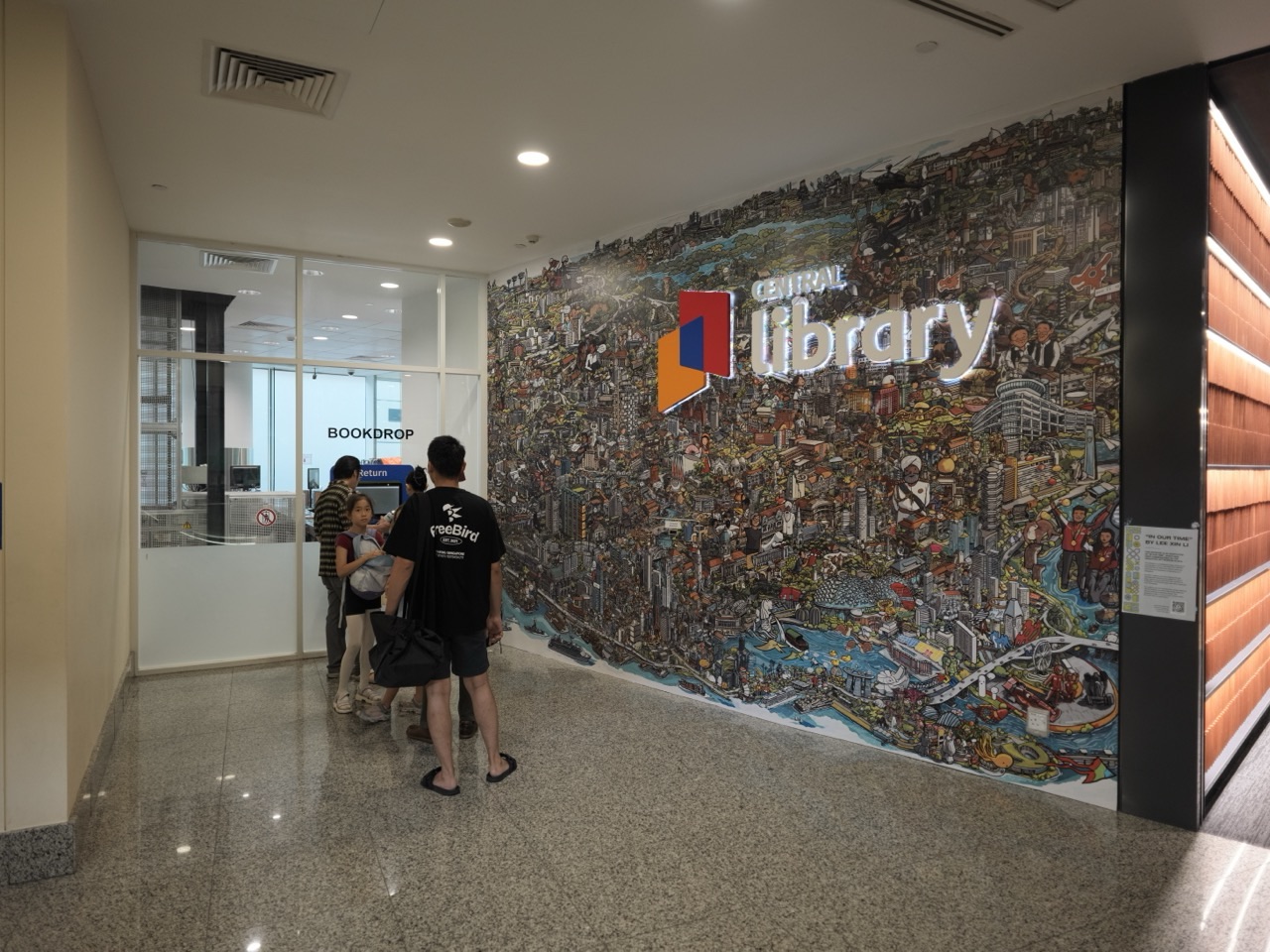
Did you know? A book can pass through a library bookdrop while the borrower later sees the title still listed on their loan account. The physical item and digital record must agree for a return to be fully resolved.
Quick answer: Library book returns fail when receiving slots, individual item identification, automated scanning, loan records, branch access and customer support disconnect. A reliable service verifies the correct item was returned and the corresponding loan was closed, with a clear investigation route for exceptions.
This guide explains how library book return systems fail in Singapore, using NLB’s history of automated RFID returns, its current branch information and NLB Mobile account services. It distinguishes school and public libraries, warns against false 24-hour assumptions, and labels fictional return disputes.
Choose your reading route
- Understand automated returns — bookdrops and RFID history
- Find an accessible bookdrop — branch-specific hours
- Know what a scan proves — physical handover and account status
- Understand fees and items — overdue, damaged and mismatched books
- Follow the return-service diagnostic — practical checks
- Quick answers — borrower FAQs
A book can be dropped off while the loan still looks active
Did you know a borrower can place a library book into an authorised return slot and later find the title still listed under their account? The physical handover and the digital loan record are two different parts of the same service. A correctly functioning system links them quickly, but a mismatch can occur when an item is misread, equipment is unavailable or a record needs investigation.
Library book returns fail when the drop-off point, individual item identity, transaction processing, circulation record and borrower support cease to agree. The goal is not merely to collect books into a large box. It is to establish that the correct physical item has been returned and that the corresponding loan is accurately closed, so readers can continue borrowing with confidence.
The complete return journey begins at home
A person checks the books due, gathers the correct items, chooses an authorised return location and brings them to the bookdrop. The machine or staff receives them, the library identifies each item and updates its circulation records. Returned materials then move into sorting and future circulation. The reader may check their account and seek help if something does not match.
A smooth visit can conceal a failure in the back-office record, while a temporary display delay can look alarming even when the item is secure. A useful audit follows one book from its original loan identity to verified return, not only the moment it crosses the slot. The outcome must agree across the physical shelf, system and reader’s account.
Singapore’s automated bookdrops have a long history
NLB introduced its bookdrop service in 1996, allowing people to return books without waiting in a counter queue and, at suitable locations, after library closing. Its official historical account says that automated bookdrops using RFID technology were implemented as part of a wider library management transformation in 1998, enabling returns to be processed almost immediately.
These facts explain the system’s intention, not a guarantee that every return at every location and time is always processed instantly. Technology can reduce waiting and improve convenience while still requiring fault handling, clear instructions and account reconciliation. A successful library service connects the familiar act of dropping a book with a correct digital cancellation of the loan.
Return anywhere is a service rule with relevant scope
NLB’s public-library history describes its Book Return @ Any Library service, introduced in 1998, so borrowers generally need not travel back to the branch where they borrowed an ordinary library book. This is an important convenience for readers moving around Singapore. But specialised materials and particular programmes can have additional requirements.
Check the actual item’s loan conditions rather than assuming every unusual object, archive item or commercial-lending product can enter any public bookdrop. A children’s book, a reserved study resource and an AV item may not all have identical rules. The return process should tell readers which materials it accepts instead of relying on broad slogans without explanation.
A visible library is not always an accessible bookdrop
A person might identify a branch on a map and assume they can return a book at any hour. Yet some bookdrops are located within malls or other premises whose doors close overnight. The library may remain physically at the same address while the available return route changes with building access.
NLB’s Sembawang Library page explicitly states that its bookdrop is subject to mall opening hours. This should not be converted into a rule for all branches, many of which have different arrangements. Before travelling outside normal hours, check the current location-specific bookdrop access information rather than assume the words “automated return” mean unrestricted physical access.
The wrong opening-hours assumption creates avoidable overdue anxiety
A borrower arrives late in the evening with a book due that day, only to find the mall doors closed. The account still shows the loan, and the person feels a penalty is inevitable. The problem is not necessarily a faulty machine; it is a planning decision based on a generalisation about access.
Use the official branch’s opening-hour and bookdrop information, including public-holiday and renovation updates. Do not invent grace periods or promise that the library will backdate a return simply because the borrower could not enter the building. A useful information system helps people choose a genuinely accessible return point before they travel.
The due date must be taken from the actual loan record
A person may remember that “library books are usually due in three weeks” and stop checking individual items. Their account can contain several loans from different dates or special arrangements, making one generic estimate unreliable. A book returned before an assumed date might already be overdue, while another may still have time remaining.
NLB Mobile and the library’s online account offer loan-management functions. Check the actual current due date and status for the specific item. Avoid hardcoding a universal loan period into a family checklist, particularly when library membership or programme terms can change. The authoritative loan record should guide the return plan.
An account can show several similar titles
A family may borrow multiple editions of a popular children’s book or several copies from the same series. The cover and title look nearly identical, yet each physical item has its own identity in the library’s circulation system. Counting only book titles can leave one borrowed copy missing.
Compare actual items with the account list where possible, especially when several family members borrow independently. A book’s title identifies the work but not necessarily the particular loaned copy. Reliable returns depend on matching the physical item to the correct record rather than assuming any visually similar book will clear an account.
The borrower may return someone else’s library book
Two siblings each have an NLB account, and their books become mixed on a shared shelf. A caregiver returns ten items, assuming they all belong to the same child. Later one account still has active loans, while the other account has been correctly cleared for a different set of titles.
Use each person’s actual loan list when reconciling returns, especially for families with several members. NLB Mobile supports management of library accounts and, according to its current app description, family accounts. Do not disclose account credentials or private borrowing histories in public to resolve an ordinary mix-up. A clear family checklist can reduce confusion before the trip.
A scanned return and a physical deposit are different events
An automated bookdrop must connect an item’s identity to a completed return. A book can move through a slot while its electronic identification is not successfully recognised in the expected way. A reader may hear or not hear a sound and infer too much about what the machine recorded.
NLB’s historical RFID accounts describe the purpose of automated returns, but an audible beep is not an official universal substitute for checking an actual loan status. Readers should follow the bookdrop’s displayed instructions, and if a transaction seems uncertain use NLB’s authorised assistance rather than trying to retrieve items from the machinery.
A successful sound does not prove every item in a stack was processed
A borrower returns several books in quick succession and hears an acknowledgement from the machine. It may be difficult to tell which object the sound refers to, particularly if the device is designed to process items separately or has its own interface rules. The person later discovers a title still active and assumes the whole return was mishandled.
Follow the actual unit’s instructions for depositing books, including any restrictions on how many can be inserted at once. Check the account after returning where appropriate. Avoid treating a single sound or animation as a receipt for a whole bag when the equipment did not provide that confirmation. Clarity about individual items protects the reader from overconfident assumptions.
The bookdrop screen may not show the authoritative account state
A display can report that an item was accepted locally while its updated record has not reached the account view the borrower uses. Conversely, an app might temporarily show older information because of caching or a failed refresh. The physical and digital systems can be correct at different moments but still leave the user uncertain.
Where the operator provides a confirmation, distinguish accepted item, processed return and current account record. If the online list remains inconsistent, use the official help process with relevant facts. A user should not have to infer backend system architecture from an animated green tick. The practical question is which specific loan remains outstanding and whether NLB can verify the corresponding physical item.
A bookdrop that is full may still look available
A high-volume return point may receive many books during evenings, weekends or school-holiday periods. If its capacity is exhausted, the machine may stop accepting items or provide a warning. A person may be tempted to leave books on the surrounding floor, thinking they will eventually be taken into custody.
Do not leave borrowed library items beside a closed or full return unit unless the operator’s authorised instructions explicitly provide that option. Check for a verified alternative bookdrop or seek staff guidance during service hours. A reliable network should communicate when equipment is unavailable and protect materials from exposure or loss, rather than allowing convenience to become uncontrolled handover.
Weather and entry location can affect return access
A bookdrop may be outside a library building, inside a covered entrance or part of a mall complex. Different layouts provide different shelter and access conditions. A person carrying a bag of books in heavy rain needs to know where the actual receiving point is, not merely the library’s central address.
Consult the current branch details and on-site wayfinding. The fact that a bookdrop exists does not guarantee every approach is sheltered, open or accessible at the intended time. Do not put books at risk by using an improvised doorway or unattended counter. A return service is as good as the path that leads readers to its authorised receiving point.
The return slot is not a general recycling container
A public return unit may be mistaken for a place to leave unwanted magazines, personal books or materials unrelated to an active library loan. Items without valid circulation identities can complicate sorting and create uncertainty over custody. A well-meant donation left in the wrong place may not enter a legitimate donation process.
Use the bookdrop only for the materials it is authorised to accept. NLB has separate information about its services and collections; donation or special-return arrangements should be verified independently. Do not assume that placing a personal book in a return slot automatically transfers ownership or makes it part of the public collection.
Items with multiple parts need special care
A borrowed item may include an accompanying disc, component or insert. If the borrower returns only the main book and keeps another loaned part by accident, the account record or library inventory may remain incomplete under the relevant lending terms. A general return rule cannot replace instructions for unusual materials.
Check the full set before returning and follow any item-specific requirements. Some specialised equipment or library programmes may require staff-assisted processing rather than an ordinary bookdrop. The reader should know what was borrowed and what must come back together. A clear condition check prevents disputes over apparently incomplete returns.
A library book can contain a borrower’s personal property
People use bookmarks, handwritten notes and loose study sheets while reading. If those items remain between the pages when the book is returned, the borrower may lose private notes or information. A library’s automated sorting process is not designed to function as a personal-item recovery service for everything inserted into a book.
Before returning, remove personal papers, identity cards and other belongings. Do not open library books belonging to strangers to search for their data. Where a personal item was accidentally left inside, contact the library through its official enquiry channel with enough information to identify the situation. Privacy and care should accompany ordinary return habits.
A damaged item and an overdue item are different problems
A borrower may return a book with water damage or missing pages and assume the return operation resolves all responsibility. The circulation record and the condition assessment can be separate matters. A book can be physically recovered while an associated charge or case still requires review.
NLB lists charges relating to lost or damaged items among the types of account transactions that may be payable through its official systems. The applicable policy and amount depend on current terms and the specific case. A responsible support process should distinguish return status from condition or fee resolution instead of using a vague “not cleared” message for every issue.
Overdue fees should never be quoted from an outdated example
A parent reads a two-year-old blog post that mentions a particular daily overdue fine and assumes it is still the exact current rate. Library rules, membership categories and special programmes can change, so copying an old amount can create unnecessary confusion or false reassurance.
Use NLB’s current charges and payment guidance for the actual account. The important operational lesson is that loan status and outstanding charges may affect borrowing privileges. Avoid inventing automatic waivers, penalties or universal fees. A clear system shows the present balance and the authorised route for a question about an item the borrower says was already returned.
A blocked borrowing account does not automatically prove theft or negligence
A library account may show outstanding charges, an overdue loan or a return discrepancy. The reader might be certain they dropped every book and feel unfairly accused. The institution may also need to investigate before confirming what happened. Neither party should be forced into a dramatic conclusion based on one incomplete screen.
Separate observable facts: which item is recorded, what its current status says, when and where a return was attempted, and whether an authorised review has occurred. NLB’s payment guidance says borrowing privileges can be affected by outstanding charges. A disputed record should follow the library’s actual support process rather than be treated as proof of dishonesty.
A return record and a book’s shelf location are not the same
A book may have been successfully checked in but not yet sorted and placed on a public shelf. Conversely, a book can be physically present in a library before an associated record is corrected. Readers searching the catalogue may assume that returned means instantly available at the exact shelf position.
Circulation processing, sorting, reshelving and catalogue availability are related but distinct operational stages. NLB’s history of RFID and automated bookdrops explains how returns were designed to update quickly, but not every later movement of a book is instantaneous. A useful public interface makes relevant statuses understandable rather than compressing physical return and full shelf readiness into one word.
A return to a different branch adds another movement
NLB’s Book Return @ Any Library arrangement improves convenience because a borrower need not travel back to the original branch for ordinary eligible materials. After a return, however, the physical item may still need sorting and movement within the network. A user who sees the book at another branch might misunderstand its current location or expected reavailability.
The return transaction and the library network’s internal routing should be tracked accurately. This is an operational process rather than a promise that a particular title will be reshelved immediately at the branch a borrower chooses. Readers should follow the current catalogue or reservation instructions instead of assuming a recently returned item is ready for a second person to collect.
High-demand periods can reveal bottlenecks
Before school holidays end or at the close of a borrowing promotion, many people may return books within a short interval. A physically small bookdrop can become busy while automated processing or sorting is under strain. The network might handle the same total volume comfortably across a week but struggle during a concentrated peak.
Operators can review throughput, capacity and user communications without assuming that one long queue proves poor overall service. Borrowers can plan using verified hours and their actual due dates. A system should provide appropriate handling when capacity is exhausted rather than leaving people guessing whether books placed near the slot will be counted as returned.
Technical problems need to be distinguished from user mistakes
A return may remain active because the borrower chose the wrong item, misunderstood the drop location or did not actually place it into an authorised return. A validly deposited book could also require investigation due to a machine or record discrepancy. Concluding either “the user is wrong” or “the library system is broken” from the account screen alone is premature.
A good support process asks for relevant dates, locations, item details and current system information, then checks the available evidence. Accurate diagnosis protects both readers and staff. It also helps separate a one-off misunderstanding from a recurring equipment or data problem that may need a wider repair.
A useful incident report needs the specific book
A person may say “I returned my books yesterday” while the account contains a dozen titles. Library staff need to know which item remains recorded as borrowed and where the return likely occurred. A general complaint can be sincere but difficult to investigate without a clear identifier.
Use the library’s official help route, providing the title and other relevant transaction details requested by staff. Include the approximate bookdrop location and time where known. Do not publish a full borrowing history or account credentials on public forums. The goal is to help the authorised library locate the record and investigate efficiently.
Do not promise a universal instant re-scan procedure
Some people believe every bookdrop records two scans or that a missing beep will always be corrected automatically by staff behind the machine. Different equipment and operational processes may exist, and a general article cannot certify the precise handling of every branch or special library collection.
Rely on NLB’s actual guidance for the relevant item and contact the institution when a loan remains unresolved. A technology description from a historical report explains design intent but does not guarantee every exception process in 2026. A responsible answer avoids making a precise technical promise that has not been verified for the specific service.
The app’s account view should be treated carefully
NLB Mobile gives users access to their library accounts and current services. But an app display is not a licence to assume that every visible delay represents a debt or a lost book. Connectivity, authentication and the state of specific records can affect what users see at a given moment.
Check the account through the authorised library application or website and follow the official enquiry process if an item remains unexpectedly active. A screenshot can document what the user saw at a particular time, but it should be shared privately with support when appropriate. Do not send account credentials or sensitive personal details to strangers offering to solve a return dispute.
Electronic alerts can be correct yet reach the reader too late
A reader may receive a due-date reminder after returning a book or miss one because notifications are disabled. The reminder can be generated from a snapshot of an account rather than reflect a later status change. The person interprets it as definitive proof the return failed, even when the account may already have changed.
Check the authoritative current loan record before drawing a conclusion from a past notification. Notifications are useful prompts, not substitutes for actual return status. A reliable library communication system makes the timestamp and current action clear rather than letting delayed messages create duplicate anxiety or unnecessary enquiries.
An after-hours return needs truthful status information
An authorised night-time bookdrop can be convenient for people who work late. But the surrounding location may have access restrictions, temporary closures or equipment faults. A reader arriving at night may have no staff member available to clarify an unexpected on-screen error.
Provide current branch-specific access information, suitable signage and a clear route for later assistance. Never advise a borrower to force open a slot or leave books in an exposed place to prove they reached the library. When the machine cannot accept a return, the service needs an honest alternative, not a false impression that an unrecorded parcel of books is now safely in its custody.
Accessibility includes the physical bookdrop
A return slot may be high, positioned behind a door, approached by stairs or difficult for a person holding several books to operate. A library can be accessible in general while one specific service point creates difficulty for some users.
NLB’s Punggol Library describes inclusive facilities in its broader service information, but that does not mean all bookdrops across the network share one geometry or access arrangement. The responsible institution should assess the actual site and suitable help routes. A return option becomes useful when intended users can reach and operate it safely, not merely when the word “accessible” appears on a branch page.
A family with young children needs a simple return routine
Children can mix school books, public library loans and personal reading materials in the same bag. Parents may return the wrong items or discover a missing loan only after leaving. The problem is not necessarily carelessness; several separate collections can look similar to a young reader.
Use a short, age-appropriate check before travel: identify NLB loans, remove personal bookmarks, count the items and compare the titles to the relevant account. Teach children how to use the authorised bookdrop with supervision where appropriate. The aim is growing independence and accurate custody, not an elaborate paperwork system for every bedtime story.
School-library returns and NLB returns are different systems
A student might borrow a title from a school library and then attempt to return it through a public NLB bookdrop, assuming all libraries share one system. Similar labels and barcodes can create false confidence, but membership, item ownership and circulation databases are not automatically connected.
Check which institution issued the loan. A school library’s return process may be separate from NLB’s public system, and some specialist collections follow their own rules. The wrong receiving point cannot be treated as a valid return merely because it contains books. Good guidance makes institutional boundaries explicit before the object is handed over.
Returns and reservations should not be confused
A branch may have both bookdrops and reservation lockers. They may look like related self-service units, but one receives borrowed items while the other makes selected materials available for collection. Putting a book near a reservation locker does not necessarily complete a return.
Follow the on-site label and the actual reservation or borrowing instructions. The service should distinguish return, pickup and other self-service functions clearly, especially at locations where several machines occupy one lobby. User-friendly design reduces the chance that an item is left in a space that was never authorised to receive it.
A special book delivery service may have its own return arrangements
NLB has offered services such as The Little Book Box, with particular loan and return terms. Its published FAQ describes returning borrowed books through public-library bookdrops under that programme. Other delivery, subscription or specialist services may have different conditions or updated procedures.
Check the service’s current terms before assuming that a courier will collect the books or that any item can be returned in any way. Programme-specific return instructions should follow the borrower from delivery through completion. A convenient collection or delivery method does not automatically imply a matching door-to-door return service.
A successful return transaction may still leave a separate fee issue
A borrower physically returns a book but discovers an account balance related to an earlier overdue period, damaged item or another transaction. The person may assume the return should erase every charge automatically. The system may be correct about the completed physical return while still recording a separate financial matter that needs review.
Use NLB’s current fines and payment information and confirm which item or charge the balance concerns. Avoid promising an automatic waiver or declaring a charge valid from a general article. A fair process distinguishes the book’s location, the timing of return and any separate account obligations so the borrower can understand what needs resolution.
A public complaint can reveal a real weakness without proving its cause
An online reader may describe a book that remained on their account after being dropped off. Such experiences deserve respectful investigation, but one anecdote does not establish how frequently the system fails or why the mismatch occurred. Different equipment, branches and circumstances can produce similar symptoms.
Record specific facts and investigate through the library’s authorised process. Management can look for patterns across verified cases rather than convert the loudest individual complaint into an unsupported nationwide failure rate. The purpose of feedback is to discover and repair real problems, not to use private borrower experiences as an excuse for speculation.
Fictional case: the book that never left the account
Illustrative case: Clara places four books into an authorised bookdrop before their due dates. Later, her app still shows one title as borrowed. She assumes she has been charged for a lost book, but has not checked the current account detail or contacted the library. The physical return and digital record appear inconsistent.
The appropriate next step is to identify the specific title, return branch and approximate time, then use NLB’s official assistance route to investigate. This fictional example does not establish a widespread scanning defect. It shows why a borrower needs an evidence-based recovery path when a transaction does not match what they remember.
Fictional case: the after-hours door was locked
Illustrative case: a family heads to a mall-based library in the evening, assuming that every bookdrop is accessible twenty-four hours a day. They arrive after the surrounding mall closes, and the return point cannot be reached. The children have school the next morning and the books are due.
The planning error began with using a general assumption instead of branch-specific access information. NLB’s Sembawang Library page demonstrates that bookdrop access can depend on a mall’s opening hours. A better service makes such constraints visible before the journey. This example is fictional, not a report of an actual Sembawang incident.
Fictional case: a school book mixed with NLB loans
Illustrative case: Ryan packs several books for return and accidentally includes a title borrowed from his school library. The family uses a public library return service, believing everything in the bag belongs to the same lender. Later, the school’s system still records the title as outstanding.
The repair is to match each item to the institution that issued it and use the correct authorised return procedure. The case is fictional. Its lesson is that a barcode and library-style label do not mean different organisations’ loan systems share one record.
A seven-question return-service audit
Can a borrower find the correct return location and hours? Does the receiving equipment accept the eligible item? Can the system identify the particular copy? Is the loan record updated correctly? Is the physical item protected and routed after return? Can discrepancies be investigated? Can readers understand what happened without disclosing unnecessary private data?
These are practical audit questions, not an official NLB technical standard. Use authorised test items and procedures; do not interfere with operational bookdrops or create false reports. A strong review verifies both the physical handover and the digital account result. The purpose is to discover the first point where reality and the record disagree.
A four-week improvement plan for a return service
Week one: map common return locations, access barriers and reported mismatches. Week two: review signage, machine instructions and account-status explanations. Week three: test authorised item identification, exceptions and help-desk handoffs. Week four: check whether repaired cases now agree across physical custody, circulation records and borrower communication.
The sequence is an illustrative management routine, not a statutory deadline. Privacy and security concerns should be handled promptly. If equipment or circulation software needs substantial work, communicate the real status rather than promising immediate perfect automation. A reliable service values honest exception handling as much as fast ordinary returns.
What readers can do before visiting the bookdrop
Check the correct institution, current loan list and item-specific due dates. Confirm that the chosen branch’s bookdrop is accessible when you plan to arrive. Remove personal papers and account for any accompanying parts. Use the machine according to the instructions displayed at that location.
After returning, review the relevant loan status through the authorised NLB account if practical. If a particular book remains unexpectedly active, record the relevant title, location and time and ask NLB for assistance. Do not publish private account information or assume a past notification is more authoritative than the current verified record.
What librarians can learn from a disputed return
A return mismatch is an opportunity to examine how physical custody, scanning, circulation records and public messages connect. The right response is not automatically to blame the borrower or the machine. An authorised staff member needs enough information to distinguish a genuine unreturned item from a transaction or record issue.
Repeated cases can guide equipment maintenance, signage changes or software checks. Protect personal borrowing histories and communicate outcomes clearly. A well-managed library strengthens trust by making a fair investigation possible, even when an individual fault cannot be diagnosed immediately.
The final principle: returned means the book and record agree
Automated bookdrops make public libraries easier to use by reducing counter queues and supporting convenient return routes. Their value depends on correct item identification, clear location information, accurate account updates, safe custody and understandable help when ordinary processing fails.
The best measure is not how many books fall through the slot. It is how reliably the correct loan closes, the physical item re-enters the collection workflow and the reader knows what happened. When the book, its record and the person who borrowed it all have a consistent account of the return, the system has delivered its promise.
Frequently asked questions
Can I return an NLB book at another public library in Singapore?
NLB’s Book Return @ Any Library service generally permits ordinary eligible items to be returned at other public branches. Check item-specific or special programme conditions.
Are all NLB bookdrops open twenty-four hours?
No universal rule should be assumed. NLB’s Sembawang Library page says its bookdrop is subject to mall opening hours. Check the chosen branch’s current access details.
What if my book still appears on my NLB account after return?
Check the current loan record and contact NLB through its official support route with the book title, approximate time and return location. Do not assume a beep or screenshot proves every stage was processed.
Does an audible beep guarantee the book was returned?
Not necessarily. An acknowledgement may reflect a specific machine event. The authoritative loan record and NLB’s relevant support procedure matter when there is a discrepancy.
Can I return school-library books to an NLB bookdrop?
Do not assume so. School library loans may belong to a separate institution and circulation system. Use the issuing school’s return rules.
What should I do if the bookdrop is closed or full?
Do not leave borrowed books unattended outside the machine unless the operator’s authorised procedure says to do so. Check another verified return location or ask NLB for guidance.
Does returning a book automatically clear all outstanding charges?
Not necessarily. A return and any existing overdue, damage or other account charge are separate matters. Check current NLB guidance and the specific record.
Evidence and further reading
- National Library Board: History of Bookdrops and RFID Returns — introduction in 1996, automation and return-anywhere service
- NLB: Sembawang Library — specific bookdrop access subject to mall hours
- NLB Mobile: Features and Account Access — library account and digital services
- NLB: Fines and Payment Options — current account charges and payment routes
- NLB: About Our Library Network — public library network and digital service context
- NLB: Grab-n-Go Libraries — separate self-service borrowing formats and their location conditions
- NLB: Borrow-n-Deliver — collection and delivery status distinctions; historical service described as a time-limited pilot
- How Library E-book Lending Breaks | When Titles, Holds and Devices Stop Matching
- Why School Library Borrowing Systems Fail | Catalogues, Access and Reader Support
- Why Libraries Fail | Access, Collections and Public Value
- How School Lost-and-Found Systems Fail | When Found Items Never Reach Their Owners
- Secondary 1 Mathematics Tutor Clementi | Small Groups Tutorials — unchanged editorial reference
Scope: Branch access, item eligibility, account processing, programme rules and fees may differ. Historical NLB descriptions explain system design and do not guarantee an instantaneous update for every individual return in 2026. Do not leave books beside a closed bookdrop, open equipment or share private credentials. All case studies are fictional.