
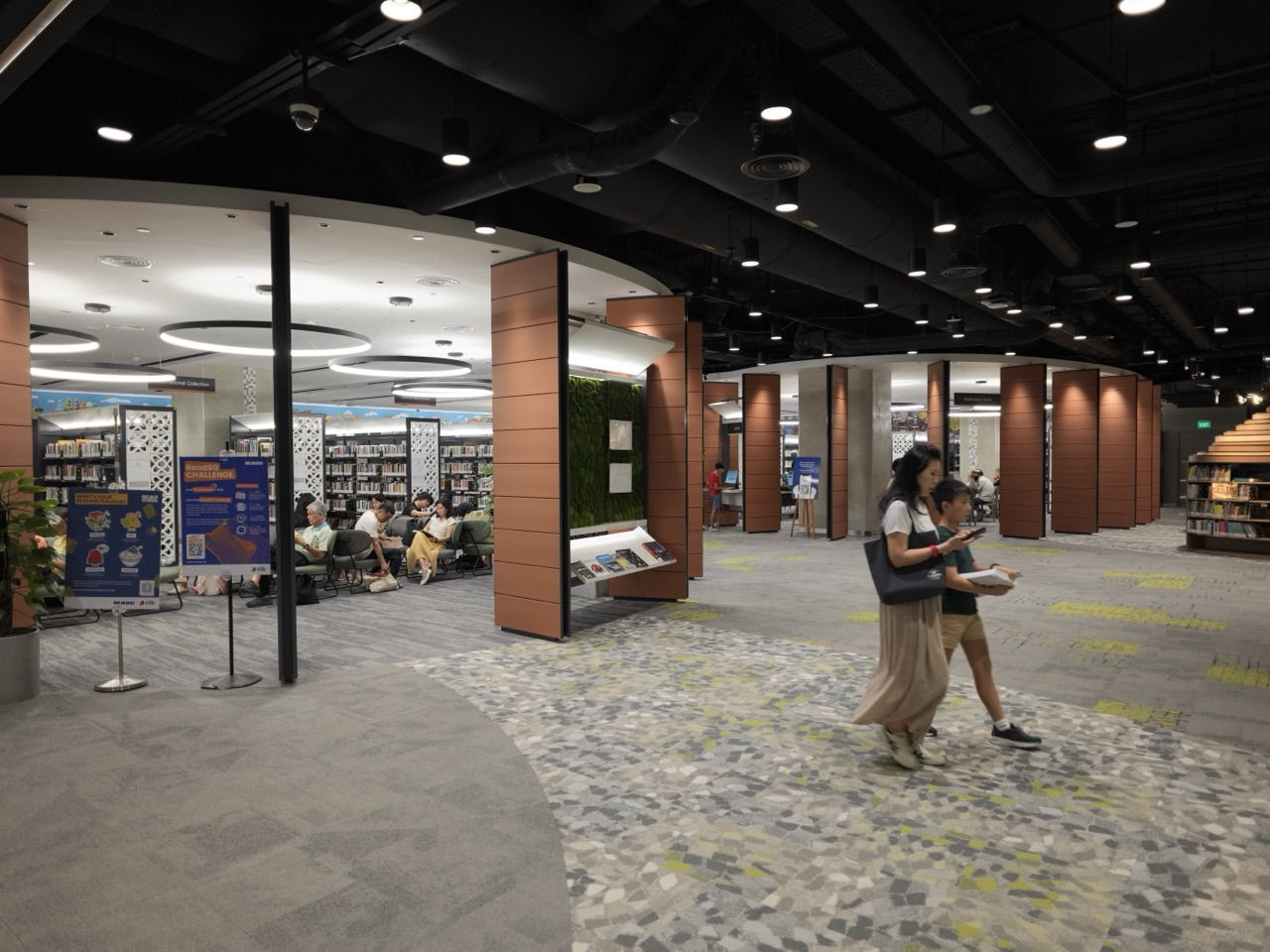
How do public libraries work in Singapore? The National Library Board (NLB) connects people to physical books, eBooks, audiobooks, reading spaces, learning programmes, archives and research collections. A member can borrow books from participating libraries, access digital materials from a phone and discover Singapore’s past through preserved records. The shelves are the visible part; membership rules, catalogues, librarians, publishing rights and digital services are the system beneath them.
If you’re asking whether NLB library membership is free, how many books you can borrow, how to use the NLB Mobile or Libby apps, whether eBooks expire, what a regional library does or where to find Singapore historical records, start here. This guide connects the existing eduKateSG How Singapore Connects articles about eBooks, school libraries, museums, archives, lifelong learning and community facilities.
The useful question is how does one person get access to reliable knowledge without needing to buy or own every book, database or historical record they may need? Singapore’s public library system solves that challenge using shared collections, lending rules, trustworthy catalogues and spaces where people can learn together.
Quick answer: the six layers of Singapore’s library system
- Public libraries: community and regional locations where users browse, borrow and participate in programmes
- Membership: borrowing entitlements, records, renewals and returns under NLB’s current conditions
- Digital library: NLB Mobile, Libby and other eResources extend access beyond a building
- National Library: national reference collections and Singapore’s published documentary heritage
- National Archives: historical public records, photographs, oral histories and other preserved evidence
- Learning community: children’s reading, adult skills, research literacy, exhibitions and participation
NLB’s About NLB page describes its 28-library network plus the National Library and National Archives. Its May 2026 membership table says basic membership is free for Singaporeans and generally allows 16 physical items plus 16 eBooks or eAudiobooks for 21 days, subject to conditions.
1. Begin with a family choosing a book
A parent visits a library with a child who has developed an interest in planets. The child finds an illustrated astronomy book, while the parent looks for a biography and a novel. They can borrow books under membership rules rather than purchase every title before knowing whether it will be useful.
That simple privilege depends on shared funding, collection selection, inventory records, circulation equipment, staff and a fair way to return and borrow items for the next reader. The book does not become privately owned simply because one family takes it home.
A public library therefore transforms scarce physical objects into repeated learning opportunities. The educational connection is How Singapore Education Works | School Libraries.
2. What does the National Library Board manage?
NLB is a statutory board under the Ministry of Digital Development and Information. It manages an islandwide public-library network alongside the National Library and National Archives of Singapore, with both physical and digital services.
These institutions have overlapping interests in information but distinct jobs. A neighbourhood library focuses strongly on borrowing and access, while the National Library’s reference collections and National Archives preserve sources for deeper research and the national documentary memory.
NLB’s official About Us overview describes a network of 28 libraries. The key point is not one fixed building count forever; it is the coordination of different knowledge services under one national institution.
3. What’s the difference between a public library and the National Library?
A public library allows patrons to browse and borrow eligible titles as part of the lending network. The National Library is also a national reference and heritage institution, with significant resources for research into Singapore and the region.
At the National Library Building, the Lee Kong Chian Reference Library occupies multiple floors and houses extensive reference holdings. Some materials are intended for consultation and research rather than ordinary home borrowing.
A researcher may therefore use a neighbourhood branch for general books and the National Library for specialised local publications or historical reference sources. See About National Library Singapore for the specific collection role.
4. Are regional libraries different from ordinary branches?
Regional libraries generally serve wider catchments and can offer broader collections or specialised spaces. Community and partner libraries serve different local contexts, but all contribute to making reading and knowledge accessible across Singapore.
The important distinction is between the level of service and the actual branch, not a ranking of which residents deserve better knowledge. Readers should choose the library that meets their needs and is practical to reach.
NLB’s annual reporting identifies public, regional and partner components within its library network. The full NLB overview offers the current starting point.
5. Who can get library membership?
NLB provides different membership types for Singapore citizens, permanent residents and eligible foreigners. The fees and privileges differ according to status, membership category and applicable conditions.
As of the May 2026 membership table, Singaporeans can register for free basic membership. Permanent residents generally pay a one-time registration fee unless qualifying exemptions or benefits apply. Foreigners residing in Singapore may use monthly or annual subscription arrangements, with specified student exceptions.
Do not assume a visiting tourist automatically qualifies for the same membership category as a Singapore citizen. Check NLB’s Membership Types and Fees for current requirements.
6. How many books can a member borrow?
Under NLB’s current basic membership arrangements for Singapore citizens, borrowers may take up to 16 physical items and separately up to 16 eBooks or eAudiobooks under the applicable rules. The standard loan period is 21 days.
Those figures are not unlimited borrowing and not a promise that every title is available immediately. A user with an eligible partner membership or accessible membership can have different privileges. Loan quantities and special collection rules may also vary.
The reader should check their own membership category rather than rely on a friend’s loan limit. The current official source is NLB Membership Privileges.
7. Why does a borrowed book have a due date?
A library owns a shared collection. Lending makes a book temporarily available to one reader while preserving the opportunity for others to borrow it afterward. A due date helps keep that circulation fair.
A title that is repeatedly kept without returning reduces access for other people. The library’s circulation system therefore records loan dates and may impose overdue charges or account restrictions under its terms.
The aim is not to punish curiosity. It is to ensure a limited number of copies can serve a much larger community. See NLB Membership Terms and Conditions.
8. Can physical books be renewed?
Many eligible physical loans can be renewed under NLB’s conditions if the renewal requirements are met. A renewal extends the period a member may keep an item, but it does not make the item their private property.
Items with holds or other restrictions may be treated differently. A user should check the library account or current loan rules rather than assume every book can be extended indefinitely.
For a student, planning reading around the due date can prevent unnecessary charges and make time for other borrowers. Consult the membership page and NLB’s Manage My Loans instructions.
9. What is the difference between borrowing and reserving?
Borrowing takes an available eligible item into a user’s loan account. Reserving or placing a hold requests an item that is unavailable or needs to be made available for collection under the library’s service rules.
Some reservations may incur fees and have collection deadlines. A book shown in a catalogue is not necessarily ready to take home at the nearest branch, since it may be on loan or located elsewhere.
A sensible search checks availability, location, expected collection process and any applicable reservation conditions. Readers should confirm the details inside their current NLB account.
10. How do self-service borrowing machines work?
Modern libraries use membership records and technologies such as barcodes or RFID to identify eligible items and register loans. Self-service borrowing can reduce queues while preserving a record of which items are out and due for return.
The machine or mobile checkout interface does not create the lending rules; it enforces them in a convenient way. An item with a restricted status may still require staff assistance.
NLB’s history of library innovation includes automated bookdrops and self-service systems. Its About NLB page explains the continuing move towards integrated physical and digital services.
11. How does returning a book work?
Returns can be made through approved library return points and bookdrop arrangements under NLB’s current service rules. The system needs to identify the item, update the member’s loan and return it to the appropriate sorting or shelving workflow.
Putting a book at the wrong unofficial location may not count as a completed return. And returning an item damaged is different from returning it in its proper state. NLB’s membership terms place responsibility for borrowed materials on the account holder.
Verify the official return method and item status rather than assume that leaving a book at any library counter ends responsibility. See the member conditions.
12. What is the NLB Mobile app?
NLB Mobile lets members search collections, manage relevant library transactions, explore eResources and access selected digital materials. It is the service interface to the library network, not simply a screen showing an electronic copy of a building.
A member may use it to search a book, check availability, manage loans or discover digital magazines and learning resources. NLB’s exact app functions can change, so older screenshots should not be treated as permanent instructions.
NLB’s digital library overview describes access to eBooks, eMagazines, eNewspapers, eComics and courses. The specialist NLB eBooks, Libby and Digital Library Access goes deeper.
13. What is the Libby app?
Libby is an app for borrowing and reading or listening to digital library materials made available through participating libraries, including NLB’s relevant OverDrive collection. It is commonly used for eBooks and audiobooks.
NLB Mobile focuses on the broader NLB discovery and account environment. Libby adds a dedicated borrowing and reading experience, including tools for managing digital loans and holds.
The older OverDrive mobile app was discontinued, while the OverDrive website remains accessible in specified ways. NLB’s Libby Frequently Asked Questions explains the practical differences.
14. Do NLB eBooks need to be returned?
Digital library loans normally have defined loan periods. An eBook can become unavailable to the borrower after its authorised period, unlike a purchased digital file the user might keep permanently.
That is part of licensed digital lending. The library provides temporary access under agreements with content providers, and high-demand titles may have waits or restrictions despite being electronic.
Users can sometimes return an eBook early or manage holds through the supported app. The current Libby guidance is the appropriate reference for the specific collection.
15. Why can an eBook have a waiting list?
An electronic book can be copied technically, but library distribution is governed by copyright and licensing agreements. A digital lending licence may restrict the number of simultaneous borrowers or the use of a title.
So an eBook displayed in a catalogue does not automatically mean one million people can read the licensed copy at once. Holds and limited lending periods can still exist.
Understanding this prevents a common mistake: assuming the library’s technology has failed because an online book is unavailable. The governing constraint may be publishing rights rather than a slow internet connection. See Digital Library Access.
16. What about audiobooks, magazines and newspapers?
NLB’s digital resources go beyond ordinary ebooks. Depending on the provider and collection, members may access audiobooks, eMagazines, eNewspapers, research databases and learning materials through approved platforms.
Not every resource has the same loan period, download format or remote-access permission. Some materials may be available only at library premises or through special licence conditions.
The practical method is to identify the resource type and then follow the current access instructions. NLB’s eResources catalogue distinguishes different platforms and materials.
17. How do library catalogues help people find reliable sources?
A catalogue connects a search query to information about an item: author, title, publication details, subject and location. These records help readers distinguish a book’s existence from its availability for borrowing.
For a research task, the catalogue can lead a student from a broad keyword to more specific subjects and authors. That is often more productive than treating the first search result on the open internet as the only source.
NLB’s OneSearch joins discovery across participating knowledge resources, including selected archive and reference databases.
18. Why the National Library preserves Singapore publications
Books and periodicals can record political, economic, educational and everyday changes over time. Preserving that documentary heritage gives future generations evidence about what people once wrote, argued, studied or imagined.
The Lee Kong Chian Reference Library contains national and regional reference collections, including materials in Singapore’s four official languages. The National Library’s responsibilities therefore reach beyond a lending service.
Use About the National Library to understand the collection and reference mission. It is a distinct form of long-term public infrastructure.
19. What does the National Archives of Singapore preserve?
The National Archives collects and preserves historically significant government, private and audiovisual records, including oral histories, photographs, maps and other material relevant to Singapore’s memory.
A historian trying to understand an old street, a family practice or a moment in public policy needs records from the time, not merely a modern retelling. Archives help make that investigation possible.
Some sources are digitised and searchable, while others require specific access arrangements or preservation restrictions. The specialist Museums, Archives and Public Memory explains the connection.
20. Why an archive is not the same as a museum
A museum often interprets objects and stories through exhibitions and displays. An archive preserves records and helps researchers investigate original sources. A library supplies publications and reference services. These roles can support one another without becoming interchangeable.
A family visiting an exhibition may develop a question that leads to an archived photograph or newspaper. A researcher may then compare that evidence with contemporary published accounts in the National Library.
This is the knowledge equivalent of tracing a transport journey through different networks. The destination is understanding, while each institution carries a different part of the evidence. See Public Memory.
21. How do newspaper archives help students?
Historical newspapers reveal what people saw as news at a particular time. They can show the vocabulary, assumptions, priorities and debates of their era, though a newspaper report is not always an unbiased or complete record.
A student writing about old Singapore might consult digitised newspapers, then compare them with archival documents and modern scholarship. Contradictions are opportunities to ask better questions rather than reasons to discard all evidence.
National Library digital resources include historical newspaper discovery. The OneSearch resource guide identifies NewspaperSG among the search and research routes.
22. Why libraries are important for early childhood
Young children need opportunities to hear language, explore stories and associate reading with pleasure rather than only examinations. Public libraries make a broad range of books available without each family buying an entire home collection.
Parents can read aloud, repeat favourites and let children choose age-appropriate titles. A child who dislikes one topic might suddenly become interested after discovering animals, vehicles, space or a particular character.
Reading progress comes from sustained participation, not forcing the longest possible book into the youngest reader’s hands. The education ecosystem connection is How Singapore Preschool Works and School Libraries and Reading.
23. What do school libraries do differently?
A school library is part of the school’s learning environment. It can support curricular reading, independent research and activities guided by teachers, whereas the public library serves the wider community across ages and interests.
Students may use both: the school library for projects and class-linked resources, and NLB collections for additional books, newspapers or specialised reference materials. Those sources complement one another.
Teachers can help students compare evidence and cite sources accurately. The specialist How Do School Libraries Work? keeps ownership of the school-specific learning pathway.
24. How does NLB support adult lifelong learning?
An adult changing careers might need books on computing, workplace communication or business; another resident may want history, languages, financial literacy or a new hobby. Public knowledge access reduces the cost of exploring these interests.
NLB’s services include digital learning resources and programmes, while employment-related organisations such as SkillsFuture and WSG manage separate training and career schemes. Borrowing a book is not the same as qualifying for a professional certificate.
The meaningful connection is that informal exploration can help a learner decide which formal training or practical experience to pursue next. Read SkillsFuture and Career Transitions.
25. What about readers with disabilities?
NLB has an Accessible Membership category designed for qualifying persons with disabilities. Its current table offers relevant expanded privileges such as longer borrowing periods, subject to specified eligibility.
Accessible library design can involve physical routes, digital interfaces, assistive technology, collections and staff support. A book collection cannot help a patron who is unable to reach it or use the format offered.
Readers should check the actual accessible services at a branch and the conditions for membership. See NLB Accessible Membership and Accessible Public Transport.
26. Why library branches belong near homes and transport
A library located in a neighbourhood centre or shopping area can fit into ordinary family routines. A parent might combine a library visit with groceries, a child’s lesson or a clinic appointment, reducing the need for a separate long trip.
This is a planning choice: making knowledge accessible requires not only good books but useful locations, opening times and routes. Smaller branches can reach local users while larger regional facilities handle broader services.
NLB’s network is part of the city. Read Town Centres and Everyday Services and How HDB Towns Are Planned.
27. Why the library is also a public social space
A library allows different people to occupy a shared knowledge space without needing to buy food or shop. Residents can read, study, discover community programmes and encounter ideas beyond their usual circle.
Shared use brings rules. Quiet zones, children’s spaces, accessibility needs and events may require different arrangements. Libraries must help users coexist without making the space impossible for everyone else.
The result is a civic resource that offers more than lending. It belongs beside The Shared Table and Community Clubs and Residents’ Networks.
28. How does NLB fight misinformation?
Librarianship involves helping people identify, locate and evaluate information. A reader can learn to ask who produced a source, what evidence supports it, when it was written and whether another reliable source agrees.
NLB’s S.U.R.E. information-literacy initiative focuses on the practice of checking and evaluating information rather than assuming popularity on social media equals truth. Those habits are valuable for school research, health decisions and civic discussion.
Think of two articles making conflicting claims about Singapore history. Rather than choose the more dramatic headline, compare original records, dates and the expertise of authors. The library provides tools for that process, not a guarantee that every sentence in every book is correct.
29. What happens behind the scenes when books are selected?
A library’s collection is not an infinite pile of every book ever printed. Specialists make choices based on readers’ needs, language, subject, quality, relevance, public mission and available resources.
Collections also require updating and maintenance. New editions may replace old references, damaged copies may need withdrawal and changing interests can alter demand. Digital licences introduce a different set of costs and limits.
NLB has a published collection-development policy as part of its governance. A public library’s duty is to serve broad learning needs, not to guarantee that every requested title will always be in stock.
30. Why copyright and library access have to coexist
Books and digital media involve authors, publishers and other rights holders. Libraries provide access under applicable legal and licensing arrangements so creators’ rights and readers’ needs can be balanced.
A person may borrow a title but does not thereby acquire the right to reproduce and distribute unlimited copies. The same principle applies to digital files, eBooks and some archival materials with restrictions.
Good information access depends on both ethical reuse and clear permissions. In school research, citing a source and using only material allowed by the relevant rules protects the credibility of the work.
31. Worked example: researching a Singapore neighbourhood
A student wants to know how a familiar town changed over fifty years. The first stage is to find an overview book through the NLB catalogue. The student then consults historical maps, newspaper articles and selected photographs or oral histories.
The records may disagree. An old map labels an area differently from a later government plan; a newspaper discusses a proposed project that was never built. The student should preserve each source’s date and distinguish planned development from completed infrastructure.
The completed project can include a simple timeline, a map comparison and a short explanation supported by citations. That is how libraries and archives turn curiosity into a disciplined investigation. Read Museums, Archives and Public Memory.
32. How should a national library system be judged?
Loan numbers are useful, but they are not the whole measure of success. Access, reader learning, research quality, cultural preservation, accessibility and sustainable participation matter too.
A popular app means little if a reader cannot use it, and a beautiful building is of limited value if collections are unhelpful or the public cannot reasonably reach it. The important result is knowledge becoming available to different people in usable forms.
Singapore’s libraries demonstrate that a modern civilisation invests in shared memory and the means of learning, not only roads and power stations. That brings us back to The Whole Machine and Education and Workforce Regeneration.
Explore Singapore’s reading, library and archival systems
NLB, learning and digital resources
- NLB eBooks, Libby and Digital Library Access
- How School Libraries, Reading and Research Work
- Digital Ambassadors and Community Hubs
- Broadband and Public Wi-Fi
- How Singapore’s Digital Identity Works
- Lifelong Learning and Career Transitions
Archives, history and community life
- Museums, Archives and Public Memory
- Singapore’s 700-Year Civilisational System
- Town Centres and Neighbourhood Services
- Community Clubs and Residents’ Networks
- The Shared Table
- How HDB Towns Are Planned
Frequently asked NLB library questions
Is Singapore public library membership free?
Basic membership is free for Singapore citizens. Fees or exemptions for permanent residents and foreigners depend on NLB’s current categories.
How many books can I borrow?
The current basic membership limit is up to 16 eligible physical items, with a separate allowance of 16 eBooks or eAudiobooks, subject to conditions.
How long can I keep a book?
The standard borrowing period for many basic membership items is 21 days, with renewal provisions where eligible.
Can I renew a borrowed book?
Many eligible items can be renewed under NLB rules. Check your account for holds, restrictions and the current due date.
Can I return a book at another public library?
Use NLB’s approved return and bookdrop arrangements; check the current return conditions for your item.
What is the difference between NLB Mobile and Libby?
NLB Mobile provides broad catalogue, transactions and eResources functions; Libby is a dedicated digital borrowing and reading app for relevant collections.
Are NLB eBooks free with membership?
Eligible members have access to NLB’s digital lending collection according to their membership and licence rules.
Why is there an eBook waiting list?
Digital licences can limit simultaneous borrowing even though the title is electronic.
What is the difference between the National Library and the National Archives?
The National Library has major reference and publication collections; the Archives preserves historically significant records including photographs and oral histories.
Do public libraries only serve students?
No. They support readers across ages, along with research, lifelong learning and community programmes.
Does NLB have books in different languages?
Yes. NLB collections include materials in Singapore’s official languages and other relevant languages or formats.
What if I lose a library book?
NLB’s membership terms set responsibility and applicable lost or damaged item charges.
Can foreigners use NLB libraries?
Yes. Access to public library facilities and eligibility for borrowing membership follow the relevant NLB rules and fees.
Can I search historical newspapers through NLB?
NLB’s digital resources include historical newspaper discovery and archive routes, subject to access conditions.
Where should I check the newest borrowing limits?
Use the current official NLB membership table rather than an old blog post.
The next Singapore systems guides
- How Singapore’s Postal System Works
- How Singapore’s Tourism Industry Works
- How Singapore’s Sports and Recreation System Works
- How Singapore’s Digital Government Works
This page joins the permanent How Singapore Works Civilisation Atlas as a public knowledge access guide. The detailed digital and educational articles retain their original subject ownership.
Official sources and reference desk
- NLB — About the Library and Archives Network
- NLB — Membership Types and Borrowing Privileges
- NLB — Membership Registration
- NLB — Membership Terms
- NLB — Libby and Digital Borrowing FAQ
- National Library — Reference Collections
- NLB OneSearch — Library and Archives Discovery
Reader note: Membership fees, loan limits, digital licences, opening hours and branch arrangements may change. Check NLB’s live information before an application or visit. This is an educational systems guide, not a guarantee that any specific book is available. Editorial review: 20 October 2026.
Continue through Singapore’s connected systems
The arts, public memory, parks and nature are not separate from this subject. They connect the visitor’s experience, neighbourhood life, learning and access to the same shared city. Follow the two further systems-level routes: