
How Singapore connects is not only about connecting one building to the electricity, water and internet networks.
Modern buildings increasingly connect their own internal systems to each other too.
Did you know that a large building can have thousands of sensors, controllers and data points quietly reporting what is happening inside?
Air-conditioning knows temperature.
Lighting knows occupancy.
Lifts know faults.
Meters know energy use.
Security systems know access events.
A Building Management System can bring many of those signals into one operational view.
This article follows Singapore’s smart-building connection layer: Building Management Systems, sensors, Smart Facilities Management, remote monitoring, predictive maintenance, energy optimisation and the digital platforms that turn a building from a collection of equipment into an observable system.
The building-construction layer is explored in How Singapore Connects | Construction Sites, Materials and Urban Growth. The district-energy layer is explored in How Singapore Connects | District Cooling, Air-Conditioning and Tropical Comfort. Here we ask the operations question: how does a building know what is happening inside itself?
Did You Know? BCA Defines Smart FM as the Integration of Systems, Processes, Technologies and People
BCA’s current Smart Facilities Management page defines Smart FM as the integration of systems, processes, technologies and people to enable data-driven operations and improved facilities-management outcomes.
That definition is important.
Smart FM is not a room full of screens.
It is a way of connecting information to decisions.
The Building Management System Is the Nervous System
A BMS can monitor and control selected building services such as:
- air-conditioning and mechanical ventilation;
- lighting;
- electrical systems;
- pumps;
- water systems;
- energy meters;
- fire or life-safety interfaces where appropriate;
- lifts and escalators through integrated monitoring;
- access control; and
- other building equipment.
Each system remains specialised.
The BMS creates a common view.
Sensors Turn Physical Conditions into Data
Temperature is physical.
Humidity is physical.
Occupancy is physical.
Pressure is physical.
A sensor translates those conditions into numbers a control system can use.
The building becomes measurable.
Did You Know? Smart FM Can Monitor Air-Con, Cleaning and Security Together
BCA’s Smart FM case studies describe integrated systems that monitor areas such as air-conditioning performance, cleaning, security and occupancy.
The systems are different.
The building manager experiences them as one operating environment.
Occupancy Sensors Can Reduce Wasted Energy
An empty room does not need the same lighting or cooling response as a crowded one.
Occupancy data can help building systems adjust operation according to use.
The room becomes responsive rather than permanently switched to one setting.
The Smart Building Is a Feedback Loop
Sensor measures.
Controller compares.
System adjusts.
Sensor measures again.
That loop can happen continuously without a facilities manager standing beside every piece of equipment.
Data Makes Maintenance Less Blind
Traditional maintenance often follows fixed schedules.
Inspect every month.
Replace every year.
Smart monitoring can add another signal: condition.
If vibration rises, temperature changes or fault codes appear, maintenance can be targeted earlier.
Predictive Maintenance Moves Work Before Failure
BCA’s current Smart FM material highlights data-driven and predictive approaches as a way to improve responsiveness and productivity.
The ideal maintenance event happens before the lift stops, pump fails or chiller trips.
The user experiences continuity.
The maintenance team experiences an early warning.
Lifts Are Perfect Smart-FM Assets
The lift network in How Singapore Connects | Lifts, Escalators and Vertical Mobility is increasingly supported by remote monitoring and diagnostics.
Lift controllers produce operational data.
Connected monitoring systems can flag abnormal behaviour.
A technician can arrive with more context.
Did You Know? BCA Promotes Open BMS Communication Protocols
BCA’s Green Mark Smart FM technical guidance encourages Building Management Systems to be ready for integration using open communication protocols such as BACnet or MODBUS, with consistent naming and exportable data points.
That is an interoperability principle.
A smart building should not trap its data inside one opaque system.
Open Protocols Reduce Vendor Lock-In
If every building system speaks a completely proprietary language, integration becomes expensive.
Open protocols allow different devices and software platforms to exchange information more easily.
The building becomes modular.
Naming Conventions Matter More Than They Sound
A sensor called TEMP-AHU-03-L2 is useful only if everyone knows what it refers to.
Consistent naming lets engineers, analytics software and maintenance teams interpret data correctly.
Good data begins with good labels.
Smart FM Connects Design to Operations
The building’s digital systems should be planned before handover.
If data points, schematics and control logic are documented clearly, future facilities teams can operate the building more effectively.
Design becomes the first stage of maintenance.
Digital Handover Preserves Institutional Memory
A building may outlive the original project team.
Operators change.
Vendors change.
Equipment changes.
Good handover documentation ensures the building does not forget how it works.
The Smart Building Connects to Energy Management
Meters can show which systems consume the most electricity.
Analytics can identify unusual consumption.
Control systems can adjust schedules and setpoints.
Energy efficiency becomes measurable rather than aspirational.
The Smart Building Connects to District Cooling
In buildings connected to How Singapore Connects | District Cooling, Air-Conditioning and Tropical Comfort, BMS data can help manage chilled-water demand and internal air-conditioning performance.
The district supplies cooling.
The building still decides how intelligently to use it.
The Smart Building Connects to Solar
Buildings with rooftop solar from How Singapore Connects | Solar Panels, Batteries and the Electricity Grid can monitor generation alongside consumption.
The building can see both sides of its electrical balance.
The Smart Building Connects to Water
Smart meters and leak-detection sensors can reveal unusual water use.
A hidden leak can become visible as data before it becomes visible as damage.
The Smart Building Connects to Indoor Air Quality
Sensors can monitor carbon dioxide, temperature, humidity and other environmental indicators.
That information can guide ventilation and comfort decisions.
Indoor environment becomes an operational variable.
The Smart Building Connects to Cleaning
A washroom used 500 times may need more attention than one used 50 times.
People counters or usage sensors can help cleaning teams allocate effort according to actual demand.
Cleaning becomes condition-based.
The Smart Building Connects to Security
Access-control events, visitor systems and camera alerts can be integrated into facilities operations.
The same building operations platform can coordinate maintenance and security workflows while preserving appropriate access boundaries.
Did You Know? Smart FM Can Aggregate Several Buildings
BCA’s 2026 facilities-management material highlights Integrated FM and Aggregated FM, where services and data can be coordinated across building portfolios.
One control centre can support several buildings.
The operating unit becomes the portfolio rather than the single property.
Aggregation Creates Economies of Scale
A specialist engineer can support several sites.
A common software platform can compare performance across buildings.
Spare parts and vendor contracts can be coordinated.
Data can reveal which building is unusual.
A Digital Twin Adds Spatial Context
A list of sensor values tells you what is happening.
A digital twin can also show where it is happening inside a three-dimensional building model.
The building becomes both data and geometry.
BCA Academy Has Been Used as a Digital-Twin Demonstration
BCA has described a digital twin of its Academy Academic Tower that used real-time data to represent building operations and support analytics and automation.
The physical building and virtual representation became linked.
Punggol Digital District Takes the Idea to District Scale
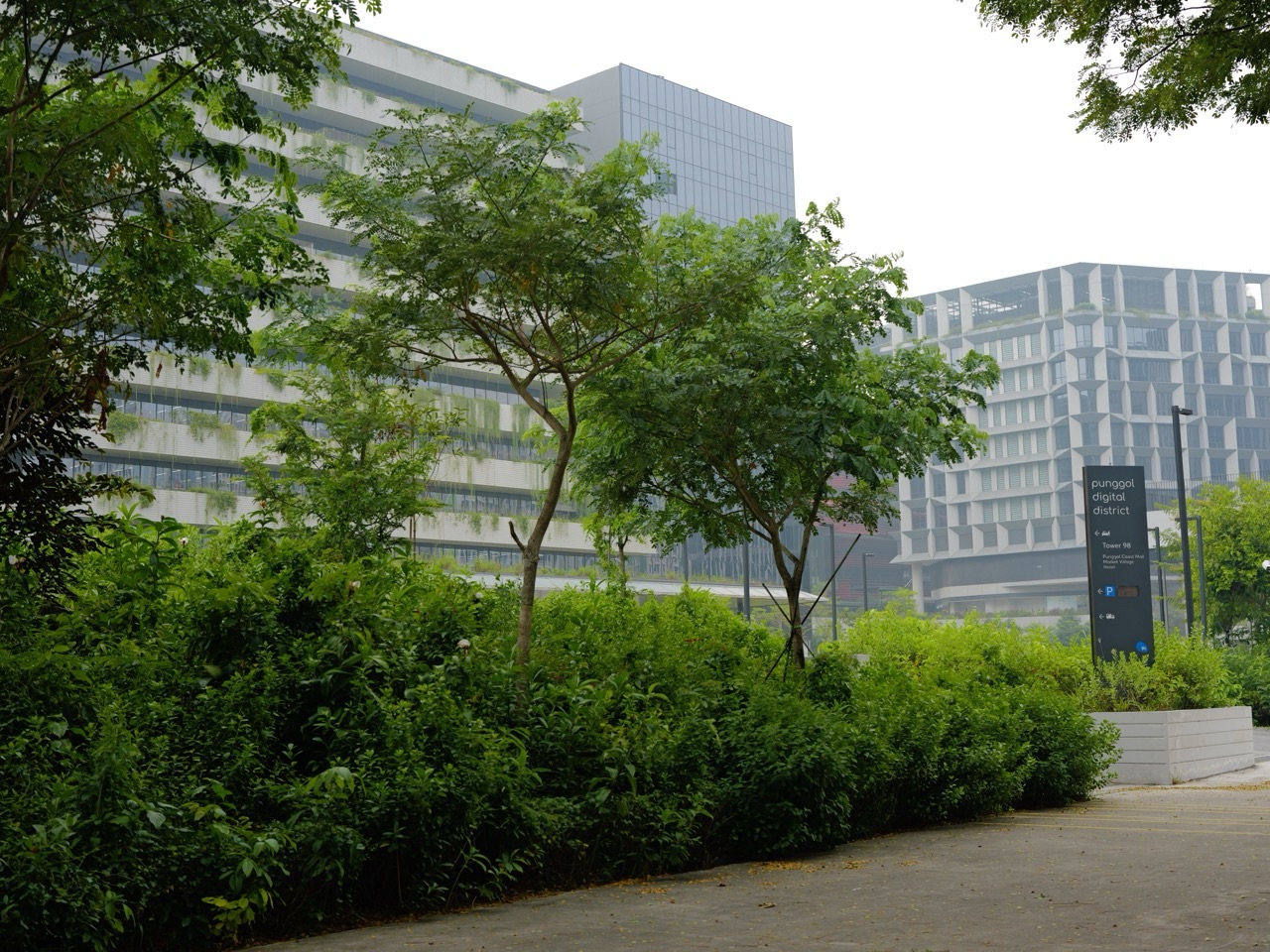
URA’s 2026 AI for Cities material describes JTC’s Open Digital Platform at Punggol Digital District as a smart-city operating system integrating building systems, sensors and IoT devices, with a 3D digital twin for monitoring and simulation.
A smart building can become a smart district when many buildings and estate systems join the same platform.
Cybersecurity Becomes a Building-Safety Issue
When building controls connect to networks, cyber risk enters facilities management.
BCA’s Smart FM guidance includes cybersecurity considerations for BMS and facilities-management systems.
A compromised building-control system can affect physical operations.
That links directly to How Singapore Connects | Cybersecurity, Scam Alerts and Digital Trust.
Operational Technology Needs Boundaries
A lift controller or chiller system should not automatically be exposed like an ordinary public website.
Network segmentation, access control and secure architecture help protect building operational systems.
A Small Example: Chiller Fault
Temperature and pressure readings drift.
Analytics detect abnormal performance.
Alert reaches facilities team.
Technician investigates before complete failure.
Comfort is preserved.
Predictive maintenance has turned data into uptime.
A Small Example: Empty Meeting Room
Occupancy sensor detects no users.
Lights switch off.
Air-conditioning setpoint relaxes according to control logic.
Energy use falls.
When occupants return, the environment responds.
A Small Example: Lift Warning
Remote monitoring detects an abnormal pattern.
Service team receives a diagnostic alert.
Technician arrives with fault context.
Component is repaired before a serious breakdown.
The user may never know a failure was prevented.
What Can Break the Smart-Building Connection?
- sensor failure;
- poorly calibrated meters;
- proprietary systems that cannot integrate;
- inconsistent data naming;
- network outage;
- cybersecurity weakness;
- false alarms;
- too much data with no operational workflow;
- facilities staff not trained to use the platform; and
- old equipment that cannot communicate with newer systems.
Smartness is useful only when data leads to action.
How to Read a Smart Building Like a Systems Thinker
1. Find the sensors
What physical conditions are measured?
2. Find the controller
What can the system actually change?
3. Find the platform
Where are data brought together?
4. Find the workflow
Who receives an alert and what happens next?
5. Find interoperability
Can systems exchange data through common protocols?
6. Find cybersecurity
How is operational technology protected?
7. Find the outcome
Lower energy, faster repair, better comfort or safer operation?
The eduKate Singapore Graph: The Building Becomes Observable
A traditional building works mostly in silence.
A smart building reports.
Temperature.
Energy.
Faults.
Occupancy.
Equipment health.
The sensors do not replace the facilities manager.
They give the facilities manager a better map of reality.
Frequently Asked Questions
What is Smart Facilities Management?
BCA defines it as the integration of systems, processes, technologies and people to enable data-driven building operations.
What is a Building Management System?
A digital control and monitoring system that can coordinate selected building services such as HVAC, lighting, energy and other equipment.
What do sensors add?
They turn physical conditions into measurable data that can trigger analysis, alerts or control actions.
What is predictive maintenance?
Using condition and performance data to identify likely equipment problems before failure.
Why are open protocols important?
They make integration between equipment and platforms easier and reduce dependence on one proprietary vendor.
Can Smart FM cover several buildings?
Yes. Integrated and Aggregated FM models can coordinate operations across multiple sites.
What is a building digital twin?
A virtual representation of a building connected to physical and operational data.
Does Smart FM save energy?
It can help identify waste, optimise operating schedules and improve equipment performance when implemented well.
Does Smart FM create cyber risk?
Connected operational systems require cybersecurity controls because digital compromise can affect physical building operations.
Where can I check official guidance?
BCA | Smart Facilities Management.
Helpful Reading and Singapore Graph Connections
- BCA | Smart Facilities Management
- BCA | Facilities Management
- How Singapore Connects | District Cooling, Air-Conditioning and Tropical Comfort
- How Singapore Connects | Cybersecurity, Scam Alerts and Digital Trust
How Singapore Connects: The Building Can Feel Its Own Pulse
Did you know that a building can know a chiller is struggling before the office becomes warm?
Sensor.
Data.
Pattern.
Alert.
Technician.
Repair.
That is Smart FM.
The building becomes observable enough to manage itself better.