
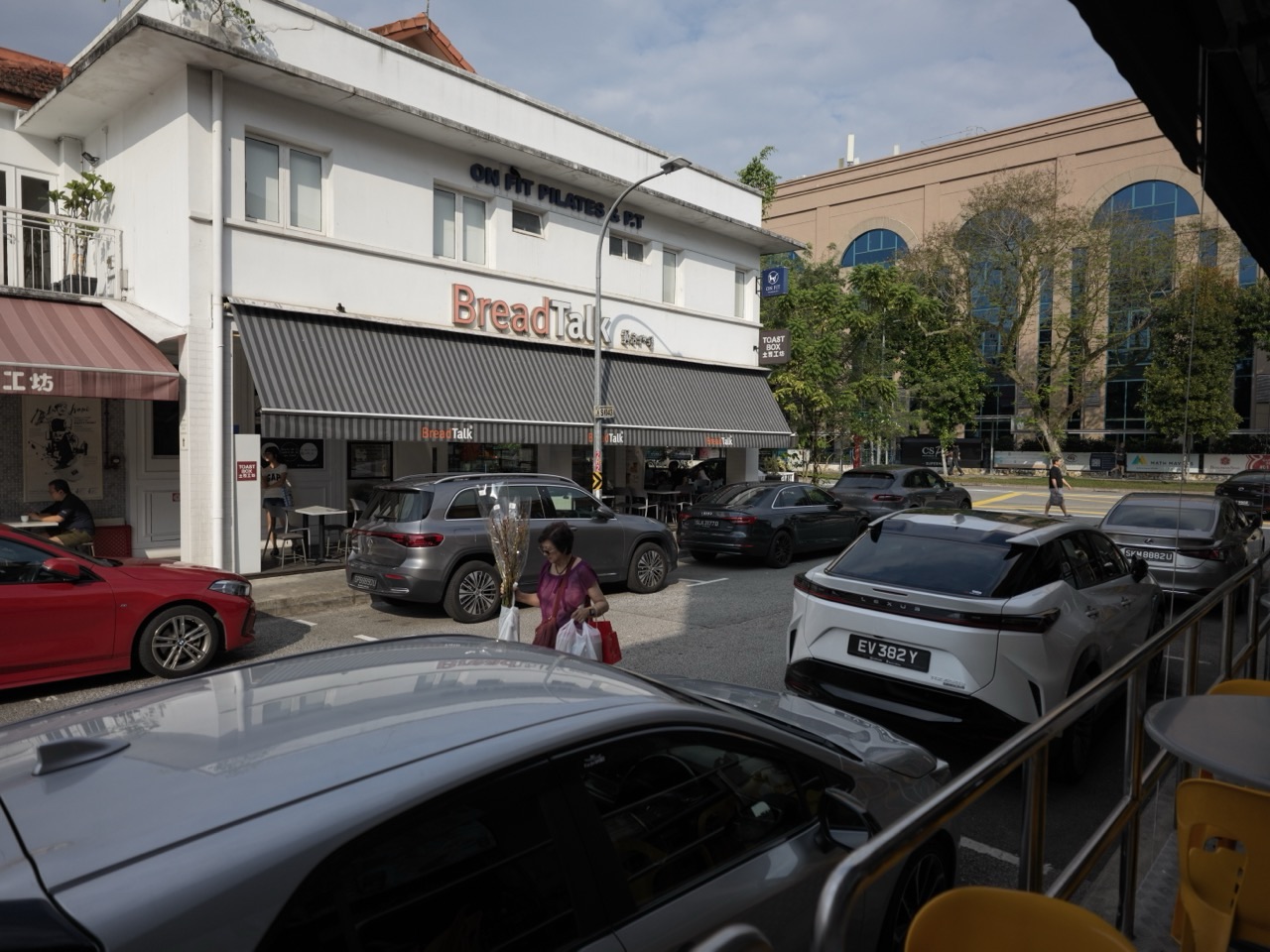
How Singapore connects is not only about travelling far.
Sometimes the most useful connection is having what you need nearby.
Did you know that a neighbourhood centre can reduce the number of journeys a family has to make?
A supermarket, clinic, coffee shop, bakery, pharmacy, tuition centre, salon, ATM and community space can all sit within the same local cluster.
That means one short walk can solve several different needs.
This article follows that daily-life connection layer: HDB neighbourhood centres, town centres, shops, pedestrian paths, transport nodes, local services and the ordinary errands that make a town feel self-sufficient.
The canonical town-planning articles remain elsewhere in eduKateSG’s urban branch. Here the focus is the relationship between local commerce and movement: how do shops, services and community spaces reduce friction in everyday Singapore life?
Did You Know? Town Planning Can Reduce the Number of Trips You Need
HDB says its towns are planned for self-sufficiency, with shops, schools, parks and community facilities distributed so residents can meet many daily needs without leaving the town.
That is a transport strategy hidden inside a planning strategy.
If useful destinations are closer, travel demand changes.
The best trip can be the trip you do not have to make.
Neighbourhood Shops Solve Fine-Grained Needs
A town centre can serve a large population.
But daily life happens at smaller scales too.
The shop under the block or in a nearby neighbourhood centre provides precision.
It handles needs such as:
- bread and groceries;
- meals and drinks;
- medicine and healthcare;
- household items;
- school supplies;
- personal services;
- child enrichment;
- banking or payment services; and
- simple social contact.
The neighbourhood shop is the retail equivalent of a local street: close, specific and easy to reach.
HDB Uses a Hierarchy of Facilities
HDB’s town-planning principles describe a hierarchy in which precinct and neighbourhood shops provide many day-to-day basics, while larger facilities such as libraries, shopping malls and Community Clubs are concentrated at town centres.
This is the same idea we saw in the road hierarchy.
Small facilities provide local access.
Large facilities provide wider range.
Different scales do different jobs.
Did You Know? A Town Centre Is a Transfer Hub for Daily Life
A town centre can connect several systems at once.
- retail;
- food;
- healthcare;
- libraries;
- community facilities;
- banking;
- public transport;
- public spaces; and
- government or municipal services.
The town centre is not just a shopping destination.
It is a switching node between different parts of daily life.
New Generation Neighbourhood Centres Put Several Functions Under One Roof
HDB describes New Generation Neighbourhood Centres as mixed-use local hubs containing facilities such as supermarkets, food courts, restaurants, enrichment schools and retail shops, together with community spaces.
The useful feature is concentration.
A family can complete several errands in one outing.
That reduces switching cost.
Direct Transport Connections Increase the Catchment
HDB says New Generation Neighbourhood Centres are designed to connect directly to transport nodes such as MRT or LRT stations and bus stops, while surrounding residential blocks are linked through covered walkways and pedestrian routes.
This expands who can use the centre.
Residents nearby can walk.
Residents farther away can arrive by public transport.
Retail and transport reinforce each other.
Covered Walkways Turn Convenience into Weather-Resistant Convenience
The connection is especially clear beside How Singapore Connects | Covered Walkways, Underpasses and Pedestrian Links.
A shop may be physically close but feel less convenient if the entire route is exposed to heavy rain or midday heat.
Shelter changes the effort cost of errands.
Transport Hubs and Retail Create Activity Loops
Integrated transport hubs, described in How Singapore Connects | Bus Interchanges, MRT Stations and Transfer Hubs, often sit beside malls and town-centre services.
A commuter can buy groceries on the way home.
A student can eat before a bus ride.
A parent can run an errand before collecting a child.
One transport journey supports several non-transport activities.
The Coffee Shop Is a Social Node
A coffee shop sells food.
It also creates repeated encounters.
Residents see familiar stallholders.
Friends meet casually.
Older residents linger.
Workers take breaks.
Children learn the rhythms of the neighbourhood.
A commercial space can become social infrastructure without being formally designed as a community institution.
The Clinic Connects Health to Ordinary Life
A neighbourhood clinic works differently from a hospital.
It places routine care closer to homes.
That fits the care hierarchy described in How Singapore Connects | Hospitals, Clinics and Care Pathways.
The patient does not always need to travel to a major medical campus.
Fine-grained local access matters.
The Supermarket Connects the Food System to the Household
In How Singapore Connects | Food Distribution, Supermarkets and Supply Chains, the supermarket was the visible end of a large logistics system.
At neighbourhood scale, it becomes the household’s access point to that system.
Global supply chains become local groceries.
Enrichment and Tuition Add an Education Layer
Some neighbourhood centres contain enrichment schools or tuition services.
That changes family scheduling.
A child can learn close to home.
Parents can combine learning with errands.
The same local node becomes both commercial and educational.
Community Spaces Keep the Centre from Becoming Purely Commercial
HDB notes that newer neighbourhood centres include sheltered community plazas and other spaces where events can be held.
That is important.
A centre filled only with transactions can feel different from a centre that also provides places to gather.
Public and commercial functions can share the same node.
Town Plazas Create a Civic Living Room
HDB lists town and community plazas in places such as Bedok, Punggol, Kampung Admiralty and Yishun.
These spaces can support events, informal gathering and everyday movement.
They create a pause inside the retail and transport flow.
A town centre becomes more than a corridor between shops.
Did You Know? Convenience Is a Form of Infrastructure
Convenience can sound trivial.
It is not.
If buying groceries requires a forty-minute journey, family time changes.
If the clinic is nearby, healthcare access changes.
If the child’s enrichment class is beside the supermarket, scheduling changes.
If the coffee shop is downstairs, social contact changes.
Distance shapes behaviour.
Older Residents Benefit Strongly from Local Services
A short walk matters more when mobility is reduced.
Nearby food, healthcare, seating, banking and social spaces can support independence.
This is why ageing-in-place is partly a neighbourhood-design question.
The home alone is not enough.
The useful world around the home matters too.
Children Learn the Town Through Errands
A child walking with a parent learns landmarks.
The bakery.
The bus stop.
The pharmacy.
The library.
The supermarket.
The playground.
Repeated errands build a mental map.
Daily life becomes geography education.
Small Businesses Add Local Identity
Two neighbourhood centres can contain similar categories of shops and still feel completely different.
The difference often comes from operators, food, long-running businesses and local routines.
Commercial variety becomes place identity.
Digital Payments Connect into the Local Shop
The payment layer from How Singapore Connects | PayNow, QR Codes and Everyday Payments now sits on many neighbourhood counters.
A traditional shop can therefore be physically local while financially connected to national digital payment infrastructure.
Parcel Lockers Extend the Centre into Logistics
Parcel lockers described in How Singapore Connects | Parcel Lockers, Letterboxes and Last-Mile Delivery can turn community and transport nodes into collection points.
An errand becomes a logistics handoff.
A neighbourhood centre becomes a tiny freight node.
A Small Example: The Saturday Morning Loop
A parent walks with a child to the neighbourhood centre.
Breakfast.
Supermarket.
Pharmacy.
Tuition class.
Library books.
Walk home under shelter.
Several systems have been used in one compact journey.
A Small Example: The Senior Resident
A senior walks to a nearby coffee shop, visits a clinic and buys groceries before returning home.
The total distance is manageable because the functions cluster.
Local planning supports independence.
A Small Example: The Evening Commuter
A commuter leaves the MRT.
Buys dinner.
Collects a parcel.
Stops at the supermarket.
Boards a feeder bus.
The town centre acts as the hinge between work and home.
What Can Break the Daily-Life Connection?
- poor pedestrian access;
- long uncovered gaps;
- shops that do not match local needs;
- weak transport links;
- vacant units;
- poor accessibility;
- too little seating;
- loading activity conflicting with pedestrians;
- services moving too far from residents; and
- town centres designed as destinations but not as convenient transfer points.
A useful neighbourhood centre is not merely full.
It is connected.
How to Read a Neighbourhood Centre Like a Systems Thinker
1. Count the functions
Food, healthcare, groceries, learning, finance, community space?
2. Trace the walking network
Which blocks connect directly?
3. Trace public transport
Where are the bus stops, MRT or LRT links?
4. Observe time
Morning, lunch and evening may attract different users.
5. Watch activity chaining
How many errands are completed in one trip?
6. Look for social space
Are there places to sit, meet and linger?
7. Look for local identity
Which businesses make this centre different from another?
The eduKate Singapore Graph: Daily Life Lives Between the Big Systems
Transport, food, healthcare, education and community can be studied separately.
Neighbourhood centres show how residents actually experience them.
Not as separate chapters.
As one Saturday morning.
That is why local commerce belongs in the Singapore graph.
It is where large national systems become ordinary errands.
Frequently Asked Questions
How does HDB plan towns for daily needs?
HDB says towns are planned with a comprehensive range of amenities so many daily needs can be met within the town.
What is a Neighbourhood Centre?
It is a local cluster of shops and services serving nearby residents, often including dining, healthcare and retail.
What are New Generation Neighbourhood Centres?
HDB describes them as mixed-use local hubs with retail, dining, supermarkets, enrichment and community spaces, linked strongly to transport and surrounding housing.
Why put shops near transport?
It allows residents to combine errands with journeys they were already making.
Why do covered walkways matter?
They lower the weather cost of reaching local shops and services.
Why are local clinics important?
They give neighbourhood-scale access to routine primary healthcare.
Why are neighbourhood shops socially important?
Repeated encounters with stallholders, neighbours and familiar places help create local identity.
How do town centres differ from precinct shops?
HDB uses a hierarchy: smaller facilities meet basic daily needs while larger town-centre facilities provide a wider range of services.
Is this the main eduKateSG town-planning article?
No. This article owns the daily-life connection lens, while the town-planning branch owns the deeper planning mechanisms.
Where can I read HDB’s official planning principles?
Helpful Reading and Singapore Graph Connections
- HDB | Plan and Design Towns
- HDB | Exploring My Neighbourhood
- HDB | New Generation Neighbourhood Centres
- How Singapore Connects | Bus Interchanges, MRT Stations and Transfer Hubs
- How Singapore Connects | Food Distribution, Supermarkets and Supply Chains
How Singapore Connects: The Best Network May Be Five Minutes from Home
Did you know that a neighbourhood can feel larger by making daily needs closer?
A supermarket connects the food system.
A clinic connects healthcare.
A tuition centre connects learning.
A coffee shop connects people.
A bus stop connects the wider city.
A covered path connects them all.
The resident experiences convenience.
The planner sees a network.
And when that network is designed well, daily life becomes wonderfully ordinary.
Which is exactly the point.