
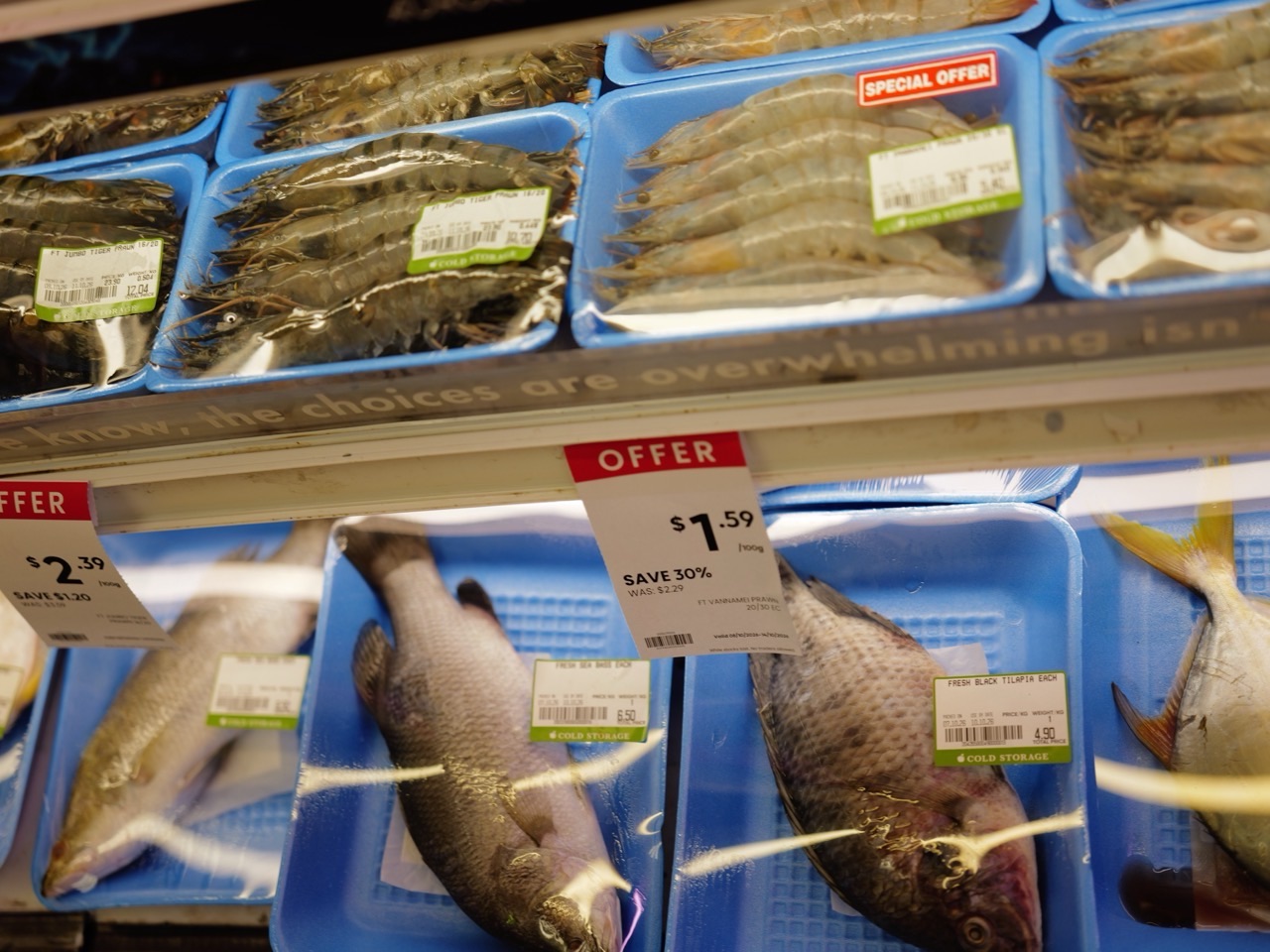
How Singapore connects is not only about moving people. Every day, food has to move too.
Did you know that a packet of rice, tray of eggs, bunch of bananas or chilled carton of milk can reveal an entire logistics network?
Before food reaches a supermarket shelf, wet market stall, hawker centre or home kitchen, it may have passed through farms, ports, airports, importers, cold stores, warehouses, distribution centres, trucks, inspections and retail systems.
The final shelf looks simple. The journey behind it is not.
This article follows Singapore’s food-distribution connection layer: imports, local production, warehouses, cold chains, retailers, supermarkets, markets and the roads and data systems that keep food moving.
The canonical food-system owner remains How Food Systems Work | From Farm, Sea and Factory to Market, Kitchen, Table and Return, while How Singapore Works | Food Security owns the broader resilience question. Here we ask the connection question: how does food move from many origins into the places where Singaporeans actually buy and eat it?
Did You Know? Singapore’s Food Network Starts Far Beyond Singapore
Singapore Food Agency’s 2025 food statistics state that Singapore imports more than 90 per cent of its food and sourced food from more than 180 countries and regions in 2025.
That means a meal eaten in Singapore can begin in many different climates, farms, fisheries, factories and ports.
The food system is international before it becomes local.
Singapore’s dinner table is connected to the world.
Diversification Is a Network Strategy
If too much supply comes from one place, problems at that source can affect everything downstream.
Diversification creates alternatives.
SFA’s Singapore Food Story 2 is built around four pillars: Diversify Imports, Global Partnerships, Stockpile and Grow Local.
The systems lesson is simple: more viable routes create more options when one route becomes difficult.
Imports Need Gateways
Food does not teleport into supermarkets.
- ships carry large volumes;
- aircraft carry faster and time-sensitive goods;
- land links support regional movement; and
- specialised logistics facilities handle chilled, frozen or controlled products.
That places the food network directly beside How Singapore Connects | Airports, Seaports and Global Gateways.
Global trade becomes local supply only when the gateway hands goods into Singapore’s domestic logistics network.
Temperature Is Part of the Route
Frozen food must remain frozen.
Chilled food must remain properly chilled.
Fresh produce can lose quality when heat and delay accumulate.
So some food journeys need a cold chain.
The route is not only about location.
It is about preserving conditions while location changes.
Cold Stores Give the Network Time
Refrigeration slows deterioration.
That gives the network more time to store, organise and distribute food.
A cold store is therefore a time-management tool as much as a building.
The colder environment extends the useful window before the next handoff.
Warehouses Concentrate Before Retail Disperses
Food often arrives in large quantities.
Consumers buy in small quantities.
Warehouses and distribution centres sit between those scales.
They receive bulk shipments, hold inventory, organise orders and send smaller loads toward individual outlets.
The network concentrates first.
Then it disperses.
Distribution Centres Are the Hidden Middle
- inventory arrives;
- stock is counted;
- temperature is managed where needed;
- orders are assembled;
- delivery routes are planned; and
- stores receive replenishment.
Customers rarely see this stage.
Yet distribution centres are where large supply becomes neighbourhood availability.
Roads Turn National Inventory into Local Availability
Food distribution depends on the road hierarchy described in How Singapore Connects | Roads, Expressways and Junctions.
A truck may use an expressway for distance, an arterial for district access and smaller roads for the final delivery.
The supply chain repeatedly changes scale.
Supermarkets Are Demand-Sensing Nodes
A supermarket does more than sell food.
Its sales data shows what is leaving the shelf.
Inventory systems can then trigger replenishment.
The physical product moves toward the customer.
Demand information moves back toward the supplier.
Modern supply chains are loops, not one-way arrows.
Wet Markets Use a Different Rhythm
Wet markets often operate with strong morning demand, smaller traders and highly perishable products.
Their retail rhythm can differ from a large supermarket chain.
But the same fundamentals remain: source, transport, storage, food safety, display and sale.
That connects this article to How Singapore Connects | Hawker Centres, Markets and Shared Tables.
Hawker Centres Depend on Upstream Logistics
A hawker stall feels wonderfully local.
Its ingredients may not be.
Rice, cooking oil, vegetables, meat, seafood and spices arrive through broader supply chains before becoming one plate.
The hawker centre is the final transformation node in a network that may span continents.
Food Safety Travels with the Product
eduKateSG’s How Food Safety Makes Eating From Strangers Safe explains inspections, traceability and food-control systems.
The connection layer matters because safety information may need to follow products through import, storage, distribution and retail.
A product is easier to manage safely when the system knows where it came from and where it went.
Traceability Connects a Product Backward
A consumer sees the product moving forward toward the shelf.
A business or regulator may need to follow it backward.
- Which source?
- Which batch?
- Which shipment?
- Which warehouse?
- Which stores received it?
Traceability turns a supply chain into a searchable history.
Stockpiles Add Time Resilience
A stockpile stores supply before it is urgently needed.
That creates a buffer.
Instead of depending entirely on the next shipment, part of future demand can be met from inventory already held.
Storage capacity becomes resilience.
Preparedness Depends on Distribution
In September 2026, SFA conducted a food-supply preparedness exercise with industry stakeholders including stockpile operators, logistics providers and retailers.
The exercise tested procedures and logistics for moving stockpiled food from warehouses to retail outlets.
That reveals a crucial point.
A reserve is only useful if the network can release it into shops where people can actually buy it.
Growing Local Adds Another Route
Local production adds another pathway into the national food system.
It does not need to replace every import to be useful.
The value lies partly in adding options and capability inside Singapore.
Network resilience grows when there are several functioning pathways.
Digital Systems Make Shelves Smarter
- inventory tracking;
- sales forecasting;
- warehouse management;
- delivery routing;
- temperature monitoring;
- ordering;
- traceability; and
- replenishment.
That makes the food network dependent on the digital substrate described in How Singapore Connects | Broadband, Mobile Networks and Public Wi-Fi.
The apple is physical.
Its inventory record is digital.
A Small Example: The Carton of Milk
Milk is produced, processed and packed.
It enters a chilled logistics network.
A shipment reaches Singapore.
Storage preserves the required temperature.
Distribution moves it to a supermarket.
Inventory places it on the shelf.
A family buys it.
A simple breakfast drink contains an international logistics story.
A Small Example: The Bag of Rice
Rice can generally be stored for longer periods than many fresh foods.
That means warehousing and stock management play a different role.
The supply chain is still about movement, but the time sensitivity differs from milk, fish or leafy vegetables.
Different foods require different logistics geometries.
A Small Example: The Morning Wet Market
Fresh goods arrive early.
Stallholders prepare before customers come.
Demand peaks in the morning.
The market’s rhythm depends on upstream deliveries happening before much of the neighbourhood fully wakes.
A quiet truck at dawn is part of breakfast infrastructure.
A Small Example: The Supermarket Restock
Sales data shows that a product is running low.
An order is prepared.
A distribution centre assembles the load.
A truck delivers it.
Staff move the product from back room to shelf.
The customer sees only the final few metres.
What Can Break the Food Connection?
- weather affecting production;
- shipping delays;
- airfreight delays;
- temperature-control problems;
- warehouse disruptions;
- road congestion;
- inventory errors;
- retail distribution problems;
- food-safety incidents; and
- overdependence on too few sources.
Food resilience therefore depends on both supply diversity and operational distribution.
How to Read Food Distribution Like a Systems Thinker
1. Find the origin
Local farm, overseas farm, fishery, factory or processor?
2. Identify the gateway
Sea, air or land?
3. Check storage conditions
Ambient, chilled, frozen or controlled?
4. Find the aggregation node
Warehouse, cold store or distribution centre?
5. Follow the last-mile route
Which roads and delivery schedules reach the shop or market?
6. Follow the data backward
Can the product be traced to source and batch?
7. Ask about alternatives
What other supply routes exist if one source is unavailable?
The eduKate Singapore Graph: Food Is a Network You Can Taste
Food connects almost every branch of civilisation.
Ports connect imports.
Roads connect warehouses.
Digital networks connect inventory.
Markets connect neighbourhoods.
Hawker centres connect food to culture.
Education connects consumers to nutrition and safety.
A meal is not one system.
It is many systems arriving at the same table.
Frequently Asked Questions
How much of Singapore’s food is imported?
SFA’s 2025 food statistics state that Singapore imports more than 90 per cent of its food.
How many countries and regions supplied Singapore in 2025?
SFA reported more than 180 countries and regions.
What is Singapore Food Story 2?
SFA describes it as Singapore’s refreshed food-resilience strategy built around Diversify Imports, Global Partnerships, Stockpile and Grow Local.
Why are distribution centres important?
They receive larger shipments, manage inventory and assemble store-level deliveries so bulk supply can be dispersed efficiently.
Why does cold-chain logistics matter?
Perishable and temperature-sensitive foods need controlled conditions during transport and storage to preserve quality and safety.
How do supermarkets connect to the supply chain?
They are retail nodes where inventory data, consumer demand and physical replenishment meet.
Why are roads part of food security?
Food still has to move from gateways, farms and warehouses to shops, markets and food businesses.
What did SFA test in September 2026?
SFA tested food-supply preparedness, including logistics for moving stockpiled food from warehouses to retail outlets.
Is this the main eduKateSG food-security article?
No. The canonical owner is How Singapore Works | Food Security. This page owns the distribution-and-connection lens.
Where can I check current official statistics?
Singapore Food Agency | Singapore Food Statistics 2025.
Helpful Reading and Singapore Graph Connections
- SFA | Singapore Food Statistics 2025
- SFA | Food Supply Preparedness
- How Singapore Works | Food Security
- How Food Systems Work
- How Singapore Connects | Airports, Seaports and Global Gateways
- How Singapore Connects | Roads, Expressways and Junctions
- How Singapore Connects | Hawker Centres, Markets and Shared Tables
How Singapore Connects: The Shelf Is the End of a Very Long Road
Did you know that the most ordinary supermarket shelf is a map of global connections?
Rice from one country.
Fruit from another.
Fish from another.
Milk through a cold chain.
Vegetables from local and overseas farms.
Warehouses behind the scenes.
Trucks arriving before dawn.
Inventory systems watching what disappears.
Then one shopper reaches out and puts dinner in a basket.
That final movement is tiny.
Everything before it is civilisation.