
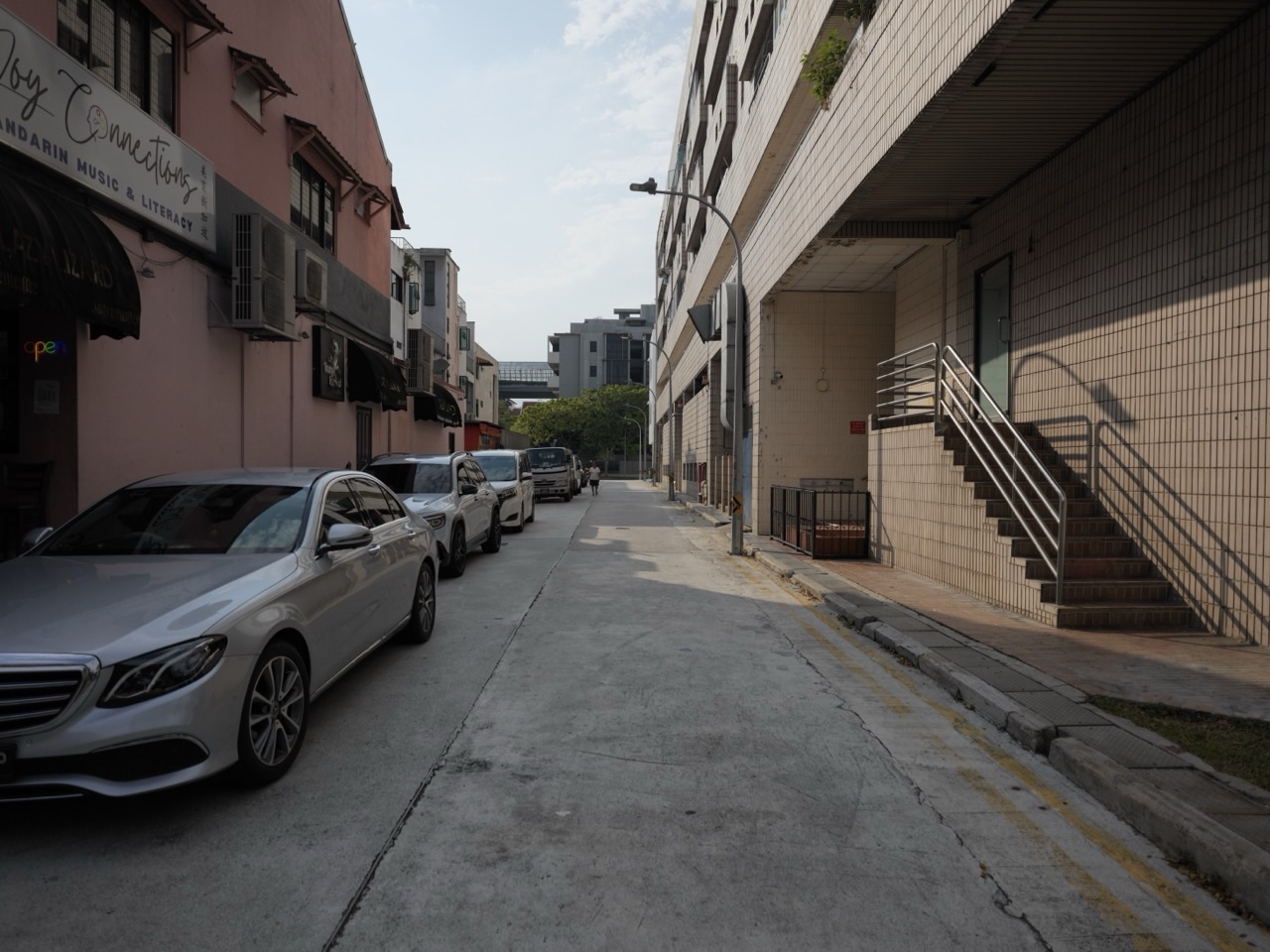
How Singapore connects is not only about moving vehicles.
A car journey also needs somewhere to stop.
Did you know that parking is really a land-allocation system?
A moving vehicle uses road space temporarily.
A parked vehicle occupies land for minutes, hours or months.
That means car parks, roadside lots, season parking, digital payment and availability information all belong to the same urban-capacity problem.
Parking.sg makes one part of that system digital.
The motorist selects a car park, starts a parking session, pays through the app, extends remotely if needed and receives a refund for unused time when ending early.
The app looks simple.
Behind it are HDB, URA and JTC car parks, parking rates, enforcement, vehicle identity, payment systems, car-park codes and increasingly digital road-space management.
This article follows Singapore’s parking connection layer: Parking.sg, short-term parking, season parking, car-park ownership, roadside lots, parking guidance, Parking@HDB and the upcoming Roadside Electronic Parking system.
The wider road network is explored in How Singapore Connects | Roads, Expressways and Junctions. The ERP 2.0 layer is explored in How Singapore Connects | ERP 2.0, On-Board Units and Road Pricing. Here we ask the stationary-road question: how does Singapore manage the places where vehicles stop?
Did You Know? Parking.sg Replaced the Need to Tear Paper Coupons
The official Parking.sg service lets motorists pay for parking directly from a phone instead of displaying paper coupons at supported public parking places.
The motorist enters the vehicle number, selects the car park and chooses a parking duration.
The system calculates the charge automatically.
Parking.sg Is a Payment Interface, Not the Car-Park Owner
Parking.sg does not own public car parks.
Its terms state that participating public car parks are managed by agencies such as HDB, URA or JTC.
The app provides a common payment interface across different public parking owners.
The Car-Park Code Is a Location Key
The app needs to know which parking place the vehicle is using.
That is why the user selects a car-park code.
One wrong code can attach payment to the wrong location.
The vehicle number identifies the car.
The code identifies the parking place.
Did You Know? The App Can Use Location to Suggest Nearby Car Parks
Parking.sg’s current help guide says the app can use the phone’s location to suggest nearby car parks, while users can also search manually.
That connects parking payment to geospatial services.
Short-Term Parking Is a Time Rental
A public parking lot is shared infrastructure.
A short-term parking payment buys temporary lawful use of that space.
The driver does not own the lot.
The driver reserves the right to occupy it under the published rules for a limited period.
Parking.sg Charges by Actual Duration
URA’s current Parking.sg guidance says parking charges are calculated on a per-minute basis.
The driver enters an intended duration.
If the session ends early, the unused portion is automatically refunded.
Digital parking becomes more granular than paper coupons.
Did You Know? Parking.sg Can Warn You Before Time Expires
The app can issue a notification around ten minutes before the parking session ends when notifications are enabled.
That converts a static parking ticket into an active reminder.
Remote Extension Removes a Physical Return Trip
With paper coupons, extending parking required going back to the vehicle.
Parking.sg allows extension through the phone.
The user may be in a meeting, meal or appointment.
The parking transaction can continue remotely.
Ending Early Creates an Automatic Refund
The driver leaves before the estimated session ends.
The app can terminate the session and refund unused parking time according to the service logic.
The system charges for actual use more precisely.
Parking Is Different from Season Parking
Short-term parking pays for temporary visits.
Season parking gives regular access near a home or workplace at a fixed monthly rate under the managing agency’s scheme.
Parking.sg’s current season-parking page explicitly says the app does not manage season-parking applications; motorists apply through HDB, URA or JTC as appropriate.
Did You Know? Different Agencies Manage Different Parking Geographies
Parking.sg gives a simple rule of thumb:
- HDB generally manages car parks in HDB estates and town centres;
- URA manages car parks in the city centre and other urban areas; and
- JTC manages car parks in industrial estates and business parks.
The driver experiences one city.
The parking system has several institutional owners.
The Entrance Sign Is the Ownership Interface
Parking.sg advises motorists to check the sign at the car-park entrance to identify the managing agency.
That sign tells you which rules, season-parking scheme and appeal channel apply.
Parking Coupons Still Exist
URA’s current short-term parking page still allows paper parking coupons as an alternative at applicable coupon-parking locations.
Digital adoption has not erased every legacy interface.
The system supports more than one payment route during transition.
Whole-Day and Monthly Paper Coupons Have Been Discontinued
URA says whole-day and monthly parking coupons were discontinued from 1 January 2022 because usage had become very low.
The digital system gradually changes what physical paper products remain useful.
Parking Rates Are Location Signals
Higher-demand areas can have different parking rates from neighbourhood areas.
That reflects land value, turnover needs and transport policy.
Parking price is another way the city signals scarcity.
The Kerb Is Valuable Urban Land
One roadside parking lot occupies space that could otherwise support:
- moving traffic;
- a bus lane;
- a loading bay;
- a taxi stand;
- a cycling lane;
- a wider footpath;
- trees;
- deliveries; or
- public space.
Parking policy is really a decision about competing uses of the kerb.
Did You Know? Roadside Parking Is Moving Toward OBU Integration
URA’s current Roadside Electronic Parking guidance says REP will be implemented after the ERP 2.0 OBU installation exercise is completed.
For motorists using the OBU touchscreen, roadside parking is designed to become another in-vehicle transaction.
REP Removes the Need to Estimate Parking Duration
Parking.sg asks the motorist to choose an intended duration and extend if needed.
URA says the upcoming REP system will allow the parking session to end automatically when the vehicle drives away.
The user will no longer need to estimate or extend the duration in the same way.
The OBU Becomes a Road-Space Payment Device
ERP charges for use of congested road space.
REP charges for occupying a roadside parking space.
Both transactions can use the same OBU infrastructure.
Moving and stationary road use converge in one vehicle interface.
Parking.sg Will Still Matter
URA says motorists who do not install the OBU touchscreen can continue using Parking.sg for digital roadside parking.
A new interface does not necessarily remove the existing one.
Parking Availability Is Another Information Layer
LTA’s parking page says the Parking Guidance System provides real-time information on lot availability in supported areas.
The motorist can make a route decision before entering a full car park.
Parking information reduces circulation.
Searching for Parking Is Traffic
A driver circling a busy district is not merely looking for a lot.
That vehicle becomes part of congestion.
Availability information can reduce unnecessary circulation.
The OBU Can Display Car-Park Availability
LTA’s current OBU material includes car-park availability information among supported features.
The road-pricing device becomes a parking-information device too.
Parking Connects to Navigation
A destination is not always the final driving point.
The car park may be on another street, another basement or another block.
The driver needs route guidance to the parking entrance, then pedestrian wayfinding to the real destination.
Parking Connects to OneMap
The location layer in How Singapore Connects | OneMap, Addresses and Location Intelligence helps convert addresses and destinations into usable geography.
Parking adds another coordinate: where can the vehicle legally stop nearby?
Parking Connects to Town Centres
HDB town centres need parking for residents, shoppers, service workers and visitors.
The parking supply has to coexist with MRT, buses, walking routes and commercial spaces.
A town centre works best when parking supports access without dominating the public realm.
Parking Connects to Industrial Estates
JTC car parks serve workers, visitors and commercial vehicles in business and industrial districts.
The same general parking problem appears with different vehicle mixes and trip purposes.
Parking Connects to EV Charging
The EV layer in How Singapore Connects | EV Charging, Car Parks and Road Energy adds another function to selected parking lots.
The lot is no longer only storage for a vehicle.
It can become an energy-transfer point.
Charging Changes Turnover Behaviour
An EV may need to occupy a charging lot longer than a quick retail visit.
That creates new questions around charging completion, lot turnover and enforcement.
Parking Connects to Accessibility
Accessible lots reduce the distance and physical barriers faced by persons with mobility needs.
Their location near lifts and entrances matters as much as their dimensions.
Parking Connects to Deliveries
Loading and unloading need kerb space too.
If delivery vehicles cannot find legal loading areas, they may obstruct traffic or footpaths.
Parking and logistics compete for the same edge of the road.
Parking Connects to Point-to-Point Transport
Taxi stands and pickup points from How Singapore Connects | Point-to-Point Transport also consume kerb space.
The kerb has become one of the busiest interfaces in the city.
Parking@HDB Adds Another Digital Model
HDB also operates Parking@HDB at selected car parks using licence-plate recognition.
The vehicle can be recognised automatically at entry and exit, and short-term parking charges can be paid through the registered account.
That is a different interface from manually starting a Parking.sg session.
Licence-Plate Recognition Makes Parking Hands-Free
Camera sees plate.
System identifies vehicle.
Parking session begins automatically.
Vehicle exits.
Session ends.
Payment is calculated.
The barrier or camera has become the meter.
Digital Parking Creates Better Usage Data
When sessions are recorded digitally, agencies can understand:
- how long vehicles stay;
- when demand peaks;
- which car parks fill first;
- how frequently lots turn over; and
- whether pricing or supply changes may be needed.
The car park becomes measurable.
But Parking Data Needs Privacy and Security
Vehicle numbers, payment information and location events are sensitive.
Digital parking therefore needs secure systems and limited authorised use.
That connects parking to How Singapore Connects | Cybersecurity, Scam Alerts and Digital Trust.
Did You Know? Parking.sg Currently Carries a Scam Warning
Parking.sg’s official site is currently warning users about phishing emails impersonating the service.
The guidance is to manage account details only through the official app.
Even a parking system can become a digital-trust target.
A Small Example: Roadside Parking
Driver reaches destination.
Checks car-park code.
Starts Parking.sg session.
App charges based on selected duration.
Meeting runs late.
Driver extends remotely.
Vehicle leaves.
Session is ended.
Unused time is refunded where applicable.
A Small Example: Full Car Park
Driver checks live availability before reaching district.
Preferred car park is full.
Alternative car park has spaces.
Route changes before arrival.
Search traffic is reduced.
A Small Example: Future REP
Driver parks in supported roadside lot.
OBU detects likely location.
Driver confirms parking place on touchscreen.
Session begins.
Driver later moves off.
Session ends automatically.
The vehicle itself has become the parking meter.
What Can Break the Parking Connection?
- wrong car-park code;
- wrong vehicle number;
- mobile battery failure;
- payment-card decline;
- app outage;
- car-park availability data lag;
- season-parking rules misunderstood;
- vehicle parked outside a legal lot;
- driver forgetting to start the session; and
- phishing messages impersonating official parking services.
Digital convenience still requires correct location and identity.
How to Read Parking Like a Systems Thinker
1. Identify the parking owner
HDB, URA, JTC or private operator?
2. Identify the parking type
Short-term, season or roadside?
3. Identify the space
Which exact car-park code or lot?
4. Identify the payment interface
Parking.sg, coupon, gantry payment, Parking@HDB or future REP?
5. Identify the time rule
Per minute, capped rate, night rate or season rate?
6. Identify alternative curb uses
Could the space serve buses, deliveries, cycling or pedestrians?
7. Identify the exit
How does the session know parking has ended?
The eduKate Singapore Graph: Parking Is Where Mobility Becomes Land Use
Driving is movement.
Parking is occupation.
That is why the car park belongs in both transport planning and urban planning.
The vehicle may stop.
The system around it keeps working.
Frequently Asked Questions
What is Parking.sg?
A government mobile app for paying short-term parking charges at supported public parking places instead of displaying paper coupons.
How does it work?
Enter the vehicle number, choose the car park, select duration and start the parking session.
Can I extend parking remotely?
Yes.
What happens if I leave early?
Parking.sg can refund unused time when the session is ended early according to the service rules.
Does Parking.sg manage season parking?
No. Season parking is managed by the relevant agency such as HDB, URA or JTC.
Who manages most public car parks?
Broadly, HDB in housing estates and town centres, URA in central and other urban areas, and JTC in industrial estates and business parks.
Are paper coupons still allowed?
Yes at applicable coupon-parking locations.
What is Roadside Electronic Parking?
An upcoming ERP 2.0 OBU function designed to let motorists start and end roadside parking through the vehicle touchscreen.
Will Parking.sg disappear when REP starts?
URA says motorists can continue using Parking.sg, including those without the OBU touchscreen.
Where can I check official information?
Parking.sg and URA | Short-Term Parking.
Helpful Reading and Singapore Graph Connections
- Parking.sg
- URA | Parking.sg Mobile Application
- URA | Roadside Electronic Parking
- LTA | Parking
- How Singapore Connects | ERP 2.0, On-Board Units and Road Pricing
How Singapore Connects: A Parked Car Still Uses the City
Did you know that parking is transport after movement stops?
Find the lot.
Identify the owner.
Start the session.
Pay for time.
Leave the space.
Release capacity for the next user.
Parking.sg makes the transaction easier.
The deeper system decides how scarce urban land is shared.