
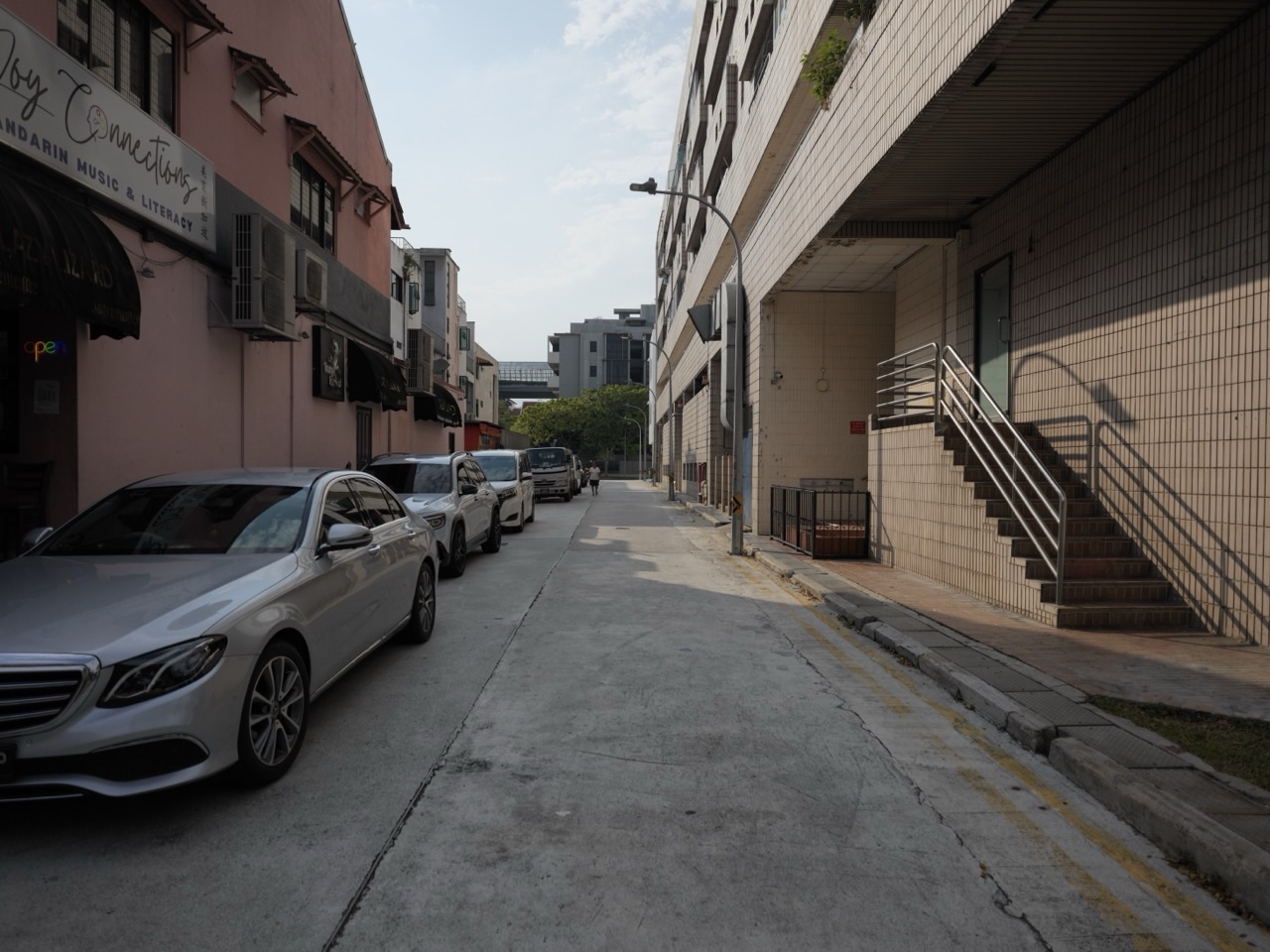
How Singapore connects is not only about moving a car.
A driving journey also needs somewhere to stop.
Did you know that a car park is really the final transport node before a driver becomes a pedestrian?
The road network delivers the vehicle. The car park stores it. The person then continues by lift, walkway, mall corridor, office lobby, school entrance or hawker-centre path.
Parking is therefore not separate from transport.
It is the handoff between vehicle movement and human movement.
This article follows Singapore’s parking connection layer: Parking.sg, HDB, URA and JTC car parks, parking sessions, digital payment, season parking and the last few metres between the car and the actual destination.
The road layer is explored in How Singapore Connects | Roads, Expressways and Junctions. Here the question is more specific: what happens when the journey stops being about driving and becomes about borrowing a piece of urban space for a while?
Did You Know? Parking Is a Time-Based Use of Space
A parking lot is physically fixed.
Different vehicles use it at different times.
The system therefore allocates space through time.
That is why parking charges are often calculated by duration.
The vehicle occupies land for a period.
The payment records that occupation.
Parking.sg Turned the Parking Coupon into a Phone Session
The official Parking.sg service lets motorists pay for supported coupon-based public parking directly through a phone instead of displaying paper coupons.
The user enters a vehicle number, selects a car park and chooses a parking duration.
The system calculates the charge and records the session.
The paper coupon becomes a digital state.
The Parking Session Is the Core Object
A Parking.sg transaction is not simply a payment.
It creates a session attached to:
- a vehicle number;
- a car park;
- a start time;
- a planned duration; and
- a payment method.
That session tells the system which vehicle has paid to occupy which managed parking area for which period.
Did You Know? You Can Extend Parking Without Returning to the Car
Parking.sg can notify the user before a session expires.
The user can extend the session remotely through the app where applicable.
The car stays still.
The right to keep using the parking space changes digitally.
This is a perfect 21st-century infrastructure pattern: physical state managed through software.
Ending Early Connects Payment to Actual Use
Parking.sg says users who end eligible parking sessions early can receive an automatic refund for unused parking time.
That creates a more precise relationship between duration and payment.
The app knows when the user says the occupation ended.
The financial record adjusts.
The Car Park Is the Last Node in the Road Network
Expressway.
Arterial road.
Local street.
Car park entrance.
Parking lot.
Then walking.
The driver descends from island-scale movement to exact destination access.
Parking is where the vehicle network hands the journey back to the pedestrian network.
A Car Park Is Also a Wayfinding Problem
Large car parks contain levels, zones, blocks and multiple exits.
The user may park successfully and still struggle to find the correct lift lobby.
This is why parking design includes signs, level markers and pedestrian routes.
Finding the lot is only half the problem.
Finding the destination from the lot matters too.
Different Agencies Manage Different Public Car Parks
Parking.sg’s current season-parking guidance notes that most public car parks are managed by HDB, URA or JTC depending on location and purpose.
- HDB commonly manages parking in HDB estates and town centres;
- URA commonly manages parking in the city centre and other urban areas; and
- JTC commonly manages parking in industrial estates and business parks.
Parking infrastructure therefore sits across several land-use systems.
Did You Know? Parking.sg Does Not Manage Season Parking Applications
Parking.sg states that season-parking applications are handled directly by the relevant managing agency such as HDB, URA or JTC.
This is a useful distinction.
The app is an interface for certain parking sessions.
It is not the owner of every parking policy or product.
Season Parking Solves Repeated Access
A visitor may park once.
A resident or regular worker may park repeatedly.
Season parking changes the transaction from repeated short sessions into a longer recurring access arrangement.
The underlying problem is still space allocation.
The time horizon is different.
HDB Car Parks Connect Housing to Roads
In an HDB estate, parking is part of residential access.
The car arrives through local streets.
The occupant walks from the car park to the block.
Some multi-storey car parks may connect directly or indirectly to sheltered paths and lift systems.
The parking structure becomes part of home access.
URA Parking Connects the City Centre
Urban parking in denser central areas has different pressures.
Land is valuable.
Demand can be high.
Road space, loading activity, pedestrians and public transport compete nearby.
Parking policy therefore becomes part of wider city-centre management.
JTC Parking Connects Industry and Business Parks
Industrial estates contain workers, visitors, service vehicles and logistics activity.
Parking has to coexist with freight routes and operational access.
This connects parking to How Singapore Connects | Warehouses, Industrial Estates and Urban Logistics.
The car park is not isolated from the work district around it.
Parking Connects to EV Charging
In How Singapore Connects | EV Charging, Car Parks and Road Energy, the car park becomes an energy node as well as a storage node.
An electric vehicle can be stationary and still be using infrastructure.
Parking time becomes charging time.
Parking Connects to Lifts
In multi-storey parking, the vehicle changes level through ramps.
The person changes level through stairs or lifts.
That places parking beside How Singapore Connects | Lifts, Escalators and Vertical Mobility.
The last metre of driving becomes the first metre of walking.
Parking Connects to Malls
A shopping-centre car park is not only vehicle storage.
It is part of the customer journey.
Entry lanes, payment systems, lot availability, lift lobbies and exits shape whether arrival feels easy.
Retail begins before the shopfront.
Parking Connects to Hospitals
Hospital parking has a different user profile.
Some visitors are stressed, elderly, carrying equipment or accompanying patients.
Wayfinding and accessible lots become especially important.
That places parking inside How Singapore Connects | Hospitals, Clinics and Care Pathways.
Accessible Parking Changes Who Can Use the Destination
A parking lot close to an accessible entrance can dramatically reduce the effort required for a person with mobility needs.
The parking network therefore has an accessibility layer.
Not every lot is functionally equal for every user.
Digital Parking Depends on Digital Infrastructure
Parking.sg needs a phone, app, account interactions and digital payment.
That places the parking session on top of How Singapore Connects | Broadband, Mobile Networks and Public Wi-Fi.
The parking bay is physical.
The session record is digital.
Parking.sg Depends on Banking
The app uses card-based payment for supported transactions.
That links parking to How Singapore Connects | ATMs, Cards, Cash and Everyday Banking.
A transport-space transaction becomes a banking transaction.
The App Reduces Estimation Error
Paper coupons require the motorist to estimate duration in advance and display enough value.
Digital parking makes extension easier and can refund unused time when a session ends early.
The interface becomes more responsive to what actually happens.
A Small Example: Lunch Stop
Driver parks in a coupon-based public car park.
Opens Parking.sg.
Selects vehicle and car park.
Starts a session.
Lunch takes longer than expected.
The session is extended remotely.
The driver never returns to the car just to manage the parking payment.
A Small Example: Early Departure
Driver expects to park for two hours.
Meeting ends after one hour.
The user ends the eligible Parking.sg session.
Unused time is automatically refunded according to the service rules.
The parking record follows actual use more closely.
A Small Example: Wrong Car Park
A user selects the wrong car park in the app.
The vehicle is physically elsewhere.
The payment record and physical occupation no longer match.
This reveals why location identity matters even in digital parking.
What Can Break the Parking Connection?
- wrong vehicle number;
- wrong car park selected;
- session expiry;
- phone battery failure;
- poor connectivity;
- payment-card problem;
- app error;
- car park full;
- confusing pedestrian exit; and
- forgetting which level or zone the vehicle is parked in.
Parking combines physical and digital wayfinding.
How to Read a Car Park Like a Systems Thinker
1. Find the managing agency
HDB, URA, JTC or another operator?
2. Find the payment model
Parking.sg session, gantry system, season parking or another arrangement?
3. Find the pedestrian handoff
Where does the driver become a walker?
4. Find the accessible route
Which lots, lifts and entrances serve mobility needs?
5. Find the digital dependency
Does the session require app connectivity or payment-card access?
6. Find the energy layer
Are EV chargers present?
7. Find the exit
How does the car rejoin the road network?
The eduKate Singapore Graph: Parking Is the Pause Between Networks
Roads are about movement.
Parking is about temporary stillness.
But that stillness is not outside the transport system.
It is the moment the vehicle stops so the human journey can continue.
The car park connects roads to buildings, roads to lifts, roads to shops and roads to homes.
Frequently Asked Questions
What is Parking.sg?
Parking.sg is Singapore’s official digital parking service for supported public coupon-based car parks, allowing motorists to start and manage parking sessions through a phone.
Can Parking.sg calculate parking fees?
Yes. The official service says it calculates charges automatically after the user enters the vehicle, car park and intended duration.
Can I extend parking remotely?
Yes, where the parking session supports extension.
Can I get a refund if I leave early?
Parking.sg states that eligible sessions ended early receive an automatic refund for unused time.
Does Parking.sg manage season parking?
No. Its current guidance directs users to the relevant managing agency such as HDB, URA or JTC.
Who manages most HDB-estate public car parks?
HDB generally manages car parks in HDB estates and town centres.
Who manages city-centre public car parks?
URA manages many public car parks in the city centre and other urban areas.
Who manages many industrial-estate car parks?
JTC manages many car parks in industrial estates and business parks.
Is this the main eduKateSG parking-session article?
No. The mechanism article is Why Singapore Works | The Parking Session. This page owns the connection lens.
Where can I check official information?
Helpful Reading and Singapore Graph Connections
- Parking.sg
- Parking.sg | Season Parking
- Why Singapore Works | The Parking Session
- How Singapore Connects | Roads, Expressways and Junctions
- How Singapore Connects | EV Charging, Car Parks and Road Energy
How Singapore Connects: The Journey Needs Somewhere to Stop
Did you know that a car park is not the opposite of transport?
It is one of transport’s endpoints.
The car stops.
The parking session begins.
The human gets out.
The journey continues by foot.
Good parking infrastructure makes that handoff boring.
And boring, in infrastructure, is often a compliment.