
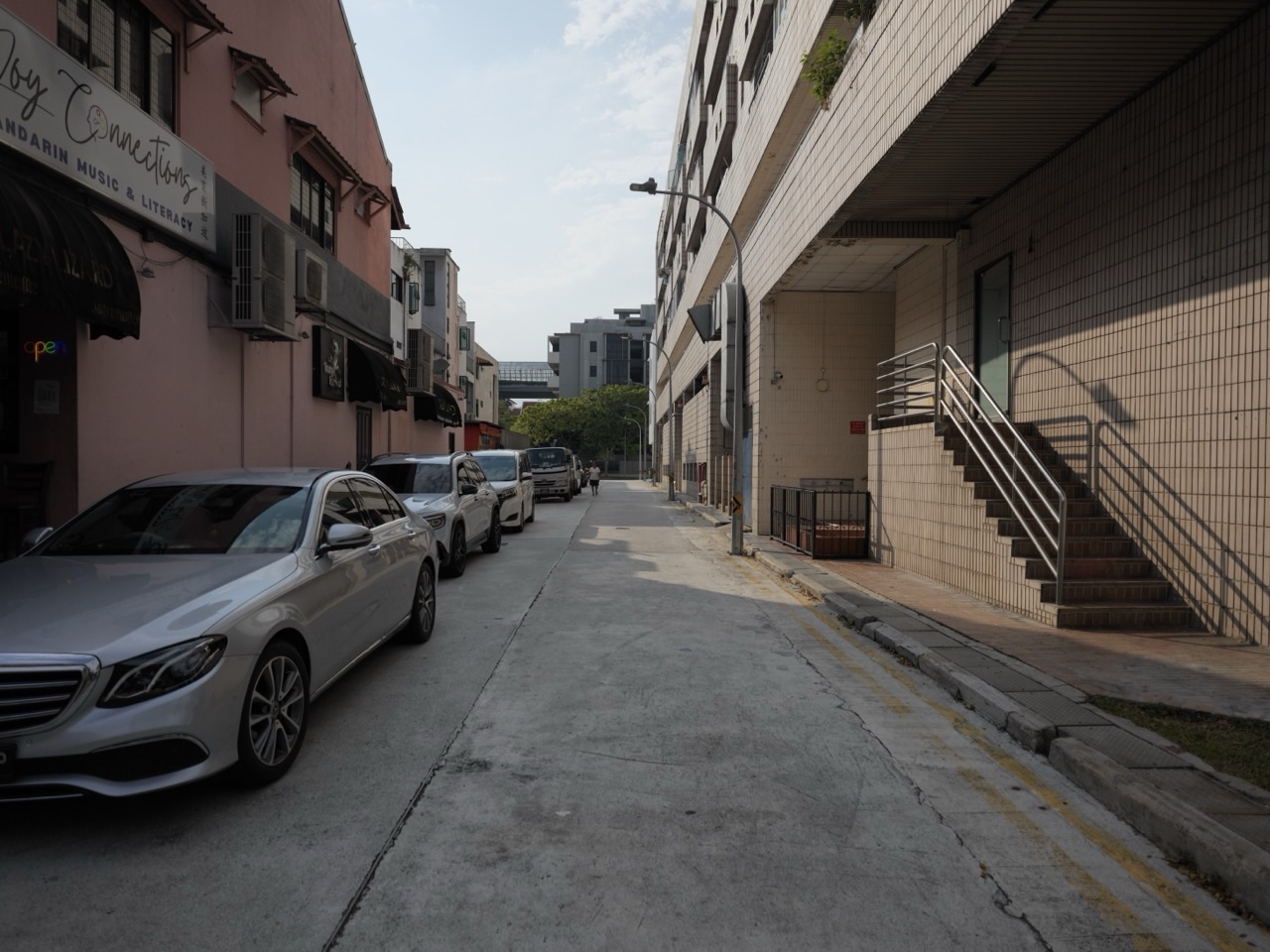
Crazy Rich Singapore | Parking.sg, Digital Parking and the Curbside Economy begins with a tiny urban-space problem repeated thousands of times a day: a car stops beside a road, occupies scarce public space, and the city has to measure how long that space is being used and collect the correct fee.
Did you know Parking.sg lets motorists pay for public parking by phone instead of displaying paper coupons, with charges calculated on a per-minute basis? Drivers can extend a session remotely, receive expiry reminders and end parking early for an automatic refund of unused time. Singapore is also preparing Roadside Electronic Parking through the ERP 2.0 On-Board Unit, where roadside sessions can eventually start and stop through the vehicle itself.
That makes “Parking.sg”, “parking Singapore”, “URA parking app”, “digital parking Singapore”, “roadside electronic parking”, “car park code Singapore” and “ERP 2.0 parking” powerful search themes. The Crazy Rich story is not an app replacing paper coupons. It is a city gradually turning curbside space into a digitally measured, time-priced transport resource.
Crazy Rich Singapore can make one roadside parking lot behave like a tiny piece of managed urban infrastructure.
Did You Know? Parking Is a Land-Allocation System
A parking space looks passive.
Economically, it is a piece of land reserved temporarily for one vehicle.
In land-scarce Singapore, that space competes with:
- traffic lanes;
- bus lanes;
- cycling paths;
- loading bays;
- footpaths; and
- public space.
Parking charges help manage demand for that scarce curb and car-park capacity.
Parking.sg Replaced the Coupon Calculation
Before mobile payment, motorists often needed paper parking coupons.
They had to estimate duration, tear the correct tabs and display the coupons visibly.
Parking.sg digitised that calculation.
The motorist now enters:
- vehicle number;
- car park code; and
- intended parking duration.
The app calculates the charge automatically.
Per-Minute Billing Changes the Economics
Paper coupons forced parking into fixed time blocks.
Parking.sg calculates charges based on the actual session under the relevant rate.
If the driver leaves early, unused time can be refunded automatically.
That makes pricing more precise.
The city charges closer to actual use rather than estimated use.
Why Automatic Refunds Matter
Suppose a driver pays for two hours and leaves after 70 minutes.
Under a fixed coupon model, unused paid time is simply lost.
Digital metering can return the excess automatically.
That makes compliance feel fairer and reduces the incentive to under-estimate parking duration.
Remote Extension Removes the Walk Back to the Car
Parking.sg can warn the user before expiry and allows remote extension.
That solves a surprisingly common friction point:
a meeting runs long, but the driver does not need to leave the meeting simply to add another paper coupon.
The app converts parking time into a remotely managed session.
Why the 10-Minute Reminder Is Useful
URA’s current guidance says motorists can receive a notification around ten minutes before a session expires if device notifications are enabled.
That is a small behavioural-design feature.
Good compliance improves when the system reminds people before they accidentally become non-compliant.
The Car Park Code Is a Location Identifier
Parking.sg asks the motorist to select the correct car park code.
That code links the vehicle to the correct pricing and parking location.
The app therefore depends on digital location identity even when GPS is not used to decide every session automatically.
Parking becomes a geospatial data problem.
The OneMap Connection
That connects naturally to Crazy Rich Singapore | OneMap, Geospatial Intelligence and the Digital Twin Economy.
Every parking lot exists at a precise location.
Digital urban management becomes easier when physical assets have reliable identifiers and map coordinates.
Parking.sg Is Different from Electronic Parking Systems
Many multi-storey or gated car parks use Electronic Parking Systems that identify vehicles and charge automatically at entry or exit.
Parking.sg is especially relevant to coupon-style public parking locations where there may be no barrier gantry.
The city therefore has several parking-payment technologies serving different physical layouts.
Why Roadside Parking Is Harder to Automate
A gated car park has a clear entrance and exit.
A roadside lot does not.
The system has to know:
- which car stopped;
- which parking area it occupies;
- when the session began; and
- when the car left.
Roadside Electronic Parking attempts to solve that problem through the ERP 2.0 On-Board Unit.
Roadside Electronic Parking Is the Next Layer
URA describes Roadside Electronic Parking, or REP, as a future ERP 2.0 functionality.
After the OBU installation exercise is completed and REP is enabled, motorists with the touchscreen display will be able to confirm a detected roadside parking location through the vehicle interface.
The OBU can then track the session and charge accordingly.
The parking app begins moving into the car.
Why the OBU Touchscreen Is Required
Location detection is not perfect, especially in dense urban areas.
URA says motorists will need the OBU touchscreen to confirm that the detected parking place is correct before starting the session.
That is an important human-in-the-loop safeguard.
Automation proposes the location.
The driver confirms reality.
Parking Ends Automatically When the Car Leaves
One advantage of REP is that the parking session can end automatically when the vehicle drives away.
That removes the need to remember to end the session manually.
It also removes the need to estimate duration in advance.
The system measures actual occupancy more directly.
The ERP 2.0 Connection
That connects directly to Crazy Rich Singapore | ERP 2.0, GNSS Road Pricing and the Smart Mobility Economy.
ERP 2.0 manages road pricing and vehicle-location-linked services.
Roadside parking becomes another possible use of the same onboard platform.
One transport device begins supporting several road-use functions.
Why Shared Transport Hardware Matters
Installing a separate dedicated device for every transport function would be inefficient.
A common onboard platform can support:
- road pricing;
- traffic advisories;
- parking;
- payment; and
- other mobility services.
The value of the OBU therefore grows as more useful services connect to it.
The Curbside Economy
Roadside space has many competing users.
A curb can serve as:
- parking;
- taxi pickup;
- ride-hailing pickup;
- delivery loading;
- bus access; or
- emergency space.
Cities increasingly need to decide which use creates the most value at each place and time.
Digital parking is one part of that curb-management problem.
The Ride-Hailing Connection
That connects to Crazy Rich Singapore | Taxis, Ride-Hailing and the Point-to-Point Mobility Economy.
A parked private car occupies curb space for minutes or hours.
A ride-hailing vehicle may occupy the same curb for seconds.
Different mobility models create different curb demands.
Why Parking Price Can Influence Driving
Cheap or free parking lowers the effective cost of driving.
Higher parking cost can encourage some travellers to consider:
- MRT;
- bus;
- walking;
- cycling; or
- shorter parking duration.
Parking price therefore influences transport behaviour even though it is not a road toll.
The Car-Lite Connection
That connects to Crazy Rich Singapore | Cycling Paths, Active Mobility and the Car-Lite Transport Economy.
A car-lite city still needs parking.
It tries to avoid dedicating more land to parking than necessary.
Better digital management makes existing capacity more efficient.
Why Parking Enforcement Still Matters
Digital payment does not remove the need for rules.
Vehicles can still:
- park without payment;
- overstay;
- use restricted lots; or
- obstruct traffic.
Enforcement ensures the curbside system remains usable for compliant motorists and other road users.
The app digitises payment.
The legal parking rules remain physical.
Why Season Parking Is a Different Product
Short-term parking prices temporary use.
Season parking gives longer-term authorised access under specific conditions.
The two products serve different users and planning needs.
A resident parking overnight every day should not necessarily interact with the curb in the same way as a visitor staying 30 minutes.
The HDB Connection
Public parking is deeply connected to HDB town design.
That connects to Crazy Rich Singapore | HDB, BTO and the Mass Homeownership Economy.
Housing estates need parking, but every car park also consumes land that could support homes, greenery or amenities.
Parking is a housing-planning problem as well as a transport problem.
Why Multi-Storey Car Parks Exist
Stacking cars vertically reduces the surface footprint of parking.
That is especially useful in dense HDB estates.
Singapore applies the same land-scarcity logic seen across many systems:
if a function needs space, ask whether it can be stacked, shared or moved underground.
The EV Charging Connection
Car parks are increasingly becoming EV charging infrastructure too.
That connects to Crazy Rich Singapore | Electric Vehicles, EV Charging and the Electrification Economy.
The parking space is no longer only where the car waits.
It can also be where the car refuels with electricity.
Why Digital Parking Produces Useful Data
Digital sessions can reveal aggregate patterns around:
- occupancy;
- duration;
- peak times; and
- demand by location.
Such information can help agencies understand how parking resources are being used, subject to applicable data-governance rules.
The meter becomes a sensor for urban demand.
The PDPA Connection
Digital parking systems process vehicle and payment information.
That connects conceptually to Crazy Rich Singapore | PDPA, Data Protection and the Privacy Economy.
Useful transport data still requires responsible handling.
The city can become smarter without treating every movement as casually public.
Why Parking.sg Is a Good Digital Government Case Study
Parking coupons were a tiny but widespread daily friction.
The digital replacement did not require rebuilding the road network.
It changed the transaction layer around an existing asset.
That is a powerful Smart Nation pattern:
remove enough small friction and ordinary life feels materially better.
The Smart Nation Connection
That connects directly to Crazy Rich Singapore | Smart Nation, GovTech and the Public Technology Stack.
Digital government becomes visible when the old paper step disappears from daily routine.
Parking.sg is modest technology with mass-frequency impact.
What Students Can Learn from Digital Parking
Economics
Parking prices scarce urban land according to time and location.
Mathematics
Per-minute charging is more precise than fixed blocks and enables proportional refunds.
Computing
Apps, payment systems and vehicle identifiers connect physical parking to digital records.
Geography
Exact location determines the correct parking code and rate.
Urban Planning
Parking supply competes with housing, roads, greenery and active mobility for limited space.
Ten Vocabulary Words for the Curbside Economy
1. Parking.sg
Singapore’s mobile application for paying eligible public parking charges digitally.
2. Car park code
A location identifier used to select the correct public parking area.
3. Per-minute billing
Charging according to actual parking duration rather than only fixed time blocks.
4. Curbside
The road-edge space used for parking, pickups, loading and other activities.
5. Roadside Electronic Parking
A future ERP 2.0 function allowing roadside parking sessions through the vehicle OBU.
6. OBU
On-Board Unit installed in vehicles for ERP 2.0 and related functions.
7. Electronic Parking System
A system automatically charging vehicles in controlled car parks through entry and exit detection.
8. Season parking
Longer-term authorised parking access for eligible users under specified terms.
9. Occupancy
The proportion or amount of parking capacity currently in use.
10. Curb management
Planning and regulating how road-edge space is allocated among competing transport uses.
Frequently Asked Questions
What does Parking.sg do?
It lets motorists pay for eligible public parking by phone instead of displaying paper coupons.
Can I extend parking remotely?
Yes. The app allows remote extension before the session expires.
What happens if I leave early?
Parking.sg automatically refunds unused time when the session is ended early under the applicable parking rules.
What is Roadside Electronic Parking?
A future ERP 2.0 functionality allowing roadside parking to be started and charged through the vehicle OBU touchscreen system.
Will Parking.sg disappear when REP launches?
URA says motorists who do not use the OBU touchscreen can continue using Parking.sg; the future role of paper coupons will be reviewed as REP is implemented.
Helpful Reading Across the Singapore Graph
- Crazy Rich Singapore | ERP 2.0, GNSS Road Pricing and the Smart Mobility Economy
- Crazy Rich Singapore | Taxis, Ride-Hailing and the Point-to-Point Mobility Economy
- Crazy Rich Singapore | Electric Vehicles, EV Charging and the Electrification Economy
- Crazy Rich Singapore | Cycling Paths, Active Mobility and the Car-Lite Transport Economy
References and Current Sources
- Urban Redevelopment Authority, Parking.sg Mobile Application, updated 4 June 2026.
- Parking.sg, Parking.sg, current app features and scam advisory.
- Urban Redevelopment Authority, Roadside Electronic Parking, current ERP 2.0 parking overview.
Crazy Rich Singapore Digitises the Space Between the Road and the Footpath
Parking looks like dead space while the car is stationary.
In reality, it is scarce land being rented by the minute.
Did you know? One of Singapore’s richest mobility upgrades is making that tiny land transaction precise enough that the driver can start it on a phone today—and eventually end it simply by driving away.