
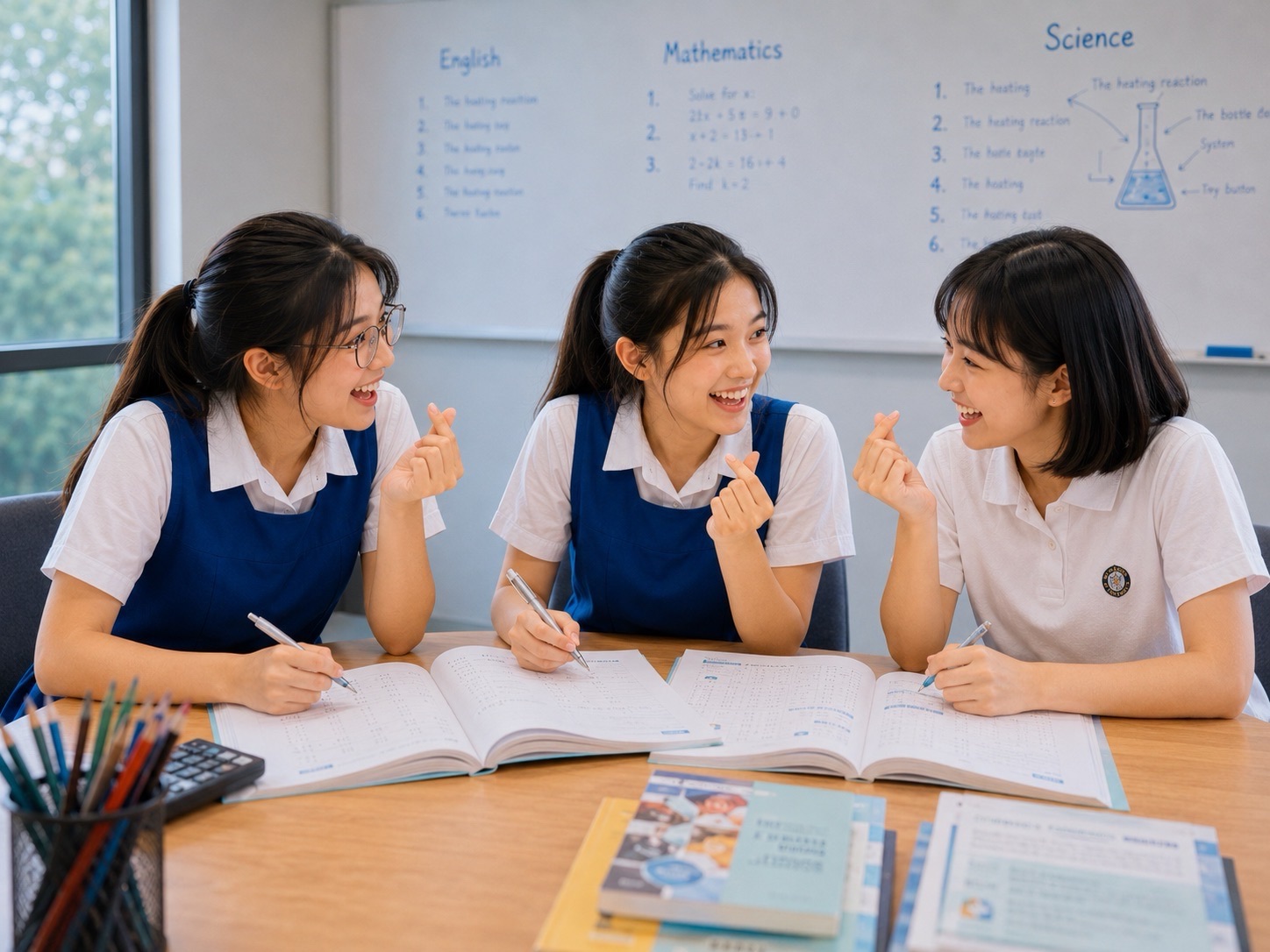
Character and Citizenship Education (CCE) is how Singapore schools help students develop values, social-emotional skills, responsible judgement and a sense of belonging and responsibility toward others. It is taught through lessons and reinforced through the wider school experience, including form-teacher guidance, Values in Action (VIA), National Education, cyber wellness, relationships, CCAs and opportunities to participate in the community. The aim is not simply to memorise six virtues for a test but to use them in everyday choices.
Find your CCE and Values in Action question
- Character and Citizenship Education in one minute
- Why does Singapore teach CCE in schools?
- What are Singapore’s six core CCE values?
- How does CCE work in Primary 1 and 2?
- What changes in upper primary?
- How does CCE change in secondary school?
- What are the five social-emotional competencies?
- What is National Education in Singapore schools?
- Why do schools commemorate Total Defence Day?
- What does Racial Harmony Day teach?
- What is Values in Action (VIA)?
- How does VIA work differently from volunteering?
- What does a good VIA project look like?
- How do schools assess VIA and character development?
- How is CCE different from CCA, ALP and LLP?
- How does cyber wellness fit into CCE?
- What about mental health, relationships and help-seeking?
- How does Education and Career Guidance connect to CCE?
If you are asking what CCE means in Singapore schools, the practical questions come quickly. What are Singapore’s six core values? What does Values in Action actually involve? How is CCE different from CCA? Why do schools observe Total Defence Day and Racial Harmony Day? Does a service project teach responsibility just because pupils complete a certain number of hours? And what happens when a student behaves well during a lesson but repeatedly mistreats classmates outside it? Values education has to work in real life, not only on classroom posters.
This guide is the character-and-citizenship junction of How Singapore Education Works, connected to the larger How Singapore Works civilisation archive. It explains CCE and VIA as educational mechanisms, then points to focused articles on CCA, community partnerships, student wellbeing and civic learning. MOE’s 2021 secondary CCE syllabus provides the official framework for much of this explanation.
Character and Citizenship Education in one minute
CCE helps pupils develop the knowledge, values and skills to understand themselves, build positive relationships, make responsible decisions and contribute to their communities. At the core are respect, responsibility, resilience, integrity, care and harmony. MOE also identifies important social-emotional competencies: self-awareness, self-management, social awareness, relationship management and responsible decision-making.
The curriculum addresses three major ideas—Identity, Relationships and Choices—and connects them with themes such as National Education, cyber wellness, mental health, Education and Career Guidance and family or interpersonal relationships according to the student’s school stage.
CCE is both a taught curriculum and a lived experience. A teacher may discuss honesty during a lesson, but the child also practises honesty when reporting a mistake in a group project. A class may study cultural diversity, but the real challenge is listening respectfully when a classmate explains an unfamiliar tradition. A service project can introduce community responsibility, but its value depends on whether students understand the people they are trying to help.
The central question is: Can the student recognise what matters in a situation and make a responsible choice when nobody is providing a multiple-choice answer?
Why does Singapore teach CCE in schools?
Academic subjects develop essential knowledge, but a functioning society also depends on trust, mutual respect, cooperation and the ability to handle disagreement. People can have impressive examination grades yet make harmful choices in work, family or civic life. Schools therefore have a role in helping young people connect capability with responsibility.
Consider a future engineer. Mathematics and Science help them design a safe system, while professional integrity helps them report when a calculation is wrong. A future manager needs technical knowledge, but also the judgement to treat colleagues fairly. A resident navigating public spaces must understand rules and the needs of other people. Education cannot reliably produce responsible behaviour merely by assuming these values will appear automatically.
CCE seeks to develop those capacities gradually. Young children learn to take turns, communicate needs and care for common materials. Older pupils practise responding to conflict, evaluating claims, understanding identity and recognising obligations in a diverse society. Pre-university students can examine more complex social choices and take greater responsibility for community initiatives.
This is not the claim that schooling can solve every moral or social problem. Families, community groups, institutions and wider society also shape behaviour. The school provides structured learning opportunities and a shared environment where actions have real consequences.
MOE’s Education Conversations describes holistic development as a national priority beyond academic grades.
What are Singapore’s six core CCE values?
The six core values are Respect, Responsibility, Resilience, Integrity, Care and Harmony. They provide language for discussing choices rather than six separate boxes to be ticked once a term.
*Respect* means recognising the worth of oneself and others, even when people are different. *Responsibility* means taking ownership of duties and actions. *Resilience* involves responding constructively to challenges. *Integrity* means being truthful and standing by ethical principles. *Care* means showing concern and acting thoughtfully. *Harmony* means working toward peaceful coexistence and appreciating diversity.
These values can sometimes create demanding choices. A student may want to remain loyal to a friend but learn that reporting serious bullying is necessary. Respecting somebody does not mean agreeing with every claim they make. Harmony does not mean forcing the person who was harmed to remain silent.
A useful lesson explores the tension, not only the vocabulary. If a pupil witnesses somebody cheating, how should integrity and care shape the response? If classmates disagree about a group project, what would respectful conflict resolution look like? Students learn when they must reason through consequences.
MOE’s CCE syllabus explains the six values and their relationship to personal character and shared civic life.
How does CCE work in Primary 1 and 2?
Young pupils encounter values through simple decisions, routines, stories and interactions. They may learn to ask permission before using another child’s belongings, admit when they have made a mistake, listen during a shared activity and help somebody who is confused.
A Primary 1 child does not need an abstract lecture about national institutions to understand responsibility. Returning a borrowed book, queuing at recess and telling a teacher that a classmate fell are concrete forms of responsible action. These examples can later become more sophisticated reasoning.
Picture a class using a shared box of coloured pencils. Two children want the same pencil at once. A teacher can help them express their needs, recognise each other’s perspective and agree on a fair way to share. The learning is not simply “do not fight”. It is how to handle an ordinary conflict without damaging relationships.
Stories also allow pupils to think about characters’ motives and choices. A child can discuss whether a character was honest, why a friend felt excluded and what might repair a mistake. Language learning and social-emotional growth can reinforce one another.
Parents can support these ideas at home by modelling respectful disagreement and involving children in manageable responsibilities, without turning every family conversation into a moral test.
What changes in upper primary?
Older primary pupils can compare viewpoints, recognise more complicated consequences and take greater responsibility for activities. They may examine dilemmas about friendship, fairness, environmental care, online behaviour and helping people in their community.
The task becomes harder than repeating a value word. A Primary 5 pupil might know that kindness is important but struggle when a friend is being unkind to somebody else. The child needs language and confidence to decide whether to intervene safely, ask for adult help or challenge the behaviour.
CCE also supports digital responsibility. As children gain access to devices and messaging apps, they need to understand privacy, the effects of forwarding messages and how to respond to harmful interactions. A respectful classroom cannot function independently from an online group chat where the same students ridicule each other at night.
Upper-primary experiences may include Values in Action activities where pupils identify a need and contribute appropriately. The degree of independence should match their age and ability. Adults still carry safeguarding and supervision responsibilities.
The Primary School and PSLE guide describes the academic progression. CCE develops alongside that progression, not after pupils finish all exam preparation.
How does CCE change in secondary school?
Secondary students are developing identity, friendships, judgement and a greater sense of independence. CCE can therefore address more complex choices about peer pressure, relationships, citizenship, digital behaviour, personal goals and the consequences of actions.
The 2021 secondary CCE framework is organised around Identity, Relationships and Choices. These provide a way to connect personal values with difficult everyday decisions. The curriculum also includes social-emotional competencies and learning experiences beyond the classroom.
Consider an online disagreement in which an embarrassing photograph is being shared. The pupil needs to understand privacy and harm, recognise the pressure to join the group, decide not to contribute and perhaps seek adult support. Knowing the word “respect” is useful only if it shapes action.
Older students may also take part in more substantial service projects or leadership activities. They can research community needs, help organise work, reflect on limitations and learn that a successful contribution depends on the people receiving it, not merely the students delivering it.
The wider Secondary School, Full SBB and SEC guide explains the school-stage structure. CCE operates across subject levels and everyday student experiences rather than being a fourth G level.
What are the five social-emotional competencies?
The CCE framework includes self-awareness, self-management, social awareness, relationship management and responsible decision-making. These competencies describe capacities students can develop through practice and feedback.
Self-awareness might involve recognising that a child becomes frustrated when a task changes. Self-management could involve using a suitable strategy to calm down and try again. Social awareness includes noticing how somebody else experiences a situation. Relationship management supports listening, communication and repair after conflict. Responsible decision-making involves weighing consequences and values rather than acting entirely on impulse.
Imagine a student who shouts when their group project idea is rejected. A teacher can help them notice the trigger, listen to alternative ideas and propose a fair way to compare options. The student is still responsible for the behaviour, but the educational response includes teaching a better method.
Social-emotional learning is not a promise that students will never feel angry, anxious or disappointed. Those emotions occur during normal life. The goal is to recognise them and respond constructively, with appropriate adult or professional support when difficulties become serious.
For mental health and support roles, read How Schools Support Student Wellbeing.
What is National Education in Singapore schools?
National Education (NE) helps students understand Singapore’s history, identity, challenges and responsibilities as members of a diverse society. It seeks to develop awareness of the country and informed participation rather than simply memorising slogans.
A meaningful NE lesson can ask why Singapore developed particular housing, water or transport arrangements, what trade-offs those systems involve and how different communities experience them. Students might explore history through sources, visit relevant sites or discuss how public choices affect ordinary people.
The annual school observances of Total Defence Day, International Friendship Day, Racial Harmony Day and National Day provide occasions to consider significant aspects of citizenship, social cohesion and the country’s place in the world.
The educational aim should be understanding. A student who knows a date but cannot explain why an issue matters has incomplete learning. Teachers can use age-appropriate discussion, historical evidence and reflection to help pupils make connections.
NE belongs within wider civic and historical literacy. Students should be able to distinguish facts, interpretations and questions that require further evidence. Responsible citizenship benefits from careful thinking, not blind confidence.
Why do schools commemorate Total Defence Day?
Total Defence Day is linked to Singapore’s historical experience of the fall of Singapore in 1942 and the importance of shared readiness and responsibility. School activities can introduce age-appropriate ideas about protecting society, remaining resilient and understanding that national security involves more than the armed forces alone.
Total Defence includes military, civil, economic, social, digital and psychological dimensions. Younger pupils may encounter simple lessons about helping in emergencies and verifying information. Older students can examine broader resilience questions involving infrastructure, cybersecurity, misinformation and community cooperation.
A useful learning experience asks how ordinary people contribute. During a transport disruption, clear information and neighbourly assistance may matter. During a health emergency, following trustworthy guidance can protect others. Students should be able to explain why these actions are relevant instead of merely reciting category names.
Schools should not frighten young children unnecessarily or pretend that every day is a crisis. The goal is preparedness and civic understanding appropriate to their age.
The sibling How Singapore Works series explains how housing, infrastructure, water, defence and community systems connect at the national level.
What does Racial Harmony Day teach?
Racial Harmony Day is an occasion to reflect on Singapore’s multicultural society, historical challenges and the importance of respect across different communities. The strongest educational experience goes beyond clothing displays or sampling festive food.
Students should be encouraged to ask thoughtful questions, understand that people within any community are diverse and avoid assuming that a classmate must represent an entire culture. Appreciating differences involves listening to others rather than turning them into entertainment.
A lesson might examine how misunderstandings spread through stereotypes, why inclusive public spaces matter or how shared rules allow people of different backgrounds to live together. Pupils can discuss how to respond when they hear a hurtful comment about somebody’s language, appearance or beliefs.
Celebration is useful, but critical reflection makes it more meaningful. A child who enjoys a performance and then learns to challenge an unfair stereotype has developed more than festival knowledge.
Respectful classroom discussion should allow age-appropriate questions while maintaining firm boundaries against humiliation or discrimination. Harmony is active work, not the absence of visible disagreement.
What is Values in Action (VIA)?
Values in Action is an experiential learning component of CCE through which students put values into practice, often by contributing to the community. It can involve service learning, environmental action, care for others or student-led projects that respond to a real need.
VIA is not simply a requirement to accumulate photographs of good deeds or hours on a form. The value comes from understanding the need, planning an appropriate response, acting responsibly, reflecting on the experience and learning how to contribute more effectively.
Imagine a class deciding to help residents at a community centre. The students might initially plan to donate items nobody needs. A stronger approach begins by listening to community partners and asking what would genuinely be useful. Students may discover that help with simple digital tasks or a well-organised activity is more valuable than an unsolicited collection.
Service also requires dignity. People receiving support are not props for a school’s publicity. Consent, privacy, safety and respectful language matter. Pupils should not be taught that a person’s difficult circumstances exist mainly to make students feel grateful.
The specialist Values in Action, Community Partnerships and Genuine Service Learning page covers operational design in more depth.
How does VIA work differently from volunteering?
Volunteering is a broad activity in which people freely contribute time or skill to a cause. VIA is a school learning experience with educational objectives, guidance and reflection. A student may volunteer within a VIA project, but the educational programme should ask what the pupil learns about responsibility, community needs and ethical contribution.
Counting time can be useful administratively, but the number of hours alone does not demonstrate impact. A group might spend ten hours painting something nobody requested, while another spends two carefully planned hours solving a genuine problem. The second experience may teach deeper responsibility.
A meaningful VIA project includes input from relevant partners. Who requested the activity? What problem are they trying to solve? Which tasks are safe and appropriate for students? How will the group know whether the contribution helped?
Reflection matters too. Students can ask what surprised them, which assumptions were wrong and how they would work differently next time. This turns activity into learning.
A school should avoid presenting VIA as a guaranteed DSA advantage or a substitute for academic qualifications. Its main purpose is values and community learning, even where participation may contribute to broader student development records.
What does a good VIA project look like?
Consider a fictional group of Secondary 2 students concerned about waste at a school event. They begin by observing what is thrown away and why. They speak with canteen staff and cleaners, identify realistic constraints, plan a small intervention and measure the change.
Their first idea may be impractical because containers are difficult to clean or because students cannot reach a return station during a short break. Instead of hiding the mistake, they revise the plan. This teaches listening, responsibility and evidence-based decision-making.
A second group works with a neighbourhood organisation to support older residents. They discover that some participants prefer conversation and companionship rather than the digital service the students originally planned. Listening changes the design. The project becomes more respectful because beneficiaries are people with agency, not passive recipients.
A third group helps younger pupils navigate a school library. They plan simple orientation activities and check whether children can independently find and return books afterwards. The outcome is a capability the younger pupils gain, not the number of photographs taken during the event.
A successful project should answer two questions: Did the action address a genuine need? What did the students learn about their responsibilities and assumptions?
How do schools assess VIA and character development?
CCE and VIA are not equivalent to a national examination paper with one universal numerical grade. Schools may use observation, student reflection, participation records, discussions and other appropriate evidence of development.
A teacher might notice that a pupil who once dominated discussions begins inviting others to contribute. That is a meaningful behaviour change. Another pupil may demonstrate integrity by reporting an error in a group project’s data despite the risk of losing marks. These are concrete examples of values being used.
However, character is not reliably measured by how eloquently a student describes being kind in a reflection sheet. A beautifully written account can coexist with disrespectful daily behaviour. Schools need to pay attention to patterns in real settings, not merely the quality of a portfolio.
It is also unfair to assume that a shy student lacks leadership or a quiet pupil lacks care. Contributions take different forms, and students may need different ways to demonstrate growth.
For the assessment distinction, see How Students Are Taught and Assessed. Academic performance and character development can inform one another, but they have different evidence and outcomes.
How is CCE different from CCA, ALP and LLP?
CCE is the broad curriculum and learning approach for values, social-emotional competencies and citizenship. CCA is organised co-curricular participation in sports, uniformed groups, clubs, societies or performing arts. ALP connects knowledge to applied problems. LLP develops broader character and life skills through distinctive school experiences. VIA is a component through which values are put into action, often in the community.
These programmes can overlap. A student might participate in a CCA, learn about responsible service through CCE and use those skills in an LLP project. But the labels are not interchangeable.
A sports CCA can teach fair play, yet the existence of a sports team does not mean all students have demonstrated integrity. A STEM ALP can investigate environmental problems, yet that is not automatically the same as a community VIA project. Good teaching makes the learning objective clear.
Parents should ask how the school’s programmes fit together and which are available to their child. They should not select a school solely because several appealing acronyms appear in its prospectus.
Read What Are ALP and LLP? and How CCAs Work for those separate systems.
How does cyber wellness fit into CCE?
Cyber wellness teaches students to use digital technology responsibly, understand risks and recognise the consequences of online actions. It is part of CCE because online decisions affect real relationships, privacy, safety and trust.
A student forwarding an embarrassing photograph is not conducting a harmless technical experiment. A pupil sharing false information may affect classmates and family members. Students need to learn how to assess content, protect personal information and respond to harmful situations.
MOE’s 2026 announcements state that CCE cyber wellness lessons were updated to include checking generative AI information and identifying deepfakes. This reflects the fact that fabricated content can look convincing, making source verification and responsible sharing increasingly important.
An age-appropriate activity might compare a genuine official notice with a misleading imitation and ask which details help establish authenticity. Older students can investigate how a generated image or claim might damage somebody’s reputation.
The purpose is not to tell pupils every new tool is dangerous. It is to teach judgement: verify, consider the people affected, respect boundaries and seek help when necessary.
For the technical school system, follow Digital Learning, SLS, PLDs and AI.
What about mental health, relationships and help-seeking?
CCE includes social-emotional learning and mental health education, helping students understand emotions, relationships and when support is appropriate. It is not a replacement for school counselling or healthcare.
A pupil might learn how to recognise stress and organise revision, but a student with persistent severe distress may need trained professionals. A classroom lesson about wellbeing cannot diagnose or treat a medical condition.
Relationship education can teach respectful communication, boundaries, empathy and responsibility. Students should understand that caring for a friend does not require keeping a dangerous secret. When somebody may be at risk, involving a trusted adult is part of responsible action.
Teachers also need to model the principles they teach. A lesson about dignity loses credibility if students are humiliated for making a genuine mistake. School culture, discipline and safeguarding arrangements influence whether CCE is trusted.
The Student Wellbeing, Counsellors and Peer Support guide explains how classroom learning connects to real support and referral services.
How does Education and Career Guidance connect to CCE?
Education and Career Guidance (ECG) helps students understand interests, strengths, choices and possible future pathways. It connects to CCE because responsible decision-making involves knowing oneself and considering the consequences of an educational or career route.
In primary school, a child might explore different kinds of work and learn that society needs people with many skills. In secondary school, students can investigate subject requirements, courses and work opportunities. Pre-university learners may make more focused decisions about further study and adult goals.
A strong ECG conversation is not “Which job has the highest salary?” It asks what work involves, which capabilities the learner has or needs and how choices may affect the person’s wellbeing and contribution to society.
The school should also challenge the assumption that only one qualification or profession represents success. Technical, artistic, academic and service-oriented careers all require real skill and responsibility.
For detailed course and subject decisions, use How Does Education and Career Guidance Work?.
How can parents reinforce CCE at home?
Children notice how adults behave, especially when something goes wrong. A parent who admits a mistake and corrects it demonstrates integrity more effectively than a long speech about honesty followed by blaming somebody else.
Ordinary family routines provide opportunities for responsibility. A child can care for shared belongings, help with manageable household tasks, keep a promise or explain why a rule protects someone. Respectful disagreements teach students that different opinions can be examined without humiliation.
Families can also discuss community experiences. After a library visit, ask how shared books are cared for. After a bus journey, ask why priority seating matters. After an environmental activity, ask whether the proposed action genuinely helped. The conversation should invite reasoning, not demand a rehearsed answer.
Do not turn CCE into a competition between siblings over who is “the kind one”. Values involve choices and growth. A child who handled one situation badly can reflect, apologise appropriately and change behaviour. Learning remains possible.
Parents and schools work best when they communicate concerns specifically and fairly. The Parents Gateway and School Communication guide explains the practical channels.
Does discipline belong to CCE?
Yes, in the sense that students learn responsibility and consequences through the school’s behaviour expectations. But CCE should not be reduced to discipline, and a punishment alone does not necessarily teach the desired value.
Consider a child who repeatedly interrupts classmates. A school may need to set clear boundaries and apply appropriate consequences. The educational response can also teach listening and self-management: how to wait, how to contribute and how to notice when somebody else has not been heard.
A bullying case is more serious. The school must protect the affected pupil, establish facts and respond appropriately to the harmful conduct. A generic lesson on kindness is not a sufficient replacement for safeguarding or accountability.
CCE should make the reasons behind rules understandable, while the discipline system handles actual breaches and safety. Integrity and care can be practised through fair reporting, proportionate responses and thoughtful follow-up.
The separate School Discipline, Bullying and Student Safety guide deals with formal rules and consequences more precisely.
What makes a National Education lesson meaningful?
A meaningful National Education lesson gives students a sound understanding of Singapore’s circumstances and invites thoughtful discussion of responsibilities and trade-offs. It can involve history, culture, institutions, security, economic issues, public infrastructure or the experience of different communities.
For example, a class studying the nation’s water arrangements might examine sources, constraints and engineering decisions. Pupils can understand why water security matters while still asking which environmental and financial trade-offs must be managed. Good civic learning connects evidence to responsible judgement.
Another class could examine how a town uses shared public space. Different groups may have different needs. A child learns that planning for the common good involves choices, not simply giving everyone their first preference.
Students should also learn to distinguish a factual claim from an interpretation or opinion, and to recognise when information is incomplete. Civic literacy becomes more durable when learners can explain reasons and question evidence responsibly.
The sister project How Singapore Connects | Roads, Expressways and Junctions shows how ordinary infrastructure decisions can become accessible examples of systems thinking and civic responsibility.
Three student journeys through CCE and VIA
Primary 2: A child sees another student struggling with a schoolbag. The teacher encourages age-appropriate help and discussion. The child learns to ask whether assistance is wanted rather than simply grabbing the bag. Care is shown through respectful action, not a reward sticker alone.
Secondary 2: A group plans a VIA project for older residents. They begin with their own assumptions, then discover through a community partner that a different activity would be more useful. They revise the plan, complete it safely and reflect on the importance of listening.
JC student: A young person discusses an online claim that could affect a community. They verify sources, consider the effect of misinformation and decide how to respond constructively. The student demonstrates civic and digital judgement rather than merely repeating a list of national values.
These are fictional learning examples, not claims about a named school. Each illustrates the same pattern: recognise a situation, understand the people affected, choose responsibly and evaluate the result.
A four-week values-in-action classroom exercise
Week one: identify a genuine need. Students observe an ordinary issue within the school or community. They gather appropriate information and ask whom the issue affects. They avoid announcing the solution before understanding the problem.
Week two: plan responsibly. The group consults relevant adults or community partners, considers safety and privacy, assigns meaningful roles and makes a small workable proposal. The plan should be within the pupils’ age and abilities.
Week three: act and observe. Students carry out the project under appropriate supervision. They record what happened rather than assuming every planned outcome was achieved. If a problem appears, they respond safely and ask for help.
Week four: reflect and improve. The group asks whether the activity was useful to the intended people, what assumptions were inaccurate, how students treated one another and which changes would make the next attempt more effective.
This is an illustrative teaching sequence, not an official number of VIA hours or a universal curriculum timetable. Its purpose is to show how values become visible through responsible action.
Frequently asked questions about CCE in Singapore
What does CCE stand for?
Character and Citizenship Education, a core part of Singapore schooling that develops values, social-emotional competencies and responsible citizenship.
What are the six CCE values?
Respect, Responsibility, Resilience, Integrity, Care and Harmony.
Is CCE a school examination subject like Mathematics?
CCE has learning outcomes and educational experiences, but it is not simply a national written exam with a universal AL or SEC subject grade.
What does VIA stand for?
Values in Action, a learning experience in which students put values into practice, often through meaningful community contribution.
Is VIA just compulsory volunteer work?
No. VIA should involve understanding community needs, responsible action and reflection. Hours alone do not show educational value.
Is VIA the same as CCA?
No. VIA is part of CCE, while CCA is a separate co-curricular participation structure. They may overlap in a school’s programme.
Do students automatically receive DSA points for VIA?
No. DSA and other admissions exercises use their own eligibility and selection rules. VIA participation is not a universal admission guarantee.
What does National Education include?
It helps pupils understand Singapore’s identity, history, challenges and civic responsibilities, supported by age-appropriate lessons and experiences.
Why do schools celebrate Racial Harmony Day?
To build understanding of Singapore’s diversity, social cohesion and mutual respect through learning and reflection.
What is taught during Total Defence Day?
Age-appropriate lessons on Singapore’s historical experience, preparedness, resilience and the responsibilities of individuals and communities.
Is cyber wellness part of CCE?
Yes. CCE includes responsible digital behaviour, and MOE’s 2026 updates address generative AI information validation and deepfakes.
Does CCE include mental health education?
Yes. It includes social-emotional and mental health learning, but professional counselling or healthcare remains a separate support service where needed.
Can students disagree respectfully during CCE discussions?
Constructive discussion and consideration of different perspectives are important skills, with appropriate safeguards against bullying or discriminatory conduct.
How can parents help at home?
Model honest and respectful behaviour, discuss real choices and give children opportunities to practise responsibility in manageable ways.
Where can families check the official curriculum?
Start with MOE’s Character and Citizenship Education information and the current school’s CCE guidance.
Why character and citizenship complete the education picture
Education develops knowledge and skill, but the use of knowledge affects other people. A technically capable person still needs to recognise error, handle disagreement fairly and act responsibly within a community. CCE provides part of the foundation for those choices.
For Singapore, this connects ordinary school experiences to the larger functioning of society. Respect supports shared spaces. Integrity supports trust. Care and responsibility support community life. Critical thinking helps people examine claims before sharing them. These are capabilities a society must continue to develop and renew.
Continue through How Singapore Education Works, Learning for Life Programmes and Student Wellbeing and Peer Support. For the wider national perspective, the How Singapore Works civilisation archive examines the public systems in which these values have practical consequences.
Official sources and October 2026 currency
The primary sources are the 2021 Secondary Character and Citizenship Education syllabus, MOE CCE programme information, MOE Education Conversations and MOE’s 2026 education announcements. The precise lesson plans, VIA activities and school-specific arrangements vary. Follow the current school and MOE guidance rather than treating any illustrative activity as a mandatory national timetable.