
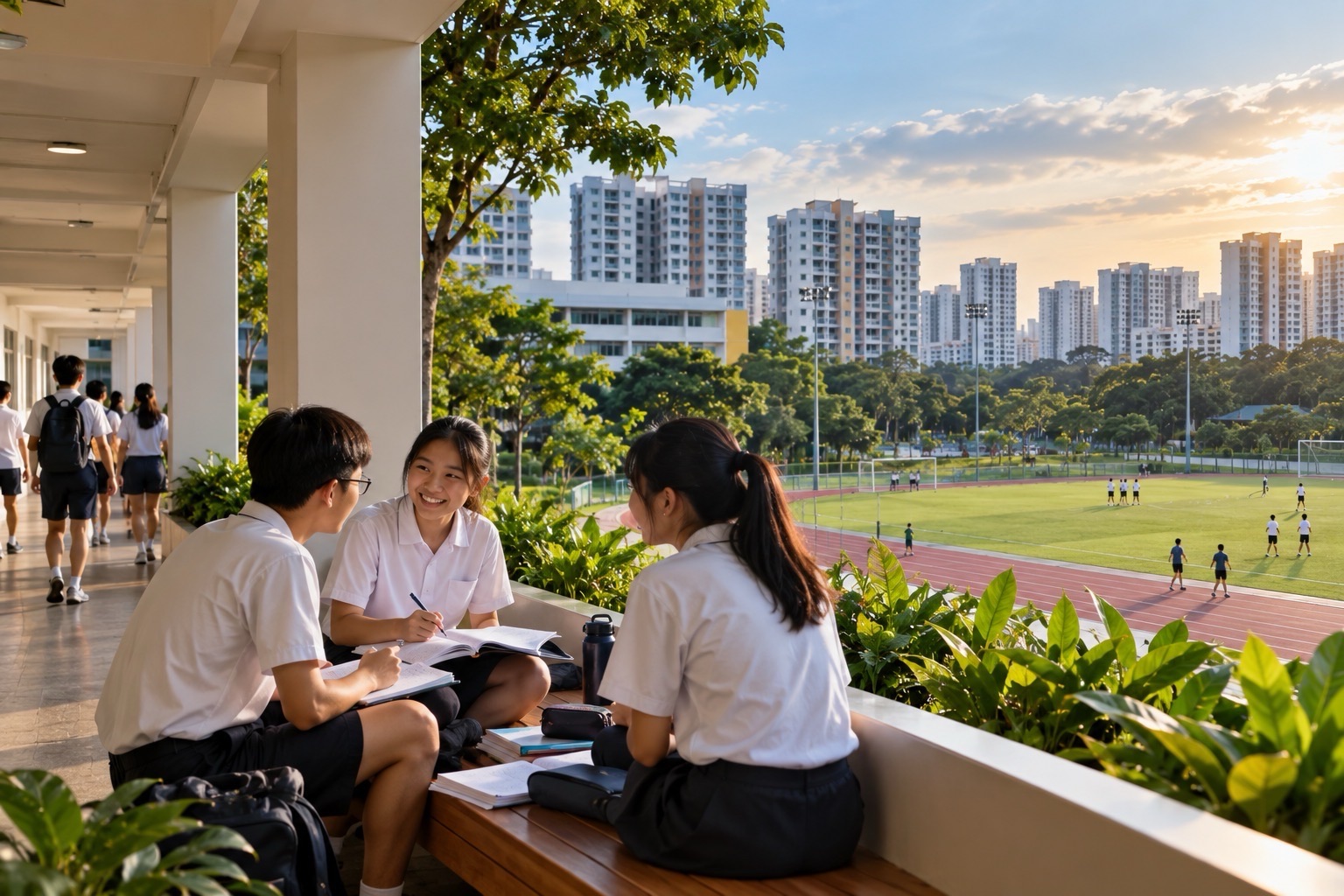
School discipline in Singapore is intended to keep schools safe, uphold clear behavioural expectations and help students understand the consequences of their actions. Schools use everyday guidance, classroom routines, conversations, counselling, school-based consequences and more serious disciplinary processes according to the situation. Bullying, violence, harassment, repeated misconduct and threats to safety need different responses from ordinary mistakes, occasional lateness or an age-appropriate disagreement.
That is the quick answer to how school discipline works in Singapore. The practical questions for parents are more specific: What rule applies? What actually happened? How does the school establish the facts? What support is given to a student who has been harmed? How does a pupil who caused harm take responsibility, and what follow-up prevents the same thing happening again? The system is not supposed to reduce every difficulty to “punish harder” or pretend that a serious incident can be solved by a quick apology.
Understand the school discipline process
- School discipline in one minute
- Why do Singapore schools have rules?
- What is the difference between a mistake and misconduct?
- How do teachers correct small everyday problems?
- What happens after a serious incident is reported?
- How are bullying and ordinary conflict different?
- How does Singapore address cyberbullying?
- What consequences can schools use?
- Is caning allowed in Singapore schools in 2026?
- What does restorative action mean?
- How does a school protect a student who reported bullying?
- How should schools treat witnesses and bystanders?
- What is a conduct grade, and does it affect examination results?
- Can parents appeal or ask for a review of a disciplinary decision?
- How do school rules interact with special educational needs?
- How can families prevent disciplinary problems before they escalate?
This guide is part of How Singapore Education Works and its sibling How Singapore Works. It explains the discipline process and family decisions without replacing the school’s written rules, MOE’s current guidance, professional legal advice or urgent safeguarding services.
School discipline in one minute
A pupil needs clear boundaries to participate safely in school. These boundaries concern attendance, respect, personal safety, learning materials, digital conduct and participation in shared spaces. Schools communicate expectations through handbooks, class routines, assemblies, form-teacher time and Character and Citizenship Education (CCE).
When something goes wrong, the response should fit the facts and seriousness. A child speaking over a classmate may need a reminder and practice listening. A pupil repeatedly targeting another student online may need formal investigation, protective action, disciplinary consequences and counselling or other support. The difference matters.
School discipline also has a preventive side. Students are more likely to follow a rule they understand, see applied consistently and can practise. A corridor routine prevents dangerous pushing; a laboratory instruction prevents injury; a digital device rule helps maintain concentration and privacy.
MOE’s Character and Citizenship Education information describes the education of values, relationships and responsible decisions. MOE also issued Parliamentary replies in May 2026 addressing schools’ handling of bullying. These are related but different responsibilities.
Why do Singapore schools have rules?
A school is a community where large groups of young people learn, eat, move and participate in activities together. Clear rules allow different students to use the same spaces without repeatedly negotiating every small question from scratch.
Consider a Science laboratory. The rule against unsupervised handling of certain equipment is not merely an exercise in obedience. It protects the class from predictable hazards. During recess, instructions about queues and safe movement reduce the risk of falls and conflict. In a digital classroom, restrictions on recording classmates protect privacy and participation.
Rules also make expectations visible. A teacher can remind students to begin a task when an agreed signal is given. A student knows how to request help or leave a room appropriately. This predictability helps children who are new, anxious or unfamiliar with school routines.
However, a rule is useful only when students can understand it and adults apply it responsibly. If one pupil receives severe consequences for a minor misunderstanding while another is repeatedly allowed to threaten classmates, trust weakens. Families are entitled to ask how a school’s stated procedure relates to an actual event.
A strong school culture combines boundaries with dignity. Children should learn self-management and the reasons behind their responsibilities, not merely how to avoid detection.
What is the difference between a mistake and misconduct?
A mistake occurs when a student misunderstands, forgets or fails to carry out something correctly. Misconduct involves behaviour that breaks an applicable expectation or rule. The distinction is not always obvious, because a pupil may act impulsively without intending every consequence.
Suppose a Primary 2 pupil forgets to bring their library book. The useful response may be helping them develop a packing routine and understand a loan deadline. A student who deliberately steals another pupil’s belongings presents a different situation involving ownership and trust.
Another example: two students disagree over a game and exchange angry words once. Adults should clarify what happened and teach conflict resolution. If one student repeatedly humiliates or excludes another, especially when there is a power imbalance, the behaviour may fit a bullying pattern. Treating every disagreement as bullying can blur the seriousness of actual repeated harm; treating repeated intimidation as “just a quarrel” leaves students unprotected.
Discipline depends on facts, age, context, severity and the relevant school procedures. Parents should not try to decide the entire incident from one emotional message, but they should take a child’s account seriously enough to ask questions.
Good teaching also distinguishes the child’s identity from the behaviour. Saying “That action was unsafe and must stop” creates room for accountability and change. Calling a child permanently “bad” does not tell them what needs to improve.
How do teachers correct small everyday problems?
Many behaviour problems are handled within ordinary classroom routines. Teachers may remind a pupil of a rule, explain a consequence, help them practise a better response or use age-appropriate classroom and school measures. Not every small incident becomes a formal disciplinary case.
For example, a group keeps interrupting each other during a project. The teacher may introduce turn-taking, allocate roles and ask pupils to repeat a classmate’s idea before responding. The problem is partly behaviour and partly a missing group-work skill. Teaching the skill can be more effective than simply adding a punishment.
A pupil may repeatedly arrive late because the family has recently changed transport arrangements. The school still needs attendance expectations, but solving the problem may involve checking the route, morning routine and any genuine hardship. A response that looks strict yet ignores the reason will not necessarily improve punctuality.
Classroom relationships matter. Students are more willing to admit a mistake when they believe the adult will listen fairly and require a reasonable next step. That does not mean there are no consequences; it means consequences are linked to an intelligible purpose.
The How Are Teachers Trained? article explains why classroom management, communication and fair feedback form part of professional preparation.
What happens after a serious incident is reported?
A serious report needs two parallel actions: address immediate safety and establish reliable facts. A school should determine whether someone needs protection, medical attention or urgent support. It should then investigate through its applicable procedures and speak to the relevant students and other witnesses.
A parent may report that a pupil was pushed repeatedly near the staircase. The school needs to know the location, timing, what each student did and whether there is current risk. A screenshot or video may provide useful evidence, but may not show everything that happened before or after. Staff need to assess information without assuming the most widely forwarded clip tells the whole story.
The school may speak to pupils separately, review available records, involve appropriate staff and communicate with families. The precise method depends on the incident and the school’s procedures. A parent should ask what can be shared, what action is being taken and when the family can expect the next update.
Privacy matters during this process. Schools cannot necessarily reveal every personal detail or disciplinary consequence involving another child to a complainant’s family. That is not automatically proof that nothing happened. Parents should focus on the safety plan and relevant outcome for their own child while seeking appropriate accountability.
If a serious danger remains, the school must not wait for every part of the investigation to finish before taking reasonable protective action.
How are bullying and ordinary conflict different?
Bullying generally involves hurtful behaviour associated with a power imbalance and may involve repeated or systematic targeting, although particular serious incidents must also be addressed. Ordinary peer conflict may involve disagreement between students with more similar power and no sustained targeting pattern.
The distinction should never become an excuse to minimise harm. A single serious assault or threat can require urgent action even if it has not occurred twice. Likewise, teasing that adults initially dismiss as harmless may become a pattern of exclusion or humiliation when examined over several weeks.
Ask whether the behaviour is repeated, intentional or coercive; whether the student feels able to escape it; and whether differences in social power are being exploited. Also ask about the location: classroom, recess, transport, CCA or group chat. The online and offline parts may reinforce each other.
A useful parent report describes observable events rather than only labels. For example: “During three recent recesses, the same pupils took my child’s bag, mocked them and stopped them joining classmates.” The details help staff investigate.
The focused School Bullying and Hurtful Behaviour guide examines reporting in greater detail. This article remains a wider explanation of school discipline.
How does Singapore address cyberbullying?
Online harassment can involve harmful group messages, deliberate humiliation, impersonation, exclusion, threats, unauthorised images or persistent contact. It can affect a child’s wellbeing even when the conduct occurs outside the physical school compound.
Parents should help preserve relevant evidence responsibly. Save the important messages, dates and account details where appropriate without reposting harmful material to a public audience. If the content involves sexual exploitation or serious threats, seek urgent appropriate professional or law-enforcement guidance rather than circulating it.
A school may need to determine how online behaviour affects student relationships and safety. Digital conduct also involves platform reporting tools and family support. No one measure solves everything. Deleting an app may stop one route of contact but leave the underlying peer behaviour unresolved.
MOE’s CCE curriculum includes cyber wellness, teaching students how to behave responsibly and seek help online. Practical digital education should explain why forwarding a humiliating clip extends the harm. Bystanders are not simply spectators when they participate in distribution.
See How Does Digital Learning Work? and Student Wellbeing and Peer Support for the separate learning and support aspects.
What consequences can schools use?
Depending on the nature of the incident and the school’s written policies, measures may include conversations, counselling or guidance, reflection tasks, detention, corrective work, adjustments to conduct grades, suspension and other permitted disciplinary responses. Serious cases may involve formal procedures or relevant authorities.
It is important not to invent one national punishment chart in which every offence receives an identical consequence across every school. The current rule, severity, circumstances and approved school process matter. A mistake at Primary 1 is not necessarily treated like serious repeated misconduct in Secondary 4.
An educational response should make the connection between behaviour and consequence clear. If a child damages a shared item, repair or restitution where appropriate may help them understand responsibility. If pupils repeatedly undermine another student’s safety, more structured protective and disciplinary measures may be required.
A consequence should not become an excuse for humiliating a child publicly or ignoring the wellbeing of someone harmed. Adults must uphold relevant standards and consider students’ dignity and learning.
Ask the school which rule applies, how it has assessed the facts and what follow-up support is planned. Families can disagree respectfully while expecting the process to be explained as far as privacy and school policy permit.
Is caning allowed in Singapore schools in 2026?
Yes, under Singapore’s legal and school regulatory framework, corporal punishment remains permitted for male pupils in specified school circumstances. MOE clarified in May 2026 that caning is a last-resort measure for serious misconduct and must follow strict protocols, including approval and authorised administration. It is not a general classroom response to routine mistakes.
MOE’s 6 May 2026 Parliamentary Reply discusses the evidence and restorative support associated with disciplinary actions. The Ministry’s position should be read in its exact current context rather than paraphrased as a rule applying equally to every child.
There are also concerns raised by international child-health and rights organisations about corporal punishment and possible harm. Policy debate on this subject exists. An explanatory guide should acknowledge that difference without claiming the legal rule has been abolished or that a particular measure is guaranteed to stop bullying.
For parents involved in a serious disciplinary process, the appropriate step is to ask the school about the exact policy, authorisation, notification, the student’s wellbeing and any legitimate review route. Do not rely on rumours, and do not confuse school discipline with criminal sentencing.
The essential point is that safe schools need prevention, fair handling, appropriate consequences and continued care for students—not only one highly visible penalty.
What does restorative action mean?
Restorative approaches focus on understanding the harm caused by behaviour, taking responsibility and helping repair relationships or conditions where doing so is appropriate and safe. They do not automatically mean excusing misconduct or requiring a harmed pupil to forgive someone before feeling safe.
Imagine a student who repeatedly excludes a classmate from a project and makes hurtful remarks. The school may impose a consequence while also requiring the pupil to understand the impact, change behaviour and show that the change is sustained. The harmed pupil may need support, boundaries and assurance that targeting will stop.
A restorative conversation can be useful when the facts, safety and readiness of everyone involved make it appropriate. It should not be forced on a child who feels threatened, nor used as a substitute for protective action after serious harm.
Repair can also be practical rather than ceremonial. If a student damaged equipment, restitution and appropriate responsibility may matter more than an impressive apology speech. If cyberbullying involved sharing an image, removing content and preventing further distribution are essential steps alongside whatever educational response is used.
The goal is learning that changes future behaviour. A punishment recorded in a file is one event; a safer pattern over the next term is a more meaningful outcome.
How does a school protect a student who reported bullying?
Students need to know they can ask for help without becoming more vulnerable. When a report indicates current risk, the school should consider an appropriate safety plan while investigating. The specifics depend on the circumstances but may involve supervision, contact boundaries, identification of trusted adults and ongoing check-ins.
A child who has been threatened on the bus may not feel safe simply because the school has held a meeting. The transport situation may need attention. A child targeted during recess may need a named adult to approach and an arrangement that does not isolate the child as though they caused the problem.
Parents should ask what immediate protection exists and how its effectiveness will be reviewed. The school may not be able to provide another student’s confidential disciplinary details, but it should be able to explain arrangements relevant to the reporting pupil’s safety.
Do not advise a child to retaliate physically or publicly shame a peer online. Those actions can make matters worse and complicate the response. Encourage the child to report accurately, remain near safe adults and communicate if anything changes.
For persistent emotional effects, counselling or appropriate healthcare support may be valuable. The Student Wellbeing guide explains how support beyond the disciplinary investigation can work.
How should schools treat witnesses and bystanders?
A witness may have seen one part of an event without understanding the full context. Schools should ask for accurate observations rather than pressuring students to fit a preferred narrative. It can help to distinguish “I saw a student push another child” from “I know why the push happened”.
Bystanders also have responsibilities. Forwarding a humiliating video or cheering on aggression can amplify harm. Students can be taught to avoid participation, seek a safe adult and provide truthful information when asked.
However, witnesses should not be expected to confront aggressive pupils alone. A student who feels threatened needs a way to report safely. A peer-support role cannot replace adult safeguarding responsibilities.
Parents of witnesses can help by encouraging honesty and privacy. Do not coach a child to repeat another family’s account without personal knowledge. Do not publish other students’ names in a community chat while a school is investigating.
Good school culture makes truthfulness, care and courage possible without asking children to become investigators or judges.
What is a conduct grade, and does it affect examination results?
Schools may use conduct grades or similar records to communicate aspects of student behaviour and participation. These are different from academic subject grades. A student’s national examination mark should not be casually equated with a disciplinary assessment.
For particular post-secondary applications, records, CCA achievements and school-based recommendations can matter through different channels. The precise impact depends on the admission route and published criteria. Families should not assume a conduct mark automatically changes PSLE Achievement Levels or SEC subject grades.
A student may need to understand how conduct affects participation in a school privilege, leadership position or an application requiring a school reference. The school should explain the relevant procedure rather than encouraging rumours about permanent blacklists.
The practical question is: which specific record is being affected, under what policy and for which decision? Separate those facts from a general fear that one mistake has ended every future opportunity.
For later routes, read Education and Career Guidance and What Happens After Secondary School?.
Can parents appeal or ask for a review of a disciplinary decision?
Parents can seek clarification through the school’s official communication and escalation procedures. Whether a formal appeal mechanism exists for a particular decision depends on the school’s rules and the nature of the action. A general education article cannot promise that every consequence is appealable through one central national online form.
Begin with a factual enquiry. Ask what rule applies, what conduct was established, what consequence has been communicated and which staff member is responsible for further discussion. If the family has evidence the school has not considered, provide it through a suitable private channel.
Keep the distinction between disagreement and immediate safety. If the child remains in danger, the family should seek prompt protection even while a review is being pursued. If the dispute is about a non-urgent consequence, a scheduled discussion may be appropriate.
A respectful request can be firm. “We would like to understand the factual basis and the current school policy, and we have further information that may affect the conclusion” is clearer than an accusation made without knowing the investigation.
Protect everyone’s privacy. Publicly circulating detailed disciplinary records, medical information or accusations about named minors is unlikely to improve the process.
How do school rules interact with special educational needs?
Students with disability, developmental or other learning needs may require reasonable support to understand expectations and participate safely. A child whose communication or regulation difficulties affect behaviour should not automatically be treated as identical to one acting with deliberate harmful intent.
That does not mean safety rules disappear. Schools still need to protect everyone. The task is to understand the student’s actual needs, use appropriate adjustments and coordinate with relevant professionals or SEN support where necessary.
For example, a child overwhelmed by a noisy transition may leave a classroom without following the usual instruction. Staff should address immediate safety and investigate why the transition is difficult. Visual reminders, predictable routines or specialist support may help prevent recurrence. The same approach would not necessarily fit a student who intentionally threatens another pupil.
Professional assessment should be carried out by appropriate qualified people. A parent or teacher should not create a diagnosis merely to explain a difficult incident. Equally, a known support need should not be ignored when choosing a fair response.
The Special Education, SEN and SPED article covers the broader educational supports.
How can families prevent disciplinary problems before they escalate?
Talk about school expectations before a serious incident occurs. Ask the child who they can approach if a disagreement becomes uncomfortable, what to do when they have made a mistake and why an online joke may hurt someone even if it was not intended that way.
Model the behaviour you want. A parent who insults teachers in front of a child while demanding respect sends mixed signals. A school adult who humiliates a pupil while teaching kindness also undermines the lesson. Consistency in everyday relationships matters.
Keep routines manageable. Chronic lack of sleep, confusing school journeys or unaddressed learning problems can affect behaviour and participation. These conditions do not excuse harmful acts, but recognising them can make prevention more effective.
Teach an actual conflict skill. A child can practise saying, “I do not agree; please stop,” moving to a safer area and reporting the situation to an adult. They can learn to distinguish a classmate’s accidental mistake from repeated targeted behaviour.
The aim is not a child who never makes errors. It is a child who can accept correction, recognise others’ boundaries and recover responsibly.
Three illustrative discipline cases
Case one: repeated missing homework. A Secondary 1 student repeatedly fails to submit work. The school checks whether the tasks are understood and whether the student can organise their timetable. Appropriate consequences and learning support may be used together. If the real cause is an unstable algebra prerequisite, the school should not assume more punishment will teach algebra.
Case two: a hurtful group chat. Several pupils circulate an embarrassing image of a classmate. The school investigates, seeks removal and containment of the content, protects the targeted student and applies appropriate consequences. Affected pupils may need counselling and ongoing monitoring. An apology alone does not solve image distribution.
Case three: a serious fight. The school establishes what happened and whether there is continuing danger. It may need medical attention, formal discipline, family communication or other authorities depending on the incident. The response must be proportionate and evidence-based; a video showing one angle does not automatically settle every fact.
These examples are fictional. They illustrate how safety, investigation, accountability and follow-up operate together. They are not a universal punishment chart.
Frequently asked questions about Singapore school discipline
Can a school discipline a child for breaking its rules?
Yes. Schools have behaviour and safety expectations and may apply permitted, appropriate consequences according to current policy and the circumstances.
Does every disciplinary mistake lead to detention?
No. Minor difficulties and serious misconduct are not necessarily treated identically. Schools use different responses and support measures.
How should parents report bullying?
Contact the school promptly through an official channel, describe specific events, mention immediate safety risks and ask what protective and follow-up steps will occur.
Is a single serious assault ignored because bullying often involves repetition?
No. Serious violence or threats require appropriate attention even without a repeated bullying pattern.
Do online incidents matter if they occur outside school?
Online conduct can affect school relationships and wellbeing. Schools and families should address harmful behaviour through appropriate channels and platform tools.
Is corporal punishment permitted?
Singapore’s school framework permits it for male pupils in specified serious cases subject to strict protocols. MOE has described caning as a last resort, not routine classroom correction.
Can girls be caned in Singapore schools?
No. Corporal punishment is not permitted for female students under the relevant framework.
Does a disciplinary consequence remove the need for counselling?
Not necessarily. Safety, accountability, support and follow-up can be needed alongside disciplinary action.
Must a harmed student forgive the person who hurt them?
No. Restorative approaches should not force an unsafe reconciliation or replace necessary protective measures.
Can parents ask why a consequence was chosen?
Parents can request appropriate clarification through the school’s official communication procedures, subject to student privacy and applicable rules.
Can a student be affected by a conduct grade?
Conduct records may matter for particular school processes, but they are distinct from national subject examination grades. Ask about the specific rule or programme.
Where can families find official guidance?
Begin with the school handbook, MOE, CCE guidance and MOE’s 2026 Parliamentary replies on bullying.
How discipline connects to Singapore’s education system
A functioning school teaches more than subject knowledge. It helps young people use shared spaces, take responsibility, communicate disagreements and trust that serious harms will be addressed. The quality of that process affects whether pupils can concentrate, ask questions and participate in everyday learning.
This is why discipline must connect to the rest of the education ecosystem. Teacher preparation supports fair classroom management. Student wellbeing supplies support around harm and stress. Parent–teacher communication helps adults establish facts and review actions. Character and CCAs provide opportunities to practise responsibility.
For the national systems perspective, visit How Singapore Works. School discipline is one everyday place where a society’s rules, care and accountability must meet.
Official sources and update note
Prepared for October 2026. Key sources are MOE’s 5 May 2026 reply on bullying, MOE’s 6 May 2026 reply on discipline and restorative support, CCE guidance and the relevant school’s current published handbook. School-specific procedures, legislation and safeguarding requirements govern actual incidents.