
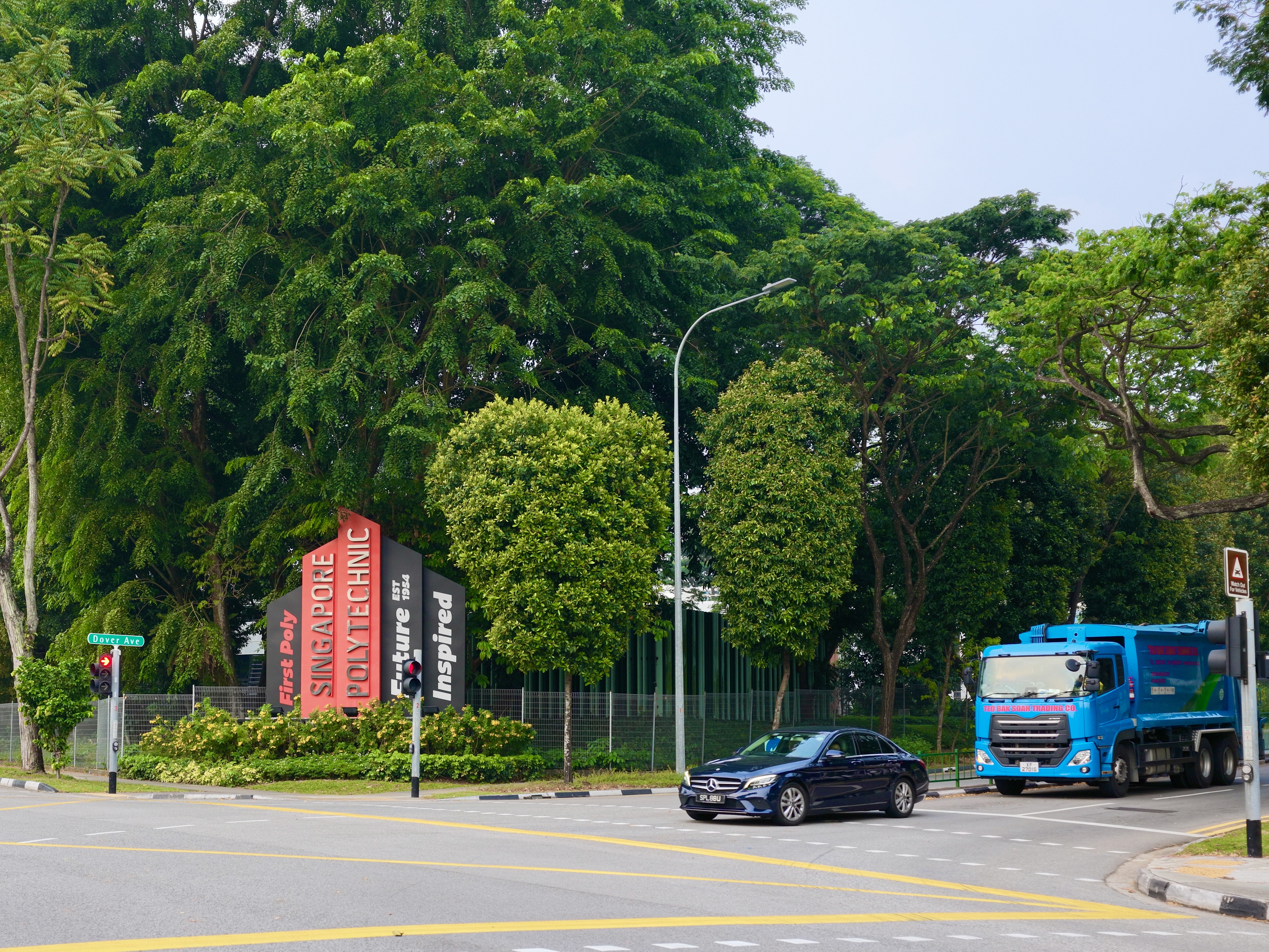
The Polytechnic Foundation Programme (PFP) is a one-year, practice-oriented preparatory route for eligible students who want to progress into a Singapore polytechnic diploma without following the ordinary Secondary 5-to-diploma pathway. Students develop academic and applied foundations at a polytechnic before entering a diploma programme, subject to passing requirements and allocation rules. Since the 2026 intake, most students enter a broad PFP cluster first and choose a specific diploma within that cluster after the foundation year.
Find the PFP question you need
- PFP in Singapore: the quick answer
- Why did Singapore create the Polytechnic Foundation Programme?
- What changed to PFP in 2026?
- What changes again for PFP admission in 2028?
- What does ELMAB3 mean?
- Are PFP subject minimum grades the same in every cluster?
- Which PFP clusters can students choose?
- Why do students choose a cluster before a diploma?
- What do students study during the one-year PFP?
- How important is Mathematics in PFP?
- How do PFP students get their eventual diploma course?
- Does passing PFP guarantee a diploma at the same polytechnic?
- Can students enter PFP directly from SEC in 2028?
- Is PFP the same as the Direct-Entry-Scheme to Polytechnic Programme?
- Is PFP easier than Secondary 5?
- How should a Secondary 3 student prepare for PFP eligibility?
- What about PFP fees and financial assistance?
For families asking how PFP will work in 2028, two dates must be kept separate. The move to cluster-based PFP admissions began with the 2026 intake. The expansion of eligibility to candidates offering G2 and G3 subjects under the first SEC examination takes effect for the 2028 intake. A Secondary 3 pupil studying under Full Subject-Based Banding in 2026 should not use an old N(A)-Level-only admissions diagram and assume it explains the rules they will face in January 2028.
This guide is the PFP junction in How Singapore Education Works, the education-system companion to How Singapore Works. It explains how eligibility, clusters, Mathematics, GPA or PFP grades, diploma choices and the new 2028 Post-Secondary Admissions Exercise fit together. For live applications, use MOE’s 2028 PFP admissions information and the selected polytechnic’s current PFP programme page.
PFP in Singapore: the quick answer
PFP is a one-year foundation programme at the polytechnics. Students build English communication, Mathematics, other foundational skills and relevant cluster knowledge. After completing the programme successfully, they move into a diploma course within the applicable cluster or specialist arrangement, with course posting based on their PFP performance, choices and available places.
The route differs from ordinary Year 1 entry after O-Level or SEC results. A student entering PFP is not yet enrolled in the usual first year of a three-year diploma. Their first year is preparatory. When that year is successfully completed, they proceed into the relevant diploma stage under the programme’s rules.
It also differs from ITE. ITE Higher Nitec provides career and technical education and its own progression routes. PFP is attached to a polytechnic with the explicit purpose of preparing students for diploma-level study. Neither is inherently the best route for every child; the correct choice depends on present eligibility, interest, learning style and later opportunities.
The most important family habit is to distinguish PFP eligibility, posting into a PFP cluster, successful completion of the foundation year, and posting to a particular diploma. Those are four different decisions or milestones.
Why did Singapore create the Polytechnic Foundation Programme?
PFP provides a route for eligible learners who are ready for more specialised applied education but would benefit from a foundation year before starting a diploma. It allows students to develop the academic, communication and study habits needed for polytechnic learning in a programme designed around their next stage.
Polytechnic subjects often require students to connect classroom knowledge to projects, laboratories, data, design decisions and independent work. A student may be strong in a practical field but need further Mathematics or English preparation to handle technical explanations. A relevant foundation year can help bridge those requirements.
The educational benefit comes from preparation, not simply reducing the number of school years on a chart. A learner who enters diploma studies able to interpret graphs, write clear reports, manage projects and seek feedback is better positioned to succeed than one who skips essential foundations.
PFP also gives students experience of a polytechnic setting before beginning the main diploma programme. They learn to manage a timetable, participate in group work and accept greater responsibility for their learning.
MOE’s post-secondary pathways overview identifies PFP among the routes into polytechnic education. The scheme is one part of a broader system that includes direct diploma admission, ITE and university pathways.
What changed to PFP in 2026?
Before Academic Year 2026, PFP admissions were more directly tied to a specific diploma course. From AY2026, the major change is admission into broad clusters. Students use the foundation year to develop core learning and understand related disciplines before being posted to a specific diploma programme.
Singapore Polytechnic’s PFP admissions guidance describes three main clusters: Sciences, Design, Engineering and Technology (DET), and Humanities, Art, Media and Business (HAMB). Some institutions organise the large DET cluster into separate Design and Engineering & Technology sub-clusters.
This reform shifts the diploma selection decision to a later point. A student may enter the Science cluster with an interest in biomedical science, then discover a stronger preference for applied chemistry during the foundation year. Their eventual options depend on the courses within that cluster, performance and posting requirements.
The change should not be described as an unconditional ability to enter any diploma after one year. Cluster membership shapes the eligible choices, and some programmes have additional prerequisites or selection conditions. Students need to know the actual course list from their polytechnic.
For the 2026 structure, see Nanyang Polytechnic’s current PFP curriculum and Singapore Polytechnic’s PFP overview.
What changes again for PFP admission in 2028?
The first Singapore-Cambridge Secondary Education Certificate (SEC) cohort graduates in 2027. Students may take subjects at G1, G2 and G3 levels under Full Subject-Based Banding. MOE’s 2028 Post-Secondary Admissions Exercise (PSE) will provide the application framework for the relevant post-secondary pathways, including PFP.
The expanded PFP route allows students offering G2 subjects, G3 subjects or an eligible mix of G2 and G3 subjects to be considered. The PFP admission calculation uses the relevant G2-equivalent grading framework, with G3 grades mapped as prescribed for the purpose of applying.
That is different from saying every SEC pupil becomes eligible for every PFP cluster. The raw ELMAB3 aggregate must generally be 12 points or better, assessed at the relevant G2-equivalent level, alongside the prescribed subject grades and other eligibility rules. Meeting the minimum does not guarantee an offer.
School-based 2026 Education and Career Guidance materials describe the widened entry pathway and the planned mapping. Families should use MOE’s current PSE PFP guidance for the actual 2028 exercise, because details can be clarified as implementation approaches.
The important benefit is flexibility for students with mixed subject levels. A pupil’s strengths need not fit one old stream label, but subject requirements still matter.
What does ELMAB3 mean?
ELMAB3 is an aggregate calculated from English Language, Mathematics and the Best Three relevant other subjects according to the PFP admissions rules. It is not the same as the PSLE Score or the ELR2B2 aggregate used for other polytechnic admissions.
For the relevant 2028 route, the scores are evaluated at the G2-equivalent scale under MOE’s published grade-mapping rules. The raw aggregate is calculated before applicable CCA bonus deductions. The net score may be used later for ranking or posting under the applicable procedure.
Imagine a fictional set of five G2-equivalent grade values: English 2, Mathematics 2, Relevant Subject 2, and two other subjects at 3 and 3. Their ELMAB3 sum is 12. That satisfies the illustrative aggregate threshold, but the child must also meet each required subject-grade condition and all other eligibility rules. Twelve does not automatically reserve a PFP place.
The aggregate is a selection signal, not a complete assessment of course fit. A student may meet the number while lacking confidence writing an explanation or working with algebra. The foundation year exists partly to strengthen that readiness.
Do not invent a personal conversion table for G3 grades. Use the official 2028 mapping and the student’s actual subject results.
Are PFP subject minimum grades the same in every cluster?
The 2026 PFP system used English Language, Mathematics, one relevant subject and two other subjects to assess eligibility, with prescribed minimum grades that differ by subject category. The 2028 proposals align and adjust requirements across clusters under the G2-equivalent framework.
School-based guidance for 2028 describes a minimum G2-equivalent Grade 3 in English, Mathematics and the relevant subject, with Grade 4 for the two best additional subjects, while retaining the raw ELMAB3 score of 12 or better. Exact permissible subject lists and grade mapping must be confirmed using the current official table.
A student interested in Science should check what counts as a relevant Science or applied subject. A student seeking HAMB should check the Humanities, Art or related subject list. An attractive aggregate is not sufficient if a mandatory subject requirement is missing.
This is why families should make a simple eligibility sheet: subjects offered, G level, actual grade, grade equivalent used for PFP, relevant subject requirement and calculated raw aggregate. It prevents a student from assuming they qualify based on the best five numbers without checking whether those five subjects are allowed.
If a required subject is unavailable in the student’s current combination, investigate realistic alternatives early with the school’s Education and Career Guidance counsellor. Do not change subjects based on a speculative future programme without checking prerequisites.
Which PFP clusters can students choose?
The core framework contains three broad clusters: Sciences; Design, Engineering and Technology; and Humanities, Art, Media and Business. These are large groups of related diploma destinations rather than three identical curricula with different names.
A Science cluster may lead toward eligible diplomas in applied chemistry, biomedical-related fields, food science or other relevant areas. DET may connect to engineering, computing, digital design or technology disciplines according to the institution. HAMB may lead toward business, communications, media, arts or humanities-related diplomas.
Not every diploma is offered by every polytechnic or within every cluster. Some institutions divide a cluster for allocation. Nanyang Polytechnic and Temasek Polytechnic have used separate Design and Engineering & Technology sub-clusters for practical programme organisation.
Certain specialised diplomas have distinct direct or cluster-based arrangements. Examples in the established scheme include Nursing, Early Childhood Development & Education and Tamil Studies with Early Education. Such exceptions must be checked with the institution.
The sensible first task is to open the chosen polytechnic’s current cluster list and identify which diploma destinations are genuinely available. A cluster should be selected because its actual modules and diplomas appeal to the student, not because its name sounds prestigious.
Why do students choose a cluster before a diploma?
Many fourteen- to sixteen-year-olds are interested in a field but do not yet know the differences between several specialised diploma courses. A broad foundation can help them experience related subjects before making a more specific commitment.
For example, an applicant interested in technology may not know whether cybersecurity, software development, design or an engineering course suits them. Cluster modules expose students to relevant approaches, giving them more evidence about what they enjoy and can manage.
This does not remove the need to research. Different diplomas still have different workloads, technical prerequisites and professional opportunities. A student who hopes for one highly competitive course should understand that cluster entry does not automatically guarantee that course.
A parent might ask the child, “If your first diploma choice is unavailable after PFP, which other courses in this cluster would you genuinely want?” If the honest answer is none, the family should reconsider whether the cluster is a safe choice.
Flexibility is valuable only when several of the available options are meaningful to the learner.
What do students study during the one-year PFP?
Polytechnic foundations differ by institution and cluster, but common content includes English communication, Mathematics, essential life skills, physical or wellbeing education and introductory cluster-specific modules. Students also learn study habits suited to applied tertiary education.
Nanyang Polytechnic’s AY2026-onwards curriculum includes English Language and Communication, Foundation Mathematics, Essential Life Skills and Health & Fitness in both semesters, together with cluster modules. Its Science cluster lists topics such as chemistry and biology, while design and engineering routes include technical and innovation modules.
A student might learn to write a clear technical explanation or use Mathematics in an applied project. The teaching may require more independent preparation than ordinary secondary-school classes. Project work can involve teamwork, deadlines, research and responsible data use.
The purpose is not to finish a future diploma syllabus prematurely. It is to create a reliable academic and practical base so the student can begin diploma studies without relying on fragile memorised methods.
A parent should inspect the actual cluster modules before selecting a programme. The learning experience may be very different from what the child expects based on the word “foundation”.
How important is Mathematics in PFP?
Mathematics is important because technical and business courses use quantities, ratios, measurement, algebra, graphs and logical interpretation. Even a design student may need scale, geometry or statistics; a media student may use data analysis and budgeting.
Consider a PFP learner taking an engineering-related module. They calculate how much material is needed for a design. If they confuse millimetres and centimetres, the error is not only a school mark—it can make the prototype the wrong size. Understanding units and reasonableness matters.
A student whose foundational Mathematics is weak should begin by diagnosing the earliest unstable concept. Are fractions, percentages, negative numbers, algebraic manipulation or reading word problems the main issue? Teaching should repair the specific problem before adding more advanced exercises.
The goal of PFP Mathematics should be transfer: Can the learner use a familiar concept in an unfamiliar task? A student who can solve a rehearsed equation but cannot explain what a variable represents needs further conceptual work.
Families choosing PFP should not assume the programme is a way to avoid Mathematics permanently. It is a chance to strengthen and use it in relevant contexts.
How do PFP students get their eventual diploma course?
After completing the foundation year successfully, students indicate eligible diploma preferences within their cluster or specialist route, following the polytechnic’s posting procedure. Allocation depends on the student’s PFP results, choices and available places. Some courses may have additional criteria.
The important point is that cluster admission is not automatically admission to one named diploma. A student may enter the Science cluster while hoping for a particularly popular health science course, but the eventual allocation can depend on relative performance and capacity.
A family should ask how PFP grades are assessed, which courses are within the cluster and what happens if the pupil does not receive the first preference. This information is necessary before choosing the initial route.
Students should continue learning seriously during PFP. The foundation year is not a waiting room before the “real” diploma begins. Strong performance may improve the student’s chances of a preferred course and demonstrates readiness for the diploma workload.
Where a programme has direct or special admission arrangements, use the official polytechnic description rather than the generic cluster rule.
Does passing PFP guarantee a diploma at the same polytechnic?
Under the established cluster-based structure, students who meet the programme’s successful completion requirements can progress to an eligible diploma course within their allocated cluster according to the polytechnic’s posting rules. This should not be described as a guarantee of the student’s top diploma preference or freedom to move to any other polytechnic.
The exact pass criteria, academic regulations and posting steps belong to the institution. A student who fails to meet the required standard may face different options from a student who completes the programme successfully.
This distinction matters because an offer to a PFP cluster is a meaningful commitment. A family should consider whether the child would be happy with more than one possible diploma within it.
Suppose a pupil wants biomedical science but is unwilling to consider any other programme in the cluster. They should investigate the diploma selection process, course competition and alternatives before accepting a PFP offer. A broad foundation is helpful when the student’s interests genuinely span related subjects.
An honest conversation about backup diploma preferences is not pessimism. It is good planning.
Can students enter PFP directly from SEC in 2028?
The 2028 route is designed for eligible SEC candidates with the required G2 or G3 subject profile, grade mapping and aggregate. It is part of the announced PSE architecture following the 2027 SEC examinations.
The family’s practical job is to match the student’s actual SEC subject levels and results to the current PFP conditions. A G3 result may be mapped to the G2-equivalent scale under the official rules. A G2 result is assessed at the applicable level. The aggregate then needs to satisfy the published threshold and subject prerequisites.
Students with many G3 subjects may also have access to other admissions routes, such as direct polytechnic Year 1 programmes or JC/MI, subject to their results. PFP is one option rather than the compulsory destination for every eligible pupil.
Students offering mostly G2 subjects may find PFP a realistic foundation pathway if they satisfy the criteria. They should also compare ITE routes and relevant later diploma progression to understand the full picture.
The best decision uses the actual 2028 MOE PSE portal and PFP section, not a 2025 scheme diagram that treats streams as fixed.
Is PFP the same as the Direct-Entry-Scheme to Polytechnic Programme?
No. PFP is a one-year polytechnic foundation programme leading to a diploma course within its scheme. The Direct-Entry-Scheme to Polytechnic Programme (DPP) involves qualifying students progressing through a relevant ITE Higher Nitec pathway and then potentially into a mapped polytechnic diploma after meeting conditions.
The institutions, qualification sequences and study durations differ. DPP students build a Higher Nitec qualification first. PFP students are already studying the foundation year at a polytechnic, preparing to progress to diploma study.
A student strongly interested in a hands-on technical pathway might prefer ITE training and later polytechnic progression. Another may benefit from the PFP approach with its cluster-based foundation and diploma options. Neither route should be chosen solely to avoid being associated with a particular school category.
A family should draw the educational arrows separately: PFP → relevant diploma; or qualifying ITE pathway → Higher Nitec → eligible mapped diploma. Each arrow has formal conditions.
For the ITE side, read How ITE Works: Higher Nitec and Work-Study Diplomas.
Is PFP easier than Secondary 5?
The routes have different learning environments and qualifications, so “easier” is an unhelpful universal comparison. Secondary 5 in the older framework led toward O-Level examinations for eligible N(A) pupils. PFP is a foundation year within a polytechnic, developing different study habits and preparing students for an applied diploma.
A pupil who dislikes timed secondary examinations may enjoy hands-on projects, but PFP still requires academic work, assessment, deadlines and independent learning. In fact, the transition to tertiary-style responsibility may be difficult for someone who depends heavily on teacher reminders.
The first Full SBB cohort and SEC reform also change how families should describe the old Secondary 5 decision. Do not assume every 2027 graduating student follows the same stream-based arrangement as an older sibling.
Students should compare what they will actually study, their eligibility and the qualifications available afterwards. A programme is not a safe option merely because somebody describes it as a shortcut.
A useful choice asks where the learner has the strongest likelihood of developing genuine competence and completing the next stage successfully.
How should a Secondary 3 student prepare for PFP eligibility?
Begin with English, Mathematics and relevant subjects at the appropriate G levels. Review the current raw aggregate rules and subject minimums. A student planning for the 2028 exercise should use the SEC-based PFP guidance rather than memorise old N(A)-only score tables.
Build comprehension and numerical foundations. A child who can decode a question but misunderstands “remaining”, “increase” or “except” may struggle with both examinations and tertiary tasks. A student with weak fractions or algebra may find foundation Mathematics difficult even when interested in a practical discipline.
Then research the actual polytechnic clusters. Identify two or three diploma destinations that genuinely appeal to the student. Look at modules rather than only names. A programme called “business” might involve accounting and data, while a creative course might require digital tools and project documentation.
Do not ignore sleep, CCA and other subject workloads. The goal is consistent learning rather than an exhausting schedule of extra worksheets. A student prepared to work independently will have an advantage in any post-secondary environment.
For subject choice earlier in secondary school, see How Secondary 2 Subject Combinations Work.
What about PFP fees and financial assistance?
PFP fees depend on the institution, year, citizenship or residency and the specific programme. Families should use the relevant polytechnic’s current fee schedule. There may also be costs for equipment, devices, transport, meals and course materials.
A student may be eligible for appropriate financial assistance or education funding under the prevailing rules. Eligibility needs to be checked rather than inferred from a family member’s subsidy. An approved financial benefit may cover only specified costs.
The physical campus matters for the budget. A student who needs a long journey to the polytechnic will face transport and time demands. Certain applied modules may require tools, a laptop or project materials. Check whether the institution supplies or subsidises them.
A household should prepare a one-year PFP budget and then consider the subsequent diploma years. The foundation year and diploma course have different educational stages; a full plan considers both.
Use the Student Financial Assistance guide and the chosen polytechnic’s official finance office for the exact entitlement.
How does PFP connect to university later?
A student who completes PFP and a relevant polytechnic diploma may apply to universities based on the diploma and course-specific requirements. PFP itself is a foundation programme, not a university-entry qualification replacing the completed diploma.
University selection can involve diploma GPA, accepted qualification, subject prerequisites, interviews, portfolios and aptitude-based criteria depending on the course. No foundation programme can promise admission to every university degree years later.
A student with interests in engineering may want to examine diploma options and eventual Mathematics requirements. A student choosing a media or design diploma might investigate portfolio demands and related university programmes. The aim is to understand the next likely routes without treating a fourteen-year-old’s career plan as fixed forever.
A diploma can also lead directly to employment or further technical training. University is not the only meaningful continuation of applied education.
For the later stages, read Polytechnic Diplomas, GPA and Internships and University Admissions in Singapore.
Three examples of PFP decisions
Example A: a Science enthusiast. The student enjoys Biology, understands experimental reasoning and is considering applied health or laboratory fields. They check the Science cluster’s actual diploma list and subject requirements. They also understand that a preferred specialist diploma may depend on PFP results and availability.
Example B: a practical designer. The child enjoys making prototypes and digital illustrations. The family explores Design and Technology or related sub-clusters and examines whether the available modules involve design, computing or engineering foundations. They avoid assuming that every Design cluster offers every creative diploma.
Example C: a learner with mixed G2 and G3 subjects. The student prepares for the 2027 SEC and wants a PFP route in 2028. The family calculates eligibility using the official G2-equivalent rules, checks the raw ELMAB3 and relevant subject grades and compares PFP with other post-secondary options.
These are fictional examples, not promises of admission. Each shows why performance, eligibility, actual course offerings and genuine interest must be read together.
A practical PFP application checklist
Confirm the child’s exam year and applicable qualification. If they are entering after the 2027 SEC, use the 2028 PSE/PFP rules. Identify their actual G1, G2 and G3 subjects and use the official mapping where relevant.
Calculate the raw ELMAB3 with the permitted subjects. Check every minimum subject-grade condition. Do not treat eligibility as a confirmed place. Inspect each polytechnic’s cluster, sub-cluster and specialist course lists.
Ask which diplomas the student could receive after completing PFP and which alternatives they would genuinely accept. Review the foundation curriculum and the academic requirements for progression.
Check fees, transport and any financial assistance. Follow the official application window and preference process. Keep the final submission confirmation and read any offer conditions carefully.
Above all, help the student choose a route where they want to learn the actual subjects and can manage the workload. A course is a sequence of study commitments, not simply an impressive name on a posting letter.
Frequently asked questions about PFP in Singapore
What is the Polytechnic Foundation Programme?
It is a one-year practice-oriented foundation programme preparing eligible students for subsequent polytechnic diploma studies.
Is PFP already cluster-based in 2026?
Yes. The main cluster-based admissions structure began for the AY2026 intake, before the 2028 SEC changes.
What changes in PFP from 2028?
Eligibility expands to relevant SEC candidates with G2 and G3 subjects, with applicable grade mapping and the new Post-Secondary Admissions Exercise.
What does ELMAB3 mean?
It is an aggregate based on English Language, Mathematics and the best three permitted other subjects under PFP rules.
What raw ELMAB3 score is normally required?
The prevailing general threshold is 12 or better, alongside subject-level and other eligibility criteria.
Can a student with G3 subjects apply to PFP?
From the 2028 SEC route, eligible G3 results and permitted combinations can be assessed under the official G2-equivalent mapping rules.
Does meeting 12 points guarantee a PFP place?
No. Students must meet subject criteria, and posting depends on competition, choices and vacancies.
What are the three PFP clusters?
Sciences; Design, Engineering and Technology; and Humanities, Art, Media and Business. Some polytechnics use sub-clusters.
Do students choose the exact diploma on entry?
In the cluster-based structure, most students enter a cluster and later apply to specific diplomas within it according to PFP performance and course choices.
Can I automatically enter biomedical science after Science PFP?
No. Entry to a particular diploma depends on the relevant cluster, performance, choices, vacancies and any specialist conditions.
Is PFP the same as ITE DPP?
No. PFP is a foundation year at a polytechnic, while DPP involves a qualifying ITE Higher Nitec route before progression to a mapped diploma.
Do students get an O-Level certificate from PFP?
PFP is not an O-Level examination programme. Its role is to prepare students for later polytechnic diploma study.
What if I fail PFP?
The institution’s academic and progression rules determine the available options. Seek advice promptly rather than assume automatic entry to Year 1.
Where should families check 2028 requirements?
Use MOE’s PSE PFP admissions guidance and the actual polytechnic’s current programme materials.
Why PFP matters to Singapore’s education system
Students grow at different speeds and respond to different forms of learning. PFP creates a bridge between secondary foundations and specialised polytechnic study, while the cluster reform allows more time to understand related disciplines before committing to one diploma.
The programme demonstrates why education is better understood as a network than a single escalator. A pupil may move from G2 and G3 secondary subjects into a foundation year, then a specialised diploma and later employment or further study. Each step has standards and choices, but no single step defines the person’s entire future.
For the full route, use How Singapore Education Works and its sibling How Singapore Works | Education and Workforce Regeneration Engine. The purpose of the system is to develop useful knowledge, judgement and the capacity to keep learning.
Official references and October 2026 context
This guide is based on Singapore Polytechnic PFP admissions, Nanyang Polytechnic PFP structure, NYP cluster admission requirements, MOE’s 2026 PSE announcements and MOE’s PSE/PFP portal. Cluster offerings, grade mapping, quotas and application dates may change; the current official 2028 instructions take precedence.