
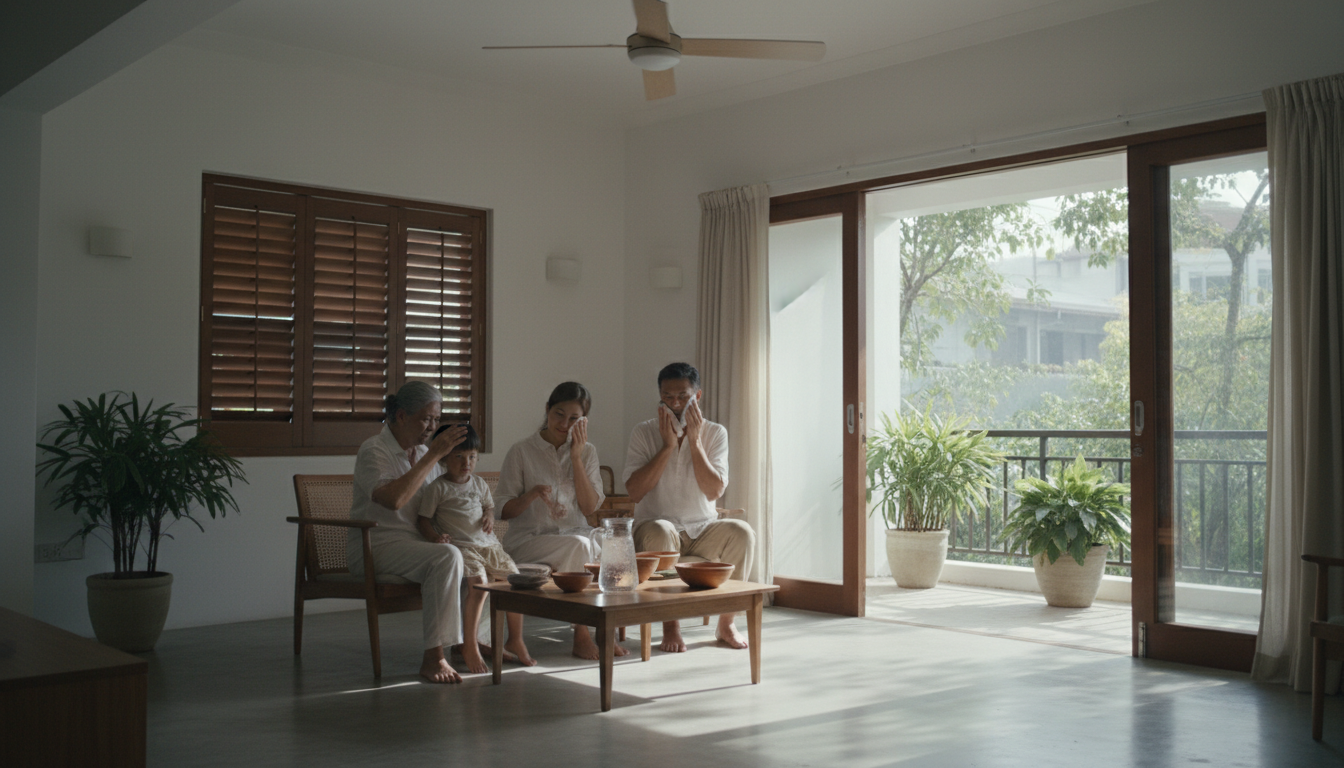
If someone becomes confused, collapses, has a seizure or has severe symptoms after exposure to heat, treat possible heat stroke as a medical emergency: call 995 in Singapore, move the person to a cooler place and begin active cooling while help is on the way. Use cool water on skin, a cool bath or safe immersion where feasible, fans and cold wet towels or ice packs around the neck, armpits and groin. Do not force drinks into a person who is unconscious, confused or unable to swallow safely.
For everyone else, surviving several dangerously hot days means reducing exposure before illness develops. Check Singapore’s official heat stress advisory, schedule activity for cooler periods, take regular cooling breaks, drink safe fluids according to your health needs, keep indoor spaces as cool as practical and check older people, infants, outdoor workers and neighbours who may not be able to cool themselves. This is a family-focused seven-day heat emergency playbook, not a prediction that a particular heatwave is imminent.
- Immediate danger: confusion, fainting, seizures or altered consciousness after heat exposure require emergency medical help and rapid cooling.
- Heat exhaustion warnings: dizziness, nausea, headache, marked weakness, heavy sweating and intense thirst mean stop activity and move to cool surroundings.
- Check Singapore’s heat stress level: the Meteorological Service Singapore (MSS) publishes Wet-Bulb Globe Temperature information and public advice.
- Moderate outdoor heat stress: reduce prolonged outdoor activity and take regular shade or indoor breaks.
- High outdoor heat stress: minimise prolonged outdoor activity and increase cooling breaks.
- Hydrate sensibly: drink safe fluids through the day; people with kidney, heart or other medical fluid restrictions need their own clinician’s advice.
- Children, infants, older adults and pregnant people need additional attention and may become unwell even when an active young adult feels fine.
- During a power outage: reassess home temperatures, medicine, accessible cooling and whether safer alternative accommodation is necessary.
- Never leave a child, older person or pet in a parked vehicle, even if windows are partially open.
- Recovery: symptoms worsening or not improving promptly need medical review; heat stroke is never simply ‘rest it off.’
Quick Information: Heat Stress Versus a Heatwave
Singapore’s Meteorological Service heat stress page reports Wet-Bulb Globe Temperature, or WBGT. WBGT takes into account humidity, air temperature, wind and solar radiation and is not the same number as air temperature. Singapore’s explanation of heat stress says the advisory helps the general population manage prolonged outdoor activities, particularly when exposed to direct sun.
The familiar public-advisory bands are low WBGT below 31°C, moderate from 31°C to below 33°C, and high at 33°C and above for prolonged outdoor activity. Moderate means reduce exposure and take regular breaks; high means minimise prolonged outdoor activities and cool more frequently. These numbers are not clinical thresholds that determine when an individual is safe, and the advisory is not a substitute for school, worker or medical-specific guidance.
Singapore also has a formal heatwave definition. In a May 2026 parliamentary response, the Ministry of Sustainability and the Environment described a heatwave as three consecutive days when the daily maximum temperature averaged across weather stations is at least 35°C and the period’s average daily mean temperature is at least 29°C. A person can experience dangerous heat stress even when that formal heatwave definition has not been met.
Why Heat Can Become a Life-Threatening Emergency
The body normally cools through several mechanisms, including sweating and evaporation. When humidity is high, sweat evaporates less easily, reducing cooling. Direct sunlight, hot surfaces, heavy clothing and physical exertion can further increase heat load. A person may retain more heat than the body can release.
Heat illness exists on a spectrum. Mild symptoms such as cramps or fatigue may progress to heat exhaustion, severe dehydration or heat stroke. Heat stroke occurs when heat regulation fails and the body is dangerously overheated, often with altered mental status. It can cause permanent injury or death if treatment is delayed.
A severe heat event need not damage buildings or close roads to be a public emergency. It can quietly overwhelm frail people, those working outdoors, residents without cooling, and families dealing with other disruptions. Heat is particularly dangerous when combined with a power failure or loss of safe drinking water.
The First Decision: Is This Heat Stroke?
Look for confusion, unusual behaviour, inability to speak clearly, fainting, seizures or loss of consciousness in someone exposed to heat. Skin may be hot and dry, but a person with heat stroke may also be sweating heavily. Do not rule out an emergency simply because the person has not stopped sweating.
The CDC’s heat-related illness guidance recommends emergency medical care and rapid cooling for heat stroke. In Singapore, call 995. Move the person away from heat if safe, remove excess outer clothing and cool vigorously using cool water, wet cloths and airflow. Safe immersion in cold water can cool rapidly when suitable and with continuous supervision.
Do not delay cooling while searching for a thermometer or waiting for a private ride. Do not give fluids by mouth to someone who is unconscious, confused, vomiting repeatedly or unable to swallow safely. Follow the emergency operator’s instructions about first aid and positioning.
The First Five Minutes When Someone Collapses
- Assess the scene before approaching. Do not expose yourself to the same dangerous heat or traffic hazard.
- Call 995 promptly if heat stroke is suspected; give the location and describe the confusion, collapse or other symptoms.
- Get the person into shade, air-conditioning or another cooler place as safely as possible.
- Remove excess outer clothing and begin cooling with water on skin, wet towels and air movement; cold packs can be placed at the neck, armpits and groin.
- If safe and supervised, cold-water immersion may be used where feasible and consistent with responder advice. Prevent drowning and do not leave the person unattended.
- Monitor breathing and responsiveness. If they are not breathing normally, follow the operator’s instructions for CPR.
- Continue cooling and supporting the person until medical responders take over.
The order matters. Heat stroke is not a condition to ‘sleep off’. The safest household behaviour is to summon qualified help and start cooling, rather than debating whether the person is just tired.
Heat Exhaustion: The Warning Before a Worse Event
Heat exhaustion may cause headache, nausea, dizziness, heavy sweating, weakness, irritability, thirst and reduced urine output. Stop physical activity immediately and move into cool or shaded surroundings. Loosen unnecessary clothing, cool the skin and rest while somebody stays with the affected person.
If the person is fully alert and can swallow safely, frequent small sips of cool water or an appropriate rehydration beverage may help. Do not demand rapid consumption of huge quantities. People with prescribed fluid restrictions need individual professional advice. Watch for worsening symptoms, vomiting or loss of alertness.
Seek medical assessment when symptoms persist, worsen or are significant. A patient who becomes confused or collapses should be treated as possible heat stroke, not as ordinary exhaustion. The distinction is clinically important, and a home article cannot reliably diagnose it from appearance alone.
The Difference Between Air Temperature and WBGT
An ordinary weather app often displays air temperature. WBGT goes further by considering humidity, direct solar heat and wind. Two afternoons with the same air temperature can pose different heat stress risks because one is sunnier, more humid or has weaker wind.
The MSS explains that WBGT is particularly useful for planning prolonged outdoor exercise and similar activity. A WBGT reading from a sensor is not the temperature inside your home or a measure of your personal heat tolerance. Individual health, acclimatisation, clothing, medications and workload also change risk.
Do not use a generic ‘it is only 32 degrees’ argument to dismiss dizziness or severe weakness. Symptoms should take priority over reassuring-looking numbers. Conversely, one high WBGT reading should lead to proportionate protective action rather than an automatic conclusion that every indoor activity is unsafe.
First Day: Make a Practical Cooling Plan
Before the hottest part of the day, identify the coolest safe rooms in the home and when direct sun reaches the windows. Use curtains, shutters or suitable shading to limit solar heating. Ventilate when outside air is safe and beneficial, and use fans or air-conditioning in ways suited to conditions.
Arrange drinking water where people spend their time. Reduce intense exercise and heavy chores during high heat stress, especially outdoors. Move unavoidable errands to cooler hours, take shade breaks and avoid walking long distances merely to follow a normal schedule.
Assign one person to check vulnerable household members at sensible intervals. A relative may need assistance obtaining water or turning on a fan. Another person may need a reminder to take breaks because they do not readily notice rising body heat.
Staying Cool in a HDB Flat or Apartment
Homes can differ greatly in heat exposure. Top floors, west-facing rooms, poor shade, crowded living areas and appliances that release heat can change comfort. A flat with air-conditioning may be more manageable, but not everyone has access to it or can operate it continuously.
Reduce unnecessary indoor heat from cooking, prolonged use of heat-producing appliances and direct sunlight. Use safe shading and airflow. A fan can improve comfort under many circumstances, but moving hot humid air is not a guarantee against heat illness, especially when someone is already seriously overheated.
If an apartment remains dangerously hot and an accessible cooler place is available, consider moving for a period if travel is safe. Avoid naming a random public building as a guaranteed overnight cooling shelter. Check actual opening arrangements, accessibility and any official heat response information.
The Problem with Humidity
High humidity slows sweat evaporation. A person who has been sweating for an hour may not cool effectively despite being covered in moisture. This is particularly relevant in Singapore’s tropical climate. Shade reduces solar radiation, but a humid enclosed space may still be uncomfortable.
Cooling methods can be combined: move away from direct sun, reduce activity, use water on the skin, circulate air, and seek air-conditioning or another genuinely cooler environment where possible. Clothing that is loose and appropriate for the weather can help.
A dark, unventilated room is not always the coolest room simply because sunlight is blocked. Check actual conditions and whether fresh outdoor air is safe to admit. During hazardous haze or a chemical alert, ventilation decisions may need to balance a separate air-quality risk.
Drinking Enough Without Overdoing It
Drinking regularly is useful during heat exposure, especially when sweating. However, there is no single amount that suits every adult or child. Body size, activity, climate, food intake, pregnancy, medications and medical conditions matter.
People with kidney failure, heart failure or prescribed fluid limits should not ignore their treatment plan because of generic heat advice. Ask a clinician how to adapt during unusually hot weather. Heavy sweating over long periods may also involve salt loss, and severe symptoms need assessment rather than homemade dosing experiments.
Avoid forcing very large volumes of plain water in a short time; overhydration can also be dangerous. Offer drinks to alert people who can swallow safely and encourage regular breaks. A confused or unconscious person requires urgent medical help and should not be given oral fluids.
Infants and Young Children
Infants depend on adults for cooling and hydration decisions. Dress them appropriately, keep them out of prolonged direct sun and monitor feeding, alertness and wet nappies. A young child may become distressed or lethargic before being able to explain dizziness or thirst.
Do not leave children in parked cars, including for a brief errand. Vehicle interiors can become dangerously hot. Also avoid leaving prams in direct sun with coverings that obstruct airflow. A shaded area and adult supervision are essential.
Schools and childcare centres should follow their own prevailing heat-stress and activity policies. Parents can reinforce a simple rule: stop, find shade, tell an adult when dizzy, and take water breaks. The aim is confidence, not fear of ordinary outdoor play.
Older Adults and People Living Alone
Older adults may be vulnerable because of chronic health conditions, medications, reduced mobility, limited access to cooling or difficulty recognising symptoms. The Singapore MOH parliamentary answer dated 6 October 2026 emphasises prevention, early recognition and the role of caregivers while local research continues.
A useful check-in asks practical questions: Does the room feel unusually hot? Is water within reach? Has the person eaten, taken medication and had an opportunity to cool? Are they alert and responding normally? An older relative may not wish to be treated as helpless, so offer assistance while respecting autonomy.
If someone is confused, collapses, has chest pain or trouble breathing, escalate appropriately. Do not let the idea of ‘not worrying the neighbours’ delay necessary medical care.
Pregnancy and People with Chronic Conditions
Pregnancy increases physiological demands, and pregnant people may need extra precautions during heat exposure. Chronic conditions involving the heart, kidneys, lungs, circulation or thermoregulation may affect tolerance. Some medicines also change sweating or fluid balance.
The right advice is individual. Ask a treating professional about medicines and hydration when a person is medically vulnerable. Do not stop, skip or double a medicine merely because it is hot. Store temperature-sensitive medicines according to the pharmacy label; a room’s heat can affect medicine stability.
If symptoms develop, seek appropriate assessment rather than attributing everything to weather. Heat can coexist with infection, cardiovascular illness and other urgent problems. An article helps with recognition but cannot diagnose the cause of a particular person’s symptoms.
Outdoor Workers and Delivery Riders
People who work outdoors may face repeated exposure while carrying loads, wearing protective clothing or moving between hot surfaces. Workers must be able to stop when unwell, access safe water and cooling breaks, and report symptoms without pressure to keep going.
Singapore’s Ministry of Manpower heat stress measures require particular provisions for applicable outdoor work, including hydration, rescheduling where feasible, shade and rest. The details depend on work sector and relevant WBGT conditions. Employers should consult the current sector rules rather than treating a consumer article as a workplace compliance checklist.
A delivery worker who feels dizzy should not be encouraged to finish one more order as a test of toughness. Heat injury can progress quickly. Stop in a safe place, seek cooling and obtain assessment if symptoms are significant.
Sport, PE and School Activities
A high heat-stress advisory changes the decision about a long outdoor run, team training or sports festival. The public advisory applies to prolonged outdoor activity for the general population. Athletes and schools may have additional specific protocols because exertion, supervision and acclimatisation matter.
Coaches and teachers should plan adequate water, breaks, shade and a clear response to any player becoming unwell. Students should be able to report dizziness or headache without being punished for ‘lacking effort’. Avoid running an intense session merely because the calendar says it is training day.
If a player becomes confused or collapses, call emergency services and cool immediately. For lesser symptoms, stop the activity, move to cool surroundings and seek assessment when appropriate. Return to strenuous exercise should follow recovery and relevant medical or school guidance.
Heatwave Plus Power Outage: Two Emergencies Interacting
A blackout removes fans, air-conditioning, refrigeration, lifts and perhaps communications. It may turn an otherwise manageable hot day into an unsafe indoor environment, especially for people with medical devices or reduced mobility. The family should reassess conditions rather than rigidly follow a ‘stay home’ instruction written for another hazard.
Conserve safe drinking water and phone battery, keep medicines at their required storage temperatures where possible and identify a genuinely cooler accessible place if necessary. Check whether the route is safe and whether the building or destination is open. Do not run combustion generators, charcoal or fuel-burning equipment indoors to create electricity.
The eduKateSG first 72 hours blackout playbook addresses food safety, lifts and power-related dangers. Heat must be considered as an additional household risk when the two disruptions overlap.
First 24 Hours: A Simple Schedule
Morning: Review Conditions
Check the official heat-stress advisory and the day’s weather outlook. Identify necessary outdoor activities and whether they can be shortened or moved. Make sure water and basic cooling methods are accessible. Contact a vulnerable relative if they live alone.
Late Morning and Afternoon: Reduce Exposure
Minimise strenuous outdoor activity during high heat stress, use shade and rest frequently. Move vulnerable people into cooler surroundings. Watch for dizziness, intense thirst, weakness, headache, vomiting or behavioural changes. Stop the activity at the first concerning sign rather than waiting for collapse.
Evening: Check Residual Heat
Some indoor spaces remain hot after sunset, and humidity can still limit cooling. Confirm that bedrooms are comfortable enough for rest and that anyone with a medical condition is well. Rehydrate sensibly and prepare water and shade for the following day.
Overnight: Plan for the Next Morning
An unusually hot night can disrupt sleep. Check that infants, older adults and people who cannot adjust their own environment have safe access to cooling. If an emergency symptom appears, act immediately; heat illness is not limited to daylight hours.
Days 2–3: Prevent Accumulated Fatigue
Heat stress can build when people work long shifts, sleep poorly, forget to drink or keep performing strenuous chores. Ask each family member how they feel and adjust the day’s plan. An individual who was comfortable on day one may not be comfortable on day three.
Reschedule non-essential outdoor errands, arrange reasonable childcare routines and monitor medicines and food storage. If a household lacks effective cooling, seek a practical alternative and check official community support arrangements when needed.
Do not treat an improvement in one weather reading as a declaration that everyone has recovered. A person who recently experienced heat illness may require medical evaluation and a cautious return to activity.
Days 4–7: Keep the Plan Sustainable
By the fourth day, people may become frustrated with changed schedules. Build a routine that still allows safe work, learning and social contact where possible. Plan shorter activities, regular breaks and cooler indoor tasks. Children should have predictable opportunities for movement without intense midday exposure.
Check older relatives and neighbours who may be struggling quietly with bills, broken fans or limited ability to travel. Practical assistance—water, a welfare call or help reaching a cooler setting—can be more effective than long warnings.
A seven-day plan is a planning horizon, not a prediction of how long a heatwave lasts. Always refer to current observations and public advisories and adjust when conditions change.
A Household Cooling Kit
- Safe drinking water and cups that children and older residents can reach.
- Light, loose clothing suited to the weather and protective sun items.
- Clean cloths or towels for cool compresses and skin wetting.
- Working fan or air-conditioning where available and appropriate.
- Thermometer for health monitoring, without using it as the sole test for heat stroke.
- Necessary medicines stored as instructed by a pharmacist.
- Paper contacts, emergency numbers and a charged phone or power bank.
- A plan to reach accessible cooler premises if a home becomes unsafe.
A kit does not need specialist survival technology. Its real value is making cooling easy before symptoms appear. It should also be reviewed whenever a household member’s health needs change.
Four-Week Preparation Plan
Week 1: Learn the Warning Signs
Explain heat exhaustion and heat stroke to the household. Teach that confusion, collapse or seizures after heat exposure call for emergency help and immediate cooling. Children should know to tell an adult early when dizzy or sick.
Week 2: Improve the Home Environment
Find rooms exposed to direct afternoon sun and add safe shading where practical. Check whether fans work, whether water can be reached easily and whether temperature-sensitive medicines are stored properly. Identify a safer cooling alternative if the home becomes uncomfortably hot.
Week 3: Plan Outdoor Activities
Check the MSS heat-stress advisory and adjust outdoor plans. Talk to schools and workplaces about their relevant protocols. Reduce unnecessary high-exertion activity during high heat stress and arrange cooling breaks.
Week 4: Review Vulnerable People and Communication
Check on older relatives, young children, pregnant people, residents with chronic illness and anyone who works outside. Write down useful contacts. Practise the first-minute response for a person who suddenly becomes confused and overheated without creating a frightening staged emergency.
Mistakes That Can Make Heat Illness Worse
One mistake is assuming heat stroke requires dry skin; people may still sweat. Another is telling someone confused or collapsing to drink a large bottle of water. A third is giving fever-reducing medicine as if heat stroke were an ordinary infection. Heat illness requires cooling and medical assessment rather than home fever treatment.
Other errors include pushing through dizziness, using only air temperature instead of the relevant heat-stress advisory, leaving people in parked vehicles, overlooking indoor heat after sunset and forgetting those who live alone. A home with fans is not automatically safe for a medically vulnerable resident if conditions remain extreme.
The correction is simple: reduce exposure before symptoms, stop activity when unwell, cool promptly and escalate emergency warning signs. Families should have permission to change plans rather than prove endurance.
Three Practical Family Scenarios
Scenario 1: A Student Feels Faint During Outdoor Training
The student tells the teacher or coach and stops immediately. An adult moves them to a cooler space, offers appropriate cooling and evaluates symptoms. If the student becomes confused, collapses or otherwise shows emergency signs, medical services are contacted and rapid cooling begins. Completing the run is no longer relevant.
Scenario 2: An Older Resident’s Fan Stops During a Hot Night
A relative checks the room, provides water consistent with medical advice and arranges access to a genuinely cooler space if necessary. The family does not wait for severe symptoms before considering assistance. If the resident is disoriented or has trouble breathing, they seek emergency medical care.
Scenario 3: A Parent Needs to Collect a Child at Midday
The parent checks the heat-stress advice, carries safe water, plans a shaded route and avoids a longer unnecessary walk. If the child is unwell, rest and appropriate medical care take priority over the normal appointment timetable. Preparedness makes an ordinary family task safer without requiring life to stop.
Frequently Asked Questions
What is the difference between heat stress and a heatwave?
Heat stress is the body’s exposure and response to environmental conditions, and Singapore’s WBGT advisory helps guide prolonged outdoor activity. A formal heatwave is defined using consecutive days of high daily temperatures. Dangerous heat stress can occur without a declared heatwave.
What is WBGT?
Wet-Bulb Globe Temperature combines factors including humidity, air temperature, wind and solar radiation. It is not directly interchangeable with an ordinary thermometer reading.
What WBGT is considered high in Singapore’s public advisory?
For prolonged outdoor activity, the high category begins at 33°C WBGT. It signals the need to minimise outdoor activity and increase cooling breaks, but it is not a medical threshold for every person.
Can heat stroke happen while someone is sweating?
Yes. Profuse sweating can occur in heat stroke. Confusion, collapse, seizures and altered mental status are urgent warning signs regardless of whether the skin is wet or dry.
What should I do if someone has suspected heat stroke?
Call 995 in Singapore, move the person somewhere cooler and start active cooling using cool water, wet cloths, air movement or other safe methods while responders are on the way.
Should I force water into an unconscious person?
No. Never give oral fluids to someone who is unconscious, confused or unable to swallow safely. Urgent medical help and cooling are priorities.
Can fever medicine treat heat stroke?
No. Ordinary fever-reducing medicines are not a substitute for rapid cooling and emergency medical care in suspected heat stroke.
Are fans enough during an extreme heat emergency?
Fans can help under many conditions but are not guaranteed protection when heat and humidity are severe. Evaluate the actual indoor environment, symptoms and availability of safer cooling.
How much should I drink in hot weather?
Needs vary by person, activity and medical condition. Drink sensibly and regularly; anyone with a prescribed fluid restriction should follow their clinician’s advice.
Are young children at greater risk?
Infants and children can have difficulty recognising or communicating heat symptoms. Provide supervision, shade, cooling and age-appropriate fluids and feeding. Never leave them inside parked vehicles.
Do older adults need extra attention?
Yes. Older adults, especially those with chronic conditions, may be more vulnerable. Caregivers should check wellbeing, water access and cooling without waiting for severe symptoms.
Can heat illness occur at night?
Yes. Humid indoor conditions and accumulated heat can cause discomfort or illness outside daylight hours. Watch symptoms and keep safe cooling options accessible.
Should schools stop all outdoor activity when it is hot?
Follow school-specific heat-management protocols and the relevant heat-stress advisory. The right level of adjustment depends on conditions, intensity, age and health status rather than one blanket assumption.
What if the electricity goes out during high heat?
Reassess home safety, medical needs, indoor temperature and access to cooling. If conditions become unsafe, seek an accessible alternative when travel is safe and follow any official directions.
What to do when heat meets a water interruption
An unusually hot week becomes harder when taps stop running. Do not assume that all tap water is contaminated merely because it is unavailable, and do not use unknown sources simply because someone is thirsty. Keep a reasonable sealed reserve and follow water-provider instructions. When safe water is scarce, reduce physical exertion and reach an appropriate cooler location when feasible.
Someone experiencing suspected heat stroke should receive immediate emergency medical help and active cooling; neither a water-distribution timetable nor a generic hydration recommendation is an adequate response. Those with kidney or heart conditions may also have prescribed limits on fluid intake and need individual guidance. The practical task is to keep cooling, water access and healthcare decisions connected but distinct.
Connected Black Swan and Doomsday survival playbooks
Use the playbook for the current verified hazard. Different emergencies can interact, but official incident instructions always take priority over generic planning examples.
Official Sources and Related Reading
- Meteorological Service Singapore — Heat Stress and WBGT
- MSS — Learn About Heat Stress
- Ministry of Sustainability and the Environment — Heatwaves, May 2026
- Ministry of Health — Older Adults and Heat-Related Illness, October 2026
- Ministry of Manpower — Heat Stress Measures for Outdoor Work
- US CDC — Heat-Related Illnesses and First Aid
- American Heart Association — First Aid Guidelines for Heat Stroke
- eduKateSG — Power Grid Failure, First 72 Hours
- eduKateSG — Water Supply Failure, First 72 Hours
The essential lesson: surviving extreme heat is less about heroic endurance and more about cooling early, adjusting activity, helping vulnerable people and recognising emergencies. Heat stroke requires immediate medical help and active cooling; everyday prevention should keep most families from reaching that point.