
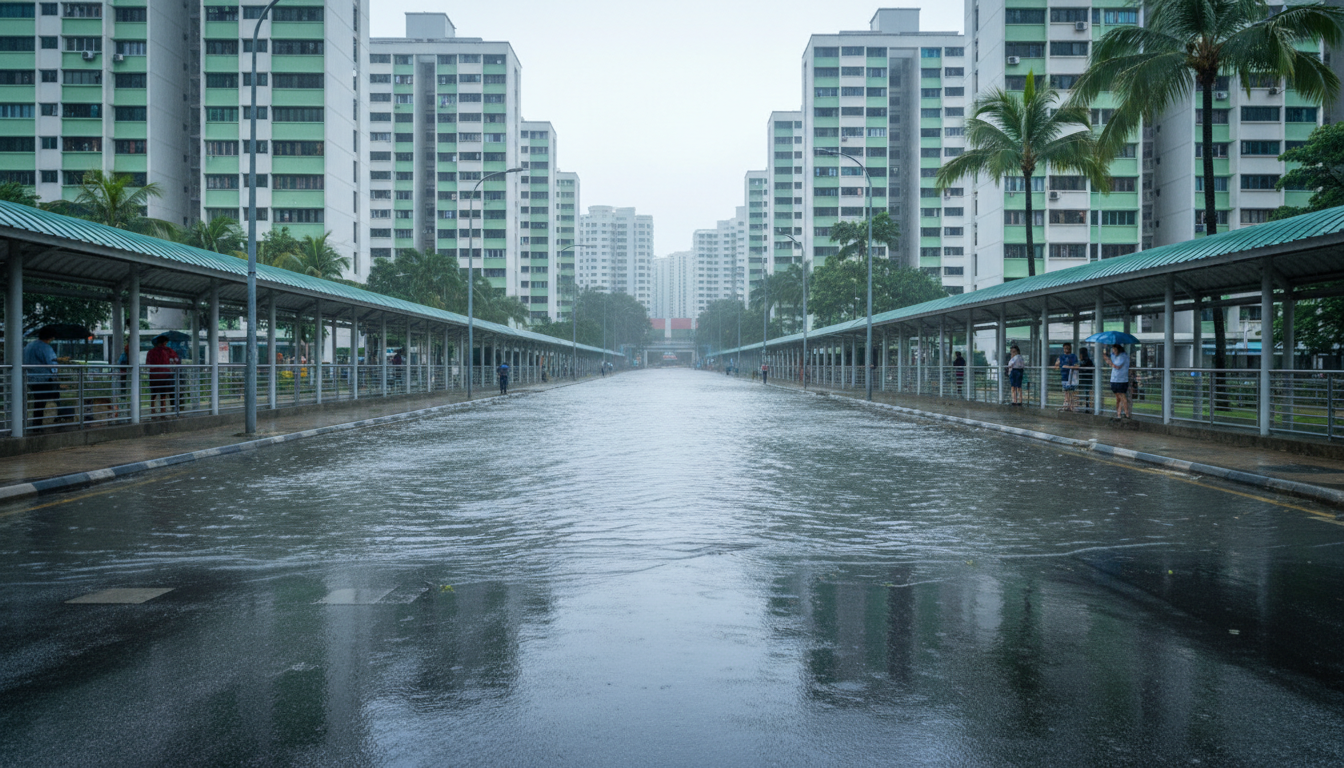
If water is rising quickly around you, turn away from flooded roads, footpaths, drains and underpasses, and move to safe higher ground without delay. Do not try to walk through moving floodwater, recover a vehicle, cross an unseen drain or touch an electrical switch while wet or standing in water. In Singapore, follow PUB flood alerts and official directions. A longer route is safer than a shortcut through water whose depth, current and hazards you cannot see.
For families, a severe flood is a sequence of decisions rather than one dramatic moment: recognise the warning, stop the journey, move away from danger, account for people and only then think about belongings, transport and recovery. This playbook explains what to do on foot, in a car, at home, in a shop and with children or older relatives. It draws on Singapore’s national water agency and established public-health flood guidance; always obey incident-specific instructions from local responders.
- The immediate rule: avoid flooded areas, turn back and move to higher ground.
- Do not walk through moving water above ankle height; even shallow moving water can destabilise a pedestrian.
- For drivers, avoid a road when floodwater is above the kerb or markings are no longer visible. Never bypass closures or barriers.
- If a vehicle stalls in rising floodwater, do not restart its engine. Seek safe higher ground and assistance.
- If water enters a home, do not touch switches, sockets or appliances while wet or standing in water.
- Keep children away from floodwater, open drains, waterways and waterlogged playgrounds.
- Use PUB’s official flood-alert channels, including MyENV and PUB flood updates, rather than social-media rumours.
- After waters fall, evaluate electrical safety, drinking water, contaminated food, hidden debris and wet materials before resuming normal life.
Quick information: when the sky suddenly opens
PUB’s Flood Safety Tips present five practical actions under F.L.A.S.H.: follow flood alerts, learn precautions, avoid flooded areas, share accurate updates and help other people where possible. The strongest personal decision is often the least dramatic one—stop, turn around and use an alternative route.
This is a general survival guide for severe flooding, not a forecast that a particular part of Singapore will experience a catastrophe. The term Black Swan here means a high-impact disruption that overwhelms ordinary routines, not a claim that common heavy rain itself is unimaginable. The severity of a specific flood depends on rainfall, drainage, terrain, water movement, infrastructure and response. Do not use a generic guide to overrule a real warning.
The first decision: is it safer to move or stay?
Ask three questions. First, is the place you are standing already unsafe? Second, is there a short, known route to higher ground that does not cross water? Third, have authorities instructed people to shelter or evacuate? If you can move safely away from rising water, do it early. If an exit is already submerged or moving water blocks the path, do not blindly push through. Seek help, remain away from electrical hazards and follow responders’ instructions.
A person standing under a covered bus stop may mistake dry shelter for safety. A covered roof does not stop rising road water, hide an open drain or protect a person standing near an electrical cabinet. Look at the ground, not just the rain. Watch whether water is advancing across the footpath, whether it moves strongly around obstacles and whether safe higher ground remains accessible.
In a flooded building, higher floors are generally preferable to basements or lower levels when water rises, but only if the structure and route remain safe and this does not conflict with specific instructions. Do not enter lifts through water or use stairs with dangerous currents. If a building is threatened, authorities may direct a different response. The purpose of this decision tree is to prevent a bad move made out of panic.
Why shallow water is more dangerous than it looks
Floodwater is not ordinary bathwater. It may be moving faster than it appears, conceal missing drain covers, carry sharp debris and bring contaminated runoff into places people ordinarily regard as clean. A child can be knocked down in water that an adult considers manageable. Even a confident swimmer is not protected against a drain opening, strong current, collision or electrical hazard.
The US CDC’s floodwater safety guidance, updated in August 2026, warns that floodwater can cause infection, chemical exposure and injuries. It advises people not to drive through flooded areas and to avoid water contact. These are broad safety principles; PUB’s local instructions remain the first reference for Singapore flood alerts and roads.
People sometimes compare flood depth with the height of their shoes. That misses the direction and speed of moving water, the presence of mud, unseen holes and sudden changes in level. Do not test a murky flood by stepping further into it. Move away before the current becomes an argument you cannot win.
What to do if you are walking or commuting
- Stop before the flooded section, remain well back from the water’s edge and identify a higher safe route.
- Follow PUB flood alerts and transport-operator notices if buses, MRT stations or road routes are affected.
- Avoid underpasses, low crossings, canal edges and any path whose surface you cannot see.
- Do not wade to retrieve dropped property, bicycles, parcels or shoes.
- If you must temporarily wait, choose an elevated, secure and accessible place, not the middle of an active roadway.
- If another person is in danger, call emergency responders; do not enter swift water and become a second casualty.
- Tell family members where you are using a short, factual message, and avoid forwarding unverified flood pictures.
A train passenger may need to change routes while road traffic is diverted. A parent collecting a child may need to wait for school instructions rather than cross an affected road. The familiar routine—shortest walk, usual bus, usual pick-up gate—should be suspended when a warning changes the risk. Being late is not evidence that a hazardous route has become safe.
What to do if you are driving
The central rule for motorists is to avoid entering floodwater. PUB cautions against driving through water above road-kerb height or where road markings are no longer visible. Driving conditions can change quickly, and you cannot judge the surface or current through a windshield. Turning back early may cost time but avoids losing the car, blocking emergency access or endangering passengers.
If a flood begins around a vehicle, slow down safely and look for an exit to higher ground without cutting across dangerous water. Do not brake or manoeuvre suddenly into traffic, and follow road closures. If the vehicle stalls in rising water, PUB advises not restarting it, switching on hazard lights, calling for assistance and moving to higher ground when it is safe to do so.
No general online instruction can determine whether someone should leave a particular trapped vehicle at a particular second. Water depth, rate of rise, current, traffic, children, doors and nearby shelter all matter. If you are trapped or imminent danger exists, contact emergency responders and follow their real-time guidance. Do not copy a dramatic rescue technique from an unrelated video.
What to do at home or in a shop
If flooding is forecast for premises known to be vulnerable, move important possessions, medicines and business documents above expected water level early. Check that lawful and appropriately designed flood barriers, drains and pumps are in working order. Do not start carrying heavy appliances once the floor is wet or the water is moving. Your body is more important than inventory.
PUB advises switching off main switches and disconnecting appliances before evacuation where it is safe to do so. Crucially, never touch electrical switches or appliances if your hands are wet or you are standing in water. If the safe access window has passed, leave the electrical work to qualified personnel or emergency services. A flooded extension lead is not a problem that needs to be solved immediately by hand.
In a shop, staff should be given a clear instruction to stop serving customers and move people away from the affected frontage when water threatens. The owner can document losses later. A retail floor, basement storage area or car park may fill in a way that is not visible from the main entrance. Warn others rather than walking into the water to ‘check how bad it is.’
The first fifteen minutes with children
Children often focus on the wrong thing when routines break: their school bag, a bicycle, a favourite shoe or the fear of missing an activity. Give a short, positive command: ‘Stay with me. We are going up to the dry path.’ Hold hands as appropriate, count the children, and choose a safe waiting point where adults can see everyone.
Avoid long explanations about possible disasters while they are still near danger. Once safe, explain why the family turned back: moving water can knock people down and hide drains. This teaches useful risk recognition without turning a rainy day into an apocalypse lesson.
For children at school or childcare, contact staff via authorised channels. Do not encourage a child to leave a secure building independently or meet a parent across a flooded street. The first instruction should be to stay with teachers or caregivers and follow the institution’s plan.
The first hour with an older person or mobility limitation
A wheelchair user, resident using a walking frame or person with impaired vision may not have the option of moving up an unfamiliar staircase quickly. Identify an accessible, safer route before severe weather when possible. If an evacuation becomes necessary, ask for authorised assistance rather than lifting someone unsafely through water.
Some people cannot hear alerts, read small text or carry a phone. Offer a simple explanation of what is known, what is uncertain and the next safe choice. Avoid physically moving an older person merely because you personally feel hurried. Assess real danger and arrange help that meets their mobility and medical needs.
How the disaster changes through time
0–15 minutes: preserve escape routes
Recognise the flood, stop approaching it and move safely to higher ground. Account for the people with you. Do not waste those minutes taking photographs close to moving water. The route may become harder or impossible as rain continues.
15–60 minutes: stabilise and verify
Check official alerts, inform family or an employer of your location, and identify safe shelter, toilets, transport alternatives and any urgent medical need. Keep communications concise. If you are responsible for others, assign one adult to watch each access route rather than sending everyone to inspect the flood.
1–6 hours: prevent secondary harm
If waiting is necessary, drink safe water, keep people away from risky edges and avoid rushing to reopen a flooded building. Monitor weather and local restrictions. People with medications, disabilities, infants or pets may need alternative accommodation or assistance.
6–24 hours: distinguish receding water from a safe return
A road may become passable before an electricity system or shop is safe. Flooded electrical fittings, food and storage rooms require separate inspection. Avoid speculative estimates of how quickly normal services will return. Follow premises owners, utility operators and government instructions.
24 hours and beyond: recover deliberately
Assess injuries, illness, water intrusion, electrical risk and mould. Photograph damage from a safe place, notify insurers where applicable and use appropriate protective equipment for clean-up. Do not re-enter an unsafe premises simply because it contains important documents.
Floodwater and the health risks after the rain
Flooding can create an after-emergency when contaminated water is tracked onto floors or into wounds. The CDC notes that floodwater can contain sewage, chemicals and sharp objects. Wash any exposed skin with soap and clean water as soon as practical, clean clothing thoroughly and seek medical advice for contaminated wounds, significant cuts or signs of infection.
Throw away food that has touched floodwater, even if the packaging looks acceptable. If authorities issue a drinking-water advisory, follow its exact instructions. A flood somewhere in a district does not by itself prove all tap water is unsafe, but a damaged supply or official notice can change that assessment.
Do not mix bleach with ammonia, acids or other cleaners. A home that has been wet may develop mould or contain damaged electrical components. For significant contamination, sensitive occupants or large clean-up tasks, use qualified professionals and public-health advice rather than improvised online mixtures.
The misleading moment: when the water level starts falling
People often experience enormous relief as the water moves away. That relief is reasonable, but receding floodwater does not repair a submerged socket, restore a road foundation or disinfect a flooded refrigerator. Check access, exposed wiring, the condition of floors and structural concerns before resuming routine work.
If you manage a property, do a staged reopening: first confirm the area is no longer hazardous, then arrange electrical checks, clear unsafe debris, document losses, dry materials, disinfect appropriate surfaces and tell people which rooms remain out of bounds. A shop can reopen one part safely while leaving another closed.
Three scenarios where ordinary instincts become dangerous
A family wants to walk through a flooded underpass
The underpass is familiar and the water seems shallow. The wrong question is whether everyone can step over the puddles. The right question is whether the route can hide drains, develop a current or rise before the family reaches the other end. Turn around and choose high, visible ground. A delayed dinner is not a disaster; entering unknown water could be.
A driver wants to rescue shopping bags from a stalled car
If the engine stalls and the water rises, the car’s contents are not worth another minute in danger. Do not restart the engine. If escape is safe, reach higher ground and seek assistance. If conditions prevent safe escape, contact responders. Insurance, vehicle repairs and lost shopping are recovery issues, not reasons to re-enter water.
A neighbour wants to turn off a flooded electrical outlet
The resident believes switching off the plug will prevent damage. Wet feet, wet hands and submerged fittings make the electrical hazard immediate. Do not touch the equipment. Withdraw to a safe dry area and obtain appropriate professional help. Electricity does not become safe because somebody feels competent or has gloves.
A household go-bag specifically for severe rain
- Compact torch or headlamp with working batteries; avoid open flames.
- Phone, charging cable, charged power bank and paper emergency contacts.
- Essential personal medicines, prescription list and items needed by people with disabilities.
- A small amount of clean bottled water and familiar shelf-stable food.
- Light rain protection and sturdy footwear suitable for safe dry-ground movement.
- Copies of key identity and insurance records stored in waterproof packaging.
- Infant, childcare, menstrual and hygiene supplies; pet provisions where relevant.
- A whistle, simple first-aid supplies and a list of who will assist each vulnerable household member.
The SCDF Ready Bag guidance emphasises portability. Do not turn the bag into a heavy suitcase that prevents you from moving safely. Keep essentials reachable and revise the contents when a child grows, medication changes or someone in the household develops new mobility needs.
A four-week plan to become flood-wise
Week 1: inspect real routes
Walk your normal route on a dry day. Notice which sections dip below road level, where canals or drains are visible, and how to reach higher ground without crossing traffic. Ask your children’s school about wet-weather collection procedures. The point is to understand geography, not to assign frightening disaster labels to places.
Week 2: establish the information chain
Bookmark PUB’s flood safety information and choose an official alert channel such as MyENV or PUB flood updates. Identify your transport operator and management office contacts. Tell the family which group chat contains verified instructions and which messages are merely personal observations.
Week 3: protect people and essential belongings
Review medicines, document storage, electric fittings near floor level and the suitability of flood protection for vulnerable premises. Prepare a light ready bag and check the route for a household member who cannot use stairs without assistance.
Week 4: rehearse one decision
During a calm moment, describe a familiar flooded crossing and ask: ‘What is the safe alternative?’ Practise turning back, sending a short message, and waiting for an authorised update. A useful drill ends when everybody knows the first move; it does not require pretending that the city has failed.
Frequently asked questions
Can I walk through ankle-deep floodwater?
Avoid entering floodwater. PUB specifically warns against walking through moving water above ankle height, but the true risk also depends on the current, ground and hidden openings. The safer default is to turn back and move to high ground rather than test depth with your feet.
Can a small car drive through a flooded road?
The safe default is no. PUB warns against driving through water above road-kerb height or when road markings are hidden; the CDC advises turning around at flooded roads. Follow closures and do not assume an SUV or a larger vehicle is immune.
Should I restart a car that stalls in floodwater?
No. PUB advises drivers not to restart a stalled vehicle in a flood. Turn on hazard lights, seek assistance and move to higher ground if it is safe to do so.
Is a covered walkway safe during heavy rain?
Cover keeps rain off your head but does not prevent flooding underneath. Check the ground, nearby drains and exit routes. If water is moving into the walkway, head to a safer higher place.
What if my home has water on the floor?
Keep away from submerged electrical equipment. Do not touch switches or appliances while wet or standing in water. Move people to safety, follow any evacuation instructions and use qualified help for electrical restoration.
When can I send children back to school after flooding?
Use school, transport and official safety notices. Do not infer normal operations simply because the rain has stopped. Access routes, electrical systems and on-site conditions may still need assessment.
Is floodwater safe once it looks clear?
No. Appearance is not proof of safety. Floodwater may contain sewage, chemicals, debris and infectious material. Avoid contact and wash any exposed skin with soap and clean water.
How do I clean flood-contaminated food and packaging?
Follow food-safety guidance. Food exposed to floodwater may need to be discarded, particularly perishable and poorly protected items. Do not taste-test it or rely on washing a compromised container.
What should I do if a road or footpath is still closed after the water falls?
Respect the closure. Road surfaces, electrical equipment and drainage structures may remain unsafe after visible water recedes. Use the official alternate route until reopening is confirmed.
Which Singapore source should I check first?
For flooding, begin with PUB’s flood alerts and Flood Safety Tips. Follow the relevant road, transport, building and emergency-service updates for your actual location. Verify the date and place of any photo shared on social media.
Flash flood, river flood and coastal inundation are not identical
People use the word ‘flood’ for several different water problems. A flash flood can develop rapidly after intense rainfall and can threaten low roads or pedestrian routes. A river or canal flood may involve water levels and overflow over a broader area. Coastal inundation has a different relationship with tides, storms and low-lying land. These categories can overlap, and a person in danger does not need to diagnose the category before reaching safe higher ground.
Why does the distinction matter once you are safe? It changes which official warnings, route closures and recovery conditions you should watch. A road that drains quickly after heavy rain may reopen sooner than a place experiencing persistent inundation or damaged infrastructure. Avoid making broad promises about how long a flood will last based on what happened in another city.
In Singapore, PUB publishes local flood advice and alerts. A visitor somewhere else should follow that country or region’s emergency management and meteorological services. Advice in this playbook is meant to support immediate decisions, not substitute for a location-specific flood warning.
The geography test before leaving home
On a dry day, draw the ordinary routes that your family repeats: school, work, the bus stop, groceries and visits to an older relative. For each route, identify a sensible alternative that avoids low-lying road sections and does not require crossing a major junction in unsafe weather. The exercise can be done on paper. Do not rely on an app remaining connected when heavy rain interrupts power, mobile service or transport.
Now imagine that one route closes. Which adults need to be informed? Can a child safely wait at school rather than be collected immediately? Does a wheelchair user have an accessible alternative, not merely a staircase? If the family has a meeting point, is it on clearly dry higher ground and accessible without crossing a drain or canal? A robust plan considers the slowest person and the most difficult journey, not just the fastest route on a good day.
Rainfall alerts, social video and the evidence hierarchy
A phone may show dramatic flood footage from a different estate, month or country. That video proves that water existed where it was filmed; it does not confirm conditions on your route. Before sharing, check the location, date and original source. Prefer an official alert and a confirmed closure over a popular post. If a friend sends a current observation, treat it as useful context, but do not attempt to reach the scene to verify it yourself.
A message to family can be precise: ‘The usual footpath is flooded, so I have turned back and am waiting at a safe covered higher location. I will use the official route update before travelling.’ This gives a decision and location without claiming a whole neighbourhood is impassable.
Recovery: the first 48 hours after water enters a property
Once responders or responsible authorities confirm that entering a property is safe, document its condition before clearing undamaged evidence of loss. Photograph affected floors, walls, appliances and stored materials from safe positions. Contact insurers or property managers for required procedures, and keep receipts for legitimate clean-up expenses. Record the date, time and extent of the intrusion where reasonably possible.
Waterlogged porous materials can retain moisture and encourage mould. The CDC’s returning-home guidance recommends drying and cleaning safely and warns that contaminated food and hidden mould may be hazards. Wet electrical components require qualified assessment; do not turn them on as a test. Avoid mixing household cleaning chemicals. When children are present, keep them out of clean-up areas with debris or contamination.
A simple recovery order is: establish safe entry, isolate electrical danger through authorised personnel, check injuries and water/food safety, photograph damage, remove unsafe debris with protective equipment, dry the premises, arrange professional repairs and only then return rooms to normal use. Skipping earlier steps to reopen faster can create more loss.
Businesses, employers and the people who have to clean up
A business should make its staff evacuation plan as clear as its property protection plan. Nobody should be instructed to stay in rising water to guard stock or use an unprotected electrical pump. Assign a person to communicate closures, one to document damage when safe and one to contact property management. Do not ask workers to clean contaminated rooms without suitable equipment and training.
A shop reopening can be phased. The front sales area may be accessible while a basement storeroom remains unsafe. Post clear boundaries and avoid allowing customers to enter partially restored spaces. Staff may need time to manage their own affected homes. An effective recovery plan protects the people who make reopening possible.
Five questions to ask before declaring the flood finished
- Is the immediate route genuinely dry and open, or are warning barriers still present?
- Have exposed electrical systems been made safe by authorised personnel?
- Are food, water and stored medicines protected from contamination?
- Can every family member or worker enter and exit without crossing a hidden hazard?
- Do official alerts and building management agree that normal access can resume?
The four-part Black Swan and Doomsday survival series
Choose the playbook that addresses the risk you actually face. A crisis can involve more than one problem, so keep related guides accessible without treating every scenario as equally likely.
Primary sources for this playbook
- PUB Singapore — Flood Safety Tips.
- PUB Singapore — Get Flood-Wise and Flood Alerts.
- US CDC — Floodwater Safety Guidelines.
- US CDC — Safety When Returning Home After a Disaster.
- SCDF — Ready Bag for Emergency.
Helpful reading within eduKateSG
The wider disaster library includes What to Expect During a Flood in Malaysia, Flash Floods in Vietnam and the First 72 Hours Blackout Playbook. These related pages address different local or cascading hazards; none replaces current incident instructions.
The single most helpful lesson: survival begins before floodwater reaches your feet. Notice the hazard, abandon the unsafe shortcut, move people to high ground, verify official alerts, then manage the property damage after the danger has passed. Calm decisions reduce the risk to everyone around you.