
Improving children’s vocabulary through travel and public transport begins with helping them understand the words people use to plan, wait, board, transfer and arrive. A child might know the word bus but be unsure what a route, platform, fare, interchange or service disruption means. These words make journeys easier to talk about and help children ask useful questions.
Parents searching for travel vocabulary for kids, public transport words, bus and train vocabulary or how to teach journey planning to children can use the forty-word table, travel dialogues and ten at-home activities here. The method applies to cities with buses, trains, trams or ferries, although exact transport systems and ticket rules differ by location.
Children do not need to travel independently to learn these expressions. A trusted adult can use a fictional map, a photograph of a station, a transport timetable or a supervised outing. The aim is understanding and communication, not treating a child as responsible for navigating busy roads or stations alone.
- Choose a journey: “We want to travel from the library to the park.”
- Name the important words: destination, route, stop, transfer and arrival.
- Show the meaning: a stop is a place where a service may pick up or drop off passengers; a transfer means changing services.
- Invite a question: “Where do we change?” or “Which stop comes next?”
- Model good uncertainty: check current official information instead of inventing arrival times or fares.
- Revisit: use a word in another route, story or mode of transport.
Why travel words are useful beyond transport
Travel language connects places, time, purpose and decisions. Depart is an action; departure names the action or event. Estimate suggests an approximation; schedule is a planned sequence. Accessible describes how a place or service can be used by people with particular needs. Children learn to communicate why a route suits one person but not another.
The Singapore Land Transport Authority’s journey-planning guide provides information about route planning, arrival details and fare payment options. Its live information should be checked before actual travel. A 2026 Ministry of Transport guide to inclusive transport also explains accessible features for people with different mobility needs.
These examples are grounded in Singapore, but the vocabulary is general English. A bus interchange in Singapore may serve a role similar to a bus terminal or transport hub elsewhere. Avoid assuming every country uses the same fares, platform systems, signs or assistance procedures.
Forty journey and public-transport words for children
Words 1–10: making a travel plan
| Word | Plain meaning | Useful example |
|---|---|---|
| journey | travel from one place to another | Our journey begins at the library. |
| origin | the place where a journey begins | The station is our origin. |
| destination | the place someone intends to reach | The park is our destination. |
| route | a planned path from one place to another | We compared two routes. |
| itinerary | a planned sequence of places, activities or travel steps | Our itinerary includes a museum and a park. |
| schedule | a plan of services or events and times | We checked the train schedule. |
| timetable | a table listing planned departures, arrivals or other times | The timetable shows service information. |
| estimate | a reasonable approximation | The app gave an estimated arrival time. |
| fare | the charge for a transport journey | An adult checked the applicable fare. |
| budget | a plan for how money will be used | The family planned a travel budget. |
A fare is not necessarily the same as an admission ticket to an attraction, and an estimated arrival time is not a guarantee. Words should be checked in the actual situation. Some transport systems charge by distance, zone or service type, so teaching a universal fare rule would be misleading.
Words 11–20: stations and useful signs
| Word | Plain meaning | Useful example |
|---|---|---|
| station | a place where passengers board or leave a train or other service | The station has two entrances. |
| stop | a designated place where a bus or other service may stop | We waited at the bus stop. |
| interchange | a place where passengers change between services or routes | We changed trains at an interchange. |
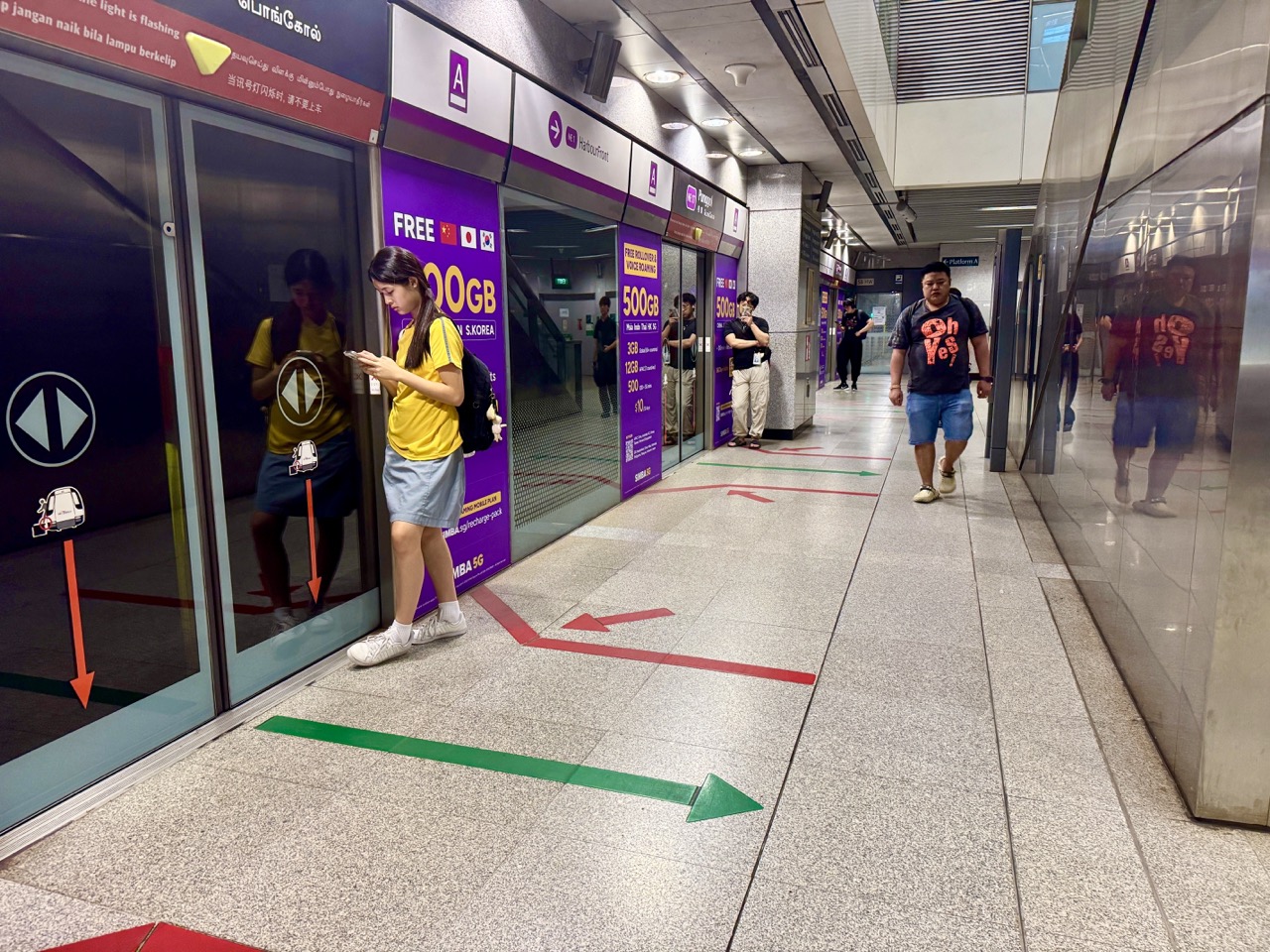
| platform | a designated area for boarding or leaving a train | The train departs from the signed platform. |
| concourse | a shared open circulation area in a station or building | We followed the signs through the concourse. |
| entrance | a way into a place | Which entrance is step-free? |
| exit | a way out of a place | We followed the exit signs. |
| signage | signs that help people navigate or understand rules | Clear signage shows the correct platform. |
| ticket | evidence of a right to travel or enter under given conditions | Some systems use digital rather than paper tickets. |
| concession | a reduced fare or benefit for eligible travellers in this context | An adult checked eligibility for a concession. |
Some stations have numbered exits while others use letters or landmarks. The word concession can also mean yielding in an argument, so its meaning depends on context. Never assume all children receive the same concession or travel-free status; official rules vary.
Words 21–30: moving through the journey
| Word | Plain meaning | Useful example |
|---|---|---|
| depart | leave a place to begin a journey | The bus is scheduled to depart soon. |
| departure | the event or time of leaving | Check the departure information. |
| arrive | reach a destination | We arrive at the museum stop. |
| arrival | the event or time of reaching a place | The arrival time is an estimate. |
| board | get onto a vehicle | Wait until it is safe to board. |
| alight | get off a vehicle | We alight at the next stop. |
| transfer | change from one service or route to another | We transfer at the interchange. |
| connection | a link between transport services or stages | We checked whether the connection was practical. |
| delay | something occurring later than planned | A delay changed the travel plan. |
| disruption | an interruption to normal service | The notice warned of a service disruption. |
The everyday verbs get on and get off are often clearer for young children than board and alight. Teach both, showing that their meanings overlap while some are more formal or common on transport signs.
Words 31–40: accessibility and sensible travel decisions
| Word | Plain meaning | Useful example |
|---|---|---|
| accessible | usable by someone with particular needs and abilities | We checked an accessible route. |
| step-free | not requiring the use of steps along the specified route | The selected path is step-free. |
| lift | a mechanical device for travelling vertically between levels | A lift may provide access to the platform. |
| escalator | a moving staircase used between levels | The adult checked the safer option for the child. |
| priority seat | a seat marked for passengers with particular needs in some systems | Offer appropriate consideration to others. |
| queue | a line or organised sequence of people waiting | We joined the queue. |
| crowded | containing many people in a limited space | The carriage was crowded. |
| alternative | another possible route or service | We chose an alternative when a path was closed. |
| announcement | a public spoken or displayed notice | We listened to the station announcement. |
| assistance | help provided to someone who needs it | We asked staff about appropriate assistance. |
Accessibility is broader than whether a route has a lift. Signs, physical access, crowded conditions, sensory needs and service interruptions can all matter. A step-free route may still have other obstacles. Parents should verify actual conditions rather than assuming a schematic map reveals every practical detail.
Worked example: a family journey to a library
Imagine a family planning to take a bus to a public library. The child says, “We get the bus.” Ask which bus they mean and where it travels. Explain route as the path the bus follows and destination as the place the family is trying to reach. Point to the bus stop on a fictional map.
The adult then says, “The bus will take us to the interchange, where we transfer to another service.” Ask whether transfer means leaving the transport system altogether. Not necessarily: it means changing from one service or mode to another during the journey.
Next discuss information quality. A printed timetable is a plan; an arrival display or app may provide a current estimate. Neither should be treated as a guaranteed time. If an official service alert reports a disruption, the family should check an appropriate alternative.
Later the child can explain a different route: “Our destination is the museum. We will board the train, transfer at the interchange and alight near the entrance.” This demonstrates useful vocabulary beyond the original library example.
Worked example: compare the shortest route with an accessible route
A fictional map shows Route A is shorter but contains stairs. Route B is longer and clearly marked as step-free. Ask which one is best. The answer depends on the traveller’s needs, not only the distance. For some passengers, the longer route may be much more suitable.
Teach compare, accessible, step-free and alternative. The child might say, “Route B is longer, but it is step-free, so it is more suitable for a traveller who cannot use stairs.” That is more accurate than simply declaring one route better for everyone.
Do not infer current access conditions from a hypothetical map. If travelling in real life, the adult should check official accessibility information, station notices and service status.
Worked example: a delay changes the plan
Imagine a bus is scheduled to arrive at 10:00, but the official display indicates an expected later arrival. Explain delay as something happening later than planned. A child could say, “The bus is delayed, so our arrival may be later.” The phrase may matters because the future remains uncertain.
Now ask whether a delay is the same as a cancellation. No. A service delayed may still operate later, while a cancelled service is not expected to run as planned. The child can compare the words and learn to ask a suitable adult for an updated plan.
Give a different example: a concert can be delayed, or a parcel delivery can be cancelled. A word learned in public transport now helps explain other situations.
Ten travel-language activities without requiring a journey
- 1. Paper bus route: Draw five stops and give the child a destination and route.
- 2. Platform detective: Read a fictional station sign and decide where the character must go.
- 3. Transfer puzzle: Use two coloured lines on paper and explain where services meet.
- 4. Arrival versus departure: Sort two fictional notices according to what happens at the start and end.
- 5. Fare versus ticket: Explain the difference between a travel charge and a document or record of entitlement.
- 6. Signage game: Create simple icons for entrance, exit, lift and information counter.
- 7. Service-disruption story: Invent a cancelled route and invite a reasonable alternative.
- 8. Accessibility comparison: On a fictional map, compare a stair-only path with a step-free path.
- 9. Calm request practice: Role-play asking station staff or a trusted adult which platform is appropriate.
- 10. Real-world word hunt: On a supervised trip, look for one genuine sign or announcement, then revisit its meaning at home.
Twenty questions parents can ask about travelling
- Where does the journey begin?
- What is the destination?
- Which service or route do we intend to use?
- What is a stop?
- How is a station different from a bus stop?
- Why do passengers transfer?
- What is an interchange?
- Where do people board?
- What does alight mean?
- What is the difference between an estimated and a scheduled time?
- What would a service delay change?
- How is a cancellation different from a delay?
- What information does a platform sign provide?
- Which route is accessible for a person who cannot use stairs?
- What does priority seating mean in this system?
- Why should we wait behind marked boundaries?
- Who can provide appropriate assistance?
- What should we check if the usual route is closed?
- How would you explain this journey to someone who has never been here?
- Can you use one travel word outside a transport context?
Choose only a few of these. A child on a busy platform needs supervision and clear safety instructions, not a long vocabulary quiz. The more thoughtful discussions can happen before or after the journey.
Travel vocabulary by age and experience
Preschoolers: Begin with bus, train, stop, go, wait, on, off, near and far. Use toy vehicles and pictures, and keep real journey supervision firmly with adults.
Early primary: Add route, destination, timetable, interchange, platform, transfer, fare and arrival. Ask the child to explain a two-step fictional journey.
Older children: Discuss alternative routes, accessibility, service alerts, estimates, concession eligibility and the distinction between a planned timetable and live information. A child can compare options but should still follow the family’s safety arrangements.
Different communication and mobility needs: Use accessible maps, photographs, audio, icons, gestures or a communication aid as needed. A child may learn the words without physically travelling along every route.
Travel safety and privacy
Do not allow young children to navigate busy roads, station edges, escalators or transport changes independently for the sake of language learning. Adults should supervise crossings and boarding, follow transport staff instructions, and prioritise the child’s wellbeing. Transport rules, assistance procedures and eligibility can change, so use the local operator’s current guidance.
Avoid sharing real travel itineraries, school commuting details or identifiable location information publicly. A fictional route teaches most of the vocabulary without exposing private details. If a child becomes separated or distressed, they need immediate help from an appropriate trusted adult or staff member, not a vocabulary exercise.
A four-week journey vocabulary progression
- Week 1 — Places: Teach origin, destination, stop, station and entrance using a simple map.
- Week 2 — Actions: Explain depart, arrive, board, alight and transfer through a toy route.
- Week 3 — Decisions: Compare timetables, fares, delay, disruption and alternatives using fictional notices.
- Week 4 — Real use: On a safe supervised outing or photo discussion, use several words in a fresh route explanation.
The sequence is optional. Some children will learn a word naturally during one family outing, while others need more examples. Accuracy and confidence matter more than finishing the list.
Common mistakes
- Assuming a timetable provides a guaranteed actual arrival time.
- Treating a ticket and a fare as the same thing.
- Calling the shortest route universally best without considering accessibility or safety.
- Confusing boarding with alighting or arrival with departure.
- Treating each country’s transport rules as identical.
- Asking a child to test public-transport navigation alone.
- Making a busy station an uncomfortable classroom.
Frequently asked questions
What transport vocabulary should children learn first?
Start with bus, train, stop, station, route, destination, wait, board and alight when these words fit the child’s real life. Introduce transfer and interchange for longer journeys.
Does using public transport improve children’s vocabulary?
Travel creates chances to notice signs, ask directions and discuss plans, but learning depends on clear explanations and opportunities to use words again. A ride alone does not guarantee progress.
What is the difference between a route and an itinerary?
A route is the path between places, while an itinerary is a broader planned sequence of travel stages, places or activities. They can overlap in a journey description.
How do children learn the meaning of transfer?
Show two routes meeting on a fictional map. Explain that a transfer involves changing services or modes during the journey, and ask the child to describe where the change occurs.
Should children use live travel apps to practise?
Not necessarily. Adults can use current official information and explain terms without giving a child an account or sharing their location. A paper map is enough for many activities.
More eduKate vocabulary guides
This article owns practical journey planning, transport services and traveller language. For position and map words, visit 36 Spatial Words. For shopping and fare comparisons, use 40 Money Words; for requests and clarification use Asking for Help. The Vocabulary Learning Hub and Vocabulary connect the wider collection.
Sources and editorial note
Grounding: Singapore Land Transport Authority: Plan Your Journey and Singapore Ministry of Transport: Inclusive Transport, last updated August 2026. These official pages should be checked for real current conditions and fares. The scenarios, word definitions, activities and timelines are original educational examples, not live transport directions.