
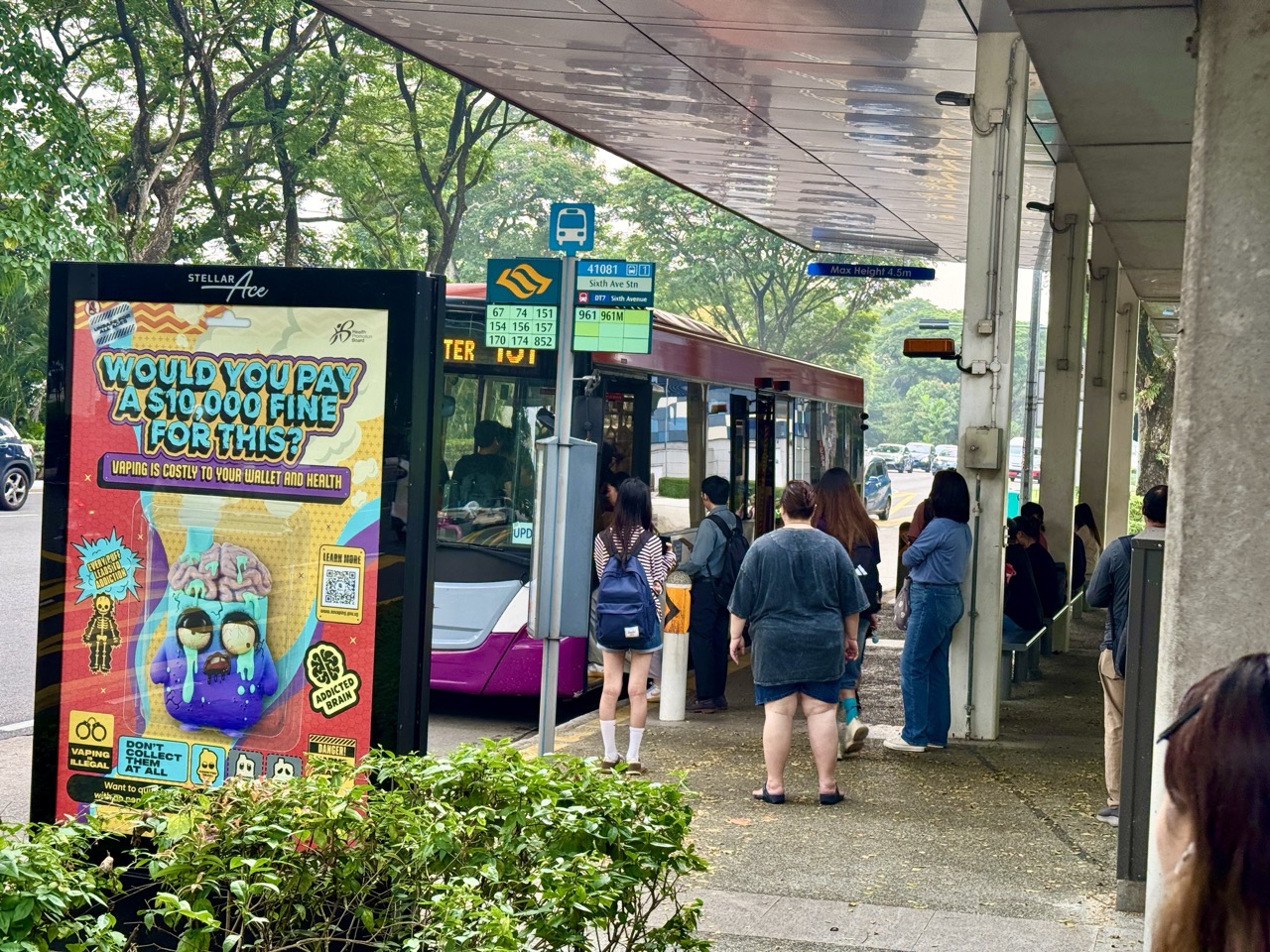
Public transport vocabulary helps you read a bus or train journey plan, understand ticket and fare terms, and respond when a service is delayed. These 20 words explain routes, timetables, frequency, platforms, interchanges, transfers, contactless payment, concessions, service disruptions and replacement buses.
If you are searching for the difference between a transfer and an interchange, think of the transfer as the act of changing services and the interchange as a place designed to make that change. Likewise, a departure time is not the same as an estimated arrival time, and a normal scheduled frequency does not guarantee a vehicle will arrive at an exact minute.
Quick answer: check the actual service number or line, direction of travel, stop or platform, and current service alerts. Use the correct ticket or payment method and understand whether transfers count as one journey under local fare rules. Rules differ by transport authority; Singapore’s public bus and MRT/LRT fares use a particular distance-fare and transfer framework that should not be treated as universal.
The top 20 vocabulary words at a glance
Use this word list when planning a trip, reading station signage or checking why a fare differs from what you expected. The detailed entries include examples and distinctions that can prevent boarding the wrong service or misreading a delay.
| Word or term | Plain-English meaning |
|---|---|
| Route | The path followed by a bus, train or other service, often identified by a number or line name. |
| Timetable | A published plan showing when a transport service is scheduled to depart or arrive. |
| Frequency | How often a service is scheduled or typically operates. |
| Headway | The time gap between successive vehicles travelling on the same service or direction. |
| Departure time | The time a service is scheduled or expected to leave a stop or terminal. |
| Estimated arrival | A prediction of when a vehicle will reach a stop or destination. |
| Bus stop | A designated roadside location where a bus service boards or alights passengers. |
| Platform | The area beside a train track where passengers board and alight. |
| Interchange | A place designed to connect two or more transport services or lines. |
| Transfer | A change from one service or line to another during a journey. |
| Fare | The amount charged for a journey on a service. |
| Concession fare | A reduced fare for an eligible category of passenger. |
| Fare cap | A limit on qualifying charges over a defined period under a particular fare system. |
| Contactless payment | Paying by tapping an eligible card or device without inserting cash. |
| Tap in | Present an accepted card or device to record the start of a journey where required. |
| Tap out | Present the appropriate card or device at the end of a journey when required. |
| Service disruption | An interruption or reduction in normal transport operations. |
| Replacement bus | A temporary bus service used to provide transport while a train or other service is unavailable. |
| Accessibility | The ability for people with different mobility, sensory or other needs to use transport safely and effectively. |
| Last service | The final scheduled journey or departure for a route or line in a stated period. |
What does public transport vocabulary mean?
Public transport vocabulary is the language used to explain network routes, planned and real-time service information, payment methods, travel conditions and accessibility. A route tells you where a service travels; a timetable shows planned times; a live arrival estimate may change because of traffic or operating conditions. Fare terms are especially local: some cities offer timed transfers, some require ticket validation, and some use daily or weekly caps. Always follow the rules of the system you are using.
How to use this glossary in real life
Plan your journey in a sequence that lets you separate route information from payment and disruption information.
- Identify the origin and destination and select a route that serves both, including the correct travel direction.
- Find the appropriate stop or platform and check the scheduled service along with current real-time updates.
- If changing between services, identify the transfer point or interchange and how much walking or waiting is required.
- Confirm the accepted payment method, fare zone or distance rules, and whether your ticket or concession is valid.
- Where contactless tap-in and tap-out are required, use the same eligible card or device according to the operator’s rules.
- If there is a disruption, read official announcements for affected stations, replacement transport, accessibility options and any changes to the last service.
In Singapore, the Public Transport Council says integrated distance fares can apply across MRT/LRT and public bus services when transfer conditions are met. Its current published guidance includes time limits and a maximum number of transfers; these should be checked at the time of travel rather than copied from an old social media post. With contactless payment, the council advises using the same card or device when tapping in and out, to avoid duplicate or incorrect charges.
All 20 words: meanings, examples and common confusions
1. Route
Meaning: The path followed by a bus, train or other service, often identified by a number or line name. A route can have several branches or directions.
Natural example: “Which route goes to the city centre without a transfer?”
Important distinction: A route is not the same as a single scheduled departure.
Practise: Check the direction and destination shown on the vehicle.
2. Timetable
Meaning: A published plan showing when a transport service is scheduled to depart or arrive. It may distinguish weekday, weekend and holiday services.
Natural example: “I checked the timetable for the early morning train.”
Important distinction: A timetable is a plan, not a live guarantee.
Practise: Read the day type and any temporary schedule changes.
3. Frequency
Meaning: How often a service is scheduled or typically operates. It may be described as every ten minutes rather than by individual departures.
Natural example: “The bus frequency is higher during the morning peak.”
Important distinction: Frequency does not mean the exact wait will equal the stated interval.
Practise: Check live information if you have a time-sensitive connection.
4. Headway
Meaning: The time gap between successive vehicles travelling on the same service or direction. It is useful for describing service frequency in operations.
Natural example: “The timetable shows an average headway of eight minutes.”
Important distinction: An average headway does not ensure evenly spaced vehicles.
Practise: Ask whether the figure is scheduled or observed.
5. Departure time
Meaning: The time a service is scheduled or expected to leave a stop or terminal. Live updates can differ from the printed timetable.
Natural example: “The scheduled departure time is 7:35 a.m.”
Important distinction: Departure time differs from arrival time at your destination.
Practise: Be at the correct stop before departure.
6. Estimated arrival
Meaning: A prediction of when a vehicle will reach a stop or destination. It can change as location, traffic and service data update.
Natural example: “The estimated arrival moved from three minutes to eight.”
Important distinction: An estimate is not a promised exact time.
Practise: Refresh the official app and watch for service notices.
7. Bus stop
Meaning: A designated roadside location where a bus service boards or alights passengers. Different directions may use opposite-side stops.
Natural example: “Is the bus stop on the same side of the road?”
Important distinction: A bus stop differs from a bus interchange where several services connect.
Practise: Check the stop code or name against the route.
8. Platform
Meaning: The area beside a train track where passengers board and alight. A station can have multiple platforms.
Natural example: “Which platform serves trains toward the airport?”
Important distinction: The station name alone does not specify the correct platform.
Practise: Follow the line, destination and platform signage.
9. Interchange
Meaning: A place designed to connect two or more transport services or lines. It may involve a walk between platforms, bus bays or stations.
Natural example: “We will change trains at the interchange.”
Important distinction: An interchange is the location; a transfer is the act of changing services.
Practise: Check walking routes, lifts and signs.
10. Transfer
Meaning: A change from one service or line to another during a journey. Its fare treatment depends on the local transport system.
Natural example: “Is this bus-to-train transfer covered by the same journey fare?”
Important distinction: A transfer does not always mean a free second boarding.
Practise: Read the relevant fare and timing rules.
11. Fare
Meaning: The amount charged for a journey on a service. It may depend on distance, zones, age, ticket type or time.
Natural example: “What is the fare for this route with a contactless card?”
Important distinction: A fare is not necessarily identical across payment methods.
Practise: Use the operator’s current fare calculator if available.
12. Concession fare
Meaning: A reduced fare for an eligible category of passenger. Age, student status, disability or other conditions may matter.
Natural example: “Is a concession fare available for eligible seniors?”
Important distinction: Eligibility and proof requirements differ by place.
Practise: Check the transport authority’s current rules and accepted card.
13. Fare cap
Meaning: A limit on qualifying charges over a defined period under a particular fare system. Not all transit networks have fare caps.
Natural example: “Does this payment method qualify for a daily fare cap?”
Important distinction: A fare cap is different from a flat fare or unlimited pass.
Practise: Read which services, dates and cards are included.
14. Contactless payment
Meaning: Paying by tapping an eligible card or device without inserting cash. Many systems support specific smartcards, bank cards or mobile wallets.
Natural example: “Can I use contactless payment on this bus?”
Important distinction: An accepted card or device in one city may not work in another.
Practise: Check accepted methods and foreign card charges if relevant.
15. Tap in
Meaning: Present an accepted card or device to record the start of a journey where required. Often used at rail gates and on certain buses.
Natural example: “I tapped in at the station entrance.”
Important distinction: Tapping in is not necessarily sufficient when a system also requires tapping out.
Practise: Watch for confirmation that the reader accepted the tap.
16. Tap out
Meaning: Present the appropriate card or device at the end of a journey when required. Systems may use this to calculate the travelled distance or close a journey.
Natural example: “Remember to tap out before leaving the station.”
Important distinction: Using a different card or payment device can create mismatched records in some systems.
Practise: Use the same permitted payment instrument for the journey.
17. Service disruption
Meaning: An interruption or reduction in normal transport operations. It may involve delays, cancelled services or station closures.
Natural example: “The operator announced a service disruption on this line.”
Important distinction: A disruption notice does not always mean every route is suspended.
Practise: Check which segment, direction and time are affected.
18. Replacement bus
Meaning: A temporary bus service used to provide transport while a train or other service is unavailable. The stops and route may differ from the normal network.
Natural example: “Where is the replacement bus boarding point?”
Important distinction: A replacement bus is not automatically equivalent in travel time or accessibility.
Practise: Follow official signs and ask about step-free arrangements if needed.
19. Accessibility
Meaning: The ability for people with different mobility, sensory or other needs to use transport safely and effectively. It can involve lifts, ramps, information formats and staff assistance.
Natural example: “Is there an accessible route to the correct platform?”
Important distinction: A station being open does not mean every lift or route is available.
Practise: Check current access notices and contact staff when necessary.
20. Last service
Meaning: The final scheduled journey or departure for a route or line in a stated period. It can change on holidays or during maintenance.
Natural example: “What time is the last service toward my destination tonight?”
Important distinction: A station’s closing time may not match the last train in your direction.
Practise: Check the direction, date and any disruption notice.
Worked example: changing from a bus to a train during a service disruption
Imagine a fictional commuter travelling from a neighbourhood bus stop to a central train station. A route planner shows a bus, one transfer at an interchange and an MRT/LRT journey. The bus is delayed, and the train operator announces a disruption affecting the final portion of the route.
First, the commuter checks the route, estimated arrival and interchange. A bus estimated to arrive in five minutes is not a guarantee of an exact wait. The traveller should also confirm the correct stop and direction rather than boarding any bus displaying a familiar number.
Next, they identify the transfer and correct train platform. A service disruption may require boarding a replacement bus at a different location; the operator’s official station announcements should clarify the affected segment and boarding point.
For a Singapore trip, fare rules depend on accepted payment methods and timing. The Public Transport Council’s July 2026 distance-fare guidance says qualifying journeys may include up to five transfers, with a two-hour first-to-last-boarding window and particular limits between types of transfers. Those rules exclude some services and situations. The commuter therefore checks the official fare calculator and does not assume every change of vehicle is free.
When tapping a bank card or mobile wallet, the traveller uses the appropriate payment method consistently. Singapore’s Public Transport Council advises using the same card or device at entry and exit to avoid incorrect or duplicate charges. Payment-card or mobile-wallet settings can cause a mismatch if the reader sees a different instrument.
If the interchange has a lift closure or the replacement service is not accessible, the commuter needs an accessibility alternative rather than just a faster route. The correct question is: “Which accessible route or assisted service can I use while this station or line is disrupted?”
Finally, someone travelling late at night checks the last service, not only the timetable’s usual frequency. A disrupted last train can affect the entire journey. This is why the vocabulary matters: it connects precise language to practical choices without claiming a particular real-time service is operating now.
Common mistakes and how to avoid them
- Confusing a service’s route with its destination direction → confirm the display and stop code before boarding.
- Treating scheduled frequency as a promised arrival time → distinguish timetable from live estimates.
- Assuming every transfer is free → read local fare rules and the validity of the ticket or pass.
- Using one card to tap in and a different device to tap out → follow operator payment guidance and check fare history.
- Ignoring accessibility when choosing the fastest route → check lifts, ramps and available assistance.
- Believing a replacement bus stops exactly where the train normally stops → follow current official boarding signs.
- Planning a late journey without checking the last service → check the exact direction, date and disruption notices.
A practical 15-minute exercise
Spend fifteen minutes with a fictional bus-and-train route. First identify the origin, destination, service number, direction, interchange and platform. Write a short sentence explaining why changing at an interchange is a transfer.
Next, compare “every ten minutes” with “the next arrival is in seven minutes”. Explain why the first is a frequency or headway description and the second is a live estimate. If a service is disrupted, identify the source you would trust for a current replacement route.
Finally, list the transport system’s accepted payment methods and describe the difference between tap in, tap out, concession fare and fare cap. Do not assume that a rule from your home city applies to another country.
Frequently asked questions
What public transport terms should a beginner learn?
Start with route, timetable, frequency, bus stop, platform, interchange, transfer, fare, tap in, tap out, service disruption and last service. These help with most journey-planning decisions.
What is the difference between interchange and transfer?
An interchange is a location where services connect. A transfer is the action of changing from one service to another. The words often appear together, but they describe different things.
Does changing buses or trains always cost extra?
No universal answer applies. Some systems combine qualifying services into one journey fare; others use individual fares, timed transfers or travel passes. Check the local operator’s rules.
Why must I tap in and tap out with the same card in Singapore?
Singapore’s Public Transport Council advises using the same payment card or device when entering and exiting the system, so the journey can be recognised correctly and incorrect or duplicate charges avoided.
What should I do during a train disruption?
Check official operator or transport-authority updates, identify the affected segment, look for replacement services and follow station staff instructions. If you need an accessible alternative, ask about that specifically.
Sources and further reading
- Singapore LTA: Plan Your Journey — journey planning, fare calculation and transfers.
- Singapore Public Transport Council: Distance Fares and Transfer Rules — official transfer requirements, updated July 2026.
- Singapore PTC: Fare Payment Guidance — using the same card or device and checking accepted taps.
- Singapore PTC: Public Transport Fares and Passes — fare types and concessions.
Explore related eduKateSG articles
See Vocabulary for Google Maps | Navigation, Routes and Travel Terms Explained for route-planning language, Singapore Vocabulary | MRT Wayfinding and an Accessible City for station signs, and Top 20 Travel Vocabulary Words for airport terminology. Explore the Vocabulary collection for other practical topics.
Use the words when the real situation comes up. The goal is to understand the meaning, ask a specific question and recognise which information still needs confirmation—not to sound complicated.