
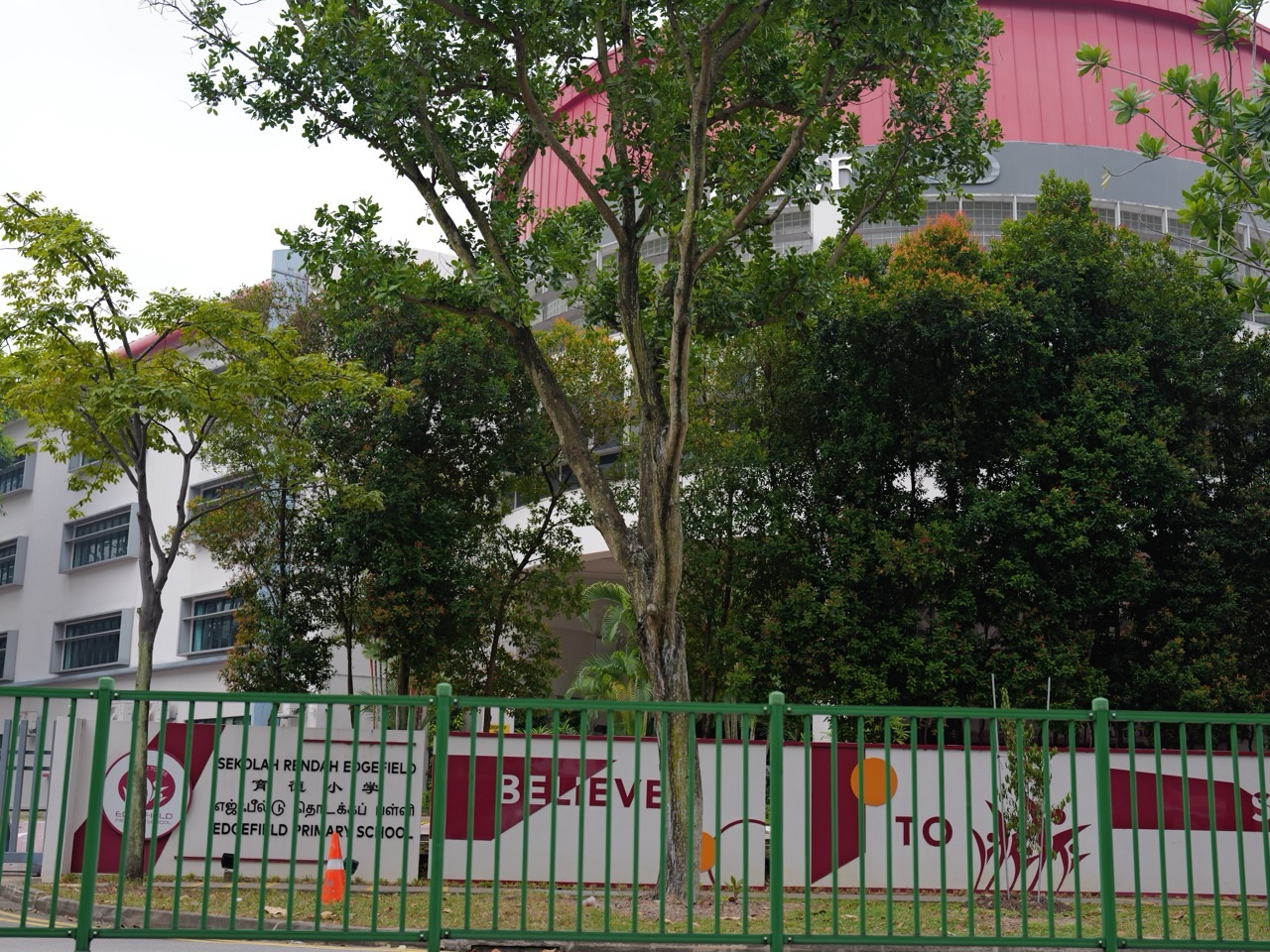
Is Edgefield Primary School a good school? Yes — it is especially worth considering for a child who enjoys both creative performance and practical environmental inquiry. At 41 Edgefield Plains in Punggol, Edgefield’s 2026 EDGE Signature Programme spans language arts, performing arts, STEM, digital literacy, sport and character. Its formal STEM Applied Learning Programme includes Primary 4 food sustainability and Primary 5 energy conservation, while its Performing Arts Learning for Life Programme offers a six-year journey from introductory dance to graduation ballroom skills. That is a distinctive fit for a child who enjoys exploring different kinds of confidence.
For parents searching for an Edgefield Primary School review, Edgefield Primary ALP and LLP, Edgefield Primary EDGE programme, Primary 1 registration in Punggol or STEM and performing arts in Singapore primary schools, begin with the actual timetable direction. The official 2026 ALP describes school-wide food audits at P4 and energy audits at P5; a separate Tier 2 innovation programme is invitation-based. The arts programme names P1 rhythm, P2 partner dances, P3 ethnic dance, P4 hip-hop, P5 instrumental choice modules and P6 ballroom dance. Those year-level facts are more useful than an unqualified claim that a school is the best.
Did you know? Edgefield’s Language Arts strand also takes children from Primary 1 choral reading through P2 storytelling and P3 Readers’ Theatre to a P4 musical. This is a particularly interesting complement to the school’s STEM and dance experiences: one child may first become confident expressing a story, then learn to explain evidence from a design task. The question worth asking is how the school helps an ordinary child — not just a confident performer — participate and improve.
Edgefield Primary School: two companion guides to school fit
Why go Edgefield Primary School? — explore the school journey. Is Edgefield Primary School a good school? — assess the programmes, access and family fit. Parents & Pathways Hub — discover other pathways.
The important facts in one glance
| Campus | 41 Edgefield Plains, Singapore 828869 |
|---|---|
| 2026 whole-school direction | EDGE Signature Programme: multiple domains including Language Arts, Performing Arts, STEM, Digital Literacy, LiLo and Sports |
| Applied Learning Programme | STEM Innovator Programme — environmental sustainability and Design Thinking |
| Primary 4 STEM | Food sustainability, including a school-wide food audit and prototype solutions |
| Primary 5 STEM | Energy conservation; household and school energy audits; creative explanations |
| Selective STEM | Tier 2 Innovation Programme for invited pupils; mentorship and advanced challenges |
| Learning for Life Programme | Performing Arts, progressive across P1–P6 |
| Language Arts | P1 choral reading, P2 storytelling, P3 Readers’ Theatre, P4 musical |
| Character strand | Live Life, Love Life (LiLo) — habits, peer relations, inclusion and resilience |
| Official references | Official STEM · Official Performing Arts · School contact |
Why Edgefield offers more than a single impressive programme
A primary-school child can be good at stories without yet enjoying Science. Another may build an ingenious model but hesitate to speak in public. Edgefield’s EDGE structure acknowledges that pupils can develop in several directions rather than declaring one narrow talent to be the school identity.
Its current programme overview describes broad participation across different domains at successive year levels. This matters for families of young children whose interests are not yet stable. P1 may reveal a love of rhythm; P3 may reveal delight in stories; P4 may introduce an environmental problem the child wants to solve.
The healthy question is not whether a pupil becomes excellent at everything. It is whether the teaching allows the child to discover interests and gain secure foundational skills without becoming overwhelmed by activities.
Did you know? The P4 STEM task begins with the school community
The official STEM Innovator Programme describes Primary 4 pupils exploring food sustainability through a school-wide food audit, interviews or other Design Thinking approaches and prototypes aimed at reducing waste. This gives children a meaningful introduction to a complex issue that can be observed locally.
A waste audit is not just about counting leftovers. Students must recognise what they are observing, decide whether the information is representative and ask whose choices or needs affect the result. They may discover that the first explanation is incomplete. These are useful scientific and human questions for young learners.
Parents should ask what the current cohort actually measures, what children create and how teachers help them turn observations into reliable conclusions. The published activity is clear; individual school projects, partners and outcomes may still vary by year.
Primary 5 conservation extends the design process
The school’s 2026 ALP describes a Primary 5 mainstream Tier 1 energy-conservation experience. Pupils look at wasted electricity in school and at home, and use sketches or storyboards to consider more efficient behaviour and practical improvements.
That introduces more than environmental vocabulary. A child may need to understand measurements, physical systems, user habits and what counts as a credible improvement. When a proposal is challenged, pupils have an opportunity to revise rather than defend it merely because it is their own.
Parents should ask how the P4 food-sustainability work prepares pupils for the P5 task. A coherent progression preserves skills in observing, reasoning and explaining across years. That matters more than having unrelated annual project photographs.
The advanced innovation track is not for every pupil
The STEM page distinguishes the P5 mainstream activity from a Tier 2 programme for students invited on the basis of strong inventive and adaptive thinking. It describes mentorship and more demanding innovation challenges, including a Young Innovators’ Fair.
Families should be pleased that extension exists without assuming their child receives a place. A school can offer an excellent mainstream STEM experience and a separate selected enrichment route. These serve different pupils’ present needs.
If your child’s main attraction is advanced engineering, ask precisely how the invitation process works, what prerequisites are assessed, whether places vary by cohort and how training interacts with ordinary academic work. A showcase cannot substitute for confirmed admission to that pathway.
Edgefield’s Design Thinking stages make the task understandable
The published process includes identifying people’s needs, defining a problem, generating ideas, prototyping, and then testing and presenting a solution. It names creative techniques such as SCAMPER and Crazy 8s. These are tools for generating possibilities, not proof that every pupil invents something revolutionary.
Suppose a child proposes a new way to remind peers to conserve energy. The useful work is deciding who needs the reminder, when and where it should appear, and whether it would change behaviour. A teacher can use a failed first attempt to show why evidence matters.
Ask for an example of a pupil improving one aspect after feedback. That is a more convincing indicator of educational value than simply counting how many tools or acronyms appear in the programme outline.
The arts LLP develops movement and performance in stages
Edgefield’s Performing Arts LLP begins with rhythm and movement in P1. P2 explores partner dance styles, P3 covers culturally diverse dance, and P4 uses hip-hop as an outlet for expression and teamwork. In upper primary, the school lists instrumental choice modules and a P6 graduation ballroom dance.
There is educational logic in moving from simple shared rhythm towards work that requires more independence, coordination and awareness of others. A young child who struggles to stay on the beat might discover that practice helps. An older child might learn to follow a group, respect a partner’s limits and contribute to an ensemble.
The page lists highlights such as showcases and family participation. Ask how those events are organised in the intended year, especially for children with mobility limitations, anxiety or very little previous dance experience. A performance opportunity should not be interpreted as a guarantee that every pupil feels confident immediately.
A particularly practical P5 choice: music modules
At Primary 5, the school describes choice modules including Angklung and Kulintang, global drumming, and Sing and Strum. The variety matters because children can encounter instrumental traditions that differ in sound, rhythm and cooperation.
A child who loves guitar-style accompaniment might enjoy Sing and Strum. Another may find percussion more approachable. Both still need guidance in listening, waiting and practising a part as a member of a group.
Ask how choices are offered, whether spaces are limited, what pupils practise in school and whether home equipment is required. Do not turn a programme list into a shopping list for parents before the school has explained the arrangements.
Language Arts gives speech a real learning progression
The official Language Arts strand is explicit about its Primary 1 to Primary 4 sequence: choral reading, storytelling, Readers’ Theatre and a musical. That is more useful than merely hearing a school is strong in English or expressive arts.
The stages progressively ask a child to read with fluency, communicate a coherent narrative, interpret dialogue and collaborate on a more involved production. A reserved P1 pupil might begin by reading as part of a group rather than being required to perform alone.
Parents should ask how comprehension is assessed in these activities. Can a child explain a character’s motive? Can they revise wording after feedback? A compelling showcase is valuable only when the teaching leading to it improves reading and oral understanding.
The LiLo strand is about the ordinary difficult moments
Edgefield calls its character strand Live Life, Love Life. It describes P1 self-management and everyday habits, P2 peer support and classroom agreements, P3 inclusion and understanding differences, and P6 resilience during the move towards secondary school.
Those are sensible problems for the different ages. A child beginning P1 must learn how to care for belongings, follow a routine and ask a teacher for help. A child entering P3 can encounter more complicated friendships and needs ways to recognise exclusion without turning every disagreement into an accusation.
The school describes weekly learning and daily routines. Families should ask who responds when an issue persists, how adults coordinate support, and how children learn that involving a trusted teacher is appropriate. A values programme is not a guarantee that all problems disappear.
Did you know? Digital Literacy has a different level progression
The school’s EDGE Digital Literacy page describes ScratchJr-style block coding in P1 and P2, Google Workspace learning in P3 and P4, and mBlock plus introductory AI ideas by P5. This is distinct from the more specialised P4–P5 STEM sustainability work.
That matters because a parent might confuse a school-wide digital foundation with an invitation-only innovation programme. One develops basic ways to understand and use tools responsibly; the other may invite a selected group into more demanding projects.
Ask how digital learning addresses cyber wellness, source checking and the limits of AI-generated output. A child should learn to use technology as a tool for reasoning, not mistake the appearance of a plausible answer for proof that it is correct.
What happens to the child who likes STEM but dreads the stage?
A school with several performance programmes need not be the wrong choice for a shy child. It depends on how teachers scaffold participation. Small-group rehearsal, age-appropriate tasks and precise feedback can help; whether such arrangements meet your child’s individual needs should be verified.
Similarly, a pupil who loves theatre but dislikes calculations can still benefit from environmental inquiry if a teacher provides appropriate support and an understandable starting point.
Ask the school to explain what participation looks like for ordinary learners at both ends of this spectrum. The right fit gives a child room to grow without expecting an advanced talent on arrival.
What about Mathematics, English, Science and PSLE foundations?
A rich collection of enrichment experiences is not a substitute for the everyday curriculum. The child still needs systematic progress in reading, writing, number sense and scientific reasoning. A pupil who builds a beautiful food-waste prototype may struggle with the mathematical representation of quantities.
Bring a specific example to a school conversation. Does the learner misunderstand the words in a problem, choose an incorrect procedure, make a calculation error or fail to explain the result? These different difficulties require different instruction.
A good school maintains learning continuity across the primary years. Programmes should create useful applications for knowledge while teachers still identify prerequisites, explain corrections and monitor progress. A strong PSLE result cannot be promised by a programme title.
Punggol location and daily family life
The school’s official contact page confirms 41 Edgefield Plains, Singapore 828869. It lists weekday general office hours, but those are not a substitute for the current pupil timetable or gate instructions.
Try the actual school route at the intended arrival time. Consider a tired child, road crossings, the rainy season, transport to siblings’ schools, and possible additional rehearsal or CCA commitments later in the day.
The best programme is one a child can actually enjoy. A manageable daily journey protects time for food, rest, reading and play, all of which support learning.
Who should shortlist Edgefield — and who should compare?
Shortlist it when your child likes stories, movement, music, Science or collaborative projects, especially when your family wants opportunities to explore several interests rather than narrow specialisation. Its updated year-by-year descriptions give parents concrete questions to ask.
Compare another school when the journey is difficult, an essential support arrangement is unconfirmed or your decision depends entirely on a future invitation to the advanced innovation pathway. The broad learning should be valuable even without selection into additional programmes.
A good-fitting school is one in which the child can participate, ask questions, learn from mistakes and feel that ordinary classroom life is manageable.
Four useful questions for Edgefield
- How does a P1 child participate in choral reading and rhythm activities if they have no previous performance experience?
- What does the ordinary P4 food audit or P5 energy investigation look like, and how is the child’s reasoning assessed?
- What is available to all pupils under EDGE, and how is the selected STEM innovation Tier 2 pathway different?
- How are learning gaps or continuing friendship difficulties identified and followed up with parents?
Primary 1 admission: distinguish desirability from availability
MOE registration follows specific eligibility phases, citizenship conditions, home-to-school address rules and school vacancies. Check the current P1 phases and dates and dated ballot records. Earlier demand does not measure school quality or predict a guaranteed place.
For later intakes, review MOE’s updated registration framework. Changes for a later registration exercise should not be inferred from the rules applied to a previous sibling. Admission and educational fit are two questions a family needs to answer separately.
The Edgefield Primary School verdict
Yes — Edgefield Primary School is a particularly interesting fit for children who could benefit from artistic confidence, practical STEM and explicit everyday character learning. The 2026 EDGE structure offers a coherent range of experiences across different years.
Choose it because the child’s genuine interests, the school’s teaching response and the family routine align. A memorable performance or prototype is one milestone; six years of steady understanding, friendship and recoverable mistakes are the greater aim.
Quick answers for parents
Where is Edgefield Primary School? 41 Edgefield Plains, Singapore 828869.
What is the ALP? The STEM Innovator Programme; general P4 food-sustainability and P5 energy-conservation activities with a separate invited advanced track.
What is the LLP? A six-year Performing Arts journey involving dance, music and progressive performance skills.
Fact-check sources and limitations
Checked against official school pages published or updated July–August 2026 on 10 October 2026. The school states broad programme intentions and some selective enrichment; this independent eduKate review neither ranks schools nor guarantees any particular activity, award or admission.
- Edgefield official STEM Innovator ALP, updated 12 August 2026
- Edgefield official Performing Arts LLP, updated 12 August 2026
- Edgefield official Language Arts progression, updated 12 August 2026
- Edgefield official LiLo character programme, updated 12 August 2026
- Edgefield official Digital Literacy programme, updated 12 August 2026
- Edgefield official address and contact, updated 29 June 2026