
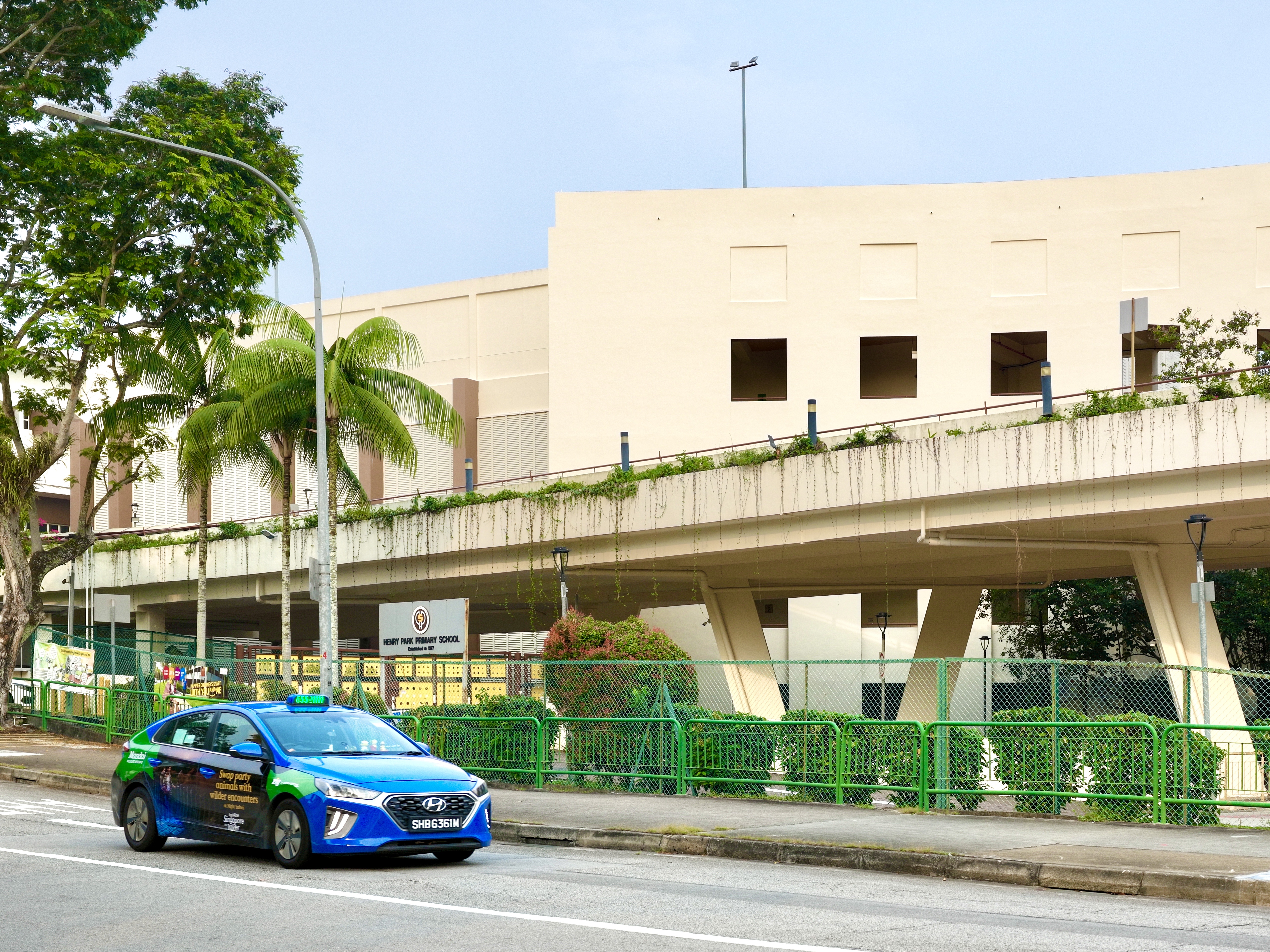
Is Henry Park Primary School a good school for your child? If your family is comparing primary schools around Holland Grove and the wider Bukit Timah area, its published Science for Life and Sports4Life programmes give you concrete features to examine. A good choice should connect your child’s curiosity with learning they can access regularly.
This Henry Park Primary School review focuses on sustainability-related science and physical learning. The school’s ALP describes broad provision alongside interest- and talent-based opportunities; Sports4Life emphasises experiential learning, sporting values and leadership. Parents should distinguish that published direction from admission certainty, comparative results or a guarantee of individual success.
Did you know? Henry Park’s published science page includes hydroponics for P3 and rice cultivation for P4. These are specific reasons to investigate the learning experience, especially for a child who likes observing living things. Our fit interpretation is that the school is worth considering when practical inquiry, physical activity and the daily journey match your family’s priorities.
Two sibling guides, one clearer school decision
Why go Henry Park Primary School? explores the programmes. This review examines family fit. Return to the Parents & Pathways Hub to compare education routes.
Choose your reading route
Understand the school · Check learning support · Plan registration · Open the complete index
Facts parents can use first
| Distinctive focus | Science for Life: sustainability-related science and STEM |
|---|---|
| Published examples | P3 hydroponics; P4 rice cultivation |
| Access distinction | Broad ALP provision and interest/talent pathways differ |
| Complementary focus | Sports4Life: physical learning, values and leadership |
Open the complete reading index
1. What makes Henry Park a meaningful possibility?
2. Who might enjoy practical science?
3. How should parents assess Sports4Life?
4. Check core learning and classroom support
5. Test the journey and the ordinary week
6. Ask questions that reveal the learning experience
The science ALP describes lower-primary activities and investigation in later years, with separate interest- and talent-based opportunities. It also labels some proposals as future plans; those should not be read as proof of present delivery. Read the published ALP.
Our interpretation is that an observant child may enjoy learning through questions about growth and change. Ask what pupils record, how they compare observations and how teachers check understanding. The setting provides an opportunity; the teaching turns it into knowledge.
Imagine a child noticing that two plants look different. An illustrative parent conversation might ask what was the same, what changed and what else could explain the difference. This is a gentle way to explore curiosity, rather than an entrance test.
At a school conversation, ask for the relevant year group’s actual task and feedback. Confirm which additional experiences require interest, nomination or selection. A family should be able to distinguish the ordinary curriculum from opportunities that only some pupils receive.
Contents · Previous chapter · Next chapter
Sports4Life’s published aims connect sport with values, participation and leadership. Its experiential approach includes reflection and trying again. Read the LLP description.
Our family-fit question is how a child learns from both success and difficulty. Ask how a beginner is encouraged, how feedback is given and how competitiveness is handled. A programme aim is encouraging, but it does not establish that every child will develop the same confidence or skill.
Contents · Previous chapter · Next chapter
The programme identity should sit beside a careful conversation about English, Mathematics and your child’s current needs. Bring one recent piece of work and ask what staff would look for. A child who understands an idea but struggles to explain it needs a different response from one who has not yet understood the idea.
Ask who notices repeated difficulty, how feedback reaches parents and what happens after the first support step. This guide has not established school-wide PSLE performance, comparative teaching quality or guaranteed intervention access. A useful school conversation describes a process you can understand.
Contents · Previous chapter · Next chapter
Try the full morning route at school-day time, including the final crossing and entrance. Plan afternoon collection, wet weather and the day your usual caregiver is unavailable. Confirm current school and activity hours directly; this review gives no journey-time or transport guarantee.
Write a sample weekday with meals, rest, homework, play and bedtime. A distinctive programme has to fit inside a sustainable routine. Compare a closer option if the proposed week depends on your child rushing through every transition.
Contents · Previous chapter · Next chapter
Take three questions: what will my child actually receive at this level; how will adults help when participation is difficult; and what would progress look like after a term? Request examples from an ordinary week. Keep general provision, CCAs and selected opportunities separate.
Listen to your child after a visit. Ask what felt inviting and what felt unfamiliar. A nervous response can identify a support question; an excited response can identify an interest worth exploring. Neither reaction alone settles the school decision.
Contents · Previous chapter · Next chapter
Use MOE’s current P1 registration guidance for the relevant exercise. Check eligibility, phase, current places and applicable home-distance rules there. This school review is an assessment of potential fit and does not establish admission priority or guarantee a place.
Keep the registration exercise year separate from the year your child starts school. Build a realistic shortlist with alternatives you could sustain. Historical vacancy stories and programme names cannot replace current official instructions.
Contents · Previous chapter · Next chapter
Henry Park Primary School has a published learning direction that gives parents specific questions to investigate. A good fit means that relevant opportunities, classroom support, social experience and the daily routine work together for your child. Our judgement is conditional on those checks, rather than a ranking against other schools.
For each shortlisted school, write one official fact, why it matters to your child and one unanswered question. This makes comparison clearer and reduces the temptation to choose by reputation alone. There can be several good possibilities for the same child.
Continue with Why go Henry Park Primary School? for the companion programme guide. For a later primary-to-secondary learning transition, the Secondary 1 Mathematics Clementi guide explains eduKate’s premium 3-pax support approach.
Contents · Previous chapter · Parents & Pathways
Official sources and review scope
Reviewed 10 October 2026 (Singapore time). Linked school pages establish published programmes and intentions. Child examples and suitability judgements are editorial analysis. This review does not establish comparative results, an admission guarantee or a prediction for an individual pupil.