
Did you know that Henry Park Primary School lets Primary 4 pupils grow rice in school, Primary 5 pupils investigate environmental problems through STEM, and student eco-leaders work on real sustainability habits such as recycling, food waste and biodiversity?
That is a wonderful place to begin because Henry Park Primary School’s 2026 learning design is full of moments where knowledge becomes something a child can see, touch, test, grow, improve and lead.
The school’s vision is “A Leader in Every Child — with Talents and Strength of Character.” Its programmes stretch across academic subjects, Gifted Education, sustainability, Science inquiry, innovation, educational technology, Programme for Active Learning, character education, student well-being and Sports4Life.
So what is so awesome about Henry Park Primary School? The interesting answer is not one result or one programme. It is the repeated attempt to help children connect strong foundations with action.
The Quick Answer: What Makes Henry Park Primary School Stand Out?
- Sustainability is built into applied learning. The school’s ALP uses Environmental Science, STEM, inquiry, problem-based learning and design thinking.
- Science starts young. Lower-primary Junior Science activities use curiosity, materials, plants and real-life investigations.
- Primary 3 to 6 students build inquiry skills progressively. The Young Investigators Programme develops fair testing, variables, investigation and scientific reasoning.
- Sports4Life connects movement to leadership. PE, games, sportsmanship, reflection and sports leadership are deliberately linked.
- Innovation is structured. The school’s Innovation and Data Management programme helps pupils identify problems, design solutions and drive change.
- Gifted learners receive research depth. The Independent Research Study gives GEP pupils experience with self-selected real-life problems.
- Character is not separated from future-readiness. CCE explicitly develops good character, resilience, purpose and active citizenship.
Did You Know? A Primary School Can Turn Its Campus Into a Sustainability Laboratory
Henry Park’s Applied Learning Programme is called Science for Life in HPPS — ALP Sustainability.
The programme uses Environmental Science as the organising idea. Pupils investigate environmental issues, work with STEM concepts, use design thinking and learn through real contexts rather than keeping sustainability as a poster on the wall.
This matters because environmental education becomes much stronger when children can observe consequences.
A plant wilts. A hydroponic system behaves differently from soil. Food waste accumulates. A bridge made from recyclable materials fails. A toy car rolls faster after a design change.
Each event gives the learner something real to explain.
Primary 1 and 2: Science Before the Formal Science Subject
Henry Park’s Junior Science programme introduces Primary 1 and 2 pupils to STEM and sustainability ideas before the formal Science curriculum begins in Primary 3, as shown in the school’s Science programme and scheme of work.
Primary 1 pupils work with recyclable materials in design tasks such as toys and bridges. Primary 2 pupils investigate flowers and connect learning journeys to what they observe in living systems.
This is excellent preparation because scientific thinking begins long before scientific vocabulary becomes sophisticated.
A six-year-old can already ask: What changed? Why did it happen? What could I try next? How do I know?
Primary 3 to 6: Young Investigators Learn How Evidence Works
The Young Investigators Programme builds inquiry skills progressively. Primary 3 pupils learn about variables, fair tests and simple investigations. Older pupils apply those skills to more complex work.
This progression is educationally important because “do an experiment” is not one skill.
- Define the question.
- Identify variables.
- Control what should stay constant.
- Observe carefully.
- Measure consistently.
- Interpret evidence without forcing the conclusion.
- Explain uncertainty.
Those habits eventually matter far beyond school Science.
Rice Cultivation, Hydroponics and Food Security
Henry Park’s sustainability work includes plant-growing experiences such as Every Child a Seed, hydroponics and rice cultivation.
Primary 3 pupils can connect plant life cycles with hydroponics. Primary 4 pupils work with rice cultivation and link the experience to plant reproduction, systems and food security.
That last connection is especially valuable.
Rice is no longer merely food on a plate. It becomes biology, agriculture, land, water, supply chains and national resilience.
A small school plot can open a very large systems question.
Sports4Life: Physical Education as a Leadership Curriculum
Henry Park’s Learning for Life Programme is Sports4Life@HPPS.
The programme connects physical development with school values and leadership. Its RICE framework highlights Respect, Integrity, Care and Excellence in sportsmanship.
Primary 1 to 3 pupils develop foundational movement through gymnastics. Primary 4 to 6 pupils encounter sports and games that build teamwork, spatial awareness, strategy and collaboration.
More advanced pupils can move into specialised training and sports leadership.
That progression matters because sport is an unusually honest classroom.
Rules matter. Effort is visible. Mistakes happen publicly. Teammates depend on one another. A learner has to recover emotionally and physically.
Character becomes behaviour rather than vocabulary.
Gifted Education: Research Means Learning to Find the Question
Henry Park’s Gifted Education Programme includes an Independent Research Study for pupils in its existing GEP cohorts who are ready for greater depth. For pupils entering Primary 4 in 2027, MOE’s refreshed approach expands school-based support, with optional advanced modules at 15 centres for eligible pupils. Pupils remain enrolled in their own schools. Existing GEP cohorts continue, with the last cohort completing Primary 6 in 2028.
Primary 4 GEP pupils learn research processes and skills. By Primary 5, students undertake a self-directed project around an area of personal interest.
This is a profound educational shift.
Most school tasks begin with a teacher’s question. Research asks the learner to decide what is worth asking, what evidence is relevant and how a conclusion should be communicated.
That is the beginning of intellectual independence.
Character and Citizenship: Future-readiness Needs a Moral Compass
The school’s CCE framework names four broad goals: good character, resilience and social-emotional well-being, future readiness, and active citizenship.
This is useful because future-readiness can become too technical if schools are not careful.
A child may become capable with technology, communication and problem-solving. The next question is: what will the child choose to do with that capability?
Ethics, responsibility, citizenship and empathy are part of the operating system.
What Families Can Borrow From Henry Park’s Learning Design
- Let children investigate before explaining everything.
- Use environmental problems to connect Science, Mathematics, design and citizenship.
- Make sport reflective. Ask what changed after a mistake and what the learner will try next.
- Give strong learners independent questions, not only harder worksheets.
- Teach sustainability through habits and systems.
- Connect leadership to service and responsibility.
The eduKateSG Learning Connection
Henry Park’s programme design fits eduKateSG’s wider idea that learning becomes stronger when knowledge transfers.
English helps pupils explain an investigation. Mathematics supports measurement and comparison. Science tests claims. Technology extends what can be built. Design helps structure a solution. Character affects whether the solution serves people and the environment responsibly.
One project can therefore become a meeting place for many capabilities.
How Henry Park Primary Connects to the eduKateSG Singapore Graph
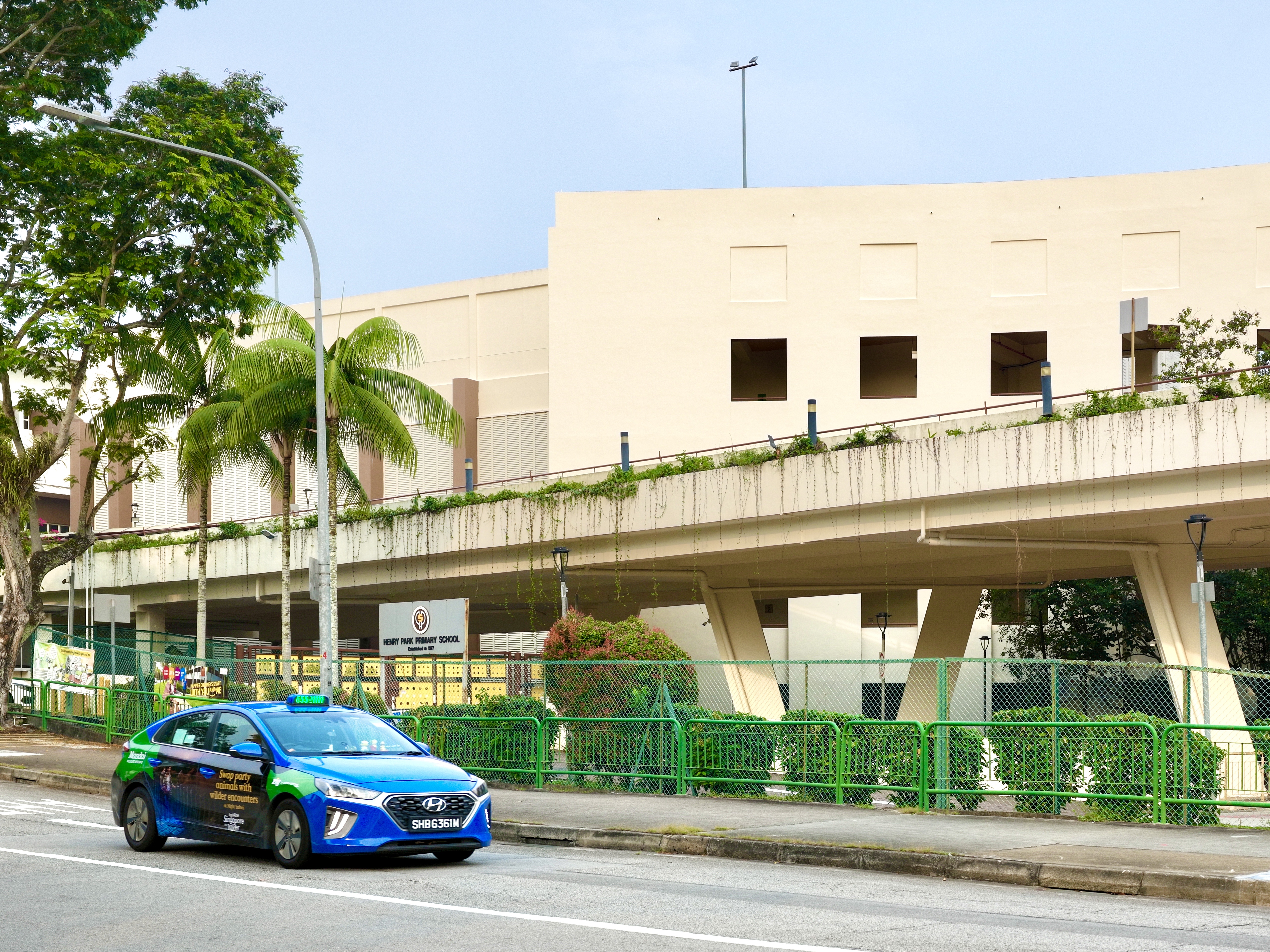
Henry Park Primary School is at 1 Holland Grove Road, between the Holland, Bukit Timah and Clementi education landscapes.
- History of Singapore | Clementi
- Why Singaporeans Love Clementi
- Fun facts about Singapore | Clementi
- History of Singapore | Bukit Timah
- Why Singaporeans Love Bukit Timah
- A Student’s Life | Bukit Timah
Frequently Asked Questions
Is Henry Park Primary School an MOE school?
Yes. Henry Park Primary School is part of Singapore’s national primary-school system.
What is Henry Park’s Applied Learning Programme?
Its ALP focuses on sustainability and Environmental Science through inquiry, STEM, problem-based learning and design thinking.
What is Sports4Life?
Sports4Life@HPPS is the school’s Learning for Life Programme, using sports to develop physical capability, values, sportsmanship and leadership.
Where is Henry Park Primary School?
The school’s official 2026 contact page lists 1 Holland Grove Road, Singapore 278790.
Is this article a school ranking?
No. It is a fact-checked explanation of current programmes and educational ideas.
For the current planning-area context, continue with Awesome Schools in Bukit Timah.
Official References Checked for the 2026–2027 Edition
- Henry Park Primary School — Applied Learning Programme
- Henry Park Primary School — Learning for Life Programme
- Henry Park Primary School — Science
- Henry Park Primary School — CCE Curriculum
- Henry Park Primary School — GEP Independent Research Study
- Henry Park Primary School — Contact and Location
So, What Is So Awesome About Henry Park Primary School?
It is the way the school repeatedly turns learning into lived experience.
Science becomes rice, hydroponics and investigations. Sport becomes leadership. Sustainability becomes habit. Research becomes a student-owned question.
Did you know that this may be one of the most useful definitions of strong primary education?
Children do not only learn about the world. They practise becoming capable inside it.