
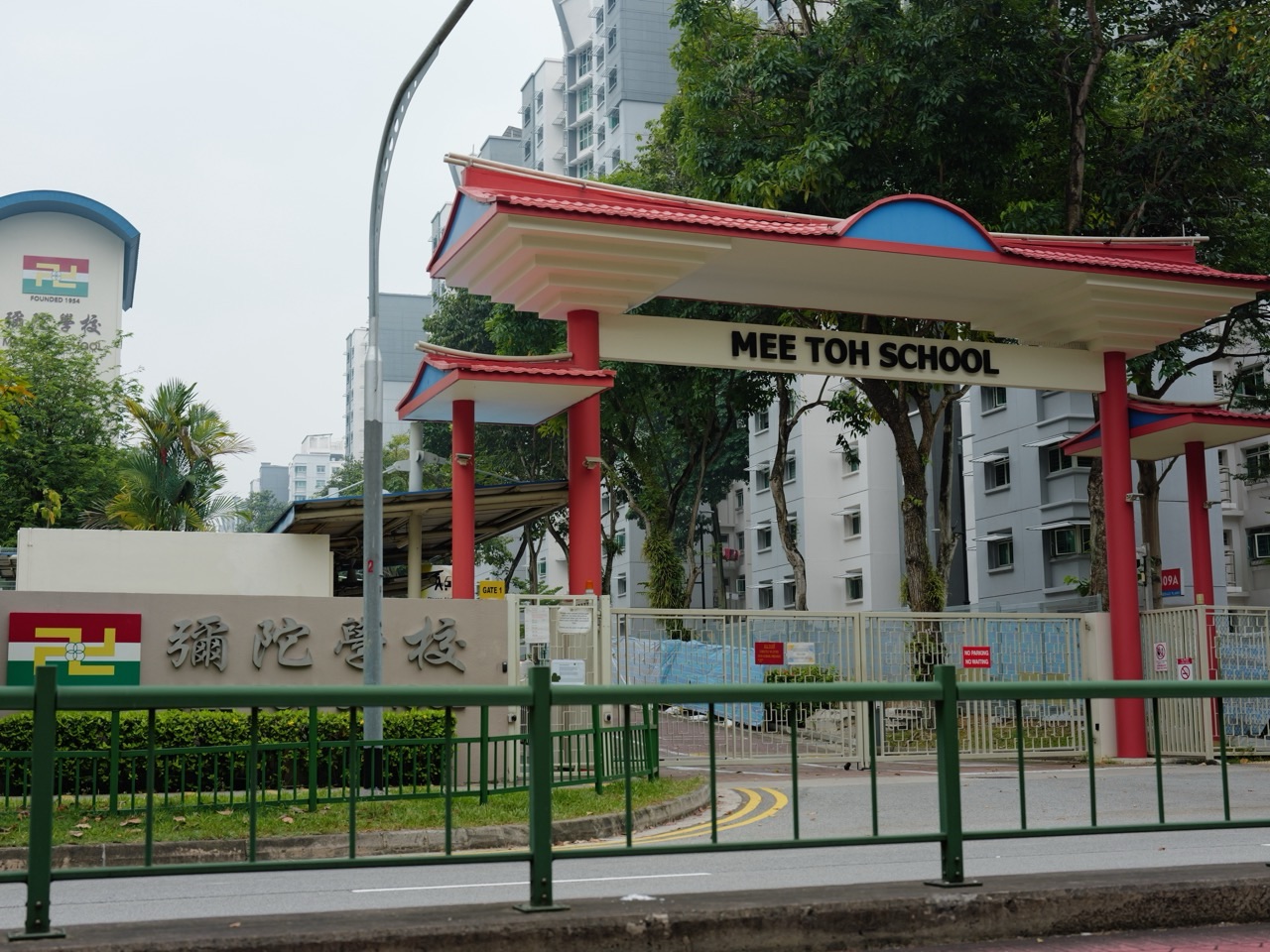
Is Mee Toh School a good school? It is worth shortlisting for families interested in environmental responsibility, physical activity and character development, provided the school’s daily routines and Buddhist heritage fit their expectations. A useful decision connects these published directions to your child’s needs and the family’s actual school week.
A Mee Toh School review should also check language provision for the correct entry year. Did you know? The school announced a Tamil Language class for Primary 1 in 2027. That specific announcement should prompt families to confirm arrangements directly; it should not be generalised into an assumption about every existing level.
This independent eduKate review draws on official pages checked on 10 October 2026. The questions and practical home example are our interpretation, rather than claims about observed classroom outcomes. Use the linked official pages and the companion profile to prepare a focused conversation with the school.
Find the answer you need
Start with the school programmes, then check participation, support and the ordinary family week.
Environmental education: turn concern into an ordinary habit · SENCE: active participation and character development · Understand Buddhist practices before making the choice · Tamil in 2027: keep the entry cohort clear · Try at home: investigate one avoidable item of waste · Can the family sustain an ordinary school week? · Check the entry-year arrangements directly · Questions for a useful school conversation · A grounded school-fit verdict
The featured eduKate classroom photograph is illustrative and does not depict pupils of this school.
Mee Toh’s environmental education page describes a whole-school ALP approach, including recycling, interdisciplinary project work with Values-in-Action, outdoor exploration and community gardening. It connects environmental care with compassion. Read the official environmental education overview.
Parents can ask how pupils move from knowing a message to making a sensible decision. For example, does a child understand why a reusable item helps, when it needs cleaning and when replacing it is unnecessary? Reasoning about trade-offs is more informative than repeating a slogan about protecting the planet.
Investigate the age-appropriate role of an ordinary pupil. Ask for one recent example of children noticing a problem, choosing an action and reflecting on its effect. A school-wide direction may be valuable, but its name alone does not tell you how much responsibility your child will exercise.
The school’s Learning for Life Programme, SENCE@MTS, links sports and outdoor education with character. Its published components include Physical and Outdoor Education, PAL, sports CCAs and ACE Wushu, with all-student participation among its objectives. See the SENCE framework.
For a child who enjoys movement, this is a concrete direction to investigate. For a child who is less confident physically, ask how participation is adapted and how beginners experience progress. Do not assume that a whole-school physical programme requires every pupil to become a competitive athlete.
A useful conversation examines how pupils handle mistakes, disagreements and different abilities in a group. Ask how teachers respond when a child feels excluded or repeatedly avoids an activity. Current CCA availability, selection, extra sessions and individual accommodations still need direct confirmation.
The school’s official Buddhist Practices section lists values talks, Dharma-related activities, an examination blessing and festival celebrations. These published practices give families specific topics to discuss, rather than leaving the school’s heritage as a vague label.
Ask which activities form part of the ordinary pupil’s day and which are separate events. Families with different beliefs can explain their expectations and ask how questions are handled. The public index does not settle participation arrangements for every activity, so avoid assuming either that everything is compulsory or that everything is optional.
Discuss the setting with your child in simple terms: people may celebrate, reflect and practise values in different ways. The family decision should rest on a clear understanding of school routines and respectful communication. A heritage label alone cannot establish how a particular child will settle.
The school announcement, updated on 9 September 2026, says it is starting a Tamil Language class at Primary 1 in 2027. Read the dated Tamil Language announcement. This is an entry-year statement; it does not describe provision at every level.
For a family considering that cohort, confirm the practical arrangements with the school: the language eligibility relevant to your child, where lessons take place, who communicates with parents and how learning support is organised. These questions clarify implementation without inventing a timetable or enrolment guarantee.
For an older child or a different entry year, ask separately about that child’s actual arrangement. An announcement about new provision is useful evidence, but it cannot answer every transfer or cohort question. Keep the school-fit decision and the child’s language pathway connected.
This is an independent home activity, not a school task. Choose one manageable source of waste, such as disposable packaging from one family snack. Record what you use for a few days, then discuss a small alternative that does not create an unreasonable burden. Let the child help decide what is practical.
Try the change and compare the result. Ask whether it reduced waste, whether it was convenient and whether any new difficulty appeared. If the first idea fails, revise it together. The learning lies in observing and checking, rather than in producing a perfect environmental project.
Keep the activity compassionate. Avoid making the child responsible for every household decision or treating mistakes as moral failure. The observations may help you ask how school environmental learning supports practical action and teamwork at the child’s age.
For Mee Toh, check the practical week alongside language provision, environmental activities and physical participation. The school programme should fit within a workable pattern of transport, meals, rest and family responsibilities. Ask about current dismissal and extra-session arrangements rather than guessing from a programme overview.
Try the journey at a realistic school-day time, including waiting and the final walk. Plan a wet-weather alternative and identify who can help if the usual arrangement fails. Compare the complete door-to-door journey, rather than a map distance or the name of the nearest station.
Sketch one normal weekday and one busy day. Include eating, homework, play and an achievable bedtime. If the plan needs the child to hurry through every transition, investigate a closer or simpler option as well. Practical fit is evidence about your family, not a criticism of a school’s programmes.
Use the MOE Primary 1 registration information for the current exercise and confirm school-specific questions with the school. Check the applicable dates, documents, phase, address and vacancy information before making plans. This review does not establish admission eligibility or a place.
Keep the educational decision and the registration check distinct. A school may suit a child well while the family still needs another workable option. Do not infer admission priority from a programme, community connection or favourable review. For transfers or a different entry level, ask about that specific situation.
Ask how environmental projects reach ordinary pupils; how SENCE supports a physically hesitant child; what participation arrangements apply to Buddhist activities; how Tamil provision works for the relevant cohort; and how parents raise learning or friendship concerns.
Describe one concrete situation: for example, your child avoids speaking in a group, struggles to understand written instructions or needs help joining play. Ask what the school would do first, who would communicate with you and how progress would be reviewed. That produces a more useful answer than a general question about whether the school is caring.
Note which answers are confirmed current arrangements and which are examples or future possibilities. After the conversation, discuss what your child would experience most days. A shortlist should reflect those ordinary conditions alongside the programmes that first attracted your attention.
Mee Toh can be a useful fit when environmental action, active learning and its heritage align with your family’s priorities. Language provision deserves a cohort-specific check, especially around the 2027 Tamil announcement. Confirm support and routines before allowing a programme name or a promising new initiative to determine the entire choice.
Revisit the choice using three questions: will the child receive suitable teaching and support, can the family sustain the week, and do the school’s published directions match what the child can meaningfully enjoy? Where an answer remains unclear, seek that information before treating the shortlist as final.
For families looking ahead to the later primary-to-secondary transition, the existing Secondary 1 Mathematics guide for Clementi families discusses that separate stage. Any additional support should address the child’s actual learning needs; this school review does not imply a school partnership or a requirement for tuition.
Contents · Previous · Companion and comparisons
Read the companion and compare schools
Why go Mee Toh School? — read the wider profile alongside this school-fit review.
Is Maha Bodhi School a good school? · Is Nan Chiau Primary School a good school? · Is Paya Lebar Methodist Girls’ School (Primary) a good school?
Official sources and review scope
Environmental education · SENCE LLP · Buddhist practices · 2027 P1 Tamil announcement
Official programme pages checked on 10 October 2026. Published examples and announced future provision should be confirmed for the child’s cohort. Family interpretations, home activities and suggested questions are independent eduKate guidance. This review does not establish comparative academic results, individual outcomes or admission eligibility.