
For a closer look at programme participation, learning support and everyday family fit, read Is Mee Toh School a good school? alongside this profile.
Did you know? For a primary-school family, the most useful programme detail may be a very specific one: which level can participate, and when a new provision starts. Mee Toh’s September 2026 announcement of a Tamil P1 class from 2027 is just such a detail. Alongside its Buddhist identity and sports-based character programme, it gives parents concrete questions to explore rather than a vague school reputation.
Should we shortlist Mee Toh School?
Consider Mee Toh if its published values, Buddhist traditions and active character-learning opportunities fit your family, and the Edgedale Plains journey is manageable. If Tamil provision matters, check the announced P1 2027 arrangement for your child’s actual level. Resolve care, support and entry questions before treating the shortlist as a final choice.
| Decision | What your family should know |
|---|---|
| Primary entry | Use current MOE P1 information and the appropriate route for other entry situations. This guide makes no admission forecast. |
| School identity | The official site documents Buddhist practices as well as its values. Clarify participation expectations for your family’s beliefs. |
| Distinctive programme | SENCE@MTS uses sports-related experiences for character learning; PE/outdoor education, PAL, sports CCAs and ACE Wushu are distinct components. |
| Mother Tongue | The 9 September 2026 announcement specifies a Tamil P1 class from 2027. Confirm arrangements for other levels; do not extend that announcement beyond its stated scope. |
| Programme access | Leadership roles and CCA participation have their own arrangements; they are not guaranteed positions for every pupil. |
| Location | 21 Edgedale Plains, Singapore 828867. General office: 6489 3326. Official contact page. |
| Learning support | The student-development page describes counsellor and SEN support roles. Confirm the appropriate response for an individual child. |
| Afternoon care | Ask about current availability, separate application, fees, hours and collection after activities. |
| Tradeoff | Religious expectations, level-specific language provision or an unresolved daily routine can outweigh a general liking for the school’s programmes. |
Independent eduKate family guide. Official sources checked on 6 October 2026. We are not affiliated with Mee Toh School. Published school examples are distinguished from our independent explanations, hypothetical home examples and family comparison suggestions. This is not the school’s admissions, teaching or assessment policy.
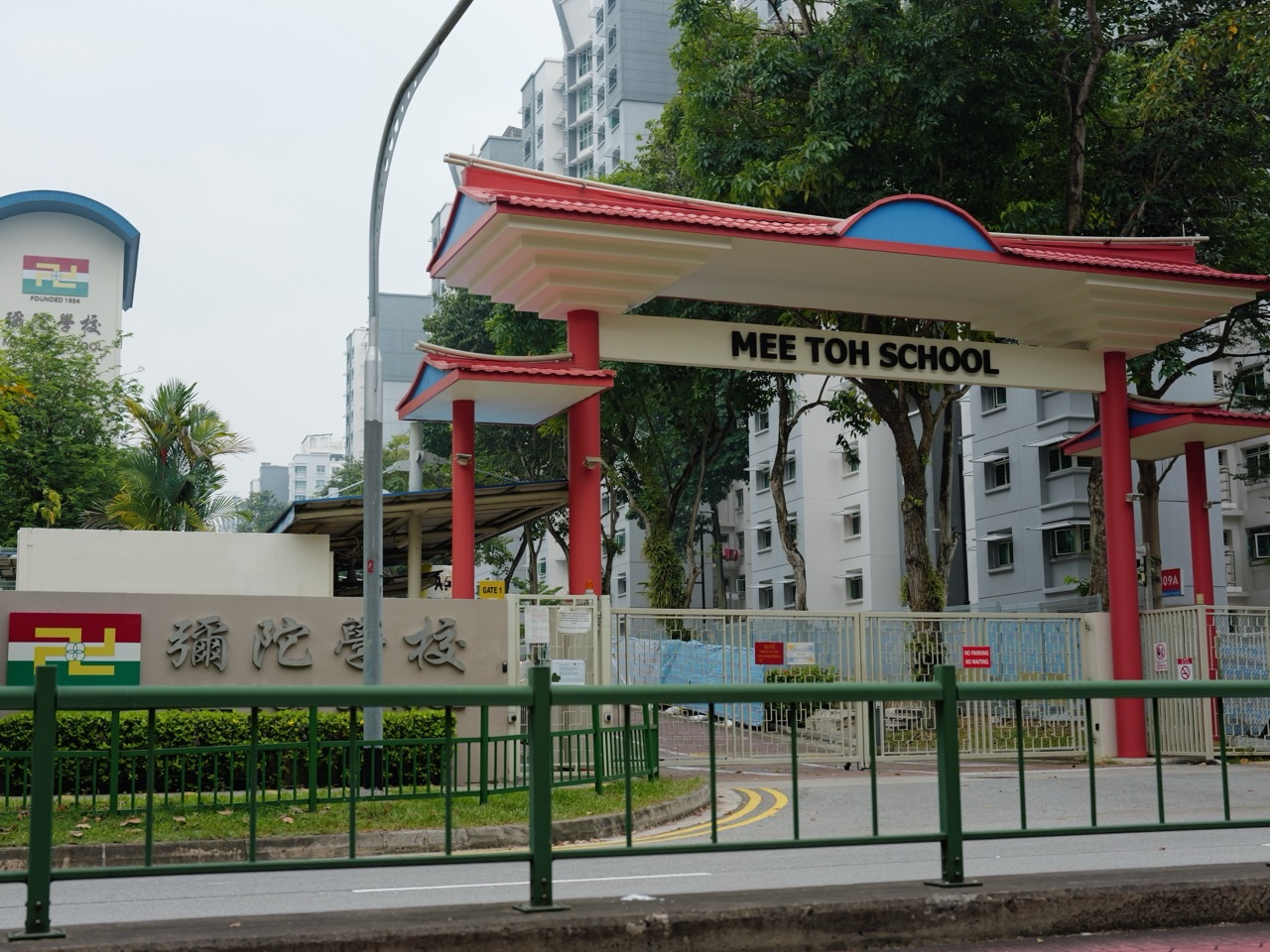
The featured eduKatePrimary photograph is illustrative; it does not depict this school or its pupils.
Find your family’s next step
Start with the decision table.
Explore the school-specific opportunities.
3 · Check important distinctions
Mother Tongue and the 2027 notice.
Care, travel and official entry.
Turn unanswered questions into a clear next step.
Full contents
1–4: Understand the school
5–8: Learning and participation
9–12: Make the family decision
What would make your child feel ready to learn at Mee Toh? Perhaps it is a comfortable language arrangement, a manageable journey or a clear way to ask for help. Start there. School identity and programmes become more useful when connected to a concrete family need.
A child who enjoys movement may be interested in a sports-based programme, but enthusiasm does not settle how they will handle a new group or a weekly commitment. Another may prefer a quieter activity and still value learning about cooperation. Ask about ordinary participation rather than imagining that every pupil must be especially sporty.
Write down three things that matter and one thing you still need to confirm. If Mother Tongue is essential, keep it ahead of optional activity preferences. If collection is difficult, do not hide that problem beneath an attractive programme description. A cheerful shortlist can still be a disciplined one.
Mee Toh’s Buddhist Practices directory lists Dharma-related activities, values talks and Vesak celebrations. These are part of the published identity. They should be explained openly to families rather than reduced to a generic claim that the school teaches good values.
Ask how the relevant practices are experienced by pupils and what current participation arrangements mean for your child. Do not assume a particular requirement or exemption. Families with different beliefs can ask respectful, specific questions and take time to understand the answers before deciding.
Discuss the distinction between learning about another tradition and participating in a religious practice if it matters to your household. A primary-school child may need an age-appropriate explanation too. This article cannot settle those expectations; its role is to make sure an important identity question is not overlooked.
The Learning for Life Programme page describes SENCE@MTS—Sports Education Nurturing Character Excellence. It brings together PE and outdoor education, PAL, sports CCAs and ACE Wushu. Read these as different components, not as proof that every pupil will hold every CCA place or follow the same activity schedule.
The family question is how an experience helps a pupil practise responsibility and cooperation. Ask what children do before, during and after a task, and how teachers help them reflect. A programme objective is an intention; it should not be rewritten as a guaranteed outcome for your particular child.
A useful home analogy is a family game in which everyone agrees on a rule, takes a turn and helps reset the space afterwards. The learning is not only winning. This is an independent illustration, not a description of Mee Toh’s lessons, and your child does not need to master a sport before enrolment.
The Mother Tongue page discusses Chinese, Malay and Tamil. More specifically, a school announcement dated 9 September 2026 states that a Tamil P1 class will begin in 2027. For family planning, that level and start year matter.
If your child is entering P1 in 2027, ask the school to confirm the relevant arrangements. If your child will be in another level, ask separately rather than assuming the P1 announcement covers them. A broad language listing and a new level-specific notice should be read together, not collapsed into a blanket promise.
The Mother Tongue page also describes a P3 Conversational Chinese and Malay enrichment programme. That is not a replacement for the child’s assigned Mother Tongue curriculum. Keep enrichment, required language learning and any Higher Mother Tongue question separate so you receive an answer to the actual issue your family needs resolved.
The published Mother Tongue page includes reading and cultural experiences. For your enquiry, explore how your child’s language learning would be supported in ordinary lessons, not only during a celebration. A child may enjoy a story aloud yet need help recognising words, answering a question or writing a response.
Keep English and Mathematics in the discussion too. Mee Toh’s sports-related programme and traditions do not answer every academic question. Ask about a task your child finds difficult and the first conversation parents should have when the difficulty persists. This keeps the enquiry grounded.
A hypothetical home routine is to read something short together and invite one genuine comment: ‘Which part surprised you?’ Let your child answer in a manageable way. This is independent guidance, not a school-prescribed exercise. The goal is regular engagement without turning every book into a test or every conversation into correction.
The student-development page describes leadership across service, cyber wellness, health, environment and peer relations, with tiered opportunities. That breadth is a useful starting point. It does not mean every pupil becomes a prefect or automatically enters a selected leadership tier.
Ask how pupils learn to contribute before they hold a formal role. A child might help a group finish a task, notice an excluded classmate or take care of shared materials. These ordinary actions can matter to a family even when they do not appear on a certificate.
If your child is interested in a formal route, clarify the identification process and commitments rather than assuming a position. Let interest grow without making a title the purpose of school. Your child can practise responsibility while being a beginner, making mistakes and receiving guidance from adults.
An experience within PAL or PE is not the same as a weekly CCA membership. The LLP’s inclusion of sports CCAs should prompt questions about current choices, entry levels, selection and allocation. Do not turn an attractive programme overview into a personal commitment that the school has not confirmed.
Ask your child what they would enjoy trying and what makes it appealing. Then investigate the ordinary practice day, equipment expectations where relevant and collection. A school activity must fit the family week as well as the child’s interest if it is to be sustainable.
Keep a second reasonable preference and allow for changing interests. A pupil who first wants to join friends may later enjoy the skill itself. Equally, a difficult first session need not define the whole experience. Ask how beginners are introduced and how parents should raise a participation concern.
The student-development page describes counsellors and SEN officers with different support responsibilities, and presents discipline as educative, fair, firm and timely. Treat this as a published approach, not a guarantee about the response to a particular incident or the intervention an individual child will receive.
If a learning, behaviour or peer concern already exists, describe it clearly and ask for the appropriate contact. Who should receive observations? What would happen first? When would parents and the school review the response? These questions help turn a general support description into an understandable process.
Share sensitive records privately through the proper channel. An article cannot assess your child or determine a support entitlement. If a difficulty is persistent, follow relevant professional advice and school guidance. Hope and careful follow-up belong together; you do not need to minimise a real concern to remain optimistic about school.
Mee Toh’s official contact address is 21 Edgedale Plains. Test the actual journey from your home, including the final walk and return after an activity. A Punggol location is not automatically convenient for every household, and a familiar road does not tell you the whole collection story.
Check crossings, shelter and current school arrival arrangements. Try the route with the caregiver who would normally use it. If a grandparent collects, their practical experience matters more than an unusually quick trip made once by a different adult.
Include a rainy-day and delayed-collection plan. A manageable commute should leave room for food, rest and ordinary family time. You may decide that a slightly different route is acceptable because another arrangement works well, but make that tradeoff consciously rather than assuming the programme will compensate for daily exhaustion.
Confirm current school-based or other care arrangements directly, including places, separate applications, fees, hours and holiday provisions. This guide does not state that a place is available. Ask how collection works when an activity finishes later than the ordinary school day.
Put the proposed week on one page with the responsible adult beside each collection. Include siblings’ schedules and a backup. If the plan depends on a care place that is not confirmed, mark that as unresolved rather than treating it as a minor detail to sort out after admission.
Keep extra lessons purposeful. Your child may need focused help in a specific area, but a new school does not automatically require a crowded tuition schedule. Listen to school feedback and leave some time to settle into routines, enjoy books, move, play and tell you what happened during the day.
Check MOE’s current P1 registration guidance for your child’s exercise and situation. Programme interest, a new Tamil-class announcement or the school’s religious identity does not by itself establish eligibility, priority or a vacancy. This guide intentionally makes no forecast of admission or balloting.
For a transfer or a child entering another level, clarify the appropriate route and the language arrangement together. Do not assume that a P1-specific provision automatically resolves an older child’s case. The suitability enquiry and the administrative entry process are related but different tasks.
Prepare a realistic alternative using the same family criteria. Compare journey, language, identity expectations, learning response and care before optional preferences. A second workable school can reduce pressure without requiring you to abandon your interest in Mee Toh. Keep the adult process organised and the child’s role age-appropriate.
Contact the school through its official details; the general office number is 6489 3326 and the published email is meetoh_sch@moe.edu.sg. Explain your child’s intended level and the question that matters most. For Tamil enquiries, mention the P1 2027 announcement rather than asking only whether the school offers Tamil.
Ask separately about religious-practice expectations, selected participation or support if they affect your decision. Record what is confirmed for your child and what remains a published example. You can appreciate a programme while waiting for an answer to an essential practical question.
Mee Toh is worth exploring when the identity and opportunities make sense for your family and the daily arrangements work. Your child need not arrive with a leadership title, sporting talent or perfect confidence. A good next step is to understand the experience clearly and create room for learning, contribution and belonging.
For eduKate information, visit the eduKateSingapore homepage. Any additional learning support should address a specific need and fit the child’s school week.