
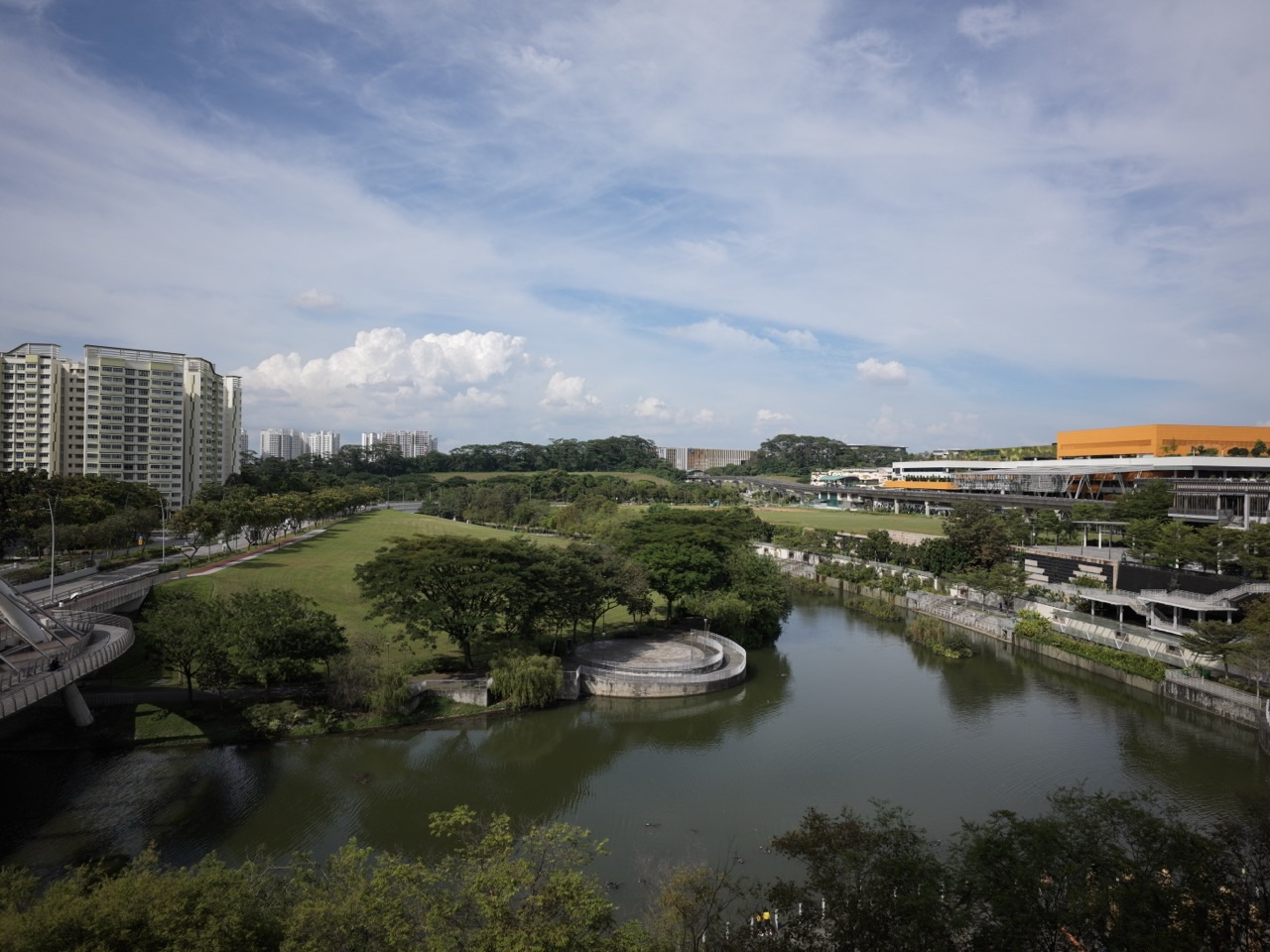
Damai LRT Station (PE7) is one of the most useful Punggol East Loop stops for a genuine outdoor visit. NParks officially lists Damai as a nearby station for Punggol Waterway Park, a 25.79-hectare park with four themed areas: Nature Cove, the Recreation Zone, the Heritage Zone and the Green Gallery. The station also serves the surrounding Punggol Drive neighbourhood, so a visit can be as simple as a short waterside walk, a quiet pause in the park or a family observation activity.
If you want to know where to go near Damai LRT and what to do, start with the park rather than a restaurant list. Choose the specific entrance and section you want, walk only as far as your group is comfortable, and check present park notices. The park is open 24 hours according to NParks, but that does not mean all facilities, playground equipment or particular paths are available at all times.
This guide explains how Damai PE7 relates to Punggol Waterway Park, which activities are realistically useful, what to check for children and seniors, and how Damai compares with Oasis and the Punggol town-centre interchange. It avoids treating every attraction along the whole Punggol Waterway as if it were directly outside the station.
Damai LRT (PE7): quick answer
- LRT line: Punggol East Loop, station PE7, with transfer to the North East Line at Punggol MRT (NE17).
- Main attraction: Punggol Waterway Park, officially listed by NParks with Damai as one of its nearby rail stations.
- Park size: 25.79 hectares; the park extends over a broad area rather than one compact plaza.
- Four named areas: Nature Cove, Recreation Zone, Heritage Zone and Green Gallery, as classified by NParks.
- Activities: riverside walking, casual photography, observing landscaping and birds, and suitable play or recreation where facilities are open.
- Other station surroundings: Damai Grove, Waterway Brooks, Treelodge@Punggol and everyday housing and service streets.
- Best for: families, nature beginners, residents wanting a low-cost walk and anyone interested in Punggol’s waterway town planning.
- Costs: public park access generally does not require an admission ticket; transport, refreshments and any separately managed activities may cost money.
- Important precaution: the waterway is not a place to swim, enter the water or fish in prohibited sections.
Why choose Damai for Punggol Waterway Park?
The strongest reason is unusually clear: NParks itself identifies Damai LRT and Punggol MRT as nearby stations. That is more trustworthy than choosing a station solely because an online map shows water somewhere near it. However, Punggol Waterway Park runs along a wider corridor through town. Choosing Damai gives you a sensible starting point, not instant access to every themed zone, bridge or playground.
Punggol’s waterway is part of a larger planned town where waterways, green spaces, transport and homes are deliberately linked. The park offers a place to move away from indoor shopping and experience a greener route. Because there are several entrances, anyone who wants a particular feature should consult NParks’ map or the latest park signage before starting.
The best way to enjoy the park is to choose a specific purpose. A child may want to see a playground or bridge; a walker may want a modest out-and-back; a student may want to compare how paths, plants and water help shape the neighbourhood. All are reasonable. Trying to cover the whole park in a short stop is not.
1. Walk towards the Punggol Waterway from Damai
After leaving the station, orient yourself using the current street-level signs and a walking map. Damai is on Punggol Drive. The immediate surroundings include housing blocks, crossings and local roads, so use proper public paths instead of following a straight-line direction towards blue water on a phone screen.
Once you reach a signed public section of the park, start with a short stretch of path. Look for open views along the waterway, landscaped banks, public seating where provided, and pedestrian connections that let people return to nearby housing. The experience is generally more satisfying when you allow time to look rather than racing to another map pin.
Remember that an out-and-back walk doubles the distance travelled along the same route. If you walk fifteen minutes away from the station, you still need to return unless another station or bus stop is safely accessible from the endpoint. For families with young children or older visitors, decide on the turning point before anybody becomes tired.
No published walking-time estimate can guarantee your pace, especially when taking photographs, pushing a pram or waiting at crossings. Plan for a comfortable outing rather than promising that every section is ‘five minutes from Damai’.
2. Understand the park’s four themed areas
NParks names Nature Cove, Recreation Zone, Heritage Zone and Green Gallery as the park’s four themed areas. These are useful categories, but they do not prove that all four are clustered beside Damai PE7. A specific themed area may be farther along the park corridor than the first entrance you reach.
Nature Cove: pause and appreciate the riverside
A nature-focused stop is well suited to people who prefer quiet walking or photography. Look for vegetation and habitat edges from a safe public walkway. Watch how the landscape changes between planted banks, water and nearby buildings. Do not assume that the similar-sounding Cove LRT station (PE1) is the entrance to Nature Cove: they are not the same named place.
Recreation Zone: choose activities that fit the group
Recreation areas can offer a more active visit, but the exact equipment available on a particular day may be under maintenance or appropriate only for certain ages. If travelling with children, check where the play area actually lies and whether the access route is manageable. A family should not rush across the park solely to reach a feature advertised in an old photograph.
Heritage Zone: understand the town’s earlier routes
The heritage theme invites visitors to think about what Punggol looked like before the modern waterfront town emerged. Roads, bridges and old route alignments can help explain how a place changes. Treat any heritage marker as a chance to read and learn, not permission to wander into a closed section or construction area.
Green Gallery: observe how greenery is organised
Planted spaces make the walk comfortable and visually interesting, but there is also a planning lesson: trees and ground planting can provide shade, support wildlife and soften an urban setting. Observe the variety without collecting plants, disturbing birds or stepping into beds to take a photograph.
If you intend to visit one particular themed area, locate it on the official park map first. The terms above are not a claim that each area begins at Damai station.
3. Enjoy the bridges and public waterway views
Bridges are among the easiest things for visitors to notice along Punggol Waterway. They make it possible to see the neighbourhood from different angles while connecting walking paths across the water. Some are distinctive landmarks, and others are primarily practical routes for residents. Either can be interesting when viewed from a safe pedestrian space.
Instead of promising a precise bridge name without a route, identify the bridge shown on the current park map for your chosen section. When you reach it, look at the engineering and design: is it primarily for walking, how do people enter it, and how does it fit into the larger path network? A family can enjoy the view and still keep the visit short.
Stay behind railings and do not climb or lean over them for photographs. Give way to people crossing and keep children close. A bridge is part of a shared public route, not a place to set up a long stationary photo shoot that blocks movement.
4. Look for ordinary wildlife without making promises
Water, planting and trees can attract birds, insects and other small animals. Whether you see anything unusual depends on the season, weather, time of day and human activity. The honest goal is to observe what is present, not to guarantee that a specific species will appear.
For a simple activity, pause quietly and notice which areas animals seem to use. Are birds higher in trees or near the water? Do insects stay near planted edges? If you cannot identify a species, write down its colour, size and behaviour and check a reliable source afterwards. That is a more useful learning habit than guessing.
Do not feed fish or birds, take home living organisms, or release unwanted pets into the water. Keep to established paths and avoid entering planted or fenced sections. Even small disturbances are harmful when repeated by many visitors.
5. Use the neighbourhood as a rain-or-heat fallback
The area around Damai includes everyday HDB residential blocks and streets. Visitors may find local convenience shops or food options, but these are not a guaranteed full-service indoor tourist centre. If the weather is too hot for a long walk, shorten the outing or choose a different East Loop station with a verified sheltered destination.
Oasis PE6 is associated with Oasis Terraces, a neighbourhood centre with food and shops. Punggol MRT NE17 is the direct station for Waterway Point. Sam Kee PW1, on the West Loop, serves One Punggol and the regional library. These alternatives are important because a good outdoor guide should offer a sensible Plan B.
Do not use covered residential corridors as if they are public tourist routes. If you want food, verify the actual outlet and walking approach; do not enter residents-only spaces just because a passage appears sheltered.
Three easy plans from Damai PE7
The 30-minute introduction: waterway and return
- Alight at Damai PE7 and use the current station signs to locate an appropriate public park approach.
- Walk towards one permitted public view of the waterway.
- Spend a few minutes enjoying the greenery, photograph the landscape if you wish and keep clear of other path users.
- Turn back with enough time and energy to return comfortably to Damai.
This is a good first visit for a family or someone unfamiliar with the area. If the intended path is closed or unsafe, choose another public route or end the trip early.
The 60–90-minute visit: one park area in depth
- Before travelling, choose a park section or feature on NParks’ map.
- Carry drinking water and select a time that avoids the strongest heat.
- From Damai, follow legal crossings to the selected public route.
- Explore that section at a relaxed pace, stopping for views and observations.
- Return without assuming that the next park zone will be equally close.
This route is suitable for people who like gentle outdoor movement, particularly when they are not trying to combine it with shopping.
A family learning outing: nature and urban design
- At home, look at the park’s four themed areas and decide which one is most suitable.
- At Damai, identify the elevated LRT and the streets that connect residents with parkland.
- Observe how planting, bridges and water affect the feeling of the town.
- Ask a child to describe three things they actually saw and one thing they still want to understand.
- Finish with a meal or rest at a verified destination if needed.
A short, careful observation is often more educational than rushing through a dozen locations. There is no need to turn the outing into compulsory homework.
How to get to Damai LRT from the MRT
Take the North East Line to Punggol MRT (NE17), then follow the interchange signs to the Punggol LRT East Loop. The station code for Damai is PE7. Check the live platform and train direction, because the loop can take different routes around the East Loop stations.
Damai is adjacent to Oasis PE6 in the numbered sequence, but the journey you actually take depends on the boarding direction. Do not assume the next train is always the shortest route. Check the route diagram, station display and any current service notice before boarding.
The cost of the rail journey depends on your complete origin, fare card and concession eligibility. Use SimplyGo’s official fare information instead of copying an old fare table. If travelling from nearby Punggol, a public bus or a suitable walking route may sometimes be easier than going through the MRT interchange.
Damai or Oasis: which is better?
- Choose Damai PE7 for a Punggol Waterway Park-focused outing and an NParks-listed approach to the park.
- Choose Oasis PE6 for Oasis Terraces, food, basic shopping, Punggol Polyclinic and a shorter optional waterside stop.
- Choose Punggol MRT NE17 for Waterway Point and the other NParks-listed rail approach to the park.
- Choose Sam Kee PW1 for One Punggol, Punggol Regional Library and SAFRA Punggol.
- Choose Cove PE1 for Punggol Field neighbourhood errands rather than for the similarly named Nature Cove area.
These destinations have different purposes. If shopping is the main goal, choose a station next to a shopping centre. If a safe nature walk is your goal, choose the park section and its accessible entrance first.
Accessibility, safety and cost
Accessibility: NParks lists Punggol Waterway Park as wheelchair accessible, but users should choose a suitable accessible entrance and route. Some features may involve slopes, different surfaces or temporary closures. If you use a wheelchair or pram, confirm the particular route rather than assuming every path in a large park is identical.
Heat and rain: Singapore can be hot and humid even in the morning. Bring water, use sun protection and shorten the walk when appropriate. In thunderstorms or lightning, leave open park areas and seek proper shelter; a desire to finish a planned route should never override safety.
Children: supervise closely near bridges, open water and cycling paths. Check the age suitability and condition of any playground before use. A park pond or waterway is not a supervised swimming facility.
Cost: ordinary public park access is generally free, while transit, parking, food and separately managed activities may charge fees. You do not need to buy anything to enjoy a suitable public walking route.
Etiquette: keep shared paths clear, give cyclists room, manage pets according to NParks rules and take litter away. Do not damage planted areas or collect wildlife.
What not to do at Damai
- Do not confuse Cove station PE1 with the Nature Cove area of Punggol Waterway Park.
- Do not assume all four thematic zones begin at Damai’s exit.
- Do not quote an exact walking time to every bridge without checking the entrance and route.
- Do not enter water, fish in prohibited sections or climb park railings.
- Do not leave children unattended near open water.
- Do not assume 24-hour park opening means all facilities are open around the clock.
- Do not continue exposed walking in a thunderstorm.
- Do not enter private residential grounds while looking for a shortcut.
Frequently asked questions about Damai LRT
Is Damai LRT near Punggol Waterway Park?
Yes. NParks officially lists Damai LRT among the park’s nearby stations, alongside Punggol MRT. The park is extensive, so choose the particular section you want before planning the final walk.
Which LRT loop is Damai on?
Damai is PE7 on the Punggol LRT East Loop, connected to the North East Line at Punggol MRT NE17.
What are the four areas of Punggol Waterway Park?
NParks names Nature Cove, Recreation Zone, Heritage Zone and Green Gallery. They are different park areas, not all located directly beside Damai.
Is Punggol Waterway Park free?
Ordinary public park access does not require a ticket. Transport and any optional purchases or paid activities are separate.
Is Punggol Waterway Park open at night?
NParks lists the park as open 24 hours, but individual facilities and paths can close and safety conditions vary. Daylight is often preferable for an unfamiliar visit.
Can I swim in Punggol Waterway?
No. Treat it as a managed waterway, not a swimming pool. Stay on permitted public paths and follow posted restrictions.
Is Damai or Oasis better for a rainy-day outing?
Oasis PE6 has the more obvious indoor fallback at Oasis Terraces. Damai is the stronger choice for a planned outdoor park visit.
What can a child learn at the waterway?
A child can observe bridge design, plants, wildlife, pedestrian behaviour and how a town uses green and blue public spaces. Keep the exercise simple and supervised.
How long should I spend?
A first visit can be as short as 20–30 minutes on one comfortable public path. A longer park visit may take one or more hours depending on the chosen section and mobility.
Official sources and related guides
- NParks: Punggol Waterway Park — park area, themes, operating information and nearby stations.
- LTA: Sengkang–Punggol LRT — East Loop network and transfers.
- SimplyGo: official public transport fares — route-dependent fare information.
- LRT Guide: Oasis PE6 — Oasis Terraces, food and nearby waterway options.
- LRT Guide: Sam Kee PW1 — One Punggol and the regional library.
- eduKate Punggol: Things to Do Along the Punggol East Loop — other PE station options.
Reviewed 31 October 2026. This is a practical location guide, not a guarantee that every facility is open or every park feature is a fixed number of minutes from the LRT. Check NParks notices, current station signs and the weather before visiting.