
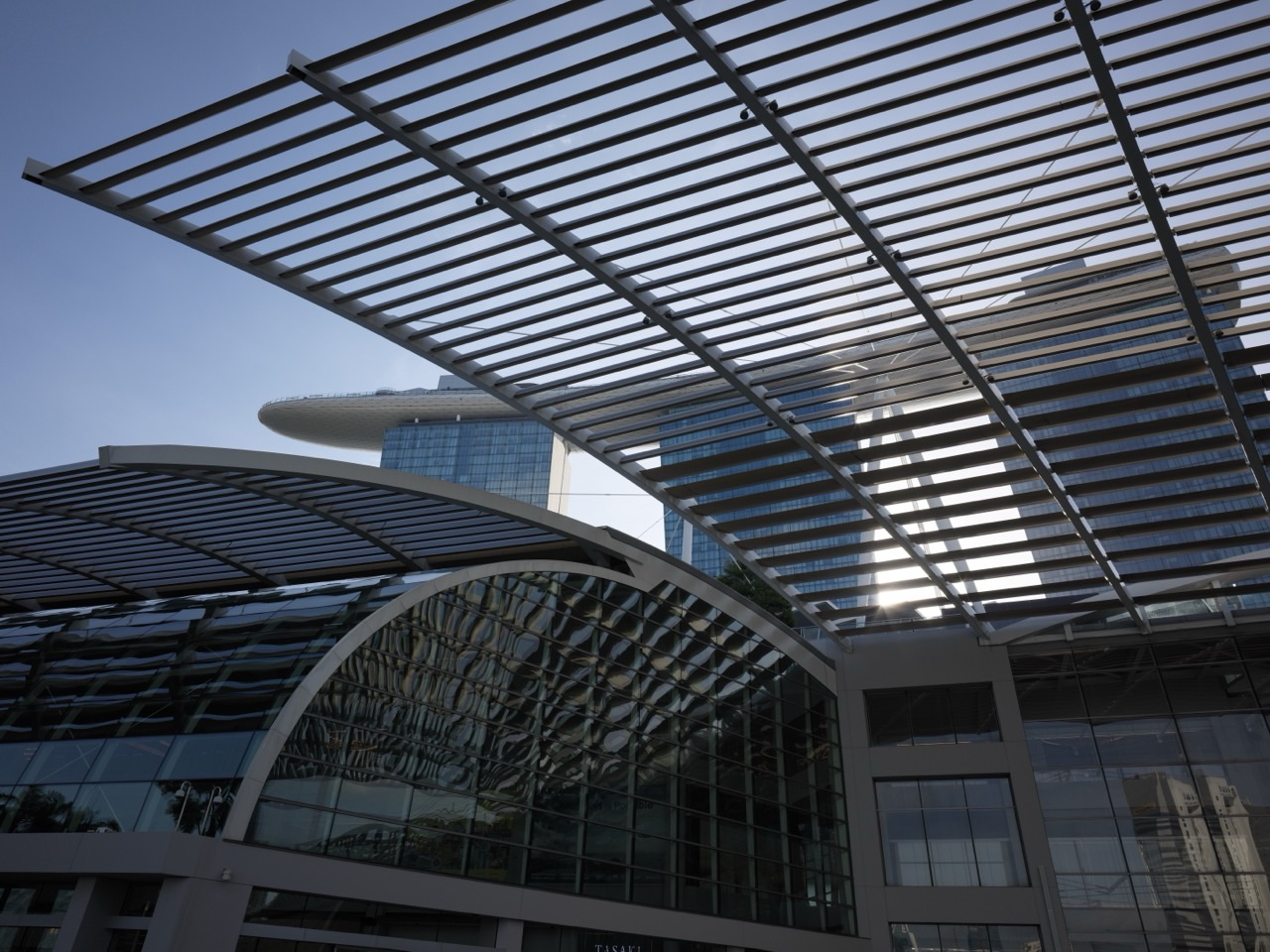
Singapore is hot because it is tropical.
That makes cooling one of the city’s largest invisible energy systems.
District cooling changes the model: instead of every building owning all of its own chillers, several buildings can share a central cooling network.
Did you know that SP Group’s Singapore district-cooling footprint reached 230,870 refrigeration tonnes by March 2026?
This article targets district cooling Singapore, Marina Bay district cooling, cooling as a service Singapore, urban cooling Singapore and centralised cooling Singapore.
Official information was checked on 4 October 2026. Worked examples are fictional.
Did You Know? Singapore’s District Cooling Footprint Reached 230,870 RT
SP Group’s latest annual report states that its Singapore district-cooling footprint reached 230,870 refrigeration tonnes as of March 2026, making it the largest district-cooling operator in Southeast Asia.
Official reference: SP Group — Annual Report.
The scale shows that cooling has become infrastructure rather than merely equipment inside individual buildings.
Marina Bay’s District Cooling Network Has Operated for 20 Years
In August 2026, SP Group marked 20 years of Marina Bay district-cooling operations and announced further expansion into Anson, Enggor and Havelock areas.
Official reference: SP Group — 20 Years of Marina Bay District Cooling.
The network has moved from a new-city experiment into long-lived urban infrastructure.
What Is District Cooling?
A central plant produces chilled water.
Insulated pipes distribute that chilled water to multiple buildings.
Each building uses the chilled water to cool its air-conditioning system and returns warmer water to the plant.
Cooling becomes a shared utility.
Why Centralise Cooling?
Large central plants can use bigger, more efficient chillers.
Shared capacity reduces the need for every building to size equipment for its own maximum peak.
Maintenance can be concentrated in fewer plants.
The network can also add thermal storage and new satellite plants more flexibly.
Worked Example: Diversity Reduces Peak Capacity
Imagine two buildings each require 1,000 RT at their individual peak.
If their peaks occur at different times, the shared system might need less than 2,000 RT of simultaneous capacity.
The economic value comes from diversity across customers.
A shared network can serve the combined load more efficiently than isolated peak-designed plants.
Marina Bay Keeps Expanding Beyond the Original Core
SP Group’s 2026 expansion plans include new customers in Anson and Shenton Way and a new Havelock cluster served by additional cooling infrastructure.
The network is progressively extending beyond the original Marina Bay financial district.
Official reference: SP Group — Marina Bay Expansion.
Cooling Can Be Moved Underground
A building with its own chiller plant needs space for equipment and cooling towers.
District cooling can free some rooftop and plant-room space for other uses.
In a high-value downtown district, recovered real-estate area can be economically significant.
The cooling network changes urban form.
Thermal Storage Shifts Electricity Demand
A district system can produce chilled water or ice during lower-demand periods and use the stored cooling later.
Thermal storage shifts part of the electricity load in time.
That can reduce peak demand and improve plant operation.
Cooling becomes an energy-storage problem.
George Street Is Adding Satellite Cooling Infrastructure
SP has developed satellite cooling and thermal-storage concepts around the George Street electricity substation to support expansion of the Marina Bay network.
Its offering documents describe plans to increase cooling capacity and interconnect additional downtown developments.
Official reference: SP Group — District Cooling Business.
Industrial District Cooling Is Growing Too
SP’s 2026 annual report states that it commenced operations for Singapore’s largest industrial district-cooling system at STMicroelectronics’ Ang Mo Kio TechnoPark.
The system has up to 36,000 RT of cooling capacity and is expected by SP to reduce cooling-related electricity consumption by about 20% annually.
Official reference: SP Group — Industrial District Cooling.
Worked Example: 20% Cooling Savings Can Become Large
Imagine a fictional industrial site spends S$5 million a year on cooling electricity.
A 20% reduction would save S$1 million annually before service charges and capital costs.
The value depends on the actual baseline and contract.
Cooling efficiency becomes a manufacturing-cost issue.
Distributed District Cooling Can Retrofit Existing Precincts
District cooling does not always require one enormous new central plant.
Distributed networks can connect existing high-efficiency plants across several buildings.
SP’s Tampines project demonstrated a brownfield distributed-district-cooling model.
The concept is useful where cities already exist and cannot be rebuilt from scratch.
Cooling-as-a-Service Changes Ownership
A building owner can buy cooling output instead of owning every chiller asset.
The service provider designs, operates and maintains the system.
That can convert capital expenditure into a long-term service arrangement.
The economics depend on contract length, efficiency and performance guarantees.
District Cooling Connects to Smart Buildings
Building-management systems can communicate load forecasts to the cooling network.
The central plant can optimise chillers around actual demand.
See Making Singapore Rich | Smart Buildings, Building Management Systems and PropTech.
Data improves thermal efficiency.
District Cooling Connects to Data Centres
High-density compute requires enormous cooling.
Some future precincts may use shared thermal infrastructure where technical requirements align.
See Making Singapore Rich | Data Centre Cooling, Liquid Cooling and Thermal Management.
Cooling is becoming a standalone infrastructure sector.
The Risk: Networks Create Shared Dependency
A shared cooling network can be highly efficient.
A major failure can also affect several buildings simultaneously.
Redundancy, thermal storage, plant diversity and maintenance therefore become critical.
Efficiency needs resilience.
The Risk: Long-Term Contracts Need Good Baselines
A customer may sign a cooling-as-a-service contract for decades.
Savings claims depend on what the building would otherwise have spent.
A weak baseline can make performance hard to evaluate.
Transparent measurement is important for both customer and provider.
The Risk: Expansion Needs Pipe Corridors
District cooling requires physical pipes beneath roads and buildings.
Urban construction can be expensive and disruptive.
Network planning needs to anticipate future customers before the district becomes too congested to retrofit easily.
Infrastructure timing matters.
The Risk: Very Efficient Buildings Can Change the Economics
If future buildings need much less cooling, the value of shared infrastructure may change.
A district network therefore has to adapt to building-efficiency improvements rather than assume demand remains constant forever.
The best network is flexible.
District Cooling Creates Exportable Singapore Expertise
SP Group has expanded cooling services into China, Thailand and Vietnam.
Its current annual report says overseas cooling capacity had reached 130,000 RT by March 2026.
Official reference: SP Group — Overseas Cooling.
Singapore’s urban cooling experience has become a regional service export.
District Cooling Connects to Green Buildings
Cooling can represent a large share of building electricity use in Singapore.
Lower cooling energy improves Green Mark performance and reduces operational carbon.
See Making Singapore Rich | Low-Carbon Concrete, Construction Materials and Green Building Products.
Education Builds Thermal-Systems Capability
The sector needs mechanical engineers, energy managers, controls specialists, facilities teams and data analysts.
Students can learn heat transfer, energy, capacity and optimisation through district-cooling examples.
See Making Singapore Rich | Education, Skills and Human Capital.
A Guided Classroom Investigation
Give students three fictional buildings peaking at different times.
Ask them to add the individual peaks and compare that with the simultaneous combined peak.
The difference illustrates diversity benefit.
The exercise teaches why shared infrastructure can need less capacity than isolated systems.
Independent Practice: Own the Chiller or Buy Cooling?
A fictional building can spend S$10 million on chillers or sign a 20-year cooling service contract.
Which is better?
Students should ask about energy use, maintenance, financing, resilience and future demand.
The learning goal is lifecycle economics.
What Progress Should Look Like
A stronger district-cooling economy should expand efficient shared networks, add thermal storage, improve brownfield retrofits and export cooling expertise to other hot, dense cities.
A stronger learner should distinguish cooling capacity from energy use, shared infrastructure from shared risk and equipment ownership from service delivery.
Frequently Asked Questions
What is district cooling?
It is a system where a central or distributed cooling network supplies chilled water to multiple buildings instead of every building relying only on its own standalone chiller plant.
How large is SP’s Singapore district-cooling footprint?
SP Group reported 230,870 refrigeration tonnes as of March 2026.
How old is the Marina Bay network?
SP Group marked 20 years of Marina Bay district-cooling operations in August 2026.
What is Cooling-as-a-Service?
It is a model where the customer buys cooling output while a service provider owns or operates the cooling system.
How does district cooling make Singapore richer?
It lowers cooling energy, frees valuable building space and creates engineering and energy-service capabilities that can be exported to other cities.
Helpful Reading and Singapore Graph Connections
- SP Group — Marina Bay District Cooling at 20 Years
- SP Group — Annual Report
- Making Singapore Rich | Smart Buildings, Building Management Systems and PropTech
- Making Singapore Rich | Building Maintenance and Facilities Management
Making Singapore Rich: Treat Cooling Like Urban Infrastructure
Did you know that the easiest chiller to optimise may be the one a building does not need to own?
District cooling pools demand.
Thermal storage shifts load.
Central plants improve operating efficiency.
Service models turn equipment into infrastructure.
Singapore becomes richer when the cost of staying cool becomes an engineering system the city can optimise at district scale.
The building needs comfort.
The network supplies the comfort more efficiently.