
Singapore cannot air-condition the outdoors.
That makes urban heat a planning problem as much as an air-conditioning problem.
Did you know that HDB’s large-scale cool-coating trial in Tampines recorded ambient-temperature reductions of up to 2°C, and HDB plans to extend cool coatings to all existing estates by 2030?
This article targets urban heat Singapore, cool paint Singapore, cool roof Singapore, heat resilience Singapore and thermal comfort Singapore.
Official information was checked on 5 October 2026. Worked examples are fictional.
Did You Know? Cool Coatings Are Planned Across Existing HDB Estates by 2030
URA’s current heat-resilience material says the HDB/Tampines Town Council pilot applied cool coatings to about 130 HDB blocks and recorded ambient-temperature reductions of up to 2°C.
Following the pilot, HDB plans to extend cool coatings to all existing HDB estates by 2030.
Official reference: URA — A Cool City in a Warming World.
Why Cities Become Hotter Than Their Surroundings
Concrete, asphalt and dark roofs absorb solar energy.
Buildings block wind.
Vehicles, air-conditioners and industry release waste heat.
Dense urban areas can therefore stay warmer than less-built-up surroundings.
This is the urban heat island effect.
Urban Heat Is an Economic Problem
Hotter streets reduce outdoor comfort.
Buildings need more cooling.
Workers exposed to heat may become less productive.
Health risks rise during extreme conditions.
Cooling Singapore therefore protects both liveability and economic capacity.
Worked Example: Surface Temperature and Air Temperature Are Different
A dark roof can become much hotter than the surrounding air in direct sun.
A reflective coating can lower the roof surface temperature substantially.
That does not mean the outdoor air cools by the same amount.
Thermal-performance claims need to distinguish surface effects from ambient effects.
Cool Coatings Reflect More Solar Energy
Cool paints and coatings contain materials that reflect more sunlight and absorb less heat than conventional dark surfaces.
URA highlights products that can reduce heat absorption and lower surface temperatures.
Official reference: URA — Shaping a Heat Resilient City.
The building exterior becomes part of the cooling system.
Shade Is Often the Most Immediate Thermal Intervention
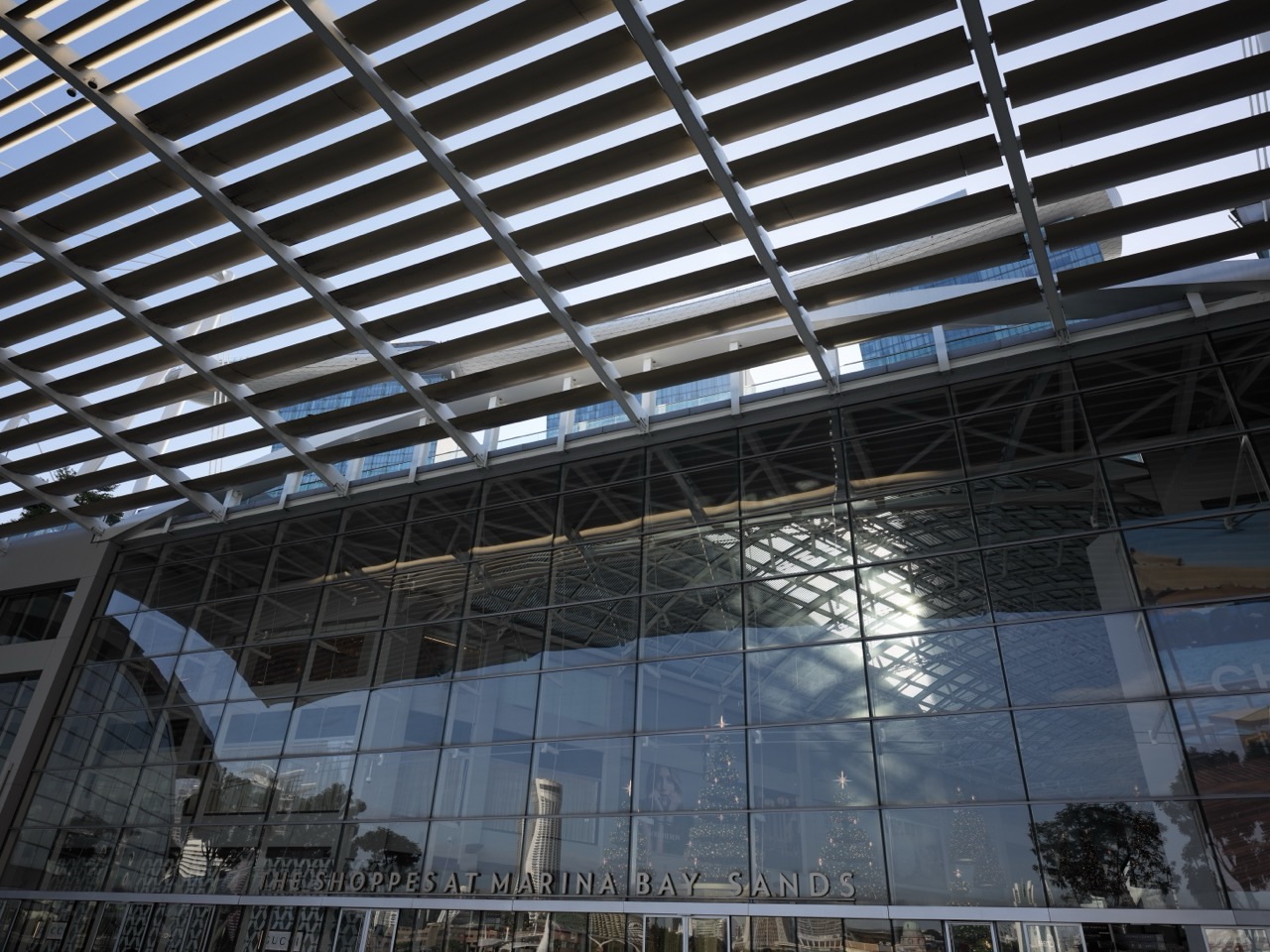
Trees, canopies, overhangs and sheltered walkways reduce direct solar exposure on people and surfaces.
A shaded pedestrian can feel far more comfortable even if the measured air temperature changes only slightly.
Thermal comfort depends on radiation, wind and humidity as well as air temperature.
Building Orientation Changes Solar Gain
A building’s orientation determines which facades receive the strongest sun and how wind moves between blocks.
URA’s heat-resilience strategy includes climate-sensitive planning approaches such as building orientation, setbacks and no-build zones to preserve airflow.
Official reference: URA — Climate-Sensitive Urban Design.
Wind Is an Urban Resource
Air movement increases evaporative cooling from skin and can reduce perceived heat.
Dense building layouts can block or redirect wind.
Planning for ventilation corridors therefore treats wind as part of urban infrastructure.
The city can be designed to use weather better.
URA Is Trialling Wind LiDAR
URA and NUS are trialling wind LiDAR technology to measure wind information at different heights and improve urban wind-flow simulations.
Official reference: URA — Wind LiDAR Trial.
The sensor helps planners understand invisible airflow before deciding how future districts should be shaped.
Worked Example: Two Layouts Can Have the Same Floor Area and Different Heat
Imagine two districts contain the same total building floor area.
One blocks prevailing winds with continuous towers.
The other preserves breezeways and more shaded pedestrian routes.
Both achieve the same density and create different thermal environments.
Density alone does not determine comfort.
Urban Climate Modelling Lets Planners Test Alternatives
URA and SUTD are developing computational models that can generate and compare planning scenarios based on urban heat performance.
Official reference: URA — Urban Heat Modelling.
This connects heat resilience to Making Singapore Rich | Digital Twins, Geospatial Data and City Simulation.
Greenery Cools Through Shade and Evapotranspiration
Trees shade surfaces and release water vapour through leaves.
Parks and planted corridors can therefore moderate local thermal conditions.
The cooling effect depends on species, soil moisture, canopy size and surrounding geometry.
Greenery is infrastructure with biological maintenance requirements.
Cool Roofs Can Reduce Building Cooling Demand
A roof that absorbs less solar heat can transfer less heat into the building below.
That can reduce air-conditioning demand, especially for low-rise or top-floor spaces.
The economic value depends on roof area, insulation and building use.
A cool roof changes both outdoor surface temperature and indoor cooling load.
District Cooling Reduces Waste Heat From Individual Buildings
Shared cooling systems can improve chiller efficiency and reduce the number of individual cooling plants operating across a district.
See Making Singapore Rich | District Cooling, Urban Thermal Energy and Cooling-as-a-Service.
Urban heat and cooling energy are linked problems.
Worked Example: One Degree Can Affect Cooling Load
Imagine a building uses 1,000 MWh a year for air conditioning.
If a combined package of shading, cool surfaces and controls cuts cooling energy by 5%, that saves 50 MWh annually.
The exact response varies by building.
Heat mitigation can create recurring operating savings.
Heat Resilience Needs Social Measures Too
Singapore’s Master Plan 2025 heat strategy includes community resilience, not only urban design.
People need information, shaded rest areas and working practices that reduce exposure during high heat.
The city cannot engineer away every hot day.
Adaptation also changes behaviour.
Heat Affects Outdoor Workers Unequally
Construction, delivery, landscaping and other outdoor jobs experience heat directly.
Employers need work-rest practices and heat-stress controls.
See Making Singapore Rich | Workplace Safety Engineering, WSH and Industrial Risk Control.
Urban heat resilience and workplace safety overlap.
The Risk: Reflective Surfaces Can Create Glare
A coating that reflects more solar radiation can increase glare in some contexts.
Material choice should consider surrounding buildings, roads and users.
Thermal performance is one design variable among many.
The best cool material is context-specific.
The Risk: Greenery Needs Water and Maintenance
Trees cool the city only if they survive and grow enough canopy.
Irrigation, soil quality, pruning and root space all matter.
A landscape plan without long-term maintenance may underperform.
Biological infrastructure has operating costs.
The Risk: Air Conditioning Can Move Heat Outdoors
Indoor cooling removes heat from buildings and rejects it outdoors.
At district scale, waste heat from many air conditioners can worsen local outdoor conditions.
Efficient cooling reduces both electricity use and rejected heat.
The indoor and outdoor thermal systems are connected.
The Risk: One Pilot Does Not Generalise Everywhere
A cool-paint result in one town depends on building layout, climate, materials and measurement method.
Scaling should continue to be monitored rather than assuming identical performance in every estate.
Evidence becomes stronger through repeated deployment.
Heat Resilience Connects to Green Buildings
Better envelopes, shading and cooling reduce operational energy.
See Making Singapore Rich | Building Retrofits, ESCOs and Energy Performance Contracting.
A cooler city can also be a lower-energy city.
Heat Resilience Connects to Urban Planning
Street orientation, parks, building height and development density all affect airflow and solar exposure.
See Making Singapore Rich | Urban Planning, Master Plan 2025 and Land-Use Economics.
Thermal comfort begins before a building is designed.
Education Builds Climate-Design Capability
The sector needs architects, planners, building physicists, landscape designers, materials scientists and data modellers.
Students can learn radiation, convection, evaporation and experimental design through urban heat examples.
See Making Singapore Rich | Education, Skills and Human Capital.
A Guided Classroom Investigation
Place identical dark and light surfaces under sunlight and compare surface temperatures using safe classroom methods and appropriate equipment.
Then ask whether the air temperature changes by the same amount.
The exercise teaches the difference between surface energy balance and ambient air.
Independent Practice: Shade or Cool Paint?
A fictional playground can add trees or repaint nearby surfaces with cool coatings.
Which gives more comfort?
Students should consider shade, time to grow, maintenance, glare and local climate.
The learning goal is multi-factor design.
What Progress Should Look Like
A stronger heat-resilience economy should create more climate-sensitive planning, scalable cool-material deployment, better wind and heat modelling, lower cooling demand and more specialised urban-climate expertise.
A stronger learner should distinguish surface temperature from air temperature, cooling energy from outdoor comfort and one technology from a complete heat strategy.
Frequently Asked Questions
How much did the Tampines cool-coating pilot reduce temperature?
URA says the trial recorded ambient-temperature reductions of up to about 2°C.
What is HDB planning next?
URA states that HDB plans to extend cool coatings to all existing HDB estates by 2030.
What is the urban heat island effect?
It is the tendency for built-up urban areas to become warmer than less-developed surroundings because of heat-absorbing surfaces, reduced ventilation and human-generated heat.
How does heat mitigation make Singapore richer?
It improves liveability, can reduce cooling demand and creates markets in materials, planning, modelling, landscaping and building-performance services.
Helpful Reading and Singapore Graph Connections
- URA — A Cool City in a Warming World
- URA — Shaping a Heat Resilient City
- Singapore Green Plan — Resilient Future
- Making Singapore Rich | District Cooling, Urban Thermal Energy and Cooling-as-a-Service
Making Singapore Rich: Design the City to Need Less Cooling
Did you know that the cheapest unit of cooling can be the heat the city never absorbs?
Shade blocks radiation.
Cool coatings reflect sunlight.
Wind carries heat away.
Urban models test layouts before construction.
Singapore becomes richer when thermal comfort is designed into the city rather than purchased only through more air-conditioning.
The climate creates the heat.
Urban design determines how much of that heat becomes a problem.