
Driving during Malaysia haze: the useful answer first
You can often still drive during haze, but two separate hazards need attention: poor visibility on the road and exposure to polluted air inside the vehicle. A high Air Pollutant Index (API/IPU) is not automatically a highway closure or a speed-limit instruction. Drivers must respond to the actual visibility, road surface, traffic and any authorised warnings. For the air entering the cabin, Malaysia’s Ministry of Health recommends keeping windows closed and using air-conditioning in recirculation mode during haze when appropriate.
Before leaving, check the relevant official Malaysian APIMS reading, the METMalaysia weather information, road or highway operator notices and the travel operator if your journey involves other services. The Ministry of Health’s haze precautions distinguish exposure reduction from other travel safety needs.
This guide covers commuting in Kuala Lumpur, driving between Johor and Singapore, long-distance journeys, car air conditioners, cabin filters, recirculation, fog, rain, family passengers and practical maths. No model year, brand of filter or specific route can be declared safe from an article alone.
The quick haze driving checklist
- Check the place and time: Use the relevant APIMS monitoring station rather than an undated national screenshot.
- Assess road visibility: Haze, fog and rain can affect the ability to see lane markings, vehicles and obstacles.
- Follow road rules: Use appropriate lighting, suitable speed and greater attention to changing road conditions.
- Reduce cabin smoke entry: Close vehicle windows and use recirculation when suitable, following manufacturer and health guidance.
- Do not ignore ventilation safety: Use defogging or fresh-air functions when necessary to maintain clear windows and safe driving.
- Inspect the cabin filter: Follow the vehicle’s actual maintenance schedule and compatible filter specification.
- Think of passengers: Children and people with certain heart or lung illnesses may need particular precautions.
- Check operator notices: Toll roads, ferries, airports and border crossings have different operational authorities.
- Do not invent a ‘safe API driving speed’: The index does not encode a visibility distance or traffic limit.
First distinction: API is not visibility
Malaysia’s API is a standardised public air-quality index derived from pollutant observations. Visibility is a meteorological and operational concept describing how far objects can be discerned under specified conditions. Their relationship can vary with particle composition, humidity, sunlight and cloud.
A driver may see a nearby car fairly clearly while fine-particle levels are elevated; another morning may be obscured by water-droplet fog even with a different pollutant situation. Neither visual condition is a complete substitute for the other measurement.
Use the Malaysia haze-versus-fog guide for the meteorological definitions, and APIMS for the official Malaysian pollutant status.
Why the Strait of Malacca is relevant to West Coast drivers
Smoke from some fires in Sumatra can cross the Strait of Malacca towards Peninsular Malaysia when winds permit. West-coast routes around Penang, Perak, Selangor, Melaka and Johor may encounter changing conditions during particular regional events.
But the geography does not determine one permanent air-quality level along the entire North–South Expressway. Rainfall, local emissions, coastal breezes and plume altitude all vary. A morning reading near Klang is not necessarily the afternoon reading at Ipoh.
The Malaysia regional geography guide explains why the smoke origin and the air experienced by a moving vehicle need separate evidence.


Kuala Lumpur commuters: think door to door
An office commuter may walk to a parked car, drive through traffic, stop at a petrol station and walk to a building entrance. A vehicle cabin can reduce some outdoor particle entry when properly managed, but that does not mean the full journey occurs in filtered air.
Open doors, loading luggage and waiting outdoors create brief exposure periods. Traffic and roadworks may add local pollution to regional haze. A sensible plan considers essential stops and the passenger’s health rather than treating a car as a medically sealed capsule.
The Klang Valley haze reference helps distinguish local monitoring areas within an urban region.
Johor Bahru and Causeway commuters
Journeys involving Johor Bahru and Singapore cross a busy border and different national air-quality reporting systems. Malaysia uses API/IPU and Singapore uses PSI and other pollutant reporting. Their numbers cannot be assumed interchangeable because they look similar.
Travellers should check the relevant actual locations and border or operator notices. Traffic delays do not automatically mean elevated haze; likewise, a smoky outlook does not prove a checkpoint has stopped operating.
The Johor Bahru and Melaka guide gives regional context, while a driver should follow the current official traffic information for the particular crossing.
Penang Island, Seberang Perai and road conditions
Penang’s island and mainland have different roads, bridges and monitoring locations. Conditions near George Town may differ from mainland routes or upland roads at the same time. A bridge journey also involves wind, rain and normal traffic considerations beyond particulate pollution.
Drivers should check actual weather and road information and avoid assuming that an island is inherently protected by sea breezes. Some smoke plumes are carried across water rather than stopped by it.
The northern Malaysia haze guide covers the geography and why different stations must retain their dates and locality labels.
What recirculation mode actually does
In recirculation mode, a vehicle generally reuses a greater proportion of cabin air rather than continuously drawing untreated outside air. That can reduce the entry of smoky outdoor air under certain conditions. Malaysia’s MOH haze precautions explicitly recommend air conditioning in recirculation mode with windows closed.
The effect depends on the vehicle’s HVAC design, door openings, seals and filters. No ordinary car is guaranteed hermetically sealed, and a recirculation button does not remove all pollutants already inside.
Drivers should understand their model’s controls and maintain adequate visibility and safe air quality rather than following an oversimplified instruction to keep recirculation on indefinitely in every situation.
When recirculation conflicts with defogging
Cars may change air intake, heating, air conditioning or fan settings when the windscreen defogging function is used. A misted windscreen can create an immediate driving hazard even if recirculation would otherwise limit some smoke entry.
The priority is to maintain a clear view and operate the vehicle safely. Follow manufacturer instructions for demisting or defogging rather than keeping a window opaque to preserve a particular intake setting.
Haze precautions involve balancing different risks. A driver should not disable necessary demisting or ventilation functions because of an online slogan.
Does cabin air conditioning automatically remove PM2.5?
Air conditioning primarily manages cabin temperature, and some systems have filters that capture a portion of particles. The level of capture varies by vehicle, filter design, airflow and maintenance. Cooling cannot be equated automatically with a high-efficiency particle filter.
A standard cabin filter, activated carbon filter and specialised particle filter are not identical. Carbon may reduce some gas or odour components in suitable systems but does not guarantee removal of every smoke gas.
Use the vehicle manufacturer’s compatible specification rather than assuming an aftermarket advertising claim creates medical-grade cabin air.
Cabin filters: what should the owner inspect?
A cabin filter can accumulate dust and other material over use. Inspection and replacement should follow the model’s manual and service conditions. A haze episode may be relevant to maintenance, but no one-size-fits-all replacement interval is justified for every Malaysian vehicle.
Some filters fit incorrectly or restrict airflow when the wrong type is installed. That can affect cooling and windscreen clearing. A qualified technician can help confirm suitability.
A service receipt and compatible part information provide more value than changing a filter solely because someone shared an old red API graphic.
HEPA labels and cabin filter marketing
HEPA is a performance term associated with high-efficiency particle filtering under specified testing conditions. The presence of the word on a product listing does not mean the complete vehicle HVAC system can safely deliver sufficient airflow with the component installed.
A thick or incompatible filter may impede fan performance. Effective cabin air quality also depends on leakage, door use, fresh-air intake and sources already in the vehicle.
The best purchase decision compares documented compatibility and test evidence, not an unverified promise to eliminate every haze gas or a fake approval logo.
Children and older passengers
Children and older adults may have different sensitivity to particulate smoke, especially where chronic respiratory or cardiovascular conditions exist. The WHO’s July 2026 wildfire-health fact sheet identifies them as groups that may be more vulnerable.
A family journey should account for its length, essential stops, cabin cooling and healthcare needs. Anyone with a clinician-provided asthma or chronic-illness plan should follow that plan.
No car filter can guarantee that an unwell passenger needs no medical assessment. Severe breathing difficulty or chest pain calls for appropriate urgent care.
Pregnancy and essential clinic journeys
Pregnant travellers may need to attend scheduled prenatal or other medical appointments even when regional smoke is present. Malaysia’s MOH lists pregnant people among those who warrant additional caution during haze.
Plan the journey using actual local information, a reasonable travel route and the clinic’s advice. Do not miss urgent or time-sensitive healthcare solely because a blog suggests every outdoor transition is forbidden.
The Malaysia pregnancy and haze guide discusses individualized prenatal questions in more detail without prescribing treatment.
Road visibility: what should a driver do when it deteriorates?
Respond to the actual road, weather and visibility under Malaysian traffic rules and competent official guidance. Reduce speed appropriately, allow more time and space for other road users, and avoid abrupt manoeuvres. Use vehicle lights as required for the conditions.
Do not stop in a live traffic lane to photograph the haze. If travel conditions become unsafe, seek a lawful, safe location and follow highway or police instructions.
A supposed formula turning API 200 into a maximum road speed is scientifically invalid because the air-quality index does not measure road visibility in metres.
Headlights and fog lamps: know the vehicle controls
Lighting that improves the vehicle’s visibility to others may be important in poor visibility, but inappropriate high beams can create glare in fog or dense aerosol under certain conditions. Actual use must follow Malaysian road rules and the manufacturer’s equipment instructions.
An article cannot safely specify one identical headlamp switch position for every vehicle and roadway. Drivers should understand how dipped headlights, fog lamps and demisting functions work before an urgent situation.
Vehicle visibility is a road-safety issue, separate from whether the occupants inhaled an unhealthy level of fine particulate matter.
Haze and rain on the same highway
Rain may reduce local suspended particles but can also lower driving visibility through water on glass, spray from tyres and wet-road conditions. A short shower does not prove that regional fires have stopped or that later air will remain clear.
Windshield wipers, tyre condition and appropriate driving speeds matter independently of the haze. A dashboard indicating good cabin temperature is not a substitute for safe outside visibility.
Check METMalaysia weather information and operator alerts alongside the air-quality readings.
Fog at hills versus smoke on coastal roads
Highland routes can encounter ordinary fog or low cloud from water droplets, while regional smoke can travel at several atmospheric heights. The two phenomena can coexist, and a foggy scene does not establish a particular PM2.5 value.
Drivers around Cameron Highlands or other upland roads should treat poor visibility as a road hazard while consulting separate official environmental information.
Likewise, a clearer-looking hilltop should not be advertised as a guarantee of clean breathable air during an extensive smoke episode.
Long-distance North–South Expressway travel
Long trips can move through regions with different official API stations, rain patterns and traffic conditions. A traveller leaving Johor at breakfast may reach Perak after weather has changed. No single city reading should be applied to the entire route.
Check relevant highway and weather information before departure and during safe scheduled stops. Avoid operating an app or map while moving in a way that distracts the driver.
The goal is to reduce unnecessary time in potentially poor air while respecting transport safety—not to create a new distraction through constant dashboard checking.
Motorcyclists and delivery riders face different exposure
A motorcyclist does not have a closed cabin with recirculation controls. Delivery riders also spend time stopped outside buildings, loading items and navigating city traffic. Their work exposure varies with task duration, exertion and protective arrangements.
Malaysian workplace guidance and current MOH advice may require particular measures for exposed workers. A motorcycle helmet’s visor is not automatically equivalent to a properly selected fine-particle respirator.
The outdoor workers guide treats DOSH 2026 obligations separately from advice for ordinary car passengers.
Public transport, taxis and ride-hailing
A taxi or e-hailing car is a vehicle, but the passenger may not control its intake or filter maintenance. A bus may have frequent door openings and different air-handling equipment. MRT and train waiting areas likewise range from enclosed to open-air spaces.
For an essential journey, consider actual boarding and waiting time, personal health, the operator’s current service notices and general local air quality. Do not assume any particular transport service has a certified cleaner-air programme without verification.
Public transport can be part of an exposure-reduction plan, but a cool air-conditioned ride should not be described as particle-free on that fact alone.
Children’s school drop-off and pick-up
Parents may need to collect children from schools or childcare centres even on smoky days. The aim is to follow the actual school notice, minimise unnecessary outdoor queues where practical, and coordinate transport without creating traffic hazards at the entrance.
A covered school loading bay may still be exposed to outdoor smoke; an open car window while waiting can bring polluted air inside. At the same time, safety and supervision rules remain essential.
The Malaysia TASKA and TADIKA childcare guide explains how childcare and kindergarten oversight differs from a generic secondary-school closure message.
Air fresheners, fragrances and false clean-air reassurance
A fragrance may mask smoke odour without removing fine particles. Some sprays and other indoor products generate their own pollutants. A car smelling fresh after an air freshener is not evidence that cabin PM2.5 concentration is low.
Focus on limiting unnecessary external intake under suitable conditions, proper equipment maintenance and avoiding avoidable cabin sources. Never use ozone-generating devices as a routine occupied-cabin ‘air purification’ strategy.
Odour, discomfort and particle readings can be related but should not be treated as identical measurements.
Smoking and vaping inside a vehicle
Smoking in a car introduces a direct indoor source of particulate and gaseous pollutants, adding to any haze that entered from outside. During a regional smoke episode, this controllable source is especially important to avoid, particularly around children or passengers with vulnerabilities.
An air conditioner or fragrance does not remove every harmful by-product of smoking. Reducing the indoor source is more reliable than attempting to mask its smell.
The Malaysia MOH haze advice includes precautionary measures relevant to smoking and exposure.
Cabin PM2.5 readings: what can a consumer device prove?
A portable optical particle monitor may estimate the concentration near its sensor. It can help compare a cabin under different settings but may respond to humidity, calibration and placement. It is not the official Malaysian API or a clinical monitor.
A sensor near the air vent might show a different number from one near a passenger. A one-minute reading should not be compared directly with a 24-hour public index or converted into exact medical risk.
The low-cost sensor guide explains how to evaluate such devices before making broad claims.
Worked maths: a modelled 30-minute drive
Illustrative calculation, not an actual exposure study: Imagine a car cabin has PM2.5 at 20 µg/m³ during one interval and 35 µg/m³ during another. The difference is 15 µg/m³; relative to 20, the second concentration is 75% higher.
This says nothing definitive about an occupant’s deposited dose or why the concentration changed. Door openings, filters, traffic and outside air could all contribute.
The lesson is to label units and observation time rather than confuse a PM2.5 measurement with API index points.
Worked calculation: a recirculation comparison
Synthetic cabin observations: A correctly placed sensor shows 40 µg/m³ under an assumed fresh-air condition, then 26 µg/m³ after a vehicle switches to recirculation under otherwise similar conditions. The difference is 14 µg/m³, a 35% lower displayed value relative to the first.
Real testing must account for rapidly changing outside conditions, humidity, door openings and sensor limitations. This is not a measured result for any Malaysian car model and does not prove a guaranteed 35% protection effect.
A comparison is useful only when its method and assumptions are stated.
Worked journey time and exposure reasoning
Hypothetical schedule: A family has a 50-minute drive and two outdoor stops of ten minutes each. Planned travel time is 70 minutes, with 20 minutes at the stops. Shortening the stops to five minutes each reduces the planned outdoor-stop time to ten minutes.
That reduction is 50% of the original stop time but cannot automatically be converted to a 50% reduction in health risk. Concentration, breathing rate and cabin conditions all remain relevant.
The arithmetic helps explain a practical choice while avoiding invented personal dose formulas.
Travel delays are not automatically haze-related
A car journey can be delayed by traffic, heavy rain, roadworks, checkpoint queues or other conditions. If a trip took 30 minutes longer on a hazy day, the extra time cannot automatically be attributed to smoke.
To evaluate actual disruption, compare official operator notices, traffic reports and appropriate baseline travel data. A higher API alone cannot establish the cause of one delay.
This is an example of why a plausible environmental mechanism needs supporting evidence before becoming an economic claim.
A practical family driving routine
Before leaving, check actual air, weather and traffic information; confirm medicines or other essential supplies for a passenger with a relevant clinical plan; and know the vehicle’s cabin, demisting and lighting controls.
During the trip, maintain safe visibility and avoid unnecessary opening of windows under smoky conditions when practical. After arrival, do not leave children, older people or pets unattended in parked vehicles, especially in the tropical heat.
The routine protects against multiple risks at once rather than assuming air filtration is the only concern.
How to interpret a highway warning
An authorised road or weather alert may concern visibility, rain, an obstruction or congestion. An environmental alert may concern measured local pollution. Both can matter, but their actions and authority differ.
Read the date, location and agency. Never repost a photograph of another country’s fog warning as an instruction for the Malaysian North–South Expressway.
The Malaysia haze alerts and communication guide explains how to preserve that context.
Frequently asked questions about driving during Malaysian haze
Can I drive if Malaysia API exceeds 100?
A public index is not an automatic nationwide driving prohibition. Road visibility, traffic law, health needs and actual operator notices govern decisions.
Does API 150 mean I can see 150 metres?
No. API and visibility are different quantities.
Should I close car windows during haze?
Malaysia MOH recommends closing windows and using air-conditioning recirculation mode during haze when appropriate.
Must recirculation remain on even if the windscreen fogs?
No blanket instruction should compromise visibility. Follow the vehicle’s proper demisting and ventilation controls.
Does a standard air-con filter remove every PM2.5 particle?
No. Capture depends on filter performance, system airflow, fit and cabin leakage.
Is a carbon cabin filter the same as HEPA?
No. They describe different materials or functions; equipment performance and compatibility matter.
Can a high-efficiency filter obstruct airflow?
An incompatible filter can create excess resistance; follow the model’s specifications.
Will an air freshener eliminate smoky particles?
Fragrance does not reliably remove fine-particle pollution.
Does fog mean there is a forest fire?
No. Fog is typically a water-droplet phenomenon, though fog and smoke can coexist.
Can smoke reduce road visibility?
Yes, but visibility depends on actual smoke, light, moisture and weather.
Does rain always improve driving safety?
No. It may clean some air locally while also worsening road visibility and surface conditions.
Is sea air always cleaner near the Causeway?
No. Wind can also carry transported smoke across water.
Can a Penang reading represent Johor’s air?
No. Use relevant local stations and times.
Is Singapore PSI identical to Malaysia API?
No. The countries use different public reporting methods.
Does an N95 worn by a driver replace cabin management?
No. Respirator fit and use differ from ventilation and road-safety decisions.
Are motorcyclists protected by an ordinary visor?
A visor is not automatically tested fine-particle respiratory protection.
Can children remain unattended in a parked car for protection?
No. Vehicle heat and safety risks make that dangerous.
Can an air purifier certify a taxi medically safe?
No. Performance and exposure vary; do not claim a health guarantee.
Can cabin PM2.5 be compared directly with official API?
No. One is a concentration estimate and the other a public index.
Does a high API close airports and highways together?
No. Each sector has distinct operating authorities and safety criteria.
Should I stop in a road lane to photograph smoke?
No. Avoid creating traffic hazards; follow safe stopping and road procedures.
Is reduced speed always appropriate when visibility worsens?
Drivers must adjust to actual hazards under current traffic law and official advice.
Does a clean cabin smell prove clean air?
No. Smell and suspended particle concentration differ.
Should cabin filters be replaced after every smoky day?
Not necessarily. Use manufacturer maintenance advice and actual condition.
Can I infer personal heart risk from one API value?
No. The index is environmental context, not individual diagnosis.
What if my child has asthma?
Use the child’s existing clinical care plan and obtain medical advice for concerns or symptoms.
What is the live source for Malaysian air quality?
The Department of Environment APIMS portal.
What is the relevant official weather source?
METMalaysia and the appropriate road or highway authority.
Do these calculations describe a real Malaysian car?
No. All worked numerical examples are fictional learning scenarios.
What is the main takeaway?
Separate pollutant exposure from immediate road visibility, and make decisions using both sets of evidence.
Related eduKate Malaysia haze reading
Authoritative sources and editorial scope
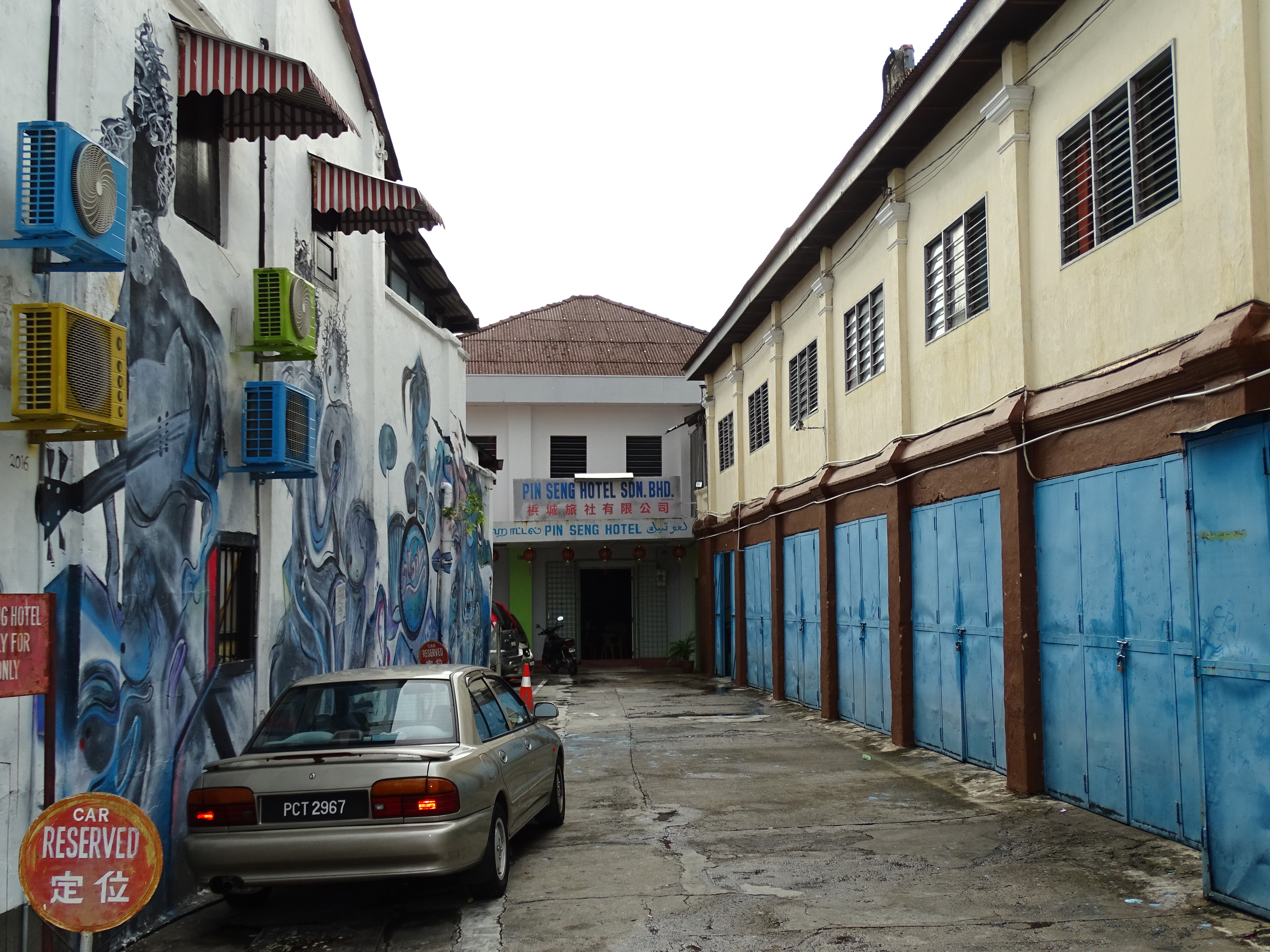
Editorial checkpoint: 19 October 2026. This guide is general journey and environmental education, not a route safety clearance, legal driving instruction, specific car product recommendation or live traffic report. The George Town image is a general historical streetscape, not a current haze photograph.
Driving guests to an outdoor wedding or concert during haze
The Malaysia haze outdoor events guide explains why a wedding ceremony, concert or public festival can involve different exposure for drivers, guests, vulnerable relatives and crews. When driving someone to an event, confirm the organiser’s actual status, the venue’s access arrangements and the relevant road conditions; a car’s recirculation function does not constitute an event safety approval. The transport decision and the organiser’s public-health decision remain separate.