
Should Malaysian outdoor weddings, concerts or festivals proceed during haze?
An event can proceed only when its organiser has assessed the actual air-quality conditions, applicable official directives, audience, planned activities and venue safety—and when necessary protections or changes are feasible. Haze does not automatically close every wedding hall, concert, outdoor market or community programme. But a long physically demanding event, an open-air audience including children, and a short indoor gathering create very different exposure situations.
On 30 August 2026, the Sarawak Disaster Management Committee (SDMC) said organisers of public and private events should review haze and API before proceeding, postponing or cancelling. At the time, the decision generally remained with organisers unless an authority issued a specific directive; the committee strongly recommended reconsidering strenuous outdoor activities when API exceeded 200. This was a dated Sarawak announcement, not a permanent nationwide event permit.
For any current event, check Malaysia’s official APIMS, relevant Ministry of Health and local-authority advice, the venue and organiser’s actual notices, and the needs of participants. This guide covers weddings, concerts, festivals, community gatherings, sports, food vendors, contracts, access and practical communication without inventing a particular cancellation.
Outdoor event haze planning in one minute
- Verify the location: Use an official local API station with a date and time, not a distant state’s old screenshot.
- Identify the event type: A high-effort marathon differs from a seated wedding dinner.
- Follow authorities: Local, sector-specific and school instructions may differ from general public-health guidance.
- Consider vulnerable guests: Children, pregnant people and some older or chronically ill guests may need added care.
- Review the venue: Open-air tents, covered walkways and filtered enclosed rooms are not equivalent.
- Prepare alternatives: A suitable indoor location, reduced outdoor duration, rescheduling or cancellation may be necessary.
- Protect staff: Setup crews, performers, ushers and vendors can spend much longer outside than most guests.
- Communicate terms: State confirmed changes, contact routes, next updates and what booking agreements actually provide.
- Document decisions: Record the monitoring source, official directions and organiser assessment.
First separate a public-health advisory from an event order
A Malaysian environmental index describes local monitored pollution at an observation time. A Ministry of Health advisory helps the public manage exposure. An authorised local or event-specific order can impose particular operating requirements. They are related but not interchangeable.
An organiser cannot claim a legal waiver merely because the APIMS screen says Moderate. Nor should a social-media user declare all weddings illegal because one district reports Unhealthy air. Check the actual authority, date, location and activity.
The Malaysia haze communication guide explains how to correct misleading forwards while preserving necessary urgency.
Why an outdoor sports event needs more caution
Running, cycling and high-effort games raise breathing volume relative to rest. More ambient air passing through the respiratory tract can increase inhaled particle exposure when surrounding pollution is elevated.
Malaysia’s Ministry of Health 2019 statement on outdoor mass physical activities recommended postponing outdoor public and sporting activities above an IPU of 100 under that time’s guidance. It should be read as historical public-health advice, together with any current rules.
A marathon’s expected physical load is not comparable to a short low-exertion ceremonial photograph, so the evaluation needs activity-specific detail.

Weddings and outdoor ceremonies: what is actually exposed?
A wedding may combine a short outdoor ceremony, group photographs, sheltered dining, a long reception and transport between venues. Different guests spend different amounts of time outside. An elderly grandparent attending one photograph does not have the same exposure duration as a photographer working outdoors for hours.
An organiser can identify which parts can be moved into a suitable indoor venue and which need to be postponed if environmental advice requires it. Food, guest mobility, ceremony needs and contracts should be part of that plan.
The event’s emotional importance deserves respect, but should not be used to pressure a vulnerable guest into ignoring medical advice.
Outdoor tents are not particle filters
A marquee or covered pavilion may protect guests from rain and direct sun, yet open sides still allow polluted outdoor air to enter. Fans can improve comfort without necessarily removing PM2.5. Closing a tent completely may create unsafe heat or ventilation problems.
An enclosed venue with properly managed cooling and particulate filtration may offer a different exposure environment, although no venue can promise zero risk for every visitor.
Ask the operator what actual indoor facilities are available rather than relying on labels such as ‘air-conditioned tent’ or ‘fully sheltered’.
Concerts: the crowd and the crew face different conditions
An outdoor concert can involve spectators standing for an hour, performers exerting themselves on stage, and technicians or security staff working longer setup and teardown shifts. Their outdoor exposure times and exertion differ considerably.
A responsible organiser reviews staff procedures, crowd access, hydration, weather, evacuation arrangements and possible reduced attendance or relocation. A public API value is relevant but does not substitute for an operational risk assessment.
Workers should not be told that an N95 makes all long shifts harmless, particularly where occupational instructions specify additional task controls.
Music festivals and multi-day programmes
A multi-day festival may span changing wind, rain and pollution conditions. A reading obtained while tickets were sold weeks earlier cannot guarantee conditions on the event day. A festival with campsites or extended outdoor queues also requires different planning from a brief indoor performance.
Organisers need a dependable source and a review routine through the actual event period. They should identify which schedule changes are realistic and tell participants how decisions will be made.
No article can guarantee an exact hour when smoke will clear or replace real crowd-management requirements.
Hari Raya, Deepavali and other family gatherings
Religious and cultural celebrations may involve open-air markets, visits, ceremonies and long journeys. The relevance of haze is the actual location and planned activity, not the religion or ethnicity of the participants.
Community organisers can offer clear practical choices and appropriate indoor alternatives while respecting cultural customs and different family needs. Incense or other indoor burning can also add a local source of particles; managing ventilation and exposure matters.
Respectful guidance avoids imposing one universal event-cancellation message on very different gatherings.
The 2026 Sarawak committee statement: use the date
The SDMC Bernama report of 30 August 2026 is useful because it explicitly distinguishes organisers’ discretion from a directive by an authority, and discusses higher-risk outdoor physical activity.
It does not mean that every Malaysian state adopted identical event controls for the entire October 2026 season, or that a specific Kuching wedding on another date was approved.
Always preserve the statement’s date and jurisdiction rather than copying its threshold without its context.
Why old 2019 event guidance should be labelled historical
Malaysia MOH’s 14 September 2019 statement recommended postponement of outdoor mass gatherings or sports when IPU exceeded 100 under the then National Haze Action Plan. That reflected a particular period and policy context.
A current organiser should check later national and local directions before treating that document as the full prevailing legal rule in 2026. The health reasoning about physical exertion remains useful, but the administrative decision needs up-to-date verification.
Published article dates matter precisely because haze policy can be clarified or revised while an episode continues.
Outdoor school concerts and sports days
Schools have separate responsibilities and Ministry of Education guidance. A school sports day, choir performance or graduation ceremony involving pupils may require changes different from an independent adult event.
Parents should follow the actual school and responsible education-authority message rather than a general concert advertisement. Any child with a medical care plan needs appropriate confidential school arrangements.
The Malaysia school and PJPK guides explain the distinction between outdoor activities, continued lessons and formal closures.
Older guests and people with medical conditions
Children, pregnant guests, older adults and people with certain heart or lung illnesses can have different sensitivity to smoke, as the WHO 2026 wildfire factsheet describes.
An event organiser should make practical alternatives available where feasible and let guests choose according to official information and their personal healthcare advice. It is not appropriate to require guests to disclose private diagnoses in a public guest list.
The senior-care guide and pregnancy guide offer further context without replacing clinicians.
Wedding photography: outdoor exposure can be adjusted
Portraits at a garden or heritage site may be important to a couple, but do not require an entire party to spend prolonged periods outside during elevated smoke. A planner can consider shorter sessions, an indoor setting or a different date subject to venue and booking arrangements.
Photographers and assistants may work outdoors for much longer than the couple. Their health and workplace protections should be part of planning, not left out of a guest-focused announcement.
One beautiful garden photograph does not establish that its surrounding air will be clean at the time of the real event.
Vendors, photographers, security and contracted workers
A concert spectator may stay two hours while setup crews work much longer. Food vendors, delivery drivers, venue technicians, cleaners and marshals also experience varying outdoor durations and physical demands.
Malaysia’s 2026 DOSH workplace haze guideline addresses risk assessment, strenuous work and relevant protections. The event organiser should coordinate responsibilities rather than simply distribute a generic face covering and assume all exposure is controlled.
An unpaid volunteer can also face practical health concerns even where the exact occupational framework differs. Responsible planning recognises everyone involved.
Food stalls and temporary outdoor catering
Food safety requirements do not disappear during haze. A vendor needs appropriate food handling, storage and temperature control alongside management of worker exposure and customer queues.
A smoky sky does not itself prove that every dish is contaminated, but neither does a covered stall guarantee filtered air. Hygiene and ambient air are related yet separate considerations.
The Malaysia hawker and restaurant haze guide discusses these differences, along with safe business continuity.
Crowd movement and queues
Long outdoor waiting lines can create unnecessary exposure for guests even when the event itself is indoors. Accurate entry times, seating and accessibility may help reduce waits, subject to security and safety requirements.
An organiser should not compromise safe crowd flow or emergency exits in an attempt to seal smoke out. A queue that moves indoors can create new crowding, heat or infection-control problems if poorly managed.
A practical plan addresses the actual movement of people, not just the headline capacity of the main venue.
Accessible transport and mobility needs
Guests with wheelchairs, walkers, prams or reduced mobility may need more time at entrances or transport pickup points. A haze contingency should account for that without excluding them or advertising inaccessible alternatives.
Some older guests may prefer transport directly to an appropriate indoor entrance; some people may choose not to attend. Respect those decisions and avoid treating one group’s needs as a marketing afterthought.
Event planners can communicate venue access and specific transport arrangements in advance rather than waiting for a last-minute cancellation.
Indoor relocation: inspect the actual venue
A venue may have air conditioning but only basic dust filtration. Another room may have a compatible higher-efficiency system, while a covered outdoor hall remains open to smoke. The differences can matter more than whether a brochure uses the word ‘indoor’.
Relocation should also retain safe cooling, ventilation, fire exits, adequate space, accessible routes, acoustics and sanitation. A meeting hall made dangerously hot or overcrowded is not automatically a safer solution.
The Malaysia public building guide gives the underlying building-operational principles.
Can a venue guarantee haze-free air?
No ordinary venue should advertise a universal medical guarantee without credible evidence. Filtration can reduce some airborne particles when properly installed and maintained, but doors open, occupants generate indoor pollutants and outside smoke changes.
A responsible statement describes what a venue has actually measured or managed, with appropriate qualification. A pleasant odour or low-cost monitor reading does not certify that all visitors are safe.
Claims about professional building systems should be supported by the actual operator or competent technical assessment.
Masks: why they are not an event permission slip
Properly fitted particulate respirators may reduce inhalation of some particles, but do not remove every gas and can be uncomfortable during intense exercise. Different people may have different medical or fitting needs.
An organiser should not treat a supply of face coverings as permission to disregard a specific authority’s instruction to postpone or restrict an activity. Audience and crew exposure may continue in different ways.
Protection starts with the event design and actual decision about whether outdoor participation is appropriate.
Contracts, postponement and refund promises
Booking contracts may describe rescheduling, cancellation, force majeure, venue change and refund procedures. The exact rights of a customer or organiser depend on the agreement, applicable Malaysian law and what actually occurs.
A high API does not automatically establish that every ticket is fully refundable or that every supplier can keep all deposits. Avoid making a generic legal promise from an environmental article.
An organiser should publish what its confirmed terms say, document decisions and obtain professional advice on genuine disputes.
Event insurance and haze
Some organisers buy event-cancellation or business-interruption policies, but coverage may depend on exclusions, insured perils, limits, notice and proof. A regional air-quality warning is not itself evidence that an insurance claim is payable.
Prepare the documents and communicate with the insurer under the actual policy. Do not record a hypothetical payout as already received revenue.
The Malaysia business-continuity guide and accounting guide explain the financial distinction.
When to notify ticket holders and wedding guests
A clear notice should identify the event, date, venue, decision, reason at the appropriate evidence level, and next reliable update or contact. Avoid a blanket ‘all concerts cancelled’ statement when the decision concerns only one site.
If no decision has been made, tell guests where official information will appear instead of promising an exact haze-clearance time. Outdated screenshots can easily trigger rumours.
The Malaysia haze community alerts guide offers short, accurate wording for changing environmental conditions.
An organiser’s evidence log
Record the actual APIMS station and time, relevant weather or official notices, vulnerable groups, event duration, alternative venues, staff assessments and the person authorising a change. Keep any confidential medical information separately and appropriately protected.
Documentation helps explain a decision to a guest or supplier afterward. It does not guarantee a particular legal outcome or make a forecast infallible.
A dated record is especially useful if different government statements appear during the same haze episode.
Why event duration matters
A thirty-minute seated ceremony and a six-hour outdoor festival expose participants for different lengths of time. Someone running, dancing or lifting equipment may breathe more air than a seated attendee.
Intensity and duration can help organisers prioritise adjustments, but Malaysia API cannot be multiplied by minutes to produce an exact personal medical risk percentage.
Practical exposure reduction may mean shortening unnecessary outdoor time, changing the location or postponing the activity when appropriate.
The difference between weather and pollution
A rainstorm can cause an outdoor event to stop because of lightning, flooding or slippery surfaces even when the API is not the primary concern. Haze can create health and visibility problems on an otherwise sunny day.
The event risk assessment needs both sets of information. A forecast shower may improve some local air but does not prove that smoke emissions at a distant peat fire have ended.
Do not announce an unconditional air-quality all-clear solely because a photograph was taken after rain.
Concert speakers and performers: health and occupational roles
Performers can exert themselves physically and require stable conditions to sing, dance or play instruments. Smoke exposure, heat and long rehearsals create a different profile from sitting in the audience.
An organiser should communicate plans with the relevant performers and support teams and respect any applicable medical advice. A temporary change to set length does not by itself produce a validated safe threshold for every singer.
Good planning avoids forcing a performer to choose between privacy about health and professional obligations.
Markets, carnivals and public celebrations
A pasar malam, charity carnival or open-air fair has many stallholders and visitors whose exposure times vary. Its operator may also have to manage food hygiene, permits, lighting, sanitation and road closures.
Regional haze is another risk to assess, not a replacement for all existing requirements. A general environmental alert does not automatically cancel every market in Malaysia.
Organisers should obtain local official information, communicate any actual change and consider how workers and visitors can access safer alternatives.
Tourism experiences with paid bookings
A hiking tour, outdoor photo walk or cultural festival ticket can be highly affected by visibility and exposure considerations, while an indoor museum programme may operate differently. Tour operators should check their actual venue and guest circumstances.
Reservation terms, transport connections and guide staffing determine how a change is managed. A public API does not by itself establish a nationwide tourism shutdown.
The Malaysia tourism guide distinguishes each destination from a broad national headline.
A worked example: outdoor guest-time reduction
Invented planning scenario: An event has 80 guests who would each spend one hour outdoors. A suitable redesign moves 50 guests into an appropriate indoor programme after ten minutes, while 30 guests follow a different plan.
For the 50 relocated guests, scheduled outdoor time falls from 50 × 60 = 3,000 person-minutes to 50 × 10 = 500 person-minutes, a decrease of 2,500 person-minutes. This does not calculate an equivalent reduction in smoke dose or health risk.
The arithmetic is helpful for planning but cannot replace actual air monitoring or the participants’ needs.
A worked example: a vendor’s lost revenue is not lost profit
Hypothetical event vendor: The vendor expects RM2,000 in sales but a verified postponement reduces actual sales to RM1,200. The observed revenue shortfall relative to that plan is RM800, or 40%.
That is not necessarily RM800 in profit lost because variable costs, stock reuse, wages and refunds may differ. If the event is rescheduled, some sales may occur later.
Financial analysis should preserve actual records and assumptions rather than using an API reading as a revenue formula.
A sample wedding haze contingency
Consider a hypothetical wedding with a garden ceremony and enclosed reception. The couple and planner identify a suitable accessible indoor ceremony option, confirm venue capacity, document supplier rescheduling terms and designate someone to check official air quality and local instructions.
Guests receive a clear message only when a decision is confirmed. Vulnerable family members are offered practical choices and are not pressured to stand outside for photographs when their healthcare advice counsels against it.
This plan respects the celebration while recognising that safety depends on conditions at the actual venue.
A sample concert review before doors open
An organiser checks the venue’s real station and conditions, relevant authority instructions, expected crowd movement, staff work duration, indoor options and the time needed to notify guests. The event director and competent safety team document the decision.
An earlier favourable API at a distant station is insufficient; a forecasted smoke plume alone is not a live ground reading. Multiple sources answer different questions.
The result might be proceeding with an appropriate change, rescheduling or cancelling, depending on real conditions. This article cannot choose for a named event without those details.
Twenty-five common questions about Malaysian outdoor events and haze
Must every wedding be cancelled at API 101?
No universal wedding closure order follows from the number alone. Check current relevant directives, venue conditions and participants.
Is an outdoor marathon the same as a seated ceremony?
No. Their exertion, duration and exposure profiles differ.
What did Sarawak’s SDMC say on 30 August 2026?
Organisers should assess prevailing haze and API before deciding; it strongly advised reconsidering certain outdoor physical activities above API 200 at that time.
Does that Sarawak statement govern all Malaysia forever?
No. Its date, state and context must be preserved.
What did MOH advise about outdoor mass physical activity in 2019?
It recommended postponement above IPU 100 under the then applicable guidance, which must be read as historical.
Are tents and marquees filtered rooms?
Not automatically. Open sides can admit smoke.
Can an indoor relocation create different hazards?
Yes. Heat, crowding, ventilation, accessibility and exits still matter.
Must vulnerable guests share their diagnoses?
No. Personal medical information deserves privacy and appropriate handling.
Is a wedding photographer exposed as long as every guest?
Not necessarily. Their work duration and physical effort may be greater.
Can masks make a prohibited event permissible?
No. Appropriate authority directives and practical risks still apply.
Are children more sensitive to wildfire smoke?
WHO identifies children among groups that may need additional protection.
Do singers and dancers have relevant work exposure?
Yes. Rehearsals and exertion can make their conditions different from spectators.
Does a high API prove the concert venue will close?
No. Check the actual organiser and competent authority decision.
Is the API equal to PM2.5 mass?
No. The public index and concentration are different measurements.
Can an event contract guarantee a full refund?
Rights depend on the actual contract and applicable law; there is no universal haze refund promise.
Is event cancellation insurance automatically payable?
No. Policy terms and verified claims determine coverage.
Can a haze forecast justify readiness planning?
Yes, while actual measured conditions and rules remain important for operational decisions.
Will one rain shower always clear regional smoke?
No. Distant fires and transport can continue.
Does a shopping centre guarantee safe air?
No. Cooling and filtration vary.
Should an organiser stop a queue blocking exits?
Crowd and emergency egress safety remain essential regardless of haze.
Can outdoor caterers ignore food-hygiene rules during haze?
No. Existing food safety duties still apply.
Can a postponement be communicated through an old screenshot?
No. Provide a dated authoritative message for the actual event.
Can guests in another state use the organiser’s local API as their own?
No. Their travel routes may have different conditions.
Does reducing outdoor minutes prove an equal medical-risk reduction?
No. Dose and individual health risk are more complex.
Where should people look for the final event status?
The responsible organiser, venue and relevant government notices, with current Malaysia APIMS for environmental context.
Continue through eduKate’s Malaysia haze ecosystem
Source references and editorial limitations
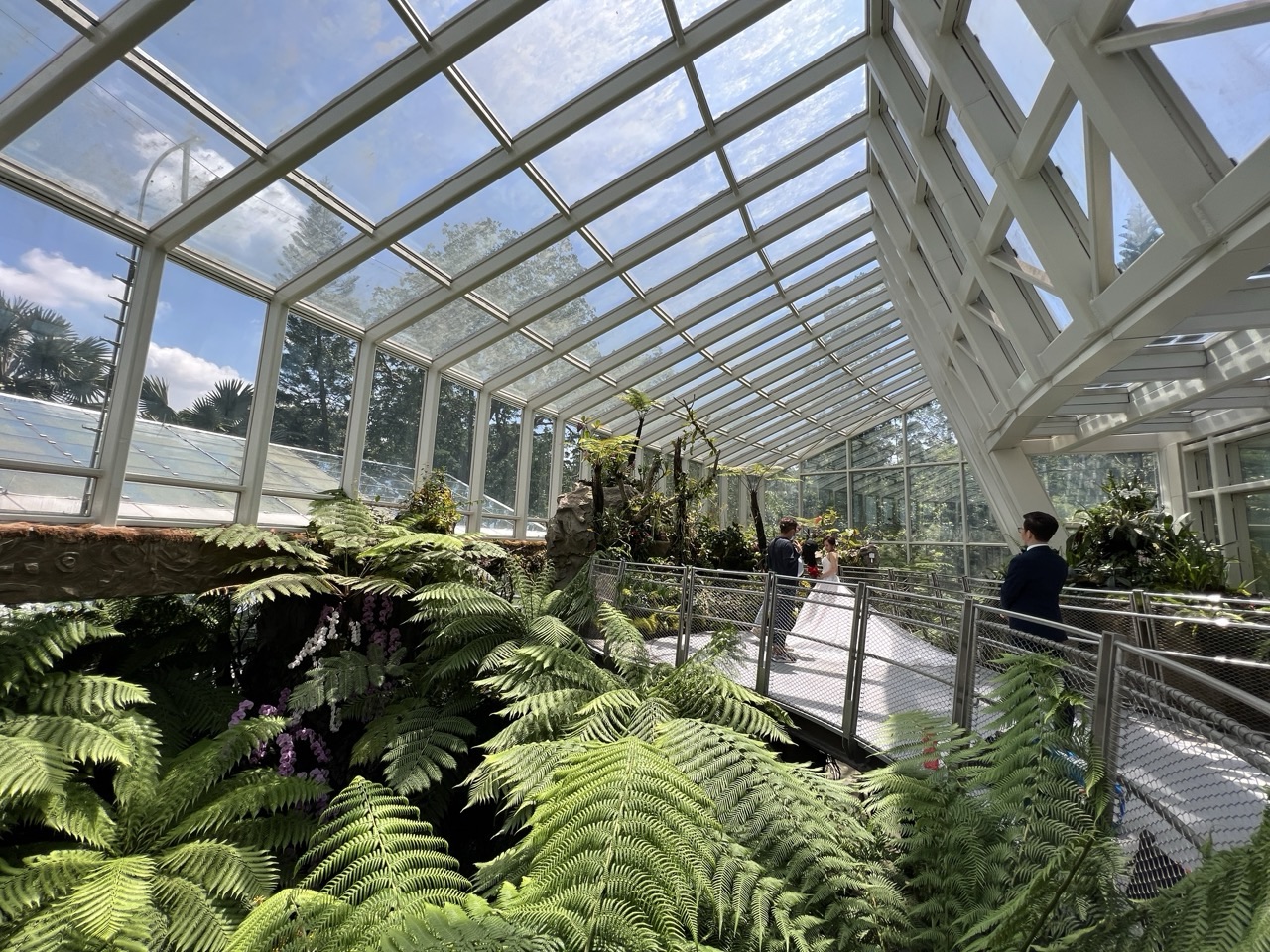
Editorial checkpoint: 19 October 2026. Event decisions must use current local instructions and the organiser’s real terms; a dated Sarawak advisory or 2019 MOH statement is not a timeless nationwide closure order. The featured wedding photograph depicts Singapore’s National Orchid Garden and is not a Malaysian haze event.