
A student in a secondary-school Infocomm Club submits a programme that calculates a correct answer for all three sample inputs displayed in a training problem. When the teacher enters an unfamiliar test case, the code fails because the student assumed the numbers would always be positive. Another pupil produces a slower-looking method that works for every stated input. The exercise reveals the difference between getting a few examples right and designing an algorithm that is correct under its actual constraints.
School coding clubs can develop computational thinking, creativity, debugging, ethical technology use and collaboration. Advanced pupils may prepare for the Singapore National Olympiad in Informatics (NOI), organised by the National University of Singapore’s School of Computing. Yet a school robotics contest, a game-making exhibition and an individual algorithmic programming Olympiad are not interchangeable. Each demands its own training and accurate application of organiser rules.
Quick answer: teach coding from understandable logic before memorised scripts; make beginner access fair; use original tasks and approved learning tools; develop testing across edge cases, complexity and debugging; distinguish individual competition work from team projects; register through the competent school and the current NOI rules; verify proctoring, languages, equipment and participant eligibility; prevent unauthorised collaboration or code reuse; and assess independent problem-solving ability beyond medal outcomes.
This independent eduKateSG Ministry of Education V2.0 article separates the individual software reasoning at NOI from the robot construction and inspection concerns already covered in Reference 218. The official NOI 2026 rules identify a preliminary online contest and an on-site final, specify school-representative registration, C++ and Python language arrangements, individual work and restrictions on communications. IMDA’s Code for Fun and Infocomm Media Club initiatives provide broader technology-learning context; school programmes differ by age and focus.
The algorithmic learning and fair-competition chain
- Fair school coding access, age-appropriate concepts and correct task interpretation
- Independent algorithms, edge-case tests, debugging and complexity reasoning
- Current organiser eligibility and school-owned contest registration
- Permitted equipment, proctoring and individual-work integrity
- Accurate official results and transfer to unfamiliar problems
1. Define what a coding club should teach
A useful coding club helps students form precise instructions, reason about data, anticipate errors and explain their design. Some clubs also support digital media or robotics.
Do not equate owning computers with computational capability. The learning evidence is a pupil who can analyse a new problem, write or revise a suitable solution and justify its behaviour.
2. Distinguish software Olympiads from robotics
NOI focuses on individual algorithmic programming and evaluates submitted code under specified tests and resource constraints. Robotics competitions also involve hardware, sensing, physical movement and inspection.
A successful robot build is not automatically a valid NOI solution, and a pure algorithm contest does not test a student’s mechanical assembly. Keep the educational objectives and organiser rules separate.
3. Give beginners a meaningful entry point
Young pupils can start with sequences, conditions, repetition and debugging in block-based environments. Older students may move to text-based programming once ready.
Wellington Primary describes using Scratch for games while practising loops, variables, conditions and sequences. A beginner’s programme can be rigorous without pretending that syntax alone demonstrates deep understanding.
4. Do not equate prior equipment ownership with talent
Some families provide coding tuition or personal devices, while others rely on school access. Selection solely through expensive preparation can exclude potential.
Make a reasonable school-level learning floor available where feasible, using provided equipment and clear participation criteria rather than inferring ability from a pupil’s home setup.
5. Check each club’s actual scope and timetable
School Infocomm Clubs vary by age, time and specialisation. Methodist Girls’ School describes coding and media tracks, and Bukit View Secondary describes a range of digital challenges.
Do not assume every primary club offers text-based algorithms or that all secondary clubs focus on the NOI. Use the present school’s actual CCA information.
6. Connect problem statements to defined inputs and outputs
Before writing code, students should identify what information arrives, what must be produced and which conditions constrain valid answers.
A correct-looking programme can fail because it misread ‘distinct’, ‘nonnegative’ or ‘at most’. The first step is understanding the task, not typing quickly.
7. Teach decomposition into manageable steps
A large programming challenge can often be divided into parsing, computation, correctness checking and output.
Pupils should know why each component exists. A sophisticated programme copied from an online answer may offer less independent learning than a smaller solution they can explain thoroughly.
8. Make pseudocode meaningful
Informal step descriptions can help a pupil reason without fighting syntax at every stage. They should be precise enough to become executable instructions.
‘Sort the numbers somehow’ is not a complete algorithmic explanation. Ask what the procedure compares, changes and guarantees.
9. Worked basic algorithm: count numbers above a threshold
Suppose the input is five values, 3, 8, 2, 8 and 4, with threshold 5. Scan each once and increment a counter when a value is greater than 5.
The correct count is 2, because both 8s qualify and the other values do not. This example tests precise inequality and handling duplicates, not memorisation of a single answer.
10. Worked edge case: empty qualifying set
Using the same task, input values 1, 2 and 3 with threshold 5 should produce zero.
A programme that leaves a counter uninitialised or assumes at least one qualifying value may fail. Edge cases teach students to inspect assumptions before competition.
11. Distinguish greater-than from greater-or-equal
For values 5, 5 and 6 and threshold 5, the number strictly greater than 5 is one; the number greater than or equal to 5 is three.
A single symbol changes the result. Accurate reading of a specification is as important as typing the loop.
12. Explain correctness beyond sample inputs
Matching the sample output proves only that certain visible examples worked. It does not establish a solution for every valid input or hidden case.
Teach students to test boundary values, duplicates, reordered data and other legitimate cases, while reasoning why the method applies generally.
13. Introduce efficiency in an intuitive way
Two correct algorithms may use very different running time or memory when input size grows. NOI programming tasks can apply explicit resource limits.
Students should first secure correctness, then assess whether the design scales under the stated constraints. Cleverness without accuracy is not a reliable improvement.
14. Worked runtime case: linear versus quadratic growth
A fictional algorithm performs roughly one operation per input item, while another compares every item with every other item. For 100 items, the first has about 100 basic steps and the second about 10,000 pairwise steps.
These are simplified illustrative models, not timing guarantees. The exercise shows why a method that feels fine for five items may be unsuitable for large input sizes.
15. Teach data structures from the actual problem
Lists, arrays, sets, maps and queues have different useful properties. A task requiring uniqueness may benefit from a structure that records whether an item has appeared.
Do not require advanced names before pupils understand the operations. Ask what information must be stored and retrieved, then discuss a suitable representation.
16. Worked duplicate-counting case
A fictional list contains 2, 2, 4, 5, 5, 5. It has six entries but only three distinct values.
Students should decide whether their task asks for entries or distinct elements. This difference is easy to explain, and often exposes an incorrect algorithm that assumes every observation is unique.
17. Teach systematic debugging
When code fails, check an example by hand, identify the first unexpected state, trace values and narrow the cause. Use an appropriate debugger or trace table.
Repeatedly changing random lines without understanding the failure can make later behaviour more confusing. Debugging is an intellectual practice, not a punishment.
18. Worked tracing case: running total
For values 4, 6 and 3, initialise total to zero, then update it to 4, then 10, then 13. The final sum is 13.
A trace table helps pupils catch code that resets the total inside the loop. They should explain why the accumulation invariant remains correct.
19. Use source attribution in practice projects
Clubs may allow learning from published tutorials, code examples and licensed libraries under their educational rules. Pupil work should distinguish copied components from original decisions.
A borrowed project shown as a wholly original invention misrepresents competence. Encourage transparent credit and meaningful adaptations.
20. Clarify AI-assisted coding rules
AI tools can assist explanation or debugging where school rules allow, but a generated programme is not automatically an authentic student contest solution.
Competition rules may prohibit outside assistance and communication during the event. Students need clear boundaries before the challenge, not after an allegation arises.
21. Treat security as part of responsible computing
School projects should not use stolen datasets, scan systems without permission or test harmful scripts on real school networks.
A coding challenge should operate in authorised environments and use fictional data where appropriate. Creativity does not excuse exposing classmates’ records.
22. Prepare the school laboratory for contest use
Computers, compilers, permitted programming languages, accounts, power, accessible seating and the required network route need checks.
The NOI’s online preliminary format places proctoring and relevant technical preparation responsibilities on schools. Equipment readiness is different from eligibility and academic coaching.
23. Read current organiser rules before registration
The official 2026 NOI competition page specifies teacher-led registration, a preliminary contest on 21 February 2026 and an on-site final on 14 March 2026.
These dates describe the 2026 edition and are not forecasts for later contests. Verify current rules for every future year.
24. Distinguish preliminaries from the final
The 2026 NOI preliminary competition was held online under school proctoring; the final took place at NUS School of Computing.
A pupil selected for the online stage should not assume a medal or guaranteed final entry. The organiser’s scores and selection rules determine subsequent participation.
25. Handle published NOI eligibility precisely
The 2026 organiser page gives defined routes for local secondary or junior-college pupils and certain Singaporean or PR students studying abroad or at home.
Do not infer eligibility from a private training course or a school club badge. Unusual cases require the current NOI organiser’s guidance.
26. Make registration ownership explicit
NOI’s official page calls for a school representative, usually a teacher, to register participating students under the applicable category.
Students should not submit classmates’ identity details via an unverified third-party website. Staff should check authorised entry records and deadlines.
27. Distinguish programme eligibility from national representation
NOI participation eligibility and eligibility for Singapore IOI or European Girls’ Olympiad in Informatics representation have different rules.
The official 2026 material describes citizenship and other conditions for international representation. Do not promise a place because a pupil performs well in one school practice paper.
28. Avoid inventing automatic final selection
The 2026 organiser describes school-category finalist invitations based on preliminary scores, quota and a committee-determined threshold, with particular arrangements for eligible female contestants.
This is not equivalent to a universal fixed score. Schools should communicate official results and conditions rather than guarantee advancement based on estimated percentile.
29. Prepare pupils for the permitted coding environment
The 2026 competition page lists C++ and Python 3 with task-dependent details and limits. Students must understand which official tools and language features are supported.
Do not promise that every programming language or external library is allowed. The exact task specification and official environment are authoritative.
30. Read task subtasks and partial scoring accurately
Algorithm contests may award points for subsets of constraints or cases. A partial solution can demonstrate something useful but may not meet the full requirements.
Teach pupils to state which inputs their algorithm handles and why. A reported partial score should not be advertised as complete correctness.
31. Apply individual-work integrity rules
The NOI organiser’s 2026 online preliminary rules require contestants to compete individually and prohibit communication during the contest.
A club can promote collaborative practice before an event while enforcing separate individual work during competition. Team enthusiasm does not override the organiser’s rules.
32. Understand open-book without inventing internet permission
NOI 2026 permits certain printed reference materials, while rules distinguish permitted references from unauthorised internet access and electronic code reuse.
Open-book does not mean outside help is allowed. A school should brief contestants using the actual current rules.
33. Handle code and device restrictions carefully
The 2026 final contest includes restrictions on personal computing, storage and communication devices within the contest environment.
Do not rely on general school phone rules alone: competition venue requirements can impose different controls. Follow the specific authorised instructions.
34. Protect candidates with access needs
Students may require suitable arrangements for participation. The school’s role is to refer needs through the organiser’s appropriate current accommodation process.
A teacher should not promise that external competition rules will be changed unilaterally. The pupil’s dignity and school access still matter.
35. Respond to technical failures fairly
A workstation might lose access to the grading system or a submitted file may not compile as expected. The organiser’s technical support and submission rules define available remedies.
Record observations accurately and use the authorised proctor channel. Staff must not edit the pupil’s competition algorithm under the guise of fixing a technical problem.
36. Separate contest outcomes from learning outcomes
A finalist award is a real result within the event’s defined scoring. It does not establish that the student can design all software systems or always make ethical technology decisions.
A non-finalist may develop strong debugging habits and mathematical reasoning. Review progress independent of the medal list.
37. Communicate actual awards accurately
Jurong Pioneer Junior College’s 2026 achievements page differentiates NOI honours, finalist recognition and medals.
Verify organiser title, category and certified result before publicity. A private practice contest certificate should never be described as a national Olympiad medal.
38. Keep coaching workloads sustainable
Coding competitions can require long individual practice. School coordinators should monitor appropriate rest, academic workload and student willingness to participate.
A pupil who enjoys programming should not be pressured to sacrifice health or ordinary schooling solely for ranking. Ambitious challenge and wellbeing can coexist.
39. Test independent transfer after coaching
Give a fresh unseen problem requiring a loop, a condition and explanation of a boundary case. Ask the pupil to reason without immediately consulting old code.
A well-documented independent solution demonstrates more learning than a folder of copied winning scripts. Schools should retain this distinction in assessment.
40. Audit the coding-competition assurance chain
A reviewer can trace access to learning, fair contest entry, authentic practice, current rules, secure equipment, proctoring, submitted work, official results and follow-up instruction.
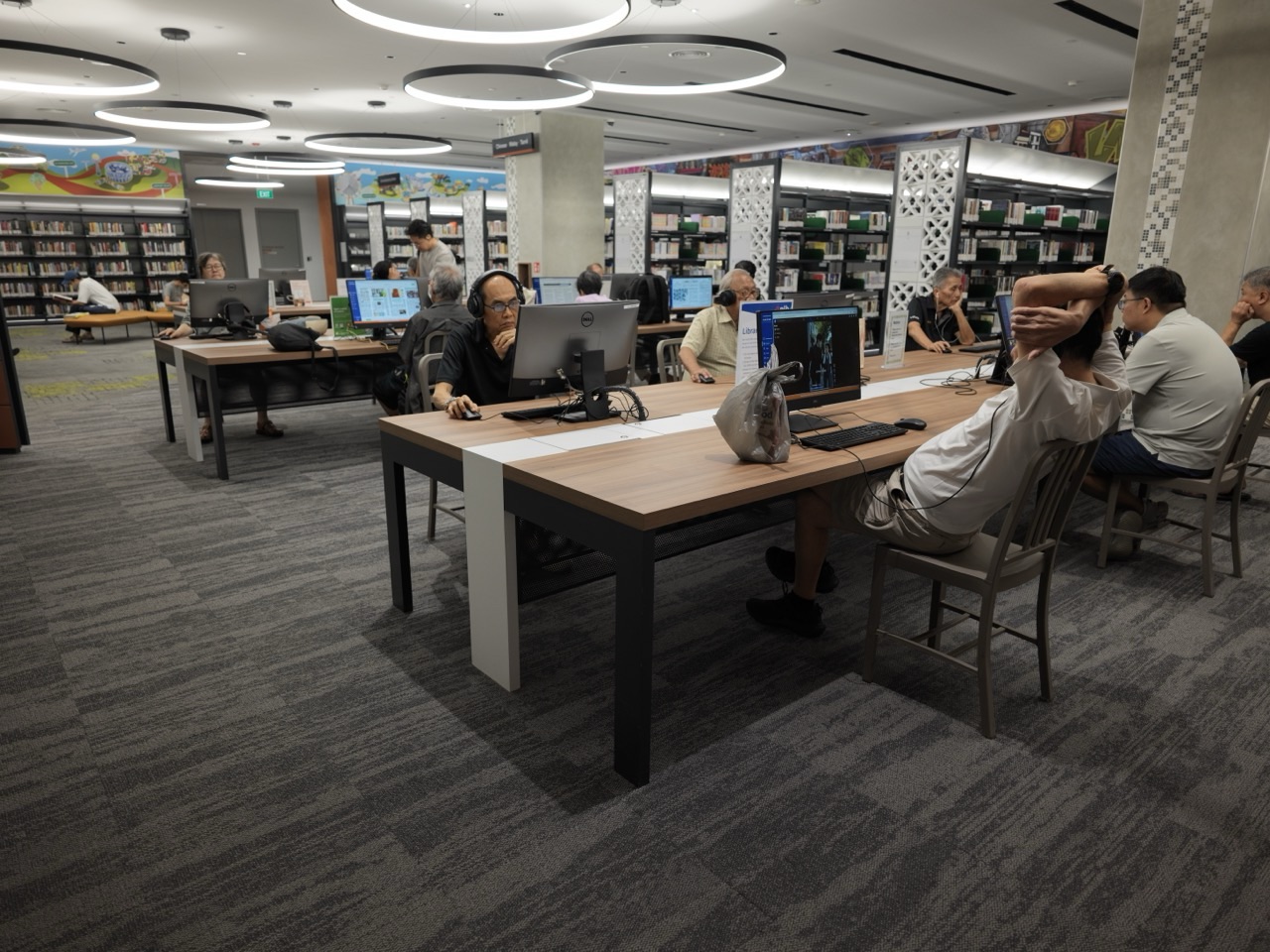
If the only evidence is a photo of students at laptops, the programme has not demonstrated algorithmic competence. Repair the precise link between activity and reasoning.
41. Value creative applications beyond Olympiad ranking
School clubs also create educational games, digital stories and helpful software projects. Those can cultivate design, collaboration and communication within their own legitimate criteria.
Recognise different pathways without pretending that every digital project is an NOI algorithm challenge. Breadth can coexist with specialised excellence.
42. Protect the overarching educational aim
Students should learn that computers follow explicit instructions, that claims of correctness need testing and that technology can be used responsibly to serve real needs.
Ministry of Education V2.0 connects rigorous logic, access, fair contest administration, integrity and transferable problem-solving rather than merely celebrating the newest device.
Coding and NOI operating evidence
| Stage | Check | Evidence |
|---|---|---|
| Learning | Can the pupil explain how an algorithm works? | Annotated reasoning and tested code |
| Readiness | Are language, devices and tasks correct? | Practice environment and staff checks |
| Registration | Are current eligibility and categories verified? | School entry and organiser notice |
| Integrity | Is work independent under competition rules? | Authorised proctoring and submission |
| Progress | Can the learner handle unseen boundary conditions? | Fresh problem and reflection |
Parent FAQ
What is Singapore’s NOI?
The National Olympiad in Informatics is an algorithmic programming competition organised by NUS School of Computing, with current official competition rules.
Is NOI the same as a robotics competition?
No. NOI centres on individual algorithmic programmes, not physical robot assembly or movement tests.
Are primary pupils automatically eligible for NOI?
The official competition defines secondary and junior-college equivalent eligibility categories; primary coding competitions use other arrangements.
Can pupils use AI tools during NOI?
Follow the exact organiser restrictions on assistance and communication; do not assume classroom tool permissions extend to official contests.
Does passing the sample inputs prove a program correct?
No. Hidden valid inputs and boundary cases may expose incorrect assumptions.
Does NOI 2026 have an online preliminary and on-site final?
Yes. The NUS organiser lists those stages for the 2026 edition, with separate rules.
Are NOI entry dates or qualifying cutoffs fixed for every year?
No. Follow the current competition edition and organiser decisions.
How can parents assess real coding progress?
Look for explanations of algorithms, debugging, boundary testing and independent new-problem solutions.
The institutional standard
Coding education develops capable thinkers when pupils can explain why their programme is correct, recognise its limitations and revise it responsibly. A confident student can learn from a failed hidden test as well as a successful demonstration.
Ministry of Education V2.0 joins inclusive access to computing, careful algorithmic instruction, secure contest administration and authentic intellectual work. Official medals are valuable but cannot replace the long-term educational outcome of independent computational thinking.
Sources and connected reading
MOE V2.0 — Main Reference Library
Reference 218 — Separate Robot-Building and Competition Assurance
Reference 198 — Separate Mathematics Olympiad Skills
Reference 170 — School Computer Laboratory Readiness
National University of Singapore — National Olympiad in Informatics
NUS NOI — Official 2026 Rules, Eligibility, Coding Environment and Contest Schedule
NUS NOI — Algorithmic Learning and Competition Purpose
IMDA — Infocomm Media Clubs and Student Technology Pathways
Methodist Girls’ School Primary — Coding and Game Design (2026)
Bukit View Secondary — Coding, Bebras and Informatics Competitions (2026)
Wellington Primary — Scratch and Game-Making (June 2026)
Jurong Pioneer Junior College — 2026 NOI Results and Recognitions
Editorial scope: independent school-level computing and competition operations reference, not a claim that every club enters NOI or that past dates and rules apply in later years. Organiser requirements, access accommodations, programming restrictions, awards, code rights, exam integrity and student wellbeing are governed by current competent schools and the competition’s official rules. All worked algorithm examples are fictional.