
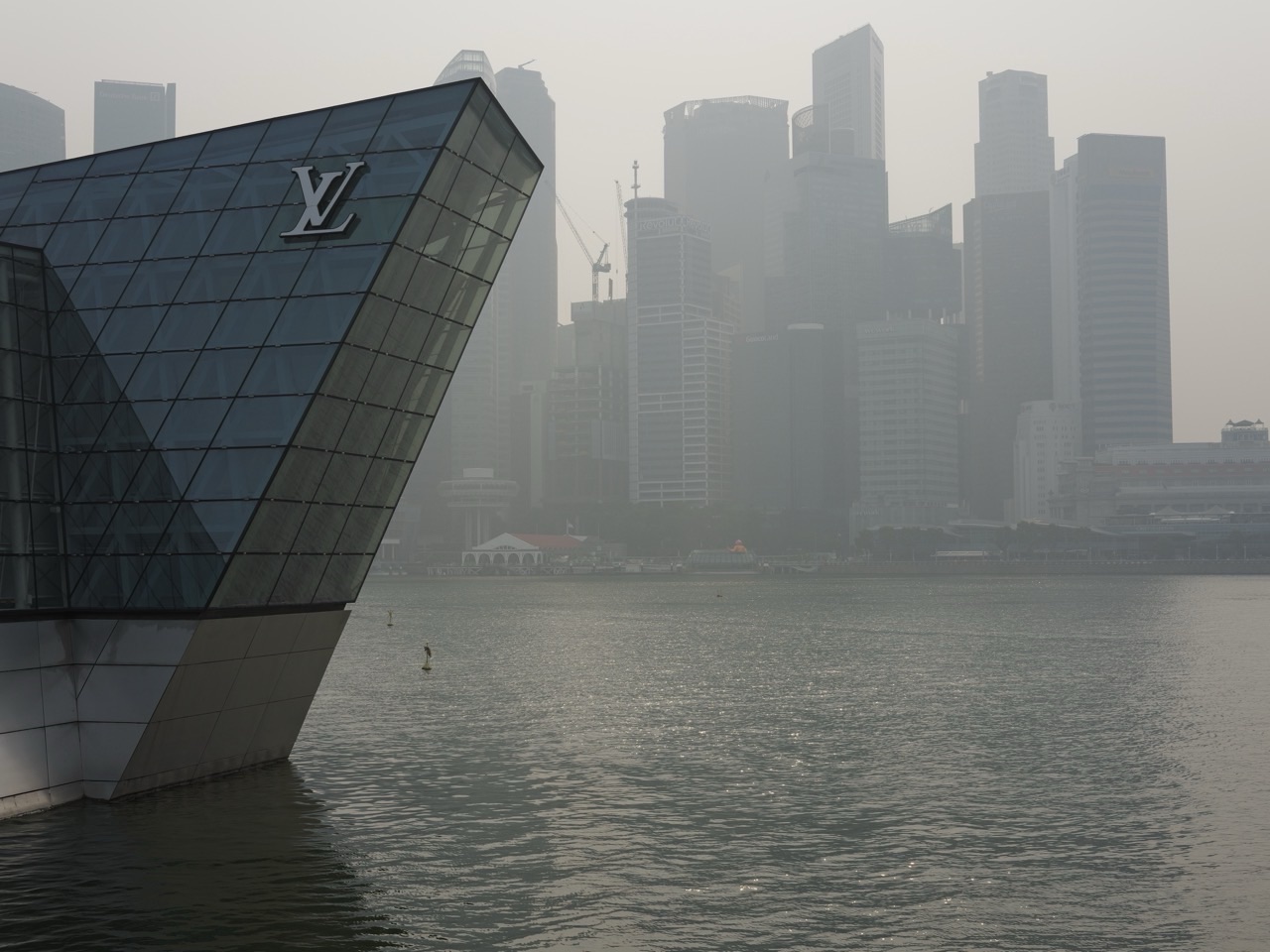
At 7.20 am, a secondary school checks air-quality readings before morning assembly. One teacher has an outdoor Physical Education lesson, a coach is planning running drills, and another class is due to conduct a Geography observation outside the gate. A parent’s phone shows a much higher fine-particle number than the 24-hour PSI reported in the morning news. Students begin asking whether school has closed, while the staff timetable still lists all activities as normal.
During Singapore’s September and October 2026 haze episodes, national agencies issued updated health advice and schools activated preparedness arrangements. On 9 October, the National Environment Agency reported an Unhealthy 24-hour PSI of 136–192 and explained MOE’s arrangements for enclosed indoor spaces with air purifiers, altered classroom lessons and attention to children with pre-existing heart or lung conditions. The Ministry of Health updated its haze guidance on 19 October 2026. School decisions therefore require current data and official instructions, not a screenshot of an old threshold chart.
Quick answer: distinguish the 24-hour PSI from the short-term 1-hour PM2.5 reading; use the actual current MOE, MOH and NEA advice; assess whether outdoor lessons, CCAs and visits should be changed; keep school air purifiers and relevant facilities functioning; check pupils’ individual healthcare arrangements; publish a reliable attendance and family communication plan; preserve academic learning indoors; and record who authorised each decision and how it was reviewed.
This independent eduKateSG Ministry of Education V2.0 reference concentrates on school-level operational handoffs. It does not diagnose respiratory conditions, predict haze levels, set a permanent school-closure rule or replace official advisories. Different students and activities can have different exposure and vulnerability, so competent school officers and healthcare professionals must apply the current instructions to actual circumstances.
The air-quality-to-learning assurance chain
- Current official PSI, PM2.5, MOH advice and responsible school decision
- Suitable enclosed indoor spaces and verified air-cleaning readiness
- Changed sports, CCA, fieldwork or examination arrangements communicated properly
- Protection of individual healthcare needs and accurate attendance
- Meaningful continued lessons, reviewed decisions and family trust
1. Identify the operational question before reading a number
A school does not merely ask whether the air looks hazy. It asks whether an outdoor assembly, sport lesson, excursion, examination or routine indoor class remains safe under current conditions.
A useful decision record names the activity, expected physical effort, time outside, pupils involved, official evidence and staff owner. These details explain why two scheduled activities may need different responses.
2. Distinguish the 24-hour PSI from the 1-hour PM2.5
The 24-hour Pollutant Standards Index summarises ambient air quality over a longer period and is used in next-day planning. The one-hour PM2.5 figure helps assess more immediate localised conditions.
These are not two interchangeable measures with identical units or thresholds. A phone showing micrograms per cubic metre of fine particles must not be misread as a PSI score.
3. Understand the official PSI bands
MOH’s October 2026 guidance describes Good at 0–50, Moderate at 51–100, Unhealthy at 101–200, Very Unhealthy at 201–300 and Hazardous above 300.
Teachers should use the latest official forecast and school directives, rather than applying this band table mechanically to every child or promising that a particular numerical reading always produces closure.
4. Read the 1-hour fine-particle context
MOH describes four short-term PM2.5 bands: Normal, Elevated, High and Very High, reflecting different microgram-per-cubic-metre intervals.
The figure can help a school interpret a sudden deterioration in its region, particularly for near-term activities, but actual health guidance also considers underlying conditions and duration of physical exertion.
5. Do not treat a general-health table as a personalised prescription
The impact of haze depends on health status, intensity and duration of exposure. Children with existing chronic respiratory or cardiac conditions can require greater protection.
Qualified clinicians and approved individual plans determine medical needs. A parent-facing article cannot specify a universal exercise tolerance or inhaler dosage for all pupils.
6. Use a current and trusted official source
The NEA, MOH and MOE maintain the relevant official guidance. The Haze Task Force coordinated cross-government measures during the October 2026 episode.
Record the date and time of the actual reading reviewed. A one-week-old forwarded screenshot may be numerically correct for its original day while useless for a current activity decision.
7. Identify who authorises changing outdoor plans
PE teachers, CCA coaches, operations staff and class tutors may see the need for adjustments. The school should specify the officer who approves the change and communicates it.
A student leader or visiting coach should not independently decide that all pupils must run outdoors because the original timetable has not yet been amended.
8. Move appropriate lessons into enclosed indoor spaces
NEA’s 9 October 2026 statement said MOE schools would keep students in well-ventilated enclosed indoor spaces with air purifiers turned on as haze measures were stepped up.
The precise facilities setup should follow the current school’s operating plan. Shifting a class into an ordinary corridor that exposes it to outdoor air is not equivalent to a protected classroom.
9. Verify the air purifier is actually ready
The 2026 NEA statements described air purifiers in primary, secondary, junior college, MOE Kindergarten and special-education classrooms as a preparedness measure.
School facilities personnel must check the applicable device, power, maintenance and safe usage conditions. Merely stating ‘purifier available’ without testing whether it operates is weak assurance.
10. Explain why indoor air still matters
Fine particles can enter buildings through air intakes, openings and gaps, as NEA’s air-pollution guidance explains. An indoor location does not automatically mean zero exposure.
Facilities decisions about windows, ventilation and air cleaning should follow competent current instructions. Students should not be asked to modify ventilation infrastructure as an improvised classroom experiment.
11. Protect learners with documented respiratory conditions
Staff should know which authorised adult holds relevant healthcare information and how to reach the family or appropriate professional when a pupil becomes unwell.
Do not reveal a child’s asthma or cardiac diagnosis to the whole class. The goal is workable medical support with minimum necessary disclosure.
12. Keep the right route for prescribed medicines
NEA’s October 2026 school advice reminded families of appropriate prescribed medicines, including inhalers where needed, and stated that unwell students should receive attention.
The child’s actual clinician and authorised school healthcare plan control medication and administration. No article can replace individually prescribed instructions.
13. Preserve classroom teaching through a real alternative
A PE lesson might teach pacing principles, movement analysis or reflective learning indoors where the school’s authorised programme permits it. A Geography lesson may analyse existing local measurements.
The alternative should meet a meaningful learning objective. A closed court and an unrelated video do not prove that intended teaching continued.
14. Protect physical activity without rewarding reckless persistence
Strenuous outdoor activity increases exposure during haze. MOH’s guidance varies by PSI band and by whether the person is a child or has chronic illness.
A school should calibrate activity through its current instructions, not encourage pupils to ‘be tough’ or compete over who can run hardest in poor air.
15. Review the status of Sports Day and CCA competitions
Outdoor sports, school athletics heats and after-school CCA training may require venue, timing or activity changes. Competition calendars do not override appropriate health precautions.
Confirm the actual organiser’s cancellation, postponement or indoor alternative policy. Families need clear information before travelling to a venue.
16. Distinguish ordinary school activity from school closure
On 9 October 2026 NEA said MOE would consider school closures if the next-day forecast became Hazardous, above PSI 300, after assessing available information.
This was a consideration in an official response framework, not an automatic parent-authorised instruction to keep every child home once a phone showed 301.
17. Keep national examination continuity explicit
NEA’s October 2026 statement described examination arrangements in enclosed spaces and the possibility of rescheduling if schools formally closed.
Candidates must follow actual MOE and SEAB communications. An informal parent rumour cannot substitute for official examination timing or a special-consideration process.
18. Preserve attendance when venues change
Moving a scheduled outdoor lesson into a hall can split pupils across classrooms. Teachers need a current named attendance record and correct supervision handoffs.
Counting the same number of students at the new venue is not necessarily sufficient to know which pupil is missing. Reconcile class identities and authorised location changes.
19. Clarify the family communication route
Parents may ask whether dismissal, transport, CCA or a camp is affected. The school should state which notices are official and what action families need to take.
Parents Gateway or another approved institutional channel should carry material instructions. A parent’s cropped haze chart should not become the school’s sole source.
20. Worked number case: PSI versus PM2.5
Imagine a fictional parent sees a 24-hour PSI of 150 and a one-hour PM2.5 of 180 micrograms per cubic metre. It is wrong to conclude that a PM2.5 reading of 180 proves PSI is 180.
The quantities describe different indices and timescales. The sound next step is to consult the current local official advisory, not choose the larger number as the ‘true PSI’.
21. Worked planning case: affected sessions
A fictional school moves three outdoor activities for four classes indoors. It has affected 3 × 4 = 12 class-activity occurrences, not necessarily twelve different cohorts.
Operational counts help staff allocate rooms, but they do not measure respiratory exposure or the quality of the replacement lessons.
22. Worked exposure case: duration matters
Two fictional activities each occur at the same official reading, but one involves a brief sheltered transfer while the other involves a prolonged high-effort run.
An exposure-related decision cannot be based on the pollution number alone. Time, exertion, student vulnerability and official guidance matter; the appropriate outcome may differ.
23. Do not promote improvised air-purifier devices
Engineering discussions about filtration can teach particle size or airflow, but classroom experiments cannot certify a homemade device for student health protection.
Facilities air-cleaning equipment requires competent selection, maintenance and operating standards. Do not rely on a student-built prototype as an emergency respiratory safeguard.
24. Keep mask advice aligned with MOH
MOH’s 19 October guidance says N95 masks are not generally needed for routine commuting to school or when indoors, and discusses their role in specified high-exposure circumstances.
Do not force an N95 mask on every young child or treat masks as a substitute for reducing exposure and proper medical care. Follow current professional advice and age-appropriate directions.
25. Prepare for a pupil becoming unwell
If a child reports breathing difficulty or other concerning symptoms, the school should use its authorised healthcare and emergency response, contacting qualified medical help as indicated.
Do not wait for the next data refresh or require the pupil to complete a station before seeking assistance. Students should know a trusted adult they can alert.
26. Make student needs invisible to unnecessary audiences
Some learners receive an individual alternative or stop activity early. Their peers need not know private diagnoses or medication arrangements.
Explain general safety expectations to the group and manage individual support discreetly through responsible staff.
27. Plan learning for affected outdoor journeys
Geography fieldwork, environmental observation or museum learning journeys may be delayed or adapted to current indoor learning resources.
A practical substitute can still involve map analysis, verified photographs and data critique. Describe clearly which parts occurred and which await a safe opportunity.
28. Confirm school bus and arrival implications
Normal transport may continue while a specific outdoor activity is cancelled. Parents should not infer that all school trips or bus services have stopped.
Use the actual school’s notice, and distinguish health-related travel advice from an announced closure or change in transport service.
29. Teach pupils to read a forecast accurately
Students can compare an observed short-term reading with a forecast range and ask which kind of statement is about the present versus tomorrow.
Avoid presenting a prediction as a completed observation. Forecasts can change, so the school reviews the current evidence at the relevant decision point.
30. Recognise haze as a regional environmental issue
Transboundary haze can arise from fires and atmospheric conditions beyond Singapore. Students can learn about air movement, monitoring and international environmental cooperation.
Avoid unsupported blame directed at communities or individual classmates. Geography and Science instruction should be evidence-led and respectful.
31. Keep staff and contractor exposure in view
Teachers, security officers and maintenance teams may have outdoor duties. School leadership must consider appropriate staff and workplace-safety arrangements as well as student plans.
A student’s sheltered classroom does not automatically mean every worker is protected. Competent occupational requirements apply to relevant staff and contractors.
32. Maintain clear operational thresholds without guessing
School plans should refer to the applicable current official advisories and define decision ownership, review frequency and permitted alternatives.
Do not invent a rigid ‘PSI 110 always closes the hall’ rule or lift a different country’s air-quality index into Singapore procedures.
33. Differentiate haze from ordinary rain decisions
Heavy rain or lightning may require immediate movement controls, while haze involves measured air pollution, forecasts and exposure-related adjustments.
A school needs distinct weather and air-quality processes while coordinating timetable changes. One broad ‘bad weather’ notice may omit important instructions.
34. Build a tested family FAQ
Parents may ask whether school remains open, whether sports training proceeds, which air purifiers are in use and what happens to national examinations.
Answer from the latest authorised sources, state the revision date, and refer individual medical questions to competent professionals rather than speculate.
35. Audit an indoor lesson handoff
Choose one planned outdoor session, trace the official reading, authorised change, suitable replacement room, learner attendance, protected healthcare needs and actual alternative lesson.
If the timetable shows ‘indoors’ but staff cannot identify the room or the learning objective, the operational and educational chain is incomplete.
36. Interpret closure decisions as official events
A school closure involves multiple consequences for transport, caregivers, staff, special services and examinations. Communication must match the authorised decision.
An old screenshot of the 2015 haze closure should not be used as proof that tomorrow’s school is closed. Verify real current instructions.
37. Assess science learning without exposing pupils
A class can graph verified PSI observations over dates, compare regions or discuss why averages hide short-term fluctuations.
Use public environmental data and avoid converting a particular child’s health into a classroom dataset. A scientific inquiry is not a reason to reveal private care plans.
38. Review communication and trust after haze events
The school can examine whether families received accurate notices, whether confusion persisted and whether staff understood how to update plans.
An honest after-action report should include failures and fixes, not only praise for having a printed haze policy.
39. Build a sustainable review cycle
Regional smoke and official advisories may change. Assign a staff owner to check current guidance, review facilities readiness and update plans when an event approaches.
Avoid storing a permanent one-page threshold chart without version control. The right process survives changes in policies, staff and school timetables.
40. Define the learner-facing success standard
During haze, students should remain appropriately protected and able to continue meaningful education where authorised, with clear help when unwell.
Ministry of Education V2.0 connects public-health evidence, school operations, clinical boundaries and classroom continuity. The ideal result is accurate, calm and accountable action, not a dramatic image of a smoky skyline.
41. Assign a recheck when conditions change
A school may review conditions at morning assembly and face different air quality before late-afternoon sport. The officer in charge should specify when the situation will be reassessed using current official readings.
The process must not depend on one teacher remembering to reopen a weather app. A named decision owner and approved update route protect late lessons, CCAs and students preparing to travel.
42. Distinguish official measurements from personal perception
A pupil might notice a strong smoky smell while another feels little discomfort. Such experiences can be important prompts to check conditions but are not substitutes for standardised readings.
Teachers can explain the difference between sensory observation and a calibrated environmental measurement. A child who reports feeling unwell should still receive appropriate attention regardless of whether classmates notice the haze.
43. Review recovery after the haze passes
When official conditions improve, a school may restore suitable outdoor activities under its current operating instructions and individual student requirements.
A cancelled practical may need a new authorised session, while an indoor equivalent may already have achieved the learning goal. A responsible review distinguishes unfinished teaching from activities that do not need to be repeated.
School haze readiness checkpoint
| Stage | Practical question | Responsible evidence |
|---|---|---|
| Monitoring | What is the latest authoritative local reading and advisory? | NEA, MOH and school review time |
| Decision | Which activities and pupils require changes? | Approved activity or venue decision |
| Protection | Are health and classroom safeguards usable? | Facilities and individual support owner |
| Communication | Have families and staff received the correct action? | Official notice and contact route |
| Follow-up | Was learning and health access preserved appropriately? | Lesson review and exception closure |
Parent FAQ
What is the difference between PSI and 1-hour PM2.5?
PSI is a longer-period index used for air-quality and forecast planning; one-hour PM2.5 describes near-term concentrations of fine particles in micrograms per cubic metre.
Does an Unhealthy PSI automatically close Singapore schools?
No. Follow actual MOE and school announcements. The October 2026 national response described considering closure in forecast Hazardous conditions.
Do schools have air purifiers in classrooms?
The NEA October 2026 advisory described air purifiers installed for classrooms in MOE schools as part of preparedness measures.
Can pupils exercise outside during haze?
Decisions depend on the current MOH and MOE guidance, air quality, exertion, duration and individual health needs.
Should every child wear an N95 to school?
MOH’s October 2026 guidance does not generally require N95 masks for normal home-to-school commuting or indoor settings.
Will national examinations continue?
Follow MOE and SEAB’s live communications for arrangements, authorised changes, rescheduling or special consideration.
What if a child with asthma feels unwell?
Follow the child’s approved healthcare plan and promptly seek competent school and medical help as indicated.
The institutional standard
Haze response is successful when schools make timely and comprehensible decisions using real air-quality evidence while protecting children’s health and the continuity of education. The correct action may be a safe indoor lesson rather than either outdoor endurance or premature closure.
A capable Ministry of Education system coordinates health advisories, facilities, family communications, examination integrity and learning alternatives. It recognises the limits of every measurement and prioritises competent decisions over speculation.
Sources and connected reading
MOE V2.0 — Main Reference Library
Reference 160 — Outdoor Activity Weather and Dismissal (Different Hazard)
Reference 207 — Safe Physical Fitness Assessments
Reference 120 — Individual Healthcare Plans
NEA — 9 October 2026 Government Haze Preparedness and School Arrangements
NEA — September 2026 Haze Response
Ministry of Health — Haze Advisory (updated 19 October 2026)
National Environment Agency — PSI Bands and Managing Haze
Singapore MOE — School Haze Management Plans
Sport Singapore — Haze Precautions for Sport
Editorial scope: independent school operational assurance, not clinical or public-emergency direction. Air-quality readings, forecasts and school arrangements may change rapidly; follow the current NEA, MOH, MOE and qualified healthcare instructions rather than relying on this historical 2026 summary. All classroom case figures are hypothetical.