
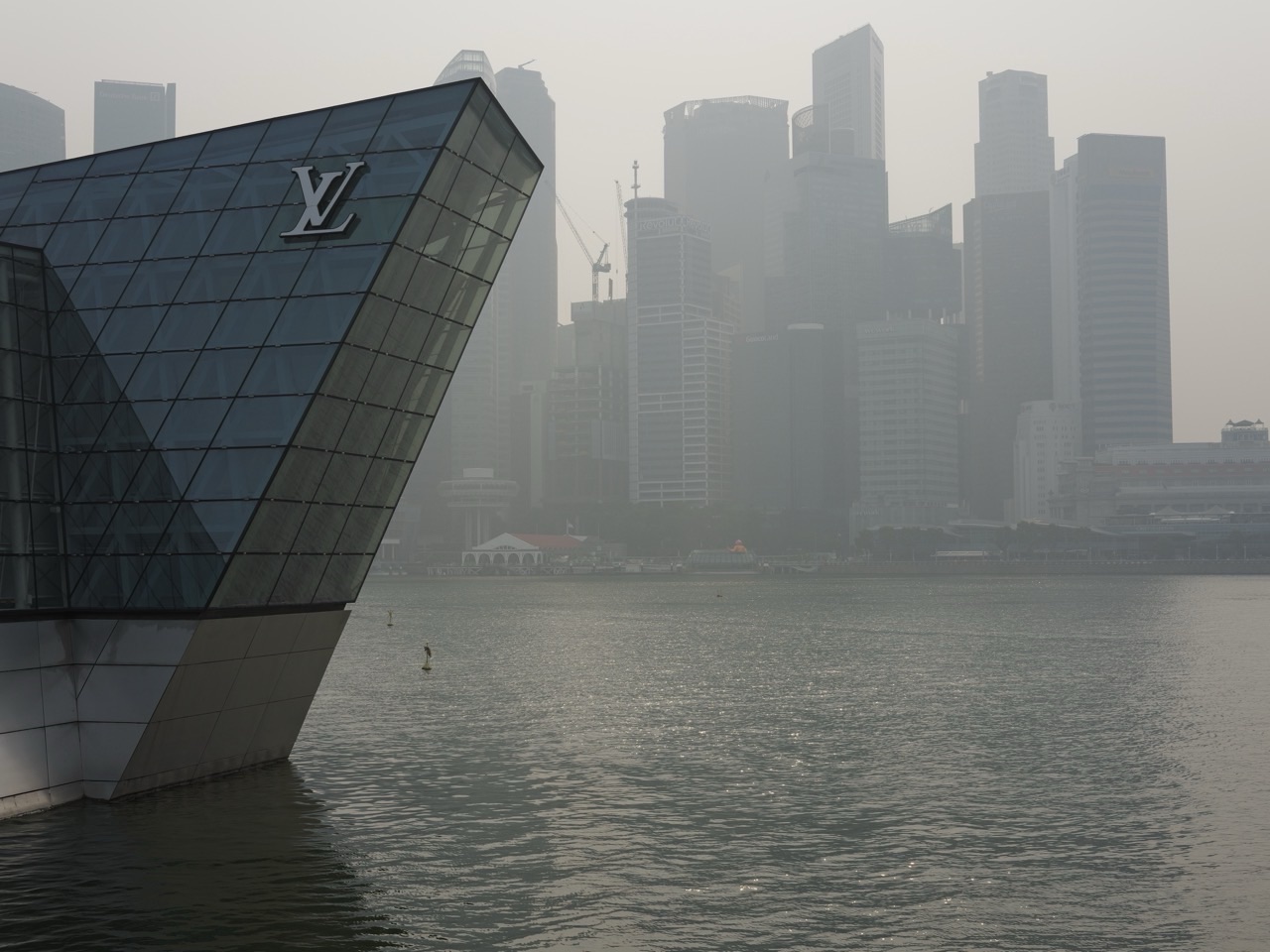
A parent checks the morning haze reading before a school sports lesson. The 24-hour PSI is in one category, but the 1-hour PM2.5 reading has moved into a different band. Another parent forwards a message saying all schools are closing, although the school has not issued a notice. Teachers must decide what happens to outdoor PE, students with respiratory concerns, excursions, open-air recess and ordinary classroom learning without confusing a changing air-quality reading with an official school closure instruction.
Singapore schools use the National Environment Agency’s haze information and the Ministry of Education’s emergency preparedness arrangements to protect students and staff. The 24-hour PSI and its forecast help plan activities for the day ahead; the 1-hour PM2.5 reading helps assess immediate outdoor conditions. They measure related but different things and cannot be substituted mechanically. Young children and pupils with chronic lung or heart disease may require more protective decisions than healthy adults.
Quick answer: follow NEA’s current advisories and the competent school’s latest MOE-aligned instructions; distinguish planning from immediate activity decisions; assign a staff owner for air-quality monitoring; reduce, relocate or cancel unsuitable outdoor activities; keep vulnerable students’ individual health plans in view; prepare safe indoor spaces with appropriate ventilation and air-cleaning arrangements; maintain named attendance and transport handoffs; communicate changes through official school channels; and preserve meaningful PE, Science and classroom learning through authorised alternatives.
This independent eduKateSG Ministry of Education V2.0 article is a school operating model, not a real-time instruction that a particular Singapore school is closed. NEA’s 19 October 2026 advisory forecast a Moderate-to-Unhealthy 24-hour PSI range for 20 October and directed residents to live 1-hour PM2.5 information for immediate decisions. MOE maintains a school haze-management page. The correct decision at any later hour must use newer authoritative readings and actual school notices, never this article’s historical example.
The school haze-management assurance chain
- Current official 24-hour PSI forecast and 1-hour PM2.5 interpretation
- Qualified school decision on PE, CCAs, vulnerable pupils and indoor rooms
- Preserved healthcare, ventilation, supervision and attendance protections
- Accurate family notices, transport and learning-mode continuity
- Source-grounded updates, incident response and verified corrections
1. Answer the main parent question: will school close?
Haze does not automatically mean that every school is closed or that the timetable changes at a particular number shared by a parent. MOE and the individual school communicate official measures.
Check the school’s current notice and MOE’s haze-management guidance. Do not follow an unsourced forwarded closure message, even if the air looks smoky outside.
2. Identify NEA as the current air-quality source
NEA publishes readings and health advisories through its official haze portal and related government channels. These are more reliable than a photograph of a skyline or a personal guess.
The school should assign a responsible staff member to check current information and record the time and source used for operational decisions.
3. Distinguish 24-hour PSI from 1-hour PM2.5
The 24-hour Pollutant Standards Index describes air-quality conditions over a longer averaging period. The forecast and health advisory help organisations plan next-day activities.
The 1-hour PM2.5 reading is a near-term indicator useful for decisions about going outdoors in the next hour. NEA explicitly explains that the two should be used for different planning horizons.
4. Explain the PSI bands accurately
The official NEA portal lists 0–50 as Good, 51–100 Moderate, 101–200 Unhealthy, 201–300 Very Unhealthy and above 300 Hazardous.
These are air-quality descriptors, not a single universal timetable for school closures, individual medical exemptions or building ventilation. Apply the relevant MOE and professional guidance.
5. Explain the 1-hour PM2.5 bands
The haze portal shows Band 1 Normal at 0–55 micrograms per cubic metre, Band 2 Elevated at 56–150, Band 3 High at 151–250, and Band 4 Very High at 251 or more.
Do not treat a PM2.5 concentration number as if it were a PSI value. Check the unit, averaging period, time stamp and official personal guide.
6. Use the longer forecast for next-day planning
A teacher arranging Sports Day or an outdoor visit tomorrow should consult the latest 24-hour PSI forecast and corresponding health advisory, then prepare feasible alternatives.
A forecast is not certainty. Weather and haze can shift, so the school needs an update checkpoint closer to the activity.
7. Use the one-hour indicator for imminent activity
Before a planned outdoor run or walk, the staff owner can consult current 1-hour PM2.5 information and the relevant NEA guidance.
Do not base an afternoon PE decision solely on a next-day forecast issued the evening before. Time-specific information matters.
8. Apply vulnerable-person guidance with care
NEA differentiates healthy people, children, older people and individuals with certain health conditions when advising about activity intensity.
A school has young learners and may have pupils with individual healthcare plans. Competent adults should apply appropriate more-protective guidance without publicly naming the child’s diagnosis.
9. Avoid generic medical advice from a school article
A pupil with asthma or other chronic conditions may have an authorised healthcare plan or clinician’s advice concerning exposure.
Teachers should follow the school’s clinical and emergency protocols and encourage families to seek qualified professional guidance. An air-quality article does not prescribe treatment or individual medication.
10. Make staff decision authority clear
The school should identify who monitors advisories, who changes a PE or CCA activity, who informs families and who confirms any permitted closure or alternate learning arrangement.
Several teachers should not independently announce conflicting instructions for the same pupil cohort. One authorised operating chain protects consistency.
11. Keep the school timetable distinguishable from rumours
If school remains in session but outdoor games move indoors, families need that narrower change rather than a vague statement that ‘haze disrupted school’.
Communicate what has changed, what has not, and where parents can verify the latest instruction. Avoid overstating consequences.
12. Plan an indoor PE alternative that teaches
A class preparing for an outdoor fitness activity might use an approved indoor movement lesson, technique explanation, game analysis or age-appropriate health discussion.
The correct substitute depends on air conditions, room suitability, cohort and school policy. Physical exertion indoors may itself need adjustment during significant haze.
13. Do not assume indoors automatically means safe exertion
Indoor air quality depends on the building, ventilation, infiltration and permitted air-cleaning arrangements. Strenuous activity may still be unsuitable under some conditions.
MOE’s haze-management information discusses indoor space and air purifiers in relevant circumstances. A school must follow its actual institutional plan rather than promise a universally safe indoor workout.
14. Verify indoor room capacity and access
A sudden decision to bring several outdoor classes indoors can overload available halls and rooms. The school must check current occupancy, safe exits, seating and supervision.
A small corridor or storeroom should not become an improvised PE hall solely because it is enclosed. Preserve ordinary fire and accessibility requirements.
15. Treat air purifiers as a managed service
A purifier requires appropriate placement, maintenance, filtering capacity and safe power arrangements. Turning a device on is not proof it is operating effectively.
Facilities personnel should handle approval and maintenance using competent guidance. Pupils should not modify electrical equipment or open filters to improve a haze demonstration.
16. Separate closed windows from general ventilation decisions
Building operations may require specific temporary settings during haze. Those depend on the air-conditioning and ventilation system, indoor conditions and official instructions.
Do not issue one unsupported universal instruction to seal every classroom without considering authorised facilities guidance or occupant safety. The school’s competent operations team makes the decision.
17. Preserve access for pupils who need healthcare support
Relevant students may require medication access, a quieter space or prompt family communication if symptoms develop.
The school should protect personal medical information and escalate real concerning symptoms through healthcare and emergency processes. No child should be pressured to continue strenuous activity to prove resilience.
18. Plan recess without unnecessary exposure
Some schools have open-air canteens or walkways; children still need food, water and safe routes during breaks.
Assign an actual plan for suitable spaces and supervised movement under the current haze measures. Do not assume children can skip meals because an outdoor location is inconvenient.
19. Protect safe travel to and from school
Haze can affect the comfort and decisions of families walking, cycling or using public transport. School release and attendance rules still matter.
Do not tell pupils to improvise a different gate or travel companion based on an unofficial haze post. Significant changes need authorised school and family coordination.
20. Avoid unsafe or unnecessary school closures
A closure or Home-Based Learning decision can affect families, student care, meals, technology and learning. It should be made by competent authorities and communicated through proper channels.
An individual teacher should not declare that all Singapore schools have closed after interpreting a graph. Official notices are the controlling source.
21. Protect access if the learning mode changes
Should authorities direct a change to on-site schooling, students may need approved platforms, materials, attendance methods and help with device access.
Plan a fallback that accommodates learners with limited connectivity or accessibility needs. A change of mode is not proof that every pupil has a functioning home setup.
22. Keep co-curricular decisions consistent
Sports, outdoor adventure, rehearsals, gardens and community visits may be affected differently by exposure, exertion and location.
Programme leaders should check the same authorised haze decision and current outdoor-activity guidance, rather than rely on last week’s cancellation rule.
23. Understand why activity intensity matters
NEA advises differently for gentle activity and prolonged or strenuous outdoor exertion. Exposure depends partly on intensity and duration as well as air quality.
A five-minute walk across campus and a long-distance endurance run are not equivalent. Schools should apply current guidance rather than ban or allow all activity indiscriminately.
24. Worked air-quality reading case: different scales
Suppose a fictional class sees a 24-hour PSI of 120 and a 1-hour PM2.5 concentration of 80 micrograms per cubic metre at a different timestamp.
The first is in the Unhealthy PSI category and the second in the Elevated PM2.5 band. Do not add 120 and 80 or average them: they are distinct measures requiring their own advisories.
25. Worked timing case: old screenshot
A parent forwards yesterday’s 6 pm air-quality screenshot at 2 pm the next day. The current local reading has changed.
The teacher should consult the NEA portal for the present hour. An old screenshot can document history but does not settle immediate outdoor activity decisions.
26. Worked percentage case: indoor capacity
A fictional school has an approved indoor room for 120 pupils and wants to relocate three outdoor groups of 45 pupils each. Total proposed occupancy is 3 × 45 = 135 pupils.
The plan exceeds the stated room capacity by 15. The school must choose a different approved venue or schedule; air pollution does not remove ordinary capacity controls.
27. Worked continuity case: a fieldwork investigation
A Science class planned an outdoor plant observation, but current conditions make the activity unsuitable. Teachers have earlier approved field photographs and measurements.
Students can analyse plant measurements and discuss limitations indoors, then complete any essential observation when conditions permit. The curriculum objective need not disappear with the outdoor session.
28. Communicate air-quality levels without panic
Families should receive the relevant official advisory, the school’s specific programme change, any action required and the next update channel.
Use calm, accurate wording. A frightening headline that omits whether children are safe or school is operating can worsen confusion.
29. Handle masks and respirators cautiously
Families may ask about N95 masks or other protective devices. Suitability and proper use depend on age, health and current official medical advice.
A school should not demand that all children use an ill-fitting respirator or give general medical instructions based only on a parent’s social-media suggestion. Follow competent current guidance.
30. Review September and October 2026 examples correctly
NEA reported a variety of air-quality forecasts during September and October 2026. On 19 October it forecast a Moderate-to-Unhealthy PSI range for 20 October.
Those historical advisories illustrate changing conditions; they must not be treated as a permanent status, current at every hour, or evidence that every school closed.
31. Distinguish Singapore air quality from regional hotspots
Haze may be influenced by regional fires and winds. Satellite hotspot maps can show potential sources, but cloud cover and incomplete observations introduce limits.
Do not infer precise local exposure at a school from a satellite image of distant fires. NEA’s actual measurements and forecast are more relevant for operational decisions.
32. Maintain a staff-ready haze checklist
Keep current government links, decision owners, approved indoor spaces, health-response routes, notification templates and safe lesson alternatives available to relevant personnel.
A detailed emergency binder that cannot be found on the day is not a reliable system. Staff should know the latest location and version of the guidance.
33. Brief relief teachers and external coaches
A visiting coach or temporary teacher may not know the school’s current restriction on outdoor activity. Inform them before students move.
An external provider must not continue a cancelled outdoor CCA simply because their own organisation has a different plan. School safety authority remains clear.
34. Preserve named pupil accountability
Moving students from the field to a hall can create missed handoffs if a group arrives in the wrong place. Maintain the authorised class register and route.
A headcount should be reconciled with actual pupils. Haze mitigation must not create a new student-custody failure.
35. Monitor significant student symptoms appropriately
A pupil may report discomfort or respiratory concerns during a haze period. Staff should use the school’s relevant individual healthcare and emergency pathways.
Do not diagnose the child as having ‘just haze irritation’ without competent assessment. Actual urgent symptoms take priority over completing a planned activity.
36. Build science literacy around the two indicators
Students can examine why air-quality measurements use different averaging periods and units, why historical forecasts are not guaranteed, and how exposure relates to activity decisions.
The learning task should not require anyone to breathe polluted air deliberately or operate unsanctioned air-sampling equipment. Approved published data can support the inquiry indoors.
37. Avoid a false numeric school-closure rule
NEA’s health-advisory bands provide important information, while MOE and schools manage education operations through current official decisions.
Do not publish a made-up universal PSI cutoff for automatic school cancellation or imply that a household can unilaterally convert an outdoor-event advisory into a nationwide closure order.
38. Review communication reach
Check whether parents can view the official message, whether digital notifications are reliable and whether families needing alternatives receive necessary information.
A parent WhatsApp group may supplement informal discussion but cannot replace the competent school’s authoritative closure or activity notice.
39. Audit one weather-to-learning decision
Choose a real or simulated activity and trace the original NEA reading and forecast, staff decision, pupil vulnerabilities, indoor venue, attendance, family communication and academic continuation.
If a class was moved but teachers cannot identify the approved room or whose decision it was, repair the operational handoff before a worse haze day.
40. Define the institutional standard
A safe haze response preserves education while respecting public-health uncertainty and different pupil needs. It should be calm, proportionate, documented and ready to change with new evidence.
Ministry of Education V2.0 succeeds when school leaders translate authoritative readings into safe, understandable actions without inventing rules, exposing vulnerable children or disrupting more learning than necessary.
Haze response operating checklist
| Moment | What to verify | Responsible owner |
|---|---|---|
| Forward planning | What is the latest 24-hour PSI forecast and health advisory? | School operations and activity leads |
| Before outdoors | What does the current 1-hour PM2.5 reading indicate? | Authorised activity decision-maker |
| Student care | Are vulnerable pupils and approved healthcare plans protected? | School student welfare and medical owners |
| Classroom fallback | Is an actual suitable room and lesson available? | Facilities and teachers |
| Family update | Is the correct school timetable and decision clearly communicated? | Official school communications owner |
Parent FAQ
Does haze automatically close schools in Singapore?
No automatic nationwide school-closure instruction should be inferred from a parent message or one reading. Follow MOE and the school’s current official notices.
What is the difference between the 24-hour PSI and the 1-hour PM2.5?
NEA recommends the 24-hour PSI forecast for advance planning and the 1-hour PM2.5 reading for immediate outdoor activity decisions.
Should children attend outdoor PE when PSI is Unhealthy?
Apply current NEA child-specific advisories and the school’s competent activity decision; avoid generic promises that strenuous outdoor activity remains suitable.
What if my child has asthma?
Follow the child’s authorised medical plan, qualified healthcare advice and appropriate school response; share necessary information privately with staff.
Do indoor classrooms always have clean air during haze?
Not necessarily. Indoor conditions depend on building systems and management, so competent facilities and school guidance matter.
Can a parent use yesterday’s reading to decide today’s PE?
The historical screenshot is not a substitute for the current 1-hour reading and official school instructions.
Do all schools switch to Home-Based Learning at one PSI number?
Do not invent a universal threshold. Any change to operating mode requires current competent authority and school direction.
Where should families check?
Use haze.gov.sg and current NEA advisories for air quality, and MOE or the student’s actual school for education operations.
The institutional standard
Managing haze well means using correct readings for correct decisions, recognising children’s different health needs, providing realistic indoor learning and giving parents information they can trust. A school can adapt without panic or the invention of unsupported universal closure thresholds.
Ministry of Education V2.0 connects public environmental information, student welfare, facilities management, classroom continuity and reliable family communication. Its success is measured by safety, proportionality and the ability to keep learning meaningful while conditions change.
Sources and connected reading
MOE V2.0 — Main Reference Library
Reference 160 — General Outdoor Weather Contingencies
Reference 177 — Sports Day and Event Safety
Reference 223 — Authorised Digital and Student Communication Rules
Reference 224 — School Notices and Unofficial Parent Rumours
Singapore MOE — School Haze Management and Emergency Preparedness
National Environment Agency — Live Haze, PSI and PM2.5 Portal
NEA — Difference Between 24-Hour PSI Planning and 1-Hour PM2.5 Decisions
NEA — Haze Forecast Issued 19 October 2026 for 20 October
NEA — October 2026 Example of Changing Haze Advisories
NEA — Government Agency and School Haze Readiness Measures
Singapore MOE — Scientific Reasoning, Responsibility and Independent Learning
Editorial scope: independent school environmental-health and operational continuity reference, not a live school-closure notice, air-quality measurement or medical treatment guide. Government advisories, PSI readings, PM2.5 readings, respiratory needs and school operating decisions can change. Follow current NEA, MOE, competent healthcare and school directions; worked cases are hypothetical.