
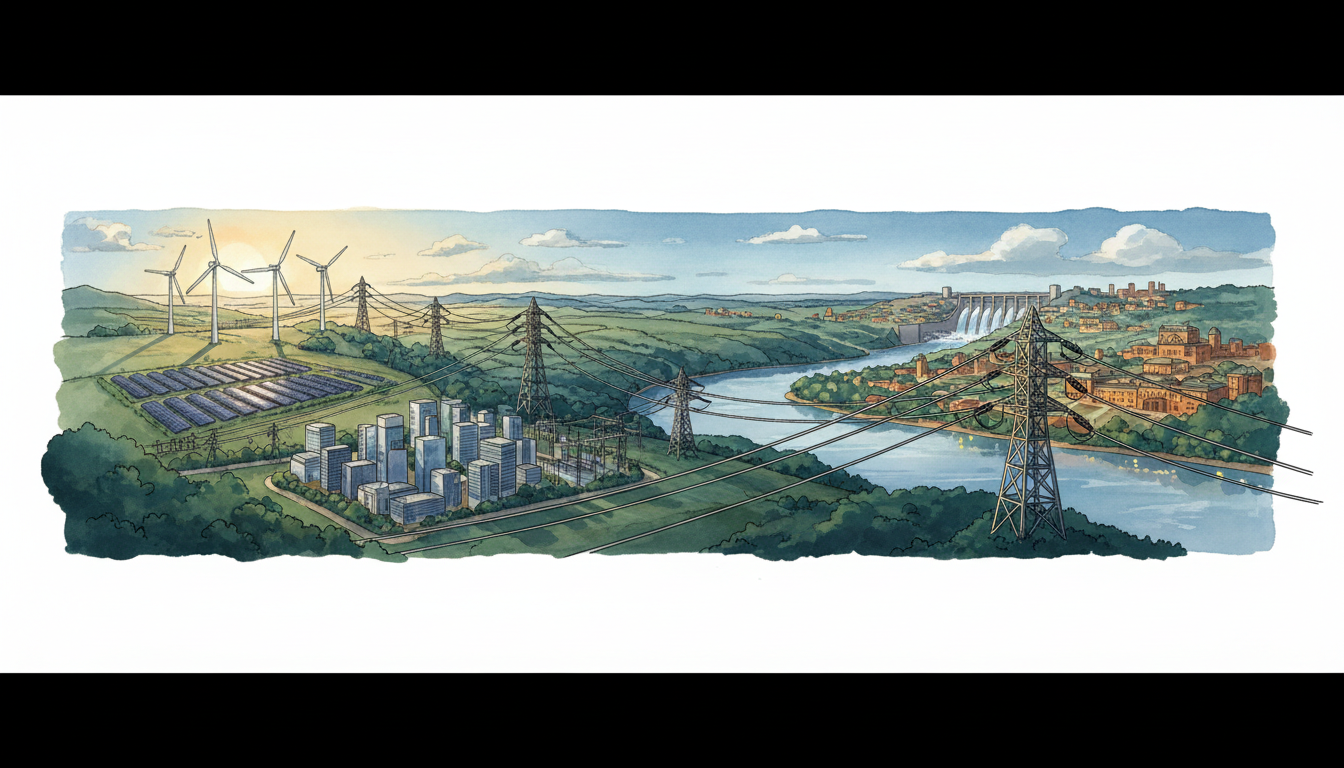
Did you know that Singapore has a ‘Four Switches’ strategy for electricity, just as it has Four National Taps for water? The names sound similar, but the systems face different challenges. Electricity must be available when people switch on a light, run a hospital or operate a factory. The country’s limited natural energy resources make diversification, reliable infrastructure and the long-term transition to lower-carbon sources especially important.
This Ministry of Education V3.0 reference applies the 2027 SEC G3 Geography K329 focus on the vulnerabilities and resilience of Singapore to the Four Switches: natural gas, solar energy, regional power grids and emerging low-carbon alternatives. It develops the energy trilemma, includes time-sensitive official 2026 policy context, uses a twelve-stage reasoning method and twenty-six original power-and-energy cases, and concludes with eduKate Depth–Load–Transfer diagnostics.
This is an independent educational reference, not an electricity-supply forecast, engineering specification, investment guide or official MOE assessment. All worked capacities, emissions and costs not explicitly linked to agencies are hypothetical. Current policies and generation shares may change and are stated with their source date.
1. The Energy Trilemma in a Land-Constrained Island
An island can need more power while having little land for large solar fields or other traditional renewables. Singapore must maintain secure supply, cut emissions where feasible and keep energy costs manageable for homes and industry. METI calls these goals the energy trilemma: energy security, sustainability and cost competitiveness. The first principle is to state which goal a proposal meets and what the others may have to absorb.
2. Where This Fits in the 2027 G3 Geography Syllabus
The 2027 G3 Geography K329 syllabus, Cluster 5 Topic 5.1 identifies Singapore’s limited land and natural resources and vulnerability to energy insecurity alongside food and water insecurity. Topics 5.2 and 5.3 connect climate impacts and sustainable/resilient development to response choices. The Four Switches are a current applied case study of these ideas, not a claim that every policy target is compulsory to memorise.
3. Four Switches—The Correct Source Categories
| Switch | Role | Main constraint |
|---|---|---|
| Natural gas | Present generation backbone and flexible supply | Imported fuel dependence and carbon emissions |
| Domestic solar | Indigenous renewable generation and diversified supply | Land, cloud and daylight limits |
| Regional power grids | Access to low-carbon generation outside Singapore | Cross-border transmission and agreements |
| Emerging low-carbon alternatives | Potential new options including hydrogen and advanced technologies | Costs, technological readiness and deployment uncertainty |
As of 2 October 2026, Singapore’s Ministry of Energy, Trade and Industry says natural gas supplies around 95% of its power generation needs. NCCS, updated 28 September 2026, reports over 2 GWp domestic solar capacity by end-2025, with a 3 GWp deployment goal by 2030, and a plan to seek around 6 GW low-carbon electricity imports by 2035. The import figure is a target rather than a claim of current delivery.
4. Power in GW Versus Energy in GWh
A source rated at 1 GW can theoretically deliver 1 GWh in one hour at that output. A 1 GW nameplate solar site does not automatically deliver 1 GWh every hour, because solar irradiation changes. Likewise, a 6 GW planned import capability cannot be converted to yearly energy without assumptions about availability and operating time. Identify which figure measures capacity, actual power, transferred energy or future goal.
5. The Spatial Dimension of Electricity Imports
Regional grids create opportunities to access electricity generated from hydropower, wind or other sources elsewhere in Southeast Asia. An undersea cable or transit network can be a vulnerability as well as an opportunity. Different countries do not guarantee independent pathways if routes share infrastructure. The Energy Market Authority explains why regional connections are considered in a diversified low-carbon transition.
6. Eight Rooms of Energy-Security Reasoning
Room one names demand and risk. Room two recognises local resource limits. Room three labels the four switches. Room four distinguishes current generation and future targets. Room five calculates power and energy correctly. Room six evaluates grid, storage and import dependencies. Room seven weighs security, sustainability and costs. Room eight makes a conditional response to a new disruption.
7. Twelve-Stage Supply–Risk–Trilemma Protocol
Stage 1 — Name the exact energy security concern
Are we discussing electricity sufficient for daily demand, reliable power during equipment failure, low emissions or affordable prices? The policy has multiple objectives, and a strategy successful for one may involve costs on another.
Stage 2 — Understand Singapore’s resource geography
Singapore has limited indigenous energy resources and relies heavily on imported fuels. Its dense built environment creates a challenge for large onshore renewable generation, making international connections relevant.
Stage 3 — Define the energy trilemma
The three dimensions are security of supply, environmental sustainability and cost competitiveness. A sound proposal examines them together instead of treating lowest cost or lowest emissions as the only possible aim.
Stage 4 — Recognise the Four Switches exactly
The four are natural gas, solar energy, regional power grids or low-carbon electricity imports, and emerging low-carbon alternatives. They are categories of strategy, not four equal shares of current electricity output.
Stage 5 — Measure natural gas dependence with dated evidence
METI stated in October 2026 that natural gas supplies around 95% of Singapore’s power-generation needs. This is a dated estimate, not a promise that the percentage will remain fixed.
Stage 6 — Distinguish installed solar capacity from energy delivered
Gigawatt-peak (GWp) describes solar panel nameplate performance in reference conditions. Actual production changes with clouds, sunlight and time; a 2 GWp fleet does not generate 2 GW all night.
Stage 7 — Recognise regional imports as both opportunity and exposure
Electricity imports can access regional low-carbon resources and diversify supply. They also require cross-border agreements, transmission reliability and resilience against geopolitical and infrastructure disruptions.
Stage 8 — Treat alternative fuels as developing options
Low-carbon hydrogen, advanced geothermal and carbon-capture technologies may be investigated, but the presence of a strategy does not establish a commercial deployment share or guaranteed technological success.
Stage 9 — Separate energy from power
Power is a rate in MW or GW, while energy is a quantity in MWh or GWh. Multiply power by hours to compare daily or annual contributions; do not add MW directly to MWh.
Stage 10 — Consider variable output, balancing and reserves
Supply must match demand over time. Flexible generation, storage, demand response and reliable grid operations may help manage variability but have costs and technical limits.
Stage 11 — Compare scenarios under a common assumption
Check whether a source’s figure is capacity, actual generation, cost per MWh, emissions or a future target. Use the same time horizon and units; indicate whether data are hypothetical.
Stage 12 — Give a qualified geographic judgement
Evaluate a portfolio against a specified shock, price change or carbon objective. State who bears costs, what new risks appear, and the evidence needed before a real decision.
8. Fictional Case: Evergreen City’s 2035 Grid Planning Challenge
Evergreen City is an invented teaching model rather than Singapore’s operational network. It has an assumed evening electricity demand, an imported energy link, a fictional solar profile, gas generation and a limited-duration battery. Students must use common units and compare the safety of a diversified supply under a cloudy day, a cable failure and a fuel price increase. No solution is a real grid operating recommendation.
9. Twenty-Six Original Energy-Security Examples
10. Worked Example A — Name the four switches without misleading percentages
Singapore’s strategy combines natural gas, domestic solar, regional grids and emerging low-carbon alternatives. These are not four current 25% shares. Policy categories represent diversification pathways that can be developed at different speeds.
Geographical audit: clarify whether this is a dated Singapore source fact or a classroom scenario. Check the power-versus-energy distinction and evaluate at least one security, sustainability or cost effect before making a judgement.
11. Worked Example B — Imported gas has a supply-chain dimension
Natural gas reaches a country through international suppliers and supporting infrastructure. A disruption could involve fuel availability, transport, price or plant operations. An answer must say which shock is being modelled.
Geographical audit: clarify whether this is a dated Singapore source fact or a classroom scenario. Check the power-versus-energy distinction and evaluate at least one security, sustainability or cost effect before making a judgement.
12. Worked Example C — Use dated data correctly
METI’s October 2026 Energy Supply page says natural gas supplies around 95% of power generation. A student should not copy that as an exact timeless percentage or confuse it with the share of all final energy consumed by every sector.
Geographical audit: clarify whether this is a dated Singapore source fact or a classroom scenario. Check the power-versus-energy distinction and evaluate at least one security, sustainability or cost effect before making a judgement.
13. Worked Example D — Power versus energy unit conversion
A model generator rated at 1 GW runs at full output for two hours, producing 2 GWh. One GW equals 1000 MW, while one GWh equals 1000 MWh. Neither number alone describes its annual contribution.
Geographical audit: clarify whether this is a dated Singapore source fact or a classroom scenario. Check the power-versus-energy distinction and evaluate at least one security, sustainability or cost effect before making a judgement.
14. Worked Example E — Shorter operation changes energy
An invented 500 MW plant runs for six hours at that output. Energy is 3000 MWh, or 3 GWh. A 1000 MW plant running for three hours yields the same energy, illustrating different power profiles.
Geographical audit: clarify whether this is a dated Singapore source fact or a classroom scenario. Check the power-versus-energy distinction and evaluate at least one security, sustainability or cost effect before making a judgement.
15. Worked Example F — Peak solar is not nighttime power
A fictional solar site has nameplate capacity of 50 MWp. At night without storage it is not delivering 50 MW from sunlight. The label is a standard-rated peak measure, not a continuous power guarantee.
Geographical audit: clarify whether this is a dated Singapore source fact or a classroom scenario. Check the power-versus-energy distinction and evaluate at least one security, sustainability or cost effect before making a judgement.
16. Worked Example G — Solar capacity-factor exercise
For a hypothetical 100 MW plant with an assumed 15% yearly capacity factor, model generation is 100×0.15×8760=131,400 MWh, or 131.4 GWh a year. The 15% is invented for the example, not Singapore’s measured national average.
Geographical audit: clarify whether this is a dated Singapore source fact or a classroom scenario. Check the power-versus-energy distinction and evaluate at least one security, sustainability or cost effect before making a judgement.
17. Worked Example H — Solar output depends on hours
An ideal fictional 40 MW solar array supplies an average 25 MW for four sunny hours, delivering 100 MWh. That result does not imply the same daily energy every day or at night.
Geographical audit: clarify whether this is a dated Singapore source fact or a classroom scenario. Check the power-versus-energy distinction and evaluate at least one security, sustainability or cost effect before making a judgement.
18. Worked Example I — 2030 capacity target is not achieved output
NCCS reported over 2 GWp deployed by end-2025 and a target of 3 GWp by 2030. These figures refer to installed solar capacity, not 2 or 3 GWh of electricity, nor a guarantee of 24-hour output.
Geographical audit: clarify whether this is a dated Singapore source fact or a classroom scenario. Check the power-versus-energy distinction and evaluate at least one security, sustainability or cost effect before making a judgement.
19. Worked Example J — 2035 imports are a target
NCCS describes Singapore seeking around 6 GW of low-carbon electricity imports by 2035, expected to be about one-third of projected energy demand then. It is a forward-looking policy aim rather than an assertion that 6 GW is flowing now.
Geographical audit: clarify whether this is a dated Singapore source fact or a classroom scenario. Check the power-versus-energy distinction and evaluate at least one security, sustainability or cost effect before making a judgement.
20. Worked Example K — A theoretical import capacity calculation
If a hypothetical 6 GW interconnector delivered at that power for 24 hours, it would carry 144 GWh in one day. The figure is a mathematical illustration and not a claim of continuous actual future imports.
Geographical audit: clarify whether this is a dated Singapore source fact or a classroom scenario. Check the power-versus-energy distinction and evaluate at least one security, sustainability or cost effect before making a judgement.
21. Worked Example L — Import diversification example
Two invented import routes deliver 3 GW each, while another design uses three 2 GW routes. Losing one route exposes 3 GW in the first or 2 GW in the second, assuming independent routes; actual shared transmission risks could weaken diversification.
Geographical audit: clarify whether this is a dated Singapore source fact or a classroom scenario. Check the power-versus-energy distinction and evaluate at least one security, sustainability or cost effect before making a judgement.
22. Worked Example M — Shared risks between different countries
Electricity imported from two places can still share one undersea cable corridor or common grid node. A country count alone is insufficient to prove physically independent electricity supply.
Geographical audit: clarify whether this is a dated Singapore source fact or a classroom scenario. Check the power-versus-energy distinction and evaluate at least one security, sustainability or cost effect before making a judgement.
23. Worked Example N — A one-hour grid shortfall
A fictional electricity demand is 5 GW, with only 4.7 GW available for one hour. The power shortfall is 0.3 GW or 300 MW, corresponding to 300 MWh of unmet energy in a simplified constant-demand model.
Geographical audit: clarify whether this is a dated Singapore source fact or a classroom scenario. Check the power-versus-energy distinction and evaluate at least one security, sustainability or cost effect before making a judgement.
24. Worked Example O — Storage power and capacity are different
A hypothetical battery holds 400 MWh and can deliver at most 100 MW. At that maximum ideal rate, it could deliver for four hours before becoming empty, neglecting losses and reserve limits.
Geographical audit: clarify whether this is a dated Singapore source fact or a classroom scenario. Check the power-versus-energy distinction and evaluate at least one security, sustainability or cost effect before making a judgement.
25. Worked Example P — The storage energy limit
A hypothetical battery holds 500 MWh and a community needs an extra 250 MW. At ideal conversion it could help for two hours; supplying 250 MW for four hours would require 1000 MWh, greater than the stated store.
Geographical audit: clarify whether this is a dated Singapore source fact or a classroom scenario. Check the power-versus-energy distinction and evaluate at least one security, sustainability or cost effect before making a judgement.
26. Worked Example Q — More gas is not automatically low-carbon
Natural gas combustion produces carbon dioxide despite potentially differing emissions from other fuels. Its role as a dependable transition source and its climate impact should both be considered.
Geographical audit: clarify whether this is a dated Singapore source fact or a classroom scenario. Check the power-versus-energy distinction and evaluate at least one security, sustainability or cost effect before making a judgement.
27. Worked Example R — A fictional emission comparison
Two model generation options emit assumed 400 kg and 50 kg CO₂ per MWh respectively. For 1000 MWh the totals are 400 tonnes and 50 tonnes. These are classroom assumptions, not measured official technology emission factors.
Geographical audit: clarify whether this is a dated Singapore source fact or a classroom scenario. Check the power-versus-energy distinction and evaluate at least one security, sustainability or cost effect before making a judgement.
28. Worked Example S — A cost-per-energy comparison
A model project A costs $80 per MWh of delivered energy and B costs $110 per MWh on a like-for-like accounting basis. B costs $30/MWh more, but evaluating resilience and emissions may justify a different decision.
Geographical audit: clarify whether this is a dated Singapore source fact or a classroom scenario. Check the power-versus-energy distinction and evaluate at least one security, sustainability or cost effect before making a judgement.
29. Worked Example T — The trilemma creates genuine trade-offs
A cheap supply option might be exposed to an external fuel shock while a lower-emission option may require new infrastructure. A strong answer evaluates at least security, sustainability and cost competitiveness.
Geographical audit: clarify whether this is a dated Singapore source fact or a classroom scenario. Check the power-versus-energy distinction and evaluate at least one security, sustainability or cost effect before making a judgement.
30. Worked Example U — Hydrogen should not be counted before deployment
Research into low-carbon hydrogen does not mean that hydrogen already provides a large measured portion of Singapore’s electricity. Separate study, demonstration, investment and commercial operation.
Geographical audit: clarify whether this is a dated Singapore source fact or a classroom scenario. Check the power-versus-energy distinction and evaluate at least one security, sustainability or cost effect before making a judgement.
31. Worked Example V — Demand response as an option
An invented factory shifts 20 MWh of non-critical use out of a peak period without increasing total weekly consumption. It reduces the peak system burden but does not by itself prove annual energy use fell.
Geographical audit: clarify whether this is a dated Singapore source fact or a classroom scenario. Check the power-versus-energy distinction and evaluate at least one security, sustainability or cost effect before making a judgement.
32. Worked Example W — Peak demand and energy are not interchangeable
Two communities each use 100 MWh daily, but one concentrates demand into a short period. Its peak requirement can be higher despite the same energy total; system adequacy considers both.
Geographical audit: clarify whether this is a dated Singapore source fact or a classroom scenario. Check the power-versus-energy distinction and evaluate at least one security, sustainability or cost effect before making a judgement.
33. Worked Example X — Gas-supply disruption
In a hypothetical 100-unit electricity portfolio with 90 units from gas, losing 20% of gas contribution removes 18 units before any response. The example is not the actual generation share or emergency contingency.
Geographical audit: clarify whether this is a dated Singapore source fact or a classroom scenario. Check the power-versus-energy distinction and evaluate at least one security, sustainability or cost effect before making a judgement.
34. Worked Example Y — A multi-switch portfolio under cloudy weather
An invented high-solar scenario experiences lower daytime output. Flexible generation, storage, verified imports and managing suitable demand may mitigate the deficit, but the question must provide capacities and constraints before declaring any option sufficient.
Geographical audit: clarify whether this is a dated Singapore source fact or a classroom scenario. Check the power-versus-energy distinction and evaluate at least one security, sustainability or cost effect before making a judgement.
35. Worked Example Z — A reasoned 2035 judgement
A pupil proposes gas for stability while increasing solar, regional imports and research into alternatives. The response becomes strong only when it identifies the vulnerabilities and costs of each, avoids treating targets as achieved results, and states which indicators to monitor.
Geographical audit: clarify whether this is a dated Singapore source fact or a classroom scenario. Check the power-versus-energy distinction and evaluate at least one security, sustainability or cost effect before making a judgement.
36. The Four Switches and the Four National Taps are different strategies
Electricity supply diversification concerns natural gas, solar, regional grids and alternatives. Water diversification concerns catchment, imports, NEWater and desalination. Mixing the labels hides different physical systems.
37. Singapore’s energy trilemma has three dimensions
Reliability, sustainability and affordability/competitiveness can pull in different directions. Geography evaluation requires a justified balance under the stated context.
38. Solar GWp is not firm capacity across a full day
Panel ratings use standard sunlight conditions. Weather and nighttime create variability; a comparison should translate power ratings into a time-specific generation profile where possible.
39. Electricity imports do not erase interdependence
Regional power offers low-carbon opportunities but creates reliance on physical cables, neighbouring generation and agreements. Diversification should account for correlated disruptions.
40. Natural gas can support reliability while retaining emissions costs
Its continuing role does not mean a low-carbon transition is complete. Clear answers consider both current system operation and future climate goals.
41. Targets and achievements must be dated
A 2030 solar capacity goal and a 2035 import goal cannot be presented as current supply without evidence. Official sources may revise targets, so identify publication dates.
42. Storage is a limited-duration resource
Storage has both a power ceiling and an energy reservoir. It can manage variability but cannot replace continuous generation without adequate charging and reserve capacity.
43. Emerging alternatives are uncertain rather than invisible
Hydrogen, geothermal and carbon-capture pathways merit evaluation but future suitability depends on technical, financial, environmental and deployment evidence.
44. System resilience includes transmission
Generating energy somewhere does not deliver it automatically to a Singapore consumer. Interconnection capacity, grid control and failure modes matter.
45. Energy efficiency and demand patterns influence adequacy
Reducing waste or moving flexible demand can lower peak requirements, but changes to when energy is used do not always change total consumption.
46. A good comparison chooses the right units
GW measures a rate of delivery, GWh an amount delivered, and $/MWh an energy cost. Conflating them makes infrastructure conclusions unreliable.
47. Geography adds stakeholder and spatial analysis
Households, industry, power developers, regulators and neighbouring states are differently affected. Land, regional cables, water use and investment shape each option.
48. Misconception Ledger
- Treating the Four Switches as the Four National Taps.
- Treating natural gas, solar, grids and alternatives as four present 25% generation shares.
- Quoting the October 2026 gas share as an unchanging future percentage.
- Equating GWp of solar panels with GW supplied continuously through the night.
- Treating a proposed 2035 import target as current delivered power.
- Confusing GW of instantaneous power with GWh of energy over a period.
- Assuming imported low-carbon electricity has no cable or geopolitical risk.
- Describing hydrogen research as a guaranteed mature power source.
- Assuming an energy store can provide unlimited power for unlimited hours.
- Treating a single lowest-cost figure as proof of a fully resilient portfolio.
- Calculating emissions without a common energy denominator.
- Confusing peak demand reductions with total energy savings.
49. Three-Pupil Grid Resilience Workshop
Student A maps the four switches, their physical origins and failure risks. Student B checks fictional GW, MW, GWh and MWh calculations, converting between power and energy. Student C evaluates the trilemma, stakeholders and likely limits of each mitigation. Rotate all roles. Then give each student a new outage scenario where the most obvious source is not available and ask for an independent, evidence-bounded recommendation.
50. eduKate Depth–Load–Transfer Diagnostic
Depth: explain why gas is a present backbone, solar is variable, regional imports require connections and hydrogen is emerging. Load: solve one portfolio case with an energy store, an import disruption and a carbon-cost trade-off using consistent units. Transfer: analyse a different city with another climate and resource profile without copying Singapore’s numerical targets. Diagnose confusion over resource, time, capacity, energy, interdependence, environmental impact or judgement, and repair the first weak link.
51. Independent Retrieval and Checked Answers
Try: (1) Name all Four Switches. (2) Convert 2.5 GW to 2500 MW. (3) If a fictional 0.8 GW generator runs at that output for 5 h, find 4 GWh. (4) A 600 MWh battery can ideally supply 150 MW for four hours if losses and limits are ignored. (5) Why does a solar site’s MWp rating not guarantee 24-hour output? (6) Why can two international import sources share a common failure risk? (7) Name all three trilemma criteria. Each explanation should identify the assumptions, not merely the number.
52. Questions for Parents and Tutors
Ask ‘Where is this energy produced?’, ‘Is the number a current share or future goal?’, ‘What happens on a cloudy night?’, ‘What if a cable fails?’, ‘Is this GW or GWh?’, ‘How many hours could storage help?’, ‘Who pays for the infrastructure?’ and ‘Does a lower-emission option still meet reliability requirements?’ These questions build geographic reasoning across technical and policy contexts.
53. Frequently Asked Questions
What are Singapore’s Four Switches?
Natural gas, domestic solar energy, regional power grids or low-carbon electricity imports, and emerging low-carbon alternatives.
How is this different from the Four National Taps?
Four National Taps describes water sources; Four Switches describes electricity supply and decarbonisation pathways.
Does Singapore still rely on natural gas?
Yes. METI’s October 2026 Energy Supply page says natural gas supplies around 95% of electricity generation needs; this is a dated estimate, not a fixed future share.
What is the target for solar capacity in 2030?
NCCS’s September 2026 page states over 2 GWp of solar installed by end-2025 and a target of 3 GWp by 2030.
What is the 2035 electricity-import target?
NCCS describes Singapore seeking about 6 GW of low-carbon electricity imports by 2035, expected to be roughly one-third of future energy demand.
Does a 3 GWp solar target mean 3 GW continuously?
No. GWp is installed peak panel capacity under reference conditions; generation varies with sunlight, weather and system performance.
Is low-carbon hydrogen already Singapore’s main power source?
No. It remains among the emerging pathways under research and possible future development.
Why not rely entirely on regional imports?
They offer diversification but introduce supply, transmission and geopolitical dependencies that must be managed.
What is the energy trilemma?
Balancing energy security, environmental sustainability and cost competitiveness.
Is an electricity bill in GWh?
Households commonly calculate use in kWh. GWh is a much larger energy unit often used in grid-scale comparisons.
54. Closing Principle
Singapore’s electricity transition is a portfolio challenge. A resilient answer understands resource geography, the four sources of strategy, time-varying power supply and the competing goals of cost, carbon and security. Use dated official information, label targets honestly and test proposed solutions against real dependencies rather than treating one technology as a universal cure.
Related eduKateSG References and Official Sources
Study Reference 251 — Resilient Singapore, Reference 312 — Four National Taps, Reference 275 — Energy, Work and Power, MOE V3.0 library, the immutable Clementi teaching benchmark, SEAB 2027 G3 Geography K329, METI Energy Supply, October 2026, NCCS Singapore Power, September 2026 and EMA Energy Security Four Switches.
MOE V3.0 Reference Sequence Navigation
Previous published reference 321 · MOE V3.0 reference library. Apply the trilemma method to a different energy shock and compare your assumptions.