
Does your child need parental consent for school health screening, dental care or vaccination in Punggol? The distinction matters. Singapore’s Health Promotion Board (HPB) says pupils are ordinarily enrolled automatically for standard school health screening, so separate screening consent is not normally required. Consent is required for primary-school vaccination and school dental services. Parents can review and submit relevant consent using the official HPB Consent Portal after checking the school’s notice. If the child previously opted out of screening, different consent arrangements may apply for opting back in.
HPB’s School Health Service visits primary schools for health screening and follows a level-specific schedule. Its HealthHub primary screening guide lists vision, hearing, growth and selected other assessments across P1–P6. Immunisations are given under the national programme where indicated, and dental care has its own school-based route. Parents at Punggol View, Northshore, Greendale, Punggol Cove or another Punggol school should rely on the school’s current appointment and location information, because having a local school photograph does not confirm a clinic or a screening date.
The useful family routine is straightforward: read the official message, update the child’s information through the authorised channel, explain the procedure calmly, check any referral or results and seek appropriate follow-up when advised. School screening is an early check—not a diagnosis of every possible condition and not a replacement for professional care when your child has symptoms or concerns.
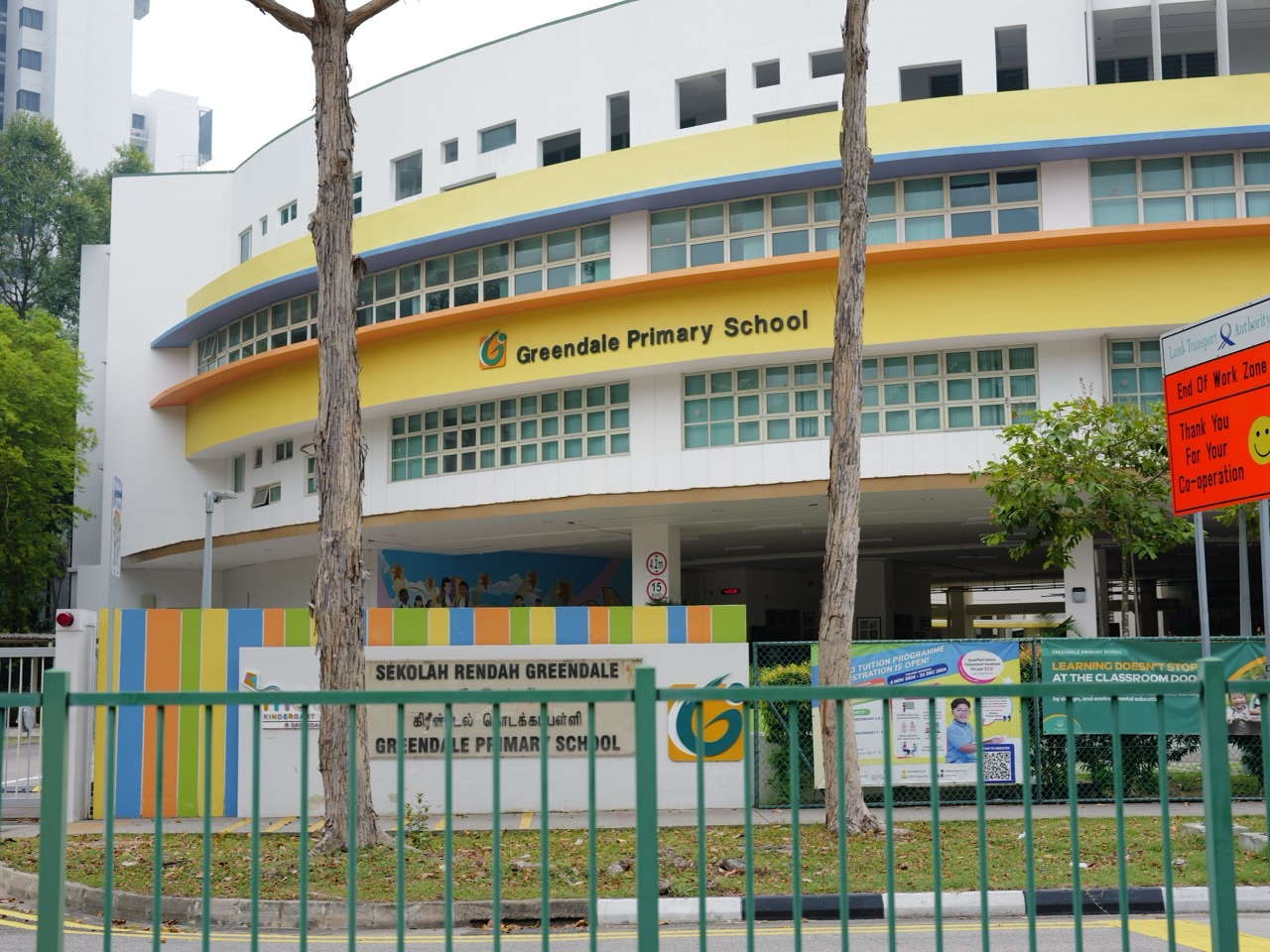
Local photograph: exterior of Greendale Primary School, Punggol. This image does not show a health screening, vaccination or school dental clinic and does not confirm its availability on a given day.
Choose your reading route
Article contents
Sections 1–6
1. Understand the difference between screening, immunisation and dental care
2. What school health screening may include from P1 to P6
3. How HPB consent works, and how to avoid unsafe forms
4. Dental services and what parents should ask about appointments
5. Vaccinations and follow-up: ask the health team, not social media
6. School health supports the child, not merely the timetable
SECTION 1 OF 6
Understand the difference between screening, immunisation and dental care
Parents often use the phrase “school health check” to describe several different services. Health screening looks for signs that certain conditions may require further assessment. Immunisation helps protect against specified infections under the national childhood programme. School dental services focus on oral health and appropriate basic dental care. These purposes overlap in supporting well-being but follow different procedures.
The HPB consent guidance distinguishes them clearly. Standard health screening is ordinarily automatic and does not need new consent; selected services such as vaccinations and dental care do need consent. The consent portal allows parents to check which forms apply. When a pupil has opted out and wishes to resume screening, HPB explains that consent is needed to opt back in.
An important exception in thinking, not necessarily in paperwork: some pupils have individual health conditions or support arrangements. Parents should give accurate details to the authorised healthcare team and ask for case-specific guidance rather than assuming an ordinary class notice answers every clinical question.
The programme is national, so a child in Punggol is not under a different medical schedule simply because of the neighbourhood. The particular school’s schedule and visit logistics, however, still need to be confirmed locally.
- Identify whether the notice refers to screening, vaccination, dental care or several services.
- Check whether consent is required for that particular service.
- Use official HPB and school instructions rather than a forwarded form.
- Update relevant child health information privately.
- Ask the designated healthcare provider about individual medical concerns.
HPB publishes a level-by-level schedule for primary schools. Primary 1 includes vision and hearing checks, height and BMI assessment, lifestyle-related support and immunisation if required. In subsequent years, selected levels include myopia checks, growth monitoring, colour-vision screening and spinal screening for girls in Primary 5 and Primary 6. Not every child receives every test every year. The scope of a particular screening depends on the child’s age, level and current programme.
The official HealthHub schedule is the correct starting point for the detailed list. It also explains Grow Well SG, which focuses on practical habits around physical activity, nutrition, sleep and screen time. Any individual lifestyle advice is given by healthcare professionals based on the child’s circumstances; families should not treat this editorial article as a personalised health plan.
It helps to reassure a younger child that checks are meant to identify things early, not to grade them. A vision chart is not a school examination. The student should try to answer honestly, and the family should follow up if a referral or further test is recommended. Do not praise a “good number” or shame a child over weight or other body measurements.
Screening findings are provisional. A child who passes one standard test may still need professional assessment if symptoms appear later. HPB itself emphasises that the screening programme is not a substitute for a fuller examination when a parent has concerns.
- P1: review vision, hearing and growth screening information.
- P2–P4: expect level-specific checks rather than every test annually.
- P5–P6: check notices for relevant growth, spinal and immunisation services.
- Keep health information current in the authorised system.
- Follow any referral instructions and seek professional advice if symptoms persist.
The HPB Consent Portal is an official Singapore government service for school health and dental consent. The portal explains that a parent may be asked for the child’s NRIC or FIN number, relevant medical information and vaccination history. Those are sensitive details. Enter them only on the real official service reached through verified instructions, not through a lookalike link in an unsolicited message.
HPB’s own help centre says parents of primary pupils need to consent to vaccinations and dental care. For secondary pupils, consent may also apply to certain other services. A family with children in different schools or levels should therefore check the forms actually shown for each child instead of assuming everyone receives an identical form.
If no consent form appears, it does not necessarily mean the portal is broken. The HPB guidance explicitly advises parents to check whether that service requires consent in the current year. If information is missing or inaccurate, use the portal’s assistance routes or contact the relevant school office. Do not ask another parent to log in or forward screenshots containing a child’s health information.
Give the child a simple, truthful explanation: the school health team helps check how children are growing and whether a follow-up may help. Avoid promises that every procedure will feel exactly the same. Questions about pain, contraindications, allergies or medical history should be answered by qualified clinicians.
- Begin at the verified government portal or official school notice.
- Check each child’s actual service forms.
- Review existing records before submitting.
- Do not share NRIC, FIN, Singpass or health information in group chats.
- Contact HPB or the school if a consent or status issue remains unclear.
Healthy teeth help a child eat, speak and participate comfortably during the school day. However, a school dental service is not guaranteed to operate from a full-time clinic at every campus. HPB advises parents of primary and secondary students to consider the school dental clinic first where available, followed by the school’s buddy clinic or another relevant clinic when necessary. Its Student Dental Centre is another route. Actual access, referrals and appointment arrangements should be checked with HPB or the school.
The HPB dental-care guidance explicitly lists these options and explains that a school or buddy dental clinic may be more convenient when available. Parents should not infer a specific clinical service, opening hour or urgency from a local school exterior photograph.
Before a planned dental visit, follow the school and dental team’s current instructions. Explain to the child that the professional may check oral health and discuss what needs attention. If the child is frightened, let the team know rather than surprising them with a false promise that there will be no uncomfortable moments.
If a child has acute pain, swelling, injury or symptoms that concern you, do not wait for an annual school dental appointment. Seek timely professional dental or medical advice appropriate to the situation. The aim of a preventive programme is early attention—not a reason to delay care.
- Check the school and HPB’s current dental service arrangements.
- Submit consent where required.
- Ask how parents receive findings and follow-up advice.
- Use appropriate dental-care channels if urgent problems arise.
- Encourage routine home oral care without fear-based language.
The school vaccination programme sits within Singapore’s national immunisation framework. HPB’s primary school screening guide currently describes a Primary 5 booster against tetanus, diphtheria, pertussis and polio, as well as immunisations that may be needed when previous compulsory childhood vaccinations were missed. The specific schedule and eligibility are defined by official healthcare guidance, not by class discussion or a tutor’s opinion.
Vaccination decisions can involve medical histories, prior records and individual clinical considerations. Those are outside the scope of an education article. Parents can review the HPB HealthHub service guidance, discuss questions with the school health team or the child’s healthcare professional, and use the proper consent process. Do not post a child’s vaccination details in parent group chats.
If the healthcare team recommends further review after a screening or procedure, ask what the finding means, whether it is urgent and which service should provide follow-up. The family may need to arrange an appointment and keep the referral information available. A referral is a request for professional assessment, not a definitive diagnosis.
Children often feel more confident when adults explain what a check is for and who will help them. The conversation should be accurate and age-appropriate. It is better to say, “The nurse will tell you what happens and you can ask a question,” than make promises the parent cannot guarantee.
- Use the current national schedule and your child’s individual records.
- Complete official vaccine consent as appropriate.
- Consult qualified healthcare professionals about medical concerns.
- Store referrals and healthcare messages securely.
- Do not infer a diagnosis from a school screening result alone.
There is a practical reason health and education belong in the same conversation. A child who cannot see the board clearly, struggles to hear a teacher or is distracted by tooth pain may find lessons exhausting. Before interpreting every mistake as weak ability or poor effort, parents and teachers should consider whether the student can comfortably access the learning environment.
That does not mean a school screening can explain every academic concern. Learning difficulties have many causes, and a reading gap, misconception or low examination score should be assessed on its own evidence. Good support keeps these questions distinct while making sure genuine health concerns are managed by the right professionals.
Our learning support and special educational needs guide explains how families can communicate about support; the sick days and catch-up lessons guide addresses schooling when health interrupts attendance. For wider everyday routines, exam-week sleep and recovery is useful reading.
At eduKate, a learning plan starts by understanding the child’s actual position. Sometimes the next helpful action is a better explanation of fractions. Sometimes it is a conversation with the teacher. Sometimes the child needs a professional eye or dental appointment. Clarity comes from choosing the right kind of help for the right problem.
Frequently asked questions
Does HPB school health screening require parent consent?
Under HPB’s current general guidance, students are ordinarily enrolled for routine health screening without a new consent form. A child who previously opted out may require consent to opt back in.
Do primary school vaccinations and dental care need consent?
Yes. HPB currently identifies these services as requiring parental consent for primary pupils. Use the official HPB Consent Portal and your child’s school notices.
If a school vision check is normal, can my child still need an eye exam?
Yes. HPB explains that the school check is a preliminary myopia screen and may miss other conditions. Seek appropriate optometry or specialist advice if you have concerns.
Keep exploring Punggol education
Read sick days and catch-up learning, learning support and SEN, sleep and examination recovery, school meals and recess and school communication.
Sources and accuracy notes
- HealthHub / HPB: Health Screening for Primary School (level-specific screening, referrals and immunisation information).
- HPB Help Centre: When to Give Consent for Your Child (screening versus immunisation and dental consent).
- HPB Official School Health and Dental Consent Portal (secure service instructions; updated July 2026).
- HPB Help Centre: Where to Get Dental Care (school, buddy clinic and Student Dental Centre routes).
- HPB: Programmes and Resources for Primary Schools (updated October 2026).
This independent parent-facing education guide is not medical advice and does not diagnose disease or recommend a particular treatment. A student’s health information and consent should be managed only through approved channels with healthcare professionals. Check the actual school schedule and HPB’s current clinical guidance. The exterior school photograph is illustrative only.