
Should your Punggol child take Standard or Foundation Mathematics, English, Science or Mother Tongue in Primary 5? The starting point is the child’s actual Primary 4 performance and the school’s recommended subject combination—not the fear that Foundation is a permanent label. Singapore’s primary subject-based banding (SBB) allows students in Primary 5 and Primary 6 to study a mix of Standard and Foundation subjects according to strengths and learning needs. A student may need more support in one subject while remaining ready for Standard work in another.
The decision normally begins at the end of Primary 4, when schools recommend a combination based on examination results and parents indicate their choice through an option form. At the end of Primary 5, the school reviews how well the student is coping and adjusts levels where appropriate. Primary 6 students then take the school-recommended combination and sit the PSLE. MOE’s official primary SBB guide describes that sequence, and Punggol Cove Primary School’s 2026 parent-resource page provides a local example with separate Standard, Foundation and Higher Mother Tongue booklists.
Choosing between Standard and Foundation should not be treated as a contest to keep up appearances. The useful family question is: Which subject level will help this child understand, participate, recover and progress? This guide explains the P4 option form, how subject strengths can differ, what to ask the teacher, how PSLE and later secondary pathways fit in, and why diagnosis before extra tuition makes the decision clearer.
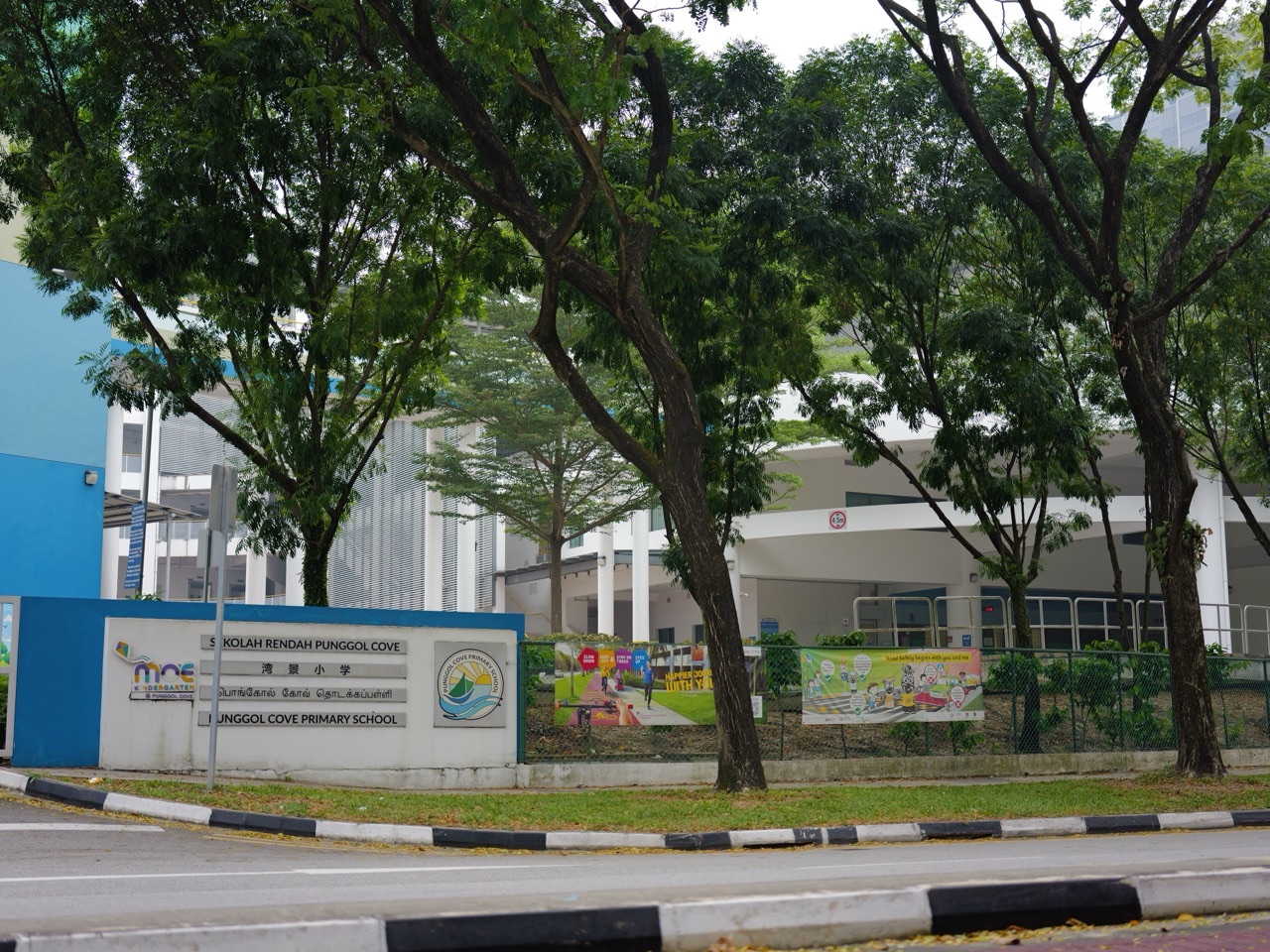
Local photograph: Punggol Cove Primary School exterior. The school image illustrates the neighbourhood, not any child’s subject combination, results or PSLE readiness.
Choose your reading route
Article contents
Sections 1–6
1. How primary subject-based banding works from P4 to P6
2. What changes between Standard and Foundation learning?
3. Does taking Foundation reduce PSLE and secondary-school choices?
4. The five questions worth bringing to the P4 teacher
The word “banding” sounds technical, but the central idea is humane. A child may be confident in English yet need to rebuild some Mathematics foundations. Another may love Science and struggle with writing. Rather than forcing the same level across the board, primary SBB permits an appropriate subject mix in the upper-primary years.
In Primary 4, the school uses relevant assessments to recommend the level at which the student should study each examinable subject. Parents receive an option form to indicate their preferred combination in accordance with school instructions. In Primary 5, the child follows the agreed combination and the school assesses their ability to cope. If progress or difficulty indicates a change, levels may be adjusted when appropriate. By Primary 6, the school determines the combination for the PSLE.
The Punggol Cove Primary School 2026 parent information page is a useful example of how a local school communicates this process: it offers a P4 subject-based banding briefing and different upper-primary booklists. However, the timing and individual recommendations come from the child’s own school. Do not assume a sibling’s old option form is still the form being used.
This is primary subject-based banding. It should not be confused with Full SBB in secondary school, where students may study subjects at G1, G2 and G3 levels. Both systems recognise different strengths, but their administrative procedures and examinations are not identical.
- Obtain the real P4 assessment feedback and the school recommendation.
- Read the exact option form, available combinations and response deadline.
- Ask why each subject is recommended at its particular level.
- Understand the P5 progress review and possible level adjustments.
- Keep primary Standard/Foundation separate from secondary G1/G2/G3.
The Standard syllabus demands a particular level of content, application and examination performance. Foundation subjects are designed to strengthen essential knowledge and give students an opportunity to succeed at a suitable level of demand. They are not simply Standard subjects with easier homework or fewer marks. Parents should compare actual syllabus aims and the work their child can do independently.
In Mathematics, a child may calculate routine fractions correctly but struggle when several ideas appear inside an unfamiliar word problem. That is different from a child who does not yet understand fractions themselves. One learner may need better problem-solving strategy within a Standard course; another may need foundational number relationships strengthened before more demanding applications become productive.
In English, distinguish between knowing vocabulary and using it to understand a passage, explain an inference or communicate precisely. In Science, distinguish memorising the names of parts from applying a concept to observations. Mother Tongue brings another combination of listening, speaking, reading and writing needs. There is no single “weak student” category that accounts for all four subjects.
The best conversations use worked examples. Ask the teacher to identify where the student is ready and where the learning chain breaks. Then discuss whether the proposed level creates an achievable route to better understanding, not just a temporarily more comfortable report-card appearance.
- What can the student complete without prompts?
- Are mistakes caused by missing fundamentals or unfamiliar applications?
- How much effort is needed to keep pace at the current level?
- What would be taught or practised differently at Foundation?
- What evidence would show readiness to adjust the subject level later?
A Foundation subject has its own PSLE scoring treatment and learning demands. It is therefore important to understand how the combination may interact with the total PSLE score and later posting possibilities, rather than assume Standard and Foundation Achievement Levels are interchangeable. MOE and SEAB publish the authoritative scoring tables, and families should use the current information when planning for a particular PSLE year.
A common worry is that Foundation permanently decides a child’s future. That is too sweeping. Secondary school pathways have changed substantially, including Full SBB and subject-level flexibility at G1, G2 and G3. Placement and subsequent progression depend on the applicable PSLE scoring rules, eligibility and later performance. It is neither accurate to promise that every door remains identical, nor fair to declare that a pupil can never progress.
What matters is making today’s learning sustainable while understanding tomorrow’s requirements. A child who can genuinely master a Foundation course may have a stronger platform than one who is completely overwhelmed and unable to learn at a more demanding level. Conversely, a child coping with Standard work should not be shifted simply because one poor test produced anxiety.
Our secondary-school choice and subject-level guide explains the G1/G2/G3 world. Parents should also consult MOE’s PSLE and Full SBB information for the current official rules.
- Use the PSLE scoring rules for the student’s actual exam year.
- Ask the school how the proposed combination affects foreseeable pathways.
- Do not treat Foundation AL grades as directly interchangeable with Standard grades.
- Distinguish present subject-level decisions from future secondary G-levels.
- Choose with both current readiness and future goals in view.
A calm meeting beats guessing from a single number. Bring the child’s marked papers or actual feedback and ask what the student can do consistently. Perhaps a child loses marks in multi-step Mathematics not because they lack intelligence but because the link from fractions to algebraic reasoning is fragile. That weakness needs to be identified before deciding what kind of support would change the outcome.
Next ask whether the difficulty is broad or concentrated. A student may struggle on one particular question demand while doing well elsewhere. If a change to Foundation is proposed, ask what it would allow the student to consolidate. If Standard is recommended, ask what support would help the child stay steady as Primary 5 content becomes more demanding.
The parent should also understand timing. When is the option form due? What happens if there is a disagreement about the recommendation? How is progress reviewed during Primary 5? What evidence would support an adjustment? These questions should be discussed through the school rather than answered from an unofficial worksheet advertisement.
Our parent–teacher meeting and report-book guide is a useful companion. It focuses on the quality of questions rather than the appearance of a particular grade.
- Which foundational concept is most insecure?
- Does the child cope independently in typical lesson tasks?
- Why does the school recommend this precise subject combination?
- How will support and progress be monitored in P5?
- What are the deadlines and rules for selecting or revising levels?
Once a subject combination is agreed, the next step is not a victory lap or a punishment. It is a teaching plan. If the student moves to Foundation Mathematics, identify the essential number and problem-solving relationships to strengthen. If Standard Mathematics continues, locate the one or two unstable prerequisites that are preventing confident execution of harder questions.
At eduKate we use the idea of learning continuity. Students need correct conceptual nodes, links between ideas, recall across time and the ability to transfer a method to a differently worded problem. When a child says, “I know this at home but forget it in school,” the problem may be retrieval or calibration rather than missing knowledge. When a child copies an example correctly but cannot explain why it works, understanding may still be fragile.
A useful practice sequence is to diagnose one mistake, teach the underlying idea, ask the child to explain it, practise a nearby example and revisit after a gap. This is more purposeful than buying ten extra assessment books. Parents can use the school’s teacher feedback and learning support resources first; paid tutoring should only be considered where it addresses a genuine need.
For families looking at three-student tutorials, the objective is not to promise a subject-level change. It is to help the student understand enough to learn independently and perform with better control. The specific subject and pace should match the pupil’s actual learning position.
- Map the actual misconception rather than assuming all errors are careless.
- Teach concepts in a manageable prerequisite order.
- Give the learner time to explain a worked method.
- Use a small number of diagnostic practice tasks.
- Review whether the learning is retained and transferable.
Children notice the language adults use. If Foundation is presented as a humiliating verdict, a student may start avoiding questions or hiding misunderstandings. If Standard is presented as a status symbol, a child may feel that asking for support is admitting defeat. Neither reaction helps learning. Speak about the level as an educational arrangement matched to current needs, not an identity.
A family can say, “We’re choosing a way for you to understand more confidently, and we’ll keep checking how you progress.” That is a much better message than promising impossible results or insisting that every subject must look the same as a cousin’s. Praise a child for reasoning accurately, noticing a mistake and asking a good question. These habits remain valuable at both levels.
Punggol students still have friendships, physical education, reading, sports, art and family lives while moving through upper primary. A good subject plan should leave space for those parts of childhood. The exam-week sleep and recovery guide explains why exhausting a child is not evidence of effective support.
By the time Primary 6 arrives, success should look like a student who has repaired important gaps and can explain what they know, whichever appropriate subject combination they are taking. Clearer learning, calmer decisions and sustainable progress matter more than labels.
Frequently asked questions
Is Primary 5 Foundation Mathematics automatically better for a child who fails one P4 Math test?
No. Ask the school to examine the broader evidence, specific misconceptions, subject recommendation and the child’s ability to cope. One score alone rarely explains the whole learning profile.
Can a P5 student take Foundation Math but Standard English?
Primary SBB allows a mix of Standard and Foundation subjects according to eligibility and the school’s recommendation and option process. Confirm the particular available combinations with your child’s school.
Can subject levels change between Primary 5 and Primary 6?
The school reviews how a pupil copes at the end of Primary 5 and can recommend changes where appropriate. Do not assume any specific upgrade or downgrade is automatic.
Keep exploring Punggol education
Continue with Punggol Cove Primary School, report books and teacher conferences, secondary subject levels, exam-week recovery and eduKate Punggol for subject learning support.
Sources and accuracy notes
- MOE: Subject-Based Banding for Primary School (primary-specific P4–P6 process).
- Punggol Cove Primary School: For Parents (updated 16 September 2026, including 2026 P4 SBB briefing and P5/P6 subject-level booklists).
- Kuo Chuan Presbyterian Primary School: Subject Based Banding (school explanation of Standard/Foundation combinations and P4/P5/P6 stages).
- MOE: PSLE Scoring and Full Subject-Based Banding (reference for PSLE and secondary pathways; check current policies).
- MOE SchoolFinder (official school profiles and listed subjects).
This independent eduKateSG guide is an editorial explanation, not an admissions notice, school offer or guarantee of eligibility. For actual requirements, dates and outcomes, consult MOE and your child’s school. Featured photographs show Punggol school exteriors and do not establish admissions statistics or school performance.