
Choosing a secondary school in Punggol involves more than comparing a PSLE score with a past cut-off point. Start with the student’s eligible options, then compare school programmes, the journey, subject support and the week they will actually live. Keep two terms separate: Posting Groups help with admission and initial subject levels; G1, G2 and G3 describe the levels at which subjects are offered.
Did you know that a student’s strengths can look different from subject to subject? Full Subject-Based Banding allows eligible students to take subjects at different levels. That makes a conversation about the student’s actual English, Mathematics, Science and Mother Tongue learning more useful than treating one label as a complete description of them.
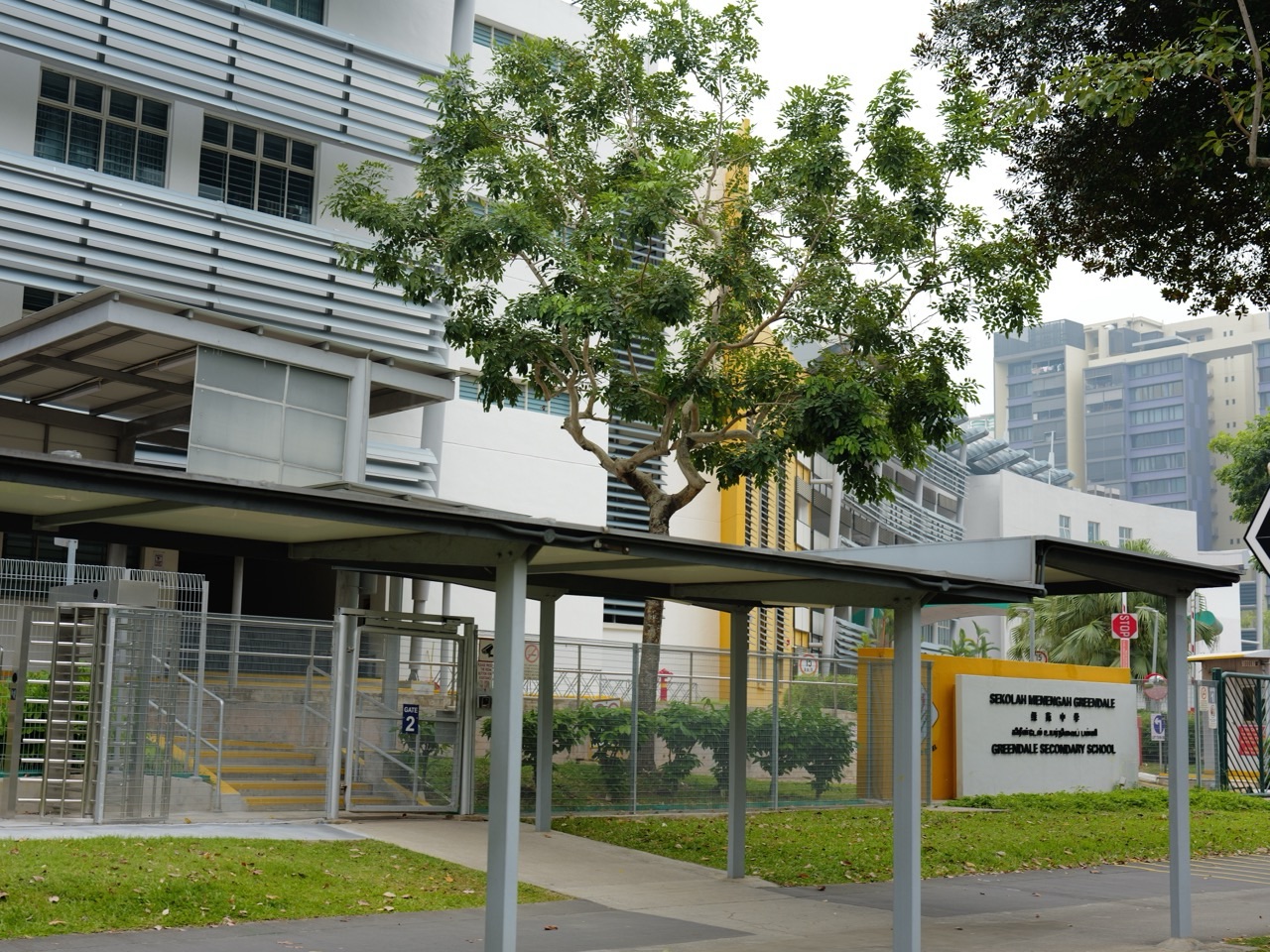
The photograph shows a student entrance at Greendale Secondary School. This guide connects that local view with four schools in our photo series: Greendale, Edgefield, Punggol and Yusof Ishak Secondary. It helps you prepare a comparison and a school conversation; it does not predict admission or select a school on the student’s behalf.
Photograph: Student entrance gates and security point at Greendale Secondary School in Punggol, Singapore. Photo: eduKate.
Find the part your family needs
Choose the question closest to your family’s next decision.
Understand PG and G · Compare the schools · Ask about support
Contents
1–3 · Understand and compare
1. Keep Posting Groups and subject levels separate
4–6 · Plan and continue
4. Ask how a student gets help and adjusts
An official school explanation on AskGov sets out the distinction: Posting Groups are used for admission and to guide initial subject levels at the start of Secondary 1. Under Full Subject-Based Banding, eligible students have flexibility to study subjects at different levels according to their strengths and learning needs.
Use a simple note with two headings: admission arrangements and subjects. Record the applicable Posting Group information under the first. Under the second, list each subject and the level confirmed by the school. This prevents an admission label from replacing the more detailed learning picture.
The numbered terms are not interchangeable. Nor should a family assume that every desired combination or later change is automatic. Ask the receiving school about eligibility, its offerings and the process for considering adjustments.
Let the student join that conversation. They may be confident in one subject and need help in another, or understand the content but struggle with the pace. Those differences are useful information.
The official pages below give concrete starting points. The comparison is about stated programme emphasis, not a prediction of results or a claim that one school is better.
| School photo guide | Published programme emphasis | Question for a visit |
|---|---|---|
| Edgefield Secondary | G.E.M — Growing the Edgefield Mindset: applied problem-solving and enterprise | How do students plan, test and improve an idea together? |
| Greendale Secondary | Design, technology and engineering; outdoor adventure learning | How are newcomers supported during unfamiliar practical or outdoor tasks? |
| Punggol Secondary | Environmental education; community and youth leadership | How do students connect a sustainability issue with practical service? |
| Yusof Ishak Secondary | S4TEM@YI: STEM, sustainability and smart-city learning | How are scientific ideas, evidence and communication brought together? |
Ask what an ordinary student at the relevant level experiences. A photograph of a competition team, a past carnival or a specialist workshop is useful context, but it does not establish the exact programme for a future intake.
Then ask your child which kind of task they would like to try and why. You are listening for curiosity and willingness to participate, not asking them to choose a career at twelve.
Begin with the current official information for the relevant posting exercise. Check eligible options and the school’s current offerings before developing a preference list. Past entry scores describe a previous exercise; they cannot guarantee a future place.
On your comparison sheet, keep separate columns for confirmed facts, the student’s preferences and unanswered questions. For example, a school may publish its programme focus, the student may enjoy the topic, and the exact CCA schedule may still need a reply.
Try the journey and discuss the return after a later school day. Include meals, equipment, homework and time to unwind. A journey that works on a quiet weekend may feel different when it is repeated with a schoolbag and an early reporting time.
Visit or enquire with the same short set of questions. Comparing answers to the same questions is easier than comparing an enthusiastic memory from one open house with a rumour about another school.
Ask who a student approaches when the pace becomes difficult, how subject teachers communicate concerns and how parents should share useful information. Listen for a process you and the child can understand.
Discuss subject-level decisions without turning them into a race. What evidence does the school consider? When are reviews made? What support can help the student meet the current demands? What would change in the workload if a different level is offered?
A student may also need practical help: organising files, noting deadlines, understanding instructions or asking a question in class. These are small daily actions with consequences across several subjects.
Use one recent example when asking for advice. ‘The student understands the graph in class but cannot explain the gradient independently’ gives a teacher more to work with than ‘Mathematics is weak’. Keep the first conversation manageable.
The Singapore Examinations and Assessment Board’s SEC guidance states that the Singapore-Cambridge Secondary Education Certificate examination begins in 2027. Students sit subjects at their respective levels, and the certificate reflects the subjects and levels taken.
This is a reason to use current terminology when reading school information. Older articles may describe the former course structure or examinations. Always check the student’s cohort and the applicable subject syllabus before choosing revision materials.
For a Primary 6 family, the immediate task remains a sensible Secondary 1 transition. For an older student, subject combinations and post-secondary requirements need a more specific review with the school. A general school comparison cannot establish eligibility for every later pathway.
Keep the horizon visible without asking the child to solve the next six years at once. The next term’s learning, routines and support are concrete places to begin.
The eduKate guide to Secondary 1 Punggol Mathematics and the move from PSLE to algebra helps families think about the learning transition. Bring the school’s confirmed subject level when discussing materials or support.
For Science, use the guide to the change from primary to lower-secondary Science. For language, the vocabulary hub offers reading routes that can support precise understanding and expression.
If tuition is useful, begin with a defined need and the student’s weekly timetable. An eduKate consultation can consider a suitable 3-pax arrangement after the starting point is clear.
End the school-choice discussion with a few things your family knows, a few questions still to ask and a next action. That leaves the student with a plan they can participate in.
Sources and further checks
Policy descriptions and the linked school programme pages were checked on 10 October 2026. Confirm intake-specific admissions, subject offerings and arrangements with MOE and the school. This is an independent eduKate guide.
Posting Groups and subject levels — official AskGov explanation
Continue the Punggol school series
Programme choices · Secondary transition · Daily routine · Library learning
Schools in Punggol | Comparing Primary School ALP and LLP Programmes
Schools in Punggol | Secondary School Choice, Posting Groups and Subject Levels — you are here
Schools in Punggol | Planning the School Journey and After-School Routine
Schools in Punggol | One Punggol Library and Learning Beyond the Classroom