
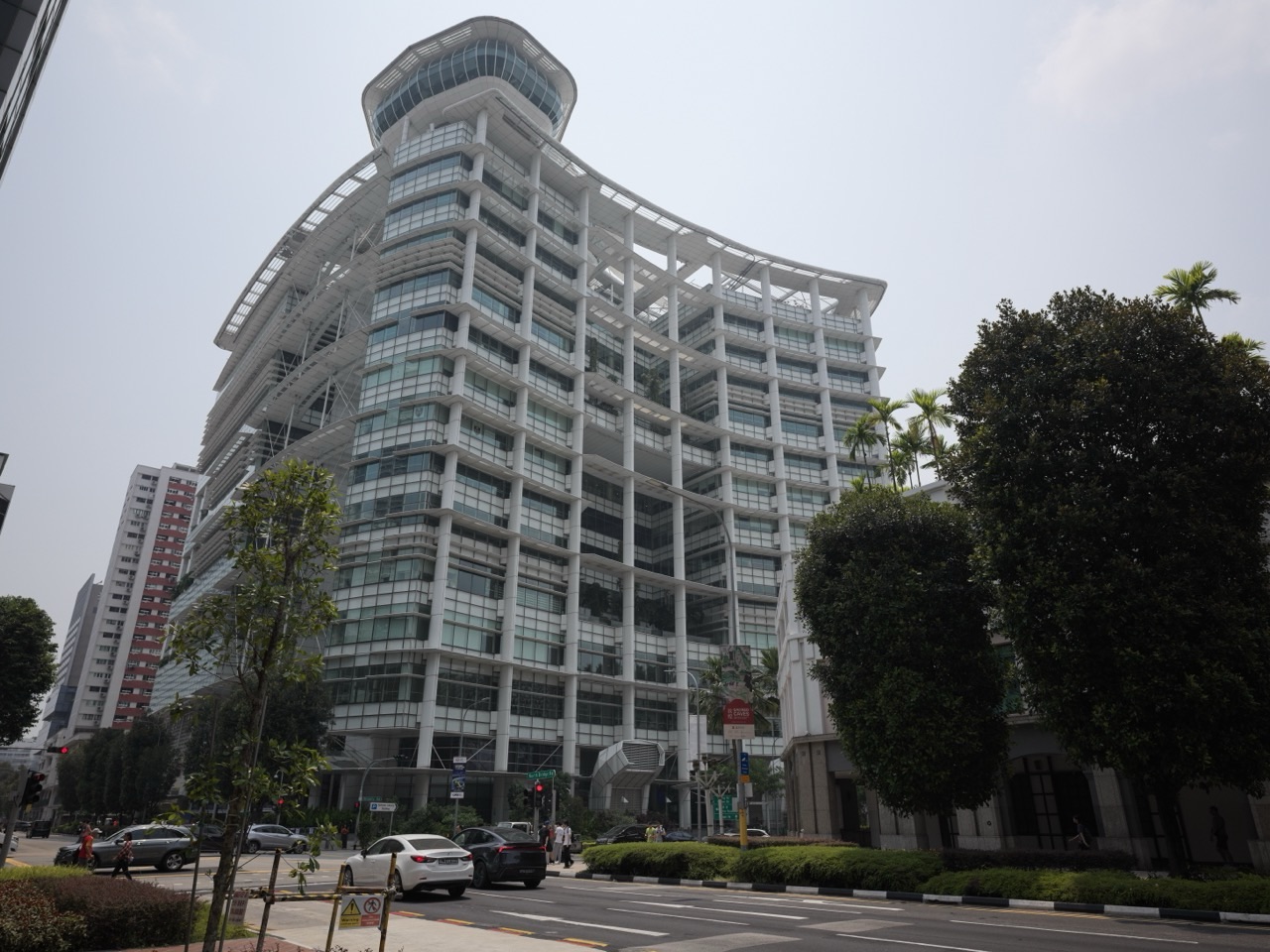
Did you know that Bras Basah’s National Museum was built for a nineteenth-century library and collection that had its origins well before the building opened in 1887? A later photograph of that museum cannot alone establish what a colonial curator intended. For Secondary 3 G3 History students, this familiar example makes a demanding skill concrete: separate a policy’s declared aim, an institution’s action and the actual historical outcome.
eduKateSG’s premium three-student tutorials meet near Sixth Avenue MRT, not in Bras Basah, for 1.5 hours each week. Students bring real marked essays and source answers, confirm their actual subject route, and repair factual chronology, evidence evaluation or historical causation. Local Bras Basah sources illustrate method without replacing the syllabus’s international and Southeast Asian cases.
The tutorial standard follows the immutable Clementi small-group reference. SEAB’s 2027 G3 directory identifies distinct K330 standalone History and K336 combined Humanities (Social Studies, History) routes.
What the three-student Secondary 3 History lesson diagnoses
The tutor begins with the child’s actual marked scripts and the school’s current chapter. An answer may be factually rich yet irrelevant to the command word, or source-aware but chronologically wrong. A pupil who mixes the prescribed colonial countries needs knowledge repair, while another who calls every partisan document useless needs source evaluation. These are distinct causes of weak performance.
We compare one original answer with a newly written response after explicit feedback. Each of three students works independently. Discussion can reveal possible interpretations, but the tutor checks the individual’s historical argument, evidence selection and ability to transfer the correction to another unfamiliar source.
K330 and K336 are separate examination entries
The 2027 SEC G3 directory lists standalone History K330 and Humanities (Social Studies, History) K336 separately. K330 has two History papers; K336 combines one History paper with a Social Studies paper. The syllabus scope and revision workload are not identical, even when students use related source-reading skills.
A Secondary 3 pupil’s eventual national examination may take place after 2027. The tutor should confirm the child’s registered combination and use the correct later published specification when available, instead of assuming that all future years and subjects retain every 2027 detail.
The 2027 K330 Paper 1 field
Standalone Paper 1 includes European control in Southeast Asia and challenges to that dominance during the 1870s–1942, with British Malaya and specified country options concerning Dutch Indonesia or French Vietnam. Interwar developments include the peace settlement, German and Japanese authoritarianism and the origins of World War II.
The pupil labels territory, years, government and historical actor before writing. One vivid detail from Bras Basah’s colonial schools cannot substitute for a prescribed Malayan case. A correct but irrelevant fact is not examination evidence answering the required question.
The 2027 K330 Paper 2 field
Standalone Paper 2 concerns the post-World War II world, including the Cold War and decolonisation in Southeast Asia through 1991. Source claims must be connected to particular crises, governments, political movements and decisions rather than the generic idea that powerful countries competed.
A useful practice starts with an actor–decision–response chain. The tutor then removes the planning grid and changes the question so that the pupil must reconstruct the mechanism independently from their own historical knowledge.
The combined K336 History route
The K336 combined Humanities route covers prescribed twentieth-century modern-world History alongside compulsory Social Studies. The historical cases and the total subject workload differ from K330. A revision guide simply labelled G3 History does not necessarily cover the child’s actual combination.
Before buying materials, check the SEAB syllabus and current school chapters. An essay from a standalone-only colonial alternative could be intellectually interesting but still displace more relevant combined-Humanities preparation.
Why Bras Basah makes a useful method laboratory
Bras Basah’s National Museum history begins with learning and collections before a purpose-built building opened in 1887. A later new museum wing and updated exhibitions changed how the site served the public. Those phases illustrate intention, institutional history, physical development and subsequent interpretation.
A student should distinguish the founding of an institution from construction and later adaptation. The same discipline applies to international peace conferences, state policy and military institutions: announcing something does not by itself establish completion or success.
Colonial collecting and a source’s perspective
The nineteenth-century Raffles Library and Museum collected natural-history specimens and cultural artefacts under colonial administrative conditions. These collections preserved important objects while also reflecting the curators’ priorities and classification practices in their period.
We ask what the collection can demonstrate, whose viewpoint its catalogue represents and which community voices may be missing. A later museum interpretation can be informative without becoming a direct eyewitness account of the object maker’s private intentions.
A museum label has a later production date
The National Museum’s historical objects may predate the modern labels interpreting them by generations or centuries. A 2026 visitor description is secondary historical synthesis even when it is grounded in genuine earlier documents. Students must not transfer the label’s creation date onto the artefact.
The tutor writes three dates: event, original record and later explanation. That small discipline prevents false contradictions when examined sources refer to older historical events through newer memoirs or researched commentary.
SJI and changing uses of one building
St Joseph’s Institution began in 1852, later occupied an established Bras Basah building, and its premises served wartime medical and educational functions before the school moved to Malcolm Road in 1988. The former campus became associated with the Singapore Art Museum, opened in 1996.
The school, building and later museum have overlapping but distinct chronologies. This illustrates how to distinguish institution, actor and physical setting; it does not itself supply evidence for a K330 essay on interwar European politics.
The wartime school garden and policy outcomes
The former SJI site was used under Japanese rule, and heritage accounts describe pupils growing crops as part of an occupation-era self-sufficiency campaign. A photograph of gardening may verify that visible activity at a particular time, but it cannot measure every household’s food availability.
The lesson asks what the authority intended, which activities actually happened and what further data would test results. Students then apply that separation to a colonial reform, diplomatic resolution or Cold War policy in their actual school topic.
A building’s façade cannot prove residents’ views
Historic photographs of Bras Basah schools or religious buildings document some visual features and occasions. They do not establish what all children learned, what every teacher believed or how entire communities responded to institutional changes.
We practise naming a source’s scope: ‘this group at this place and date’ rather than ‘everyone everywhere’. A judgement becomes more convincing when it follows the available evidence rather than stretching one attractive image into a universal claim.
British Malaya needs its own evidence
In a British Malaya case, the pupil must name relevant British administrators, local institutions, interests and resistance within the required years. Indonesia and Vietnam cannot be swapped into the paragraph as generic evidence of European expansion.
The tutor uses two country-specific timelines and asks for one contrast. Only after facts are accurate does the student explain a shared imperial motive. A broad label such as ‘colonialism’ cannot stand alone as proof of a particular decision.
Economic interests need a mechanism
A sentence claiming that a power wanted resources is not yet a full historical explanation. The pupil should identify how that interest influenced a concrete administrative or military choice and how the choice affected local political or economic relations.
We build claim–evidence–mechanism paragraphs. If the learner produces only lists such as ‘resources, prestige, security’, the tutor asks what each factor caused an actor to do and what evidence shows the effect.
The Paris Peace Settlement required negotiation
After World War I, leaders negotiating a settlement had different aims, pressures and proposed solutions. A historical explanation distinguishes those intentions from treaty terms, immediate reactions and later consequences. Declaring the settlement simply ‘unfair’ without a mechanism is weak.
We read a hypothetical delegate speech as a source of expressed goals, then check real syllabus cases for the agreed provision and reaction. No one speaker’s promise can prove lasting international stability.
Collective security is more than its definition
Defining the League of Nations does not answer why its collective response failed to deter or resolve an episode of aggression. The student must identify what measures were available, what states actually did and why those actions affected other actors’ calculations.
The tutor asks the learner to write the missing middle step between a resolution and an outcome. A condemnation, sanction or negotiation has a different evidential role; do not treat the mere announcement of a policy as successful enforcement.
Germany and Japan need separate timelines
Nazi Germany and militarist Japan developed under different domestic institutions, leadership arrangements and political pressures. Their actions contributed to interwar tension in distinct regional and international settings. Shared concepts do not justify importing a German event as evidence of a Japanese decision.
The first correction is factual: separate cases, dates, actors and actions. We then move from those facts to explanations and comparisons, checking whether the student’s answer really fits the country named in the question.
Avoid hindsight when explaining the origins of war
A student knows that world war later occurred, but leaders at earlier moments did not necessarily have full knowledge of the future. Diplomatic statements, appeasement choices and military decisions must be evaluated with the information and constraints relevant to their own dates.
We distinguish a contemporaneous belief from a historian’s later explanation. Unsupported phrases such as ‘everyone knew war was inevitable’ are replaced with evidence about actual fears, options and reactions in the prescribed case.
Cold War crisis writing needs a decision–response chain
A broad discussion of superpower rivalry gives context but cannot explain a named crisis. The answer should describe the perceived threat, the decision a particular government made, its opponent’s reaction and how these actions influenced the crisis.
The pupil first sketches an actor–action–consequence sequence and then writes it without the scaffold. A changed question about escalation rather than origins forces the reasoning to adapt.
Decolonisation has distinctive local agency
Nationalist movements in Southeast Asia interacted with different colonial authorities, wartime developments and international conditions. A paragraph saying everyone wanted freedom is a starting generality, not a country-specific causal explanation.
We identify the movement, political goals, actual decisions and resulting institutional changes in the specified territory. Comparative work follows factual study and does not erase the differences between places.
Inference cannot be only paraphrase
An inference states what source wording or imagery suggests about a historical issue. A student must select a decisive clue and explain the bridge from that clue to a defensible claim rather than restating the whole document.
In Bras Basah, an older school photograph may reveal a specific building and group. For world History, a political speech may reveal a stated position. Neither source proves unanimous agreement by an entire population without further evidence.
Purpose depends on maker, audience and moment
A newspaper editorial, government proclamation, private diary and colonial catalogue were created for different reasons and readers. Saying a source was written ‘to tell people’ is too vague unless it identifies the specific intended belief or action.
The tutor requires one piece of content supporting the inferred purpose. We also separate persuasive intent from factual reliability: a deliberate public argument can include accurate information while leaving other important facts out.
Reliability is tied to an exact claim
A ministerial speech might accurately establish that a policy was announced while offering incomplete evidence about later consequences. An individual’s letter may credibly record their own feelings but have limited access to broader military decisions.
Students practise stating the proposition before judging reliability, including both strengths and limitations. The word ‘official’ is not a universal guarantee, and the word ‘biased’ is not a universal rejection.
Usefulness depends on what is being investigated
A political poster may be useful for understanding official messaging but not sufficient for measuring population opinion. An institutional museum catalogue may document collection provenance but tell us less about the beliefs of an original community.
A useful answer names the enquiry, selects evidence that helps answer it and explains what other source would be needed. The tutor deliberately changes the enquiry so the student sees usefulness as question-specific.
Comparison needs a common historical issue
Two texts about the same year may address separate events, while two authors discussing the same policy may hold different views. A proper comparison identifies the proposition both actually address, quotes or explains relevant evidence and accounts for the relation.
Simply writing ‘one is a speech, the other a cartoon’ compares formats, not historical claims. Production date and audience are supporting context rather than substitutes for the comparison.
Corroboration is stronger when independent
Two modern websites repeating one old document are not necessarily two independent witnesses. Within a case study, corroboration identifies whether a second source was produced separately and actually supports the narrow proposition under test.
The learner states exactly what is confirmed. A second document may support an event date without resolving disputed motivations; stronger evidence does not require claiming that every remaining question has disappeared.
A causal essay must respond to its command
An ‘explain’ question requires a mechanism; ‘how far’ also requires weighing relevant factors using a stated criterion. Accurate chronology and factual examples are foundations, but a list of facts without an argument may still fail the question.
We change the command word or territory in a follow-up. The pupil must adapt the answer instead of reproducing a polished memorised essay that no longer fits.
Timed writing follows accurate reasoning
A Secondary 3 student with unstable history knowledge may benefit more from short source drills or an evaluated paragraph than repeated full mock papers. Once the student selects relevant evidence reliably, the tutor gradually introduces time constraints.
Progress is assessed by an unseen response and the disappearance of an earlier recurring error, not only by the number of worksheets completed. Parents should request evidence of independent transfer.
A real 1.5-hour teaching sequence
- 10 minutes: retrieve one country-specific event and supporting source detail.
- 15 minutes: diagnose the first mistake in a genuine marked essay or source response.
- 20 minutes: model one missing inference, purpose, comparison or causal mechanism.
- 20 minutes: each learner writes independently on new relevant material.
- 15 minutes: test evidence accuracy, question focus and historical context.
- 10 minutes: perform an unseen transfer task and record the next correction goal.
This is an illustrative allocation. The tutor must adapt to each student’s real difficulty: a learner with wrong territory facts needs a different intervention from someone who knows the case but cannot weigh its causal factors.
An illustrative twelve-week upper-secondary progression
- Weeks 1–2: confirm syllabus, cohort and real marked-work deficiencies.
- Weeks 3–4: rebuild historical actors, country-specific timelines and relevant case knowledge.
- Weeks 5–6: source inference, maker purpose and meaningful comparison.
- Weeks 7–8: reliability, usefulness and independent corroboration.
- Weeks 9–10: causal paragraphs and balanced evaluative essays.
- Week 11: changed essay commands and a bounded time limit.
- Week 12: an unfamiliar source task and a personal progress audit.
This planning map is not a grade guarantee. School demands and independently demonstrated improvement, rather than the passage of twelve weeks, should control the next teaching decision.
Fourteen original fictional source-and-essay exercises
Every miniature source below is original fictional classroom material, not authentic words from a historical figure, an archive transcript or SEAB examination material. These are method drills and are deliberately distinguished from the verified historical references.
Practice 1: A 1823 school proposal
Fictional source: An official plans a new educational institution.
Question: Does a proposal prove a later building existed? Reasoning: No; intention and construction differ.
Independent task: Find a later opening document.
Practice 2: An 1887 catalogue
Fictional source: A curator classifies artefacts from several regions.
Question: Does it show all communities’ own views? Reasoning: No, institutional priorities shape the record.
Independent task: Identify absent perspectives.
Practice 3: A 1942 school order
Fictional source: A wartime authority repurposes a classroom.
Question: Does the order prove every planned use happened? Reasoning: No, implementation needs evidence.
Independent task: Seek a dated photograph.
Practice 4: A colonial railway promise
Fictional source: An official promises development will benefit all traders.
Question: Is benefit proven? Reasoning: The statement is an aim, not a measurement.
Independent task: Find commercial records.
Practice 5: An Indonesian petition
Fictional source: A group opposes a colonial policy.
Question: Does it represent all residents? Reasoning: Only the represented group is evidenced.
Independent task: Find another viewpoint.
Practice 6: A 1919 peace speech
Fictional source: A delegate forecasts permanent peace.
Question: Can it show future success? Reasoning: A forecast is not an observed outcome.
Independent task: Examine the agreement and later reaction.
Practice 7: A League statement
Fictional source: Members promise to consider collective measures.
Question: Were sanctions automatically enforced? Reasoning: A discussion differs from action.
Independent task: Find an enforcement record.
Practice 8: A crisis poster
Fictional source: A party blames unemployment on an opponent.
Question: Does the poster establish causation? Reasoning: It provides rhetoric, not economic proof.
Independent task: Seek relevant economic records.
Practice 9: Two appeasement views
Fictional source: Two 1938 newspapers disagree over a concession.
Question: How do we compare? Reasoning: Analyse positions on one decision.
Independent task: Consider contemporary constraints.
Practice 10: A Japanese policy memo
Fictional source: A 1930s leader describes expansion as security.
Question: Is this the only motive? Reasoning: One stated justification needs context.
Independent task: Name another possible factor.
Practice 11: A Cold War radio warning
Fictional source: A government alleges a rival attack plan.
Question: Is the allegation proven? Reasoning: No, find independent support.
Independent task: Identify a diplomatic source.
Practice 12: Decolonisation pledge
Fictional source: A movement promises independence will solve hardship.
Question: Does the promise prove the outcome? Reasoning: No; test subsequent results.
Independent task: Name later records.
Practice 13: A changed essay
Fictional source: ‘Explain two causes’ becomes ‘how far was one decisive?’
Question: What changes in writing? Reasoning: An evaluative comparison and judgement are needed.
Independent task: Choose a criterion.
Practice 14: An unseen source
Fictional source: An unfamiliar diplomat’s telegram presents a policy position.
Question: Which skills transfer? Reasoning: Provenance, evidence, context, source limits.
Independent task: Write a supported inference.
Original ten-mark essay practice: collective security
Original question: ‘How far did the limitations of collective security matter more than the independent decisions of aggressive states in raising tensions during the 1930s?’ Choose a historical criterion for importance, cite the appropriate prescribed episodes and explain how willingness or reluctance to take action affected deterrence.
A separate argument traces specific expansionist decisions. The judgement weighs mechanisms and consequences rather than saying only that both factors were important. A changed command word checks that the pupil understands the difference between explanation and evaluation.
Original ten-mark essay practice: Cold War escalation
Original question: ‘Explain how a government’s response to a perceived threat could intensify a Cold War crisis.’ The pupil identifies a prescribed episode, names the states and actors involved and traces a precise decision–response–consequence chain.
A second ‘how far’ version asks the learner to weigh that immediate choice against longer-term strategic conditions. A generic statement that the two superpowers competed does not substitute for the relevant episode and mechanisms.
Frequently asked questions: Secondary 3 G3 History Bras Basah
Are Bras Basah museums themselves prescribed in K330? They are local historical method examples. The candidate still needs the official international and colonial syllabus cases.
Can K336 students use all K330 essay questions? Not safely without checking their separate syllabus. Combined Humanities includes Social Studies and its own historical scope.
What if a student can memorise model essays? Test a changed country, source or command word. The new response reveals whether factual understanding and causal reasoning are independent.
Where does tuition meet? The referenced small-group sessions are near Sixth Avenue MRT; Bras Basah families should assess the regular journey.
Official subject specifications and local source references
Consult the SEAB 2027 G3 subject directory, the K330 History syllabus and K336 Humanities (Social Studies, History). For local source-reading illustrations, use NLB’s Bras Basah education history, the early maps, NHB’s National Museum history, the history of museum collecting and wartime monument accounts. A heritage guide and an examination syllabus answer different questions.
The immutable Clementi small-group tuition reference explains the three-student model. Parents can discuss a marked school History script with eduKate Singapore.
Continue the Secondary 1–4 G3 History learning sequence in Bras Basah
Secondary 1 G3 History tuition Bras Basah, Secondary 2 G3 History tuition Bras Basah, Secondary 4 G3 History tuition Bras Basah. Earlier guides build source enquiry and wartime comparison; the later guide develops exam-specific synthesis and timed essay decisions.