
- Examination cohort and registered subject are clearly recorded.
- K330 and K336 materials follow the correct prescribed scope.
- Source inference uses a decisive clue and explanation.
- Reliability and usefulness are evaluated for specific questions.
- Final source responses integrate support, challenge and a judgement.
- Essays name correct territories, actors and historical periods.
- Two essay choices can be planned within the paper’s time limit.
- An unseen task shows improvement without a model answer.
Frequently asked questions: Secondary 4 G3 History Bras Basah
Can a combined-Humanities candidate simply follow K330? No. K336 includes compulsory Social Studies and a different History scope; use the proper specification.
Does K330 require typing in 2027? The published standalone K330 syllabus provides printed questions with typed answers in a digital booklet. Official examination instructions determine the precise arrangements.
Is Bras Basah museum history in the SEC paper? Here it is a source-method illustration, not a substitute for the prescribed colonial, interwar or Cold War cases.
Will more practice papers always help? Only if the first recurring error is diagnosed and corrected. Repetition without new independent understanding can preserve the weakness.
Where does the tutorial meet? Near Sixth Avenue MRT; families from Bras Basah should assess the regular journey.
Official examination syllabuses and historical references
Use the 2027 SEAB G3 directory, K330 standalone History and K336 combined Humanities for the relevant paper format. Local historical illustrations draw from the National Museum history, NLB’s Bras Basah schools account, wartime monument records, NLB’s early maps and the former SJI art museum history. A heritage guide does not determine a national-paper content list.
The teaching format follows the immutable Clementi three-student tutorial reference. Parents can bring the child’s actual registered code and marked script to eduKate Singapore for a learning discussion.
Continue the Secondary 1–4 G3 History learning sequence in Bras Basah
Secondary 1 G3 History tuition Bras Basah, Secondary 2 G3 History tuition Bras Basah, Secondary 3 G3 History tuition Bras Basah. Earlier stages build historical enquiry, wartime source evaluation and upper-secondary causal writing. Secondary 4 adds precise SEC routing, multi-source judgement and timed essay selection.
No six-week schedule can responsibly guarantee an examination grade. The child’s starting knowledge, school assessment timing and evidence of independent progress govern what follows.
Fifteen original fictional source-and-exam drills
All miniature sources below are original fictional teaching prompts. They are not genuine archival documents, quotations from historical people or actual SEAB past-paper tasks. The tutor uses these to practise a reasoning move before checking it on real material from the registered syllabus.
Practice 1: 1887 museum announcement
Fictional source: Fictional official announces opening of a new museum building.
Question: Does the announcement date every earlier collection? Reasoning: No; building and institution differ.
Independent transfer: Check archival collection chronology.
Practice 2: Colonial catalogue
Fictional source: Fictional curator classifies a specimen using colonial labels.
Question: Does the catalogue record all original community voices? Reasoning: No; collecting priorities shape representation.
Independent transfer: Find a different source.
Practice 3: SJI medical instruction
Fictional source: Fictional wartime notice orders conversion of classrooms.
Question: Does the order prove all medical needs were met? Reasoning: No; implementation needs evidence.
Independent transfer: Find hospital records.
Practice 4: Museum renovation forecast
Fictional source: Fictional leaflet depicts a future restored gallery.
Question: Can this show completed construction? Reasoning: No; it is a prospective illustration.
Independent transfer: Look for dated opening evidence.
Practice 5: Malayan colonial policy
Fictional source: Fictional administrator predicts a new rule will increase exports.
Question: Is it verified success? Reasoning: No; separate plan and measured outcomes.
Independent transfer: Identify a local impact record.
Practice 6: Dutch Indonesia petition
Fictional source: Fictional group protests an imposed policy.
Question: Whose views are documented? Reasoning: The petitioners, not every resident.
Independent transfer: Find an independent account.
Practice 7: 1919 negotiating speech
Fictional source: Fictional delegate promises a settlement will secure peace.
Question: Has future peace been proven? Reasoning: No; the promise is not an outcome.
Independent transfer: Compare later events.
Practice 8: League decision
Fictional source: Fictional diplomats condemn aggression and consider sanctions.
Question: Were sanctions enforced? Reasoning: Debate and implementation differ.
Independent transfer: Find evidence of actions.
Practice 9: 1932 economic poster
Fictional source: Fictional party blames all unemployment on one enemy.
Question: Is it proof of the accusation? Reasoning: No, it shows political rhetoric.
Independent transfer: Check economic context.
Practice 10: Japanese expansion memo
Fictional source: Fictional official argues military expansion ensures security.
Question: Can we treat this as the only motive? Reasoning: No; test other factors and choices.
Independent transfer: Identify another historical source.
Practice 11: Appeasement source pair
Fictional source: Fictional 1938 editorials disagree over concessions.
Question: What is comparable? Reasoning: The two positions on the same proposal.
Independent transfer: Explain contextual differences.
Practice 12: Cold War broadcast
Fictional source: Fictional official warns of an imminent opponent attack.
Question: Does warning prove an attack plan existed? Reasoning: No; the allegation needs corroboration.
Independent transfer: Find diplomatic evidence.
Practice 13: Decolonisation campaign
Fictional source: Fictional movement promises immediate prosperity.
Question: What can be inferred? Reasoning: A programme and aspiration, not later results.
Independent transfer: Name outcome measures.
Practice 14: A five-source collection
Fictional source: Fictional set includes competing official claims and a memoir.
Question: How does synthesis begin? Reasoning: Group support and challenge by issue.
Independent transfer: Write a qualified conclusion.
Practice 15: Changed command word
Fictional source: A question changes from ‘explain causes’ to ‘how far was one cause decisive?’
Question: What must change? Reasoning: Add weighed comparison and a criterion.
Independent transfer: Plan the judgement.
Original ten-mark essay: collective security and aggressive decisions
Original practice question: ‘How far were limitations of collective security more important than aggressive decisions in increasing international tension during the 1930s?’ The pupil should define a relative-importance criterion, select appropriate prescribed events and explain how weak enforcement could affect deterrence. A second argument should examine the distinct choices made by aggressive states.
The conclusion needs a weighted judgement, not merely ‘both factors were important’. We change the question’s focus in a follow-up exercise to test historical understanding rather than the ability to reproduce a memorised paragraph.
Original ten-mark essay: Cold War crisis response
Original practice question: ‘Explain how a government’s response to a perceived threat could increase Cold War tension.’ The candidate chooses a prescribed crisis, names the governments and actions, and describes the reaction and consequence. General superpower rivalry alone does not complete the mechanism.
For a ‘how far’ variation, compare immediate leadership choices against longer-standing strategic conditions and reach a justified conclusion using case-specific evidence.
Parent checklist for meaningful final-year progress
- Examination cohort and registered subject are clearly recorded.
- K330 and K336 materials follow the correct prescribed scope.
- Source inference uses a decisive clue and explanation.
- Reliability and usefulness are evaluated for specific questions.
- Final source responses integrate support, challenge and a judgement.
- Essays name correct territories, actors and historical periods.
- Two essay choices can be planned within the paper’s time limit.
- An unseen task shows improvement without a model answer.
Frequently asked questions: Secondary 4 G3 History Bras Basah
Can a combined-Humanities candidate simply follow K330? No. K336 includes compulsory Social Studies and a different History scope; use the proper specification.
Does K330 require typing in 2027? The published standalone K330 syllabus provides printed questions with typed answers in a digital booklet. Official examination instructions determine the precise arrangements.
Is Bras Basah museum history in the SEC paper? Here it is a source-method illustration, not a substitute for the prescribed colonial, interwar or Cold War cases.
Will more practice papers always help? Only if the first recurring error is diagnosed and corrected. Repetition without new independent understanding can preserve the weakness.
Where does the tutorial meet? Near Sixth Avenue MRT; families from Bras Basah should assess the regular journey.
Official examination syllabuses and historical references
Use the 2027 SEAB G3 directory, K330 standalone History and K336 combined Humanities for the relevant paper format. Local historical illustrations draw from the National Museum history, NLB’s Bras Basah schools account, wartime monument records, NLB’s early maps and the former SJI art museum history. A heritage guide does not determine a national-paper content list.
The teaching format follows the immutable Clementi three-student tutorial reference. Parents can bring the child’s actual registered code and marked script to eduKate Singapore for a learning discussion.
Continue the Secondary 1–4 G3 History learning sequence in Bras Basah
Secondary 1 G3 History tuition Bras Basah, Secondary 2 G3 History tuition Bras Basah, Secondary 3 G3 History tuition Bras Basah. Earlier stages build historical enquiry, wartime source evaluation and upper-secondary causal writing. Secondary 4 adds precise SEC routing, multi-source judgement and timed essay selection.
- Week 1: confirm examination year, registered K330/K336 subject and marked errors.
- Week 2: repair chronology and prescribed country knowledge.
- Week 3: practise inference, purpose, reliability and usefulness.
- Week 4: multi-source synthesis with supporting and challenging evidence.
- Week 5: choose, plan and write two ten-mark essay types.
- Week 6: unseen timed work, precise feedback and a renewed correction target.
No six-week schedule can responsibly guarantee an examination grade. The child’s starting knowledge, school assessment timing and evidence of independent progress govern what follows.
Fifteen original fictional source-and-exam drills
All miniature sources below are original fictional teaching prompts. They are not genuine archival documents, quotations from historical people or actual SEAB past-paper tasks. The tutor uses these to practise a reasoning move before checking it on real material from the registered syllabus.
Practice 1: 1887 museum announcement
Fictional source: Fictional official announces opening of a new museum building.
Question: Does the announcement date every earlier collection? Reasoning: No; building and institution differ.
Independent transfer: Check archival collection chronology.
Practice 2: Colonial catalogue
Fictional source: Fictional curator classifies a specimen using colonial labels.
Question: Does the catalogue record all original community voices? Reasoning: No; collecting priorities shape representation.
Independent transfer: Find a different source.
Practice 3: SJI medical instruction
Fictional source: Fictional wartime notice orders conversion of classrooms.
Question: Does the order prove all medical needs were met? Reasoning: No; implementation needs evidence.
Independent transfer: Find hospital records.
Practice 4: Museum renovation forecast
Fictional source: Fictional leaflet depicts a future restored gallery.
Question: Can this show completed construction? Reasoning: No; it is a prospective illustration.
Independent transfer: Look for dated opening evidence.
Practice 5: Malayan colonial policy
Fictional source: Fictional administrator predicts a new rule will increase exports.
Question: Is it verified success? Reasoning: No; separate plan and measured outcomes.
Independent transfer: Identify a local impact record.
Practice 6: Dutch Indonesia petition
Fictional source: Fictional group protests an imposed policy.
Question: Whose views are documented? Reasoning: The petitioners, not every resident.
Independent transfer: Find an independent account.
Practice 7: 1919 negotiating speech
Fictional source: Fictional delegate promises a settlement will secure peace.
Question: Has future peace been proven? Reasoning: No; the promise is not an outcome.
Independent transfer: Compare later events.
Practice 8: League decision
Fictional source: Fictional diplomats condemn aggression and consider sanctions.
Question: Were sanctions enforced? Reasoning: Debate and implementation differ.
Independent transfer: Find evidence of actions.
Practice 9: 1932 economic poster
Fictional source: Fictional party blames all unemployment on one enemy.
Question: Is it proof of the accusation? Reasoning: No, it shows political rhetoric.
Independent transfer: Check economic context.
Practice 10: Japanese expansion memo
Fictional source: Fictional official argues military expansion ensures security.
Question: Can we treat this as the only motive? Reasoning: No; test other factors and choices.
Independent transfer: Identify another historical source.
Practice 11: Appeasement source pair
Fictional source: Fictional 1938 editorials disagree over concessions.
Question: What is comparable? Reasoning: The two positions on the same proposal.
Independent transfer: Explain contextual differences.
Practice 12: Cold War broadcast
Fictional source: Fictional official warns of an imminent opponent attack.
Question: Does warning prove an attack plan existed? Reasoning: No; the allegation needs corroboration.
Independent transfer: Find diplomatic evidence.
Practice 13: Decolonisation campaign
Fictional source: Fictional movement promises immediate prosperity.
Question: What can be inferred? Reasoning: A programme and aspiration, not later results.
Independent transfer: Name outcome measures.
Practice 14: A five-source collection
Fictional source: Fictional set includes competing official claims and a memoir.
Question: How does synthesis begin? Reasoning: Group support and challenge by issue.
Independent transfer: Write a qualified conclusion.
Practice 15: Changed command word
Fictional source: A question changes from ‘explain causes’ to ‘how far was one cause decisive?’
Question: What must change? Reasoning: Add weighed comparison and a criterion.
Independent transfer: Plan the judgement.
Original ten-mark essay: collective security and aggressive decisions
Original practice question: ‘How far were limitations of collective security more important than aggressive decisions in increasing international tension during the 1930s?’ The pupil should define a relative-importance criterion, select appropriate prescribed events and explain how weak enforcement could affect deterrence. A second argument should examine the distinct choices made by aggressive states.
The conclusion needs a weighted judgement, not merely ‘both factors were important’. We change the question’s focus in a follow-up exercise to test historical understanding rather than the ability to reproduce a memorised paragraph.
Original ten-mark essay: Cold War crisis response
Original practice question: ‘Explain how a government’s response to a perceived threat could increase Cold War tension.’ The candidate chooses a prescribed crisis, names the governments and actions, and describes the reaction and consequence. General superpower rivalry alone does not complete the mechanism.
For a ‘how far’ variation, compare immediate leadership choices against longer-standing strategic conditions and reach a justified conclusion using case-specific evidence.
Parent checklist for meaningful final-year progress
- Examination cohort and registered subject are clearly recorded.
- K330 and K336 materials follow the correct prescribed scope.
- Source inference uses a decisive clue and explanation.
- Reliability and usefulness are evaluated for specific questions.
- Final source responses integrate support, challenge and a judgement.
- Essays name correct territories, actors and historical periods.
- Two essay choices can be planned within the paper’s time limit.
- An unseen task shows improvement without a model answer.
Frequently asked questions: Secondary 4 G3 History Bras Basah
Can a combined-Humanities candidate simply follow K330? No. K336 includes compulsory Social Studies and a different History scope; use the proper specification.
Does K330 require typing in 2027? The published standalone K330 syllabus provides printed questions with typed answers in a digital booklet. Official examination instructions determine the precise arrangements.
Is Bras Basah museum history in the SEC paper? Here it is a source-method illustration, not a substitute for the prescribed colonial, interwar or Cold War cases.
Will more practice papers always help? Only if the first recurring error is diagnosed and corrected. Repetition without new independent understanding can preserve the weakness.
Where does the tutorial meet? Near Sixth Avenue MRT; families from Bras Basah should assess the regular journey.
Official examination syllabuses and historical references
Use the 2027 SEAB G3 directory, K330 standalone History and K336 combined Humanities for the relevant paper format. Local historical illustrations draw from the National Museum history, NLB’s Bras Basah schools account, wartime monument records, NLB’s early maps and the former SJI art museum history. A heritage guide does not determine a national-paper content list.
The teaching format follows the immutable Clementi three-student tutorial reference. Parents can bring the child’s actual registered code and marked script to eduKate Singapore for a learning discussion.
Continue the Secondary 1–4 G3 History learning sequence in Bras Basah
Secondary 1 G3 History tuition Bras Basah, Secondary 2 G3 History tuition Bras Basah, Secondary 3 G3 History tuition Bras Basah. Earlier stages build historical enquiry, wartime source evaluation and upper-secondary causal writing. Secondary 4 adds precise SEC routing, multi-source judgement and timed essay selection.
The timing varies with the student’s needs. A wrong-country error requires factual revision; a weak synthesis requires a different intervention. Every student should produce their own work so that improvement is observable.
An illustrative six-week final-year diagnostic route
- Week 1: confirm examination year, registered K330/K336 subject and marked errors.
- Week 2: repair chronology and prescribed country knowledge.
- Week 3: practise inference, purpose, reliability and usefulness.
- Week 4: multi-source synthesis with supporting and challenging evidence.
- Week 5: choose, plan and write two ten-mark essay types.
- Week 6: unseen timed work, precise feedback and a renewed correction target.
No six-week schedule can responsibly guarantee an examination grade. The child’s starting knowledge, school assessment timing and evidence of independent progress govern what follows.
Fifteen original fictional source-and-exam drills
All miniature sources below are original fictional teaching prompts. They are not genuine archival documents, quotations from historical people or actual SEAB past-paper tasks. The tutor uses these to practise a reasoning move before checking it on real material from the registered syllabus.
Practice 1: 1887 museum announcement
Fictional source: Fictional official announces opening of a new museum building.
Question: Does the announcement date every earlier collection? Reasoning: No; building and institution differ.
Independent transfer: Check archival collection chronology.
Practice 2: Colonial catalogue
Fictional source: Fictional curator classifies a specimen using colonial labels.
Question: Does the catalogue record all original community voices? Reasoning: No; collecting priorities shape representation.
Independent transfer: Find a different source.
Practice 3: SJI medical instruction
Fictional source: Fictional wartime notice orders conversion of classrooms.
Question: Does the order prove all medical needs were met? Reasoning: No; implementation needs evidence.
Independent transfer: Find hospital records.
Practice 4: Museum renovation forecast
Fictional source: Fictional leaflet depicts a future restored gallery.
Question: Can this show completed construction? Reasoning: No; it is a prospective illustration.
Independent transfer: Look for dated opening evidence.
Practice 5: Malayan colonial policy
Fictional source: Fictional administrator predicts a new rule will increase exports.
Question: Is it verified success? Reasoning: No; separate plan and measured outcomes.
Independent transfer: Identify a local impact record.
Practice 6: Dutch Indonesia petition
Fictional source: Fictional group protests an imposed policy.
Question: Whose views are documented? Reasoning: The petitioners, not every resident.
Independent transfer: Find an independent account.
Practice 7: 1919 negotiating speech
Fictional source: Fictional delegate promises a settlement will secure peace.
Question: Has future peace been proven? Reasoning: No; the promise is not an outcome.
Independent transfer: Compare later events.
Practice 8: League decision
Fictional source: Fictional diplomats condemn aggression and consider sanctions.
Question: Were sanctions enforced? Reasoning: Debate and implementation differ.
Independent transfer: Find evidence of actions.
Practice 9: 1932 economic poster
Fictional source: Fictional party blames all unemployment on one enemy.
Question: Is it proof of the accusation? Reasoning: No, it shows political rhetoric.
Independent transfer: Check economic context.
Practice 10: Japanese expansion memo
Fictional source: Fictional official argues military expansion ensures security.
Question: Can we treat this as the only motive? Reasoning: No; test other factors and choices.
Independent transfer: Identify another historical source.
Practice 11: Appeasement source pair
Fictional source: Fictional 1938 editorials disagree over concessions.
Question: What is comparable? Reasoning: The two positions on the same proposal.
Independent transfer: Explain contextual differences.
Practice 12: Cold War broadcast
Fictional source: Fictional official warns of an imminent opponent attack.
Question: Does warning prove an attack plan existed? Reasoning: No; the allegation needs corroboration.
Independent transfer: Find diplomatic evidence.
Practice 13: Decolonisation campaign
Fictional source: Fictional movement promises immediate prosperity.
Question: What can be inferred? Reasoning: A programme and aspiration, not later results.
Independent transfer: Name outcome measures.
Practice 14: A five-source collection
Fictional source: Fictional set includes competing official claims and a memoir.
Question: How does synthesis begin? Reasoning: Group support and challenge by issue.
Independent transfer: Write a qualified conclusion.
Practice 15: Changed command word
Fictional source: A question changes from ‘explain causes’ to ‘how far was one cause decisive?’
Question: What must change? Reasoning: Add weighed comparison and a criterion.
Independent transfer: Plan the judgement.
Original ten-mark essay: collective security and aggressive decisions
Original practice question: ‘How far were limitations of collective security more important than aggressive decisions in increasing international tension during the 1930s?’ The pupil should define a relative-importance criterion, select appropriate prescribed events and explain how weak enforcement could affect deterrence. A second argument should examine the distinct choices made by aggressive states.
The conclusion needs a weighted judgement, not merely ‘both factors were important’. We change the question’s focus in a follow-up exercise to test historical understanding rather than the ability to reproduce a memorised paragraph.
Original ten-mark essay: Cold War crisis response
Original practice question: ‘Explain how a government’s response to a perceived threat could increase Cold War tension.’ The candidate chooses a prescribed crisis, names the governments and actions, and describes the reaction and consequence. General superpower rivalry alone does not complete the mechanism.
For a ‘how far’ variation, compare immediate leadership choices against longer-standing strategic conditions and reach a justified conclusion using case-specific evidence.
Parent checklist for meaningful final-year progress
- Examination cohort and registered subject are clearly recorded.
- K330 and K336 materials follow the correct prescribed scope.
- Source inference uses a decisive clue and explanation.
- Reliability and usefulness are evaluated for specific questions.
- Final source responses integrate support, challenge and a judgement.
- Essays name correct territories, actors and historical periods.
- Two essay choices can be planned within the paper’s time limit.
- An unseen task shows improvement without a model answer.
Frequently asked questions: Secondary 4 G3 History Bras Basah
Can a combined-Humanities candidate simply follow K330? No. K336 includes compulsory Social Studies and a different History scope; use the proper specification.
Does K330 require typing in 2027? The published standalone K330 syllabus provides printed questions with typed answers in a digital booklet. Official examination instructions determine the precise arrangements.
Is Bras Basah museum history in the SEC paper? Here it is a source-method illustration, not a substitute for the prescribed colonial, interwar or Cold War cases.
Will more practice papers always help? Only if the first recurring error is diagnosed and corrected. Repetition without new independent understanding can preserve the weakness.
Where does the tutorial meet? Near Sixth Avenue MRT; families from Bras Basah should assess the regular journey.
Official examination syllabuses and historical references
Use the 2027 SEAB G3 directory, K330 standalone History and K336 combined Humanities for the relevant paper format. Local historical illustrations draw from the National Museum history, NLB’s Bras Basah schools account, wartime monument records, NLB’s early maps and the former SJI art museum history. A heritage guide does not determine a national-paper content list.
The teaching format follows the immutable Clementi three-student tutorial reference. Parents can bring the child’s actual registered code and marked script to eduKate Singapore for a learning discussion.
Continue the Secondary 1–4 G3 History learning sequence in Bras Basah
Secondary 1 G3 History tuition Bras Basah, Secondary 2 G3 History tuition Bras Basah, Secondary 3 G3 History tuition Bras Basah. Earlier stages build historical enquiry, wartime source evaluation and upper-secondary causal writing. Secondary 4 adds precise SEC routing, multi-source judgement and timed essay selection.
- 10 minutes: retrieve the correct date, actor and issue for the registered paper.
- 15 minutes: inspect a genuine marked script and diagnose the first weakness.
- 20 minutes: model one missing source or essay reasoning step.
- 20 minutes: each learner writes independently on an unfamiliar task.
- 15 minutes: check evidence, relevance, historical context and judgement.
- 10 minutes: unseen transfer, specific error log and focused home exercise.
The timing varies with the student’s needs. A wrong-country error requires factual revision; a weak synthesis requires a different intervention. Every student should produce their own work so that improvement is observable.
An illustrative six-week final-year diagnostic route
- Week 1: confirm examination year, registered K330/K336 subject and marked errors.
- Week 2: repair chronology and prescribed country knowledge.
- Week 3: practise inference, purpose, reliability and usefulness.
- Week 4: multi-source synthesis with supporting and challenging evidence.
- Week 5: choose, plan and write two ten-mark essay types.
- Week 6: unseen timed work, precise feedback and a renewed correction target.
No six-week schedule can responsibly guarantee an examination grade. The child’s starting knowledge, school assessment timing and evidence of independent progress govern what follows.
Fifteen original fictional source-and-exam drills
All miniature sources below are original fictional teaching prompts. They are not genuine archival documents, quotations from historical people or actual SEAB past-paper tasks. The tutor uses these to practise a reasoning move before checking it on real material from the registered syllabus.
Practice 1: 1887 museum announcement
Fictional source: Fictional official announces opening of a new museum building.
Question: Does the announcement date every earlier collection? Reasoning: No; building and institution differ.
Independent transfer: Check archival collection chronology.
Practice 2: Colonial catalogue
Fictional source: Fictional curator classifies a specimen using colonial labels.
Question: Does the catalogue record all original community voices? Reasoning: No; collecting priorities shape representation.
Independent transfer: Find a different source.
Practice 3: SJI medical instruction
Fictional source: Fictional wartime notice orders conversion of classrooms.
Question: Does the order prove all medical needs were met? Reasoning: No; implementation needs evidence.
Independent transfer: Find hospital records.
Practice 4: Museum renovation forecast
Fictional source: Fictional leaflet depicts a future restored gallery.
Question: Can this show completed construction? Reasoning: No; it is a prospective illustration.
Independent transfer: Look for dated opening evidence.
Practice 5: Malayan colonial policy
Fictional source: Fictional administrator predicts a new rule will increase exports.
Question: Is it verified success? Reasoning: No; separate plan and measured outcomes.
Independent transfer: Identify a local impact record.
Practice 6: Dutch Indonesia petition
Fictional source: Fictional group protests an imposed policy.
Question: Whose views are documented? Reasoning: The petitioners, not every resident.
Independent transfer: Find an independent account.
Practice 7: 1919 negotiating speech
Fictional source: Fictional delegate promises a settlement will secure peace.
Question: Has future peace been proven? Reasoning: No; the promise is not an outcome.
Independent transfer: Compare later events.
Practice 8: League decision
Fictional source: Fictional diplomats condemn aggression and consider sanctions.
Question: Were sanctions enforced? Reasoning: Debate and implementation differ.
Independent transfer: Find evidence of actions.
Practice 9: 1932 economic poster
Fictional source: Fictional party blames all unemployment on one enemy.
Question: Is it proof of the accusation? Reasoning: No, it shows political rhetoric.
Independent transfer: Check economic context.
Practice 10: Japanese expansion memo
Fictional source: Fictional official argues military expansion ensures security.
Question: Can we treat this as the only motive? Reasoning: No; test other factors and choices.
Independent transfer: Identify another historical source.
Practice 11: Appeasement source pair
Fictional source: Fictional 1938 editorials disagree over concessions.
Question: What is comparable? Reasoning: The two positions on the same proposal.
Independent transfer: Explain contextual differences.
Practice 12: Cold War broadcast
Fictional source: Fictional official warns of an imminent opponent attack.
Question: Does warning prove an attack plan existed? Reasoning: No; the allegation needs corroboration.
Independent transfer: Find diplomatic evidence.
Practice 13: Decolonisation campaign
Fictional source: Fictional movement promises immediate prosperity.
Question: What can be inferred? Reasoning: A programme and aspiration, not later results.
Independent transfer: Name outcome measures.
Practice 14: A five-source collection
Fictional source: Fictional set includes competing official claims and a memoir.
Question: How does synthesis begin? Reasoning: Group support and challenge by issue.
Independent transfer: Write a qualified conclusion.
Practice 15: Changed command word
Fictional source: A question changes from ‘explain causes’ to ‘how far was one cause decisive?’
Question: What must change? Reasoning: Add weighed comparison and a criterion.
Independent transfer: Plan the judgement.
Original ten-mark essay: collective security and aggressive decisions
Original practice question: ‘How far were limitations of collective security more important than aggressive decisions in increasing international tension during the 1930s?’ The pupil should define a relative-importance criterion, select appropriate prescribed events and explain how weak enforcement could affect deterrence. A second argument should examine the distinct choices made by aggressive states.
The conclusion needs a weighted judgement, not merely ‘both factors were important’. We change the question’s focus in a follow-up exercise to test historical understanding rather than the ability to reproduce a memorised paragraph.
Original ten-mark essay: Cold War crisis response
Original practice question: ‘Explain how a government’s response to a perceived threat could increase Cold War tension.’ The candidate chooses a prescribed crisis, names the governments and actions, and describes the reaction and consequence. General superpower rivalry alone does not complete the mechanism.
For a ‘how far’ variation, compare immediate leadership choices against longer-standing strategic conditions and reach a justified conclusion using case-specific evidence.
Parent checklist for meaningful final-year progress
- Examination cohort and registered subject are clearly recorded.
- K330 and K336 materials follow the correct prescribed scope.
- Source inference uses a decisive clue and explanation.
- Reliability and usefulness are evaluated for specific questions.
- Final source responses integrate support, challenge and a judgement.
- Essays name correct territories, actors and historical periods.
- Two essay choices can be planned within the paper’s time limit.
- An unseen task shows improvement without a model answer.
Frequently asked questions: Secondary 4 G3 History Bras Basah
Can a combined-Humanities candidate simply follow K330? No. K336 includes compulsory Social Studies and a different History scope; use the proper specification.
Does K330 require typing in 2027? The published standalone K330 syllabus provides printed questions with typed answers in a digital booklet. Official examination instructions determine the precise arrangements.
Is Bras Basah museum history in the SEC paper? Here it is a source-method illustration, not a substitute for the prescribed colonial, interwar or Cold War cases.
Will more practice papers always help? Only if the first recurring error is diagnosed and corrected. Repetition without new independent understanding can preserve the weakness.
Where does the tutorial meet? Near Sixth Avenue MRT; families from Bras Basah should assess the regular journey.
Official examination syllabuses and historical references
Use the 2027 SEAB G3 directory, K330 standalone History and K336 combined Humanities for the relevant paper format. Local historical illustrations draw from the National Museum history, NLB’s Bras Basah schools account, wartime monument records, NLB’s early maps and the former SJI art museum history. A heritage guide does not determine a national-paper content list.
The teaching format follows the immutable Clementi three-student tutorial reference. Parents can bring the child’s actual registered code and marked script to eduKate Singapore for a learning discussion.
Continue the Secondary 1–4 G3 History learning sequence in Bras Basah
Secondary 1 G3 History tuition Bras Basah, Secondary 2 G3 History tuition Bras Basah, Secondary 3 G3 History tuition Bras Basah. Earlier stages build historical enquiry, wartime source evaluation and upper-secondary causal writing. Secondary 4 adds precise SEC routing, multi-source judgement and timed essay selection.
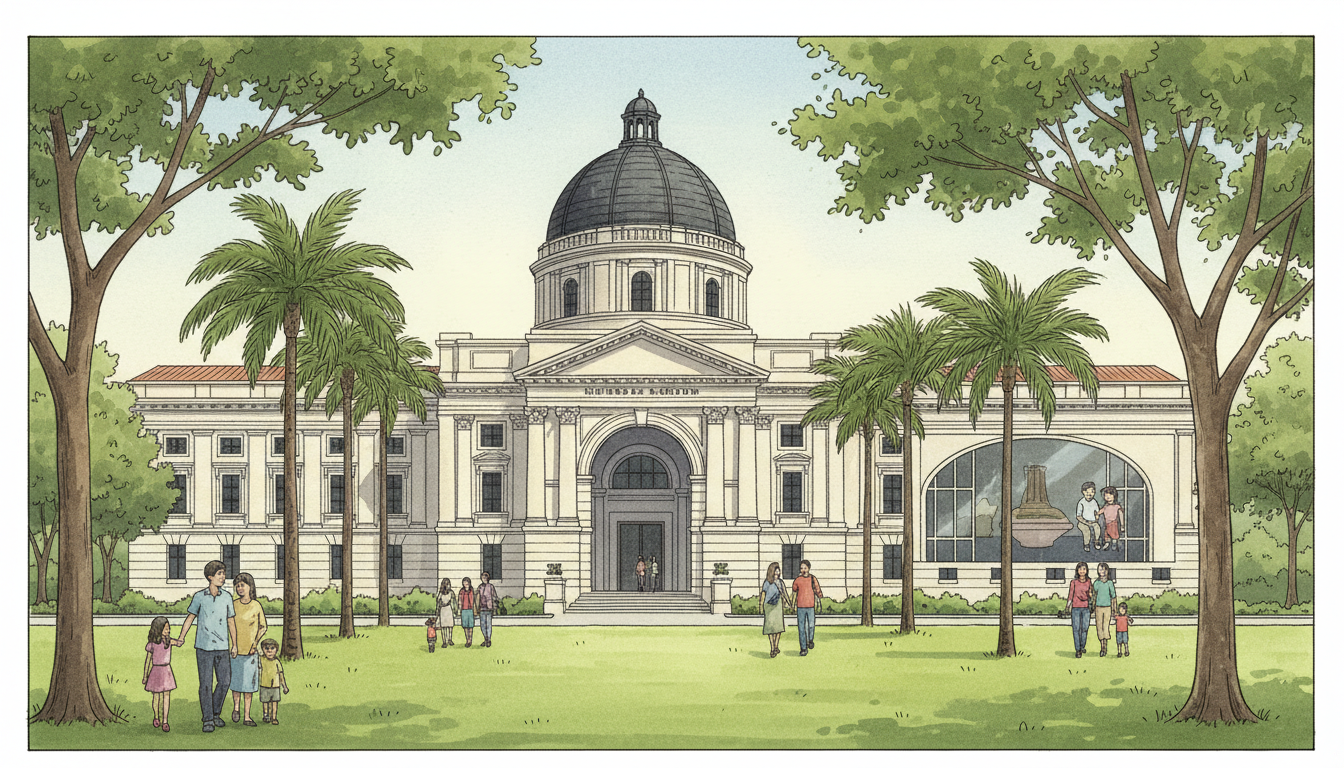
Did you know the historic National Museum building in Bras Basah opened in 1887, even though the Singapore Library and collecting activities were older? That familiar difference between an institution, a proposal and a completed building mirrors the challenge in Secondary 4 G3 History: students must separate an actor’s stated purpose from a decision and its actual consequences.
eduKateSG’s premium three-student History tutorial is held near Sixth Avenue MRT, not in Bras Basah. Each weekly 1.5-hour session uses genuine marked school scripts, correct subject registration and individual correction of source synthesis, historical causation and essay technique. Bras Basah provides a method analogy, not a substitute for the actual SEC case studies.
The class format follows the immutable Clementi small-group reference. For the first 2027 SEC examination, the SEAB G3 directory lists distinct standalone K330 History and K336 combined Humanities (Social Studies, History) specifications.
What does a Secondary 4 G3 History tutorial do?
The tutor begins with the student’s actual registered subject and marked answer rather than another generic worksheet. Did the pupil misidentify a source’s purpose, ignore contradictory evidence, use a country from the wrong syllabus case or write a chronology with no mechanism? These weaknesses require different corrections. In the premium three-student class each learner writes a revised answer independently, then attempts a second unfamiliar task. The 1.5-hour weekly tutorial is near Sixth Avenue MRT, not in Bras Basah.
The child should be able to explain what changed in their own thinking, not merely admire the tutor’s perfect model. Before-and-after scripts are a stronger progress measure than a binder full of notes. The school chapters and latest official examination specification determine all nationally styled practice.
The 2026 O-Level and 2027 SEC cannot be mixed
The Singapore-Cambridge Secondary Education Certificate begins with the 2027 examination. A pupil sitting GCE O-Level History in 2026 follows the appropriate 2026 subject syllabus. For 2027, the published G3 subject directory separates standalone History K330 from Humanities (Social Studies, History) K336. Students from later cohorts must check the specifications applicable to their own examination year rather than assume no changes occur.
Before teaching a full paper, the tutor writes down the examination year, registered code, paper options, prescribed historical cases and instructions on answer medium. A mistaken subject route can waste an entire revision cycle even when the worksheet is academically demanding.
The published K330 standalone assessment structure
The 2027 standalone History K330 course has two History papers, each lasting 1 hour 50 minutes and carrying 50 marks. Each paper contributes half of the final standalone subject grade. Both contain a compulsory 30-mark source-based case study and a 20-mark essay component. This means a candidate needs preparation for two separate historical content fields, not a general one-paper summary.
The tutor separates fact retrieval, source interpretation and essay construction within each paper. A child who has revised only the interwar period remains exposed when the second paper tests later history. Skills overlap between papers, but the prescribed knowledge has to be accurate for each.
What K330 Paper 1 covers
K330 Paper 1 includes the extension of European control in Southeast Asia and challenges to dominance in the period from the 1870s to 1942. British Malaya forms part of the prescribed colonial scope; the specified additional option concerns Dutch Indonesia or French Vietnam. Other content includes the post-World War I peace settlement, Nazi Germany, militarist Japan and developments toward World War II in Europe and the Asia-Pacific.
An essay about the origins of conflict cannot be answered by reciting the history of a school in Bras Basah. The local case is valuable for practising source methods, but the actual paper requires the correct territory, political actors, period and historical evidence.
What K330 Paper 2 covers
The published 2027 K330 Paper 2 addresses the post-World War II world, including the Cold War and decolonisation in Southeast Asia. Students need a sound account of relevant governments, turning points, international reactions and local political movements during the prescribed post-war years. The phrase ‘the superpowers fought for influence’ may introduce context but does not explain a specified Cold War crisis.
In one lesson the tutor might ask for the actor, perceived threat, action and response. In the next, the command word changes to a judgement about relative importance. This tests whether the learner understands the particular episode rather than memorising the same general introduction.
The K330 source case is worth 30 marks
Each standalone K330 paper contains a compulsory 30-mark source-based case study with up to six sources and five sub-questions. Candidates must make defensible inferences, analyse perspectives and evaluate claims using relevant historical context. The final part calls for a judgement using evidence across several documents. Summarising all sources one by one may be accurate reading without adequately addressing the central historical issue.
The tutor begins with a temporary support–challenge–qualification chart and removes it when the child has internalised the method. Source letters are organisational aids, not votes. A persuasive response weighs evidence and explains the overall conclusion instead of treating every source as equally decisive.
The 20-mark K330 essay section requires selection
In Section B of each K330 paper, candidates choose two ten-mark essays from three possible questions. Before writing, the student should identify the required time period, country, issue and command word. Familiarity with a chapter title does not guarantee that a prepared essay answers a changed question. Good choice-making protects limited time and reduces the temptation to insert irrelevant material.
For each possible essay, the pupil drafts a short claim and two relevant historical examples. An ‘explain’ answer requires clear causes and mechanisms. A ‘how far’ response additionally requires a criterion and supported weighing of alternative explanations.
K330’s 2027 digital answer booklet
The published standalone K330 arrangement uses printed question papers and typed responses in a digital answer booklet. Students should practise concise typed writing, consistent source labels and readable paragraph organisation. However, faster typing does not turn an unsupported inference into a good History answer. Historical accuracy, question focus and evidence selection remain the underlying skills.
A tuition typing task should not pretend to reproduce every feature of the real examination platform. The actual permitted functions, equipment and accessibility arrangements are set by SEAB and school instructions. Practise efficient writing without making assumptions about software shortcuts.
The K336 combined Humanities structure
The 2027 combined Humanities (Social Studies, History) K336 subject includes a 1-hour-45-minute Social Studies paper worth 50 marks and a 1-hour-50-minute History paper worth 50 marks. Each contributes half of the combined subject. K336 History has its own compulsory 30-mark source section and 20-mark essay section, including two ten-mark essays selected from three.
Identical-looking source and essay marks do not mean K336’s entire historical scope equals K330. The pupil must use the registered combined syllabus and check its own response-medium instructions rather than copying standalone K330 rules.
K336 Social Studies cannot be omitted
The 2027 K336 Social Studies paper includes a 35-mark source-based section and a 15-mark structured-response section. Its issues involve citizenship and governance, diversity and globalisation within the relevant syllabus. These are not simply spare History questions. Combined candidates need time to learn source evaluation and contextual knowledge for Social Studies as well as the historical topics.
A tutor who teaches only Cold War essays to a combined-Humanities candidate may neglect half the assessed subject. The schedule should reserve appropriate practice for both components and distinguish their question demands.
A K336 revision book must match K336 content
The combined History course concerns prescribed twentieth-century modern-world developments. It should not be treated as K330 Paper 1 with fewer marks. Students should inspect the year’s official case scope before using a standalone revision guide, particularly where colonial Southeast Asian alternatives differ.
The test is simple: show the exact subject title, code, year and relevant units at the top of each school or tuition paper. General slogans about G3 are not enough to establish syllabus compatibility.
Why Bras Basah is a useful teaching analogy
The National Museum’s Stamford Road building opened in 1887, but the library and collecting history that eventually led to it predates the structure. Students encounter the same reasoning challenge in examination sources: an intention may precede a decision, a decision may precede implementation, and consequences may emerge much later.
A museum opening invitation could reliably show an event being announced. It cannot prove the institution served every public need or that all its intended collections were immediately installed. A student learns to choose evidence for the precise proposition at issue.
1823, 1845 and 1887 are different events
The early Singapore Institution and plans for library and museum facilities belong to the nineteenth century, while the Singapore Library operated at the school by 1845. The dedicated Raffles Library and Museum opened in 1887 at Stamford Road. These dates describe institutional origins, earlier operation and a later building rather than competing versions of one event.
We practise a three-column chronology: what was proposed, which institution was actually operating and when new premises opened. This trains the pupil to avoid inventing contradictions between two accurate historical records.
An old museum catalogue can reveal its collector’s priorities
A colonial-era museum record may document an object’s origin or collection while reflecting the research priorities and classifications of curators at that time. The catalogue can be historically important without providing a complete account of what the original object’s community believed.
The tutor asks whose perspective appears in the source, what can be independently checked and which further record might reveal an overlooked voice. This does not make every colonial document false; it makes the evaluation question-specific.
SJI’s building changed uses across different eras
St Joseph’s Institution began as a school in the nineteenth century, while its Bras Basah premises served emergency medical and other functions during the Second World War. The school later moved to Malcolm Road, and the former building became associated with Singapore Art Museum. One architectural shell can remain recognisable despite changing institutions and social functions.
A modern museum photograph cannot show how a hospital ward was arranged in 1942. Source creation date and the event being described must be kept separate. Correctly identifying the building does not mean every inference about its earlier purpose is justified.
Wartime food growing: intention is not measured success
During the Japanese Occupation, the school premises were used as Bras Basah Boys’ School, and heritage accounts describe students growing crops in support of food self-sufficiency. An official campaign can reveal the occupying authority’s objective while a photograph may show a specific activity. Neither alone proves the nutritional condition of every family.
The tutor uses this local illustration before presenting an international source. League declarations, peace agreements and military orders also require separating proposed policy, actual implementation and measurable effects.
Provenance starts with when and by whom
A modern museum caption about an earlier event is a secondary interpretation. A photograph created during the event is more contemporary, but still reflects a particular photographer’s position and chosen frame. A later memoir provides an individual’s recollection that may be valuable yet limited for exact quantitative claims.
The child annotates event date, source date, creator, intended audience and issue being tested. A source’s historical type helps decide how to use it, but no simple rule such as ‘primary means correct’ can settle all questions.
An inference must bridge source detail and claim
The pupil chooses an exact phrase or feature from a source and explains why it supports an interpretation relevant to the question. Copying a dramatic quotation is description, not sufficient inference. Claiming that an entire population shared the depicted speaker’s view usually stretches a single document too far.
The tutor changes the source after one corrected example. A good learner should be able to justify a fresh inference without borrowing the first answer’s specific people and events.
Purpose is not a synonym for reliability
Purpose asks what a creator hoped a particular audience would believe or do in a specific context. Reliability asks how far a stated factual proposition can be trusted. A government publicity document may be persuasive and still accurately record that an initiative was announced.
Students practise both questions separately. Merely saying ‘biased’ avoids identifying the source’s actual content and relevant limits. An evidence-based source judgement is more useful than a permanent label.
Usefulness is defined by the historical enquiry
A political propaganda poster can be useful for examining official messaging while being insufficient for proving public agreement. A museum collection record may help establish an artefact’s provenance but reveal relatively little about its maker’s thoughts. Whether a document is useful depends on which question is asked.
The tutor insists on a complete judgement: useful for determining a named issue because of this clue, but limited for another inference because of missing information. This approach carries directly into examined source case studies.
Comparison should address the same proposition
Two documents may both concern war yet speak about different decisions or populations. Before declaring agreement or disagreement, the student identifies a historical question that both sources genuinely address. Each position is then substantiated by a particular clue.
Saying one is a cartoon and the other a speech identifies formats but not their historical claims. Creator and date can help explain a contrast, but they do not replace the actual comparison.
Corroboration requires an independent evidence path
Two modern websites repeating a newspaper extract may not be two independent witnesses. In a source set, another document strengthens a particular proposition when it has relevant information and a sufficiently distinct origin. Repetition alone is not proof.
The learner states which detail is supported and what remains disputed. Agreement about a date may not verify a whole historical interpretation of causes, motives or significance.
Synthesis is how a source answer becomes judgement
A source case’s final question usually cannot be answered well by repeating each document in order. Group material into evidence supporting and challenging the central claim, identify source limits and reach a reasoned conclusion. Context should clarify the meaning of the evidence, not replace close reading.
The tutor checks whether every paragraph addresses the proposition. Source A through F are not six equal votes; the strength of an account depends on evidence, context, relevance and possible dependence on another source.
British Malaya is not interchangeable with other colonial cases
The K330 colonial question requires accurate treatment of the prescribed country and period. British Malaya, Dutch Indonesia and French Vietnam involved distinct administrators, local political actors and responses to external rule. A pupil should not copy an event from the wrong territory because the general concept of colonialism appears in both.
We use a five-part label—territory, actor, date, decision and effect—before drafting. Good content knowledge makes source analysis more accurate because the student understands what context is plausible.
A colonial essay needs a mechanism between cause and result
Writing that a government wanted access to trade or resources may identify a motive, but does not explain how the interest produced a particular political outcome. The pupil needs an action, institution or policy linking the pressure to change. The historical evidence should show the sequence rather than merely list possible causes.
The tutor asks which actor took which decision, why they chose it and what changed as a result. This repairs fact-dump paragraphs that sound knowledgeable but never answer the causal question.
The Paris Peace Settlement involved competing goals
Post-World War I negotiators had differing national priorities. The final agreement, immediate reactions and later results should not be collapsed into a single account of ‘peace’ or ‘unfairness’. An explanatory paragraph must identify a provision, a relevant actor and its political consequences.
A negotiator’s hopeful speech can reliably reveal the expressed aim, but not independently demonstrate that the long-term forecast came true. We teach students to distinguish contemporary intentions from retrospective judgement.
The League and collective security require actual decisions
An international resolution may announce a response to aggression, but a real historical effect requires considering enforcement, member-state willingness and reactions by the state targeted. The phrase ‘the League was weak’ does not explain a particular case unless its constraints and effects are shown.
An evaluative essay compares institutional limitations with the choices of aggressive states, supported by the prescribed events. The conclusion weighs those mechanisms, rather than declaring both equally important by default.
Interwar Germany and Japan had different paths
Nazi Germany and militarist Japan developed in different political structures and historical conditions. Similar themes such as authoritarianism and expansionism do not allow the student to substitute one country’s leaders, acts or dates for the other’s.
A tutor builds accurate separate timelines before asking for comparison. The final answer must explain a real policy and its mechanism in the country specified by the examination question.
World War II did not look inevitable to every earlier actor
History students know what eventually happened, but contemporary politicians confronted uncertain futures and competing options. A diplomatic statement should be read with knowledge of its immediate setting, not solely through hindsight.
A strong causal answer separates long-term pressures, immediate decisions and responses. It explains how factors raised the likelihood of conflict without claiming that every earlier statement necessarily predicted the final outcome.
Cold War crises need exact actors and responses
The label ‘superpower rivalry’ supplies a general context. An examined question normally needs the particular crisis, perceived threat, leader or government decision, rival reaction and consequence. The correct actor and date are part of the explanation.
The tutor practises actor–action–reaction chains, removes the scaffold and asks the pupil to answer a changed unseen question. A generic prepared essay that ignores the episode is not reliable preparation.
Decolonisation needs the local political movements
Different Southeast Asian territories experienced changing sovereignty through different colonial arrangements, nationalist activities and international circumstances. An answer should identify which movement acted, what authority it challenged and how particular decisions led to political change.
A region-wide statement that people wanted freedom may introduce the theme, but cannot replace the country-specific mechanisms and evidence demanded by a History essay.
Choosing essays is itself an examinable habit
When the candidate may choose two of three questions, they should check the command word, case, period and evidence before beginning. It is wiser to choose a question supported by accurate historical knowledge than one that merely resembles an essay memorised earlier.
A brief plan names a claim, factual episodes and the link to the command. ‘How far’ additionally needs comparative weighting and a justified conclusion. We practise this decision under increasingly realistic time limits.
110-minute practice should not use an invented official split
One possible K330 tutorial strategy allows around 60–65 minutes for the compulsory source case, roughly 20–23 minutes for each selected ten-mark essay and the remaining minutes for checks. This is a teaching suggestion, not an official SEAB allocation.
The tutor adapts timing to the actual problem. A student copying long source extracts needs evidence-selection practice, while someone with poor factual recall needs content repair. Simply asking everyone to type faster may deepen mistakes.
Typing skills and historical skills must develop together
For 2027 K330’s digital answer booklet, concise paragraph planning and clear labels are useful. But typing speed cannot rescue a source answer that ignores evidence or a ten-mark essay written about the wrong country. Students should also follow the latest official examination instructions about available software features.
Timed practice is marked for chronological accuracy, response relevance, argument and completion. The measure is a historically sound answer under realistic constraints, not an impressive word count.
An unseen script demonstrates whether tuition worked
The final step of a correction cycle is a fresh source set or essay focus the child has not rehearsed. Does the pupil select evidence, qualify an inference, identify the right country and reach a supported judgement independently? If not, the tutor returns to the first missing step.
Parents should request a concrete example of an earlier error and a new answer that fixes it. A clear explanation of improvement is more meaningful than an unexamined stack of completed practice papers.
An illustrative weekly 90-minute three-student History session
- 10 minutes: retrieve the correct date, actor and issue for the registered paper.
- 15 minutes: inspect a genuine marked script and diagnose the first weakness.
- 20 minutes: model one missing source or essay reasoning step.
- 20 minutes: each learner writes independently on an unfamiliar task.
- 15 minutes: check evidence, relevance, historical context and judgement.
- 10 minutes: unseen transfer, specific error log and focused home exercise.
The timing varies with the student’s needs. A wrong-country error requires factual revision; a weak synthesis requires a different intervention. Every student should produce their own work so that improvement is observable.
An illustrative six-week final-year diagnostic route
- Week 1: confirm examination year, registered K330/K336 subject and marked errors.
- Week 2: repair chronology and prescribed country knowledge.
- Week 3: practise inference, purpose, reliability and usefulness.
- Week 4: multi-source synthesis with supporting and challenging evidence.
- Week 5: choose, plan and write two ten-mark essay types.
- Week 6: unseen timed work, precise feedback and a renewed correction target.
No six-week schedule can responsibly guarantee an examination grade. The child’s starting knowledge, school assessment timing and evidence of independent progress govern what follows.
Fifteen original fictional source-and-exam drills
All miniature sources below are original fictional teaching prompts. They are not genuine archival documents, quotations from historical people or actual SEAB past-paper tasks. The tutor uses these to practise a reasoning move before checking it on real material from the registered syllabus.
Practice 1: 1887 museum announcement
Fictional source: Fictional official announces opening of a new museum building.
Question: Does the announcement date every earlier collection? Reasoning: No; building and institution differ.
Independent transfer: Check archival collection chronology.
Practice 2: Colonial catalogue
Fictional source: Fictional curator classifies a specimen using colonial labels.
Question: Does the catalogue record all original community voices? Reasoning: No; collecting priorities shape representation.
Independent transfer: Find a different source.
Practice 3: SJI medical instruction
Fictional source: Fictional wartime notice orders conversion of classrooms.
Question: Does the order prove all medical needs were met? Reasoning: No; implementation needs evidence.
Independent transfer: Find hospital records.
Practice 4: Museum renovation forecast
Fictional source: Fictional leaflet depicts a future restored gallery.
Question: Can this show completed construction? Reasoning: No; it is a prospective illustration.
Independent transfer: Look for dated opening evidence.
Practice 5: Malayan colonial policy
Fictional source: Fictional administrator predicts a new rule will increase exports.
Question: Is it verified success? Reasoning: No; separate plan and measured outcomes.
Independent transfer: Identify a local impact record.
Practice 6: Dutch Indonesia petition
Fictional source: Fictional group protests an imposed policy.
Question: Whose views are documented? Reasoning: The petitioners, not every resident.
Independent transfer: Find an independent account.
Practice 7: 1919 negotiating speech
Fictional source: Fictional delegate promises a settlement will secure peace.
Question: Has future peace been proven? Reasoning: No; the promise is not an outcome.
Independent transfer: Compare later events.
Practice 8: League decision
Fictional source: Fictional diplomats condemn aggression and consider sanctions.
Question: Were sanctions enforced? Reasoning: Debate and implementation differ.
Independent transfer: Find evidence of actions.
Practice 9: 1932 economic poster
Fictional source: Fictional party blames all unemployment on one enemy.
Question: Is it proof of the accusation? Reasoning: No, it shows political rhetoric.
Independent transfer: Check economic context.
Practice 10: Japanese expansion memo
Fictional source: Fictional official argues military expansion ensures security.
Question: Can we treat this as the only motive? Reasoning: No; test other factors and choices.
Independent transfer: Identify another historical source.
Practice 11: Appeasement source pair
Fictional source: Fictional 1938 editorials disagree over concessions.
Question: What is comparable? Reasoning: The two positions on the same proposal.
Independent transfer: Explain contextual differences.
Practice 12: Cold War broadcast
Fictional source: Fictional official warns of an imminent opponent attack.
Question: Does warning prove an attack plan existed? Reasoning: No; the allegation needs corroboration.
Independent transfer: Find diplomatic evidence.
Practice 13: Decolonisation campaign
Fictional source: Fictional movement promises immediate prosperity.
Question: What can be inferred? Reasoning: A programme and aspiration, not later results.
Independent transfer: Name outcome measures.
Practice 14: A five-source collection
Fictional source: Fictional set includes competing official claims and a memoir.
Question: How does synthesis begin? Reasoning: Group support and challenge by issue.
Independent transfer: Write a qualified conclusion.
Practice 15: Changed command word
Fictional source: A question changes from ‘explain causes’ to ‘how far was one cause decisive?’
Question: What must change? Reasoning: Add weighed comparison and a criterion.
Independent transfer: Plan the judgement.
Original ten-mark essay: collective security and aggressive decisions
Original practice question: ‘How far were limitations of collective security more important than aggressive decisions in increasing international tension during the 1930s?’ The pupil should define a relative-importance criterion, select appropriate prescribed events and explain how weak enforcement could affect deterrence. A second argument should examine the distinct choices made by aggressive states.
The conclusion needs a weighted judgement, not merely ‘both factors were important’. We change the question’s focus in a follow-up exercise to test historical understanding rather than the ability to reproduce a memorised paragraph.
Original ten-mark essay: Cold War crisis response
Original practice question: ‘Explain how a government’s response to a perceived threat could increase Cold War tension.’ The candidate chooses a prescribed crisis, names the governments and actions, and describes the reaction and consequence. General superpower rivalry alone does not complete the mechanism.
For a ‘how far’ variation, compare immediate leadership choices against longer-standing strategic conditions and reach a justified conclusion using case-specific evidence.
Parent checklist for meaningful final-year progress
- Examination cohort and registered subject are clearly recorded.
- K330 and K336 materials follow the correct prescribed scope.
- Source inference uses a decisive clue and explanation.
- Reliability and usefulness are evaluated for specific questions.
- Final source responses integrate support, challenge and a judgement.
- Essays name correct territories, actors and historical periods.
- Two essay choices can be planned within the paper’s time limit.
- An unseen task shows improvement without a model answer.
Frequently asked questions: Secondary 4 G3 History Bras Basah
Can a combined-Humanities candidate simply follow K330? No. K336 includes compulsory Social Studies and a different History scope; use the proper specification.
Does K330 require typing in 2027? The published standalone K330 syllabus provides printed questions with typed answers in a digital booklet. Official examination instructions determine the precise arrangements.
Is Bras Basah museum history in the SEC paper? Here it is a source-method illustration, not a substitute for the prescribed colonial, interwar or Cold War cases.
Will more practice papers always help? Only if the first recurring error is diagnosed and corrected. Repetition without new independent understanding can preserve the weakness.
Where does the tutorial meet? Near Sixth Avenue MRT; families from Bras Basah should assess the regular journey.
Official examination syllabuses and historical references
Use the 2027 SEAB G3 directory, K330 standalone History and K336 combined Humanities for the relevant paper format. Local historical illustrations draw from the National Museum history, NLB’s Bras Basah schools account, wartime monument records, NLB’s early maps and the former SJI art museum history. A heritage guide does not determine a national-paper content list.
The teaching format follows the immutable Clementi three-student tutorial reference. Parents can bring the child’s actual registered code and marked script to eduKate Singapore for a learning discussion.
Continue the Secondary 1–4 G3 History learning sequence in Bras Basah
Secondary 1 G3 History tuition Bras Basah, Secondary 2 G3 History tuition Bras Basah, Secondary 3 G3 History tuition Bras Basah. Earlier stages build historical enquiry, wartime source evaluation and upper-secondary causal writing. Secondary 4 adds precise SEC routing, multi-source judgement and timed essay selection.