
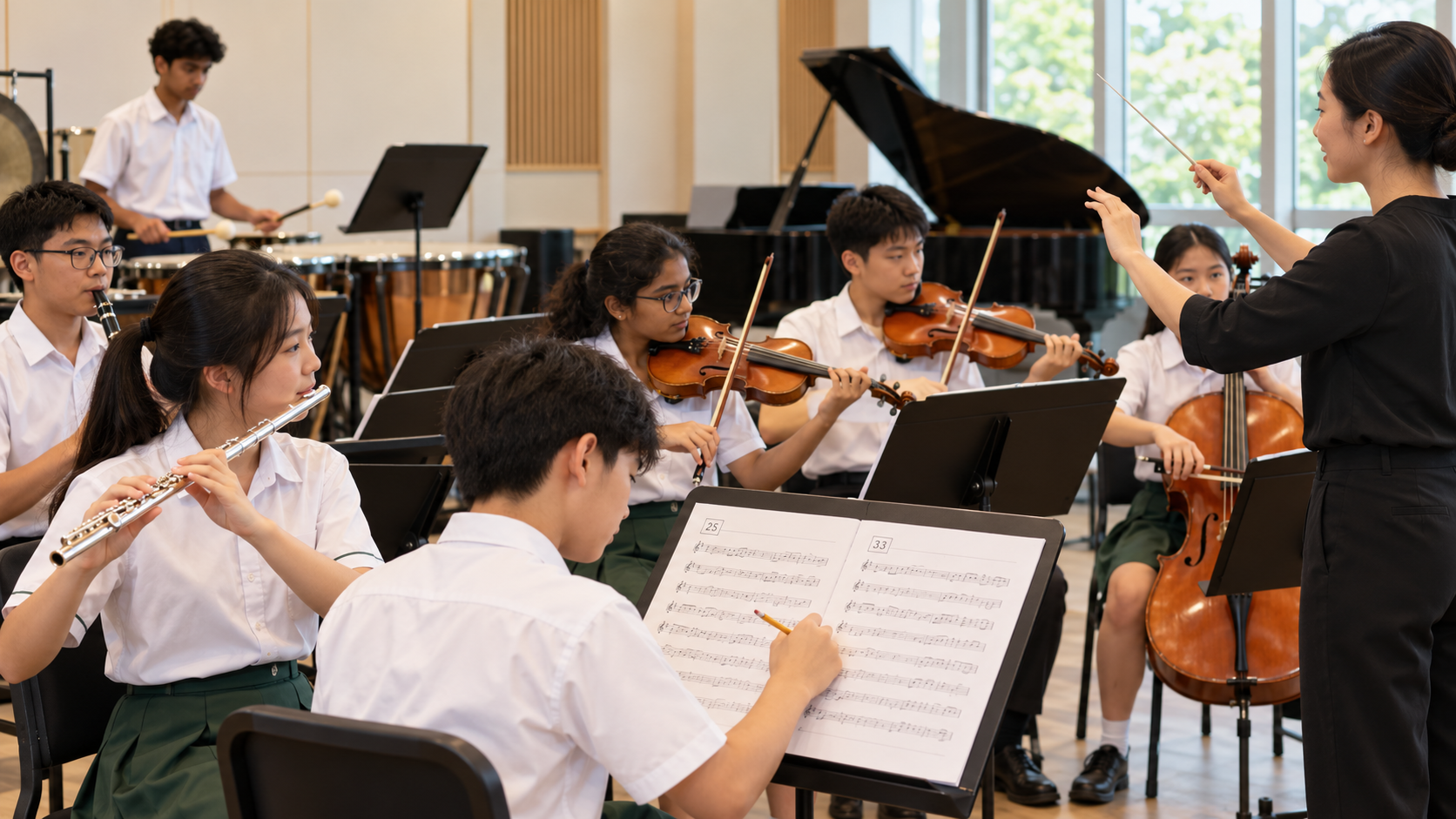
Singapore schools planning arts education for 2027 still have an important application deadline to consider. The National Arts Council (NAC) Artist-in-School Scheme (AISS) has a closing date of 20 November 2026 for projects starting from Term 2 on 22 March 2027. The Term 1 deadline was 12 October 2026 and has already passed. Applications must be submitted by schools, not individual parents booking a subsidised private lesson.
AISS supports sustained collaboration between schools and practicing arts professionals. The minimum duration is twelve hours, and activities should be co-designed for learning rather than treated simply as a visiting performance. The current scheme includes an Enhanced AISS track supporting Traditional Arts and Multicultural Arts projects, alongside provision for mainstream and Special Education (SPED) schools.
This Singapore 2027 guide helps school leaders, art and music teachers, students, parents and community artists understand the correct application timeline, what a good artist partnership achieves, how an accessible SPED activity may differ from a mainstream project and what kind of evidence demonstrates real learning. Funding amounts and individual grant approval depend on the official guidelines and assessment, so no school should assume that submitting an application secures an automatic fixed amount.
Reviewed 31 October 2026. Independent eduKateSG educational information, not an announcement of grant award, construction-site access or guaranteed booking. Use the latest responsible-agency notice for current deadlines and operating arrangements. The featured illustration is a conceptual arts or heritage image, not a photograph of the future building.
Confirmed information and dates
- NAC’s AISS 2027 application cycle opened on 10 August 2026 and applications must be made by schools.
- For projects starting from Term 1, 11 January 2027, the published closing date was 12 October 2026 and is already past as of 31 October.
- For projects beginning from Term 2, 22 March 2027, the published application deadline is 20 November 2026.
- NAC plans to notify schools of application results in batches from October 2026 through February 2027.
- AISS supports co-designed artist–school partnerships with a minimum of twelve hours, not just a one-off guest performance.
- Mainstream AISS outcomes include learning about artistic practice, non-performance roles and using arts learning for broader educational goals.
- Enhanced AISS adds dedicated support for programmes connected to Traditional Arts and Multicultural Arts in Singapore’s communities.
- SPED-AISS supports appropriate artistic learning, broader educational goals and teacher skills for adapting arts pedagogy to student needs.
What residents and families should not assume
- A 2027 project year does not mean every application remains open through 2027: the two published deadlines fall in October and November 2026.
- Parents and students cannot independently submit an AISS school grant application as though it were a direct household subsidy.
- Twelve hours is the minimum partnership commitment, not the maximum, a guarantee of one twelve-hour day or an entitlement to a particular artist.
- Enhanced AISS is a dedicated track; not every performance involving different cultures automatically receives additional funding.
- An approved grant, amount and subsequent programme timetable depend on NAC’s current assessment and actual school arrangements.
- AISS does not require every student to be a stage performer. Technical, critical, design and cultural skills can be legitimate learning outcomes.
Contents: choose the issue relevant to you
- 1. The most urgent date is 20 November 2026
- 2. What Artist-in-School actually funds
- 3. Why the twelve-hour minimum matters
- 4. Schools apply, not individual families
- 5. What counts as an arts professional?
- 6. Arts learning can build more than performance skills
- 7. Traditional Arts in the enhanced track
- 8. Multicultural Arts is more than placing cultures side by side
- 9. SPED-AISS has a distinct educational purpose
- 10. The teacher and artist should co-design the work
- 11. Build a coherent project rather than a list of activities
- 12. Evaluating arts learning beyond a final show
- 13. How to budget without inventing a grant amount
- 14. Applications must include relevant project evidence
- 15. Results are expected October 2026 through February 2027
- 16. A four-week preparation and parent-information plan
This guide separates what has been officially announced, which steps still require later approval or construction, and what a school or resident can usefully do now. Examples below are hypothetical and illustrate the effect of a deadline, design proposal or operating requirement.
1. The most urgent date is 20 November 2026
NAC’s official page for the 2027 AISS cycle gives two dates rather than one continuous application period. Term 1 projects beginning from 11 January 2027 had an application deadline of 12 October 2026, which is already past. For programmes that start from Term 2, 22 March 2027, the application closes on 20 November 2026. A school reading a general title such as ‘Arts Grants 2027’ should therefore not wait until the intended teaching term begins before applying. The school—not a student or artist acting independently—must complete the official application.
A practical Singapore situation
Illustration: A teacher discovers the scheme in late October and plans a cultural-arts workshop for April. The Term 2 application period may still be relevant; the Term 1 cycle is already closed.
What to check and do
Confirm whether the proposed project can legitimately begin from Term 2, then check the current NAC form and supporting documents well before 20 November.
2. What Artist-in-School actually funds
The Artist-in-School Scheme is designed to deepen students’ learning through sustained partnerships between schools and professional arts practitioners. Rather than paying for an arbitrary external performance, it supports artists and educators who jointly design projects with clear intentions. An artist may bring specialised craft knowledge, creative methods or production experience that complements the school curriculum. Teachers help ensure the learning is age-appropriate, inclusive and meaningful for their actual students. The scheme provides funding support subject to the official guidelines, not a general arts shopping allowance for all household purchases.
A practical Singapore situation
Illustration: A school wants a famous singer to appear briefly at assembly and describes it as an AISS project without any learning sequence.
What to check and do
Consider whether the partnership offers at least twelve hours of substantive co-designed education. A one-off entertainment event is not automatically the same thing.
3. Why the twelve-hour minimum matters
NAC specifies that the sustained artist–school partnership must include at least twelve hours. This prevents the purpose of the scheme from being reduced to a short visit that leaves no time for exploration, practice and reflection. A useful twelve-hour learning sequence might have several workshops covering observation, technique, experimentation, feedback and a culminating explanation. The exact timetable depends on the grant, student group and professional discipline; there is no requirement that all hours occur in a single continuous session.
A practical Singapore situation
Illustration: A Primary 5 group spends two hours experimenting with rhythms and wants to make a concert that week. It may need additional sessions to learn the underlying ideas and practise purposefully.
What to check and do
Design a realistic multi-session sequence that genuinely meets the minimum and allows the students’ own learning to develop.
4. Schools apply, not individual families
The AISS website explicitly states that applications must be submitted by schools. Parents may encourage a school to explore the opportunity or provide feedback about useful learning themes, but they do not become the grant applicant by paying an artist privately. Similarly, an artist cannot assume that contacting NAC with an idea alone secures approval for a particular school. The participating institution must be willing to co-design the project, meet the documentation requirements and take responsibility for delivery and learning evidence.
A practical Singapore situation
Illustration: A parent finds a talented local visual artist and wants to obtain an AISS grant to pay for a private class held at home.
What to check and do
That is not the school-based application route. Discuss a suitable school partnership with the relevant teacher or leadership first.
5. What counts as an arts professional?
NAC describes arts professionals broadly: musicians, dancers, writers, sculptors, visual and performance artists, and people working in critical or technical arts roles such as lighting designers and sound designers. This matters because arts learning is wider than learning to sing or draw. A student may deepen understanding by exploring how a production is organised, how a script is edited, how an audience interprets performance or how technical choices shape an artistic experience. The school should establish the professional’s relevant practice and suitability for the age group.
A practical Singapore situation
Illustration: A theatre teacher wants pupils to understand stage lighting rather than only perform an acting scene.
What to check and do
A lighting practitioner may be an appropriate arts collaborator under the published scope. Design a project showing the actual learning value.
6. Arts learning can build more than performance skills
Mainstream AISS objectives include deeper appreciation of art forms, awareness of non-performative roles and broader educational outcomes. A well-designed workshop can support confidence in expressing ideas, collaboration, respectful listening, planning and critical reflection. However, these benefits are educational aims, not guaranteed personal transformations from attending a few sessions. A school should identify specific outcomes it can observe and assess, rather than promise that all participants become professional artists or instantly improve every academic subject.
A practical Singapore situation
Illustration: A Secondary 2 student helps design a soundscape for a short drama and learns to interpret feedback and control timing.
What to check and do
The success can be explained through planning, revision and teamwork rather than exaggerating claims about examination grades.
7. Traditional Arts in the enhanced track
Enhanced AISS includes dedicated funding for Traditional Arts projects rooted in practices, techniques and cultural knowledge associated with Singapore’s major ethnic groups. Such learning can involve music, dance, theatre, craft, oral traditions or other professionally taught practices. The goal is understanding and appreciation, not reducing cultural heritage to a costume or short tourist performance. Educators should collaborate with practitioners who can explain historical context, appropriate conduct and the meaning of what students are asked to do.
A practical Singapore situation
Illustration: A school organises an arts module based on an ethnic tradition but plans to use generic online clips rather than involve a relevant practitioner.
What to check and do
A qualified artist partnership can offer context and authentic technique. Follow NAC’s specific enhanced-track guidelines when constructing the application.
8. Multicultural Arts is more than placing cultures side by side
The Enhanced AISS Multicultural Arts strand aims to strengthen students’ appreciation of Singapore’s multicultural identity and traditions through artistic participation. It is not simply a competition to display four different costumes. Valuable learning can compare how artists collaborate, how musical rhythms interact, how stories express place and belonging, or how cultural practices change when communities live together. Respectful cross-cultural work recognises both distinctions and shared experiences without assuming all members of a cultural group practise the same art.
A practical Singapore situation
Illustration: A group creates a multicultural showcase by copying stereotyped motifs from the internet without speaking to arts practitioners.
What to check and do
Co-design with knowledgeable artists and invite students to explain sources and choices rather than depend on surface-level decoration.
9. SPED-AISS has a distinct educational purpose
NAC also provides AISS pathways for Special Education schools. Its stated objectives include deepening artistic knowledge in ways aligned with the curriculum, supporting broader educational outcomes and developing teachers’ capacity to teach arts effectively to learners with different needs. Accessibility matters: communication modes, sensory experiences, physical participation and attention requirements may differ. A meaningful SPED project is not a simplified copy of a mainstream performance, but a carefully adapted learning experience developed with teachers and relevant artists.
A practical Singapore situation
Illustration: A student with limited verbal communication engages deeply through rhythm and tactile materials yet finds a fast-paced theatrical showcase unsuitable.
What to check and do
Work with SPED staff and the artist to identify safe, appropriate expressive and learning approaches. Review the separate SPED-AISS guidelines.
10. The teacher and artist should co-design the work
Co-design means both educator and practitioner shape the project, rather than one party arriving with a predetermined commercial workshop and simply repeating it. The teacher knows student development, learning goals, assessment context and school schedules. The artist brings domain-specific expertise and creative practice. Together they can decide what learners will explore, how progress can be observed, how challenges are adapted and how feedback will be used. This collaboration is a defining feature of the scheme.
A practical Singapore situation
Illustration: A photographer suggests a technical lesson using equipment that young pupils cannot operate safely without significant adaptation.
What to check and do
The teacher and artist can modify the tools and tasks without discarding the artistic principle. The application should explain why the revised learning design works.
11. Build a coherent project rather than a list of activities
A strong AISS proposal can state a clear student-learning question, a sequence of sessions, a suitable arts practitioner, estimated hours, intended evidence and a realistic final reflection. For example, students might begin by observing a traditional performance, analyse a technique, practise in small groups, develop a short piece, exchange feedback and explain the cultural or technical choices they made. Those steps are a possible educational structure, not an official mandatory format or guarantee of grant approval.
A practical Singapore situation
Illustration: A school lists a dance workshop, a music talk and a poster competition without showing why the activities form one learning experience.
What to check and do
Connect the sessions through an identifiable idea and describe how students’ understanding should deepen across the partnership.
12. Evaluating arts learning beyond a final show
A polished performance can be rewarding, but the scheme’s educational value need not depend on creating a concert-quality result. Teachers may examine process journals, student explanations, sketches, design changes, group listening, rehearsal notes or participation in a supportive environment. Assessment should respect the art form and students’ capabilities. A school should not make unsupported claims that a project increases grades by a specific percentage, or that every student must feel comfortable performing publicly.
A practical Singapore situation
Illustration: A learner contributes careful sound-design work backstage but dislikes appearing on stage.
What to check and do
The student’s role can still demonstrate artistic understanding. A suitable evaluation recognises the legitimate non-performing contribution.
13. How to budget without inventing a grant amount
The NAC website refers schools to the official 2027 AISS and SPED-AISS Grant Guidelines and application template for funding and reporting details. Without the actual approved grant letter, a school should not assume that NAC will pay 100% of all costs, cover unrelated excursions or reimburse any artist fee quoted. Schools should read eligible cost rules, reporting terms and deadlines, and should confirm whether the Enhanced AISS strand applies. The grant application is an assessed request rather than a blank cheque.
A practical Singapore situation
Illustration: A teacher sees a third-party advertisement claiming all AISS projects receive an automatic S$20,000 award.
What to check and do
Use the actual 2027 NAC grant guidelines and proposed budget. Do not present an amount as guaranteed without award documentation.
14. Applications must include relevant project evidence
NAC provides an online application and resources for planning and reporting, including the 2027 template, briefing materials and grant guidelines. The process helps applicants describe the artist-school partnership, intended participants, objectives and financial plan. Schools should check the precise fields of the current application rather than copy a previous-year form without review. Incomplete information may create avoidable delays or make it difficult to establish that the programme meets the education criteria.
A practical Singapore situation
Illustration: A school has a promising artist partner but has not agreed on the duration or cost breakdown before the November deadline.
What to check and do
Resolve the core programme and budget details with the artist and use NAC’s current forms. Seek official clarification rather than insert estimates presented as facts.
15. Results are expected October 2026 through February 2027
NAC says schools will be notified of 2027 AISS application outcomes in batches from October 2026 to February 2027. That is an administrative notification window, not a promise that every applicant receives a decision on the same day. Schools should also avoid starting unapproved expenditure on the assumption of a favourable outcome. If an arts professional or school must reserve dates before confirmation, they should make the provisional status clear and understand any cancellation or financial conditions.
A practical Singapore situation
Illustration: A school schedules a March programme with a professional artist and announces the grant as awarded before receiving a decision.
What to check and do
Label the booking and budget accurately until the written result arrives. Update parents and teachers when the programme is genuinely confirmed.
16. A four-week preparation and parent-information plan
Week one: identify whether the school is eligible and whether Term 2 timing is feasible before 20 November 2026. Week two: choose an arts professional and agree on a meaningful learning question. Week three: prepare a twelve-hour-or-longer sequence with accessibility, safety and student evaluation in view. Week four: finalise the application, budget and approval responsibility, then prepare a clear explanation for families about what happens only if the school is selected. For the 2027 term itself, teachers can revisit the plan with students and respond to actual learning needs.
A practical Singapore situation
Illustration: A parent wants to support a proposed school arts project but cannot find the application form.
What to check and do
Share the NAC scheme page with the school rather than attempt to submit an individual household grant application.
A four-week preparation plan
- Week 1 — Confirm the timetable: Identify which 2026 deadline or 2027 start applies and save the relevant official announcement.
- Week 2 — Review real needs: Discuss educational outcomes, accessibility or neighbourhood access with the people who will actually use the programme or space.
- Week 3 — Document what is known: Gather the project information, partner details, available services, safe routes or learning objectives, without treating projections as completed results.
- Week 4 — Make an achievable next step: Submit any legitimate school application before its real deadline, or use current community facilities while future construction is underway.
How to verify a future-year headline
The year 2027 can mean different things: a school term when an awarded project begins, a building construction phase, an application deadline during the preceding year or the start of an operating service. These milestones cannot be substituted for each other. A government page can give a credible target while leaving the specific booking date, grant amount or local site management to future notices.
Parents and residents can make a short note identifying the decision, the official source, the confirmed date and the missing information. That prevents a promotional description from being repeated as a service guarantee and makes it easier to correct an older timeline when the authority issues an update.
A resident and school checklist
- Identify the public agency and its latest dated page.
- Distinguish announced project or programme details from live access and booking.
- Check who may submit an application and who is merely a participant.
- Preserve deadlines that fall in the previous calendar year.
- Ask about genuine accessibility, age or eligibility conditions.
- Keep future spending and venue projections out of the current budget unless confirmed.
- Use present-day facilities or teaching arrangements where the future option is not operational.
- Respect the rights, dignity, cultural traditions and personal information of participants and neighbours.
- Do not circulate an unofficial registration or payment link.
- Recheck later specific schedules, grant decisions and site notices before acting.
Frequently asked questions
When does the 2027 AISS application close for Term 2?
20 November 2026 for projects starting from 22 March 2027.
Is the Term 1 2027 window still open on 31 October 2026?
No. The Term 1 deadline was 12 October 2026.
Who can apply?
Schools submit the official AISS application.
Can parents claim the AISS grant for private tuition?
No. It is a school-led artist partnership scheme, not a household course voucher.
How long must the partnership be?
At least twelve hours under the published scheme.
Must students perform publicly?
No. Non-performance roles, critical learning and broader educational outcomes can be part of the project.
What is Enhanced AISS?
A track offering additional support for Traditional Arts and Multicultural Arts programmes.
Can SPED schools apply?
Yes. NAC identifies SPED-AISS objectives and separate support resources.
Who qualifies as an arts practitioner?
Relevant practising artists and arts professionals, including technical and critical roles, can be considered under the scheme.
When are outcomes announced?
NAC says October 2026 through February 2027 in batches.
Is funding automatic after submission?
No. Individual proposals are assessed under grant guidelines.
Where are the official templates?
On NAC’s AISS and school arts teacher pages, with the 2027 guidelines and current form.
Official primary sources
These official links support the present timetable and scope. The responsible agency’s later notices and actual decisions supersede this editorial explanation.
- NAC: Artist-in-School Scheme and exact Term 1/2 deadlines
- NAC: School Arts Teacher guidance and 2027 application resources
- National Arts Council: Arts funding and programme overview
- NAC: Explore the arts and public programmes
- MOE: Student learning and holistic education context
Related eduKateSG reading
- Singapore 2027 | Sentinel Cybersecurity Student Applications
- Singapore 2027 | SEC Exams and Student AI Literacy
- Singapore 2027 | Community Club AI Courses and Local Programmes
Conclusion: turn Singapore’s 2027 plans into useful knowledge
Education and community planning work best when good intentions are matched by accurate dates, meaningful participation and a clear understanding of what has actually been funded, built or opened. An announced programme may be valuable long before every practical detail is finalised, but residents should never have to guess whether a school can apply or whether a building is ready.
Use official information, help people prepare in ways that fit their circumstances, and update the plan when new evidence arrives. Clear and useful public information can support both neighbourhood connection and stronger learning.