
A Singapore arts collective wants funding for a new performance and sees three different amounts on NAC’s website: a S$50,000 Creation Grant, a S$100,000 Presentation & Participation ceiling, and a percentage cap that depends on whether the applicant is a nonprofit or a commercial company. The figures are not interchangeable. One scheme funds making the art, another presents it to audiences, and the dates of application and first public presentation determine eligibility.
The Gold Standard of NAC Arts Grant Application Services is a public pathway from the correct project and applicant category to a realistic evidence-based budget, on-time submission, fair assessment, accountable funding and truthful completion reports. It should enable Singapore artists to create and share work without promising a grant merely because a proposal is culturally valuable or a portal accepted its form.
The National Arts Council’s 2026 funding directory shows that the Creation Grant 2026 is closed, while the next Presentation & Participation Grant application closes on 15 December 2026 at 11:59pm Singapore time for projects meeting the published future start dates. NAC merged the old Production and Extended Play grant streams into General P&P from 16 April 2026, raising that programme’s ceiling to S$100,000 per applicant per financial year.
From grant fit and budget to a finished accountable arts project
The chapters separate Creation, General Presentation & Participation, Publishing, current cycles and eligible costs. They then follow OurSG Grants submission, evidence review, award conditions and project closure.
1. Start with the art project, not the maximum grant
An artist may need time to compose an original work, a publisher may need funds to print an arts book, and a performance company may need a venue, technicians and audience outreach. Those are different project stages. Searching for the largest funding cap before defining the actual task can lead to the wrong application.
The National Arts Council provides distinct Creation, General Presentation & Participation, Publishing P&P and other grants. The first government-service decision is which activity and applicant category fit the current scheme. A Gold Standard intake asks what will actually be created, presented or developed and when the work begins.
Back to NAC grants chapters · Next chapter
2. Explain the Creation Grant’s genuine purpose
A theatre producer who already has a completed script and needs a public run does not necessarily need the same funding as the writer developing a new script from early research. Treating production and creation as synonyms misstates the budget and project stage.
NAC’s Creation Grant supports established practitioners and collectives developing original arts works, adaptations, translations and prototypes across qualifying disciplines. It can support the creative development period for up to eighteen months. Finished public production and presentation generally belong to later or other eligible schemes.
Back to NAC grants chapters · Next chapter
3. Do not describe Creation 2026 as still open
Someone checking the NAC website in October 2026 may see an older application guide with a May deadline and assume it remains possible to apply for a project starting next week. That would be misleading.
The FY2026 Creation Grant closed on 15 May 2026, with notification scheduled by 15 September 2026 and eligible project commencement no earlier than 31 October 2026. The service should mark that cycle closed and direct prospective applicants to officially announced future cycles rather than invent a new open call.
Back to NAC grants chapters · Next chapter
4. Use the Creation Grant’s applicant requirements
A collective may have strong artistic merit but no clear eligible applicant, while an international guest artist might assume any Singapore performance makes them eligible for every local creation scheme.
NAC’s Creation Grant is for Singapore Citizens or Permanent Residents applying as eligible individuals or collectives with a strong artistic track record. It gives priority to practitioners resident in and actively contributing to Singapore. A Gold Standard service checks eligibility separately from evaluating artistic merit.
Back to NAC grants chapters · Next chapter
5. Show the Creation Grant maximum accurately
An applicant may have a development budget of S$100,000 but assume that because the work is original, all expenses will be underwritten by Government.
The published Creation Grant is capped at S$50,000 per applicant for eligible direct creation costs, subject to assessment and terms. A maximum is not an award guarantee. The form should distinguish realistic eligible costs, the amount requested, other sources of funding and the actual approved amount.
Back to NAC grants chapters · Next chapter
6. Define the Presentation & Participation route
A musician recording tracks, a company staging an exhibition and a festival organising a cultural event may seek support for bringing work to audiences rather than only creating it privately.
NAC’s General Presentation & Participation Grant supports eligible music recording, exhibitions, performances, festivals and conferences delivered physically, digitally or in hybrid form. The process asks for the actual first event date or relevant music-release/showcase milestone, and the applicant’s project proposal and budget.
Back to NAC grants chapters · Next chapter
7. Apply the April 2026 funding merger
Old NAC pages may show a separate Production Grant or annual Extended Play music grant. A musician could waste time applying to a withdrawn route or miss a live quarterly cycle.
From 16 April 2026, NAC merged the Production Grant and the Extended Play or Full-Length Album grant activities into P&P (General). The current General P&P cap is S$100,000 per applicant per financial year. A service directory should mark old streams replaced rather than offer obsolete application buttons.
Back to NAC grants chapters · Next chapter
8. Distinguish individuals, collectives, nonprofits and for-profits
A small arts nonprofit and a commercial production company may propose equally valuable exhibitions but have different allowed funding proportions. Applying one seventy-percent rate universally could overstate public support.
Under the 2026 General P&P rules, eligible individuals, collectives and nonprofit organisations may seek up to 70% of a realistic eligible budget, while for-profit organisations may seek up to 50%. Both remain subject to the S$100,000 annual applicant cap. Real awards depend on NAC assessment, not simply arithmetic.
Back to NAC grants chapters · Next chapter
9. Show the relevant current General P&P deadlines
An artist planning an April 2027 production should not rely on the fact that another project received an earlier August 2026 grant decision. Application windows are specific, and each closes at a stated Singapore time.
For the current General P&P cycle, applications are due by 15 December 2026 at 11:59pm Singapore time, with notification by 26 February 2027 and projects to take place on or after 15 April 2027. The previous August 14 cycle has closed, and its planned notification is 30 October 2026.
Back to NAC grants chapters · Next chapter
10. Define project start date by the real public event
A rehearsal or booking may occur earlier than opening night, while the grant table refers to a defined project start. Confusing internal planning with public presentation can misstate whether the grant’s period is eligible.
NAC says P&P (General) normally uses the first performance, exhibition or equivalent event as project start. For music recording, both the release of tracks and launch showcase must occur on or after the eligible date under current requirements. The applicant should use the official definition rather than choose a convenient contract date.
Back to NAC grants chapters · Next chapter
11. Distinguish Publishing P&P from General P&P
A writer proposing a new literary anthology might see the General P&P grant’s seventy-percent cap and apply the same rate to printing and distributing a book. The publishing funding route has its own percentage and eligible output requirements.
The Publishing P&P Grant supports specified print and digital arts publications, translation, marketing and publicity. It is capped at 50% of qualifying budget and up to S$100,000 per financial year per applicant. Its 2026 application windows align with the listed P&P cycles, but the publication date is the relevant start date.
Back to NAC grants chapters · Next chapter
12. Identify the publishing genres accurately
A food recipe catalogue or corporate brochure is not automatically eligible for a literary arts publishing grant merely because it is printed beautifully. The proposed publication must match NAC’s supported arts disciplines.
NAC lists fiction, poetry, children’s and young-adult literature, graphic novels, literary nonfiction and relevant literary journals, along with certain visual arts books, scripts and music scores. The programme should show the eligible genre and evidence of artistic merit without implying that every educational or commercial marketing print run qualifies.
Back to NAC grants chapters · Next chapter
13. Understand the Tote Board Arts Fund as another scheme
An arts group running an inclusive community programme might better fit the Tote Board Arts Fund than a professional concert-presentation grant, depending on the audience, applicant and actual objectives.
NAC lists distinct Tote Board Arts Fund cycles and programme conditions. As of October 2026 the next displayed application deadline is 15 December 2026, with notification scheduled for 15 March 2027 and eligible projects from 1 April 2027. The portal must route projects according to the governing guidelines rather than use a single generic arts grant label.
Back to NAC grants chapters · Next chapter
14. Do not promise the Cultural Medallion Fund to all applicants
A new artist may read that a special arts funding stream has no fixed application cycle and interpret that as universal year-round access to public funds.
NAC’s Cultural Medallion Fund is limited to eligible Cultural Medallion recipients. The no-fixed-cycle route also carries timing requirements, including proposals at least eight weeks before project start. A good eligibility page names both conditions before a non-recipient invests time in a full application.
Back to NAC grants chapters · Next chapter
15. Keep artist eligibility separate from organisation eligibility
A festival organiser may have a registered Singapore arts company, while an artistic collective operates without incorporation and submits through an individual representative. Their legal applicant identities and documents are not identical.
NAC supports individuals, organisations and collectives under the eligible grant categories. The service should ask who has actual responsibility for grant spending, the appropriate government login and which programme-specific Singapore residency or registration criteria apply. A company’s ACRA number alone is not a guarantee of artistic eligibility.
Back to NAC grants chapters · Next chapter
16. Choose the correct official OurSG Grants portal
An artist may receive a consultant’s application form by email and assume submitting that attachment is enough. The Government’s prescribed digital portal is the actual route to an assessed grant.
NAC requires applications via the OurSG Grants portal, with the correct authenticated login and required electronic templates. For the published P&P cycle, late applications by email or hardcopy are not accepted. A Gold Standard service distinguishes a saved draft, a completed on-time submission, review queries and a formal award.
Back to NAC grants chapters · Next chapter
17. Give Corppass administration to the right person
An arts organisation may ask a freelance designer to prepare the application, but that person should not automatically have authority to bind the legal entity to grant terms or expose internal financial records.
NAC provides an OurSG Grants guide for Corppass administrators alongside applicant instructions. The business should grant appropriate authorised roles, have responsible officers review declarations and keep the financial signatory separate from an unapproved third-party helper. Login access is not evidence of grant eligibility.
Back to NAC grants chapters · Next chapter
18. Use the official proposal rather than a promotional pitch alone
A social-media reel can show compelling artwork but may not explain the creative process, target audiences, public engagement or actual delivery milestones required for fair grant assessment.
NAC uses prescribed project-proposal and budget templates and may request artistic samples, portfolios and collaborators’ CVs depending on stream. A Gold Standard form should connect proposed deliverables, methods, dates and people to a coherent plan, rather than reward only marketing polish.
Back to NAC grants chapters · Next chapter
19. Give budgets honest eligible and ineligible rows
A production may include rehearsal space, technicians, venue rent, travel and promotional material. Not all requested amounts necessarily qualify as directly attributable project costs under a particular scheme.
NAC defines funding against realistic direct costs within the current grant guidance. The submission should show the original total budget, relevant qualifying lines, committed income, other funding and requested percentage. A projected profit margin or unrelated business overhead must not be quietly added as eligible spending simply to reach a higher cap.
Back to NAC grants chapters · Next chapter
20. Declare other public and private support accurately
A group may obtain a sponsorship, ticket revenue and another government grant for the same programme. Hiding one funding source can mislead the public funder about the actual financial need and the risk of double funding.
The OurSG Grants budget should record other income and support as required by its conditions. A reliable application process asks the project team to reconcile sponsorship agreements and grant awards before approval, and provides an update route when real financing changes.
Back to NAC grants chapters · Next chapter
21. Make timeline readiness a real assessment input
An artist might plan a March show while applying in December to a P&P cycle whose earliest eligible show date is April. Even the best artistic proposal cannot override a published commencement boundary.
A Gold Standard calendar calculates the first event or publication date against the correct application round, and should flag ineligible early starts before filing. It should not promise retrospective public funding for a finished show unless the particular scheme explicitly allows it.
Back to NAC grants chapters · Next chapter
22. Handle collaborations with evidence, not assumptions
A theatre producer can name a venue, international performer or community partner in the proposal before those people confirm availability. A carefully managed grant application should identify which arrangements are real and which remain tentative.
NAC says applicants waiting on partner information should apply by the deadline and indicate clearly what remains outstanding, then supply the updates promptly. The process should preserve correspondence and any changed scope, without inventing letters of commitment or treating a collaborator’s website profile as signed consent.
Back to NAC grants chapters · Next chapter
23. Include the self-employed applicant’s financial evidence
A self-employed artist may not have audited company accounts or a regular monthly employer payslip. That does not make the individual ineligible for the grants that permit individual practitioners.
The 2026 General P&P instructions call for additional evidence for SEP applicants: the latest IRAS Notice of Assessment or consolidated income statement, CPF employment or self-employed history covering six months, and a declaration about not concurrently holding full-time employment. A service should present this conditional checklist rather than ask every nonprofit to upload personal CPF records.
Back to NAC grants chapters · Next chapter
24. Require relevant artistic track record and work samples
An applicant can describe a future project convincingly but reviewers still need evidence of ability to create or present it at the proposed scale. Different programme categories may request different proof.
For Creation Grant 2026, NAC requests at least two samples of past relevant work plus CVs, creative references, project proposal and budget. The service should name actual missing pieces and give a truthful correction route; it must not submit unrelated images or claim an unrecorded performance happened.
Back to NAC grants chapters · Next chapter
25. Recognise the 2026 Audience Development Playbook declaration
An artist may complete a saved application template from early 2026 and miss an additional reporting field introduced later in the year.
From 15 August 2026, NAC requires relevant grant applicants to indicate both intent to use and eventual use of the Audience Development Playbook at the application and reporting stages, for programmes including Creation and P&P. The agency said the assessment criteria were unchanged. A Gold Standard form shows the current declaration rather than misrepresent it as a new guaranteed scoring bonus.
Back to NAC grants chapters · Next chapter
26. Avoid double-counting the annual funding cap
A collective might stage two separately eligible projects within the same financial year and assume each receives its own independent S$100,000 maximum. The published cap is by applicant per financial year.
NAC’s General P&P and Publishing P&P guidance refers to an annual applicant cap. The system should show total grant funding already received or sought for the relevant stream and financial year, and apply the actual approved amounts, not simply the budget of each isolated proposal.
Back to NAC grants chapters · Next chapter
27. Read the result as conditional approval, not a payment guarantee
An application can be eligible and still not receive funding after merit, budget and priorities are reviewed. A shortlisted project may need further information or confirmation of conditions.
An accurate OurSG Grants status distinguishes submitted, received, under assessment, clarification requested, awarded and accepted grant terms. Applicants should never commit suppliers based solely on a saved draft or assume that a favourable review conversation is a binding grant offer.
Back to NAC grants chapters · Next chapter
28. Keep funding agreements separate from statutory permits
A theatre show might receive NAC support while still needing a venue booking, relevant arts entertainment classification, public entertainment licence or other approvals. The public grant cannot lawfully waive unrelated safety or copyright rules.
The eduKate Public Entertainment Licence guide addresses separate Police permission, while IMDA handles relevant arts entertainment licensing. A Gold Standard arts grant application should record actual project viability and refer organisers to those authorities rather than imply an approved grant authorises every performance.
Back to NAC grants chapters · Next chapter
29. Use an accountable project manager after award
A grant agreement may appoint a primary contact and set deliverables across several months. If an artist or staff member leaves, the project still has obligations concerning expenditure, reporting and audience activity.
NAC appoints account-management support for relevant funded projects and uses milestones or progress reporting according to its terms. A good service dashboard records accountable people, actual changes, approved scope and the next reporting duty rather than assume the initial proposal remains perfectly accurate throughout delivery.
Back to NAC grants chapters · Next chapter
30. Do not turn material budget changes into hidden edits
A production might lose a venue and replace it with a smaller space, or spend less on travel and more on access support. Some adjustments can be legitimate, but grant funds remain subject to prescribed approved use.
A Gold Standard process informs the funder where the grant agreement requires approval and preserves the original budget, revised request and actual spending. It does not quietly spend restricted funds on an unrelated commercial project simply because the organising company owns both ventures.
Back to NAC grants chapters · Next chapter
31. Give accessibility and audience engagement concrete meaning
An applicant can promise community access while making no arrangements for people with disabilities, linguistic minorities or residents unfamiliar with the arts. Funders should assess achievable actions rather than abstract claims.
A useful project plan identifies its real audiences and practical engagement methods: accessible venue, understandable information, appropriate pricing and meaningful feedback. NAC’s Audience Development Playbook supports using audience insights. The service should record what was delivered and learned, not equate a broad publicity impression count with participation.
Back to NAC grants chapters · Next chapter
32. Track the correct closing reports
An arts project may have finished the performances but still owe the Government a reconciliation of what occurred and how grant money was spent. A final Instagram post is not a substitute for prescribed closure documentation.
NAC requires grant recipients to submit relevant P&P Self-Evaluation Reports and financial documentation through OurSG Grants within three months after project completion. Creation Grant recipients similarly submit a Final Evaluation Report and relevant expenditure records. The award record should show the actual closing deadline.
Back to NAC grants chapters · Next chapter
33. Use certified statements for grants at or above S$10,000
A small artist may not need the same professional accounts certification as a larger grantee, while a sizeable grant requires independent financial assurance.
NAC’s current instructions require a statement of accounts certified by an ISCA-registered accountant or an equivalent recognised international professional when the grant is S$10,000 or more. The proof of the accountant’s professional registration is also required. Smaller grants submit the prescribed financial report, with supporting receipts if requested.
Back to NAC grants chapters · Next chapter
34. Complete old obligations before another application
A successful artist may seek new funding for a subsequent project while a previous one still has missing reports or unresolved disbursement reconciliations. New applications must not become a shortcut around accountability for old awards.
NAC’s funding directory instructs applicants to settle outstanding reports and payments before applying anew. A good public service shows closure of earlier projects and any amounts due, with a fair enquiry route for disputed findings rather than simply block the user with an unexplained error.
Back to NAC grants chapters · Next chapter
35. Worked case: a nonprofit theatre company in December 2026
Fictional nonprofit company Harbour Stage intends to present a new production in May 2027. Its realistic qualifying General P&P budget is S$60,000, covering performers, theatre hire, technical production and audience engagement. It confirms applicant eligibility and submits the prescribed proposal to OurSG Grants by 15 December 2026.
The 70% maximum for qualifying nonprofits would represent up to S$42,000 on such a budget, subject to assessment and the annual cap. The amount is not guaranteed. The group waits for NAC’s published decision cycle, obtains any separate venue and entertainment permissions, records expenses and completes its post-project self-evaluation and financial reporting on time.
Back to NAC grants chapters · Next chapter
36. Worked case: a commercial publisher’s arts book
Fictional arts publisher River Press wants to release a Singapore literary anthology in May 2027. It expects S$40,000 of qualifying editing, design, translation and publication costs and applies under the Publishing P&P route rather than General P&P.
The maximum funding share is 50%, or S$20,000 in this hypothetical calculation, subject to approval. The publication date—not the day the editor began working—is the scheme’s key eligible project date. If the award reaches S$10,000, the publisher must plan for the prescribed accountant-certified financial statement at closing.
Back to NAC grants chapters · Next chapter
37. Measure funded public value and compliant spending
A grant system can count a rising number of awards while artists miss their project start dates, audiences are excluded, grant expenditure cannot be reconciled or overdue reports block future projects.
The Gold Standard is suitable eligibility, a realistic approved plan, fair decisions, accountable funds and demonstrable arts engagement or creative outcomes. A public service should measure actual completion, accessible participation, legitimate expenditure and learning from evaluation—not only the volume of OurSG Grants applications.
2026 NAC grant paths compared
| Programme | Core purpose | Published funding | 2026 application timing |
|---|---|---|---|
| Creation Grant | Develop new original arts work, adaptation or translation | Up to S$50,000 | FY2026 closed 15 May |
| General P&P, individual / collective / nonprofit | Music recording, performance, exhibition, festivals | Up to 70% of eligible costs; S$100,000 per FY cap | Next closes 15 Dec 2026 |
| General P&P, for-profit | Same General P&P eligible activities | Up to 50%; S$100,000 per FY cap | Next closes 15 Dec 2026 |
| Publishing P&P | Eligible print/digital literary and arts publications | Up to 50%; S$100,000 per FY cap | Next closes 15 Dec 2026 |
| Tote Board Arts Fund | Prescribed community arts activities | Programme-specific guidelines | Next closes 15 Dec 2026 |
The upcoming General P&P window
| Application due | Result scheduled | First eligible project date |
|---|---|---|
| 14 Aug 2026 (closed) | 30 Oct 2026 | 15 Dec 2026 |
| 15 Dec 2026, 23:59 SGT (upcoming) | 26 Feb 2027 | 15 Apr 2027 |
Grant submission, award and completed reporting are different states
| Milestone | What it means | What has not been confirmed |
|---|---|---|
| OurSG Grants draft | Proposal being prepared | Application submitted on time |
| Application submitted | NAC can consider the case | Grant eligibility or award accepted |
| Formal award accepted | Approved scope and conditions established | All project work and reports completed |
| Project delivered | Proposed activity occurred | Accounts and outcomes reconciled |
| Final reports accepted | Prescribed closure evidence provided | Other awards automatically approved |
Questions arts applicants regularly ask
- Can I apply for Creation 2026 on 21 October? No. Its 15 May 2026 deadline passed.
- Do new productions still use the old Production Grant? Those relevant activities moved to General P&P from 16 April 2026.
- Does everyone receive 70% under General P&P? No. Eligible for-profit organisations have a lower 50% maximum.
- Is S$100,000 guaranteed for a strong proposal? No. It is a per-applicant per-FY ceiling, with merit and budget assessment.
- Do print arts publications use the same General P&P percentage? Publishing P&P has a distinct 50% limit.
- Can a theatre show open before the permitted project date? Not under that cycle’s published eligibility rules.
- Does accepting an award remove reporting duties? No. Final evaluation and financial submissions are required.
A public arts funding quality audit
- Can applicants identify the correct Creation, General P&P, Publishing or other scheme?
- Does the portal date cycles and exclude obsolete Production/EP options?
- Is applicant legal type used for the correct 70% or 50% maximum?
- Do project proposals and evidence explain genuine artistic merit and deliverability?
- Are budgets realistic, direct-cost-based and reconciled with existing funding?
- Can authorised applicants use OurSG Grants and supply required SEP documents safely?
- Does the application state first eligible public event or publication date correctly?
- Are grants distinguished from entertainment and venue permissions?
- Can recipients track deliverables, spending and changes against actual award conditions?
- Do three-month closing reports and S$10,000 certified-account requirements work correctly?
- Does public value include real artists and audiences reached, not simply applications awarded?
NAC authoritative guidance and related eduKate articles
- NAC: Current arts funding directory and cycles
- NAC: General Presentation and Participation Grant 2026
- NAC: Publishing Presentation and Participation Grant
- NAC: Creation Grant closed FY2026 and full conditions
- NAC: 2026 Creation Grant application timetable and reporting
- NAC: P&P grant stream change April 2026
- NAC: Grants, Audience Development Playbook declaration from August 2026
- NAC: Other project grants including Tote Board Arts Fund
- OurSG Grants: official application portal
- IMDA: Arts entertainment licence where applicable
- eduKate: Public Entertainment Licence Application Services
- eduKate: Public Park Event Permit Services
- eduKate: ACRA Corporate Service Provider Registration
- eduKate: Arts hub
- eduKate: Event Management Companies
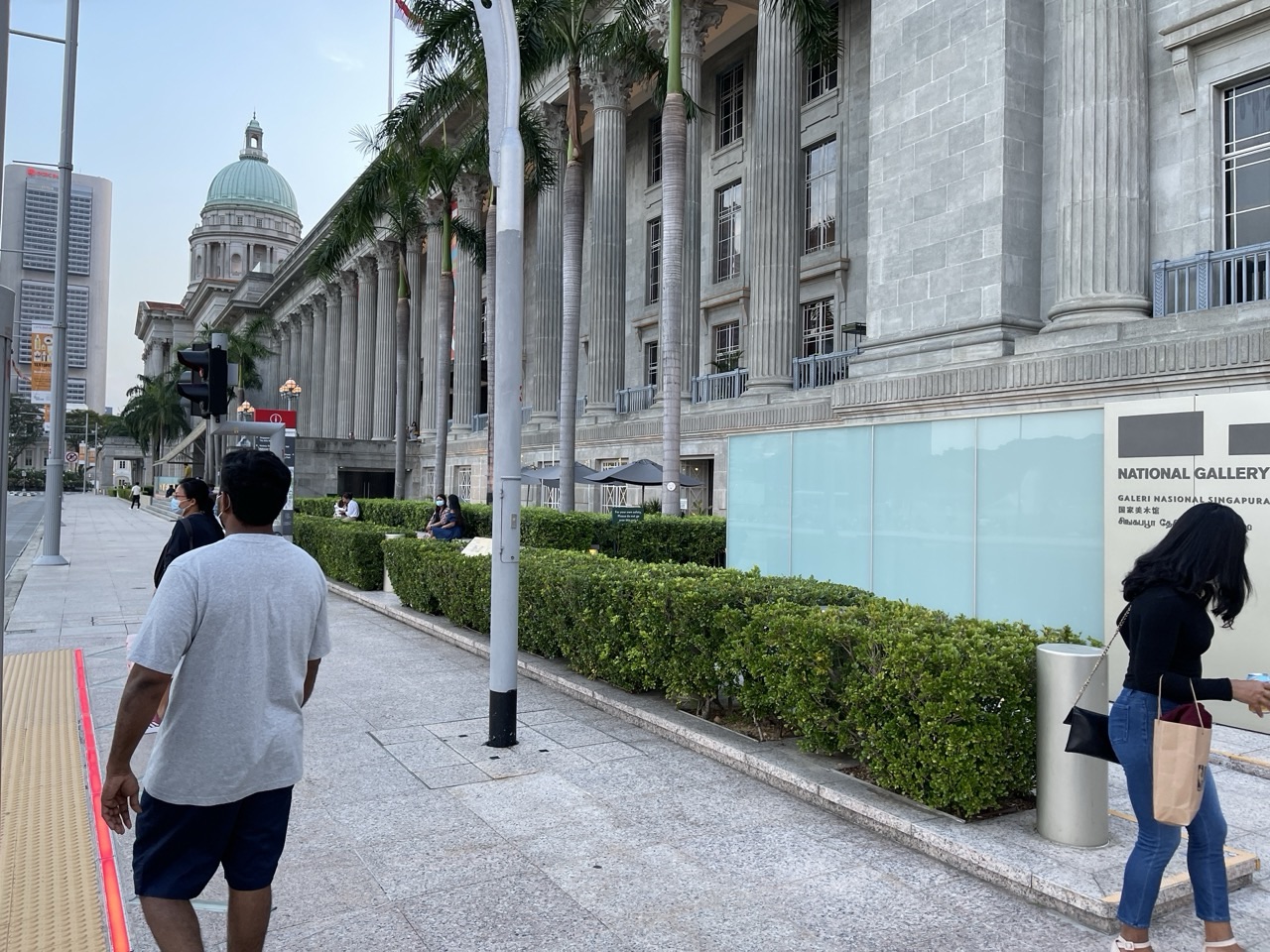
The featured photograph shows National Gallery Singapore beside the Padang as general arts and cultural-sector context; it does not depict an applicant or a NAC-funded exhibition. Part of The Gold Standard | eduKate Singapore and the Sectors and Services Directory. This educational service guide is not an award decision. Current NAC application guidelines, issued terms and prescribed project dates govern real funding.