
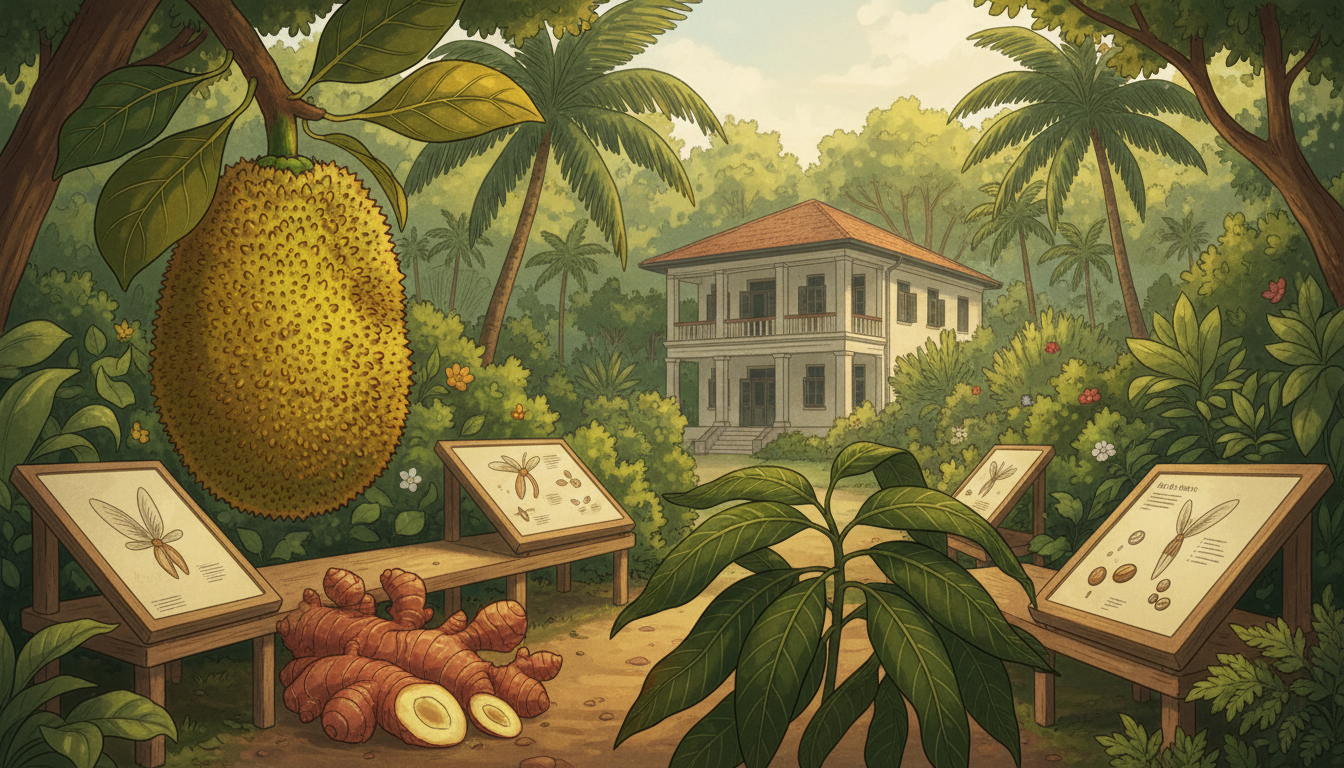
What to do in Singapore when you want to see nature and understand why it matters? Visit Singapore Botanic Gardens as a living science library. Instead of trying to photograph every lake, tree and flower, choose one botanical question and follow the evidence: how plants survive, how seeds travel, how researchers conserve threatened species, or how people have used plants throughout history.
The Gardens are famous for their landscapes and orchids, but their work goes far beyond scenery. They contain a Seed Bank, plant research and conservation programmes, historic botanical collections and learning trails that can turn an ordinary walk into a practical lesson in biology, geography and environmental responsibility.
This is an easy-to-understand guide to what, why and how to explore that scientific story. The official Singapore Botanic Gardens visitor page lists general garden access from 5 a.m. to midnight daily, with free admission to the grounds; individual galleries, forests and the ticketed National Orchid Garden have separate schedules. Check the 27 October 2026 notices before leaving, because closures can change what you can safely visit.
The quick answer: choose one scientific question, not the whole garden
Begin with one of three accessible learning plans:
- Seeds and conservation: visit the Seed Bank interpretive gallery and the Seed Dispersal Garden to investigate how plants reproduce and how species can be preserved.
- People and plants: explore the Centre for Ethnobotany, then compare plant uses with the displays and vegetation around it.
- Forest ecology: choose a suitable section of Learning Forest or the Rain Forest Trail, subject to current weather, access and mobility needs.
- Orchids and diversity: visit the National Orchid Garden if the admission, operating hours and ticket category suit your group.
- For younger children: select an age-appropriate garden or observation task rather than expecting them to complete a demanding forest loop.
You do not need to combine every option. A focused visit followed by one simple explanation can be more rewarding than a full-day route that leaves everyone exhausted.
Why a botanic garden is different from a decorative park
A botanic garden may look like a park to a casual visitor, but it also plays scientific roles. Living plant collections can support identification, research, propagation, education and conservation.
A decorative landscape may primarily be organised for appearance and recreation. A research collection is also organised around questions about species, origins, ecological relationships and care. The two can overlap.
NParks describes Singapore Botanic Gardens as both a historic public garden and an institution of botanical science. Its collections and research have grown over many decades as scientists learn more about tropical biodiversity.
When you visit, ask what each space is trying to teach. A formal flower display, a remnant rainforest and a research seed bank answer different questions even though all contain plants.
The UNESCO story: recognition of heritage, not every flower
Singapore Botanic Gardens was inscribed as a UNESCO World Heritage Site in 2015. The official Gardens history discusses its scientific and cultural contributions, including botanical research and the development of the region’s horticultural knowledge.
UNESCO inscription recognises the site’s outstanding heritage value under specific criteria. It is not a certification that every plant is rare, that every activity is free or that every historic feature remains untouched.
Ask which parts of the Gardens represent historical continuity and which are newer facilities serving present-day research.
The distinction is valuable: a place can preserve old records while adopting new scientific methods. Heritage and innovation are not necessarily opposites.
A scientific visit begins with a prediction
Before setting out, write one prediction. For example: “Seeds that travel by wind will have structures different from seeds carried by animals.”
Visit a suitable display and look for evidence. Does an exhibit show wings, hairs, hooks or fleshy coverings? Which examples support your prediction, and where might the real world be more complicated?
Then write what you actually observed. Do not say a plant was wind-dispersed simply because its seed looked light; use the official identification or trustworthy source before concluding.
This small scientific habit—predict, observe, check—makes the visit useful beyond the immediate location.
Why plant names matter
People often use different common names for the same species, or the same common name for several different plants. Botanists use scientific names to help identify organisms more precisely.
A label may include a genus and species name, a family and sometimes information about the specimen or cultivar. A common name can still be helpful, but it is not always enough for technical research.
For children, notice the name and one visible feature. For older students, record the scientific name when appropriate and verify whether it refers to a species, hybrid or cultivar.
Better vocabulary creates better questions. “I saw a large tree” is a starting point; “I saw a labelled species with fruit adapted for dispersal by animals” makes a claim that can be investigated.
Start near Bukit Timah Gate for a plant-science day
Several educational facilities are located in the Bukit Timah Core of the Gardens. The Seed Bank and Centre for Ethnobotany both list Bukit Timah Gate as a suitable nearby entrance.
This makes the area useful for a focused educational visit without travelling across the entire 82-hectare Gardens.
Check the full route for your particular starting point, including Botanic Gardens MRT, pedestrian crossings, toilets, rest needs and actual facility access. Do not rely solely on the words “near an MRT” to predict the effort for someone using a stroller or mobility aid.
The question and the group’s needs should determine the route, not a desire to cover as much ground as possible.
The Seed Bank: nature’s future in small packages
The Singapore Botanic Gardens Seed Bank was established in 2019 as part of conservation work for Singapore and Southeast Asian plant diversity.
NParks says it has the capacity for up to 75,000 seed collections representing around 25,000 plant species, while the collection described in its October 2026 profile includes seeds from more than 300 species, many native and threatened.
That difference between *capacity* and *current holdings* matters. A building designed to store many collections does not automatically already contain all of them.
A visitor can learn why collecting, documenting, processing and conserving seeds requires more than putting a handful into a jar.
What seed banking actually means
Seed banking generally involves collecting appropriate material, recording its provenance, assessing the biological properties of seeds and placing suitable seeds in controlled storage conditions intended to preserve viability.
A seed is not a miniature plant waiting indefinitely under any circumstances. Its ability to germinate depends on the species, maturity, handling, moisture, temperature and the passage of time.
The NParks Seed Banking explanation describes drying, controlled cold storage and viability testing among the methods involved.
The core idea is risk management. If a plant population declines in the wild, properly stored genetic material may support future conservation work, subject to biological and practical constraints.
Not every tropical seed can be frozen
This is one of the most important scientific distinctions at the Gardens. NParks notes that many tropical native species have seeds that do not tolerate the drying and freezing conditions used in conventional seed banking.
Some seeds are described as desiccation-sensitive or recalcitrant. Such seeds need other conservation approaches, and researchers continue studying suitable methods.
Therefore, avoid claiming that one freezer can preserve every threatened plant species. The science is more complicated, and a seed bank cannot replace living habitats.
Ask a student: “What would scientists need to know before storing a seed?” The answer begins with how that species responds to water loss, temperature and storage.
Why seed viability matters
A seed that looks intact may no longer be capable of germinating. Storage success therefore requires evaluating whether the material remains viable.
NParks’ research description includes seed testing and careful documentation. A visitor can learn the principle without handling laboratory material.
Imagine a hypothetical batch of stored seeds. If researchers later test a sample, the result helps them understand whether storage conditions are maintaining useful living potential. It is not enough to count how many seed packets occupy a shelf.
This is a lesson in the difference between an inventory and a functioning conservation resource. Numbers alone do not tell you whether the biological purpose has been achieved.
Look into the research process, not into restricted rooms
The Seed Bank interpretive gallery allows visitors to learn about the journey from forest collection to scientific storage, including viewing areas associated with laboratories.
That does not mean the laboratories are open for visitors to wander through. Controlled research areas depend on cleanliness, protocols and trained personnel.
Use interpretive windows and displays as intended. Do not disturb staff, attempt to handle collections or enter a restricted room because you want a closer photograph.
A museum-style display can explain a laboratory’s purpose without granting access to the scientific workflow itself.
The Seed Dispersal Garden: a simple biology investigation
Outside the Seed Bank, the Seed Dispersal Garden presents plants illustrating different ways seeds travel.
NParks describes wind, water, animal and mechanical dispersal adaptations. Seeds may carry structures that help them float, catch wind, attach to animals or be released through a physical mechanism.
Choose two displayed examples and compare what the structures do. Avoid collecting seeds or removing fruit from plants for a demonstration.
The guiding question is: “Why does a plant benefit when its seeds do not all remain directly beside the parent?” Consider competition, suitable habitats and the chance of colonising other places.
Wind dispersal versus animal dispersal
A wind-dispersed seed may have wings or feathery structures that slow its descent or allow it to move with air. An animal-dispersed fruit may contain edible tissue that attracts an animal, but the exact mechanism varies by species.
Do not classify every small seed as wind-dispersed. Some tiny seeds travel by different mechanisms, and one species may use more than one process.
Use labels and trusted descriptions to confirm examples. The shapes are clues to investigate, not substitutes for evidence.
A student can draw two seeds and explain how the surrounding structure might change their movement.
Water dispersal and the idea of buoyancy
Some seeds or fruits can float and move along waterways. Features such as fibrous coverings or air spaces may contribute to that ability in particular species.
A simple analogy is a buoyant object that remains afloat long enough to travel. But you should not throw seed material into a garden pond to test the idea; that could interfere with maintenance or ecological management.
Use the official display and investigate the species’ biology. Ask what other factors—water currents, salinity, obstacles or time—would affect the journey.
This connects plant science with the physical behaviour of water, a topic that reappears in Singapore’s rivers, reservoirs and coastal ecosystems.
The Centre for Ethnobotany: people and plants
The Centre for Ethnobotany explores how plants shape culture, tradition and daily life through materials, artefacts and interpretive displays.
Ethnobotany involves studying relationships between people and plants. It may consider food, fibre, medicine, ritual, tools and other uses, while recognising that knowledge varies among communities.
The Centre opened in 2018 and normally operates 9 a.m. to 6 p.m. daily except the last Wednesday of the month, according to its current official listing.
Check its actual opening before planning it as the day’s anchor. It is an educational facility, not an invitation to take plant materials home.
Why “used traditionally” does not mean “clinically proven”
One important distinction in ethnobotany is between a historically documented use and a treatment proven safe or effective through modern medical evidence.
A label may explain that a plant was used in a traditional practice. That is valuable cultural and historical information. It does not automatically establish an appropriate dose, absence of toxicity or medical suitability for an individual.
Do not pick, chew or brew unidentified plants after reading a display. Follow professional medical guidance for health questions rather than treating a public garden as a self-prescribing pharmacy.
This is an example of precise vocabulary preventing a dangerous misunderstanding.
Food plants connect botany to everyday meals
Some plants have familiar culinary roles: leaves, roots, fruits, seeds, herbs or spices. At the Centre for Ethnobotany, these relationships can help children understand that food comes from living organisms and human cultivation systems.
Choose a familiar ingredient and identify the plant part used. Then ask what must happen between a growing plant and the food that reaches the home.
Do not assume every specimen in a display is edible or available for harvesting. A garden label explains; it does not grant permission to pick.
A useful learning result is a diagram showing producer, cultivation, harvest, distribution, cooking and consumption. It connects biology with geography and economic systems.
The Healing Garden: study classification, not self-treatment
The Gardens include a Healing Garden, with plants grouped for interpretive education about their associations with health traditions.
Its current visitor information lists operation generally 7 a.m. to 7 p.m., with Tuesday closure for maintenance.
Visitors can learn how plants have been classified and valued in different traditions, but should not equate an interpretive label with a recommendation to use an unfamiliar plant as medication.
Read the information as history and botany. If a claim sounds like a medical promise, look for appropriate clinical evidence beyond the garden display.
Learning Forest: a different kind of classroom
The official self-guided walks list a Learning Forest audio trail of approximately one kilometre, with an indicative duration of 60 to 90 minutes.
The area introduces freshwater swamp and lowland dipterocarp forest habitats and includes a barrier-free route option. The experience is not the same as walking through a formal ornamental garden.
Choose the Learning Forest if your question is about habitats, layers of vegetation and how living organisms share a landscape. Pay attention to the role of water, shade and differing plant forms.
This is an outdoor learning environment, not a place for improvised collecting or touching wildlife. Stay on designated routes.
A forest is a set of relationships
A forest contains trees, smaller plants, fungi, animals, microbes, soil and water interactions. Seeing many trees does not tell you everything about those relationships.
Observe different layers of vegetation and ask how sunlight changes from canopy to forest floor. Look at fallen leaves without removing them. Consider how decomposition returns materials to the ecosystem.
A scientific visit distinguishes processes from appearances. A lush scene may suggest healthy vegetation, but properly evaluating ecological condition requires more evidence than a short tourist walk.
The goal is to begin recognising relationships that are usually invisible when we think of trees as isolated objects.
Rain Forest Trail: a small remnant with major meaning
The Rain Forest self-guided trail is listed as a roughly 600-metre route through a six-hectare rainforest remnant, with an indicative duration of thirty to forty minutes.
That may sound small, but the ecological and heritage significance is substantial. Remnant primary rainforest can preserve characteristics of a much older landscape within a heavily urbanised setting.
Do not confuse “short trail” with “guaranteed easy in all conditions.” Roots, wet ground, weather and individual mobility may change suitability.
Check current closures. NParks states that the Rain Forest can close during inclement weather and reopen only following safety inspection.
Why forest closure is a scientific decision
Heavy rain can change traction, water flow and the stability of parts of a trail. Trees and branches may also pose hazards in particular conditions.
The current Gardens notices say that areas including Rain Forest, Learning Forest and Rambler’s Ridge may be closed during inclement weather.
This is not an inconvenience that visitors should defeat. Restrictions protect both human safety and the management of sensitive environments.
A scientifically minded visitor uses new information to revise the plan. “We will visit the Seed Bank instead” may be a better response than forcing a forest walk because it appeared on a checklist.
National Orchid Garden: flowers and scientific classification
The National Orchid Garden showcases orchid species and hybrids and has a long association with the Gardens’ orchid research and horticultural work.
Its current regular hours are 8.30 a.m. to 7 p.m., with last ticket sale and entry at 6 p.m., according to the official visitor page.
Unlike the generally free Gardens grounds, the National Orchid Garden has admission charges. Rates differ for local visitors, standard visitors, seniors, students and children according to current terms.
Check ticketing before choosing it as the main family activity. A free botanical-learning day can still be complete without the Orchid Garden.
Orchid species, hybrids and cultivars are different ideas
An orchid species occurs as a biological species, while a hybrid generally results from crossing different parental lineages. Cultivar names can identify cultivated selections with particular characteristics.
The distinctions matter because a striking colour does not necessarily indicate a naturally occurring species. Horticultural breeding and selection can create visual forms that do not arise in exactly the same way in wild populations.
Read the botanical labels carefully and avoid guessing parentage from appearance. The Gardens’ plant-conservation work includes orchid research, propagation and efforts related to threatened native species.
A student can learn the idea of biological diversity while recognising that horticulture and conservation have overlapping but distinct goals.
Orchid conservation is not the same as producing showy hybrids
Breeding ornamental orchids may prioritise traits such as flower colour or form. Native-species conservation aims to protect threatened biodiversity, potentially using seed germination, tissue culture, habitat work and reintroduction strategies.
Both can involve skilled laboratory and nursery methods. Their purposes are not identical.
NParks describes a Native Orchid Conservation Programme begun in 1995, involving threatened species and efforts to preserve material for appropriate conservation outcomes.
The important question is: “What are scientists trying to preserve, and why?” An attractive garden display can prompt the question, but a conservation outcome requires scientific evidence.
A dated 2026 orchid visitor notice
The Gardens’ 27 October 2026 notices announce that the Tan Hoon Siang Mist House at the National Orchid Garden will be closed on 5 November 2026 for tree works.
That is a specific dated condition, not a reason to call the entire Orchid Garden permanently closed. It also demonstrates why a general list of attractions should never be treated as a live guarantee.
If your main interest is a particular cool-house or display area, recheck on your actual visit date. Maintenance can affect parts of a venue while the broader attraction remains available.
The best itinerary contains at least one alternate learning activity that does not depend on one room being open.
The public reference library closure is a different issue
As of October 2026, NParks’ notice page says that the Gardens’ Public Reference Library is closed until 2027 while collections are being digitised.
Do not confuse this with the Seed Bank or the general Gardens. Nor should a visitor infer that the entire Botanic Gardens has no public learning resources during that closure.
If your visit involves studying plants through books, consult an appropriate external library or digital collection rather than depending on this particular facility.
This is another example of accurate information architecture: one institution contains several services, each with its own operating status.
Jacob Ballas Children’s Garden: useful, with age rules
The Jacob Ballas Children’s Garden is designed for children up to 14 years old, accompanied by adults.
Its normal hours are 8 a.m. to 7 p.m., last entry 6.30 p.m., with closure on Mondays unless the day is a public holiday.
Families should plan for age requirements, supervision and a suitable route. The garden is different from the main botanical research galleries, although it can introduce children to plant and environmental ideas through exploration.
Check current notices before promising a particular play feature. Some attractions may be unavailable even when the overall garden is open.
The Tree House closure: do not promise it in 2026
NParks’ October 2026 notices say the Tree House in Jacob Ballas Children’s Garden is temporarily closed because termite damage made the wooden structure unsafe.
The Gardens are working toward a replacement, with an indicative completion around the end of 2027. That is a planned timeframe, not a guaranteed opening date.
Do not use an old photograph to promise children that they can climb the Tree House today. Choose another open feature instead and explain why safety inspection and maintenance matter.
The children can still have a worthwhile garden visit without completing one specific attraction.
Plants, medicine, crafts and the history of knowledge
Ethnobotanical exhibits show that plants have been used in many kinds of human work. Wood, fibres, dyes, oils and food ingredients all depend on biological resources and technical skills.
A plant’s role may be described through indigenous knowledge, historical records or contemporary research. These forms of evidence should be treated carefully and attributed appropriately.
Ask whether a display is describing a past practice, a cultural meaning or a scientifically tested property. Avoid treating them as equivalent.
This helps readers understand why botanical science and social history often meet in the same museum. The plant is one part of the story; people and their knowledge are another.
The Heritage Museum: botany helped shape an economy
The Gardens’ museums and galleries directory explains that the Heritage Museum covers topics including rubber seeds and orchid hybridisation.
This offers a historical view of botanical research. Plant knowledge can influence agriculture, trade and economic development as well as landscape design.
But do not reduce the history to one scientist or one crop. Institutions develop over decades through different researchers, workers, policies and changing regional conditions.
A useful learning question is how an institution’s botanical expertise became useful beyond the garden boundary.
A child-friendly plant-science outing
Begin with the Seed Dispersal Garden or an age-appropriate open section. Give a child three questions: “Which seed might travel through air?”, “Which plants have leaves that look different?”, and “Why do we not pick things from the Gardens?”
Let the child draw shapes and describe what they see. Use official labels for identification rather than insisting that every guess be immediately correct.
Keep the outing short enough to preserve curiosity, and supervise near water, steps or vegetation. Do not force a long forest route simply because the map shows one nearby.
A child who returns home knowing that plants use different strategies to spread seeds has already learned something substantial.
A Secondary Biology investigation
A Secondary student can investigate: “How does seed structure influence dispersal, and why is seed banking difficult for some tropical species?”
At the Seed Dispersal Garden, compare labelled examples. At the interpretive gallery, read about storage conditions and the challenge posed by drying-sensitive seeds.
Write a short evidence chain: observed structure, documented dispersal mechanism, storage limitations and the possible conservation implications.
Avoid claiming that one short visit demonstrates the survival of all tropical plant species. Scientific reasoning improves when conclusions match the evidence actually collected.
A Secondary Geography investigation
Ask: “What roles can a botanic garden perform within a dense tropical city?”
Consider research, conservation, education, recreation and heritage. Use official sources for the institution’s stated functions and observation for how spaces are arranged.
Look for trade-offs. Public access can support learning, while sensitive habitats and laboratories need protection. Forest trails may close after severe weather even when ornamental lawns remain open.
The outcome is an explanation of multifunctional public space, not a claim that planting trees automatically solves every environmental problem.
Art students can learn from botanical illustration
Botanical drawing is not merely a flower portrait. A scientific illustration may emphasise structures important for identification, including leaves, flowers, fruits and arrangements.
The Gardens contain botanical art resources and exhibitions described by its museums directory.
Choose one appropriately displayed example and ask what details are represented and why. Then sketch an observed leaf without picking it.
A good drawing records evidence. Its purpose differs from decorative art even though both require observation and skill.
A five-word botanical vocabulary exercise
Use five terms: dispersal, viability, habitat, conservation, and hybrid.
A seed may disperse without remaining viable; a habitat is more than a collection of ornamental plants; conservation involves protecting biological diversity; a hybrid has a specific biological or horticultural relationship to its parents.
Ask a learner to use each term in a sentence connected with a verified display or observation.
Accurate vocabulary becomes an intellectual tool. It helps a student separate biological mechanisms that casual language might blur together.
What to do with grandparents and children together
The Seed Dispersal Garden and Centre for Ethnobotany can support different generations at once. A grandparent may recognise a plant associated with cooking or earlier daily life, while a child notices a seed’s shape.
Invite personal stories, but distinguish memory from verified botanical identification. A plant commonly used by one household may have different uses elsewhere.
Plan seating, toilets, shade and route length. Some participants will be comfortable on forest trails, while others may prefer the more accessible gallery areas.
The best intergenerational visit gives people different ways to contribute without requiring identical interests or physical ability.
Plant allergies and sensory sensitivities
Flowers, fragrances, pollen and outdoor insects can affect some visitors. Do not assume that a “natural” environment is automatically comfortable or safe for everyone.
Ask participants about their needs. Avoid touching unfamiliar plants or letting children rub leaves across their skin. Consider a shorter outing or suitable indoor alternative if particular exposures are problematic.
For health-specific decisions, follow individual professional advice rather than relying on general travel guidance.
Botanical learning can happen through labels, photographs and curated displays as well as close outdoor observation. The method should suit the person.
A realistic short route
For a focused visit, choose a suitable Bukit Timah Gate approach and explore the Seed Bank interpretive gallery and nearby Seed Dispersal Garden when both are open.
Read a few displays, draw two seed forms and explain one method of dispersal. If time and energy permit, add the Centre for Ethnobotany, which is also associated with this section of the Gardens.
Do not assume all rooms are open on their usual schedule during maintenance or special events. Use the current visitor information and relevant notices.
This route’s purpose is understanding seed science, not crossing all 82 hectares of the Gardens.
A forest route for a different day
For a second visit, choose the Learning Forest audio trail or Rain Forest Trail according to interest, accessibility and weather.
The two are not interchangeable. Learning Forest features interpretive trail experiences across a restored and managed forest environment, while the Rain Forest Trail enters a remnant primary rainforest setting.
Read the official trail lengths and current restrictions before choosing. Do not assume an hour on a map is a guaranteed journey time for every group.
One forest question might be: “What changes in the layers of vegetation as we move from a garden path into a forest?” That is a meaningful entire outing by itself.
How much should the visit cost?
General Singapore Botanic Gardens admission is free. Some galleries and publicly accessible trails are available without a conventional entry fee, while the National Orchid Garden charges admission according to visitor categories.
The current official visitor page lists different local, standard, student and senior rates. Transport, food, parking and optional events may add expenses.
Do not use a flat “everything is free” claim or assume a visitor’s residency category. Check the actual rules before setting the budget.
A satisfying scientific outing does not require a paid orchid ticket when the Seed Bank and other appropriate spaces can answer the question you brought.
Heat, rain and stop rules
Singapore’s climate makes timing important. Outdoor plants are available to observe during warm weather, but prolonged heat can tire visitors. Bring water, suitable footwear and rest when needed.
Check NEA weather and the Gardens notices. During nearby lightning, seek appropriate substantial shelter; do not remain on an exposed trail or beneath an isolated tree.
Heavy rain may close forest areas, and the official site says certain spaces reopen only after safety checks.
A changed plan is not a failed scientific trip. It is evidence that you can use information to choose a safer method of learning.
Conservation requires restraint
Do not collect seeds, leaves or flowers without authorisation. Do not release animals, damage plants or enter protected beds to photograph an unusual specimen.
Respect trail boundaries and research spaces. Some of the collections may be rare, carefully managed or part of long-term scientific work.
You can take notes, sketch, photograph where permitted and study official labels without removing anything.
The scientific attitude is not to treat every living thing as a sample to be taken. It is to understand the observation methods appropriate to the environment.
What not to do at the Gardens
Do not promise access to the Jacob Ballas Tree House in 2026 or the Public Reference Library before its announced reopening. Do not claim the Tan Hoon Siang Mist House will be available on its specified November closure date.
Do not assume the whole Garden is open for every activity simply because the grounds open from early morning to midnight. Forest trails and galleries have separate hours and weather restrictions.
Do not turn historical plant uses into personal medical advice, or invent identifications from a flower’s colour.
Avoid a long itinerary that exhausts the group. Use the Gardens as an invitation to investigate, not a challenge to visit every attraction.
A reusable plant observation notebook
Divide a page into six fields: plant or seed, visible structure, suspected function, official source, uncertainty, and next question.
For example: “A labelled winged seed. Thin extension visible. The display identifies wind dispersal. I wonder how wind strength affects its movement.” This keeps the observation and explanation separate.
At the end, choose one concept to explain to another person in plain language.
The notebook is more useful than a long list of unfamiliar names because it demonstrates how a learner built understanding from evidence.
Frequently asked questions
Are the Singapore Botanic Gardens free?
General grounds admission is free. The National Orchid Garden has separate ticketed admission, and individual programmes may have their own conditions.
What is the best science activity for beginners?
The Seed Bank interpretive gallery and Seed Dispersal Garden offer an accessible way to begin investigating seed biology, storage and conservation.
Is the Seed Bank an actual research facility?
Yes. NParks describes scientific work on seed processing, viability and storage, alongside a public interpretive gallery. Laboratories are not unrestricted visitor areas.
Can every tropical seed be frozen?
No. Many tropical species produce drying- or freezing-sensitive seeds, which require research into alternative conservation methods.
When is the Learning Forest open?
The current listed hours are 7 a.m. to 7 p.m. for relevant trails, with additional restrictions and closures during unsuitable weather. Check the exact trail.
Is Jacob Ballas Children’s Garden available?
The Garden has published age and operating rules, but its Tree House is temporarily closed because of damage. Verify the latest notices for individual features.
Is the National Orchid Garden included in free admission?
No. It is separately ticketed, with categories described on the official visitor page.
Can I pick plants for a science experiment?
Not without appropriate authorisation. Observe, sketch and use displays instead of removing living or preserved plant material.
Official sources and connected eduKate reading
Use the Singapore Botanic Gardens visitor guide, current notices, self-guided walks, Seed Bank, Seed Banking research, Centre for Ethnobotany, National Orchid Garden and Gardens history.
Continue through Touring Singapore | Things to Do and Places A–Z, Why Study History | Explore How Botanic Gardens Changed Rubber Science and Conservation, What to do in Singapore | Observe Wildlife Without Disturbing Nature and What to do in Singapore | Build a Hands-On Science Discovery Day.
The most valuable discovery
Plants are not simply decorations in a green city. They are living organisms with strategies for reproduction, survival and interaction, and they are part of the cultures, research systems and conservation decisions that shape Singapore.
Choose a small botanical question. Observe carefully, verify what you learn and leave the living collections undisturbed. If you return home able to explain one plant mechanism more clearly than before, the outing has done something lasting.