
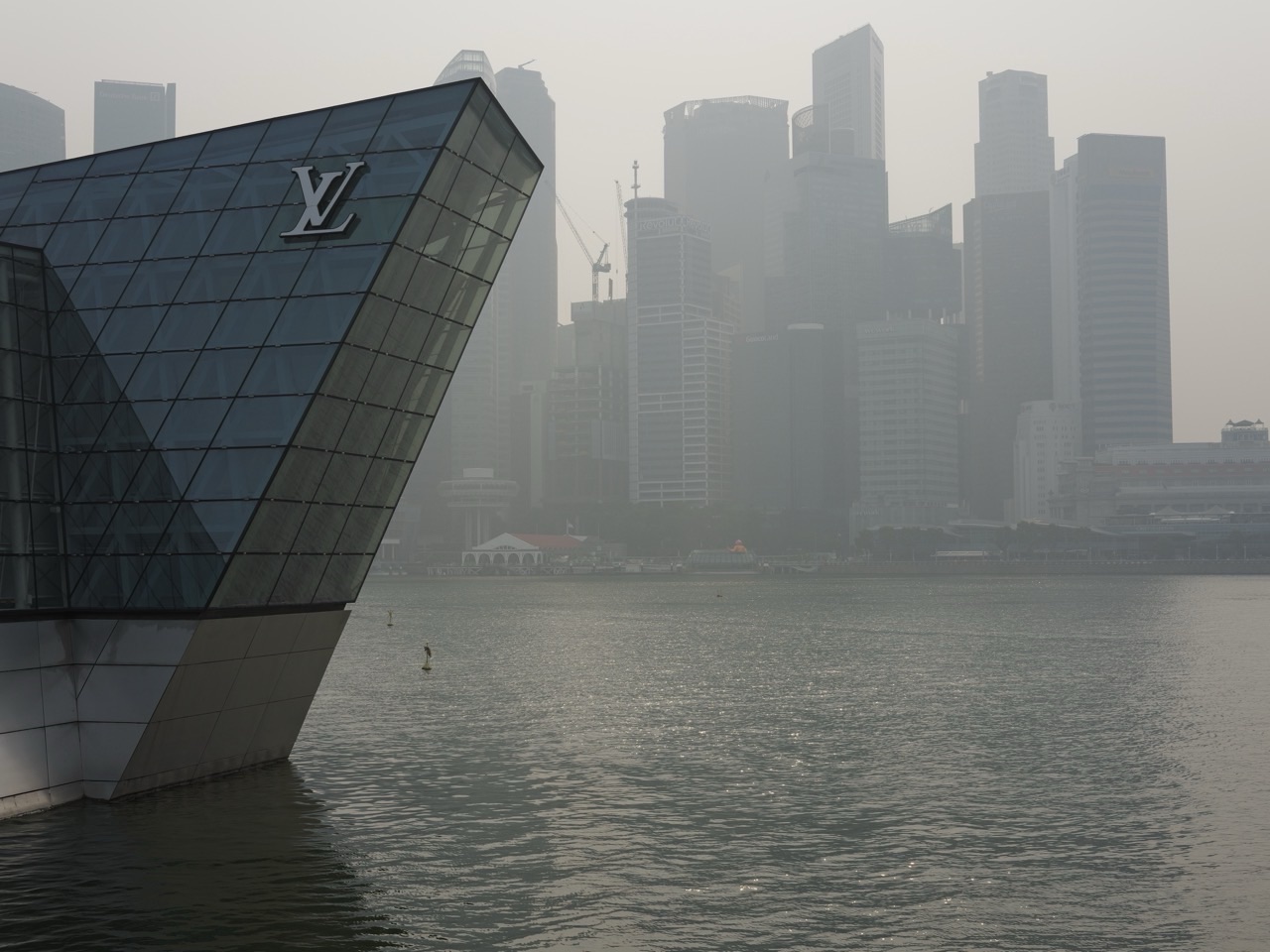
Haze in Singapore changes the small decisions that make up a normal day: whether to open an HDB window, walk to the MRT, send a child to outdoor training, have lunch at a hawker centre or move a family outing indoors. Start with the NEA haze and air-quality dashboard, use the one-hour PM2.5 reading for the next hour, and use the 24-hour PSI forecast with the Ministry of Health haze advisory for tomorrow. The best Singapore haze lifestyle plan does not depend on a single number; it matches the latest reading to the person, the journey, the intensity of the activity and the time spent outside.
For parents, students, office workers, older residents and anyone organising a busy Singapore household, a practical haze plan is simple: protect the journeys you cannot avoid, rearrange activities you can, and avoid treating all indoor spaces as equally clean. A short covered trip to school is different from an outdoor football match. An enclosed, well-filtered room is different from a naturally ventilated corridor or open-air food centre. A healthy adult and a child with asthma may need different choices on the same afternoon. This guide is the islandwide decision centre for Singapore haze, HDB living, MRT and bus travel, school runs, shopping, meals, work and family routines.
You do not have to turn every hazy day into a crisis. You do need a repeatable method. On 16 October 2026, NEA forecast an Unhealthy to Very Unhealthy PSI range for 17 October, illustrating how quickly familiar activities can require another look. That dated forecast is context, not a permanent description of today’s air. Whenever you return to this article, check the current government readings first. Once you know what is happening outside, you can keep the parts of daily life that matter while reducing unnecessary exposure.
The five-minute decision before you leave home
A useful Singapore haze routine starts before you look for a mask or argue about cancelling an activity. First, open haze.gov.sg or the myENV app. Identify the one-hour PM2.5 band for your area and read the personal guide for immediate activity. Second, read the PSI forecast and corresponding MOH advice if you are deciding what tomorrow might look like. Third, name the person doing the activity: healthy adult, child, older person, pregnant person or someone with chronic heart or lung disease. Fourth, estimate exposure: a few minutes, a long wait outside, several hours at a worksite or a vigorous run. Fifth, decide whether the activity is necessary, adjustable or optional.
The order matters. Families sometimes start with the conclusion—“it looks bad, so everything is cancelled” or “I can still see the buildings, so everything is fine”—then choose evidence to support it. Neither is a good decision system. Visibility is not a reliable substitute for measured particulate concentrations. Equally, a forecast meant to help plan the next day does not replace the one-hour reading intended for the immediate hour. A measured, time-aware decision gives your family more flexibility, not less.
For example, suppose a parent in Bishan has to collect a child, buy groceries and meet friends for a walk at MacRitchie. School collection and food shopping are the essentials. The social walk is optional. The parent can shorten uncovered walking, choose a sheltered pickup route, move groceries to a shorter shop and reschedule the nature walk according to the latest reading. Nothing heroic is required. The important move is to separate what must happen from what can change.
Know which air-quality number answers which question
Singapore residents often hear “the PSI is high” and assume that tells them everything about the next sixty minutes. The 24-hour PSI represents an index over a longer period and is used with the official forecast for planning. The one-hour PM2.5 concentration gives a more immediate indication of fine-particle conditions; MOH provides a corresponding personal activity guide. They are related measures, not interchangeable units. PM2.5 is a concentration reported in micrograms per cubic metre, whereas PSI is an index derived from pollutants and averaging periods.
MOH’s current one-hour PM2.5 bands are Normal (0–55 µg/m³), Elevated (56–150), High (151–250) and Very High (251 or more). The bands help people decide how to adjust outdoor activity. For healthy persons, the official guidance at Elevated is to reduce strenuous activity for the next hour; at High, avoid strenuous outdoor activity; and at Very High, minimise outdoor activity. Vulnerable people have more cautious advice at the same readings. These are not invitations to push hard right up to a numerical boundary: symptoms, duration and individual health still matter.
The PSI forecast categories are Good (0–50), Moderate (51–100), Unhealthy (101–200), Very Unhealthy (201–300) and Hazardous (above 300). A parent planning a school sports day should consult the relevant forecast and official school communication. An adult choosing whether to jog immediately should check the one-hour reading and MOH guide. It is possible for the two indicators to create different impressions because they answer different time questions. Our How Singapore Connects guide to PSI and haze monitoring explores the measurement system; this lifestyle article concentrates on what to do after reading it.
Build a household plan around people, not furniture
The best starting point for household planning is a simple list of people and routines. One family may include a preschooler, a primary-school student, an adult who works outdoors and a grandparent with heart disease. They should not all receive identical instructions. The person with a vulnerable health profile needs more conservative exposure decisions. Parents should keep prescribed medicines and relevant contact information accessible, especially where a child has an existing asthma action plan.
Next, map the places each person uses. Is the student waiting under a covered walkway or exposed near a road junction? Does the working adult move between enclosed office space and an outdoor logistics yard? Does the older family member exercise in a shaded but open void deck, or in an enclosed room? These practical details determine how to reduce avoidable exposure. A map does not need to be drawn beautifully. A short household note—essential journey, alternative, responsible person—is enough.
Finally, agree on who makes the call. If air quality worsens, the adult collecting a child should know whether to change route, when to notify a coach, and whom to call if plans move indoors. Good preparation means the family is not improvising every instruction while rushing between work, school and an appointment. Use the Punggol haze lifestyle guide for a worked neighbourhood example; the principles here apply from Woodlands to Bedok and from Jurong to Marine Parade.
Living with haze in a Singapore HDB flat
An HDB flat can be comfortable during haze, but “indoors” is not automatically identical to “particle-free”. Outdoor air can enter through open windows, door gaps, corridors and ventilation pathways. Cooking, smoking and some household activities can add indoor particles too. During a sustained episode of poor outdoor air, choose a room where people spend meaningful time, close windows and doors when appropriate, and use air conditioning or a suitable air purifier if available. A purifier with an appropriate particle filter can lower indoor particulate concentrations when sized, positioned and maintained correctly.
Do not confuse an ordinary fan with a particle filter. A fan moves air; by itself it does not remove fine-particle pollution. An air-conditioned room may be more comfortable, but filtration and fresh-air arrangements vary by system. Avoid running sources of indoor smoke or strong fumes while trying to make the home a cleaner refuge. Do not assume that a pleasant fragrance means the air has become safe. Scent is not a measurement of PM2.5.
There is a practical trade-off between reducing outdoor particle entry and maintaining adequate ventilation. On a badly affected day, temporarily limiting entry of smoky outdoor air can be sensible; over time, indoor ventilation still matters, particularly if occupants feel stuffy or the room has other pollutant sources. Follow official advice and use the actual room conditions rather than adopting a permanent “seal everything” rule. If someone has substantial heart or lung disease, ask their clinician about individual precautions.
Families living near expressways, in high-rise blocks or beside busy roads should avoid assuming that their storey alone guarantees cleaner indoor air. Exposure depends on many factors, including wind, infiltration, open windows and indoor sources. The useful question is not whether the flat has the perfect floor plan. It is whether the household has a realistic clean-air room and a way to reduce time in heavily polluted outdoor air.
School runs: the ten minutes that need a plan
School journeys are one of the hardest parts of a haze day because time is not entirely yours to control. Students still need to travel; parents and caregivers may also be working. Start with the school’s messages about outdoor activities and any specific arrangements. Do not invent your own school closure from a headline about conditions in another country, or assume that Singapore schools are closed because an outdoor event has been cancelled.
When travel is necessary, reduce unnecessary uncovered waiting. Confirm the correct bus stop or school pickup gate, bring a water bottle, and avoid adding a leisurely detour to an already essential journey. A sheltered walkway is useful for sun and rain, but it is not a sealed, filtered environment. It should not be described as a clean-air chamber. An MRT platform, open-air bus interchange and air-conditioned train carriage also have different degrees of enclosure.
For a student who normally walks a longer route, compare safe alternatives in terms of exposure, cost, journey time and supervision. A shorter bus trip may help, but a long wait at a busy stop may erase some of the benefit. If a coach changes a CCA venue or cancels outdoor practice, treat the communication as the source of truth. This article supports planning; the school’s operational guidance is the authority for the event.
An older student can help by checking the official air-quality source with a parent, reading the band correctly and explaining why a plan changed. That is an excellent example of everyday scientific literacy. Our MOE V3.0 reference on haze and environmental monitoring turns the same real-world question into a structured learning exercise, rather than encouraging children to speculate from a smoky skyline.
MRT, buses, taxis and the last kilometre
There is no magical mode of transport that makes every minute of a haze day clean. The sensible goal is to keep necessary journeys predictable and avoid extended unnecessary time outdoors. For a person travelling from Tampines to the city, the route might include walking to a bus stop, waiting for a feeder bus, changing to an MRT line and reaching an office through an outdoor plaza. The last segment may be the easiest to alter: use a sheltered entrance where practical, combine errands within one building or reschedule non-essential walking.
MRT carriages and enclosed air-conditioned spaces are different from open-air platforms and bus stops. Rather than making categorical claims about every station, examine the actual route. Some MRT stations are elevated and open to the air; others are underground. An enclosed space can reduce immediate outdoor exposure, but it is not an assurance of medical-grade filtration.
The common mistake is to focus on a five-minute walk while overlooking an hour-long optional outdoor stop. Another is to buy an uncomfortable mask for a brief journey when official guidance emphasises reducing extended outdoor exposure and does not generally require an N95 for short commutes. Check MOH’s current mask advice before making a decision about a vulnerable person’s longer outdoor journey.
Public transport is also a social system. If you accompany an elderly parent who walks slowly or needs rest, allow more time without planning a long exposed wait. If a child gets tired or distressed, shorten the optional part of the journey. A successful haze commute is not the fastest theoretical trip on a map; it is a safe, workable trip for the actual passenger.
Office days, hybrid work and outdoor occupations
An office worker can often move meetings online or keep lunch indoors. A delivery rider, cleaner, construction worker, event worker or traffic marshal may not have that freedom. Good haze planning should acknowledge that difference. Workers with outdoor duties should follow employer risk controls, applicable workplace safety arrangements and current agency guidance, and should raise concerns when symptoms or exposure conditions make tasks unsafe. A general lifestyle article cannot replace job-specific occupational risk assessment.
A manager can reduce the number of optional outdoor transitions by combining tasks, modifying break arrangements, reviewing transport between sites and checking forecasts before scheduling prolonged physical work. The aim is not to make every role identical. It is to understand which exposure is essential to the job and which is the product of habit.
For desk-based teams, remote meetings may save a cross-town commute without affecting the work. But workplace decisions also depend on the job, team requirements and employer policy. A colleague with chronic respiratory disease may need different arrangements from a healthy colleague. Privacy and respectful communication matter; do not ask people to prove a diagnosis in a group chat.
Students can apply the same thinking to tuition and study routines. A regular lesson in an enclosed classroom may still be workable, while an optional long outdoor journey to arrive early is unnecessary. The proper question is not simply “school or home?” It is which arrangement best preserves education, safety and the individual’s wellbeing, given the real travel conditions.
Hawker centres, coffeeshops and eating out
Singapore’s food culture does not disappear when haze arrives. What changes is the distinction between covered and enclosed venues. A hawker centre with a roof and open sides is sheltered from rain and sun, yet outdoor air may still flow through it. A coffeeshop beside a road is not the same as an air-conditioned food court with doors and mechanical ventilation. Neither should be described as perfectly filtered without evidence.
If readings and personal circumstances suggest limiting outdoor exposure, a family might choose a shorter meal, eat in an enclosed venue or bring food home. That does not make hawker centres inherently unsafe under every haze condition. Duration, air flow, crowding, personal health and current pollution all influence a sensible choice. Parents with small children may find that collecting food and eating in a comfortable home environment is easier than trying to supervise a lengthy open-air meal.
Notice a common planning trap: families may cancel an hour of outdoor exercise, then replace it with three hours of open-air browsing and dining. Exposure is not restricted to sports. Quiet sitting, browsing at an outdoor market and standing in a queue also involve breathing outdoor air. Exercise adds intensity to the equation, but time itself remains relevant.
Keep your plan humane. If an outdoor vendor is working in haze, a polite decision to buy quickly, collect an order or return another day is more useful than declaring that the whole neighbourhood is off-limits. This is a lifestyle adjustment, not a judgement on local businesses.
Shopping malls, libraries and community spaces
A good alternative to an outdoor outing is usually a place that offers a genuine reason to go, not merely a roof. Public libraries can support quiet reading, research and children’s learning. Malls may offer groceries, meals and family errands in one trip. Community facilities can host classes or programmes. However, opening hours, building operations and events change; verify the individual venue before travelling.
The National Library Board has a network of libraries in different parts of Singapore. A family in the west may consider a nearby library rather than travelling all the way east for a similarly suitable activity. A household with an elderly member may prioritise minimal walking and convenient seating. A student who needs to revise for an examination may prefer a predictable, quiet place over a crowded entertainment venue.
“Go to a mall” is not an entire haze strategy. Calculate the travel cost and time, the amount of walking outside, whether the venue has what you need, and whether staying home would be more restorative. Indoor shopping should not become an excuse for buying things merely because outdoor recreation is less attractive today.
For families, choose one principal activity, one food plan and one transport plan. This is usually enough. If the air improves later, you can revise; if it deteriorates, you have already avoided overcommitting. Our Punggol family weekend guide offers a local example of a flexible plan.
Parks, waterfronts and Singapore’s outdoor culture
Singapore’s parks are part of everyday life: the Rail Corridor, East Coast Park, Bishan-Ang Mo Kio Park, Jurong Lake Gardens, MacRitchie, the Southern Ridges and neighbourhood park connectors provide movement, greenery and a change of pace. During haze, however, a park is still outdoors. Water, trees and wide space do not automatically remove fine smoke particles from the air you breathe. A waterfront breeze may feel pleasant while monitored PM2.5 remains elevated.
This distinction helps prevent false reassurance. You can love the outdoors and decide that today is not the right day for an extended outing. For healthy people, some outdoor activity may still be possible under MOH guidance depending on the band and individual response. For vulnerable people, the same conditions can justify considerably more restraint.
Keep a list of postponed ideas instead of treating a cancelled park outing as wasted leisure. Reschedule a cycling trip, a nature photograph walk or a picnic for a better-air period. A change in timing preserves the experience more effectively than forcing it through discomfort.
For the mechanics of running, cycling and sports across Singapore, use our dedicated Singapore haze exercise guide once published; for Punggol Waterway and local routes, the Punggol haze exercise guide is more specific.
Four islandwide examples that make the method concrete
West: Jurong and Clementi. A family plans a morning grocery run, a child’s swimming session and dinner with grandparents. Check current air-quality guidance and the swimming facility’s operational notices. Complete necessary groceries with minimal waiting, reassess the outdoor sport separately, and consider an enclosed dinner setting or a home meal if a vulnerable relative would face extended outdoor exposure. The plan is modular: one item can change without upsetting the whole day.
Central: Bishan, Toa Payoh and Novena. A working adult wants to run after an office day while collecting a parent from a clinic. The clinic visit is essential; the run is discretionary. Check the latest one-hour reading near the intended activity and use the MOH guide. A short indoor mobility session might preserve a healthy routine without turning a medical appointment into a rushed evening.
East: Tampines, Bedok and Pasir Ris. Friends plan a beachside cycle and supper. A long ride increases breathing effort and outdoor duration. If haze conditions justify reducing strenuous exertion, move the meeting to a short indoor catch-up or postpone the cycling component. Do not substitute an exposed seafront meal of equal duration and assume the exposure problem has been solved.
North and northeast: Woodlands, Sembawang, Yishun, Hougang and Punggol. Several people may be crossing neighbourhoods for tuition, family visits and recreation. Plan the essential trip first, compare transit connections and avoid unnecessary open-air delays. If a younger child has respiratory symptoms, treat that health need as more important than keeping a recreational booking. Our Punggol health guide expands this situation locally.
The neighbourhoods in these examples are not claims that one region has permanently cleaner air than another. Spatial conditions vary; use the latest published readings for the relevant region rather than guessing from the address.
What “healthy living” should mean on a hazy week
People often use the word “healthy” to mean completing the exact fitness plan they made last Sunday. A more durable definition includes exposure reduction, hydration, manageable physical movement, nourishing meals, social connection and sufficient rest. If outdoor training is reduced for several days, that does not erase months of activity. It is an adaptation to a temporary environmental constraint.
Sleep matters because poorly planned evenings can become more tiring than the original outdoor outing. If air quality forces children indoors, adults may be tempted to fill every hour with classes, screen time or shopping. Resist the belief that every empty slot needs a substitute. Reading, quiet hobbies, stretching and family conversation are legitimate uses of time.
Hydration may help with a dry throat but it does not physically filter pollution from the lungs. Vitamins, special drinks, incense, essential oils or supposedly detoxifying foods should not be presented as protection from fine particles. For people with chronic disease, prescribed care and exposure guidance matter far more than fashionable remedies.
The more useful habit is consistency. A household that checks an official source, has a reasonable fallback plan and talks calmly about changing conditions can keep daily life functional. That is a better outcome than trying to outsmart haze with one miracle purchase.
Masks: when the rule is not “everyone, everywhere”
There is understandable confusion about N95 masks. MOH advises that an N95 or equivalent is generally not needed for short exposure such as ordinary commuting between home and school or work, and is not generally needed indoors. For healthy people who must undertake outdoor activities when one-hour PM2.5 is Very High, a well-fitted respirator may reduce exposure. Vulnerable people may need to consider a respirator at lower bands for necessary outdoor trips, according to the specific official guidance and their medical situation.
Fit matters. A loose respirator allows air to enter around the edges; wearing one for a strenuous activity is not a good substitute for reducing or postponing exertion. Those with severe heart or lung conditions, older persons and pregnant people who have difficulty breathing should seek personalised advice before using an N95 where the advisory cautions. Masks are an additional tool, not permission to ignore environmental conditions.
Ordinary surgical masks are not designed to filter fine haze particles to the same standard as an appropriately fitted particulate respirator. Equally, making a preschool child wear a poorly fitting adult respirator can provide false reassurance. Do not turn mask selection into the entire household plan. Start with sensible choices about time, location and intensity.
Check MOH’s mask and personal health guidance directly because official advice may be revised.
Symptoms deserve attention without unnecessary alarm
Short-term haze exposure can cause eye, nose and throat irritation. Some people cough or feel uncomfortable; those with asthma, chronic obstructive pulmonary disease or heart disease may have greater risks. If a person develops symptoms, reduce further exposure and assess whether medical advice is needed. Persistent or worsening respiratory symptoms, significant breathlessness or concerning chest symptoms should not be dismissed as ordinary haze irritation. Seek urgent medical assistance for severe symptoms.
A person who has a prescribed inhaler or other chronic-condition medication should keep it available and follow their treatment plan. Household members should know where essential medication is kept, without assuming that more medication is always better. Do not self-adjust prescriptions merely because a headline reports a higher PSI.
Parents know a child’s baseline better than an internet article does. If a child looks unusually tired, wheezy or struggles to breathe, treat the symptoms rather than debating the precise number on the air-quality screen. The same applies to older relatives. Individual medical questions belong with qualified professionals; our Singapore haze health guide develops the symptom and indoor-air decision in depth.
Rain, wind and why yesterday’s plan may fail today
Smoke haze can change with weather patterns, source fires and wind. A shower may temporarily improve local conditions, but rain does not guarantee that an entire regional smoke episode has ended. Similarly, a breezy evening can feel fresher while still carrying pollutants. The most trustworthy response is to check official measurements rather than extrapolate from yesterday.
This also explains why a weekly plan should have adjustable parts. The class may proceed indoors, while the outdoor competition is reviewed. A family can reserve the library for a rainy or hazy afternoon and keep the garden visit for a suitable day. It is rarely necessary to predict the entire next week with false precision.
If you enjoy understanding the wider environmental system, Global Connectivity Problems | Singapore Haze examines how smoke crosses borders. Our Gold Standard of Urban Air Quality explores longer-term monitoring and city systems. This page remains the everyday family decision point rather than retelling those specialist articles.
A realistic morning-to-evening routine
7am: Check the current air-quality reading and the school or work messages that affect your household. Set a simple plan for essential journeys and any outdoor activities that might need adjustment. Prepare water, necessary medication, transit details and an indoor alternative. Do not spend twenty minutes scrolling through unofficial rumours when an authoritative reading answers the immediate question.
Midday: Recheck if you are about to begin a significant outdoor activity or the conditions have visibly changed. Choose where to eat based on the real space and the needs of the people joining you. Someone with a vulnerable health condition may prefer to spend less time in an open-air environment, even when a healthy colleague chooses a short meal there.
Late afternoon: Review school pickup, CCA notices, exercise plans and outdoor appointments. If a scheduled sport is moved, use the freed time for rest or an appropriate indoor activity. Parents should communicate changes early rather than making a child wait at the original venue.
Evening: Make the home comfortable, plan necessary shopping efficiently and check the PSI forecast for the next day. Discuss what worked. A tiny debrief—“the earlier bus helped; the outdoor queue did not”—creates a better future routine. Then switch off the constant checking unless there is a real reason to revisit the data.
Singapore haze checklist before a necessary journey
- Check the official one-hour PM2.5 reading for the next hour and the 24-hour PSI forecast for future plans.
- Match the MOH personal guide to each traveller’s health status, not only the healthiest person in the group.
- Identify which part of the journey is necessary and which part can be shortened, moved indoors or postponed.
- Allow realistic travel time without planning an unnecessarily long wait outside.
- Verify school, workplace, clinic, sports facility or event messages rather than assuming normal or closed operations.
- Take prescribed medication and relevant personal necessities; water supports comfort but does not replace exposure reduction.
- Treat open-sided shelters, open-air hawker centres and covered walkways as different from enclosed filtered rooms.
- Recheck if the trip involves prolonged outdoor exposure or if conditions change before departure.
Frequently asked questions
Can I open my HDB windows when there is haze?
The answer depends on outside conditions, indoor ventilation needs and the household. When outdoor particle levels are high, reducing the entry of smoky outdoor air can be helpful, especially when you have a suitable clean-air room. Avoid indoor smoke sources, consider appropriate filtration if available and balance this with the need for adequate ventilation. The rule is not to keep a home sealed permanently without regard to its air quality and occupants.
Should Singapore families cancel all plans when PSI passes 100?
No single cancellation rule covers every person and activity. MOH distinguishes healthy people from vulnerable groups and differentiates normal movement from prolonged or strenuous outdoor exertion. Check the latest one-hour PM2.5 guide for immediate decisions and the 24-hour PSI forecast for planning. An essential short trip and an optional prolonged outdoor workout should not be treated as equivalent.
Is the air in an MRT station safe during haze?
Different stations and sections have different degrees of enclosure and ventilation. An underground station is not the same environment as an exposed elevated platform. Public transport can reduce time spent walking or cycling outdoors, but no general article should guarantee that every station has clean, perfectly filtered air. Plan the actual route and reduce avoidable waiting.
Are malls and libraries better than parks during haze?
For a person advised to reduce outdoor exposure, a suitable enclosed indoor location may be a more practical setting than a prolonged visit to an exposed park. That does not mean every indoor location has identical particle concentrations. Choose somewhere appropriate to the person’s needs, confirm the venue is open and consider the travel exposure needed to reach it.
Does an air conditioner remove all PM2.5?
No. Cooling and filtering are not the same thing. Some systems include filtration, while others provide limited particle removal. Properly selected and maintained particle filters can help reduce indoor levels, but effectiveness depends on the equipment, room and use. Check the actual system instead of assuming a cool room is automatically particle-free.
Should I buy N95 masks for every short school run?
MOH advises that N95 masks or equivalents are generally unnecessary for brief trips such as ordinary commuting and in indoor environments. The decision differs for necessary extended outdoor exposure, high pollution bands and vulnerable people. Fit, comfort and specific health conditions matter. Review the latest MOH mask guidance before purchasing or insisting on use.
Can a child continue tuition and revision during haze?
Generally the important questions are the conditions of the journey, whether the lesson is indoors and any symptoms or health vulnerabilities the child has. Continue educational routines when they remain safe and workable, but do not add unnecessary outdoor exposure merely to protect a perfect timetable. Haze also offers a thoughtful way to teach data interpretation, scientific evidence and flexible planning.
Does drinking more water neutralise haze particles?
No. Drinking adequate water can support hydration and ease dryness, but it does not remove inhaled pollutants. The principal protection is to limit unnecessary outdoor exposure when the official advisory calls for it. Do not treat drinks, herbal products or supplements as replacements for air-quality guidance or appropriate medical care.
Should a family go to Sentosa, East Coast Park or Gardens by the Bay during haze?
First distinguish outdoor components from enclosed components of the proposed outing. Then check the immediate one-hour PM2.5 guidance, the expected duration, participants’ health and the venue’s operational notices. A spectacular waterfront view does not reduce particle exposure. A postponed outdoor activity can remain a great family idea for a better-air day.
Why do two people make different decisions from the same PSI reading?
Because the official advice accounts for health status, length of exposure and intensity of physical effort. An older person with chronic lung disease may need to avoid an activity that a healthy adult can still undertake at reduced intensity. This is not inconsistency; it is how a health-sensitive decision should work.
Where to go next in eduKate’s Singapore haze reference library
For more detail about personal health, symptoms, chronic conditions and indoor-air choices, read Singapore Haze and Health. For practical training substitutions, read Singapore Haze and Exercise. For family outings, local indoor plans and outings by region, read Singapore Haze Weekend Activities. The four Punggol haze guides provide a neighbourhood-level example.
The education side of the ecosystem is equally useful: MOE Reference 86, How Singapore Connects | Air Quality, Why Science? | Air Quality, PSI and Environmental Data, and Why Mathematics? | Air Quality, PSI and Particulate Matter explain the evidence behind the numbers rather than competing with the everyday guide.
Official sources and review note
The primary references for health advice are the Ministry of Health haze guidance, NEA’s haze portal, the NEA advisory issued on 16 October 2026, HealthHub’s haze precautions, SportSG facility updates and the National Library Board. This is a practical reference guide prepared in October 2026, not a live pollution meter or a substitute for medical advice. Verify official current readings, opening hours and individual instructions on the day you act.
The lasting principle is wonderfully ordinary: read the air, protect the person, then adapt the plan. Singapore life can remain rich, connected and active without pretending that every hazy day is the same.
Explore the Southeast Asia master hub: For the complete regional explanation behind Singapore’s daily haze decisions, read How Haze Works | SEA 2026, the complete 42-chapter eduKateSG guide to fire, peat, monsoon winds, PM2.5, PSI, prevention and regional cooperation.