
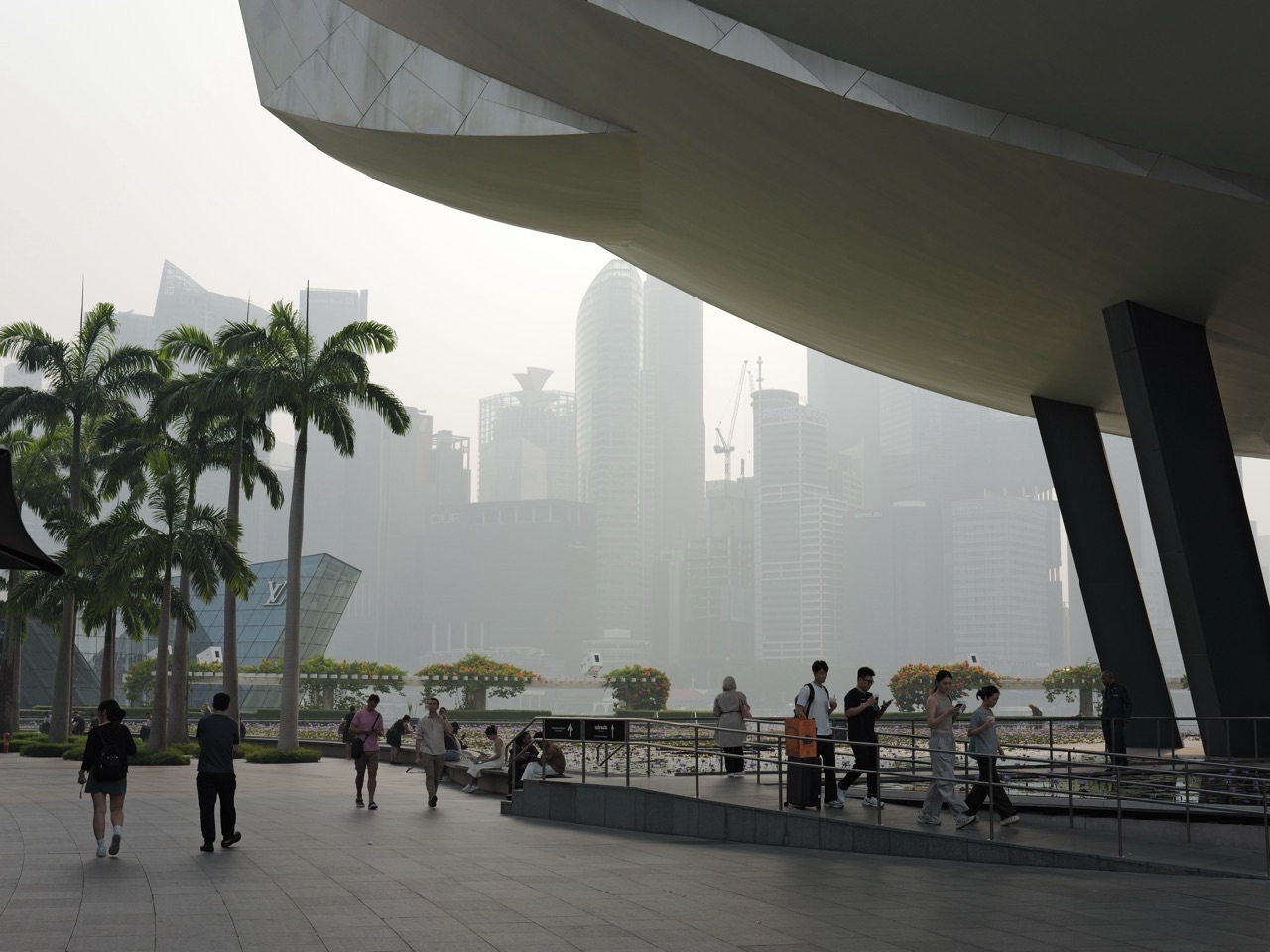
Do Singapore schools close when the haze becomes Unhealthy, and what happens to PE, CCA, preschool and national examinations? A high PSI does not by itself mean that every school has closed. MOE schools have continuity and haze-management plans, outdoor lessons and sports can be adjusted, and the actual school or examination authority communicates operational decisions. Check the NEA one-hour PM2.5 guide for immediate outdoor activities, the MOH haze health advisory for children and vulnerable students, and the messages from your child’s school or childcare operator. For PSLE, O-Level, N-Level and A-Level examination arrangements, use the Singapore Examinations and Assessment Board’s official haze page, not a social-media rumour.
This Singapore haze schools and parents guide explains preschool and childcare precautions, primary and secondary school operations, outdoor PE, CCAs, school camps, sports days, national examinations, student asthma, air purifiers, home revision and school journeys. Parents often ask whether their child must attend school when the air looks smoky, whether swimming training is cancelled, whether a school hall is different from an open court, and whether children need N95 masks. The short answer is to separate five decisions—attendance, the travel route, outdoor physical activity, the child’s health and the specific exam or event—rather than treating a PSI headline as one blanket rule. The Singapore Haze Lifestyle Guide covers general family routines; this guide follows the student and school system from arrival to dismissal.
Follow this specialist handoff: When an outdoor school activity is adjusted because of haze, the next question is whether the indoor learning space is suitable. The specialist learning-environment owner is MOE Reference 109 on classroom indoor air, comfort and learning conditions.
The distinction is especially important in 2026. SEAB’s exam-arrangements page, updated 10 September 2026, explicitly points candidates to haze-management information for national examinations. Meanwhile, an MOE school safety page updated 11 June 2026 describes school continuity and the need to monitor students with pre-existing heart or lung conditions. These are verified sources for different decisions; neither is a promise that all schools and exam rooms use identical opening times or activity arrangements.
Start with one simple question: school, sport or exam?
A parent sees the headline “PSI exceeds 100” and immediately starts asking whether school is cancelled. But a regular classroom lesson, a two-hour football CCA and a nationally scheduled examination are different activities with different management arrangements. It is more useful to determine exactly what will happen to the child that day.
If the question is regular attendance, read your school’s current message and any MOE announcement. If the question is outdoor sport, follow the school’s or coach’s operational instructions and consider the current PM2.5 and personal health guide. If the question is a national examination, check SEAB’s official communications and your examination centre instructions. If the question is whether a particular child with asthma can participate, follow their prescribed care plan and seek medical advice as appropriate.
This separates what the government has advised from what the school has decided and from what is necessary for the individual child. A parent need not guess a universal closure threshold, and a school need not be accused of ignoring a hazard simply because one outdoor event was moved indoors while classes continued.
The same approach applies across Singapore—from Clementi and Jurong to Punggol, Tampines, Woodlands, Sengkang, Yishun and Queenstown. A student’s neighbourhood changes the travel plan, but basic principles of environmental health and school communication remain the same.
Which air-quality figure matters to a student?
NEA reports both a 24-hour Pollutant Standards Index, or PSI, and one-hour PM2.5 concentration. The one-hour number is an immediate guide, useful before a school sports session or outdoor event. The 24-hour PSI forecast and corresponding health advisory help families and schools plan ahead. The two indicators are not measured in identical units; PSI is an index while PM2.5 is a fine-particle concentration measured in micrograms per cubic metre.
MOH’s one-hour PM2.5 bands are Normal at 0–55, Elevated at 56–150, High at 151–250 and Very High at 251 or more. At Elevated levels, healthy people should reduce strenuous outdoor activity for the next hour, while vulnerable people should avoid strenuous outdoor activity. At High, healthy people should avoid strenuous outdoor activity and vulnerable people should avoid all outdoor activity. At Very High, minimise outdoor activity, and vulnerable people should avoid it. Children belong to the vulnerable group for this public-health advice.
The 24-hour PSI forecast categories are Good 0–50, Moderate 51–100, Unhealthy 101–200, Very Unhealthy 201–300 and Hazardous above 300. At an Unhealthy forecast, MOH advises children to minimise prolonged or strenuous outdoor physical exertion. At Very Unhealthy, minimise outdoor activity. At Hazardous, avoid outdoor activity. Schools may have more specific operational protocols, so parents should use the actual school’s arrangements rather than invent one national cancellation rule from the table.
An important detail: an “indoor court” can be enclosed, naturally ventilated or partly open. A roof does not prove the air is filtered. If the activity is strenuous, check the real setting and the guidance, especially for a child with respiratory symptoms.
What MOE schools actually prepare for
MOE schools maintain continuity plans and health-related responses for haze. The Changkat Changi Secondary School safety page explains that MOE and schools have guidelines corresponding to the health advisory and that teachers watch for students who are unwell. It notes special monitoring for students with pre-existing heart or lung conditions and reminds parents to ensure that required medicines, such as inhalers for asthma, are available.
That is a better basis for planning than claiming every school will close at a fixed number. The school may be able to teach indoors while reducing or suspending particular outdoor activities. An outdoor assembly, fitness activity, sports training session or camp has different exposure characteristics from a classroom lesson. The actual decision is communicated through the school or relevant organiser.
There are also operational considerations that parents do not see directly: staff duty, indoor space, changes to timetable, school buses and medical support. A parent cannot infer all those conditions by looking at an open campus gate. Rather than trying to reverse-engineer school policy from pictures, use the official school communication channel.
If your child is vulnerable and the school has not been told about a relevant medical condition, communicate it privately through the appropriate process. A personalised arrangement can be important even where the majority of students can proceed with a modified activity.
Primary-school pupils: managing PE and outdoor play
Primary-school children often have several kinds of movement in one day: morning travel, assembly, recess, PE, a CCA and play after school. The longest or most strenuous item may not be obvious. A brief supervised journey between buildings and a prolonged football game should not be equated simply because both happen outdoors.
For PE, schools may use an appropriate indoor alternative or adjust the intensity and duration of activity according to current guidance. Parents should not invent a replacement PE timetable themselves. The school is responsible for implementing its operational plan. If an event is cancelled or relocated, teachers need reliable communication and families need clear pickup arrangements.
During recess, the student may still walk through outdoor corridors or eat in an open-sided setting. A roof can offer sun and rain protection without filtering particles. That does not mean every short outdoor movement is necessarily unsafe. The relevant advice accounts for age, health, exertion, duration and current readings. Use measured data rather than dramatic claims that any step outside causes immediate harm.
After school, do not automatically substitute an outdoor CCA with an hour of strenuous playground activity. Instead choose a comfortable indoor activity, reading, craft or age-appropriate low-intensity movement when health guidance permits. The goal is to protect learning and wellbeing together.
Secondary-school pupils: sports teams, CCAs and pressure to keep training
Secondary students often train for school teams, interschool competitions, running events or physical proficiency goals. A training plan creates pressure to complete the exact session even when air quality worsens. The intelligent adjustment is to preserve long-term fitness rather than making one unsuitable day a test of willpower.
When outdoor strenuous activity should be avoided, a coach can consider appropriate indoor technical work, tactical discussion, film analysis, low-intensity movement or postponement in accordance with school and sport guidance. A heavy indoor session in an open-sided sports hall may not solve the exposure problem. Any replacement should suit the individual student’s health, the venue and the relevant official advice.
Students who have asthma may be embarrassed about requesting a modification. Parents and coaches can make adjustments routine and private rather than treating them as weakness. A student should know whom to contact when symptoms begin and how their prescribed medication plan works. Persistent wheezing, worsening shortness of breath or chest discomfort require appropriate medical attention.
It is also worth teaching students how to interpret evidence. The 24-hour PSI forecast and the one-hour PM2.5 concentration can sometimes appear inconsistent because they answer different time questions. Learning the difference is more valuable than arguing about whether an old screenshot showed a higher number earlier in the day.
Preschools and childcare: ECDA has its own requirements
Preschools are not simply smaller primary schools. Younger children have different supervision needs, activity patterns and difficulties describing symptoms. Singapore’s Early Childhood Development Agency Code of Practice, fourth edition includes a dedicated section on management of haze. It sets out precautions for centres and distinguishes normal conditions from periods when pollution increases.
At a 24-hour PSI of 100 or below, the ECDA guidance includes continuing normal activities, identifying children with asthma or respiratory problems, ensuring medication arrangements and preparing an enclosed room with working air purification for children who become unwell. At PSI 101–200, it calls for minimising prolonged and strenuous outdoor physical activities and strenuous indoor exercise, while recognising that non-strenuous indoor movement can remain appropriate. Children with chronic heart or lung conditions require particularly cautious arrangements.
The exact protocol becomes more restrictive at higher PSI categories. Centres should refer to the current ECDA requirements and official advisory rather than treating a blog summary as an operating procedure. A centre may have a designated room for children who develop respiratory problems and procedures for informing parents. This does not give a caregiver permission to delay medical attention for a child who is struggling to breathe.
Parents can ask useful, specific questions: What has changed in outdoor play today? Who monitors official readings? How are children with asthma supported? What happens if a child develops respiratory symptoms? When are parents contacted? These are better questions than demanding that every preschool use precisely the same timetable.
A baby, a preschooler and a Primary 3 child do not need identical plans
Imagine a household with an infant, a four-year-old and a Primary 3 pupil. The infant does not have an outdoor CCA, but may still be exposed during childcare drop-off. The preschooler may normally have structured outdoor movement. The older child could have PE, recess and a sports club. One household needs three related but different decisions.
The infant’s priority may be a comfortable home or childcare room and minimal unnecessary outdoor time when conditions are poor. The preschooler benefits from gentle indoor play and a predictable routine. The Primary 3 child may be able to attend lessons while the outdoor sport component is modified. If any child has existing respiratory disease, their medical plan affects the choice more than the siblings’ energy levels.
Families can make the home adjustment positive. A short storytelling activity, puzzle, board game, drawing project or suitable movement session is a real alternative. It is not necessary to fill every cancelled outdoor hour with extra academic tutoring. Children often cope better when adults calmly explain why a plan changed.
A simple parent statement works: “The air outside has more tiny particles today. We are checking the official readings and choosing an activity that is better for us.” There is no need to dramatise the situation or promise a specific future date when the sky will be clear.
School assembly, recess, camps and learning journeys
Parents sometimes hear “outdoor activities are reduced” and wonder whether that includes assembly, recess, a learning journey or a camp. The answer depends on the actual event and the school’s current instructions. Outdoor activity is not only sport; a prolonged standing assembly or several hours on a learning journey also involve exposure.
An outdoor assembly can sometimes be adapted to an enclosed setting or changed in duration. Recess arrangements depend on the school’s spaces. Learning journeys may involve transport between venues and a mixture of indoor and outdoor segments. Camps often have both strenuous tasks and long periods outdoors, so they need their own contingency planning.
A sheltered campsite does not automatically offer particle-filtered air. Rain contingency and haze contingency are distinct. Parents should look at official camp instructions and be aware of where their child will actually spend time. Do not transfer one school’s historic camp policy to all other schools as though it is a standing national rule.
If a child becomes unwell during an event, the school’s medical and parent-contact arrangements matter. The right response is not to continue a demanding outdoor activity merely because other children are still comfortable. Risk management has to account for individual symptoms and health conditions.
School buses, MRT and the morning commute
A school may have adjusted PE perfectly, but a pupil still needs to travel. The journey may involve a walk to a bus stop, waiting outside, an MRT interchange and a final exposed crossing. For a young child, supervision and a predictable pickup location are crucial; reducing exposure must not introduce road-safety or safeguarding risks.
Start with the necessary parts of the trip. Use a convenient and safe route, reduce avoidable uncovered waiting, and avoid adding optional outdoor errands. A covered walkway helps with sun and rain but is not a guaranteed clean-air corridor. Enclosed train carriages and open bus platforms have different environments, but no general article can guarantee medical-grade filtration everywhere.
MOH states that N95 or equivalent masks are generally not needed for brief ordinary school or work commutes or indoors. Respiratory protection can be relevant for certain extended necessary outdoor exposures at higher pollution levels, but fit and health suitability are important. Children in particular should not be made to wear poorly fitting adult respirators as a substitute for reducing inappropriate activity.
If a student has asthma, keep the prescribed medication arrangements consistent with the school plan and seek medical advice when symptoms worsen. A parent can coordinate transport or a school pickup without assuming that a change in route makes the child completely free of exposure.
Exams during haze: use SEAB, not rumours
National examinations generate understandable anxiety. Students work for months toward PSLE, GCE N-Level, O-Level and A-Level papers. When haze appears just before an examination, rumours may spread that all papers are cancelled, moved or automatically eligible for special consideration. Such claims can be disruptive and are often unsupported.
The Singapore Examinations and Assessment Board maintains a page on examination arrangements during haze, updated in September 2026, and links to the relevant MOE and SEAB haze-management information. Candidates should use that current page, the appropriate exam-specific instructions and their school or examination centre’s official communication.
Do not invent an exam postponement based solely on a PSI reading. Equally, do not assume an exam will proceed unchanged under every imaginable hazardous situation. The relevant authorities manage the decision. Candidates should prepare to follow the announced arrangements and keep contact details and entry instructions readily accessible.
If a student is unwell, especially with significant respiratory symptoms, obtain medical advice and follow SEAB’s and the school’s established procedures for reporting illness or exceptional circumstances. Haze alone does not create an automatic individual special-consideration award. Each procedure has requirements, evidence and deadlines that should be confirmed with the authority.
PSLE families: keep preparation calm and practical
Primary 6 pupils may be especially sensitive to disruptions because routine supports their confidence. A haze episode can change recess, outdoor relaxation and transport, but study goals need not turn into a daily crisis. Parents can maintain regular sleep, appropriate revision breaks, meals and a consistent place to work.
First distinguish a health issue from an academic issue. If a child has breathing symptoms, address those. If a planned outdoor break is unsuitable, offer a quiet alternative, such as stretching when appropriate, drawing or a conversation. Do not replace every cancelled sports period with another practice paper; exhausted students generally do not learn well from constant emergency scheduling.
For the exam venue and timetable, rely on current SEAB PSLE information and the haze-examination page. A parent’s group chat can be useful for sharing the official link, but it is not the source of authority. Forward the actual notice rather than paraphrasing a screenshot without context.
A simple evening checklist can preserve confidence: exam details, writing instruments and permitted items, current official messages, safe transport and adequate rest. It is more helpful than discussing speculative cancellation thresholds with an anxious child.
O-Level and A-Level candidates: revision, practical papers and appointments
Secondary and pre-university candidates may have examinations, practical assessments, oral tests and consultations during a haze episode. Each assessment has its own official arrangements. Refer to the appropriate SEAB O-Level or A-Level candidate pages, plus haze notices and the school’s instructions.
A student preparing for a Chemistry or Biology practical examination should not invent changes to laboratory procedures based on a haze headline. Laboratories have existing safety arrangements, and examination organisers communicate modifications where needed. A student needing medical support should follow established processes rather than waiting until the exam begins to report a serious problem.
For revision, keep the process predictable. A learner can focus on two or three important tasks, take suitable breaks and avoid unnecessary outdoor exposure. If an outdoor study group is no longer comfortable, a suitable enclosed learning space or a remote discussion may work. That is a practical adaptation, not a change in the examination syllabus.
Looking ahead, Singapore’s new Secondary Education Certificate examinations begin in 2027. This is separate from the 2026 O-Level and N-Level arrangements. The MOE subject-based banding announcements explain the timeline. Avoid mixing examination cohorts and dates when sharing information with students.
Can a school classroom be made cleaner during haze?
MOE schools and early-childhood centres have building and operational arrangements to protect students during poor air quality. An enclosed room with appropriate filtration may help lower exposure to outdoor particles. But “indoors” is not automatically the same as “filtered,” and school buildings differ in ventilation, room use and equipment.
The ECDA Code of Practice includes preparations involving enclosed rooms with air purifiers for children who may become unwell. Parents should not assume every classroom everywhere has identical filter capacity or that every school is required to publish individual sensor readings. Ask the operator about its actual arrangements if your child has a medical vulnerability.
At home, the same principles apply: temporarily reduce smoky outside-air entry when appropriate, avoid indoor smoke sources and use suitable filtration if available. A standard fan moves air but does not remove PM2.5 by itself. Ventilation still matters when outdoor conditions improve. For a practical room sizing example, see Singapore Haze at Home: HDB Windows, HEPA and CADR.
A child with asthma needs more than a purifier. Properly prescribed medicines, an individual action plan, a parent-contact procedure and appropriate medical care are all important. Environmental controls help reduce exposure, but they do not replace clinical treatment.
Masks for children: what the official advice actually says
Families sometimes assume every child should wear an N95 for the entire school day. MOH’s guidance does not say that. It states that N95 or equivalent respirators are generally unnecessary for ordinary short commutes and indoor environments. The main precaution for children is to follow the haze health advisory when planning outdoor activity.
Child-size respirator fit presents special challenges, and MOH notes the lack of international certification standards for masks intended for children. An adult-size mask on a young child may leave gaps and create false reassurance. A mask that increases breathing difficulty is not a reasonable substitute for reducing exposure. Parents should use current official information and individual medical advice where applicable.
Normal surgical masks do not provide the same fine-particle protection as a properly fitted particulate respirator, although they may reduce contact with larger irritants. Do not turn a mask into a symbol that the child has somehow “solved” the environmental issue. Time and intensity outdoors remain central.
Schools and households can reduce anxiety by discussing protection without making dramatic claims. Show children where the official reading is and explain the planned change to activity. A calm decision based on evidence builds confidence.
What if a child becomes unwell during a haze period?
Haze can irritate the eyes, nose and throat and aggravate chronic respiratory conditions. Children may describe discomfort imprecisely, so parents and teachers should watch for new wheezing, persistent cough, unusual tiredness or difficulty breathing. Not every symptom occurring during haze is caused by haze; infections and other conditions can happen simultaneously.
For a student with prescribed asthma medication, follow the written care plan and ensure the appropriate adult knows about it. Do not independently increase or discontinue medication because of a PSI headline. If symptoms persist or worsen, seek clinical assessment. Severe breathlessness, chest pain, collapse or signs of a medical emergency warrant urgent help.
An unwell child may need to stay home or have different arrangements according to medical advice and the school’s policies. Avoid treating attendance as proof of good discipline when the child is actually struggling. Schools and parents share an interest in children learning safely.
A parent can give the school a concise factual message: the child’s symptoms, what medical advice has been obtained, and what practical adjustment is requested. Detailed health information should be shared privately, not broadcast in a class group chat.
Four examples from Singapore families
Clementi Primary 4 pupil. The school remains open but moves a planned outdoor PE session according to its haze plan. The parent checks the current reading, ensures the pupil knows the pickup arrangements and keeps evening recreation indoors if the personal guide recommends less outdoor activity. The child continues ordinary learning without an unnecessary dramatic change to the whole timetable.
Punggol preschooler. The childcare operator follows ECDA haze procedures. A parent asks how outdoor play has changed, whether the indoor room is comfortable and what happens if respiratory symptoms arise. They do not assume that a shaded waterway playground is an equivalent indoor alternative after school.
Tampines Secondary 3 athlete. The student has an outdoor training session while one-hour PM2.5 is High. The coach uses the school’s operational guidance to adjust the session, and the student follows personal health advice. An appropriate indoor technical review or rest can preserve learning without insisting on hard outdoor drills.
Jurong exam candidate. An O-Level student sees a speculative group-chat message saying a paper is cancelled because of haze. They consult the official SEAB haze arrangements page and school announcements, then prepare according to those instructions. The family discusses illness or special circumstances directly with the authority rather than assuming an automatic exam change.
These are illustrative scenarios, not claims that any particular school or examination had a specified air-quality reading on the day you read this.
A quick school-day haze decision table
| Question | First official source | Practical decision | Do not assume |
|---|---|---|---|
| Is school open? | School and MOE communication | Follow actual attendance and continuity arrangements | Unhealthy PSI automatically closes all schools |
| What happens to PE? | School or PE teacher | Check adjusted venue, intensity or postponement | A roof always means filtered air |
| What happens to CCA? | School or coach | Confirm schedule, pickup and personal health needs | Every CCA has the same rule |
| Is preschool outdoor play changed? | Operator and ECDA haze guidance | Ask about activity and vulnerable children | Preschool follows a university timetable |
| What happens to PSLE/O/A papers? | SEAB and exam centre | Read official current arrangements | An old screenshot cancels the paper |
| Child has asthma | Clinical plan and school communication | Keep medication and contact arrangements appropriate | A good-looking sky means no risk |
| Are masks necessary? | MOH haze advisory | Match advice to activity and fit | N95 is needed for every short trip |
| Is indoor air safe? | Operator’s real room arrangements | Consider filtration, ventilation and symptoms | Every air-con classroom is identical |
FAQ: Singapore schools during haze
Will MOE close schools if PSI reaches 101?
Do not assume an automatic nationwide closure at a single reading. MOE schools have haze continuity arrangements and may modify outdoor activities while normal lessons continue. Follow current announcements from MOE and the individual school, and use MOH health guidance for the child’s personal exposure decisions.
Is PE cancelled during haze?
PE may be modified, moved, reduced or postponed depending on the school and current conditions. A prolonged vigorous outdoor activity poses different exposure concerns from normal classroom teaching. The school’s operational announcement is authoritative for the actual class.
Are outdoor CCAs still allowed if students feel fine?
The activity decision must follow school and relevant sport guidance, not just whether a healthy student feels energetic. Children are included in MOH’s vulnerable categories. Some students have chronic conditions or symptoms requiring additional caution. Check the current band and activity instructions.
What about preschool children at PSI 101–200?
ECDA’s Code of Practice includes minimising prolonged and strenuous outdoor physical activities and strenuous indoor activity for children under those conditions, with additional protection for those with chronic heart or lung conditions. The operator should follow its current requirements and keep parents informed about actual arrangements.
Are school camps cancelled when haze arrives?
Schools and camp organisers use contingency plans, but there is no reliable universal answer without the actual event notice. An outdoor camp can involve prolonged exposure, so schools may change activities or location. Follow the organiser’s communication rather than applying an unrelated historic camp rule.
Will PSLE, O-Level or A-Level exams be postponed automatically?
Do not assume a postponement. SEAB has an official page covering examination arrangements during haze and is the appropriate source, along with your school or exam centre. Exam procedures can change with circumstances, but only current official announcements should be used.
Can a candidate claim special consideration because of haze?
Haze itself should not be treated as automatically granting special consideration. Follow SEAB’s applicable rules and reporting procedures for illness or exceptional circumstances, and seek medical assessment when appropriate. Keep evidence and contact the school or exam centre promptly.
Should every child wear an N95 to school?
No blanket requirement follows from MOH’s public guidance. N95 masks or equivalents are generally not needed for ordinary short school commutes or indoor environments. Activity adjustment is the key precaution, and fit and health suitability matter. Consult the current MOH guidance and a clinician when necessary.
Is the school hall safer than the field?
An enclosed room may reduce some outdoor particle entry, but actual ventilation, filtration and openings matter. A roofed open-sided hall is not equivalent to an enclosed filtered room. The school must apply its operational guidance to the real setting.
Can a child with asthma continue school?
That depends on symptoms, the prescribed asthma action plan, medical advice and the school’s arrangements. Many classroom routines may remain possible while strenuous outdoor activities are changed. Keep prescribed medication accessible and seek help for worsening symptoms.
Are HDB-to-school sheltered walkways protection against haze?
They provide shelter from rain and sun but may remain open to outdoor air. They should not be labelled particle-filtered corridors. Shortening unnecessary outdoor waiting can be useful, but age-appropriate supervision and road safety must remain priorities.
What should I tell my child about haze?
Explain that tiny particles can make the air less suitable for outdoor activity, so adults consult official data and sometimes change plans. Offer an alternative rather than describing every outing as dangerous. Evidence and flexibility are more helpful than fear.
Can a cancelled school sport session become an indoor strenuous workout?
Not automatically. The room’s ventilation and the child’s health still matter. ECDA, MOE, MOH and sport-specific guidance apply in different settings. The replacement should fit the actual circumstances rather than simply reproducing the same intensity under a roof.
What if the school and a social-media post say different things?
Use official school, MOE, NEA, MOH and SEAB communication. An online image may be undated or from another school. If the issue concerns your child, contact the school’s designated channel for clarification instead of forwarding a rumour.
Continue through eduKate’s haze and education ecosystem
The regional background begins with How Haze Works | SEA 2026. The household companion is Singapore Haze at Home: Windows, HEPA and CADR. Families can also use Singapore Haze Health, Singapore Haze Exercise and Singapore Haze Weekend Family Activities.
The education bridge is MOE V3.0 Reference 86: Air Quality, Haze and Environmental Monitoring Literacy, Why Science? Air Quality and PSI, Why Mathematics? Air Quality, PSI and Particulate Matter and Why English? Writing an Environmental Monitoring Report. EduKate’s immutable Clementi Secondary 1 Mathematics tutorial reference demonstrates the wider site’s clear question-first explanation approach.
For additional Singapore haze topics, explore Haze and Pets: Dogs, Cats and Small Animals and Haze and Outdoor Work: MOM, Construction and Delivery. Both concern parts of Singapore everyday life that schools and households frequently encounter.
Sources and maintenance note
Official sources: MOH Haze, NEA Haze Portal, SEAB Examination Arrangements During Haze, SEAB PSLE, SEAB O-Level, MOE School Safety example, ECDA Code of Practice Fourth Edition and MOE Full Subject-Based Banding information.
Prepared in October 2026 as a practical reference for parents and students. It is not a live school-status announcement or an official examination instruction. Check current official notices, school communications and individual health advice before acting. The goal is to keep education steady while making sensible adjustments whenever Singapore’s air changes.