
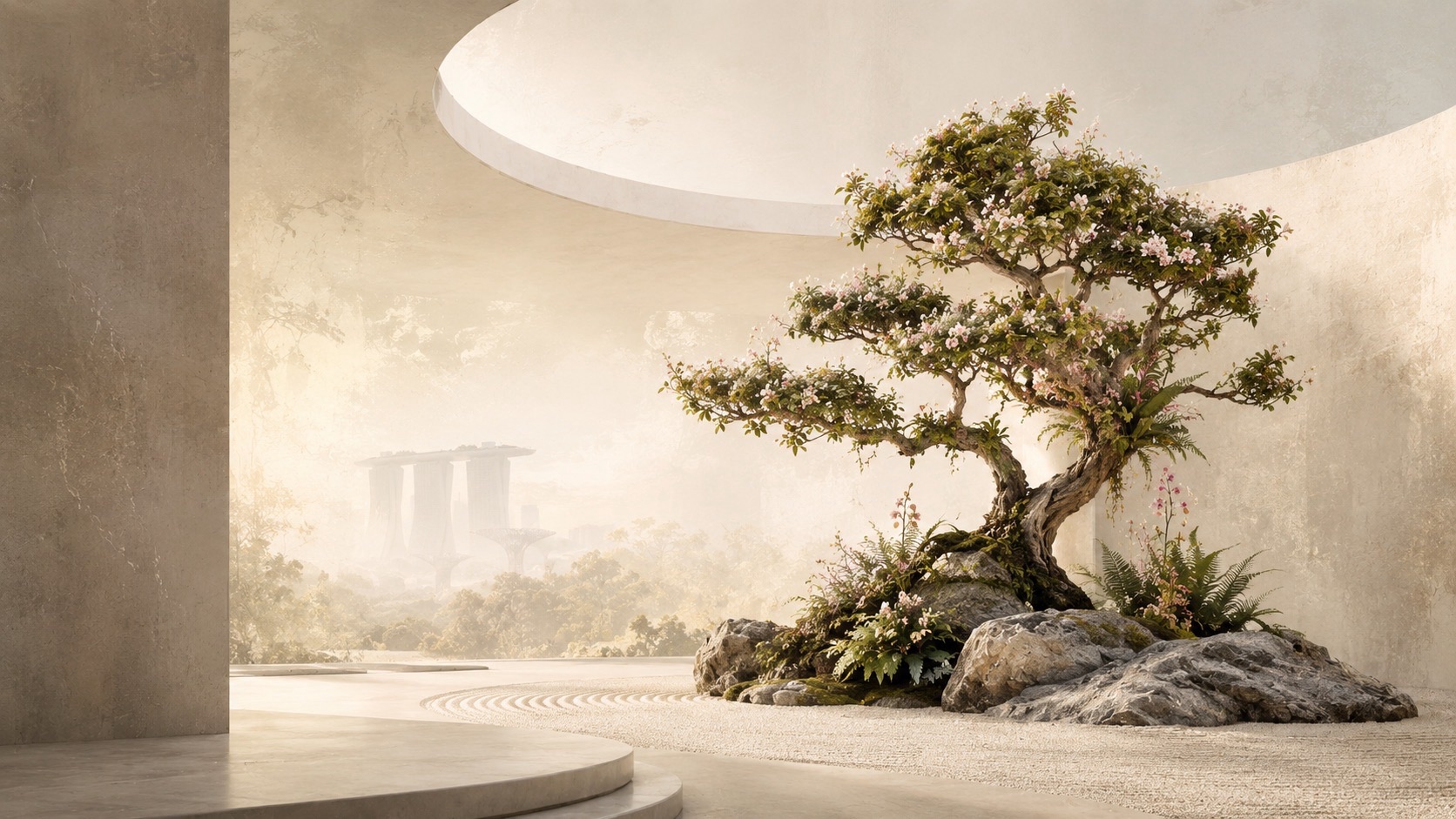
Luxury longevity is the idea that the finest things are designed not merely to impress when new, but to remain useful, beautiful, repairable and meaningful over time. People searching for durable luxury, timeless design, repairable luxury goods, long-lasting materials and sustainable luxury are really asking one question: what makes something worth keeping?
Did you know? Longevity may be one of luxury’s deepest tests because time eventually exposes everything. Weak finishes wear badly. Poor joints loosen. Fashion-led details date. Cheap coatings peel. Unserviceable mechanisms fail. But good materials, intelligent engineering, careful craftsmanship and proper maintenance can create objects that become more convincing as years pass. True luxury does not merely survive time. It learns how to look better inside it.
This is the longevity chapter of The Art of Luxury | What Is Luxury?, building naturally from The Art of Luxury | Provenance, The Art of Luxury | Craftsmanship and The Art of Luxury | Materials.
Luxury materials tell us what something is made from.
Craftsmanship tells us how it was made.
Provenance tells us where it came from.
Longevity asks whether it deserves to remain.
Did You Know? Durability Is Not the Same as Longevity
Durability describes resistance to wear, damage or failure.
Longevity is broader.
An object can be physically durable yet become obsolete, impossible to repair or emotionally disposable.
A long-lived luxury object needs more than strength.
- durable materials;
- repairable construction;
- replaceable wear parts;
- timeless proportions;
- maintainable finishes;
- continued usefulness;
- emotional or cultural meaning.
Longevity is durability plus reasons to care.
The Longevity Equation
A useful way to think about long-lived luxury is:
Luxury Longevity = Durability × Repairability × Maintainability × Timelessness × Attachment
If durability is zero, the object fails.
If repairability is zero, one failure may end its life.
If maintainability is zero, age becomes neglect.
If timelessness is zero, the object may survive physically but feel culturally exhausted.
If attachment is zero, the owner may replace it even while it still works.
Luxury Begins with Designing for the Second Decade
Many products are designed around the moment of sale.
Luxury longevity asks a harder question.
What will this look like after ten years?
After twenty?
What will wear first?
Can that part be replaced?
Will the material develop character or simply deteriorate?
Designing for the second decade changes the first decision.
Patina Is Age That Adds Meaning
Patina is one of luxury’s most beautiful relationships with time.
Leather softens.
Timber deepens in tone.
Metal changes at the surface.
Stone develops subtle wear.
These changes do not always reduce value.
They can make the object more personal because the surface records time, touch and use.
Read The Art of Luxury | Leather and The Art of Luxury | Timber.
Wear Is Not Always Failure
Luxury literacy requires knowing the difference between wear and failure.
A softened edge may be graceful wear.
A split structural joint is failure.
A surface darkened by use may be patina.
A flaking coating may be degradation.
Good design anticipates the way an object will age and allows acceptable wear to become part of its character.
Repairability Is a Luxury Feature
A repairable object makes a confident statement:
This is worth fixing.
Screws can be reached.
Panels can be removed.
Stitching can be reopened.
Surfaces can be refinished.
Mechanisms can be serviced.
Components can be replaced without destroying everything around them.
Repairability transforms ownership from consumption into stewardship.
Maintenance Is Part of Luxury, Not an Embarrassment
Nothing used in the real world stays perfect without care.
Wood needs conditioning.
Leather needs cleaning and moisture balance.
Stone may need sealing or repolishing.
Textiles need appropriate cleaning.
Mechanical systems need service.
Luxury longevity accepts maintenance as part of the relationship rather than pretending an object will remain new forever.
The Best Luxury Objects Have a Service Life, Not Just a Warranty
A warranty has a date.
A service ecosystem can last far longer.
Can the object still be repaired after the warranty ends?
Are parts available?
Are technicians trained?
Are service records maintained?
Can an independent specialist understand the construction?
Longevity depends on an ecosystem around the object, not only the object itself.
Luxury Craftsmanship Designs for Repair
Craftsmanship becomes more impressive when the maker thinks beyond assembly.
How will this come apart?
How can a damaged element be replaced?
Where should wear happen?
Which surface can be renewed?
What should remain untouched?
Designing for repair requires imagining a future craftsperson opening the object years later.
Continue with The Art of Luxury | Craftsmanship.
Timeless Design Is Not Design Without Character
Timeless does not mean bland.
It means the design’s value does not depend entirely on a short-lived trend.
Strong proportion.
Clear function.
Honest materials.
Good ergonomics.
Controlled detail.
These qualities can survive style cycles because they are rooted in use and form rather than novelty alone.
Fashion Ages Faster Than Proportion
A decorative trend can date quickly.
Good proportion tends to age more slowly.
This does not mean avoiding fashion.
It means deciding which parts should carry fashion and which should carry permanence.
A room can change textiles without demolishing the architecture.
An object can change a replaceable component without discarding its core.
Luxury longevity separates the permanent layer from the updateable layer.
Modularity Can Be Luxurious
Modularity is often associated with efficiency.
But it can also support longevity.
If one component fails, replace the component rather than the whole object.
If technology changes, update the technology layer while preserving the durable structure.
If upholstery wears, renew upholstery rather than discard the frame.
Luxury can be the freedom to evolve without starting again.
Good Materials Age in Different Ways
No material is immortal.
But materials fail differently.
- leather may dry, stretch or patinate;
- timber may move, dent or deepen in colour;
- stone may stain, etch or wear;
- metal may scratch, oxidise or fatigue;
- textiles may fade, pill or weaken;
- ceramics may remain chemically stable yet chip or crack.
Luxury material selection includes understanding the failure mode before choosing the finish.
Gold Lasts Because Chemistry Is on Its Side
Gold’s resistance to ordinary corrosion helps explain why ancient gold objects can survive in recognisable form.
That does not make every gold object durable in every sense.
Pure gold is soft.
Design and alloy choice still matter.
But chemically, gold gives luxury a remarkable relationship with time.
Read The Art of Luxury | Gold.
Titanium Turns Longevity into Engineering
Titanium’s strength-to-weight characteristics and corrosion resistance make it useful where durability must coexist with reduced mass.
Modern luxury often values this kind of technical longevity.
The object lasts not because it is heavy or traditional, but because materials science was used intelligently.
Continue with The Art of Luxury | Titanium.
Porcelain Shows How Fragility and Longevity Can Coexist
Porcelain can chip or break if mishandled.
Yet carefully kept porcelain can survive for centuries.
This is a useful distinction.
Fragile does not necessarily mean short-lived.
Longevity depends partly on use, storage and care.
Read The Art of Luxury | Porcelain and Ceramics.
Luxury Furniture Can Be Rebuilt Around a Strong Core
A well-made chair may outlive its upholstery.
A table may be refinished several times.
A cabinet may receive new hardware while its joinery remains sound.
This is the advantage of a strong structural core.
Long-lived luxury often separates the parts that age quickly from the parts designed to endure.
Architecture Is Luxury on the Longest Clock
A building may be used by people not yet born when it is designed.
That changes the meaning of longevity.
Structure matters.
Drainage matters.
Waterproofing matters.
Access for maintenance matters.
Adaptable floor plans matter.
Replaceable mechanical systems matter.
A luxurious building should age as an asset, not become a maintenance trap disguised by expensive finishes.
The Most Luxurious Building May Be the One That Can Change Use
Families change.
Work patterns change.
Technology changes.
Climate expectations change.
A rigid building may become obsolete while its materials remain intact.
Adaptability is therefore a form of longevity.
The ability to change without demolition is spatial luxury across time.
Provenance Becomes More Valuable as Objects Age
After decades, memory becomes unreliable.
Documentation protects continuity.
Who made it?
When was it serviced?
What was replaced?
Who restored it?
Where did the material come from?
A long-lived object without records can become mysterious.
A long-lived object with good provenance becomes legible.
Read The Art of Luxury | Provenance.
Heirlooms Turn Luxury into Intergenerational Design
An heirloom is an object that survives one owner.
That changes the ownership mindset.
The object is no longer merely mine.
It may belong temporarily to me.
This encourages better care, more complete records and slower replacement.
Luxury becomes custodianship.
Emotional Durability Matters
Why do people keep some objects and replace others?
Sometimes the difference is emotional attachment.
A gift.
A wedding object.
A travel memory.
A piece commissioned for a home.
An inherited table.
Objects with stories are harder to discard.
Luxury longevity can therefore be designed through meaning as well as material.
The Cost-per-Use View Changes Luxury Economics
An expensive object used for twenty years may cost less per use than a cheaper object replaced repeatedly.
This does not mean every expensive object is good value.
It means purchase price is only one economic measure.
Maintenance cost.
Repair cost.
Resale value.
Frequency of use.
Replacement interval.
These all matter.
Long-lived luxury changes the arithmetic from price today to value across time.
Resale Is a Test of Whether Value Survived Ownership
Secondary markets ask a brutal question:
Does someone else still want this after you are finished with it?
Objects with good materials, recognised craftsmanship, strong provenance and serviceability often have a better chance of carrying value forward.
Longevity becomes economic, not merely physical.
Sustainable Luxury Begins with Keeping Things Longer
Sustainability is complicated.
But one principle is easy to understand.
If a useful object lasts longer, the resources and labour invested in making it are spread across more years of use.
Longevity does not solve every environmental problem.
But disposability almost always makes the problem harder.
A culture of maintenance can be a culture of restraint.
Luxury Repair Preserves Embedded Skill
When an object is repaired, more than material is preserved.
The original designer’s decisions remain.
The maker’s work remains.
The owner’s history remains.
The repairer adds another layer of skill rather than replacing the entire story.
Repair is conservation of human effort.
Monaco: Longevity in a Collector Culture
Monaco offers a natural lens for longevity because yachts, watches, jewellery, art, classic vehicles and high-value property all depend on maintenance.
Ownership is not passive.
Boats require refits.
Mechanical objects require service.
Buildings require constant care.
Collections require conservation.
Luxury assets survive because maintenance ecosystems surround them.
Explore Crazy Rich Monaco | Monaco Classic Week, Vintage Yachts and the Maritime Heritage Economy.
Singapore: Longevity in a Tropical Climate
Singapore makes durability practical because tropical conditions are demanding.
Humidity.
Heat.
Heavy rain.
Ultraviolet exposure.
Air-conditioning cycles.
Salt air near the coast.
Luxury materials and buildings must be chosen for climate, not only appearance.
A beautiful material that fails prematurely in the tropics is not luxurious.
China: Longevity Through Repair, Craft and Cultural Continuity
For bilingual English–Chinese readers, longevity connects naturally with ideas of durability, inheritance, preservation and transmission.
耐用 means durable.
维修 means repair or maintenance.
修复 often refers to restoration.
传承 adds the idea of passing knowledge or tradition onward.
Longevity is therefore not only keeping the object alive.
It is keeping the knowledge around the object alive too.
English–Chinese Longevity Vocabulary | 长久耐用与维护词汇
- longevity — 长久性 / 使用寿命
- durable — 耐用的
- durability — 耐久性
- repairable — 可维修的
- repair — 维修
- maintenance — 保养 / 维护
- restoration — 修复
- serviceable — 可保养维修的
- replaceable part — 可更换部件
- patina — 包浆 / 岁月质感
- wear — 磨损
- heirloom — 传家之物
- timeless — 经典耐久的 / 不受时间影响的
- life cycle — 生命周期
- stewardship — 妥善管理 / 守护责任
Visit and Touring Vocabulary | Buying Things Worth Keeping · 购买值得长期使用的物品
1. How long is this designed to last? · 这个设计使用寿命有多长?
A useful question for durable goods. 中文:这个设计使用寿命有多长?
2. Can this be repaired? · 这个可以维修吗?
One of the best ownership questions. 中文:这个可以维修吗?
3. Are replacement parts available? · 有替换零件吗?
Useful for mechanical and engineered objects. 中文:有替换零件吗?
4. How should I maintain it? · 应该怎样保养?
Useful for materials, furniture and accessories. 中文:应该怎样保养?
5. Can the surface be refinished? · 表面可以重新处理吗?
Useful for timber, stone and metal. 中文:表面可以重新处理吗?
6. Is there a repair service? · 有维修服务吗?
Useful when buying something intended for long use. 中文:有维修服务吗?
7. What usually wears out first? · 通常哪里最先磨损?
A revealing question about design honesty. 中文:通常哪里最先磨损?
8. Has this been restored? · 这个修复过吗?
Useful for vintage and antique objects. 中文:这个修复过吗?
9. Is the restoration documented? · 修复有记录吗?
Useful for provenance. 中文:修复有记录吗?
10. Can this be passed down? · 这个适合传给下一代吗?
A beautiful question for heirloom-quality objects. 中文:这个适合传给下一代吗?
11. What care does the material need? · 这种材料需要怎样保养?
Useful across leather, timber, stone and textiles. 中文:这种材料需要怎样保养?
12. Is there a service record? · 有保养维修记录吗?
Useful for valuable used or vintage objects. 中文:有保养维修记录吗?
Continue with the Top 100 Vocabulary for Visiting and Touring | World City Directory.
How to Recognise Something Worth Keeping
- The structure feels more durable than the fashion applied to it.
- Wear parts can be replaced.
- Surfaces can be maintained or renewed.
- The maker or service network understands repair.
- The materials age in understandable ways.
- Documentation can follow the object.
- The design still works after novelty disappears.
- You can imagine wanting it after the excitement of purchase is gone.
Longevity begins when desire survives familiarity.
What Students Can Learn from Luxury Longevity
Engineering
Long life depends on fatigue, corrosion, tolerances, wear, redundancy and maintainability.
Economics
Cost-per-use, resale value, repair cost and replacement cycles change how value is measured.
Design
Timeless proportions, modularity and replaceable wear parts can extend useful life.
Environmental Thinking
Keeping useful things longer can reduce pressure for repeated extraction, manufacturing and disposal.
History
Surviving objects become evidence of how earlier people lived, made and valued things.
Character
Maintenance teaches patience, responsibility and respect for accumulated work.
Frequently Asked Questions
What does longevity mean in luxury?
Luxury longevity means designing objects, spaces or systems to remain useful, beautiful, repairable and desirable over long periods.
Is durability the same as longevity?
No. Durability is resistance to physical wear or failure. Longevity also includes repairability, maintenance, continued usefulness and emotional relevance.
Why is repairability luxurious?
Because repairability assumes the object is valuable enough to preserve rather than discard when one component fails.
What is patina?
Patina is the surface character that develops through age, oxidation, handling or use. In some materials it can add beauty and historical depth.
Can fragile objects be long-lived?
Yes. Porcelain, glass and delicate textiles can survive for generations when their use, storage and maintenance are appropriate.
Why are service records important?
They document maintenance, repair and component replacement, helping future owners understand condition and provenance.
Is timeless design always minimalist?
No. Timelessness comes from enduring proportion, function, material logic and cultural strength, not necessarily visual minimalism.
Does expensive mean long-lasting?
No. Price does not guarantee durability, repairability or access to long-term service.
How does longevity relate to sustainability?
Longer useful life can reduce the frequency of replacement and spread embodied materials and labour across more years of use.
What is the simplest test for luxury longevity?
Ask whether you can realistically imagine maintaining, repairing and still wanting the object ten or twenty years from now.
Helpful Reading Across the eduKate Knowledge Graph
- The Art of Luxury | What Is Luxury?
- The Art of Luxury | Provenance
- The Art of Luxury | Craftsmanship
- The Art of Luxury | Materials
- The Art of Luxury | Leather
- The Art of Luxury | Timber
- The Art of Luxury | Titanium
- Crazy Rich Monaco | Monaco Classic Week, Vintage Yachts and the Maritime Heritage Economy
- Top 100 Vocabulary for Visiting and Touring | World City Directory
The Art of Luxury Is Making Something Worth Keeping
Not merely expensive enough to desire.
Strong enough to use.
Beautiful enough to revisit.
Repairable enough to save.
Meaningful enough to remember.
And honest enough to age.
Did you know? Perhaps the most sustainable luxury object is not the one advertised as timeless. It is the one people actually refuse to throw away.