
What is luxury? Luxury is the condition in which life moves beyond basic necessity into exceptional quality, rarity, comfort, beauty, privacy, service, time and choice. The meaning of luxury changes across people and cultures, which is why searches for types of luxury, luxury lifestyle, modern luxury, luxury experiences and luxury travel can lead to very different answers. A fine object can be luxurious, but so can a silent room, an uninterrupted afternoon, a private view, a perfectly prepared meal, a handmade object, a trusted expert or simply the freedom to say, “Not today.”
Did you know? The most interesting way to understand luxury is not to begin with price. Begin with what becomes scarce when ordinary life becomes crowded. In one place, space is scarce. In another, time is scarce. Somewhere else, craftsmanship, privacy, clean air, personal attention, cultural access or certainty may be scarce. That is why luxury goods, luxury services, luxury hospitality and luxury experiences often seem completely different on the surface while solving the same deeper problem: they give a person more quality, control or meaning than everyday life normally allows.
Luxury, then, is not one object.
It is a human state built around surplus, scarcity, distinction, care and choice.
Did You Know? Luxury Is Relative
Academic research has long struggled to produce one universal definition of luxury because luxuriousness changes with context.
A hot shower may feel ordinary in one household and extraordinary in a place where water, heat or privacy is difficult to obtain.
A large room may feel unremarkable in a low-density countryside home and astonishing in the centre of a crowded global city.
A handmade object may be normal inside a craft community but rare in a mass-produced market.
Luxury is therefore partly objective and partly relational.
The material can be excellent.
The workmanship can be exceptional.
But the feeling of luxury also depends on what the person normally experiences.
Luxury Begins Where Necessity Ends — But It Does Not End There
At the simplest level, luxury is often described as something desirable but not essential.
That definition is useful, but incomplete.
Humans do not stop wanting once survival is secured.
We decorate.
We celebrate.
We improve tools beyond minimum function.
We turn meals into rituals, houses into architecture, clothing into identity and travel into memory.
Luxury appears when utility gains additional layers: beauty, symbolism, mastery, pleasure, privacy, status, heritage, rarity or emotional meaning.
The Five Great Ingredients of Luxury
Many forms of luxury can be understood through five ingredients.
1. Scarcity
If something is available everywhere, immediately and without limit, it becomes harder to experience it as luxurious.
Scarcity may come from limited land, rare materials, limited production, difficult skill, seasonal availability, restricted access or simply limited time.
2. Quality
Luxury often promises a higher level of material, execution, comfort, reliability, finish or sensory pleasure.
Price can imitate quality.
Real quality has to survive inspection.
3. Time
Some luxuries take enormous time to make.
Others save enormous time for the person using them.
That makes time one of luxury’s most interesting currencies.
4. Attention
Personal attention is expensive because one human being can only give full attention to a limited number of people at once.
This is why personalised service, private instruction, careful hosting and bespoke work can feel luxurious even without precious materials.
5. Control
At the highest level, luxury often means control over environment, schedule, access, noise, temperature, movement, company and decisions.
The guest is not merely buying a better chair.
The guest is buying fewer unwanted interruptions.
Why Humans Create Luxury
Luxury becomes possible when a society produces enough surplus that some labour, materials and time can be directed beyond immediate survival.
Once surplus exists, humans do several very human things with it.
- we make objects more beautiful than function requires;
- we make ceremonies more elaborate than survival requires;
- we use difficult materials because difficulty demonstrates skill;
- we reserve spaces for privacy, power or ritual;
- we give gifts that carry social meaning;
- we compete for distinction;
- we collect objects that carry memory or identity; and
- we create leisure because freedom from compulsory work is itself valuable.
Luxury therefore grows out of economics, but it quickly becomes culture.
Status Is Part of Luxury — But It Is Not the Whole Story
Thorstein Veblen made conspicuous consumption famous as a way of thinking about expensive consumption and social rank.
Later economic research formalised situations in which people may value costly goods partly because those goods communicate wealth or status to other people.
That mechanism is real.
But reducing all luxury to display would miss too much.
A private garden nobody sees can be luxurious.
An hour with no messages can be luxurious.
A perfectly repaired old object can be luxurious.
A meal cooked only for family can be luxurious.
Some luxury announces itself.
Some luxury disappears into the life of the person enjoying it.
Conspicuous Luxury and Inconspicuous Luxury
Conspicuous luxury works partly because other people can see it.
Inconspicuous luxury can work in the opposite direction.
It may hide its cost inside material quality, fit, quiet service, provenance, technical detail, access or private knowledge.
The person who knows, knows.
This distinction matters because social status is not always communicated by being louder.
In some circles, restraint itself becomes a signal of confidence.
Did You Know? Time Can Be More Luxurious Than Things
Researchers use the term time affluence for the sense of having enough time rather than constantly feeling rushed.
This gives modern luxury a fascinating reversal.
For someone with enough possessions, another possession may not change much.
But an unhurried morning can change the whole day.
A private transfer can remove waiting.
A well-designed service can remove administration.
A quiet retreat can remove demands.
Modern luxury frequently sells back the time and attention that modern life has fragmented.
Space Is Luxury in Dense Cities
In a dense city, square metres become a luxury language.
A wider entrance.
A room that does not need to perform three jobs.
A private balcony.
A garden buffer.
A generous bathroom.
A view with distance in it.
The luxury is not only the floor area.
It is the freedom from compression.
Read Crazy Rich Monaco | Monaco Real Estate, Property Prices and the Scarcity Economy for a place where land scarcity makes this mechanism unusually visible.
Privacy Is the Luxury of Choosing Who Gets Access
Privacy is not merely being alone.
It is control over access.
Who can enter?
Who can observe?
Who can interrupt?
Who can contact you?
This is why private entrances, separate lounges, screened gardens, discreet service corridors and appointment-only access can feel more luxurious than decoration.
Architecture becomes a social filter.
Service Luxury Is the Removal of Friction
A powerful luxury service does not make the customer feel busier.
It makes complexity disappear.
The traveller does not need to think about every transfer.
The diner does not need to coordinate every detail.
The resident does not need to solve every small household problem personally.
Behind the scenes, many people may be working extremely hard.
At the front of the experience, everything feels calm.
Luxury often hides labour by organising it well.
Craftsmanship Turns Time into Matter
Hand skill can make an ordinary material extraordinary.
Cutting, joining, polishing, stitching, carving, glazing, tuning, finishing and restoration all convert trained time into physical quality.
This is one reason craft belongs naturally inside the luxury conversation.
The material is only part of the value.
The invisible years of learning inside the hand matter too.
Continue with How Culture Works | Craft — How Skill Becomes Tradition Through Hands, Tools, Apprenticeship and Making.
Materials Matter, But Provenance Matters Too
Two objects can look similar and still have very different stories.
Where did the material come from?
Who made it?
How long did it take?
Can it be repaired?
Will it age well?
Luxury becomes deeper when provenance can be explained rather than merely implied.
Traceability turns a beautiful object into a knowable object.
Experiential Luxury Can Exist Without Ownership
Modern luxury is increasingly easy to understand through experiences.
You may not need to own the room, vessel, gallery, garden, table or landscape.
You may only need access to it at the right moment, under the right conditions.
Consumer research into “moments of luxury” has highlighted experiences that feel unusually freeing, scarce, caring, exciting or emotionally significant.
This helps explain why memory can compete with possession.
An extraordinary day can remain valuable after the physical setting is gone.
Access Can Be More Luxurious Than Ownership
Ownership creates control, but it also creates maintenance.
Access can offer the pleasure without the permanent responsibility.
A private room for one night.
A chartered vessel for one afternoon.
A table in a restricted dining room.
A private viewing before public opening.
A guided visit with an expert.
Luxury can therefore be temporary but still intense.
Read Crazy Rich Monaco | Monaco Yacht Show, Superyachts and Port Hercule for the extreme end of the access-and-ownership spectrum.
Knowledge Can Be Luxury
A person can possess an expensive object and still not understand it.
Knowledge adds another layer.
Knowing the history of a craft, the reason a material behaves a certain way, the etiquette of a ceremony, the architecture of a building or the ecology of a landscape can make an experience richer without making it more expensive.
This is cultural luxury.
It is the pleasure of seeing more because you know more.
Security and Certainty Can Be Luxury
People often notice luxury’s visible pleasures and miss its invisible protections.
Reliable transport.
Backup plans.
Trusted advisers.
Redundant systems.
Insurance.
Security.
Healthcare access.
Financial resilience.
At a certain point, luxury stops looking decorative and starts looking like reduced uncertainty.
Read Crazy Rich Monaco | Private Banking, Wealth Management and the Financial Centre for the financial form of this mechanism.
The Collector’s Luxury Is Continuity
Collecting can look like acquisition from the outside.
From the inside, serious collecting can be about continuity.
Objects connect maker, period, technology, taste, memory and future custodianship.
The collector may value completeness, rarity, condition, provenance or historical sequence.
The object becomes part of a system of knowledge.
Read Crazy Rich Monaco | Luxury Watches, Jewellery and the Collector Economy.
Wellness Luxury Is Often the Purchase of Better Conditions
Wellness becomes luxurious when the environment is designed to make good conditions easier.
Quiet.
Sleep.
Fresh food.
Clean air.
Movement.
Recovery.
Professional attention.
None of these is glamorous by necessity.
Luxury often means arranging ordinary human needs unusually well.
Food Luxury Is Precision, Ingredient, Timing and Hospitality
An expensive ingredient does not automatically create an exceptional meal.
Luxury dining can come from seasonality, freshness, technique, timing, service, setting, pacing and the confidence to leave unnecessary things out.
A perfect bowl of something simple can outperform a complicated plate if every decision is right.
The luxury is concentration of attention.
Travel Luxury Is Control Over the Journey
In luxury travel, the destination matters — but the transitions matter too.
Who handles the luggage?
How long is the queue?
Can the itinerary change?
Is the room ready?
Can dietary needs be handled without drama?
Can a guide adjust to the traveller’s interests?
Travel becomes luxurious when friction falls and choice rises.
Continue through the Top 100 Vocabulary for Visiting and Touring | World City Directory to connect travel knowledge with usable English–Chinese vocabulary.
Luxury Architecture Is Choreography
Great luxury architecture does more than look expensive.
It choreographs movement.
Guests arrive one way.
Service may arrive another way.
Private and public rooms have different acoustic, visual and circulation rules.
Light is controlled.
Views are framed.
Storage disappears.
Machines are hidden.
The building turns complexity into calm.
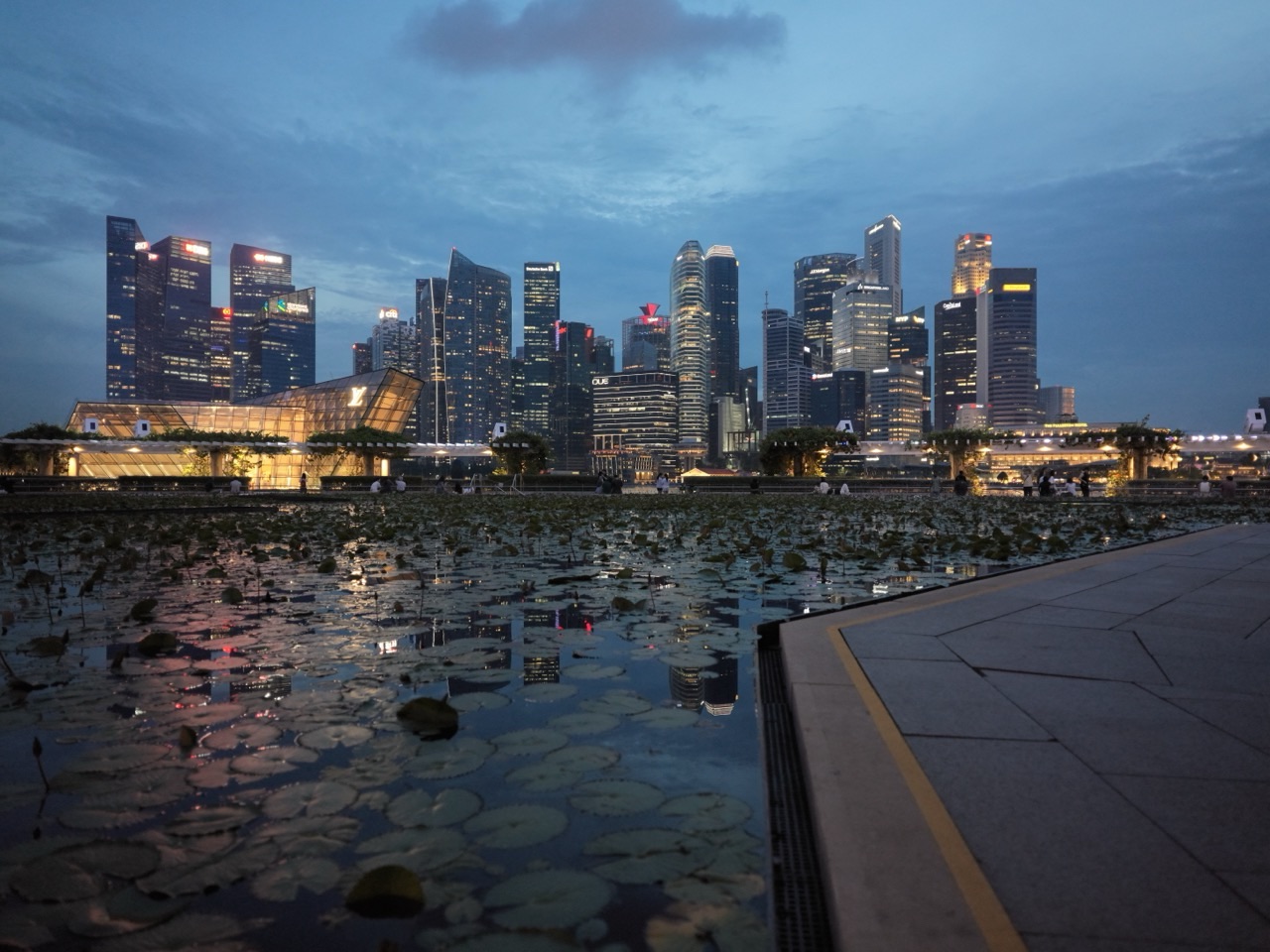
Singapore Makes a Brilliant Luxury Laboratory
Singapore is useful for understanding luxury because density makes scarcity visible.
Space has a cost.
Time has a cost.
Silence has a cost.
A long uninterrupted view has a cost.
Convenient transport can make time more valuable, while private transport can make schedule more controllable.
Dense-city luxury therefore often converts urban pressure into personal room: more space, more privacy, fewer queues, better coordination and greater certainty.
The city teaches an important principle.
Luxury is often the opposite of whatever everyday life has too much of.
Monaco Makes Scarcity Visible at National Scale
Monaco makes another mechanism unusually easy to see.
When land is extraordinarily limited and wealth is concentrated, space, access, privacy and location become powerful luxury variables.
This is why the wider Crazy Rich Monaco | Millionaires, Billionaires and the Wealth-Density Economy branch is useful beyond travel.
It is a living laboratory for how wealth interacts with urban scarcity.
Luxury Is a System, Not a Surface
A beautiful room depends on hidden systems.
Water.
Energy.
Cleaning.
Maintenance.
Security.
Logistics.
Reservation software.
Skilled labour.
Supply chains.
Training.
The customer sees serenity.
The system produces serenity.
That is why the best luxury can look effortless while being operationally demanding.
The Paradox of Luxury: Effortless for One Person, Intensive for Another
A hand-finished object feels effortless in use because somebody else spent years learning how to make it.
A calm hotel arrival feels effortless because dozens of operational details were solved before the guest appeared.
A private dinner feels intimate because procurement, preparation, timing and service were coordinated out of sight.
Luxury frequently transfers effort away from the consumer.
The more invisible the transfer, the more magical the result can feel.
Price Is a Signal, Not a Definition
High price can indicate scarce inputs, skilled labour, prime land, expensive service or limited production.
But high price can also exist without corresponding quality.
That is why price alone cannot define luxury.
A useful test is to ask:
- What is scarce here?
- What is unusually well made?
- What human time is being concentrated?
- What friction is being removed?
- What access is being granted?
- What knowledge is embedded?
- What will remain valuable after the novelty disappears?
If there is no good answer, the price may be the most luxurious thing about it.
Sustainable Luxury Asks a Harder Question: Will It Still Be Good Later?
Luxury and sustainability can conflict when consumption becomes resource-intensive, disposable or purely performative.
But luxury can also support durability, repair, restoration, skilled craft, provenance and long product life.
A better sustainability question is not simply, “Is it expensive?”
Ask:
- Can it be repaired?
- Can it age gracefully?
- Were the materials chosen responsibly?
- Was skilled labour respected?
- Will it be kept long enough to justify the resources inside it?
- Does the experience protect the place that makes it special?
Durability can be a form of quiet abundance.
For English–Chinese Readers: The Language of Luxury
- luxury — 奢华 / 奢侈
- refined — 精致的 / 高雅的
- exclusive — 专属的 / 限定的
- rare — 稀有的
- bespoke — 定制的
- craftsmanship — 工艺 / 精湛工艺
- provenance — 来源 / 出处 / 渊源记录
- private — 私人的 / 私密的
- discreet — 低调的 / 谨慎周到的
- curated — 精心策划的 / 精选的
- heritage — 传统 / 文化传承
- timeless — 经典耐久的 / 不受时间影响的
- scarcity — 稀缺性
- privilege — 特权 / 优待
- connoisseur — 鉴赏家 / 行家
A useful bilingual distinction: 奢侈 can emphasise expense or non-essential consumption, while 奢华 often carries a stronger sense of richness, splendour or luxurious quality. 高端 means high-end or premium, but high-end and luxury are not always identical.
Visit and Touring Vocabulary | Luxury Travel · 奢华旅行
1. Private suite · 私人套房
A larger private accommodation space, often with separate living areas. Example: “Does the private suite include a separate dining room?” 中文:私人套房有独立餐厅吗?
2. Butler service · 私人管家服务
Personalised assistance with guest arrangements and daily needs. Example: “Is butler service available throughout the stay?” 中文:入住期间全程提供私人管家服务吗?
3. Concierge · 礼宾服务
A service that helps arrange transport, dining, tickets and local requests. Example: “Could the concierge arrange a private guide?” 中文:礼宾部可以安排私人导游吗?
4. Private transfer · 私人接送
Pre-arranged transport reserved for one traveller or group. Example: “We would like a private transfer from the airport.” 中文:我们想预订机场私人接送。
5. Chauffeur · 专职司机
A professional driver providing dedicated transport. Example: “Can the chauffeur wait while we visit the museum?” 中文:我们参观博物馆时,司机可以等候吗?
6. Private dining · 私人用餐
A meal served in a reserved room or exclusive setting. Example: “Is private dining available for six guests?” 中文:可以为六位客人安排私人用餐吗?
7. Tasting menu · 品鉴菜单
A sequence of smaller courses designed as one complete dining experience. Example: “How long does the tasting menu usually take?” 中文:品鉴菜单通常需要多长时间?
8. Private viewing · 私人观赏 / 私人预展
Restricted access to an exhibition, collection or property outside normal public viewing. Example: “Can a private viewing be arranged before opening?” 中文:可以在开馆前安排私人预展吗?
9. Bespoke itinerary · 定制行程
A travel plan built specifically around one traveller’s interests and timing. Example: “We prefer a bespoke itinerary focused on architecture and food.” 中文:我们想定制一个以建筑和美食为主题的行程。
10. Exclusive access · 专属通道 / 专属使用权
Entry or use restricted to a limited group. Example: “Does the booking include exclusive access to the terrace?” 中文:这项预订包含露台的专属使用权吗?
11. Spa retreat · 水疗度假
A stay or programme centred on rest, treatments and wellness. Example: “We are looking for a quiet spa retreat.” 中文:我们想找一个安静的水疗度假地。
12. Panoramic view · 全景
A wide, uninterrupted view across a landscape or city. Example: “Does the room have a panoramic sea view?” 中文:房间有全景海景吗?
13. Appointment only · 仅限预约
Access available only after a booking is made. Example: “Is the gallery appointment only?” 中文:这家画廊只接受预约参观吗?
14. Discreet service · 低调周到的服务
Attentive help delivered without unnecessary interruption or attention. Example: “We appreciate discreet service and privacy.” 中文:我们重视低调周到的服务和隐私。
15. Heritage craft · 传统工艺
A making tradition passed through generations or maintained through specialist training. Example: “Is there a workshop where we can learn about the local heritage craft?” 中文:这里有介绍当地传统工艺的工坊吗?
What Students Can Learn from the Art of Luxury
Economics
Luxury reveals scarcity, willingness to pay, signalling, market segmentation, labour intensity and the economics of limited supply.
History
Palaces, ceremonial objects, textiles, gardens and feasts show how surplus and hierarchy were organised in earlier societies.
Psychology
Luxury can involve pleasure, reward, identity, memory, belonging, aspiration and status.
Architecture
Space planning shows how privacy, circulation, acoustics, light and service routes create comfort.
Language
Words such as bespoke, discreet, provenance and refined teach precision: expensive, premium, high-end and luxurious are related but not identical.
Systems Thinking
The visible experience depends on hidden infrastructure. Luxury is a useful way to study how many systems cooperate to make one moment feel simple.
Frequently Asked Questions
What is luxury?
Luxury is exceptional quality, scarcity, comfort, beauty, time, privacy, service, access or choice beyond ordinary necessity. It can be material or immaterial.
Is luxury always expensive?
No. High price is common because scarce materials, skilled labour, prime space and personal service are costly, but price alone does not create luxury.
What are the main types of luxury?
Useful categories include material luxury, spatial luxury, service luxury, time luxury, privacy, experiential luxury, cultural luxury, access, wellness, security and intellectual luxury.
Why do humans want luxury?
Because humans seek more than survival. We pursue comfort, beauty, celebration, mastery, identity, status, memory, autonomy and meaningful experiences once basic needs are met.
Is luxury mainly about status?
Status is one important mechanism, especially for visible consumption, but private pleasure, craftsmanship, time, security, privacy and meaningful experience can be luxurious even when nobody else sees them.
What is quiet luxury?
Quiet luxury is luxury communicated through quality, material, fit, service, restraint, knowledge or detail rather than obvious display.
Why is time considered a luxury?
Time cannot be manufactured or stored. When people are busy, freedom from rushing, waiting and interruption can become more valuable than another possession.
Why is privacy a luxury?
Privacy gives a person control over access, observation and interruption. In dense or highly connected environments, that control becomes scarce.
Can luxury be sustainable?
It can move in that direction when durability, repairability, responsible materials, skilled labour, long use and protection of place matter more than disposability.
What is the simplest test for real luxury?
Ask what is genuinely better: the material, skill, space, time, attention, privacy, access, knowledge, reliability or memory. If the only answer is price, the luxury may be shallow.
Helpful Reading Across the eduKate Knowledge Graph
- Crazy Rich World | Countries, Culture, Wealth, Travel and How the World Works
- Crazy Rich Monaco | Monaco Real Estate, Property Prices and the Scarcity Economy
- Crazy Rich Monaco | Private Banking, Wealth Management and the Financial Centre
- Crazy Rich Monaco | Luxury Watches, Jewellery and the Collector Economy
- Crazy Rich Monaco | Museum of Prehistoric Anthropology, Human Origins and the Archaeology Economy
- How Culture Works | Craft
- How Society Works | The Big Picture
- Top 100 Vocabulary for Visiting and Touring | World City Directory
References and Further Reading
- Going (in)conspicuous: antecedents and moderators of luxury consumption, open-access review in Journal of Consumer Marketing, via PubMed Central.
- Laurie Simon Bagwell and B. Douglas Bernheim, Conspicuous Consumption, Pure Profits, and the Luxury Tax, National Bureau of Economic Research.
- Sylvia von Wallpach, Andrea Hemetsberger, Thyra Uth Thomsen and Russel W. Belk, Moments of luxury — A qualitative account of the experiential essence of luxury, Journal of Business Research.
- Time affluence and health: a scoping review of conceptual and methodological patterns, 2026, via PubMed Central.
- Conspicuous consumption research: Thematic evolution, theoretical structure, and future directions, 2026 systematic review of 955 articles.
The Art of Luxury Is the Art of Making Scarcity Feel Like Ease
Luxury can be gold, stone, silk, glass, timber, food, land or transport.
But it can also be silence.
It can be time.
It can be privacy.
It can be a person who remembers what you need before you ask.
It can be a view protected from clutter, a craft protected from disappearance, a meal protected from hurry or a day protected from interruption.
Did you know? Perhaps the clearest definition of luxury is not “more expensive.” It is more deliberately human: more time where time is scarce, more space where space is scarce, more attention where attention is scarce, and more choice where ordinary life gives us less.
The Art of Luxury | Complete Series Directory
This article is the conceptual hero for the complete Art of Luxury series. For the wider project — Crazy Rich World, how countries built abundance, luxury travel and city touring — begin at the Luxury | World Directory.
Luxury Concepts, Experience and Civilisation
- The Art of Luxury | Access Over Ownership
- The Art of Luxury | Air
- The Art of Luxury | Attention Is the Rarest Luxury
- The Art of Luxury | Comfort Is Engineered
- The Art of Luxury | Craftsmanship
- The Art of Luxury | Effortlessness
- The Art of Luxury | Experiential Luxury
- The Art of Luxury | Fire
- The Art of Luxury | Freedom and Autonomy
- The Art of Luxury | Gardens
- The Art of Luxury | Imperfection
- The Art of Luxury | Legacy
- The Art of Luxury | Light
- The Art of Luxury | Longevity
- The Art of Luxury | Memory and Meaning
- The Art of Luxury | Patience
- The Art of Luxury | Patronage
- The Art of Luxury | Personalisation
- The Art of Luxury | Privacy Is the New Luxury
- The Art of Luxury | Provenance
- The Art of Luxury | Rarity and Scarcity
- The Art of Luxury | Repair and Restoration
- The Art of Luxury | Restraint
- The Art of Luxury | Ritual and Ceremony
- The Art of Luxury | Scent
- The Art of Luxury | Seasonality
- The Art of Luxury | Security and Safety
- The Art of Luxury | Service Is the Invisible Luxury
- The Art of Luxury | Silence Is Luxury
- The Art of Luxury | Sound
- The Art of Luxury | Space Is the New Luxury
- The Art of Luxury | Stewardship
- The Art of Luxury | Taste and Connoisseurship
- The Art of Luxury | Time Is the Ultimate Luxury
- The Art of Luxury | Touch
- The Art of Luxury | Trust
- The Art of Luxury | Water
Luxury Materials and Material Culture
For the dedicated material hierarchy, use The Art of Luxury | Luxury Materials.
- The Art of Luxury | Aluminium
- The Art of Luxury | Brass
- The Art of Luxury | Bronze
- The Art of Luxury | Carbon Fibre
- The Art of Luxury | Cashmere
- The Art of Luxury | Chromium
- The Art of Luxury | Cobalt
- The Art of Luxury | Copper
- The Art of Luxury | Crystal Glass
- The Art of Luxury | Diamond
- The Art of Luxury | Gemstones
- The Art of Luxury | Gold
- The Art of Luxury | Iridium
- The Art of Luxury | Iron
- The Art of Luxury | Lacquer
- The Art of Luxury | Leather
- The Art of Luxury | Manganese
- The Art of Luxury | Marble
- The Art of Luxury | Molybdenum
- The Art of Luxury | Nickel
- The Art of Luxury | Niobium
- The Art of Luxury | Osmium
- The Art of Luxury | Palladium
- The Art of Luxury | Pearls
- The Art of Luxury | Platinum
- The Art of Luxury | Porcelain and Ceramics
- The Art of Luxury | Rhenium
- The Art of Luxury | Rhodium
- The Art of Luxury | Ruthenium
- The Art of Luxury | Silk
- The Art of Luxury | Silver
- The Art of Luxury | Stainless Steel
- The Art of Luxury | Tantalum
- The Art of Luxury | Timber
- The Art of Luxury | Titanium
- The Art of Luxury | Tungsten
Continue into the World
- Luxury | World Directory
- Crazy Rich World
- How Countries Got So Rich | World Country Directory
- Top 10 Things to Do in Every Country | Luxury | World Country Directory
- Top 100 Vocabulary for Visiting and Touring | World City Directory
Series navigation: The Art of Luxury | Complete Series Directory · Luxury | World Directory · Crazy Rich World