
Invasion ecology investigates the movement, establishment, spread and impacts of organisms introduced beyond their native range through human activities. Not every introduced organism is invasive: the important distinction is whether negative effects are actually demonstrated or credibly assessed.
This Gold Standard guide explains the stages of biological invasion, from introduction pathways to population monitoring and responsible management. Worked fictional examples distinguish detection, observed abundance, species richness, density and ecological damage so readers can test the meaning of each claim.
THE GOLD STANDARD · INVASION ECOLOGY
Trace the introduction. Test the impact. Protect the ecosystem.
Chapter index
Origins, terminology and pathways · Chapters 1–9
- What invasion ecology actually studies
- Native, alien, established and invasive are not synonyms
- Human transport creates introduction pathways
- Arrival does not guarantee establishment
- Establishment is a population question
- Spread occurs through identifiable mechanisms
- Ecological impact is a separate evidentiary claim
- Interactions alter food webs and other networks
- Islands expose both ecological vulnerability and uncertainty
Impacts, measurements and monitoring · Chapters 10–18
- Cities and farms are also invasion environments
- Invasion pathways may operate across fresh and marine waters
- Detection can be difficult when populations are small
- Worked example: a survey with imperfect detection
- Species richness and introduced abundance are different metrics
- Worked example: area-normalised observations
- Introduced plants can modify habitats
- Climate change may alter invasion opportunities
- Prevention and early response have distinct roles
Safeguards, control, transfer and reading · Chapters 19–24
1. What invasion ecology actually studies
Invasion ecology investigates how organisms introduced outside their native ranges arrive, establish reproducing populations, spread, interact with resident species and sometimes produce damaging effects. It is a scientific discipline examining processes, not a general instruction to treat every unfamiliar organism as harmful. Transport, introduction, establishment and spread are different stages; ecological impact adds a further question about what changed after arrival.
The IPBES 2023 Thematic Assessment of Invasive Alien Species distinguishes alien from invasive alien species and treats impact as central to its assessment. The IUCN overview of invasive alien species likewise describes invasive alien species as organisms moved outside their natural range by human activities that negatively affect biodiversity, ecosystem functions or human wellbeing. A garden plant may be non-native yet show no demonstrated invasive impact; a harmful invader may be a plant, insect, vertebrate, fungus or pathogen.
The gold standard begins with identification, geographic range, pathway, time and evidence of impact. The mere sight of a species with an unfamiliar name cannot replace these observations.
2. Native, alien, established and invasive are not synonyms
Native range refers to where a species occurs without human-mediated introduction under the relevant biogeographic understanding. An alien species has been introduced beyond its natural range through human action, intentionally or accidentally. Establishment means a population persists and reproduces without continued introduction. Invasive alien species are a harmful subset, defined in relation to ecological or other relevant impacts.
These categories depend on place, evidence and time. A species can be native to one island but alien to another. A single abandoned ornamental plant does not demonstrate establishment. A growing introduced population requires investigation before harm or invasion status is asserted, even if risk management may reasonably begin before every consequence is documented.
The IPBES 2023 Thematic Assessment of Invasive Alien Species gives definitions and the stages of the invasion process. Use the precise term warranted by the evidence and avoid turning ‘alien’ into an insult or an automatic ecological verdict.
3. Human transport creates introduction pathways
International trade, travel, horticulture, aquaculture, shipping and the movement of materials can carry organisms or propagules beyond historical range boundaries. Some introductions are deliberate; others are accidental passengers on equipment, cargo or vehicles. A pathway identifies how movement can occur, not proof that an individual consignment carried a particular organism.
Prevention works best when authorities understand which pathways pose credible risks and can apply proportionate measures. Inspections, quarantine and appropriate biosecurity may be relevant within authorised regimes. Teaching the pathway does not mean encouraging students to move live organisms or test transport procedures themselves.
The IUCN overview of invasive alien species explains prevention and management across stages, while the IUCN’s October 2026 global strategy discusses coordinated action internationally. The most valuable decision often occurs before a new population becomes established.
4. Arrival does not guarantee establishment
Many introduced individuals never form self-sustaining populations. Survival, reproduction, suitable habitat, competitors, predators, disease, climate and the size and frequency of introduction all matter. A visitor or newly arrived organism may disappear without leaving a persistent population, while another introduction can succeed under favourable conditions.
Propagule pressure describes aspects of the number, frequency and composition of introduced individuals or viable propagules. It can influence establishment probability, but it is not the only driver. A small introduction into a highly suitable habitat may still succeed, while repeated introductions may fail if essential conditions are absent.
Research should distinguish a detection event from evidence of local reproduction. An adult insect observed near a port does not by itself prove that eggs, larvae and continuing populations are present nearby.
5. Establishment is a population question
A population becomes established when it can persist and reproduce under the relevant definition without needing repeated introductions. Evidence may include multiple life stages, repeated surveys, recruitment over time or documented expansion. The strength of the evidence depends on the biology of the organism and the available monitoring design.
Carefully record how a species was identified, whether individuals could have been repeatedly transported and which habitats were examined. Apparent persistence might be continual arrival rather than local breeding. Conversely, a population may be established yet difficult to detect because individuals spend much of the year concealed or inactive.
The Ecology and Biogeography roots support spatial and population reasoning. A valid claim names the type of evidence that distinguishes establishment from continued import.
6. Spread occurs through identifiable mechanisms
After establishment, organisms may expand through natural dispersal, human transport or connected habitats. Spread rate depends on reproductive timing, mobility, landscape barriers, local climate and the availability of suitable new sites. One measured frontier is not necessarily a steady expansion rate over an entire future decade.
A species can spread rapidly across a corridor but slowly through fragmented habitat. Seeds and larvae may move through different vectors, sometimes involving vehicles, water, animals or human handling. Managers need to examine the pathway most relevant to the specific species and place rather than apply one generic containment plan.
Mapping should distinguish confirmed records from unverified sightings and areas not yet surveyed. A blank map square could reflect insufficient observation, not genuine absence. The spatial model should be updated when new records change the inference.
7. Ecological impact is a separate evidentiary claim
An invasive population may affect native species through predation, competition, herbivory, disease transmission, habitat modification or other pathways. The presence of an alien organism in a habitat does not by itself prove which impact occurred. The mechanism must be supported with appropriate observation, experiment or comparative evidence.
An observed decline of one native species after an introduction may have other causes, including habitat loss or extreme weather. A convincing study examines the competing explanations and whether changes are consistent across sites and periods. The IPBES 2023 Thematic Assessment of Invasive Alien Species synthesises documented global impacts without implying that every alien species has the same effect.
The gold standard describes the measured outcome and limits of attribution, whether the outcome is species abundance, community composition, ecosystem service or another well-defined variable.
8. Interactions alter food webs and other networks
Invaders can participate in predator–prey relationships, change food availability, modify vegetation or introduce disease pathways. Some effects are direct, such as predation on a resident organism; others operate indirectly through food webs or habitat. The strength and direction of effects can vary among sites and years.
A new predator may affect prey numbers, yet a prey decline cannot be attributed solely to that predator if other pressures changed. A plant may alter habitat structure with consequences for insect or bird communities. Researchers need to distinguish a hypothesised link from an observed mechanism.
Use Biodiversity and Conservation to deepen the wider community context. A useful food-web diagram states what each arrow means and what evidence supports its direction.
9. Islands expose both ecological vulnerability and uncertainty
Islands often contain distinctive species and ecological relationships shaped by isolation, limited range and history. Some may be especially vulnerable to introduced predators, competitors or pathogens, but vulnerability differs with the organisms and habitat. One famous island story does not establish the risk for every island worldwide.
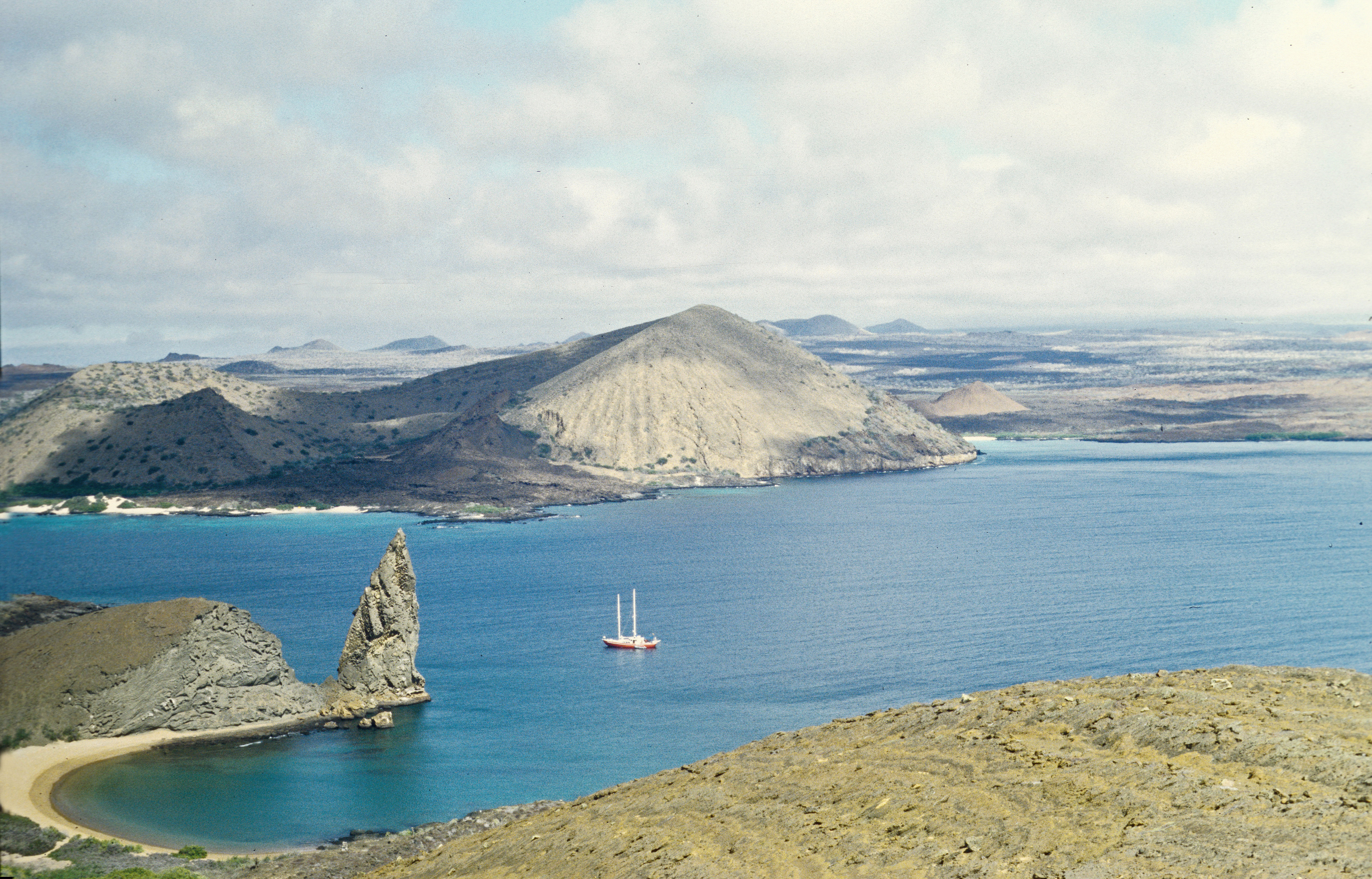
The photo selected for this article shows Bartolomé Island in the Galápagos as an illustration of island geography, not evidence of a particular invasive-species event at that photographed site. Linking a landscape image to claims of actual invasions without supporting records would be misleading.
The Island Biogeography root examines isolation, colonisation and local extinction dynamics. Invasion ecology adds the distinct question of human-mediated introduction and the impacts that follow.
10. Cities and farms are also invasion environments
Urban parks, gardens, rivers and agricultural landscapes may provide pathways and resources for introduced organisms. Repeated disturbance can create opportunities for some species, while high movement of goods and people can facilitate transport. But no urban habitat should be assumed to contain a damaging invader merely because humans modified it.
An agricultural invasive-species concern may involve crop loss or ecosystem impacts, while a city park may raise questions about native plant regeneration or public risk. These decisions require different methods and authorities. Terms such as weed or pest can refer to management priorities and are not substitutes for formal evidence about biogeographic origin.
The Environmental Science root connects land use, ecosystems and human decisions. A strong study identifies both the ecological mechanism and the management purpose.
11. Invasion pathways may operate across fresh and marine waters
Rivers, lakes, ports and coastal habitats can receive alien species through different transport routes and human activities. Hydrological connectivity and seasonal conditions may then affect survival and spread. Marine fouling organisms and freshwater aquatic plants create different challenges, so one monitoring method cannot represent them both adequately.
Water movement can spread propagules, but transport also depends on life history and local barriers. The presence of an organism downstream is not automatic proof of its source. Water chemistry, salinity and temperature may affect suitability for establishment.
The Marine Biology and Ecology roots provide broader habitat context. Researchers must align sampling and claims with the specific water system rather than treating every aquatic detection as interchangeable.
12. Detection can be difficult when populations are small
Early populations may be sparse, concealed or active only under particular conditions. A survey failing to detect the species does not prove it is absent. Detection probability depends on the method, observer, time, habitat and population size, and can be especially important when the species is rare.
A field programme should record search area, duration, number of sampling units and relevant conditions. Repeating an appropriate survey may improve the chance of detection, but only under defensible assumptions about independence and detection behaviour. A single negative record should not be used to declare a landscape free of the organism.
Detection, occupancy and abundance answer different questions. Occupancy indicates whether a species uses a site under the selected definition; abundance concerns how many individuals are present or estimated. The Statistics root gives the needed modelling concepts.
13. Worked example: a survey with imperfect detection
Imagine an entirely fictional monitoring system in which a suitable survey detects an established species with probability 0.60 under specific conditions. If two visits were independent and detection probabilities stayed constant, the probability of missing it both times would be (1 − 0.60)² = 0.16, or 16%. The complementary chance of at least one detection would be 84%.
Those results apply only under the explicit assumptions that the species truly occupies the site, the two survey outcomes are independent and the 0.60 probability is appropriate. Real visits may be correlated by weather, life stage, equipment or observer. The calculation is not a universal detection rate and should not determine actual biosecurity protocols without specialist evidence.
Now imagine a negative result from two visits. It does not prove absence; the chance of both misses under this fictional model is still 16%. This illustrates why early detection must be paired with sound survey design.
| One-visit detection | Two independent misses | At least one detection |
|---|---|---|
| 60% | (0.40)² = 16% | 84% |
14. Species richness and introduced abundance are different metrics
Species richness counts identified species in a defined sample, while abundance describes the number of individual organisms or an estimate. A site can contain many individuals of one introduced species without being rich in introduced species. Similarly, an increase in total species count after an introduction may coexist with losses of particular native species.
Consider fictional equal-effort surveys. Site A records 120 introduced individuals representing two species; Site B records 80 individuals representing four introduced species. A has greater recorded introduced abundance; B has greater recorded introduced richness. Neither statement alone describes impact on native populations.
Compare survey coverage, species identification and habitat conditions before interpreting the difference. The figures should not be repackaged as a simple ‘invasion severity’ index without an evidence-based reason.
15. Worked example: area-normalised observations
Suppose a fictional team counts 72 introduced plants in twelve equal quadrats of 0.5 square metre, a total sampled area of six square metres. The observed density is 72 ÷ 6 = 12 plants per square metre. Another site yields 54 plants in six such quadrats, a sampled area of three square metres and observed density of 54 ÷ 3 = 18 per square metre.
The raw count is larger at the first site, but its observed density is lower. The result does not prove that the second site’s overall population or ecological damage is larger; sampling locations and detection may differ. It is a comparison of observed density under fictional sampling conditions.
A careful field report states quadrat placement, size, count rules and uncertainty. Counting seedlings, mature plants and repeated stems under different rules can make apparently comparable numbers meaningless.
| Site | Plants observed | Area sampled | Observed density |
|---|---|---|---|
| A | 72 | 6 m² | 12/m² |
| B | 54 | 3 m² | 18/m² |
16. Introduced plants can modify habitats
Some introduced plants may alter light availability, fuel characteristics, soil or habitat structure as they establish and spread. The effects depend on their traits, abundance, resident community and environmental conditions. A fast-growing introduced plant is not necessarily invasive simply because it grows visibly in one season.
Researchers examine whether native recruitment, other organisms or ecosystem processes change, and whether alternatives such as disturbance or climate explain those changes. Observing a dense stand can prompt a question but is not sufficient to infer that a particular ecological service has collapsed.
The IPBES 2023 Thematic Assessment of Invasive Alien Species discusses impacts across different kinds of invasive organisms. Claims about a specific species require local and taxon-specific evidence, not direct transplantation of global averages.
17. Climate change may alter invasion opportunities
Changing temperatures, rainfall, extreme events and land use can modify where organisms survive and how they disperse. A warming climate may open some areas to species previously unable to establish, but local responses differ and some species may lose suitable habitat. Predictions depend on the model, data and assumptions.
The IUCN 2025 brief on invasive species and climate change describes interacting drivers. A modelling map is a scenario estimate, not a confirmed location of future populations or exact invasion date.
Adaptation planning benefits from credible monitoring and reducing human introduction pathways. Treating climate as the sole explanation can conceal manageable transport and land-use drivers.
18. Prevention and early response have distinct roles
Prevention aims to reduce opportunities for new harmful introductions. Early detection and rapid response focus on identifying and managing a new population before it spreads widely. Later-stage control or restoration may require different resources and trade-offs. These stages should not be combined into one slogan about removing all non-native organisms.
The IUCN’s October 2026 global strategy describes a coordinated global response involving science, policy and partnerships. In real settings, legal authority, ecological risk, staff competence and humane or environmental safeguards shape what interventions are permitted and appropriate.
This educational guide does not recommend that readers capture, release, transport, poison or eradicate species on their own. Suspected invasive-species problems should be raised through relevant local environmental authorities.
19. Management choices can cause unintended effects
Control programmes can have non-target consequences, including harm to other organisms, changes in food webs, contamination or disturbance. Even a technique effective against one target may be inappropriate in another habitat or jurisdiction. Success must be defined before action and evaluated against both intended and unintended outcomes.
Eradication means removing the target from a defined area under a stated standard of evidence; it is stronger than observing lower counts at one site. Suppression or containment describe different aims. A single season of nondetection does not automatically establish eradication.
Decisions need qualified ecological assessment, lawful authorisation, long-term monitoring and attention to animal welfare and affected communities. Prevention may avoid risks and costs that later removal makes unavoidable.
20. Biological control requires expert safeguards
Biological control can involve using one organism to influence another population. The concept is not the same as the casual release of a predator into a landscape. Introducing a new organism can produce additional ecological risks, and suitability depends on host specificity, local ecology, regulation and monitoring.
Students can learn from publicly documented case studies without acquiring, breeding or releasing organisms. The scientifically important questions are what mechanism was proposed, how non-target risks were evaluated and what occurred after implementation.
The IPBES 2023 Thematic Assessment of Invasive Alien Species covers management options and their evidence. Invasion ecology must consider the risk of a proposed remedy becoming another ecological problem.
21. Monitor outcomes, not just intervention activities
A programme may count traps installed, inspections completed or hectares treated. These indicate activity, not necessarily reduced ecological impact. Outcome measures might track confirmed target populations, native species recovery or relevant ecosystem conditions over an appropriate period.
Monitoring must account for changing detection, weather and survey effort. A reduction in observed individuals could reflect actual decline, a shift in behaviour or a change in how sampling was conducted. Reliable evaluation records the method and investigates plausible explanations.
The Research and Conservation roots support outcome-focused design. A good management report states what was attempted, what evidence indicates and what remains unknown.
22. Public policy must distinguish evidence from value judgements
Conservation decisions involve ecological goals, budgets, affected livelihoods, public health and legal responsibilities. A species might create measurable damage in one place while also having social or economic significance. The fact of that tension does not erase the ecological evidence; it demands transparent discussion of objectives and consequences.
Decision-makers should define which harm they aim to prevent and which trade-offs they are willing and authorised to accept. Global assessments inform the science but do not determine every local action without context. Communities and specialists may have differing legitimate concerns.
Use Ethics and Environmental Science for the wider principles of responsible management. A scientifically sound claim should remain distinct from a contested policy preference.
23. Independent practice and changed-context transfer
Question one: an introduced plant appears once near a path. Does that alone prove an established invasive population? No; continued reproduction and damaging impacts have not been established. Question two: 72 plants in six square metres is 12 per square metre, while 54 in three square metres is 18. The smaller raw count has the higher observed density.
Question three: under a fictional 60% detection probability per independent visit, what is the chance of two misses when the species is present? Sixteen percent. Does a negative survey prove absence? No. Question four: how does an introduced species differ from one documented to be invasive? Harm is an additional evidentiary requirement.
Change the habitat from an island forest to an urban canal. Reconsider pathways, sampling method, possible affected species and authority before transferring a control proposal. Sound reasoning adapts to the new ecosystem.
24. Frequently asked questions and linked learning
Are all alien species invasive? No. Is a native species always harmless? No; native organisms can also cause serious problems, but their presence does not make them an invasive alien species under the standard definition. Does a single sighting demonstrate establishment? No. Does a survey reporting zero individuals prove eradication? Not by itself.
Can one invasive organism affect more than one ecological relationship? Yes, through direct and indirect effects. Does every management strategy require removal? No; prevention, monitoring, containment and restoration may have different roles depending on law and evidence.
For connected study, follow Ecology, Conservation, Island Biogeography, Biodiversity, Statistics and Research. The IPBES 2023 Thematic Assessment of Invasive Alien Species and IUCN overview of invasive alien species are primary references. The worked numbers are fictional. The wider reasoning method appears in The Gold Standard of Education: Learning Transfers into Life.