
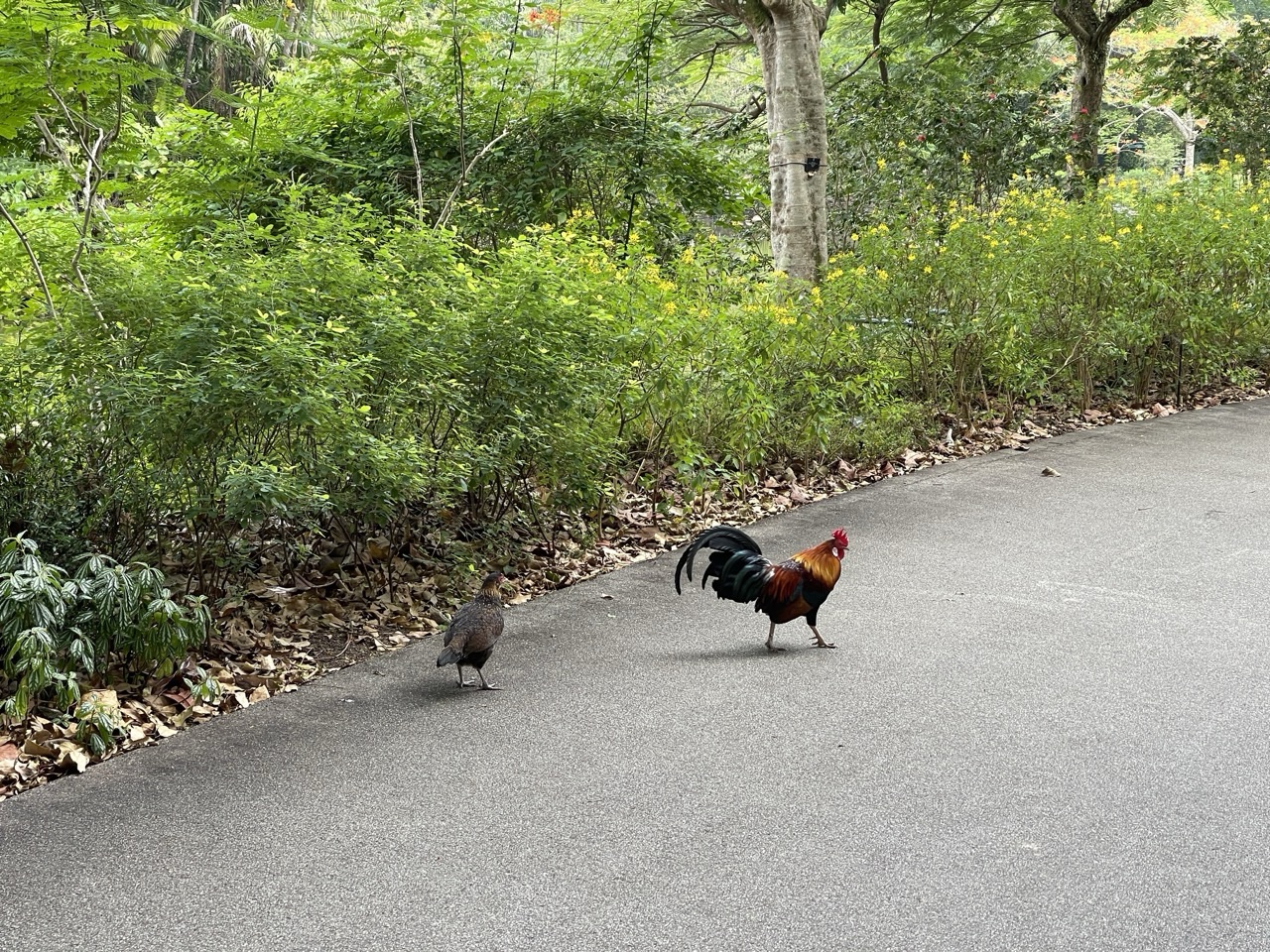
The gold standard of wildlife is helping wild populations and the habitats they depend on persist, while treating individual animals responsibly and using evidence that can survive inspection. A beautiful photograph, one rescue or a larger list of sightings can be valuable. Each answers a different question from whether a population is secure.
This root guide connects wildlife observation, ecological corridors, citizen science, sensitive-location data, education and lawful trade. Start with the actual need: learning what lives nearby, evaluating a conservation claim, improving a survey or deciding how to behave around a wild animal.
The fieldwork examples are hypothetical teaching cases. Observe within the rules of the place and follow current guidance from the responsible authority. A learning project never creates permission to enter restricted areas, handle wildlife or disturb breeding sites.
Find your next learning step
Choose the question closest to your task, or read the chapters in order.
- Understand wildlife — Individuals, populations and habitats.
- Improve observation — Identification, methods and an effort calculation.
- Protect animals and evidence — Encounters, sensitive locations and outcomes.
- Test a claim — Corridors, trade and practical learning.
- Choose a specialist guide — Observation, habitats and community routes.
Full chapter index
Chapters 1–5
Chapters 6–10
Chapters 11–15
Chapters 16–17
Wildlife is a broad practical category of organisms living outside domesticated management. This guide focuses on wild animals and their ecological relationships. Plants, fungi, water, soil and microorganisms remain essential to the habitats and food webs those animals use. A wildlife problem rarely stops neatly at the outline of one animal.
Begin by separating the individual, population, species and habitat. Helping an injured individual is an animal-care task. Maintaining a viable population requires attention to survival, reproduction, movement and threats. Species-level assessments can span many populations. Habitat work concerns the places and processes supporting them.
A successful action at one level does not automatically establish success at another. A release event does not by itself demonstrate long-term survival. More visitors to a wildlife attraction do not establish an improvement in wild populations. Conversely, less dramatic work on habitat condition can be important even when it produces few photographs.
State the intended outcome in plain language. Which organism or ecological relationship matters? What problem is being addressed? Over which area and period? This prevents a well-intentioned activity from becoming a solution to a question nobody actually asked.
A habitat is more than a patch coloured green on a map. Animals may need feeding areas, shelter, breeding places, water and routes between them. The useful conditions can vary by species and life stage. An area suitable for one organism may be unsuitable for another.
For a learning walk, look for relationships without disturbing them. Describe vegetation structure, available shade, visible water, surrounding land use and possible barriers. Keep observation separate from inference. Seeing a bird beside a tree does not prove it nests there or depends on that tree species.
Urban conditions add movement, noise, lighting, roads, buildings, pets and human food sources. A connection that looks continuous to a person may still be difficult for a small animal to cross. Conversely, an organism may use a route that a simple map fails to reveal.
The Ecological Corridors guide develops this landscape view. The point is not to assume that every connection works. It is to ask what evidence shows actual use, whether the connection serves the relevant species and which hazards remain along the route.
Contents · Previous chapter · Next chapter
Identification turns an observation into a potentially useful record, but confidence must match the available evidence. A brief distant view may support a family or genus rather than a species. Record the most defensible identification and preserve the uncertainty.
Write down features that can be observed: size in context, shape, markings, movement, call, habitat and time. Photographs or audio can support later checking when collected appropriately. Do not invent a detail because it would make a preferred identification fit.
An identification app provides a suggestion. Its output is not independent confirmation. Check whether the proposed species occurs in the relevant place, whether distinguishing features are visible and whether a knowledgeable reviewer agrees. If the evidence remains ambiguous, keep an uncertain record.
Common names and scientific names also need care. Different names may refer to the same species, and a familiar name may be used loosely. Before counting species, check whether the list contains synonyms or repeated entries. A cleaner table is more useful than a longer list built from uncertain labels.
Contents · Previous chapter · Next chapter
An observation method should follow the question. A casual walk can reveal interesting organisms. It does not automatically support comparison between sites, years or management approaches. Comparisons need an understood sampling method.
Write the route or observation points, time of day, duration, search effort, observer arrangement and recording rules. Mark weather and visibility conditions that may affect detection. Keep the method consistent where possible and describe departures rather than concealing them.
Detection is not the same as presence. An animal can be present without being seen. A higher count can reflect more observers, a longer visit, better equipment or more favourable conditions. Repeated observations and appropriate methods help interpret the pattern, but do not remove every uncertainty.
NParks’ citizen-science programmes offer structured ways to participate in biodiversity recording. Follow the selected programme’s protocol rather than combining fragments from several activities and calling the result comparable. The programme’s instructions define what a valid contribution requires.
Source context: NParks — Citizen Science Programmes.
Bounding habitat residence time between tracking fixes separates point counts from duration and works through explicit crossing assumptions, irregular gaps and uncertain boundary classifications.
Matching Habitat Use with Each Animal’s Available Environment compares original habitat-use records with explicitly paired availability, then tests unequal animal weights, classification uncertainty and the limits of ecological interpretation.
A line drawn between recorded fixes is also distinct from an animal’s continuous travel. Bounding Travel Distance Without Counting Location Error as Movement separates recorded distance, uncertain true positions and the path between them, with original joint bounds, speed constraints and sampling checks.
Contents · Previous chapter · Next chapter
Imagine a hypothetical park survey. In the first visit, one observer spends 30 minutes and records 12 birds. In the second, two observers spend 60 minutes each and record 30 birds. The raw count rises from 12 to 30, but effort has increased from 0.5 observer-hours to 2 observer-hours.
For an elementary arithmetic check, the encounter rates are 12 ÷ 0.5 = 24 birds per observer-hour and 30 ÷ 2 = 15 birds per observer-hour. This makes the effort difference visible. It does not establish that bird abundance fell: observers may overlap, individuals may be counted twice and detection conditions may differ.
A sound conclusion is therefore narrow. The second visit produced more recorded birds under a different observation effort. The two visits alone do not show population growth. The next step is to use a suitable standard protocol and repeat the work under comparable conditions.
Ask students to write three columns: observed, calculated and inferred. Put the counts and effort in the first, the simple rates in the second and the limited conclusion in the third. This small exercise teaches the difference between arithmetic correctness and ecological evidence.
Contents · Previous chapter · Next chapter
Responsible observation begins by giving wildlife space and keeping the animal’s behaviour central to the decision. A close encounter can feel rewarding to a person while being disruptive to the animal. An image is not worth changing a feeding, resting or breeding situation.
Follow current site rules and species-specific official guidance. Avoid feeding, chasing, crowding, baiting or manipulating an animal to create a photograph. Keep pets controlled under the applicable rules. Manage rubbish and food so that people do not create unnecessary attraction or conflict.
An apparently unattended young animal is not automatically abandoned. A person without the necessary knowledge may misread a normal situation. Where an animal appears injured or a situation creates a concern, use the appropriate local reporting or response channel and follow its advice rather than improvising handling.
Teachers should explain these boundaries before a visit. Students need a simple plan: observe, keep an appropriate distance, tell the responsible adult and record only what can be collected without interference. Ethical restraint is a scientific skill because disturbance can alter the very behaviour being studied.
Contents · Previous chapter · Next chapter
A wildlife record can be accurate and still be unsuitable for unrestricted publication. Precise nest, den or rare-species locations may create disturbance or exploitation risks. Sharing requires judgment about who needs the detail and what access is appropriate.
Separate the original evidence from the public display. An authorised project may need accurate coordinates for analysis while a classroom presentation uses a less precise description. Follow the receiving programme’s rules and the relevant authority’s advice; do not invent a universal masking distance.
Photographs can reveal more than their caption. Background landmarks, route descriptions and embedded metadata can identify a location. Removing a coordinate field while leaving an easily recognisable landmark may not achieve the intended protection.
The sensitive-nest case study in the directory explores this failure. The lesson transfers beyond wildlife: the right information should reach the people who can use it responsibly, while public sharing should consider consequences. An impressive open map is not automatically a responsible map.
Contents · Previous chapter · Next chapter
Conservation work should define the threat and explain why the proposed action addresses it. Habitat loss, fragmentation, disturbance, pollution, invasive organisms and exploitation are different problems. Each needs evidence appropriate to its mechanism.
An activity record tells us what was done. An outcome record asks what changed. The number of volunteers, plants installed or signs erected can describe effort. Those numbers alone do not establish improved breeding success, survival or habitat function.
Choose indicators that fit the project and acknowledge the time needed for a meaningful response. Use a baseline where available, repeat measurements and consider alternative explanations. A comparison site or other careful design can strengthen inference when appropriate, but its suitability depends on the actual ecological question.
A project can report uncertainty honestly and still be useful. The stronger claim is not always the better claim. A precise account of limited evidence helps the next team continue the work; an inflated success story can cause the underlying problem to disappear from attention.
Source context: NParks — Bird study using citizen-science data.
Contents · Previous chapter · Next chapter
Suppose a hypothetical estate advertises a new planted strip as a successful wildlife corridor. The planting has been completed and photographs show green cover. That establishes an intervention and a visible change. It does not yet establish safe movement by the species the corridor is meant to support.
Start by identifying the intended organisms, the areas being connected and the barriers along the route. Then ask what evidence is suitable and proportionate: properly planned observations, records of actual use, habitat condition and continuing threats. Use competent ecological input for decisions beyond a classroom exercise.
Imagine that observations show animals entering one end but a road remains a hazardous break. The finding does not mean the planting has no value. It means the claimed continuous function is not established and the unresolved barrier needs attention.
For students, draw the proposed chain of benefit: planting changes habitat; habitat supports use; use supports movement; movement contributes to the conservation goal. Place the available evidence beside each link. The first verified link cannot stand in for all the later ones.
Contents · Previous chapter · Next chapter
Wildlife trade questions require the actual species, material, origin, transaction and jurisdictions. A common name or a statement that an object is old is not enough to determine the correct route. The CITES permit guide in the directory explains the importance of identification and documentary traceability.
Permits and conservation are connected but distinct. A document must match the real item and proposed movement. Its existence does not answer every question about animal welfare, ecological impact or broader lawful requirements. For an actual transaction, confirm the current requirements with the responsible authority.
Similarly, an animal-care organisation and a conservation programme may have different roles. Rehabilitation, release, captive management, population monitoring and habitat protection each demand suitable competence. The public should be able to understand what a service does and how its claims are evaluated.
This is a root guide for understanding the connections. It does not classify an individual specimen, authorise trade or recommend handling. The useful next step is to follow the specialist route that matches the real task, with the underlying identification and evidence intact.
Contents · Previous chapter · Next chapter
A new learner can begin with careful description: identify a few common organisms with appropriate support, explain where each was observed and distinguish an observation from a guess. The goal is accuracy and attention rather than an impressive species total.
A learner who already recognises species but makes broad claims needs stabilisation in method. Keep effort records, check duplicate entries, preserve uncertainty and compare like with like. A smaller dataset collected consistently can teach more than a large uncontrolled list.
An advanced learner can investigate detection, sampling bias, movement evidence and the design of conservation evaluation. They should also examine the ethics of collection and sharing. Better analysis does not create permission to obtain data through harmful or unauthorised methods.
Parents and teachers can support all three routes by asking calm, specific questions. What did you actually see? What makes that identification likely? What else could explain the change? What would you need to know next? These questions build independence without turning every nature walk into a test.
Contents · Previous chapter · Next chapter
Before a visit, choose one question and learn the relevant rules. During the visit, keep a modest record under the approved method. Afterwards, check identifications, organise the evidence and write one proportionate conclusion. Include a limitation and a sensible next question.
Mathematics helps with units, effort and comparison. Science explains organisms and interactions. Geography connects habitat with land use and scale. English makes the distinction between possible, likely and demonstrated visible to another reader. Wildlife study becomes richer when these disciplines support each other.
AI can suggest identification features or help organise a draft table. Verify its claims and do not upload sensitive locations or other restricted material without permission. Keep the human observer’s original record. Replacing it with a polished reconstruction destroys useful provenance.
The final scorecard is practical: clear purpose, credible identification, appropriate method, safe and ethical conduct, protected sensitive information, realistic interpretation and a next step someone can act on. The gold standard is sustained care supported by evidence, including the judgment to leave a wild animal undisturbed.
Contents · Previous chapter · Next chapter
A claim such as wildlife returned after restoration contains several questions. Which organisms returned? How were they identified? Was the observation effort comparable before and after? Was the site used temporarily or repeatedly? What happened in nearby areas over the same period? A careful reader makes these questions visible before accepting a large conclusion.
An absent baseline does not make every later observation worthless. It changes what can be claimed. A project may establish current use without establishing improvement from a measured starting point. Report that distinction and design the next monitoring step accordingly.
A photograph can document an organism at a place and time when its provenance is credible. It cannot on its own establish population size, reproductive success or the entire effect of a management intervention. Different questions need different evidence.
For students, rewrite an inflated headline into a supported one. Replace a declaration that a species has been saved with a precise description of the observation and remaining uncertainty. This exercise protects both scientific reasoning and public trust.
Contents · Previous chapter · Next chapter
A useful field note records enough context for later checking without creating unnecessary disturbance or disclosure. Start with the observation date and period, a location appropriate to the project, the method, observer effort, the organism or provisional identification and the actual evidence. Record conditions or interruptions that affect interpretation.
Separate original notes from later corrections. If a reviewer changes an identification, preserve the reason and the status of the revised record. Quietly replacing the original label without explanation can make it difficult to reconstruct how the conclusion developed.
For a school project, use an invented or suitably non-sensitive example to practise the record structure. Ask another group to identify what can be checked and what information is missing. The exercise can reveal that a very detailed description still omits duration or effort.
End with a proportionate conclusion. The record should make the next person’s work easier: confirmation, programme submission, another observation or a decision to leave the matter unresolved. A reliable small contribution is part of conservation capability even when it produces no dramatic story.
Contents · Previous chapter · Next chapter
Follow the published specialist guide that matches the actual question. These pages examine particular mechanisms, duties and services; this root explains how those parts connect. The directory lists the relevant articles verified for this guide.
Observation and responsible evidence
- The Gold Standard of Citizen Science | Careful Observations, Protected Wildlife and Useful Evidence
- The Gold Standard of Citizen Science | Trustworthy Observations, Safe Fieldwork and Responsible Data
- Gold Standard Practical Case Study 57 | The Citizen Science Map Made a Sensitive Nest Easy to Find
- The Gold Standard of a Ministry of Education | School Biodiversity Observation Logs, Ethical Sampling and Outdoor Science Evidence
Habitats and ecological connections
- The Gold Standard Of Urban Ecological Corridors
- How Singapore Connects | Nature Reserves, Ecological Corridors and Wildlife Crossings
- The Gold Standard of Environmental Remediation Engineering | Cleanup with Evidence and Lasting Protection
Community participation and trade
- Singapore Haze Volunteering and Citizen Science | NParks Biodiversity Watches, Community Gardens and Safer Fieldwork
- The Gold Standard of NParks CITES Permit Application Services | Lawful Wildlife Trade and Verifiable Origins
The Gold Standard of Education | Learning That Transfers into Life connects these subject decisions with clear explanation, independent practice and responsible action.
Contents · Previous chapter · Next chapter
What is the gold standard of wildlife?
Responsible care for wild populations and their habitats, supported by reliable observations, proportionate conservation action and honest reporting.
Do more sightings prove a population is increasing?
No. Effort, timing, visibility and detection can change. A trend needs suitable repeated evidence.
Can an app identify every animal?
No. Treat its output as a suggestion and check distinguishing features, location and uncertainty.
Should a school publish exact nest locations?
Consider the risks and follow the project’s rules and official guidance. Public learning rarely needs unrestricted precise locations.
Is a wildlife corridor successful as soon as planting is finished?
Planting completion is an activity result. Ecological function requires evidence appropriate to the intended species and outcome.
What is a useful first activity for children?
Supervised observation of common wildlife, using careful descriptions and respectful distance, followed by a discussion of what was seen and what remains uncertain.
Contents · Previous chapter · Next chapter
Use the primary sources below for their particular subject and current official information. The worked examples and learning routes in this guide are teaching illustrations; they do not claim that the sources endorse this article.
- NParks — Citizen Science Programmes
- NParks — Become a Citizen Scientist
- NParks — Bird study using citizen-science data
Explore first-principles Mathematics learning for the underlying habits of diagnosing a gap, explaining a method and checking an independent application.