
Zoologists study animals, their behaviour, populations, evolution and relationships with habitats. Their professional challenge is to turn appropriate observations into conclusions that can withstand scientific review without unnecessarily harming wildlife. This Singapore-focused guide uses a fictional forty-trigger camera-trap study to show why sightings and population counts are different things.
The eduKate Gold Standard means accountable evidence, qualified methods and real-world usefulness. This is an individual zoologist career guide, distinct from veterinary practice and zoo keeping. All scenarios use invented observations and provide no instructions for handling, trapping or locating sensitive wildlife.
Quick answer: what makes an excellent zoologist?
A professional zoologist asks a clear animal-biology question, obtains appropriate Singapore research permissions, uses humane and justified scientific methods, records observations truthfully, accounts for sampling effort and uncertainty, and explains what the findings do and do not show. Animal welfare and conservation responsibility are integral to the work.
Worked example: forty camera triggers are not forty animals
| Fictional observation category | Triggers | What is established |
|---|---|---|
| Clear animal records | 18 | Usable observations, not necessarily unique individuals |
| Uncertain image or identity | 12 | Further review may be needed |
| No relevant animal in image | 10 | Trigger occurred, not a zoological encounter |
| Total recorded triggers | 40 | Not a population census |
Eighteen divided by forty equals 45% clear animal records under this fictional categorisation. It does not estimate the percentage of animals present or show how many unique mammals live in the forest. Conclusions about abundance need a suitable study design and detection analysis.
Navigate the zoologist’s professional responsibilities
1. Zoologists study animals through questions, not just sightings
A fictional research team studies mammals near a forest-edge habitat in Singapore. Its camera trap records forty triggered events. Eighteen yield clear animal observations, twelve images are too uncertain for a confident identification and ten triggers show no relevant animal. An inexperienced analyst declares that eighteen individual mammals live there. A professional zoologist recognises why the evidence does not support that conclusion.
Zoology examines animal diversity, behaviour, ecology, evolution, physiology and relationships with environments. A camera trigger can represent one animal returning repeatedly, different individuals or a detection affected by equipment and habitat conditions. Responsible research asks what the observation means before making a conservation claim.
Back to chapters · Next chapter
2. Distinguish zoologists from veterinarians
Zoologists investigate animal biology, species and populations, while veterinarians provide qualified animal healthcare and other professional services under their legal scope. Some zoologists work near clinical research, but a biology degree does not confer authority to diagnose or treat a sick animal.
The eduKate Veterinarians guide covers licensed clinical care. A zoologist who encounters an apparently injured wild animal should follow the authorised wildlife and animal-welfare route rather than improvise treatment. Professional boundaries protect the animal and researcher.
Back to chapters · Next chapter
3. Distinguish zoologists from zookeepers
Zookeepers focus on the welfare and daily management of animals under appropriate facility systems, while zoologists may study ecology, populations or other scientific questions. The jobs can collaborate when research occurs in accredited institutions or managed facilities.
The eduKate Zookeepers guide explains facility care. A research project should not direct keepers to change feeding, access or handling practices without the proper animal-care and ethical authorisations.
Back to chapters · Next chapter
4. Begin with a question that available evidence could answer
A broad instruction to count all wildlife in one nature reserve may be unrealistic or undefined. The zoologist should specify species or animal groups, area, time period and the actual ecological quantity of interest. Species presence, encounter frequency and population abundance are different research objectives.
In the invented camera-trap study, a suitable initial question might ask which animal groups were observed under a defined permitted survey and how detection patterns varied with effort. The researcher must not convert that observational task into a definite census without an appropriate statistical design.
Back to chapters · Next chapter
5. Know when a Singapore NParks research permit is required
NParks’ research-permit guidance states that taxonomic or ecological field studies and collection of research material in Singapore generally require a research permit, including work in national parks, nature reserves and parkland.
The principal investigator or group leader normally applies. Students may have a supervisor apply on their behalf as described by NParks. A zoologist should not treat an ordinary public park entrance as unrestricted permission to undertake organised scientific field research.
Back to chapters · Next chapter
6. Distinguish ordinary education from regulated research
NParks makes a distinction between field research and educational field courses under its research-permit guidance. A permitted class excursion does not automatically authorise specimen collection or a separately designed taxonomic study. The activity’s real purpose and methods matter.
Teachers planning group visits have their own advance-notification expectations in particular circumstances. A zoologist collaborating with a school should clarify the proposed activity and permissions rather than quietly expand a classroom exercise into a research project.
Back to chapters · Next chapter
7. Understand that wildlife law adds separate considerations
A research permit may need to be accompanied by authorisations under the Parks and Trees Act, Parks and Trees Regulations or Wildlife Act as applicable. Specific handling, disturbance, collecting or other activities can involve additional controls.
The research team should work with NParks and qualified institutional officers to determine what is allowed before fieldwork. This guide provides no capture, baiting, tracking, handling or location-sensitive survey instructions. Ethical questions must be resolved through real approved protocols.
Back to chapters · Next chapter
8. Preserve the permit scope through the entire project
A permit may identify approved methods, sites, times and personnel. A research team should not assume that a promising new question allows unlimited changes to these conditions. Additional specimen handling or work at another location may require amendment or fresh approval.
The zoologist should keep a controlled record of authorised activities and communicate changes to the relevant authority. A research result cannot be professionally defensible if its methods depended on unapproved work that exposed animals or habitats to avoidable harm.
Back to chapters · Next chapter
9. Respect animal welfare in scientific research
AVS’ NACLAR guidelines describe humane care and use of animals for scientific purposes, including research and field studies. Their guiding principles include the 3Rs: Replacement, Reduction and Refinement.
The 3Rs encourage alternatives where possible, fewer animals used when justified and reduction of harmful impact. Actual animal work may need institutional ethics review and specialist supervision. A researcher should not regard scientific curiosity as permission to impose any procedure they can imagine.
Back to chapters · Next chapter
10. Distinguish field permits from animal research facility licences
AVS states that facilities intending to use animals for scientific purposes require an Animal Research Facility Licence under the applicable Animals and Birds rules. That is a different regulatory question from whether a natural-habitat field investigation needs an NParks research permit.
The AVS guidance updated September 2026 explains the facility licence. Researchers must identify the actual activity, place and institution rather than claim that one permission universally covers every type of zoological work.
Back to chapters · Next chapter
11. Choose observational methods for the research purpose
Zoological research can involve field notes, remote cameras, ecological surveys, museum specimens, genetics or laboratory observations, subject to relevant expertise and permissions. Different methods detect different aspects of animal life and have distinct limitations.
A camera trap might capture a larger animal moving through its area while missing a small or otherwise less detectable species. The equipment’s presence does not guarantee a comprehensive account of biodiversity. Choosing a suitable design matters more than collecting as many images as possible.
Back to chapters · Next chapter
12. Distinguish camera triggers from independent observations
A camera trap can trigger multiple times for one animal, moving vegetation or an unrelated event. A file count is therefore not necessarily a count of separate sightings, let alone different individual animals. A research protocol should define how data are classified and analysed.
In the fictional set, forty triggers produce eighteen clear animal records, but the researchers cannot claim eighteen separate mammals without suitable evidence. Appropriate classification and independence assumptions must be documented and justified by trained researchers.
Back to chapters · Next chapter
13. Understand why detection depends on sampling effort
Observation counts can rise simply because one camera operates longer or covers a different part of a habitat. Comparing two sites without accounting for effort can create false ecological rankings. The researcher should record the meaningful effort and context for each dataset.
Suppose two invented monitoring locations show fourteen observations during ten nights and eight observations during five nights. The crude rates are 1.4 and 1.6 observations per camera-night respectively. Those figures are not population estimates and need further study of detectability, repeated visits and environmental conditions.
Back to chapters · Next chapter
14. Recognise detectability as a scientific limitation
An animal may be present but go unobserved because of its size, movement, habitat, behaviour, time of activity or the chosen method’s properties. Different species cannot necessarily be compared by raw image count. The absence of a detection is not always evidence of absence.
Zoologists can use appropriate scientific models and study designs to address detection probabilities, but a public career article cannot validate a particular population model for every site. A good report distinguishes observed records from broader inferred abundance.
Back to chapters · Next chapter
15. Keep species identification tied to evidence
A blurred silhouette may resemble several animals. The zoologist should identify the lowest taxonomic level supported by the image and appropriate expertise rather than assign an exciting rare species because it would make a compelling headline.
In the hypothetical data, twelve uncertain images remain uncertain. A reviewer may later establish some classifications, but the researcher should preserve the original status and subsequent evidence. Doubt is a legitimate scientific finding when handled transparently.
Back to chapters · Next chapter
16. Use taxonomic names consistently and correctly
Common names can vary by region and language, while scientific names and classification may change with taxonomic research. A zoologist should identify which accepted reference and taxonomic concept supports their records.
An old field guide may remain useful but contain outdated names. The professional can explain both current and historical terminology when needed and avoid treating nomenclature changes as proof that an entirely new animal appeared at the site.
Back to chapters · Next chapter
17. Understand the limits of animal counts from photographs
Repeated detections of one recognisable individual can still produce many images. Equally, animals may overlap, remain hidden or visit between survey periods. A photo file total is therefore not a direct estimate of population size.
The invented eighteen clear records might concern a small number of repeat visitors. Without an approved design and evidence of individual identification, assigning an exact count would be speculation. A report should say what was seen, not what the author hopes the cameras proved.
Back to chapters · Next chapter
18. Separate seasonal changes from long-term trends
Wildlife activity may vary with rainfall, food availability, reproduction, land-use change and other environmental factors. A rise between two short survey periods may reflect conditions rather than population growth.
Singapore’s NParks Long-Term Socio-Ecological Research programme uses repeated studies to understand changes over time. Zoologists should align sampling periods and contextual information before making broad trend claims.
Back to chapters · Next chapter
19. Recognise the habitat as part of animal ecology
Zoological evidence gains meaning from knowing habitat type, surrounding land use and possible movement paths. A mammal sighting at a forest edge may reveal an encounter rather than permanent residence in that specific spot.
The zoologist works with botanists, geospatial scientists and environmental researchers to understand the wider system. The eduKate Environmental Scientists guide examines the complementary environmental assessment role.
Back to chapters · Next chapter
20. Do not reduce conservation to charismatic species
Orangutans, otters and other visible animals can attract public attention, but conservation also depends on less noticeable species and their relationships with habitats. Zoologists need methods appropriate to insects, small vertebrates, aquatic organisms and other groups, not just large mammals.
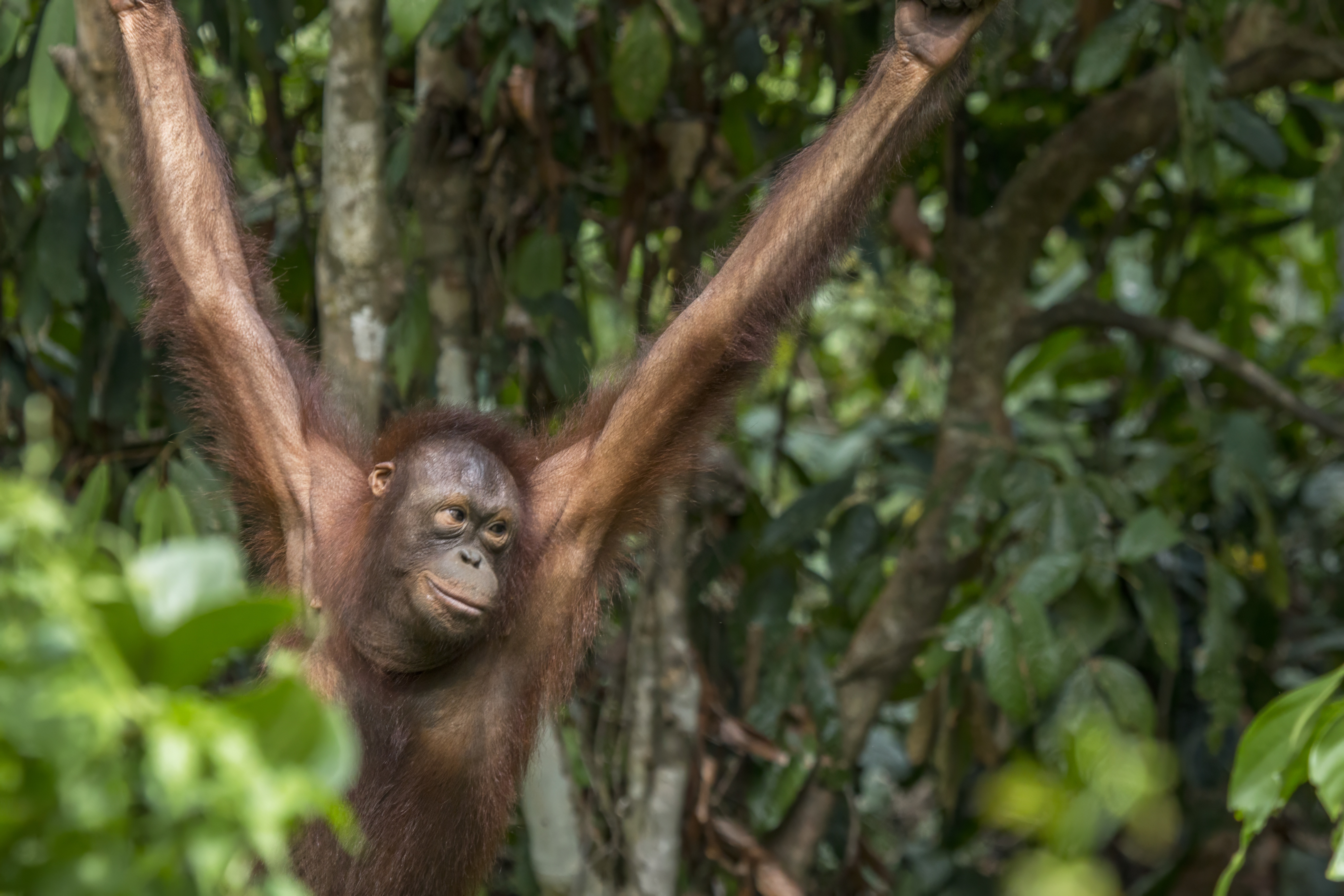
A photograph of a Bornean orangutan from Sabah can be a legitimate illustration of zoological study while not representing a Singapore camera-trap record. Captions and source status must stay honest. Good research recognises both public interest and ecological complexity.
Back to chapters · Next chapter
21. Protect sensitive wildlife locations
Publishing exact positions of nests, breeding areas or vulnerable species can create disturbance or exploitation risks. Researchers may need to limit location details under permits, ethical requirements and conservation policy.
The eduKate Sensitive Nest Location case study demonstrates why technically accurate maps can still harm wildlife if shared without regard for consequences. The zoologist must balance transparency with responsible protection.
Back to chapters · Next chapter
22. Keep human privacy in camera-trap datasets
Remote cameras may inadvertently record people. Researchers need appropriate privacy, access, retention and institutional arrangements for images that identify individuals. The permitted purpose of wildlife monitoring does not justify unrelated surveillance or online publication of bystanders.
The project should have authorised processes for classification and handling of such records. A field team cannot automatically post every captured image because it came from an animal study. Ethical data management includes people who may have been recorded unintentionally.
Back to chapters · Next chapter
23. Treat AI species classification as a reviewed aid
AI systems can help screen large wildlife image collections but may confuse similar species, empty frames and rare animals. A confident label from a model is not equivalent to independent zoological verification.
NParks has supported biodiversity monitoring research using technology, but specific models require suitable validation. The zoologist should retain confidence and review records and understand which outputs were checked by qualified people. Automation accelerates attention; it does not remove scientific responsibility.
Back to chapters · Next chapter
24. Keep raw evidence distinct from cleaned datasets
Researchers may exclude duplicate triggers or low-quality images for defined analyses. Those transformations need appropriate criteria and documentation so a future reviewer can reconstruct what was used and why.
Deleting inconvenient records solely to strengthen a preferred conclusion undermines reproducibility. The fictional forty-trigger dataset should remain traceable even if the final analysis examines only a specified subset. Data cleaning must preserve scientific meaning.
Back to chapters · Next chapter
25. Use geographical records without overclaiming precision
Field records may contain coordinates, maps and habitat descriptions with different uncertainties. A modern digital map’s many decimal places do not guarantee that an old observation was located accurately to that precision.
Zoologists should document the actual source and measurement basis, and protect sensitive locations. Uncertain positions should not be turned into exact distribution boundaries without suitable evidence. Mapping is a powerful tool when scale and limitations remain visible.
Back to chapters · Next chapter
26. Distinguish observation from behavioural explanation
A photograph showing an animal near food or another species can be consistent with several behaviours. It may not prove predation, feeding, territoriality or social interaction. Behavioural research needs appropriate definitions and evidence.
A zoologist can describe what the camera actually recorded and propose hypotheses, then distinguish them from tested conclusions. Dramatic language should not replace direct observation. Strong behavioural science remains careful even when a striking image attracts attention.
Back to chapters · Next chapter
27. Recognise when handling requires specialised approval
Capture, marking, sampling or physical handling of animals can introduce welfare, researcher safety and legal concerns. Such work may need permits, specific training, ethics approval and qualified veterinary input depending on the species and activity.
This guide intentionally provides no capture, restraint, bait, surgical or sample-collection instructions. A zoologist’s role includes knowing when a non-invasive alternative is appropriate and when a proposal must be reviewed by the correct authorities before any work occurs.
Back to chapters · Next chapter
28. Understand animal research facilities and IACUC review
Research institutions working with animals for scientific purposes may operate under AVS licensing and Institutional Animal Care and Use Committee oversight where applicable. Their responsibilities are separate from routine public wildlife observation.
A zoologist should not treat every research project as automatically exempt because it is scientific. The actual institution must meet relevant care, welfare and governance requirements. AVS’ NACLAR principles provide a common ethical reference.
Back to chapters · Next chapter
29. Account for specimen movement and export law
Some projects may need to move scientific specimens between facilities or countries. NParks states that research specimen export can require appropriate letters of approval, export documents and additional CITES permits for protected species.
A publication or collaboration agreement does not substitute for legal permission to transport fauna. The relevant authority, specimen and destination determine required arrangements. Researchers should settle these matters before promising a colleague access to physical samples.
Back to chapters · Next chapter
30. Communicate findings to conservation decision-makers
NParks and other organisations may use zoological evidence to inform habitat management, species recovery and biodiversity planning. Decision-makers need clear answers about species observed, timing, survey effort and uncertainty, rather than claims that every ecological question has been settled.
A useful report may show that a species was detected under a defined study, while explaining what additional evidence is needed to evaluate population trends. Modest claims can lead to better conservation action than an exciting but unsupported count.
Back to chapters · Next chapter
31. Work with communities without exposing animal welfare
Community observations and citizen science can enrich biodiversity knowledge, but they vary in completeness and observer experience. A zoologist should provide clear ways to report observations, check identifications and protect sensitive species.
Public enthusiasm should not be channelled into crowding a nest, approaching wildlife for a better photograph or disclosing restricted locations. Ethical outreach helps people appreciate animals while respecting habitat rules and the authority of qualified conservation teams.
Back to chapters · Next chapter
32. Build interdisciplinary scientific collaboration
Zoologists may work with environmental scientists, veterinarians, botanists, statisticians, museum curators and park managers. Their roles contribute different evidence and decision authority, so a large interdisciplinary project needs clear responsibility for each conclusion.
A statistician may help analyse detection probabilities, while a species expert confirms classification and a park authority controls permits. The zoologist should not absorb every specialist’s role simply because the project concerns animals. Clear collaboration makes the result more robust.
Back to chapters · Next chapter
33. Develop a career through biology and quantitative reasoning
Prospective zoologists may study biology, ecology, animal behaviour, genetics, evolution, statistics, research ethics and geospatial methods. Roles exist in universities, museums, conservation programmes, research organisations, environmental consultancies and related fields.
A student portfolio could use a synthetic camera-trap dataset to calculate observation rates and explain why they are not animal counts. Real animal fieldwork requires the appropriate permits, supervision and welfare systems. Intellectual honesty is a valuable early-career skill.
Back to chapters · Next chapter
34. Recognise that research questions can change as evidence grows
A pilot survey may identify a more useful research question, such as how detections differ between habitats or years. Such changes can be legitimate but may require amended ethics, permits, methods or analysis plans.
The researcher should document what was originally intended and what evolved, avoiding retrospective claims that every interesting result had been predicted. Transparent adaptation is part of good science when it preserves appropriate approvals.
Back to chapters · Next chapter
35. Judge zoological excellence by evidence and welfare together
A high image count, colourful species chart or popular wildlife photograph cannot alone prove good research. Quality also involves suitable questions, legal permits, humane methods, traceable records, careful statistics and conservation decisions proportionate to the findings.
Return to the forty fictional camera triggers. An excellent zoologist does not claim eighteen separate animals without evidence. They preserve the uncertainty and communicate what was observed. The gold standard is scientific work that helps living animals and their habitats rather than merely collecting impressive numbers.
A second worked case: different numbers of camera nights
A second synthetic dataset has Site A reporting fourteen wildlife detections across ten camera-nights and Site B reporting eight across five camera-nights. The crude rates are 14 ÷ 10 = 1.4 detections per camera-night at A and 8 ÷ 5 = 1.6 at B. Looking only at raw totals might suggest A is busier because fourteen exceeds eight.
Adjusting for the recorded effort changes the descriptive comparison, but neither rate establishes animal population, species richness or habitat quality. Cameras may detect species differently, and repeat visits or placement differences may affect observations. A professional report describes the rate and its limitations rather than declaring B definitely holds more wildlife.
This reasoning is a useful school-level mathematical example without asking students to undertake unlicensed animal field research. The scientific achievement is recognising what a denominator changes—and what uncertainty remains afterward.
A third worked case: one animal appears repeatedly
Suppose the research team’s photographs clearly show one recognisable animal on several dates. Counting every recorded appearance as a different individual would exaggerate the number of animals. The zoologist should distinguish observations, repeat encounters and genuine individual-identification evidence under an approved method.
The team should document which events appear to belong together and which cannot be established. When individual identity is uncertain, the report should say so. A repeated sighting can still reveal activity patterns, but it does not automatically prove an increasing population.
The distinction matters for conservation decisions. If a protected habitat is evaluated using exaggerated animal counts, resources or public expectations may be misdirected. Careful animal science makes the reasoning transparent before applying it to policy.
Zoologist’s field-research quality checklist
- Is the scientific question specific and connected to the real decision?
- Does the activity require an NParks research permit or other Wildlife Act approval?
- Are animal-welfare, NACLAR and institutional ethics requirements met where applicable?
- Are camera triggers, observations, independent events and individuals distinguished?
- Is survey effort and detection uncertainty accounted for?
- Are species identifications traceable and uncertain ones labelled honestly?
- Are sensitive wildlife locations, research samples and personal data protected?
- Can a future researcher reproduce the analysis and understand the limitations?
Frequently asked questions about zoologists
What does a zoologist actually study?
Animal biology, diversity, behaviour, evolution, ecology and population or habitat relationships, using appropriate scientific methods.
Is a zoologist the same as a veterinarian?
No. Veterinary healthcare and scientific zoological research are separate professional roles with different authorities.
Is a zoologist the same as a zookeeper?
Not necessarily. Zookeepers manage care in animal facilities, while zoologists investigate scientific questions and may work with facility staff.
Does zoological fieldwork in Singapore require an NParks permit?
NParks generally requires research permits for taxonomic and ecological field studies and collection of research material, subject to its actual guidance and exceptions.
Can I count photographs to estimate how many wild animals live in an area?
Not automatically. A single animal may trigger many photographs and detection can depend on equipment, habitat and study effort.
Can a student class trip be treated as unrestricted wildlife research?
No. Educational field courses and organised scientific research can have different requirements, and collection or handling may need further permission.
Is all animal research covered by an NParks field permit?
No. Scientific animal-use facilities may need separate AVS licensing and ethical oversight under the applicable rules.
What are the 3Rs in animal research ethics?
Replacement, Reduction and Refinement, which guide humane and responsible use of animals for scientific purposes.
Can zoologists publish exact locations of sensitive nests?
They should follow permits, conservation protections and ethical data policies; exposing sensitive locations can create harmful disturbance.
How does someone become a zoologist?
Relevant study in biology, zoology or ecology, plus research methods, quantitative reasoning, supervised experience and the permissions required for actual work.
What makes zoological research excellent?
A defensible question, humane and lawful methods, traceable observations, careful inference and useful conservation communication.
Official biodiversity sources and connected eduKate articles
- NParks: Apply for a Research Permit
- NParks: When Taxonomic and Ecological Field Research Requires Approval
- NParks: Research Permit Reporting and Specimen Export Conditions
- NParks: Long-Term Socio-Ecological Research Programme
- AVS: NACLAR Humane Animal Research and the 3Rs
- AVS: Animal Research Facility Licensing, September 2026
- eduKate: Veterinarians
- eduKate: Zookeepers
- eduKate: Environmental Scientists
- eduKate: Sensitive Wildlife Location Case Study
Featured photograph credit: Charles J. Sharp, Wikimedia Commons, CC BY-SA 4.0. The photograph depicts a Bornean orangutan at Sepilok, Sabah, in 2015. It illustrates zoological subject matter; it is not an image of the fictional Singapore research case or an animal photographed during 2026 fires.
The gold standard of zoologists is careful scientific understanding that improves decisions about animals and their habitats without inventing abundance, overlooking animal welfare or hiding the limitations of what was observed.