
The gold standard of zoology is a defensible understanding of animals built from appropriate observations, sound biological reasoning and responsible treatment of living systems. A useful conclusion explains what the evidence shows, how it was collected and which uncertainties remain. An impressive photograph or a large collection of sightings is a starting point, not a complete scientific explanation.
Zoology connects animal diversity, anatomy, physiology, behaviour, ecology and evolution. It also meets conservation, animal welfare, veterinary work, zoo care and public learning. These connections are valuable when their responsibilities remain clear: studying a wild population, diagnosing an individual animal and caring for animals in a managed setting require different evidence and professional roles.
This root guide ties the eduKate specialist articles into a single reading route. Begin with the question you want to answer, follow the worked examples and continue into the guide for the relevant role. The animal studies below are fictional teaching examples. They illustrate reasoning and do not describe real field results or provide a protocol for capturing, handling or experimenting on animals.
Find the part you need
Choose a reading route or open the chapter index. All teaching chapters remain expanded below.
Full chapter index · Worked evidence check · Learning That Transfers into Life
Chapter index
Understand animal science · Chapters 1–5
Build reliable observations · Chapters 6–10
Connect welfare and conservation · Chapters 11–15
Test claims and explanations · Chapters 16–20
Learn and choose the next step · Chapters 21–24
CHAPTER 1 OF 24 · Understand animal science
1. Begin with an animal question that evidence can answer
A zoological question should identify something that can be investigated through an appropriate method. Asking whether animals are interesting expresses curiosity. Asking whether a particular animal uses two habitat types differently identifies a relationship that observations might help examine. The question determines which information is relevant and what a successful study would need to distinguish.
Imagine a school group seeing more birds near one pond than another. The first observation is worth recording, but several explanations are possible. The ponds may differ in vegetation, observation time, visibility, disturbance or the kinds of birds present. Declaring one pond healthier would move beyond the evidence before those alternatives had been considered.
The group can make its question more precise: during the agreed observation periods, which bird species were recorded at each pond, and under what conditions? That question has a manageable scope. It does not promise to measure all biodiversity or establish the cause of every difference. A narrower question often produces a more useful investigation because readers can understand what the findings apply to.
Write down the intended claim before collecting data. Decide whether the study concerns presence, recorded activity, habitat use, behaviour or population size. These are different outcomes. A method that supports one may not support another. The first sign of scientific quality is a visible connection between the question, the observations and the conclusion the researcher intends to draw.
CHAPTER 2 OF 24 · Understand animal science
2. See the main branches as connected explanations
Animal diversity concerns the range of animal forms and their relationships. Anatomy examines structure. Physiology concerns how living systems function. Behaviour examines what animals do and the conditions associated with those actions. Ecology considers relationships with other organisms and environments. Evolution provides a framework for understanding change and relatedness across generations.
These branches meet in ordinary questions. A bird’s feeding behaviour may depend on the structure of its beak, available food, competition and conditions in its habitat. Explaining only one component can leave the reader with a partial account. A zoologist selects the relevant level of explanation rather than assuming that every question requires every branch at once.
Students can practise connecting the branches through a carefully observed example. Describe the visible structure, the action and the environmental setting separately. Then ask what additional information would be needed to explain their relationship. A beak shape alone does not establish every item in a bird’s diet. A feeding observation alone does not establish the species’ full ecological role.
The purpose of a root guide is to make these connections navigable. Follow the organism from observable features to function, from action to setting and from a local observation to a wider biological explanation. Keep the level of certainty appropriate at each step. Good zoology makes the links clear without pretending that a single classroom encounter can answer all the questions it raises.
Life-history questions also require the timing of recruitment to remain visible. Comparing Reproduction Schedules When Lifetime Offspring Totals Agree follows original age-labelled cohort schedules, separates lifetime replacement from growth per interval and checks survival, periodicity and observation limits.
Census timing also changes which animals appear in each projection class. Changing Census Timing Without Changing the Animal Life Cycle follows an original finite-age life cycle through separate birth and survival maps, reconciles pre- and post-breeding states and distinguishes a representation change from changed biology.
CHAPTER 3 OF 24 · Understand animal science
3. Identify organisms without hiding uncertainty
Identification connects an observation with an established taxonomic name. It can depend on features that are difficult to see in a brief encounter or a poor photograph. Some groups contain species that appear similar to a beginner. An honest record should preserve uncertainty rather than forcing every observation into a precise label.
Record what can actually be seen. A photograph may establish a broad animal group while leaving species uncertain. A field note can preserve size estimates, visible markings, behaviour and habitat without claiming a final identification. Later review may improve the label, but the original evidence should remain available so another person can understand why the identification changed.
Scientific names can help distinguish organisms when common names vary, but a formal-looking label does not make an identification correct. Check an appropriate, current reference and note the basis for the determination. If a record is revised, retain the earlier label in the record history rather than silently changing the underlying evidence to fit the preferred answer.
For a student project, an uncertain record can be a productive result. It shows which feature was missing and what kind of observation would be needed next. The lesson is not that every learner must become an expert taxonomist immediately. It is that precision should follow evidence. An observation identified reliably at a broader level is more valuable than a confidently incorrect species name.
Connect species identification with weighted site-validation evidence in The Gold Standard of Zoology | False-Positive Species Records and Weighted Validation of Site Presence. The worked examples distinguish the observed result from the additional assumptions needed to interpret it.
CHAPTER 4 OF 24 · Understand animal science
4. Separate zoology from veterinary practice and animal care
Zoologists, veterinarians and animal-care professionals can work together, but their roles are not interchangeable. A zoologist may investigate animal behaviour or population patterns. A veterinarian brings clinical training to animal health assessment and treatment. A keeper works within an authorised care system for animals in a managed setting. The right response depends on the question and the professional responsibility involved.
If an individual animal changes its usual behaviour, the observation may be relevant to several people. A keeper may document the change and follow the care team’s escalation process. A veterinarian may assess health concerns. A researcher may consider whether study conditions are affecting observations. None should assume that an appealing behavioural explanation rules out other possibilities.
Continue into the ecosystem guides on Zoologists, Zookeepers and Veterinarians for their respective responsibilities. This root page connects their evidence, rather than replacing professional training or merging their authority.
The distinction is useful for students exploring careers as well as readers evaluating an animal story. Ask who made the observation, who has responsibility to act and which expertise supports the conclusion. A zoology degree does not by itself establish clinical authority, and familiarity with animals does not establish research competence. Dependable collaboration makes the limits visible and brings in the appropriate role when needed.
| Question | Closest professional route |
|---|---|
| What can a study conclude about animals? | Zoology and relevant research expertise |
| How should an individual animal be clinically assessed? | Veterinary expertise |
| How is routine care delivered in a managed setting? | The authorised animal-care team |
| How do findings support an environmental decision? | Relevant biological and environmental expertise |
CHAPTER 5 OF 24 · Understand animal science
5. Understand habitat as part of the animal's life
An animal observation becomes more informative when its setting is recorded. Food, shelter, water, breeding conditions, disturbance and connections between habitat areas can influence where animals are recorded. A photograph separated from its context may show that an animal was present while revealing little about why it was there or whether the setting supports it over time.
Avoid treating every green space as ecologically equivalent. Two areas may look similar from a path yet differ in vegetation structure, moisture, connectivity or human activity. The relevant differences depend on the organism and the question. A feature useful to one species may be unsuitable for another, so a general impression of attractive landscaping is not a full habitat assessment.
A useful student record describes observable conditions without making unsupported ecological claims. Note the habitat type at a sensible level, the observation period and relevant disturbances. Distinguish what was measured from what was estimated. If an animal is seen near a building, that observation does not by itself establish that development benefits or harms its entire population.
The ecosystem case on a green corridor that was planted but disconnected provides an onward route for thinking about ecological function. The key question is whether the feature performs the role being claimed. A visible strip of vegetation and a usable connection for a particular animal are related possibilities, but they require different evidence.
CHAPTER 6 OF 24 · Build reliable observations
6. Keep observation separate from the explanation attached to it
An observation describes what was recorded. An interpretation proposes what it means. Keeping them separate allows another reader to examine the reasoning. An animal moved away when a person approached is an observation. The animal was angry is an interpretation that may not be supported by that observation alone.
Behavioural descriptions should be specific enough to review. Record visible movements, durations or sequences at a level appropriate to the project. Avoid replacing the description with an emotionally appealing label. Words such as happy, lonely, lazy or friendly may feel intuitive, but they can conceal the features that a researcher or care professional needs to assess.
Consider a fictional animal repeatedly walking along one enclosure edge. A visitor records a short clip. The clip establishes a brief sequence under particular viewing conditions. It does not establish the animal’s entire daily behaviour or identify a cause. A professional assessment may require longer records, contextual information and appropriate welfare or clinical expertise.
This does not mean ordinary observers should ignore concerns. It means communicating them accurately. Describe what was seen, when it occurred and what evidence is available through the appropriate channel. A clear observation gives the responsible team something useful to examine. A confident diagnosis based on a short clip may spread faster while making the original question harder to assess.
CHAPTER 7 OF 24 · Build reliable observations
7. Record effort so observations can be compared fairly
Counts mean more when the effort behind them is known. Ten observations during a short visit and ten observations across many visits do not describe the same recording rate. Different observers, routes, equipment and conditions can also influence what is detected. Comparisons should begin by asking whether the observation processes were sufficiently similar.
For example, a fictional group records twelve bird observations in one hour at Site A and eighteen in three hours at Site B. The raw total is larger at Site B. The simple rates are twelve observations per hour and six observations per hour respectively. Neither calculation establishes population size, but the effort record changes the interpretation of the raw totals.
Even a rate comparison has limits. The sites may differ in visibility, species composition or observation time. A single hourly rate may also hide substantial variation between visits. The calculation is useful because it makes one condition explicit; it does not automatically correct every difference in the study. State the remaining limitations alongside the result.
A good field record therefore preserves date, duration, location at an appropriate sensitivity level, observer information and relevant method details. The exact fields depend on the study design. The principle remains consistent: readers need enough information to understand how the observation was produced. A tidy spreadsheet without effort information may be less useful than a modest dataset whose conditions are clearly documented.
CHAPTER 8 OF 24 · Build reliable observations
8. Distinguish repeated detections from individual animals
An animal can be recorded more than once. A camera may capture repeated visits by the same individual, and several photographs may belong to one passage. A sound recorder may detect repeated calls from one animal. Counting files or triggers is therefore different from counting individuals, even when every record clearly contains the species of interest.
Suppose a fictional camera produces forty triggers. Eighteen contain clear animal images, twelve are uncertain and ten show no relevant animal. The clear-image proportion is eighteen divided by forty, or 45% of triggers. It is not the proportion of animals in the habitat, and eighteen is not automatically the number of distinct individuals.
A defensible analysis requires definitions matched to the question and an appropriate study method. Researchers may distinguish events, detections and identifiable individuals, but those categories cannot be invented retrospectively simply to obtain a preferred result. A school exercise should acknowledge the limit rather than pretend that a more elaborate calculation can recover information the images do not contain.
The specialist Zoologists guide examines this camera-trigger problem in greater depth. Return to the root distinction whenever a claim moves from a record count to a population claim. Ask what identifies an individual, how repeat observations were handled and whether the method can support the reported number. If those answers are missing, keep the conclusion at the level the evidence actually supports.
For an extended worked comparison of stable and switching encounter probabilities in population estimates, continue to The Gold Standard of Zoology | Stable and Switching Encounter Probabilities in Population Estimates.
For the separate abundance question involving recurring identifiable individuals, read The Gold Standard of Zoology | Unequal Encounter Probabilities in Capture–Recapture Estimates.
CHAPTER 9 OF 24 · Build reliable observations
9. Treat a non-detection as a qualified result
Failing to record an animal does not always establish that the animal is absent. It may be present outside the observation period, hidden from view, quiet, moving elsewhere or difficult for the method to detect. The strength of an absence claim depends on the study design and the probability of detecting the animal if it were there.
A student group visiting a pond for twenty minutes may report that it did not observe a particular species during that visit. That is a clear and defensible statement. Reporting that the species no longer lives at the pond makes a much wider claim. The difference is scientific scope, rather than cautious wording added for appearance.
Repeated, appropriately designed observations can provide stronger evidence than a single brief visit, but repetition alone is not enough if the method consistently misses the target. A daytime observation plan may be poorly matched to an animal active mainly at another time. The researcher must connect animal biology with the detection method and the practical conditions of observation.
For learners, this is an important lesson in negative evidence. Ask what the method was capable of detecting and under what circumstances. An empty record can be informative when its conditions are known. It can also identify a limitation worth investigating. The correct response is to describe that limitation and improve the question or design, rather than fill the gap with certainty.
For a deeper worked guide to repeated visits, conditional detection and the meaning of an all-zero history, read The Gold Standard of Zoology | Interpreting All-Zero Survey Histories with Imperfect Detection.
Separate identity evidence from animal fate in The Gold Standard of Zoology | Tag Retention and the Survival Hidden Behind Missing Identifiers. Follow the original worked cases, then return here for the broader subject pathway.
When accepted follow-up records leave some endpoint fates unresolved, bounding survival from verified fates and unresolved follow-up records keeps the original cohort, dated evidence and local returns separate. Its original accounts complement the encounter and identifier models above.
CHAPTER 10 OF 24 · Build reliable observations
10. Preserve raw records and a visible correction history
A dataset becomes easier to trust when readers can trace a reported result back to the observations from which it was produced. Raw photographs, field notes and original entries serve a different purpose from a cleaned analysis table. Both can be useful, but changes between them should be documented rather than concealed.
Imagine that two entries refer to the same observation. A reviewer identifies the duplication and removes one from the analysis. The correction is appropriate, but the original records and reason for exclusion should remain traceable within the project’s data system. Otherwise, later reviewers may be unable to distinguish legitimate cleaning from selective removal of inconvenient observations.
Use consistent definitions for uncertain records, duplicates and exclusions. Explain the categories before interpreting the final totals where feasible. If the project changes a definition during review, record the change and consider its effect on the result. A correction that changes the conclusion is especially important to communicate clearly. Scientific reliability improves through accountable revision.
Technology can assist this process through organised files, version histories and reviewed labels. It does not eliminate the need for judgement. An automatic classifier can suggest an identification, while a human reviewer still needs to consider whether the image supports it. Preserve the distinction between the model’s output, the reviewed determination and the final use of the record in an analysis.
CHAPTER 11 OF 24 · Connect welfare and conservation
11. Make animal welfare part of the research question
Research quality includes the consequences of obtaining evidence. A method should be appropriate to the question and subject to the necessary professional, ethical and regulatory review. The desire for a clearer photograph or a more dramatic demonstration does not by itself justify disturbing an animal or changing its environment.
For ordinary public learning, observation from permitted places and participation in an established activity provide a more suitable starting point than improvising an intervention. A learner can develop strong scientific reasoning without handling wildlife. Questions about identification, effort, uncertainty and explanation can be examined through existing records, approved educational materials and appropriately supervised observations.
Keep the distinction between learning about a method and being authorised to perform it. Reading a field-study description does not transfer the study team’s permissions or training. If a proposed project involves animals, discuss its scope with the responsible institution and relevant authority before beginning. The requirements depend on the activity, setting and applicable rules.
A useful project review asks whether the question can be answered through a less intrusive approach and what would happen if the planned observations reveal a concern. These questions connect scientific purpose with responsibility. Welfare should not appear only as a sentence at the end of the report. It should influence the choice of question, the method and the decision about whether the activity should proceed.
CHAPTER 12 OF 24 · Connect welfare and conservation
12. Check Singapore research requirements for the actual activity
In Singapore, consult the current NParks research-permit guidance when planning biodiversity research. The relevant question is whether the proposed activities fall within the requirements, rather than whether the project is described as educational, voluntary or small. An appealing project name does not determine its regulatory status.
The official page on when a research permit is required sets out activity-based conditions. Use that source to assess the proposed scope and seek clarification where needed. This root guide provides an onward route; it does not issue permission or replace a project-specific assessment by the responsible authority.
A sensible planning record describes the question, location, organisms, proposed activities and intended use of records. That description helps the institution or authority understand what is actually proposed. Avoid starting a broader activity on the assumption that a narrower approval will cover it. If the project changes, check whether the existing permissions and conditions still apply.
After approval, the team still needs to follow the authorised scope and any reporting or other conditions. A permit is part of an accountable research process, rather than a general endorsement of every future activity by the same group. Keep current official guidance available to the project lead and record who is responsible for checking it before work begins.
CHAPTER 13 OF 24 · Connect welfare and conservation
13. Understand care in managed settings through the animal's needs
Animals in managed settings depend on people for many conditions of daily life. Appropriate care requires species knowledge, attention to individuals, professional routines and collaboration with veterinary teams. A visitor’s brief impression can raise a question, but it cannot establish every relevant feature of the animal’s care or welfare.
The Zookeepers guide follows observation, habitat conditions, care records and professional handovers. At the root level, the useful connection is between animal biology and accountable care. Understanding typical activity, social relationships and environmental needs helps professionals interpret observations without reducing each animal to a generic exhibit.
Mandai’s animal-welfare overview provides a local institutional route into how welfare is discussed in a managed wildlife setting. It is a source for that institution’s stated approach, rather than independent proof of every animal’s condition on every day. Readers should distinguish an organisational framework from a case-specific assessment.
Public education should help visitors understand animals while respecting the care system’s limits. An animal resting out of sight is not necessarily a failed educational experience. A thoughtful explanation can make natural patterns, choice and responsible observation visible. The standard is learning that deepens understanding without treating an animal’s constant visibility or performance as the main measure of success.
CHAPTER 14 OF 24 · Connect welfare and conservation
14. Connect conservation claims with a biological outcome
Conservation concerns maintaining or improving the conditions that support biodiversity. A campaign, planting event or research project may contribute, but the activity itself is not the entire outcome. Ask which species, habitats or ecological processes the action is intended to benefit and what evidence would show that contribution.
For example, a project may plant vegetation along a route intended to improve habitat connection. The number of plants establishes an implementation output. Whether the route supports movement or other intended ecological functions requires further evidence. The appropriate measures depend on the organisms, landscape and time scale. A photograph of planting day cannot answer all those questions.
The IUCN Red List categories and criteria provide a framework for assessing extinction risk. A global category is not a complete description of every local population or a ready-made management plan for a particular site. Use the relevant assessment and supporting information at the scale appropriate to the question.
A responsible conservation explanation identifies both progress and remaining uncertainty. It may say that a habitat intervention was completed, monitoring has begun and biological outcomes are still being assessed. That account is more informative than declaring success at the moment of implementation. It also gives readers a clear reason to support follow-through, because ecological function often needs evidence collected after the visible event.
CHAPTER 15 OF 24 · Connect welfare and conservation
15. Protect sensitive wildlife information while enabling review
Biological records can contain information that should not be shared openly in full detail. A precise location may expose a sensitive animal or breeding site to disturbance. A photograph may also include people or private property. Responsible communication considers which information is necessary for the audience and which belongs within a controlled professional review process.
The ecosystem case on a sensitive nest location in citizen science provides a focused route into this problem. The root principle is that scientific usefulness and indiscriminate publication are different decisions. A record can remain available to appropriate reviewers without broadcasting every coordinate to every reader.
For a student presentation, a general habitat description may be enough to explain the learning. Follow the host programme’s rules for submitting full records and handling sensitive information. Do not promise participants that every observation will be publicly displayed. Explain the purpose of any limits so they understand that responsible reporting is part of the scientific task.
Transparency still matters. Describe the method, the sensitivity decision and the route through which appropriate review can occur, where relevant. Hiding an inconvenient result is different from protecting a vulnerable location. Good data governance makes that distinction explicit. The aim is enough traceability to assess the claim while avoiding unnecessary exposure of animals, people or places.
CHAPTER 16 OF 24 · Test claims and explanations
16. Worked example: compare two observation visits correctly
A fictional school group records twelve observations at Pond A during one hour and eighteen at Pond B during three hours. It announces that Pond B has 50% more animals because eighteen is 50% greater than twelve. The arithmetic comparison of observation totals is correct. The claim about animals is not established by those totals.
The first repair is to label the quantity. These are recorded observations, not verified unique individuals. The second is to account for effort: twelve per hour at A and six per hour at B under this simplified calculation. The third is to examine comparability. Were methods, times, observers and visibility similar enough for even that rate comparison to be meaningful?
The group might then write: during these visits, the recorded observation rate was higher at Pond A, but the small dataset and differing conditions limit inference. That statement preserves useful information without inventing a population estimate. It also identifies what a better study would need to control or record. An uncertain conclusion can be more scientifically valuable than a confident one built on a mismatched denominator.
Ask students to rewrite the original claim in three forms: a raw-total statement, an effort-adjusted statement and a limitations statement. Then ask which evidence would be needed for a population comparison. This exercise develops numerical reasoning and scientific interpretation together. The learning goal is to recognise the quantity being compared before performing the calculation, rather than use more advanced mathematics to disguise an unsupported claim.
Check the quantity and observation effort
| Fictional visit | Recorded observations | Hours | Observations per hour |
|---|---|---|---|
| Pond A | 12 | 1 | 12 |
| Pond B | 18 | 3 | 6 |
CHAPTER 17 OF 24 · Test claims and explanations
17. Worked example: a behaviour change has several possible causes
In a fictional wildlife-care setting, an animal begins using a different resting area. A visitor says it must dislike the new enclosure feature. A keeper has additional records: the weather changed, a neighbouring activity became louder and the animal’s daily routine also changed. These observations support several possibilities, not a single immediate diagnosis.
The professional response begins with documentation and the team’s established assessment route. What changed, when did it change and which observations are reliable? Is the new pattern persistent or limited to a brief period? Who needs to review it? Relevant health or welfare concerns belong with the responsible professionals rather than an improvised experiment conducted for visitors.
For students, the case can be analysed without intervening in an animal’s life. List the observations separately from each proposed explanation. Identify what each explanation would predict and what information is missing. Recognise that several factors may interact. The purpose is to learn careful reasoning, not to select the most entertaining explanation or decide that one short story proves the animal’s emotional state.
A good public account might say that a change was observed and is being assessed through the care team’s process. If a conclusion is later supported, explain the evidence at an appropriate level. This preserves both responsibility and scientific honesty. The reader sees how a question moves through observation, review and action instead of being invited to mistake an attractive narrative for an established cause.
CHAPTER 18 OF 24 · Test claims and explanations
18. Use evolution without turning every feature into a perfect design
Evolution helps explain similarities, differences and change across animal lineages. It does not require treating every observed feature as an optimal solution to a current problem. Biological history, constraints and interactions matter. A story that sounds plausible is not automatically a demonstrated evolutionary explanation.
A learner may notice a structure and immediately ask what it is for. That question can be useful, but it should lead to investigation rather than a made-up answer. What is known about the structure’s function? How does it vary across related organisms? What evidence supports a proposed explanation? Different questions may require comparative, developmental or other biological evidence.
Avoid describing an individual animal as deliberately evolving a useful feature during its own life. Learning, physiological adjustment and evolutionary change concern different processes and time scales. Clear terminology prevents a familiar phrase from carrying a mistaken mechanism. Students should be able to distinguish an animal’s immediate response from changes in a population across generations.
The ecosystem article Charles Darwin: The Machinery Behind Evolution offers an onward historical and conceptual route. Read it alongside current biological learning, keeping history, evidence and mechanism connected. The standard is an explanation whose moving parts can be examined, rather than a sentence that assigns a purpose to every feature and treats that purpose as proof.
CHAPTER 19 OF 24 · Test claims and explanations
19. Evaluate animal stories, images and AI labels
Animal content often travels farther than its original context. A photograph may be cropped, a clip may omit earlier events and a caption may attach a location or species name that was never verified. Before using such material as evidence, identify the source, date, relevant context and basis for the claim.
An image can support some questions while leaving others unanswered. It may show a visible anatomical feature but not establish where the photograph was taken. A short clip may document an action but not its typical frequency. A caption may describe a conservation status that has changed or applies at a different geographic scale. Match the claim with what the material can actually establish.
AI identification tools add another layer. A predicted label is a model output, not a substitute for a reviewed biological determination. Check the visible features and appropriate references, and retain uncertainty where the evidence is weak. If the image quality is insufficient, repeated requests to a model do not create the missing information.
In a classroom, ask learners to mark three parts of an animal post: directly visible evidence, contextual information from a source and interpretation. Then identify what needs checking before the post can be used in an explanation. This routine encourages curiosity while reducing uncritical repetition. It also shows why a carefully qualified account may be more useful than the most shareable story.
CHAPTER 20 OF 24 · Test claims and explanations
20. Connect animal science with environmental decisions
Zoological evidence can inform environmental decisions, but it usually forms part of a wider assessment. A project may involve animal observations, habitat information, water conditions, land use and community concerns. Each evidence stream has its own methods and limits. Combining them responsibly requires more than placing several charts next to one another.
The Environmental Scientists guide provides an onward route into measurement and decision support. The useful connection is traceability: decision-makers should understand which observation supports which conclusion and which assumptions connect the biological findings with a proposed action.
Suppose an animal is recorded near a planned change to a site. That record may be relevant, but its implications depend on the species, habitat use, study design and wider setting. Neither dismissing the record as just one sighting nor treating it as a complete assessment is adequate. Appropriate expertise is needed to decide what further evidence and response are justified.
Communicate alternatives and uncertainty in a form readers can use. Explain what is known, what remains unclear and how that affects the decision. A useful scientific contribution may recommend additional investigation, a change in design or monitoring of a specific outcome. Its quality lies in the relationship between evidence and action, rather than the certainty of the language or the visual polish of the report.
CHAPTER 21 OF 24 · Learn and choose the next step
21. Build a learning pathway from observation to explanation
A good zoology learning sequence starts with a manageable observation and gradually adds interpretive demands. Learners first describe what they can see, then identify relevant features, organise records and compare explanations. Technical vocabulary becomes useful when it names something the learner understands, rather than arrives as a long list to memorise without context.
For example, a class can examine an approved image set and distinguish observations from interpretations. Later, it can compare records collected with different effort and explain why raw totals are insufficient. A further task can ask what information would be needed to support a population claim. The sequence deepens reasoning without requiring students to handle live animals or imitate a professional field method.
The Learning That Transfers into Life guide connects this sequence to the wider educational purpose. The learner should recognise the same evidence problem in a changed context: camera triggers, survey responses and online image labels all require clarity about what was recorded and what is being inferred.
The Secondary 1 Mathematics Clementi guide illustrates why foundations and diagnosis matter. In animal science, an incorrect calculation may begin with a misunderstood quantity rather than weak arithmetic. Repair that first connection, then ask the learner to perform and explain the calculation. Understanding grows when the task’s meaning remains visible through each step.
CHAPTER 22 OF 24 · Learn and choose the next step
22. Use citizen science through an established programme
Citizen science can connect public interest with structured observations that contribute to a wider project. Its value depends on the programme’s question, recording method, training and review. Joining a recognised activity allows learners to understand how their observation fits with other records and what quality requirements the project uses.
NParks’ citizen-science overview provides an official route into its biodiversity participation opportunities. Check the current information for the particular activity, including any training, registration and recording arrangements. An overview page is a place to find the next route; it does not establish that every activity is always open or appropriate for every participant.
During a programme, follow the supplied method even when another approach seems more exciting. Consistency may be essential to how the records will be interpreted. Submit uncertainty honestly, respect restrictions and avoid altering the environment to obtain a preferred observation. If a record appears unusual, use the programme’s review process rather than publicising an unverified claim as a discovery.
Afterwards, ask how the data will be used and what the project can conclude. A meaningful learning outcome is understanding why one observation needs context and review before it becomes part of a wider account. Participation is valuable when curiosity develops into reliable recording and responsible judgement, not merely when a participant accumulates a long personal list of sightings.
CHAPTER 23 OF 24 · Learn and choose the next step
23. Choose the related article without confusing its scope
For professional research, continue into Zoologists and the related Biologists guide. For managed animal care, use Zookeepers; for clinical animal care, use Veterinarians. These routes share biological knowledge while retaining different responsibilities.
For environmental decisions, use Environmental Scientists with the cases on sensitive wildlife locations and ecological connections. A case helps reveal a particular reasoning failure. A professional guide explains the wider responsibilities of the role. Read both when deciding how a scientific claim should be assessed.
For study exploration, the ecosystem’s course guides for Biology, Marine Biology and Veterinary Medicine provide different onward routes. Check current institutions’ own entry requirements and course information before making an application decision. Related interests do not imply identical training or professional eligibility.
The wider Sectors and Services Article Directory supports further discovery. This root page organises the closest connected articles found for the subject; it is not a claim that the ecosystem will never gain another relevant page. The reading method remains stable: identify the question, select the role or learning route and assess its evidence at the right scale.
CHAPTER 24 OF 24 · Learn and choose the next step
24. Ask a better next question about the animal evidence
Begin with the observation that prompted your interest. What was recorded, and under what conditions? Which part is directly visible? Which part comes from a source? Which part is an explanation? Writing these separately often reveals the most useful next question without requiring a larger or more intrusive investigation.
Then examine the intended claim. If the question concerns identification, seek an appropriate reference or qualified review. If it concerns a count, check what was counted and whether repeated detections or effort affect interpretation. If it concerns welfare or clinical condition, use the responsible professional route. A clear question helps the receiving person understand what information is needed.
For learners, choose a modest task that can be completed and explained: improve one record, correct one misleading chart or compare two plausible interpretations. Review the result and identify what remains uncertain. The aim is increasing control of scientific reasoning, rather than an expanding collection of confident statements about animals.
The gold standard of zoology keeps curiosity connected with evidence and responsibility. It explains animals through their biology and surroundings, preserves the limits of observations and respects the lives being studied. A good account leaves the reader with a clearer understanding of what is known, why it is known and which next observation or professional question could improve that understanding.
Sources and onward reading
Official sources below support the identified institutional or scientific context. The worked examples and practical checks are teaching tools, not reported programme results or an official accreditation scheme. Source routes checked on 21 October 2026; consult current requirements before acting.
NParks: research permits — Official starting point for assessing biodiversity research requirements in Singapore.
NParks: when a research permit is required — Activity-based guidance; check the current requirements for the actual project.
NParks: citizen science — Official overview of biodiversity participation opportunities.
IUCN Red List: categories and criteria — Framework for extinction-risk assessment; local management requires the relevant evidence and scale.
Mandai: animal welfare — An institutional account of its stated animal-welfare approach.
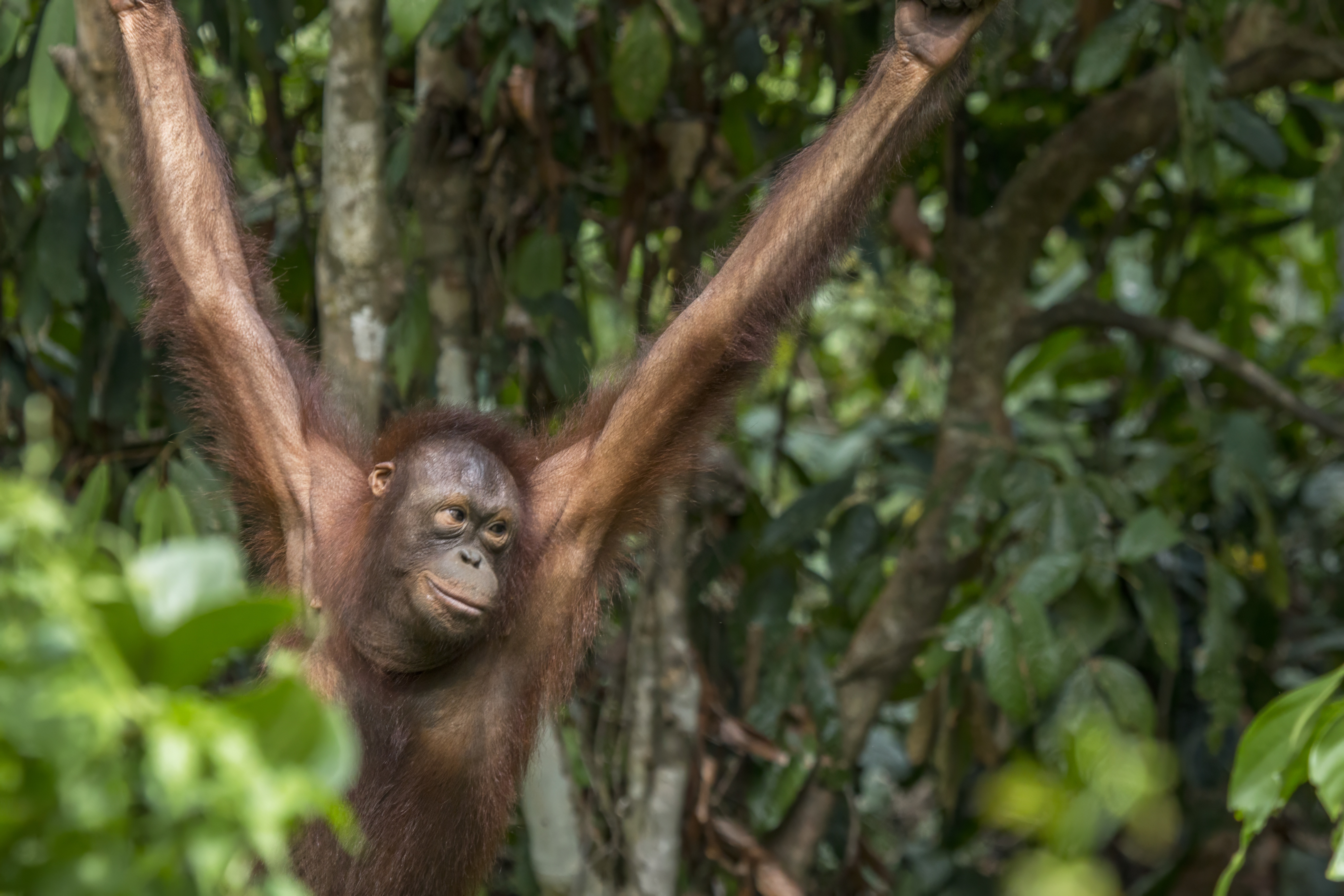
Featured photograph: Bornean orangutan at Sepilok, Sabah, photographed in 2015 by Charles J. Sharp, via Wikimedia Commons, CC BY-SA 4.0. The image illustrates the subject; it does not show the fictional teaching cases.
