
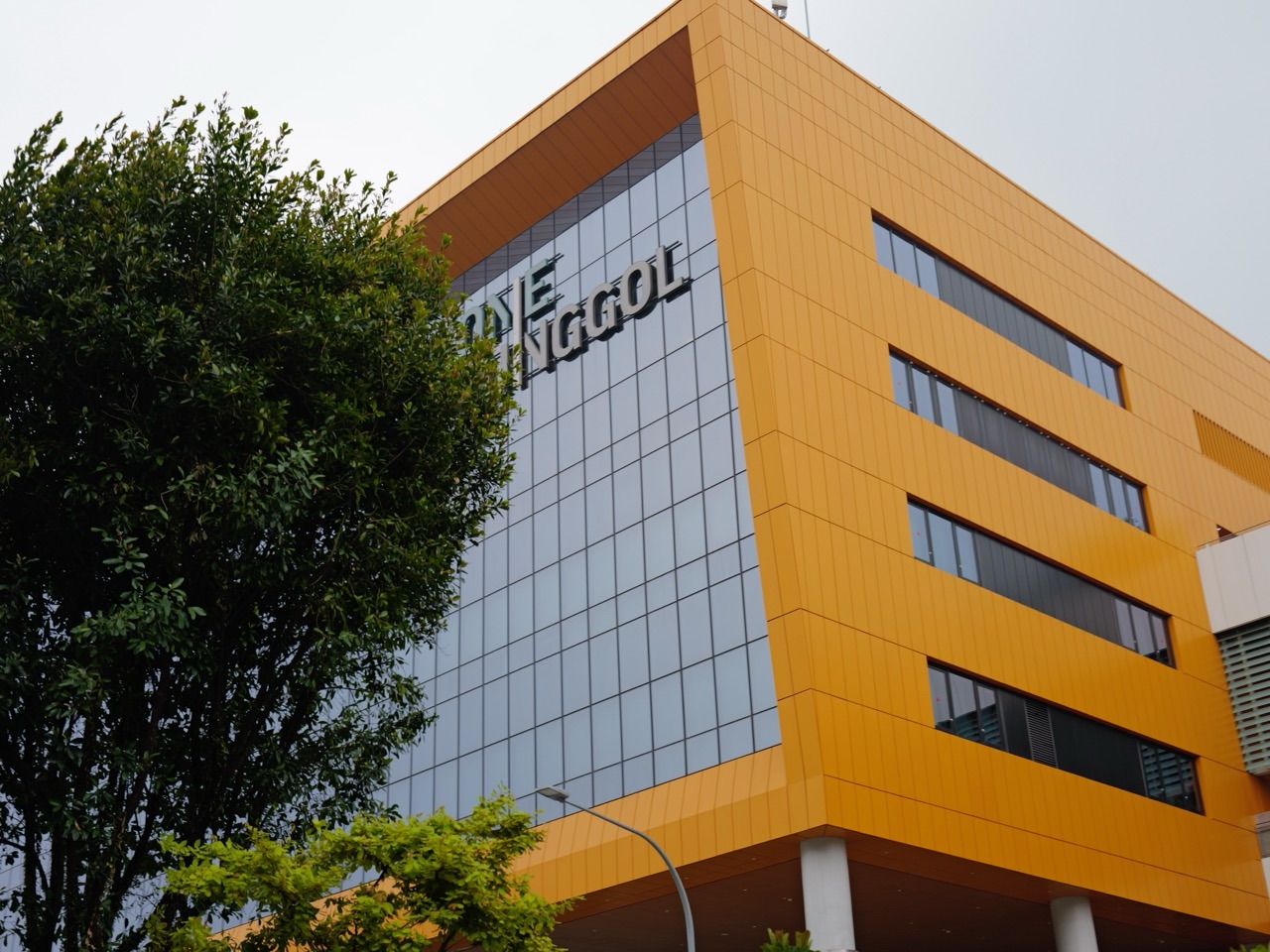
One Punggol is one of the most useful low-cost family destinations in the estate. At 1 Punggol Drive, the community hub brings together Punggol Regional Library, One Punggol Hawker Centre and community services and programmes. You can spend a short morning helping a child choose books, take an older relative for a relaxed meal, attend an available community activity, or find a quieter place for independent study. It is a practical choice when the weather is wet or too hot for a long park outing.
This guide starts with the decisions visitors actually face: how to arrive, which facility to choose, what is free, when library spaces operate, how to plan for children of different ages and how to avoid confusing One Punggol with similarly named places. It is not a claim that every programme, toy, seat or workshop is permanently available. The building houses several operators, and each has its own opening hours, registration rules and capacity. Check the exact service you intend to use.
Quick information:
- Address: One Punggol, 1 Punggol Drive, Singapore 828629.
- Getting there: Punggol MRT/LRT (NE17/PTC) and Sam Kee LRT (PW1) are useful rail approaches; One Punggol is also served by local buses.
- Library: Punggol Regional Library occupies several levels of the hub, with spaces for children, teenagers, adults, reading and study.
- Library hours: regular library service is generally 10am–9pm, with a separate 9am–10am self-service access arrangement according to NLB updates. Check public-holiday exceptions.
- Study Zone: a separate study space on Level 3 has been listed for 9am–10pm access, including public holidays; it has different access conditions from the main library.
- Food: One Punggol Hawker Centre is on Level 2; stall schedules and menus vary.
- Family activities: library discovery spaces, exhibitions and community programmes may have different booking, age and capacity rules.
- Budget: entry to the hub and general library browsing can be free; meals, retail, some activities and transport may cost money.
Pick the right version of One Punggol for your family
When people say they are ‘going to the library’, they may mean five very different experiences. A toddler may need a short story and hands-on discovery. A Primary-school child may want to find a new favourite series. A teenager may want a desk to work at independently. A parent may want a reading break while their child browses. An older adult may want a comfortable place to meet a friend before lunch. Planning improves when the actual purpose is clear.
| Visitor or need | Good first choice | Plan around |
|---|---|---|
| Toddlers and preschoolers | Children’s library discovery areas or an age-appropriate story session | Noise, nap schedules, supervision and session capacity |
| Primary-school children | Book browsing and a short reading challenge | Interest and reading comfort, not just school level |
| Teens | Teen reading areas or appropriate study spaces | Seats, quiet rules and programme conditions |
| Parents | Browse, read and share a meal | Not forcing every activity into one visit |
| Older adults | Accessible public areas, reading and hawker meal | Step-free routes and comfortable rest points |
| Visitors in rain | Library and indoor hub facilities | Different operator hours and indoor crowding |
The most important part of a family day out is not completing a list. It is choosing an activity that the people present can enjoy without pressure. The right visit might last only forty minutes. A younger child who finishes a book and leaves happy has achieved more than one who is forced to remain until the adult’s planned itinerary is complete.
How to get to One Punggol by MRT, LRT or bus
The hub is at 1 Punggol Drive, not Punggol Way. Punggol MRT (NE17), connecting with the Punggol LRT system, is a sensible starting landmark for many visitors. Sam Kee LRT (PW1) is another nearby option. The People’s Association provides building and access information, while OnePA publishes community-club details. Use the specific pedestrian route to the hub rather than selecting the nearest label on a map and assuming every entrance is identical.
Bus connections depend on where you start. The OnePA listing identifies services including 84 and 382W in the area; current bus stops and routes should be verified using a journey planner. If you use a taxi or a private-hire vehicle, specify ‘One Punggol, 1 Punggol Drive’. This avoids confusion with Punggol Coast Mall, Waterway Point and other public buildings carrying Punggol in their name.
For people with wheelchairs or strollers, check the route from your chosen transport point to the building entrance, then find the lifts serving the facility you want. A building can have accessible internal circulation while one particular shortcut from the street is inconvenient. Allow time to identify lifts rather than improvising on stairs. For separate arriving groups, agree to meet at a clear indoor landmark and exchange a phone number or message if the meeting point changes.
Official directions and facility information: People’s Association — One Punggol and OnePA — One Punggol community programmes.
Punggol Regional Library is not the Comics & Games Library
Two libraries near one another serve different interests. Punggol Regional Library is inside the One Punggol community hub and is a large, multi-level public library. NLB Comics & Games Library is a specialised self-service venue at Punggol Coast, in Tower 7 at 88 Punggol Way. If someone gives you only ‘the Punggol library’ as a meeting point, verify which one they mean.
The regional library is better suited to a broad family visit because it provides different kinds of reading, discovery and study settings. The Comics & Games Library is a more specific choice for visitors interested in graphic novels, comics and games. Either can be worthwhile. The mistake is assuming the facilities, schedules, opening hours and borrowing arrangements are identical merely because NLB operates both.
What can you do inside Punggol Regional Library?
According to NLB’s library fact sheet, Punggol Regional Library was designed as a large, multi-level regional library with inclusive services, children’s learning spaces, reading collections, programmes and facilities intended for different users. Its scale is a major advantage: a family with children of different ages does not necessarily have to choose between a picture-book corner and resources for older readers.
Let a young child discover the Toy Library and early-learning features
NLB describes children’s facilities including a Toy Library, TinkerTots and Stories Come Alive. These names refer to curated learning environments and activities, not a blanket guarantee that every piece of equipment is freely available on demand. Some programmes and interactive experiences may have time slots, age conditions, limited entry or instructions for safe use. Read signage and ask staff where appropriate.
A good toddler visit begins with one simple intention: enjoy an object, picture or short story together. The adult does not need to explain every possible lesson. Children learn through attention and repeated experience. If the child is fascinated by a colour, texture or pattern, allow time for that discovery instead of moving quickly to the next station.
Choose books with pictures the child can point to and describe. A caregiver can ask, ‘What can you see?’ or ‘What do you think will happen next?’ These questions create a conversation. They do not have to be answered perfectly. Respect the space by keeping belongings organised, returning materials as instructed and supervising young children who are not yet familiar with shared public facilities.
Help a Primary-school child find a book they actually want to read
A library visit becomes more successful when it begins with genuine choice. A child who has been reluctant to read long stories may prefer a nonfiction book about animals, a comic, a mystery, a visual reference book or a story about school friendships. There is no need to insist on the thickest book. The goal is to establish interest and the habit of returning to the page.
Try a fifteen-minute browsing process. Ask the child to select three possible books, read the first page or two of each and decide which one they would like to take further. If none fits, return them neatly and try another shelf. This teaches a useful skill: readers can evaluate what they enjoy instead of feeling obliged to finish something they never chose.
If the child is learning English vocabulary, ask for one interesting word from a selected page, then help them infer its meaning from the sentence or picture. A library outing should not become a private tuition lesson. One enjoyable word can create a more positive memory than a compulsory list of twenty unfamiliar terms.
Give teenagers an independent reading and thinking space
NLB’s description includes teen-oriented collections and spaces such as Teenspace. A teenager may use the library for fiction, graphic literature, research, schoolwork or simply reading away from home distractions. There is value in being able to browse without a parent steering every choice. Agree on a meeting time and keep communications simple; respect the library’s own seating and noise rules.
Students using the building for serious work should distinguish general browsing space from the designated Study Zone and other bookable or limited-capacity areas. Carry the materials needed for the session, use headphones only where permitted, and do not reserve empty seats with unattended belongings. A space designed for quiet learning works best when everyone shares it considerately.
Explore making, discovery and accessible learning
The regional library’s published facilities include initiatives such as Spark!Lab, MakeIT and other hands-on or digitally supported learning environments. Such programmes can make the library more than a place to store books, but participation may involve age requirements, registration, availability, staff supervision or scheduled sessions. Do not promise children a maker workshop or technology experience before checking whether it is operating on your visit date.
NLB also emphasises inclusive collections and assistive technology at Punggol Regional Library. That matters for families who need different reading formats, sensory considerations or physical access. The best approach is to check official facility details and ask what support is available for a particular visitor. An inclusive design feature is only useful when the user knows where it is and how to access it.
Punggol Stories: a local-history reason to visit
A trip to the library can also be an encounter with the neighbourhood’s past. NLB has presented ‘Punggol Stories’, a permanent exhibition about Punggol’s history, communities and changing landscape, across parts of the library. The exhibition links the place residents know today with older coastal life, farms, settlements and the growth of a new town.
This can be especially appealing to families who do not want a formal museum day. A child may recognise a modern MRT or HDB scene, then discover that the area once looked and functioned differently. Ask what changed, what remained and why a community might preserve its memories. These are genuinely interesting questions even if a visitor knows little Singapore history.
Use the official exhibition information to check current access, floors and any associated events. If an exhibit requires quiet viewing or is temporarily unavailable, respect that. The value lies in the story, not in forcing a visit to every panel.
Official starting point: NLB Exhibitions — current and ongoing exhibitions.
Library opening hours: the 9am, 10am and 10pm confusion
There is an important distinction between the main library, an early self-service period and the separate Study Zone. NLB and current local visitor information describe general Punggol Regional Library services from around 10am to 9pm, while a morning self-service arrangement allows certain entry from 9am to 10am. Staffed services need not begin at the same time as self-service access. Library operating arrangements can also differ on public holidays and major holiday eves.
The Study Zone on Level 3 has been listed with an extended schedule of 9am to 10pm, including public holidays, with access via One Punggol’s Lift Lobby B outside ordinary library hours. Do not assume that the extended Study Zone schedule means every floor of the library, every borrowing service or every children’s activity stays open until 10pm. The zone may have separate access procedures, capacity limits and expected etiquette.
Before organising a study group or bringing a child to a specific session, check the latest NLB library information and notices. If you are arriving at 9am, identify exactly which part you intend to use. If you want librarian assistance, plan for the staffed period instead of assuming the earlier access window covers everything.
A particularly unhelpful mistake is to tell a teenager ‘the library is open till ten’ without explaining which library area that refers to. A student can then arrive at the regular reading areas after closing and discover that only a separate study space is available. Share the facility name, floor and time, not merely the building name.
One Punggol Hawker Centre: a simple family meal
One Punggol’s Level 2 hawker centre is a practical part of the building’s appeal. You can combine a reading visit with lunch or dinner without making a separate trip to a shopping centre. Because a hawker centre houses different stalls, friends and family members can often find different types of meals while remaining at the same table.
Choose a meal time that suits the child or older adult in your group rather than waiting until everyone becomes hungry. With young children, have one adult supervise while another orders. Check what is actually open, compare menu prices and ask vendors about ingredients where allergies or dietary requirements matter. Stall operating times and dishes can change, so no evergreen guide should promise a particular meal at a fixed price.
Do not confuse it with Punggol Coast Hawker Centre. One Punggol Hawker Centre is at the community hub, 1 Punggol Drive. The 40-stall Punggol Coast Hawker Centre is at 84 Punggol Way inside Punggol Digital District. Both are in the wider Punggol estate, but they are different destinations. If your family is meeting for food, send the full address rather than saying only ‘Punggol hawker’.
After eating, consider whether anyone actually wants another activity. Sometimes the best ending is a direct return home with a book to read. A family should not have to complete every possible building feature in one visit.
Free and paid community activities at One Punggol
Beyond the library and hawker centre, One Punggol is a People’s Association community hub. Community-club activities may include classes, interest groups, workshops and seasonal events. What matters for planning is that these are scheduled programmes rather than facilities automatically running whenever the building is open.
Use OnePA’s One Punggol listing to find current classes and event details. Look for the date, venue, age suitability, fee, whether registration is required, available places and cancellation conditions. Some events are free; others charge fees. A free event may still require a reservation or have a capacity limit. Do not travel on the assumption that every advertised programme admits walk-in participants.
Families can use the hub repeatedly without requiring a paid activity each time. One week might be a reading visit; another might be a specific exhibition or programme; a third might simply be a meal with a grandparent. Treat the hub as a useful community resource rather than an attraction that must provide a new paid experience on each visit.
How much does a family outing to One Punggol cost?
Entry into publicly accessible building areas and general library browsing do not require an attraction ticket. Some specific experiences, reservations, classes, paid services and food do have costs or conditions. Public transport or legal parking may also add to the budget. Set your spending expectation at the level that fits the outing: nothing beyond travel, travel plus a modest meal, or a prebooked class with its published fees.
| Activity | Typical cost question | What to check |
|---|---|---|
| General library browsing | No general browsing admission | Library access hours and rules |
| Borrowing books | Depends on library account and borrowing conditions | NLB membership and item eligibility |
| Community exhibition | Some are free | Current exhibition notice and dates |
| Community class or workshop | Free or paid depending on event | OnePA fee and booking requirements |
| Hawker meal | Pay individual stall prices | Current menus and opening schedules |
| Study Zone | Check current entry conditions | Separate hours and availability |
Families sometimes feel that a day out must involve a ticket or substantial purchase to be memorable. It does not. A child may remember the freedom to pick a book, the laughter from a story or a new discovery about Punggol’s past. You can plan a valuable afternoon without chasing commercial attractions.
Four family itineraries that genuinely work
40 minutes: a simple after-school book stop
Arrive at the hub, choose a suitable reading shelf, let the child select one or two books and spend a short period looking through them together. If it is close to closing, check the actual library hours first. Keep the number of tasks small. The objective is to leave with curiosity intact, not with a new compulsory assignment.
90 minutes: library plus a relaxed meal
Begin at Punggol Regional Library while everyone has the patience to browse. Give different family members different areas to explore where suitable. Set a meeting point and a reasonable time. Then have a meal at the Level 2 hawker centre. If the meal takes longer than expected, end there. A good schedule leaves room for the normal uncertainties of real family life.
Half-day: books, local history and community life
Start with an age-appropriate library discovery activity. Explore Punggol Stories or another currently accessible exhibition, leaving time to read and discuss rather than merely photograph displays. Take a break for lunch and, only if a suitable programme is actually available, include a prebooked OnePA community activity. Check that the event starts at a workable time before promising it to the group.
Quiet study outing: teenager or adult
Choose between regular library reading areas and the separate Study Zone based on what kind of work you need to do and when you are arriving. Bring your own materials, note the current hours and leave the desk in a condition that others can use. Work in purposeful blocks with sensible breaks rather than trying to study for hours without moving. If the Study Zone is full or has limited access, adapt the plan instead of assuming a seat was guaranteed.
These are activity templates, not fixed door-to-door journey estimates. The best sequence depends on opening hours, available seats, programmes, weather and the preferences of the people coming with you.
What works best for toddlers and preschoolers?
Young children often enjoy an environment that is new but not overwhelming. Choose a small part of the children’s library and keep the visit predictable: enter, look at books or an appropriate discovery area, share a short story and leave. A toddler who has had enough may become upset long before an adult finishes the itinerary. That is a signal to change the plan, not a reason to push harder.
Check rules before using interactive materials. Some toys may require a turn, supervised session or special handling. It is better to model taking turns and respectful sharing than to demand immediate access. Bring the practical necessities your family normally needs, such as water and changing supplies, and identify toilets and lifts on arrival.
What works best for Primary-school children?
Primary-school visitors are often ready to make more independent choices. Ask them to find one book for fun and one about something they are curious about. That pair is useful because it separates reading pleasure from information seeking. A child interested in football, animals, volcanoes, drawing or space can begin with an existing interest rather than a list designed only around school examinations.
If you want to link the outing with learning, keep it light. Ask the child to tell you one surprising fact and where they found it. An answer based on an actual page is better than a fluent guess. This builds the habit of checking information without turning a leisure outing into another tuition session. If the child is not in the mood for an explanation, enjoy the book and talk about it another day.
Can teenagers really use One Punggol independently?
A teenager can benefit from a public place that supports independent reading and study. The parent can agree on boundaries—arrival, meeting point, departure and communication—while allowing space to browse. A library is not a guaranteed private room, however. There may be other visitors, announcements and limits on where devices or group discussions are appropriate. Quiet work requires the student to adapt to a shared environment.
For exam preparation, the student should arrive with one specific task: revise a topic, write a draft or solve and review a set of questions. Finishing a clear task is usually more satisfying than spending several hours ‘studying’ with no defined output. The value of the library is not simply that it has tables. It gives the student a setting in which to practise focus and self-direction.
Accessibility, sensory needs and considerate visiting
One Punggol serves a broad community. NLB’s published regional-library design puts particular emphasis on inclusion and diverse reading needs. Nonetheless, every visitor has a specific route and set of requirements. Before travelling with a wheelchair user, check step-free connections from transport, lift locations, toilet access and whether a particular activity area has separate participation rules.
For children who find crowds or loud sounds difficult, a quieter reading stop may work better than a busy demonstration. Allow a flexible exit and do not insist that a child remain in a programme after becoming overwhelmed. For older adults, make seating and the return journey part of the plan instead of adding them only after discomfort occurs.
Visitors can also help make public spaces more welcoming. Keep pathways clear, do not block lift doors with strollers, follow quiet-zone instructions, avoid loud calls in reading areas and return shared materials as requested. Community facilities are most useful when people of different ages and needs can enjoy them together.
Rain, heat, haze and school-holiday crowds
A library-and-hub itinerary is a useful alternative when outdoor plans are disrupted by storms, strong sun or haze. That does not mean the building is always quiet. Weekends, school holidays, programme days and meal times may attract more visitors. Consider a shorter stay or a different time if someone in the group needs a calmer environment.
For an outdoor walk afterwards, check the weather rather than assuming a cloudy sky is safe. If lightning threatens, remain in appropriate shelter. During haze, follow official air-quality advice. If your original plan was Waterway Park or Coney Island, there is no harm in making One Punggol the main event and saving the outdoor destination for another day.
Six common mistakes that make a One Punggol visit harder
- Confusing the hub with Punggol Coast: the locations, libraries and hawker centres are different.
- Assuming all facilities close together: the community club, library, self-service entry and Study Zone may have different schedules.
- Promising an event without booking: programmes can require pre-registration, meet age limits or fill up.
- Expecting a particular toy, book or study seat: shared facilities have limited inventory and capacity.
- Making the visit too educational: children benefit from curiosity and autonomy, not constant correction.
- Forgetting the return journey: factor in meals, tiredness, transport and mobility needs before adding another stop.
Frequently asked questions about One Punggol and Punggol Regional Library
Where is One Punggol?
The community hub is at 1 Punggol Drive, Singapore 828629.
Is Punggol Regional Library inside One Punggol?
Yes. It occupies multiple levels of the community hub and serves different reader ages and needs.
Is library entry free?
General public library browsing does not require a separate attraction admission ticket. Borrowing and specific experiences follow NLB rules.
What time does Punggol Regional Library open?
The regular library schedule is generally 10am–9pm, with a separate early self-service period from 9am. Check NLB notices and holiday exceptions before travelling.
Is the Study Zone open until 10pm?
It has been listed for 9am–10pm access, including public holidays, with separate entry arrangements. This does not mean the whole library remains open until 10pm.
Is the library open on public holidays?
Main library operations and Study Zone arrangements differ. Check the relevant NLB notice instead of applying one holiday-hours statement to every facility.
Is there anything for preschoolers?
NLB has described a Toy Library and early-learning features. Specific sessions, equipment and ages may have their own conditions.
Can I study for examinations there?
Yes, suitable reading or study spaces may be available, but seats and designated areas follow local rules and capacity. Check the Study Zone arrangement separately.
Is there food inside the building?
Yes. One Punggol Hawker Centre is on Level 2; individual stalls may have different opening times.
How do I find activities or classes at One Punggol?
Check the current OnePA One Punggol listing for dates, fees, age limits and registration availability.
What is the difference between Punggol Regional Library and Comics & Games Library?
The regional library is inside One Punggol at 1 Punggol Drive. The specialised Comics & Games Library is at Punggol Coast, 88 Punggol Way.
What can we do if we do not want to spend much?
Browse books, explore free accessible exhibitions where available, enjoy shared reading, or visit for one low-cost meal. Paid programmes and purchases are optional.
Official sources and useful eduKate Punggol guides
- People’s Association — One Punggol community hub
- People’s Association — One Punggol contacts and directions
- OnePA — classes, events and community programmes
- National Library Board — public library locations and notices
- NLB — Punggol Regional Library facilities fact sheet
- NLB — current exhibitions
- eduKateSG — One Punggol Library and learning beyond the classroom
- eduKate Punggol — detailed Punggol Regional Library guide
- eduKateSG — Punggol Coast Mall, hawker centre and heritage trail
- eduKateSG — Waterway Park family activities
- eduKateSG — Coney Island nature and cycling guide
Visitor information reviewed 6 November 2026. The featured photograph shows the One Punggol building exterior, not current seating, book holdings or event availability. Operator opening hours and programme capacity can change; NLB and OnePA notices take precedence.