
The library at One Punggol can give a school question somewhere to grow. Choose one purpose for the visit: find a book, investigate a topic, develop an idea or complete a defined piece of work. The National Library Board currently lists it as Punggol Library at 1 Punggol Drive, One Punggol #01-12; it is also widely known as Punggol Regional Library.
Did you know that a useful library visit can end with a better question rather than a finished worksheet? A child who arrives wondering how plants grow might leave asking how a rooftop garden gets enough light. That question can lead back to reading, observation, Mathematics and a conversation at school.
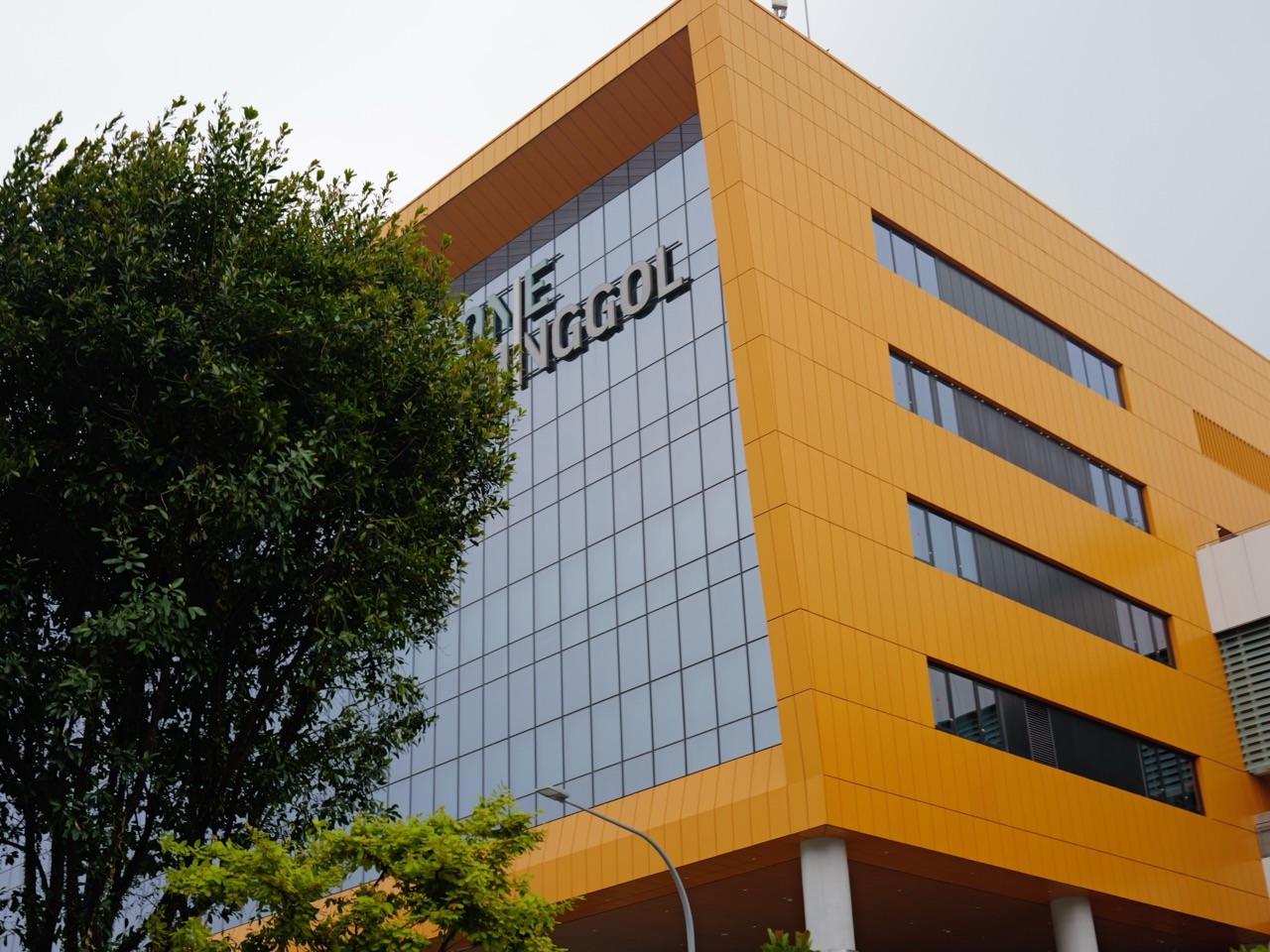
The photograph shows the exterior of One Punggol, the hub containing the library. It does not show a library classroom or an eduKate teaching venue. This companion to our Schools in Punggol series offers optional family activities inspired by local school themes; these are not official school assignments or school–library partnerships.
Photograph: Exterior of the One Punggol building in Singapore. Photo: eduKate.
Find the part your family needs
Choose the question closest to your family’s next decision.
Choose a visit purpose · Connect school interests · Plan a teen visit
Contents
1–3 · Understand and compare
1. Give this visit one clear purpose
4–6 · Plan and continue
4. For teenagers, separate reading, revision and making
5. Make the visit workable for the whole family
6. Carry the question back into the eduKate learning network
Before leaving home, finish one sentence together: ‘Today I would like to find out…’ or ‘Today I need a place to work on…’. Keep the answer small. Choosing a first book about insects is enough; so is finding an explanation for one Science question.
Use NLB’s current Punggol Library page for opening arrangements, access, events and study-seat links. The main library and the dedicated Study Zone have different arrangements, so check the part you intend to use.
A library visit and a booked programme are different plans. If you want a particular session, check its age guidance, registration and availability before travelling. If you want quiet work, check the intended study facilities rather than assuming every shared space has the same purpose.
Keep room for browsing too. A clear starting point helps a child enter the visit; it need not prevent them discovering a different book that catches their attention.
The following connections are suggested by eduKate. They draw on themes described by the schools and can be adapted by any family, whichever school the child attends.
| School theme to explore | An optional library question | A small result to bring home |
|---|---|---|
| Punggol View: communication and storytelling | How does this author help us understand a character’s feelings? | Retell one scene and explain one word choice. |
| Northshore: game design and making | What makes a set of instructions easy to follow? | Write a clearer rule for a simple home-made game. |
| Mee Toh: environmental learning | What happens to one material after we use it? | A short explanation supported by a named book or source. |
| Yusof Ishak: sustainability and urban farming | What does a plant need, and how might a city provide it? | A labelled sketch with one question still to investigate. |
Do not force the connection if a child wants to read something else. A comic, a story or a book about an unexpected interest can still support a worthwhile conversation. The goal is to help the learner find a way into reading and inquiry.
Ask the child to identify where an answer came from. A drawing can be imaginative, while a factual label needs a source. Making that distinction gently is a useful start to research.
Start with a book the child can engage with, including one you read aloud together. Pause at a moment they find interesting. Ask what they noticed before asking what the author meant.
Choose one unfamiliar word and work out its meaning from the sentence and surrounding information. Then use it in a fresh example. A word understood well is more useful than a long list copied without meaning.
After a factual passage, try three short prompts: What did we learn? What made us think that? What would we like to check next? The adult can model an answer before asking the child to try.
Let the response suit the child. It could be a spoken explanation, a labelled picture, a question written on a small card or a few sentences. There is no need to turn every borrowed book into an assessed project.
Bring the thread back another day. ‘Did our new book change what we thought?’ helps reading become a continuing conversation rather than a collection of disconnected visits.
A teenager preparing an assignment needs a different plan from a family browsing picture books. Decide whether the task is sustained reading, quiet revision, research or an organised making activity. Then use the appropriate space and current arrangements.
NLB’s official library launch information describes features including Teenspace and MakeIT. Use those descriptions to discover possibilities, then check current programme conditions and equipment requirements before planning an activity around them.
For revision, write down one task and what completion would look like. For example: explain two mistakes in a Mathematics exercise, outline an argument or compare two accounts of an event. A task with a visible endpoint is easier to review than ‘study all afternoon’.
For research, record the title or author of a source and distinguish its explanation from your own inference. Ask whether another credible source supports the point, especially when it is a current claim.
Talk or collaborate only where that use is appropriate. A successful visit respects the purpose of the space and the people sharing it.
NLB provides accessibility information and a Social Story for Punggol Library. These resources can help families prepare for the environment and sequence of a visit. Check them when they would make the experience more predictable or easier to navigate.
Plan a meeting point and an adult supervision arrangement appropriate to the children. If siblings need different spaces, decide who stays with whom. A large public building should not turn into a vague ‘we will find each other later’ plan.
Choose a realistic finishing point. Borrowing one useful book and leaving calmly can be a better family outing than trying to visit every feature when the child is already tired.
Afterwards, ask what made the visit easier and what should change next time. The answer might be a different time, a clearer purpose or fewer competing activities. Keep the part that worked.
Use the eduKate vocabulary hub when a book raises a language question. Return to a word in context, explain it and use it again in speech or writing. The point is to make reading more understandable and expressive.
For broader visit planning, eduKatePunggol’s library guide covers the library’s spaces in more detail. Use NLB’s live page for current operational arrangements, since a dated guide cannot capture every later change.
If curiosity extends towards university or work, the SIT Punggol campus guide offers a longer view of applied learning. A younger pupil needs room to explore; an older student can begin comparing actual subjects and programmes.
Finish with one thread to continue: a book to borrow, a question to ask a teacher or an explanation to improve. The library becomes part of learning when something from the visit remains useful after the family walks out.
Sources and further checks
Sources checked on 10 October 2026. Activities are optional eduKate suggestions. Check NLB for current hours, access, bookings and programme conditions. This independent article does not imply endorsement by NLB or any school.
NLB — current Punggol Library page
NLB — official launch and library features
Northshore Primary — imaginEErs
Mee Toh School — environmental ALP
Yusof Ishak Secondary — S4TEM@YI
Continue the Punggol school series
Programme choices · Secondary transition · Daily routine · Library learning
Schools in Punggol | Comparing Primary School ALP and LLP Programmes
Schools in Punggol | Secondary School Choice, Posting Groups and Subject Levels
Schools in Punggol | Planning the School Journey and After-School Routine
Schools in Punggol | One Punggol Library and Learning Beyond the Classroom — you are here